Photographer Raphael Olivier Explores the Suspended Reality of North Korea’s Socialist Architecture


Ryugyong Hotel. Image © Raphael Olivier

Ryugyong Hotel. Image © Raphael Olivier

North Korea is one of the few countries still under communist rule, and probably the most isolated and unknown worldwide. This is a result of the philosophy of Juche – a political system based on national self-reliance which was partly influenced by principles of Marxism and Leninism.

In recent years though, the country has loosened its restrictions on tourism, allowing access to a limited number of visitors. With his personal photo series “North Korea – Vintage Socialist Architecture,” French photographer Raphael Olivier reports on Pyongyang’s largely unseen architectural heritage. ArchDaily interviewed Olivier about the project, the architecture he captured, and what he understood of North Korea’s architecture and way of life.


The Workers Party Foundation Monument . Image © Raphael Olivier


Pyongyang International Cinema House. Image © Raphael Olivier


Pyongyang Ice Rink . Image © Raphael Olivier


Overpass. Image © Raphael Olivier


Pyongyang International Cinema House. Image © Raphael Olivier

Pyongyang International Cinema House. Image © Raphael Olivier

Marie Chatel: You’re based in Singapore, and conducted all your previous personal series in China. Why did you develop an interest in North Korea and what did you want to capture?

Raphael Olivier: I first travelled to Pyongyang in 2015 for a very short 24 hour visit, which was an eye opener and sparked my curiosity about the country. North Korea is a complex nation with multiple facets and points of interest, but as an architectural photographer the first thing to strike me when I visit any city is usually the visual appeal of its construction. In that sense Pyongyang is very unique and has a distinctive style of its own, which I wanted to explore more so I decided to go on a dedicated architecture tour with specialist agency Koryo Tours.


Overpass. Image © Raphael Olivier

Overpass. Image © Raphael Olivier

MC: Did you feel constrained by traveling in a tour group or did it somehow contribute to the experience?

RO: Of course travelling in a group within an organized tour has its limitations, but that’s part of the deal when visiting North Korea. The country is not yet open to individual tourism so a certain level of compromise has to be made.


Pyongyang Ice Rink . Image © Raphael Olivier

Pyongyang Ice Rink . Image © Raphael Olivier

MC: Looking at Pyongyang‘s landmark buildings, were there recurrent features similar to Soviet architecture that you noticed? What made Pyongyang’s architecture unique?

RO: There is definitely a strong Soviet influence in the city’s architecture, mixed with some elements of traditional Korean design. I would say the biggest difference between Pyongyang and other cities is that Pyongyang is very homogenous. In former Soviet cities we might still find great examples of modernist architecture but somehow sprinkled throughout more contemporary urban fabrics. In Pyongyang the whole city’s layout is planned from A to Z and there aren’t any private developers building their own projects here and there. It’s an endless vision of raw concrete blocks painted in pastel colors as far as the eye can see, which is very unique.


Swimming pool at the Changgwang-won Health Complex. Image © Raphael Olivier

Swimming pool at the Changgwang-won Health Complex. Image © Raphael Olivier

MC: The photograph of the swimming pool at the Changgwang-won health complex is intriguing, as it’s the one time in your photographs you have direct visual contact with a Pyongyang inhabitant. In most pictures people are absent or self-effacing. How would you describe their use of public buildings?

RO: Pyongyang is a real city, and a real capital. It might not be a bustling metropolis like New YorkLondon or Tokyo, but there are real people living there, going around and using public spaces for their daily activities. The difference is that foreign visitors are often kept at a certain distance, not often interacting directly with the local population. However this is changing as the country is gradually opening up, leading to more opportunities for tourists to meet the locals in less staged settings.


Pyongyang Sports Village. Image © Raphael Olivier

Pyongyang Sports Village. Image © Raphael Olivier

MC: Along the same lines, I wonder about the city’s layout and how people relate to their urban environment? From your photographs, it seems that roads and public squares remain just as empty and clean as the public buildings, if not more.

RO: Buildings and public spaces that are used for official purposes (military monuments etc) are not used for recreational purposes. But there are also plenty of parks, sport playgrounds and entertainement venues that are used by the public. My photos this time were focused on architecture, but of course it would be naive to think this small work could give a general overview of a city like Pyongyang.

Architecture is Propaganda: How North Korea Turned the Built Environment into a Tool for Control
//cdn.embedly.com/widgets/platform.js

http://ift.tt/2ccxp7K

Burned Cathedral of St. Sava Begins Reconstruction Process in New York

Instagram photo by Christopher Beckman * Aug 21, 2016 at 9:33pm UTC
//cdn.embedly.com/widgets/platform.js

Almost four months after going up in flames, the Serbian Orthodox Cathedral of St. Sava has begun the process of rebuilding in the Flatiron district of New York. On the night of May 1, a four-alarm fire blazed through the 1851 building by Richard Upjohn, burning the majority of the church. 

In the time since the fire—which was caused accidentally by improperly extinguished candles—church officials have been working with city government agencies and have determined that the addition of metal beams and other small reinforcements will be sufficient to salvage the remaining structure of the church.

Burnt down this week in NYC ….candles possible cause. Sad.
//cdn.embedly.com/widgets/platform.js
With the addition of these beams, reconstruction inside the parish hall will be able to proceed.

The shoring of the 25th Street wall has been required as well as waterproofing, says church executive board member Lidija Nikolic. Shoring and bracing was broadened to the entire building as opposed to previous specification to only to the east and west walls. This should be completed by the first week of September.

A look inside #nyc #stsava
//cdn.embedly.com/widgets/platform.js

The process of approval for the reconstruction designs will take six months to a year, as the Landmarks Preservation Commission will make final decisions concerning design parameters.

A complete loss. The Serbian Orthodox church was destroyed by a fire that sprang from candles that had not been extinguished completely. #fire #church #noroof #chelsea #nomad #nyc
//cdn.embedly.com/widgets/platform.js

Orthodox Easter Sunday – May 1, 2016 @ 6:50 pm – Fire engulfs this historic church after hundreds came for Easter services 🌷 #photooftheday #fengshui #interiordesign #newyork #architecture
//cdn.embedly.com/widgets/platform.js

A benefit reception to support reconstruction financing was held this week at the New York Athletic Club, and drew in Serbian tennis players from the upcoming U.S. Open. Insurance and donations will also contribute to the rebuild.

News via Metro.

http://ift.tt/2cmYOow

Which Intelligence Is Your Most Dominant?

Harvard psychologist Howard Gardner developed the Theory of Multiple Intelligences. This test suggests that everybody has a dominant intelligence “modality”. Your dominant intelligence reveals what are you good at and where you are most successful!

Which one is more like you? Musical–rhythmic, visual–spatial, verbal–linguistic, logical–mathematical, bodily–kinesthetic, interpersonal, intrapersonal, or naturalistic?

intelligenceTake this quick and easy quiz and find out which intelligence is your most dominant!

Which Intelligence Is Your Most Dominant?

//cdn.playbuzz.com/widget/feed.js


Leave a comment below to tell us what you’ve got!

The post Which Intelligence Is Your Most Dominant? appeared first on Change your thoughts.

http://ift.tt/2c9vJKc

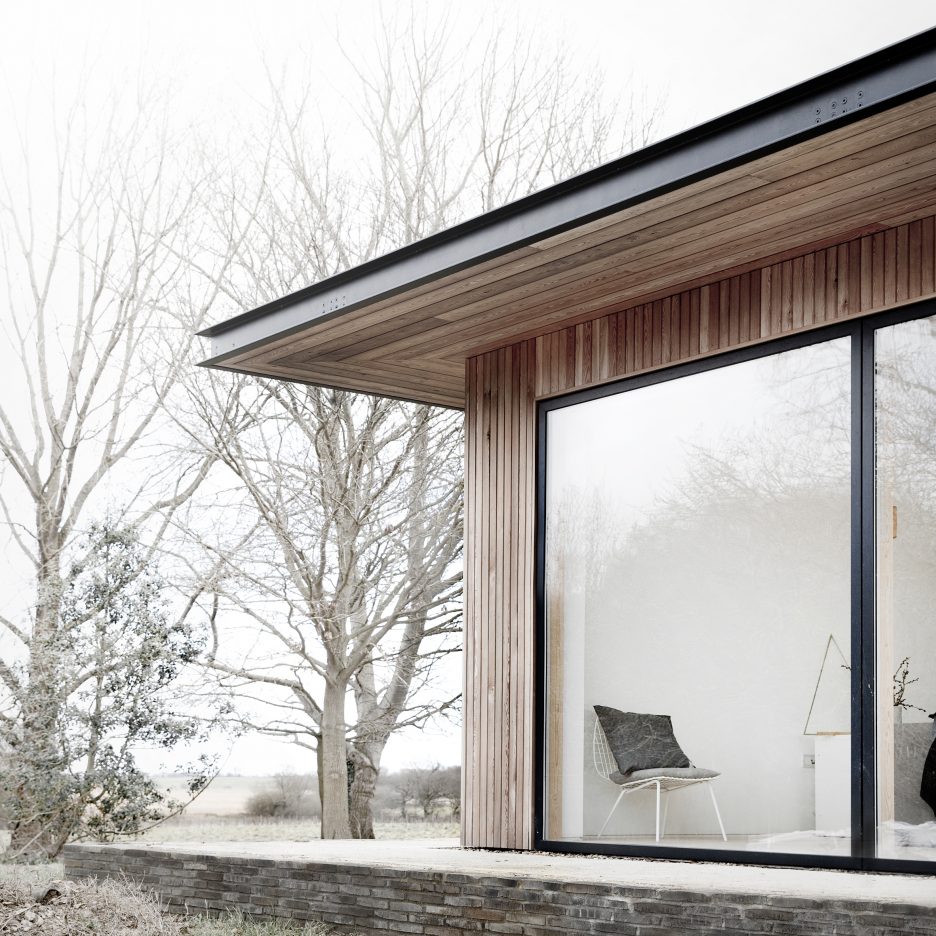
Norm Architects completes contemporary farmhouse in the Suffolk countryside


Panoramic glazing frames views of meadows and cornfields from this farmhouse designed by Danish studio Norm Architects for a working farm in southern England (+ slideshow). (more…)

http://ift.tt/2cIgkFu

💙 Jellyfish on 500px by Rodrigo Chaves, Goiania,…

💙 Jellyfish on 500px by Rodrigo Chaves, Goiania, Brazil☀  Canon… http://ift.tt/1SAtzq7

http://ift.tt/2cmWhek

UK government doesn’t value design say Barber and Osgerby


London Design Biennale 2016: The UK government is not doing enough to support the design industry, according to Barber and Osgerby, who claim their London Design Biennale pavilion is one of the few not to receive public funding.  (more…)

http://ift.tt/2bW99bz

Urbem Arquitetura Designs a Spacious Family Home That Blends the Line Between Indoors and Outdoors

FMG Monte Alegre by Urbem Arquitetura (32)

FMG Monte Alegre is a private home located in Piracicaba, Brazil. It was designed by Urbem Arquitetura in 2015. FMG Monte Alegre by Urbem Arquitetura: “The architectural project thought of a house that should provide plenty of space for a middle-aged couple that often hosts friends and family, spending most time with their kids and grandchildren. The edification was set in as suburban district, in an enclosed allotment, build upon..

More…

How to Care for Others by Practicing Self-Gratitude

//pagead2.googlesyndication.com/pagead/js/adsbygoogle.js

(adsbygoogle = window.adsbygoogle || []).push({});

“Self-compassion is simply giving the same kindness to ourselves that we would give to others.” – Christopher Germer

We all try to take care of our loved ones to some extent. Unfortunately, however, we tend to forget one important thing along the way: ourselves.

When you lose yourself in the process of taking care of other people, you experience a lot of negativity. Your sincerity to help decreases and your actions become forced. The more you continue to care for other people without practicing self-care , the less satisfaction you’ll feel when helping them.

So, how do you avoid all these things?

//pagead2.googlesyndication.com/pagead/js/adsbygoogle.js

(adsbygoogle = window.adsbygoogle || []).push({});

Simple. Start with practicing self-gratitude.

//c.amazon-adsystem.com/aax2/getads.js

//<![CDATA[
aax_getad_mpb({
"slot_uuid":"16dcbcd0-2124-4a85-9abe-c263dd9084e5"
});
//]]>

Research suggest that individuals that practice gratitude have fewer negative health issues. They sleep more soundly at night and feel more refreshed in the morning. People who show gratitude feel more satisfied with their life to the point that they’re able to maintain a positive outlook even for the future.

How To Start Practicing Self-Gratitude

practicing-self-gratitude

Practicing self-care through gratitude can be challenging, particularly if it is not something you do every day.

//pagead2.googlesyndication.com/pagead/js/adsbygoogle.js

(adsbygoogle = window.adsbygoogle || []).push({});

If you’re unsure about where to start, you can try using a gratitude journal.Before you go to sleep, try to write down at least three things that have happened for that day which you are grateful for. The list can be as simple as the meal you ate for breakfast or a good deed a friend did for you unexpectedly.

As you continue to write about positive things, you’ll slowly begin to feel happier about your life. You’ll find it easier to see the good in everything to the extent that you begin to affect other people.

//pagead2.googlesyndication.com/pagead/js/adsbygoogle.js

(adsbygoogle = window.adsbygoogle || []).push({});

Doing something as simple as offering a sincere ‘thank you’ to someone, for example, can increase that person’s warm feelings toward you. And once that happens, you’ll be able to sustain a long term relationship.

See Also: How to Adopt an Attitude of Gratitude

How To Control Your Emotions

According to social and psychological counselors, learning how to understand and manage our own emotions is another powerful tool we can use in helping others. Because of this, many counselors focus on teaching self-regulation skills to their clients.

Individuals who are in better control of their own emotions are frequently good at seeing the good in other people. They can also identify opportunities for themselves and others easily. They don’t find difficulty maintaining a healthy outlook during times of extreme stress, too.

If you want to control your emotions, you must first know why they exist in the first place. Understanding why there were triggered can give you a clearer idea on how you should address them.

Although this sounds like an easy task, it can be incredibly challenging to get to the root of your emotion. You need to have a higher level of self-honesty, so you can be comfortable in admitting the reasons to yourself.

//pagead2.googlesyndication.com/pagead/js/adsbygoogle.js

(adsbygoogle = window.adsbygoogle || []).push({});

Self-Gratitude and Taking Care Of Others

taking-care-of-others

See Also: A Little Bit of Gratitude, Everyday! 

Emotionally intelligent individuals are often more empathetic towards the situations of other people. Because they can understand things better,  they’re able to help others go through their certain issues more efficiently.

Addressing your needs while taking care of other people isn’t bad. You just have to find the right balance to make sure you build a positive energy that you can use to influence other people to do the same.


//pagead2.googlesyndication.com/pagead/js/adsbygoogle.js

(adsbygoogle = window.adsbygoogle || []).push({});

(function(d) {
var params =
{
id: “cb4f919c-04fa-460c-b2ff-2c7f9ecf4472”,
d: “ZHVtYmxpdHRsZW1hbi5jb20=”,
wid: “165294”,
cb: (new Date()).getTime()
};

var qs=[];
for(var key in params) qs.push(key+’=’+encodeURIComponent(params[key]));
var s = d.createElement(‘script’);s.type=’text/javascript’;s.async=true;
var p = ‘https:’ == document.location.protocol ? ‘https’ : ‘http’;
s.src = p + “://api.content.ad/Scripts/widget2.aspx?” + qs.join(‘&’);
d.getElementById(“contentad165294”).appendChild(s);
})(document);

The post How to Care for Others by Practicing Self-Gratitude appeared first on Dumb Little Man.

http://ift.tt/2bW6Q8L

My http://ift.tt/1XZ918K Aerial view of London

from Instagram: http://ift.tt/2c9kJMT

@signordal Aerial view of London

via Instagram http://ift.tt/2c9kJMT