Sorrento House 1 / Vibe Design Group


Courtesy of Vibe Design Group

Courtesy of Vibe Design Group


Courtesy of Vibe Design Group


© Grant Kennedy


© Luke Boyle


© Grant Kennedy


© Luke Boyle

© Luke Boyle

Sorrento House 1, the latest coastal project from Vibe Design Group, is the Australian Beach house reborn. The building presents a modest, yet sinuous face to passers by. A well-honed palette of materials is introduced, their application modulated masterfully and subtly; the mark of an experienced hand. Timber battening twists to become shuttering for windows behind. A cast concrete wall articulates the point of entry. A low-slung, angular roof constructed from 18m sheets of custom Colorbond is punctuated by a cast concrete chimney; stylish protection from any seaward weather. If the exterior is uniquely Australian in vernacular, the interior might just as easily be Northern European or Japanese. The synthesis of timber, cast concrete and steel is sensitive and assertive in equal measure. Each material is given a role, an opportunity to shine solo, and contribute in concert. Silken timber renders concrete textural, and luxurious, in return.


© Grant Kennedy

© Grant Kennedy

Plan

Plan

Courtesy of Vibe Design Group

Courtesy of Vibe Design Group

Extended proportions define the living spaces, from the monolithic kitchen (a sculptural assembly of intersecting rectangular forms) through to the integrated fireplace and hearth. The design language of Vibe has rarely found a clearer expression than in these spaces; expansive and spacious, yet human in scale. Bathrooms build upon the formal qualities of the materials palette. The introduction of matte black joinery and architectural vertical mirrored panels, provide practicality, but not at the expense of style.


© Grant Kennedy

© Grant Kennedy

The private, restrained entry to the building is balanced by a more expansive rear elevation, complete with deck and swimming pool. The game of geometry is played out in the roof from this aspect. It is strikingly resolved with flair and personality. This house sits naturally on Melbourne’s Mornington Peninsula, but might just as easily find itself in any of Australia’s coastal regions. This house demonstrates that modesty and luxury can be reconciled simply through good design.


Courtesy of Vibe Design Group

Courtesy of Vibe Design Group

Sorrento House 1 was awarded Winner – New Houses over $1m and Most Innovative Kitchen Design in the 2016 BDAV Design Awards.

http://ift.tt/2c1udLT

How to Keep Tabs on Your Competitors

Want to keep tabs on your competitors? Wish you could spy on them legally to find out what they’re planning? You can. Learn what your competition is up to with these tips.

http://ift.tt/2bcKmgE

How to Sell Yourself

In very small businesses, when you’re marketing your business, you’re really marketing yourself. Here’s advice for getting better at selling yourself and your business.

http://ift.tt/2bPPz0q

Top 6 Problems Freelancers Face (and What to Do About Them)

Freelancing comes with new challenges you didn’t face as an employee. Here are the top 6 freelancer problems and tips for handling them.

http://ift.tt/2bRHUe7

How to Reduce Attorney Fees for Your Business

At some point in the life of your business you will probably need to hire an attorney. Here are ways to reduce your legal expenses and attorney fees.

http://ift.tt/2bLDp7w

Namwon Pavilion / Boundaries architects + DUCA Manual house


© Hwang Hyochel

© Hwang Hyochel


© Hwang Hyochel


© Hwang Hyochel


© Hwang Hyochel


© Hwang Hyochel

  • Other Participants : 25 local high school students from Namwon

From the architect. The project is subtitled Nam-1-gwang-1-ru (“南1光1루”, pronounced Namwongwanghallu), as an amalgamation of Namwon (location) and Gwanghallu (a nearby 17th century Nugak, an elevated open-air house typology, registered as national heritage).


© Hwang Hyochel

© Hwang Hyochel

Diagram

Diagram

© Hwang Hyochel

© Hwang Hyochel

The pavilion is a participatory project, installed through public workshops incorporating various ideas. Similar to a Nugak, it is primarily a place to take a break, while suggesting a different perspective of looking (or not looking) at the city. The roof is open to the stars and the winds, and the walls become a temporary exhibition space for public artwork. The pavilion can be split into four units, and they can be configured in various ways to adapt to the vibrant and diverse culture of Yegaram Street.


© Hwang Hyochel

© Hwang Hyochel


© Hwang Hyochel

© Hwang Hyochel

Namwon Pavilion Workshop
The workshop was scheduled for three weeks, composed of Dankook University’s project team and 25 local high school students from Namwon. Each week, we tested out various scenarios, with everyone participating in the design and build process with hopes that this pavilion would become a place to tell their personal experiences. Since its installation, it had been used as an exhibition booth for the 2015 Chunhyang Festival, as well as the backdrop for many street performances on Yegaram. It had also received an Award of Excellence for the 2015 National Public Design Awards, particularly for its integration of education and public participation in its design.


© Hwang Hyochel

© Hwang Hyochel

http://ift.tt/2cwSz3j

Loch Achray, Scotlandphoto via patricia

Loch Achray, Scotland

photo via patricia

House in Iwasawa / Opensite Architecture Studio


© Takeshi Yamagishi

© Takeshi Yamagishi


© Takeshi Yamagishi


© Takeshi Yamagishi


© Takeshi Yamagishi


© Takeshi Yamagishi

  • Structure Design: EQSD / Toshiki Endo

  • Construction Company: Yajima corporation

© Takeshi Yamagishi

© Takeshi Yamagishi

This housing project for family of four adults. Family need four private rooms and small shared space (living, ding and kitchen), because they are different time zone of life. However, I think do not want to plan such as closed each private rooms. I think put the gradations to the distance of the private rooms. So, I created this housing It’s like “minimum apartments”.


© Takeshi Yamagishi

© Takeshi Yamagishi

Section

Section

© Takeshi Yamagishi

© Takeshi Yamagishi

For that purpose, It needs to be shared “space elements” such as Engawa and Loft. (Engawa is traditional open shared space in japan, It’s like balcony). There are floor of different heights across the inside and outside of the private rooms. And, It’s  Important to be able to control the relationship look/seen visual for the gradations. So, many windows lined as somewhere in the city landscape.


© Takeshi Yamagishi

© Takeshi Yamagishi

Main wood materials that are used in this house, It is “Nishikawa-zai”. Nishikawa-zai means material that carried in the river from the west of the Edo (old Tokyo). This area is famous as a producer of good material nearest from Edo. Hanno city to be built of this house, there are center of Nishikawa area.


© Takeshi Yamagishi

© Takeshi Yamagishi

http://ift.tt/2cbxqby

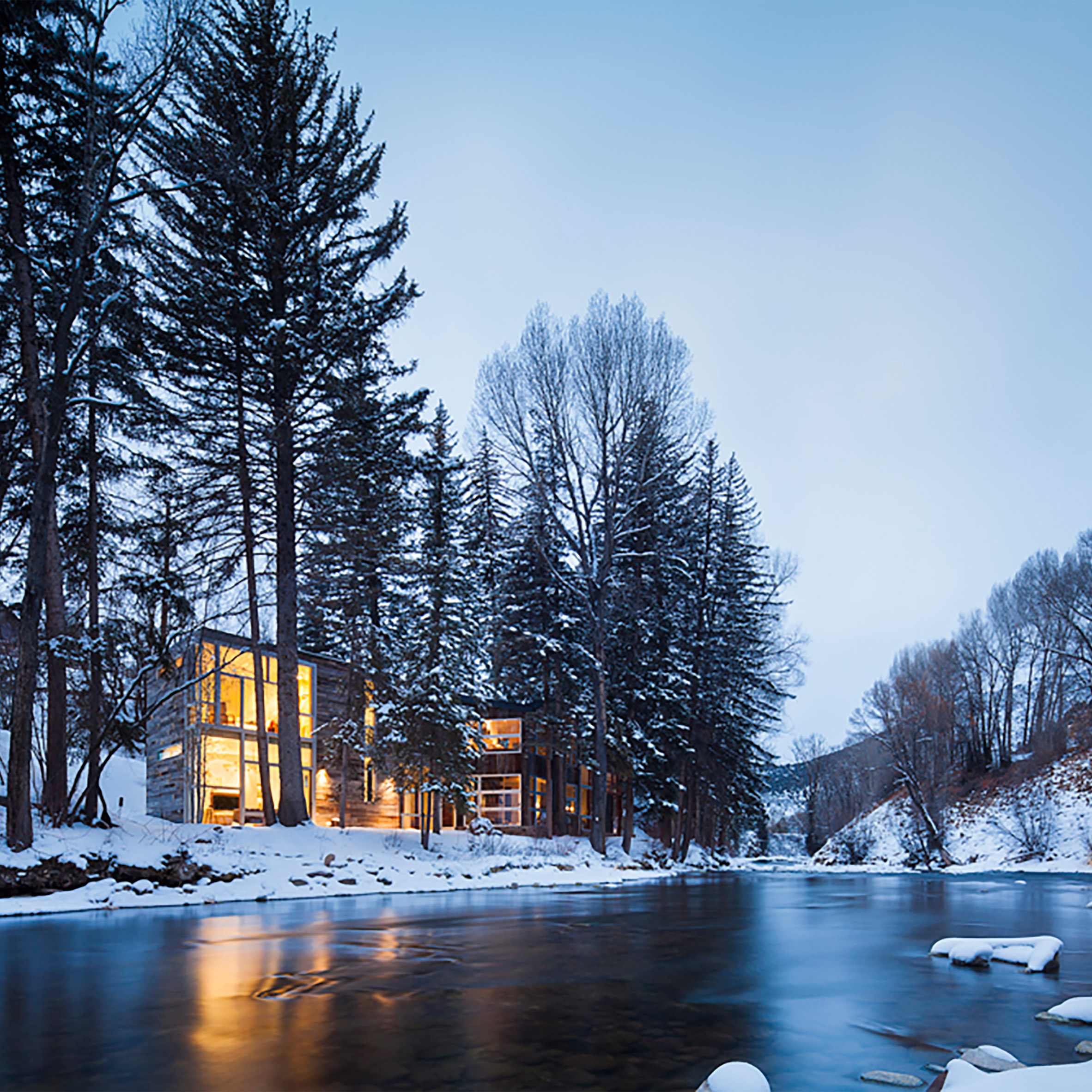
Studio B adds two separate volumes to Riverside House in Colorado


Colorado architects Studio B have extended a local waterfront home by adding a pair of buildings with different levels of privacy (+ slideshow). (more…)

http://ift.tt/2cl8xcs

Abandoned view by KT Photography. A part of Lillesden revisited…

via Abandonedforgotten http://ift.tt/2c15zLl