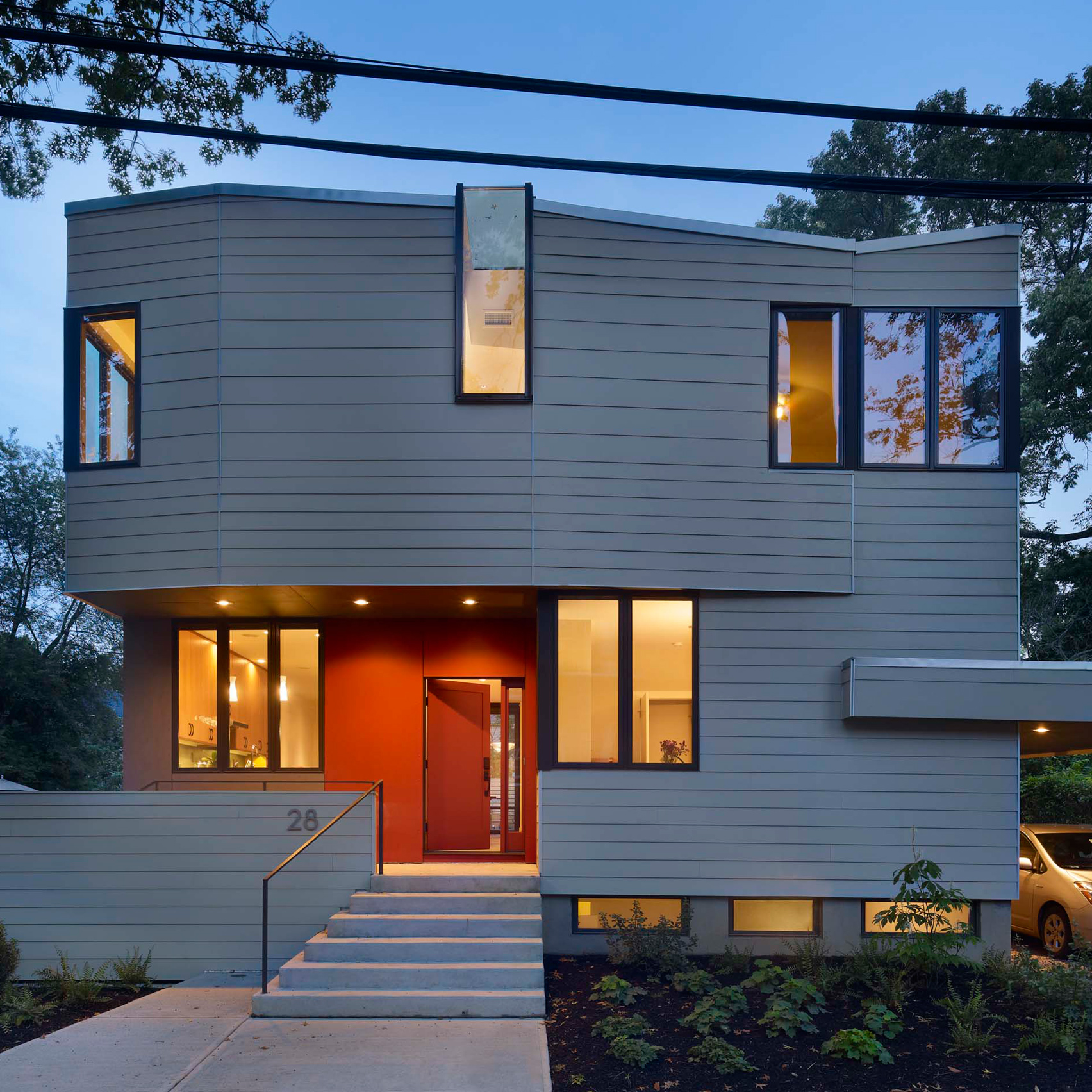
This prefabricated family home in Princeton, New Jersey, by local architect Marina Rubina was conceived as an “experiment” in providing a high-quality residence that is sustainable and affordable (+ slideshow). (more…)
This prefabricated family home in Princeton, New Jersey, by local architect Marina Rubina was conceived as an “experiment” in providing a high-quality residence that is sustainable and affordable (+ slideshow). (more…)

Capability to Respond
During the emergency process for commissioning new Courthouses, as part of the restructuring of the Judicial System defined by the National Government of Ecuador, the consulting company Hospiplan is invited to participate in the design of new buildings that would ¨guarantee all citizens an opportune, efficient and quality access to justice¨. This emergency commissioning implied the radical reduction of time allocated for the development of the projects, and a necessary reorganization of the processes normally followed.
Based on previous experiences, Hospiplan calls arquitectura x to lead a team capable of producing 20 projects in 21 days, located in the 3 geographic regions of the country, with a total of 45 days to develop all details, specifications, engineering designs and budgets. arquitectura x proposes a strategy to design 1 generic project with 20 variables, instead of 20 specific projects.
In the end, 18 Courthouses were designed since 2 plots were deemed inviable, and to date 5 have been built. Because of the nature of the emergency commissioning, each building was constructed by individual contractors without any involvement of the design team during the building process.
This building is one of the specific results and should be considered as part of a system, developed in the following way.
Systematization of the Design and Construction Process.
The design of these Courthouses is seen as an opportunity to emphasise the need to optimize all constructions processes for public buildings in Ecuador, by implementing a planning model based, on one hand on modular building components, standardization of production processes, light prefabrication and dry assembly methods, and on the other, on the systematisation of the design methodology, in order to produce a generic model flexible enough to be modified and adapted depending on the specific contexts and needs of each case.
The 20 programs are thus systematized according to the strict functional correlations given by the operational needs, generating programmatic modules following logic of use, be it public, semi-public, or private use, and determined dimensionally by the structural-spatial building module selected to optimize construction. The functional dynamics of these programmatic modules are also based on the double circulation system determined by the operating requirements of the courthouses, and on the vertical distribution logic of the spaces, prioritizing public use on the ground floor while concentrating private use on the upper floors.
This way a series of matrices for the subsystems of the project are generated, allowing for simultaneous evaluation and decision making for the 20 cases at once, based on worst case scenarios, that is, always making decisions for one project and applying them to the other nineteen.
General Layout and Public Space
The layout of the buildings on the site responds to one basic principle:
Public building = Public space
The buildings´ general layout respond to their context, always generating public spaces shaded by trees in the form of plazas, small squares, broadening of sidewalks, and/or gardens and green parklets. For this purpose, the buildings incorporate open portals that act as transitional space between the public interior and public exterior. These portals are also the architectural elements that allow the buildings to become an urban ¨place making¨ model in the case of areas intended as new centralities for their towns.
Structural – Spatial Grid
The structural system is in essence a steel grid, with a square, 6.30 metre module, that acts as the dimensional base for the building. A rational, repetitive and invariable structural system is intentionally sought with the double premise of achieving the most efficient use of materials, and a time effective execution during the construction process. In contrast to other more common structural principles based on diaphragms or slabs, the linear grid allows for the most flexible solutions for distribution, spatial organization, transformation, or expansion of the building.
The 6.30 metre module between axes corresponds to the dimensions of the two basic elements that form the grid: 6.00 metre long IPN beams and 0.30 x 0.30 metre square columns; this modular dimension of the grid minimizes material waste and optimizes sectioning of standard steel members.
Distribution and Circulation Systems
The circulation scheme responds to the particular needs defined by the operational system of the courthouses, with all-access public areas located to the front and on the lower and ground floors, characterized by the portals and double or triple height halls. These public areas are distributed occupying most of the ground floor and the frontal spaces of the first and/or second floors, oriented to the public space outside.
Vertical circulation in the public spaces is solved with an open staircase and elevator placed in the centre of the building; private vertical circulation is contained in one or more cores that access all levels of the building, but are always separated from the open public circulations.
Scale, Materiality and Adaptation
The Courtrooms are the primary spaces in the buildings, the places where hearings are held to impart justice, spaces located in a predominant area of the first or second floors above the interior public space, clearly identifiable as volumes clad in natural wood.
The spatial scheme responds to an open plan principle, spaces are defined with a light prefabricated constructive system of modular fibrocement boards, used for interior walls, floors, ceilings and facades. This system allows for total flexibility of the buildings so they can adjust to new programmatic conditions, modifications, expansions, renovations, and the possibility of dismounting and recycling of parts and materials. Modular, prefab dry assembly systems also allow the efficient construction of these buildings in relatively isolated places.
The buildings relate to their context primarily through the portals, acting as a primary protection and adaptation system, while the less public facades are by nature less open. When necessary, both the portals and the other facades incorporate secondary systems that protect the buildings from the incidence of direct solar radiation and rain, whilst admitting as much natural light as possible. It is here that specific materials for each region or case are employed, such as perforated galvanized steel screens.

Architectural photographer Mirna Pavlovic has an obsession with abandoned places. For her, their appeal lies in their ability to exist on a different temporal plane from the rest of reality – both impossibly ancient and frozen in the present.
“They are never truly dead, yet never really alive,” Pavolic explains. “Precariously treading along the border between life and death, decay and growth, the seen and the unseen, the past and the present, abandoned places confusingly encompass both at the same time, thus leaving the ordinary passer-by overwhelmed with both attraction and revulsion.”
For her latest series, Dulcis Domus, Pavolic trekked over fences and past “no trespassing” signs to capture the once-glorious villas, palaces and castles of Europe that have now been left to decay, slowly returning to the Earth that existed before them. Through photography, Pavolic attempts to highlight social issues through an aestheticised approach, allowing viewers to “see with fresh eyes what lies beneath those spots that we pass by on the street.”
Continue reading to see a selection of photographs from the series – hover over the images to see where each villa is located.
“As public space becomes privatized and the restriction of movement in urban environments increases, there is an overwhelming encouragement to avert the gaze.” Pavlovic explains. “The world is structured to guide us, with traffic lights, road crossings, paths and fences, designated areas for play, work, death. Crossing the border of imposed restrictions means to purposefully go against ingrained beliefs, to breach a loose social contract held together by a fear of punishment and a comfortable status quo.”
“In the end, the acts of transgression and trespassing into abandoned spaces become equally as incongruous in nature as the spaces being explored. Wandering off the path, like the abandonments, becomes in itself an act that is both invisible and increasingly present. Both suppressed and flourishing. It becomes a desperate cry against the discouragement to see and experience, a cry for freedom in a world where everything is prescribed, regulated and expected.”
“The homeless, the drug addict, the metal thief, the graffiti vagabond – these become our sisters and brothers in a self-imposed exile. To find a new home, we claim the ones that were once called by that name, reappropriating not only the structure itself but their own personal histories as well. In an almost carnevalesque manner, they become sites of our own search for context, meaning and definition. These homes become grotesquely revitalized, but remain within their own reality. In turn, we become vehicles of disparity, embodying and assimilating the otherness and the radical alterity offered by abandonments.”
More of Pavolic’s photographs can be viewed on her website, here, or check out her work on Facebook and Instagram.

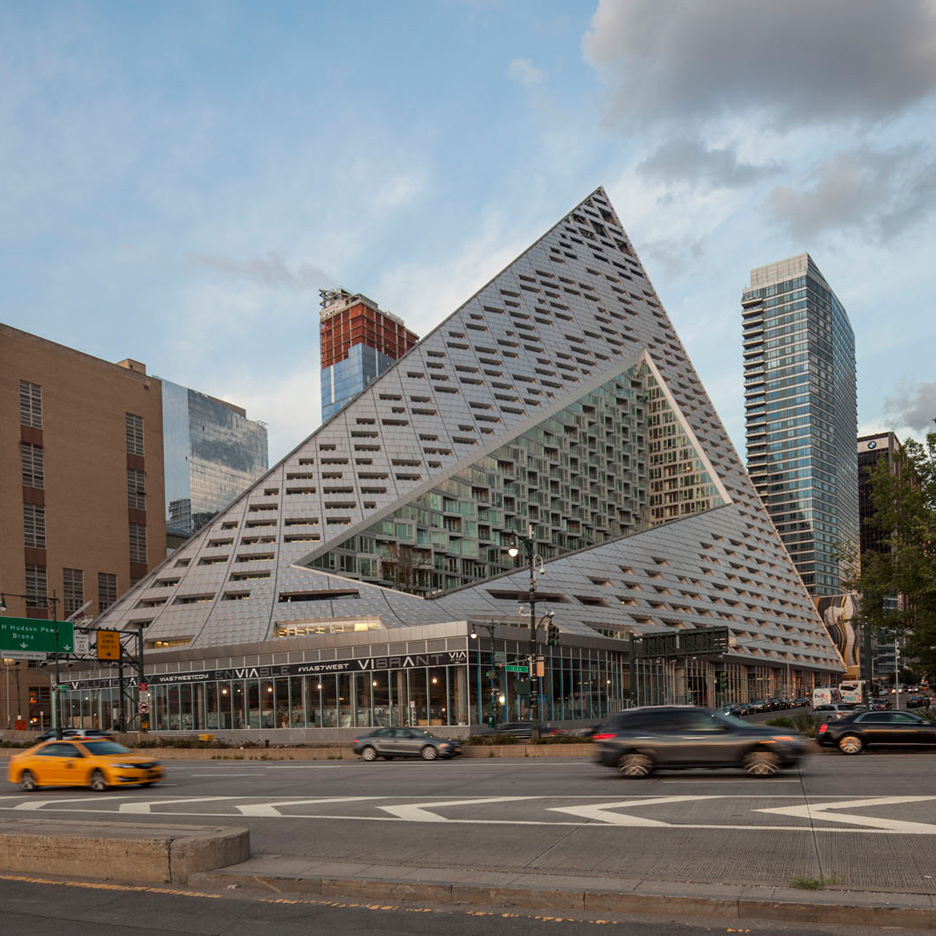
The tetrahedral New York apartment building designed by Bjarke Ingels Group is captured in these pictures by photographer Montse Zamorano (+ slideshow). (more…)

From the architect. Bordeaux, Chartrons’ area. On the street front, a limestone building. On the back lot, a silk screen printing workshop. The order was to renovate and raise the two storey building, creating two dwellings and one shared ground between the workshop and the housing.
Three Spaces for Three Functions
The building’s groundfloor is divided in two main parts : the common space / private access and the garage / public access to the workshop. In the courtyard, a single stairway serves the upper floors of both dwellings and printshop. For an intuitive sharing, a subtle variation of the ground material delineates the nominated areas. Freed from the interior circulation, everyone benefits of extra spaces. In the metal growth, the flat expands on two floors, making good use of an attic space relieved of traditional woodframe.
The extension, composed of a wooden structure and zinc scales, relies on the existing stonework. Locally, zinc scales were used to protect the west gablewall. The material create a bridge between the historic context and the contemporary extension, used to create a continuous skin from the street to the courtyard. As if something precious was embedded in a raw stone, the small addition reflects the surroundings, producing a moving spectrum of colours day and night.

DETAIL Magazine has announced the winners of the DETAIL Prize 2016. This year, the jury selected five projects from a pool of 337 projects from 42 different countries by looking for “realizations in which the overall design concept and the detailing were brought together in a coherent way.” The winners were noted for being “future-oriented, innovative and pioneering projects from different disciplines that have outstanding architectural and technical qualities.”
This is the seventh edition of the biennial award, which aims to “strengthen architecture in public debate, strengthen the role of architects in public, and strengthen networking among architects, industrialists, developers and politicians.”
Continue after the break to see the winners.
Winner
MPavilion 2014, Melbourne / Sean Godsell Architects
2nd Prize
St. Agnes, Berlin / Brandlhuber + Emde, Burlon / Riegler Riewe Architekten
3rd Prize
Hilti Art Foundation, Vaduz / Morger Partner Architekten
DETAIL Structure Prize
Merchant Square Footbridge, London / Knight Architects
DETAIL Inside Prize
K8, Kyoto / Florian Busch Architects
This year’s jury consisted of Peter Ippolito (Ippolito Fleitz Group), Gilles Retsin (Gilles Retsin Architecture), Mike Schlaich (schlaich bergermann partner), Enrique Sobejano (Nieto Sobejano Arquitectos) and Daniel Lischer (alp architektur lischer partner ag).
Voting for the DETAIL Reader’s Prize is now open. Until 14 October 2016, you can vote online for your favorite selection out of 13 projects nominated by the jury.
Winning projects will be presented and displayed alongside other works from the winning firms at the DETAIL Symposium in the Magazin der Heeresbäckerei event venue in Berlin on Friday, 11 November 2016.
News via DETAIL Magazine.

You’re reading How to Procrastinate Less and Write More, originally posted on Pick the Brain | Motivation and Self Improvement. If you’re enjoying this, please visit our site for more inspirational articles.
Procrastination is the enemy. Everyone knows it, and that goes for the stubborn soul who insists that the white-hot pressure of a last-minute completion makes his or her work better. It does not.
Procrastination is fighting a war against your momentum, your productivity, and your sanity.
The Easy Target
Everyone procrastinates, but writers are especially afflicted. We all do it for different reasons: there are those crazy busy periods, overbooked with projects to the extent that we feel forced to push assignments to the next day, next week or next month.
Then there are those jobs that we don’t only want to put off, but avoid altogether. There are also projects that bore, projects that don’t pay, and projects that insult. Maybe you fear a lack of expertise in a topic area, which creates anxiety about the end result.
Freelance writers tend to put off starting a job when the client’s instructions are so vague that I hardly know where to begin anyway. Let’s face it, instructions clouded by poor communication, language barriers, time zone delays, or even the client’s own confusion can cause a writer to move on to something less convoluted, where we’re more certain of our own success.
Finally, we might delay the writing activity that requires intense concentration because it’s so hard to find that single-minded, “sweet spot” state of mind necessary for crafting the inspiring opening sentence.
Put simply, procrastination brings unnecessary stress to daily life. Fortunately, it’s easy to combat, but it’ll take applied effort to weed it out for good.
Searching for the Remedy
What has to be figured out first, is what triggers your procrastinator self. Boredom? Confusion? Disappointment? Be adequately in tune with yourself, so that you might sense the signals and then ward off the inevitable delay (in starting and finishing).
Next, consider the value of being obligated to an appointment, then make one with yourself! Time blocking is an essential practice that keeps a writer from wandering aimlessly across various jobs, and it forces focus on one project at a time, for a limited period. Need to create 500 words of content by 5pm? Dedicate a healthy span of minutes by marking your calendar: once it’s set, there’s a real obligation in play.
Another method to force focus is to disconnect from wifi. (Try it and believe.) With multiple browsers open (at least one of which is likely social media), there’s no way to avoid distractions from a job at hand. It’s amazing how the “blinders” created by canceling out web displays ups the productivity quotient (and keep you from resorting to procrastination).
How about an attitude adjustment via re-evaluation of existing projects? Spend 5 minutes re-assessing each current assignment, with the goal of identifying even the smallest nugget of interest or engagement. Then, throw questions at each assignment: start with the basics of “why, when, who, what” then move to more in-depth “attacks” like “For what?” and “To what end?” I like to ask a job how it’s going to lead to the next job; after all, who isn’t in hot pursuit of more work?
Here’s a tough one: take stock of how your life habits sabotage your work. Then, change them! Commit to this short-term goal: for one week, get up 30 minutes earlier than normal. I guarantee that the relief you feel from padding the work day with 30 precious minutes will motivate you to become more of a morning person. Besides, sleeping in is just another form of procrastination, yes?
One last vital suggestion is to nail down the job parameters. Once I’m truly clear on basics of content, purpose, and deadline, even the most objectionable project becomes less daunting—and that realization prompts me to stop procrastinating and to go to work!
The True Practice Session
The ultimate cure for writer’s procrastination is simply to WRITE, so it’s time to practice what I preach. Follow through—and that means now, not later.
First, move somewhere with few distractions and have at the ready your favorite way to write (keyboard, pencil and paper, whatever). Start with the letter “A” and work your way through the alphabet by stating a word, out loud, that begins with each letter (it’s all about action, so actually speaking is valuable).
It might go something like this: “Art, ball, cane, dart, envelope…” Wait until you sense a connection between two spoken words, then stop and write 4 full sentences about it, noting that no matter how small the association may be, there’s material there (otherwise your brain wouldn’t have handed you those particular words in sequence). Afterwards, pick up where you left off (“fan, gargoyle, hijab”) and repeat the exercise. In the spirit of time blocking and forced focus, keep at it until you’ve been writing for… as long as you can.
Writing may be both a pain in the neck and an enlightening, enriching experience. Use the tips and go for the latter!
———————-
Regine Ward is a freelance writer/blogger and tutor at Do My Homework Online. Her main values are lifelong learning, helping people become the best versions of themselves and constant self-improvement. In her free time Regine travels, reads, drinks coffee and bakes cookies. Find her on Twitter or Facebook.
You’ve read How to Procrastinate Less and Write More, originally posted on Pick the Brain | Motivation and Self Improvement. If you’ve enjoyed this, please visit our site for more inspirational articles.

London Design Festival 2016: circus tents, clowns, elephants and strongmen are transformed into kitchenware and tableware in Marcel Wanders‘ latest collection for Italian design brand Alessi, which will launch in the UK during the London Design Festival (+ slideshow). (more…)
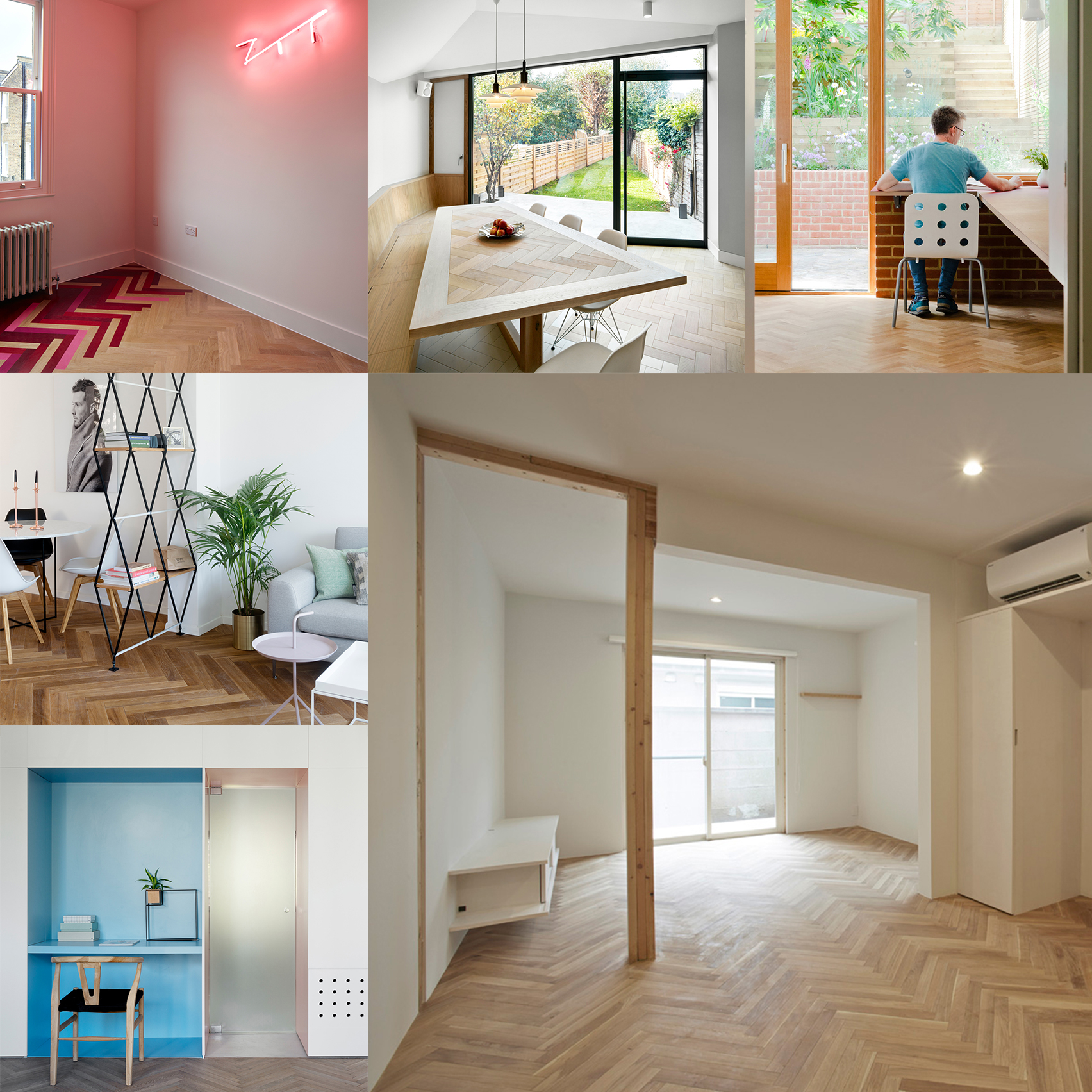
An apartment in Tel Aviv with herringbone flooring went viral on our Pinterest channel this week, so we’ve chosen to count down our top 10 most-pinned homes with parquet detailing (+ slideshow). (more…)

