Veiled in Brilliance: How Reflective Facades Have Changed Modern Architecture


Reflections on glass façade. Elbphilharmonie, Hamburg. Architects: Herzog & de Meuron. Image © Frank Thiel

Reflections on glass façade. Elbphilharmonie, Hamburg. Architects: Herzog & de Meuron. Image © Frank Thiel

Even as modernism promoted the transparency of glass architecture, many within the movement were conscious of the monotony of large glass facades, with even Mies van der Rohe using elements such as his trademark mullions to break up his facades. But in the years since, countless uniform structural glazing skyscrapers have emerged and bored urban citizens. In response to this, unconventional reinterpretations of facades have gained interest.

Accompanied by the belief that light and brilliance could help in creating iconic architecture and a better human world, glass and metal have been innovatively transformed to create crystalline images. As a result, the locus of meaning in architecture has shifted from the internal space-form towards the external surface.

Celebrating the expressive materiality of transparency and reflective imagery for entire building skins emerged during the early 20th century, when Paul Scheerbart and Bruno Taut envisioned a new glass culture made of “colored glass” “sparkling in the sun,” “crystalline shapes of white glass” which make the “jewel-like architecture shimmer.” Mies van der Rohe absorbed this vision when he discarded the rectangular tower in favor of a free-form glass skin in his proposal for the Glass Skyscaper in Berlin in 1921. In a 1968 interview, Mies explained his skepticism regarding the urban monotony of glass mirror effects: “Because I was using glass, I was anxious to avoid dead surface reflecting too much light, so I broke the facades a little in plan so that light could fall on them at different angles: like crystal, like cut crystal.” Norman Foster materialized this glass dream with his Willis Faber & Dumas Headquarters in Ipswich in 1975 and SOM presented it in its tallest manifestation with the Burj Khalifa Tower in Dubai in 2009.


Glass façade of  Elbphilharmonie, Hamburg. Architects: Herzog & de Meuron. Image © Maxim Schulz

Glass façade of Elbphilharmonie, Hamburg. Architects: Herzog & de Meuron. Image © Maxim Schulz

Undoubtedly the glass façade at the Elbphilharmonie in Hamburg by Herzog & de Meuron refers to the visionary glass culture of Scheerbart, and indirectly to the golden shimmering skin of Berlin’s Philharmonic by Hans Scharoun as well. Inwardly and outwardly curved glass elements distort the perception of the city, water and sky. They build a fresh contrast to the uniform plane glass curtains of the International Style. The environment is not appreciated as a clear mirrored picture, but instead goes through a process of modification and reproduction.

Due to the curves of the balconies, the building reflects points or lines of brilliant light streaks. With a blue or diffuse sky the distinctive curves reflect the light as bright lines, similar to the horizontal lines seen in the designs of the automotive industry. Under direct sunlight, bright glossy points appear and evoke a jewel-like shimmer. Additionally, the vertical and horizontal convex curves of numerous single glass elements reinforce the shiny distorted reflections of the sky. Overall the curved façade with its printed dot screens evokes a vivid and liquid image, which expresses a close link to the water around. Built upon the historic brick warehouse below, and with its abstract choreography of complex distorted light reflections, the Elbphilharmonie operates as a magical eyecatcher.


Façade with curved glass elements at Prada Aoyama, 2003, Tokyo. Architects: Herzog & de Meuron. Image © Yen-Chi Chen

Façade with curved glass elements at Prada Aoyama, 2003, Tokyo. Architects: Herzog & de Meuron. Image © Yen-Chi Chen

The precursor to the Elbphilharmonie, which first showcased Herzog & de Meuron’s desire to transform the mirror effects of modernist glass skyscrapers, was the Prada Epicenter in Tokyo, completed in 2003. The glazing shell consists mainly of rhombus-shaped elements, but selected parts create distinct distorted reflections due to the convex exterior shapes of the glass – comparable to a contact lens resting on the façade.

The intriguing imagery of brilliant reflections on transparent glass facades is fortunately not limited to those outside the building; it also offers interesting views for those inside. However, for closed exhibition or concert halls, the concept of veiling an entire building with brilliant reflective effects has been adapted with other shimmering panels.


Reflections on titanium façade at Guggenheim Museum Bilbao, 1997. Architect: Frank Gehry. Photography: Thomas Mayer. Image © ERCO. www.erco.com

Reflections on titanium façade at Guggenheim Museum Bilbao, 1997. Architect: Frank Gehry. Photography: Thomas Mayer. Image © ERCO. http://www.erco.com

The American architect Frank Gehry transferred this aesthetic of brilliance from glass to metal with the titanium cladding of the Guggenheim Museum Bilbao in 1997. While the connotations range from a ship for the larger form to fish scales regarding the reflective panels, the building as a whole has turned into an urban jewel that kicked off numerous urban redevelopments with its iconic signature. Many an aspiring metropolis assumes that the structural form is the key successful factor in “Bilbao effect.” However, with the sparkling light qualities of the titanium sheets and its changing appearance, Frank Gehry has not only brought a dynamic composition of forms to Bilbao but reinforced his design with a distinctive, dynamic image which varies with every cloud and sunbeam.


Walt Disney Concert Hall, 2003, Los Angeles. Architect: Frank Gehry. Image © Gehry Partners, LLP

Walt Disney Concert Hall, 2003, Los Angeles. Architect: Frank Gehry. Image © Gehry Partners, LLP

Though they are less than half a millimeter thick, the titanium sheets evoke an interesting, almost corrugated- tactile dressing – an association which the New York Times critic Herbert Muschamp connected with Marilyn Monroe: “Frank Gehry’s new Guggenheim Museum is a shimmering, Looney tunes, post-industrial, post-everything burst of American optimism wrapped in titanium (…) The building is the reincarnation of Marilyn Monroe.” With the Walt Disney Concert Hall, opened in 2003, the lustrous gesture subsequently arrived in the glamorous Hollywood scenery.

Later Paul Andreu covered the monumental dome of the National Grand Theatre of China with a shiny titanium skin and heightened the effect with a surrounding reflecting pool to stand out against the nearby ancient red walls of the Forbidden City. But continuous glossy skins do not present the only option for sparkling jewels in the city.


Aluminium discs at Selfridges Birmingham, 2003. Architects: Amanda Levete and Jan Kaplicky (Future Systems). Image © Ken Lee

Aluminium discs at Selfridges Birmingham, 2003. Architects: Amanda Levete and Jan Kaplicky (Future Systems). Image © Ken Lee

The play of elegant veils in fashion and shiny cladding in architecture combined in a Paco Rabanne dress for a British retail temple. Future Systems stylishly covered the Selfridges Birmingham department store, opened in 2003, with a dense mesh of 16,000 anodized aluminium discs. The store was able to avoid attaching any logos to the building due to the fact that the building itself was turned into a sign. Its sensuality immediately spurred the marketing world to utilize the sensational setting for advertisements. The glistening net creates a fascinating feeling for scale: Small discs generate a haptic, human feeling while the overall form offers hardly any clues about the building’s number of stories or size. The diffuse reflections of the façade cladding leads to an abstract transformed image, which is primarily determined by the brightness and colour of the sky and neglects any clear mirror effects of the neighborhood.


Messe Basel - New Hall, 2013, Basel. Architects: Herzog & de Meuron. Image © Hufton + Crow

Messe Basel – New Hall, 2013, Basel. Architects: Herzog & de Meuron. Image © Hufton + Crow

In contrast to the shimmering disc dress at Birmingham, the stretched metal gesture at Messe Basel New Hall by Herzog & de Meuron introduces a linear interpretation of light reflections. The building’s twisting bands of aluminum avoid the well-known monotony of windowless exhibition halls. The homogeneous but stretched aluminum modulates the building in a light way. When oriented towards the sky, the surface gives brightness to the building which is set in stark contrast to the dark perforations and areas where the bands leans toward the ground.


Aluminum sunshades at South Australian Health and Medical Research Institute, Adelaide. Architects: Woods Bagot. "South Australian Health and Medical Research Institute" by Jackstarshaker is licensed under <a href="http://ift.tt/2dW2mgn BY-SA 4.0</a> . Image

Aluminum sunshades at South Australian Health and Medical Research Institute, Adelaide. Architects: Woods Bagot. "South Australian Health and Medical Research Institute" by Jackstarshaker is licensed under <a href="http://ift.tt/2dW2mgn BY-SA 4.0</a> . Image

For an Australian science facility the veil has even fulfilled the task of protecting against the harsh sunlight. The architects Woods Bagot erected an urban icon with enveloping the entire building with aluminum sunshades, each individually computer modeled, for the South Australian Health and Medical Research Institute in Adelaide.

Some forms of sparkling reflective patterns are even able to initiate political discussions and influence the names of buildings. The “Fernsehturm Berlin” is an excellent example of this, with its reflection in the form of a cross emanating from the sphere. Built in 1969, the socialist and atheist party of the German Democratic Republic erected the tower to resemble the Russian satellite Sputnik. Located in the historic center of former East Germany next to a medieval church, the tall tower was intended as a political statement addressing the deconstruction of the old city. But the selection of pyramidal stainless steel panels led to an unintended effect: The reflections of the sun create a clearly visible cross pattern on the sphere. Thereby, the communist regime had accidentally installed a highly visible Christian symbol in an ostensibly atheist environment. Hence, the people in Berlin nicknamed the lighting effect the “Pope’s revenge.”


Glass façade of  Elbphilharmonie, Hamburg. Architects: Herzog & de Meuron. Image © Maxim Schulz

Glass façade of Elbphilharmonie, Hamburg. Architects: Herzog & de Meuron. Image © Maxim Schulz

These strategies with shimmering veils have significantly increased the relevance of the surface as a carrier for the meaning of a building. The International Style has come to a point in façade design where the uniformity of mirroring cubes has begun to erode a sense of human scale. Consequently, concave and convex building forms, reflective curved façade elements, or a mixture of the two, have opened another set of options, generating more multifaceted images for the city. Furthermore, the interest in complex reflection patterns has swept aside brutalism with its raw concrete dualism of dark voids and light surfaces. These shimmering facades have also superseded Kahn’s monumentality, where the material’s purpose is primarily to cast a shadow. Neither shadows nor simple mirror effects seem to evoke enough attraction for our spectacle-oriented society today. Therefore, new landmarks will continue to reach for innovative combinations of material and form to create brilliant veils and a bright urban future.

Light matters, a monthly column on light and space, is written by Thomas Schielke. Based in Germany, he is fascinated by architectural lighting and works as an editor for the lighting company ERCO. He has published numerous articles and co-authored the books “Light Perspectives” and “SuperLux”. For more information check www.erco.com, www.arclighting.de or follow him @arcspaces

http://ift.tt/2erx6bO

Oh!Porto Apartments / Nuno de Melo e Sousa + Hugo Ferreira Arquitectos


© José Campos

© José Campos


© José Campos


© José Campos


© José Campos


© José Campos


© José Campos

© José Campos

A building on a privileged site in dialogue with the emblematic D.Luís I bridge, the river, facing the houses and Porto´s Ribeira, embedded within a unique landscape that leads us where the Douro crosses the horizon. Building on top of this area protected under the flag of Unesco with its charming historical character, was a delicate process – a deep reflection made of very strong restrictions.


Site Plan

Site Plan

The existing building, buffeted by abandonment and full of add-ons, would have to adapt to a new type of use: apartments for local tourism. On four floors, measuring 13.80m by 7.20m, it was necessary to organise five independent studios for flexible use, a penthouse, a reception with a common kitchen, back office and technical areas.


© José Campos

© José Campos

Given the constraints of the building´s weakness, the remaining thick perimeter granite walls, and new programmatic use, the design concept serves three principal structures:

1- a longitudinal concrete axis serving as backbone to support the existing structure and to solve all the technical necessities: bathrooms, kitchens, vertical ducts, lighting and the elevator. Applying this layout, the studios became open spaces and the longitudinal view: the courtyard versus the Oporto, the Douro river, the bridges, and the ocean.


Axonometric

Axonometric

2 – a staircase, on the concrete spine alignment, connects all floors and different exterior areas.


© José Campos

© José Campos

3 – a new volume, assuming as an “add-on”, with the typical black slate outside skin- two bedroom apartment with a large living room facing the best panoramic views towards Oporto.


© José Campos

© José Campos

The proposal is expressed along a longitudinal section, between the margins of reconstruction, the new structure and the backyard areas, from the street level to the top. These relations enhance the inner experience of the building, framing the construction site challenged by conditions concerning space and light, became the design themes, articulating different levels of privacy within the excavated granite, under tension with the sculptural stairs, the back concrete hill and the D.Luís I bridge.


© José Campos

© José Campos

From the inside, the building, reveals the structural and conceptual narrative. The concrete slabs and walls, show the spine which holds the thick granite walls, with the existing windows as framed views. And the penthouse, as it is a penthouse, is white!


© José Campos

© José Campos

http://ift.tt/2dvPZX6

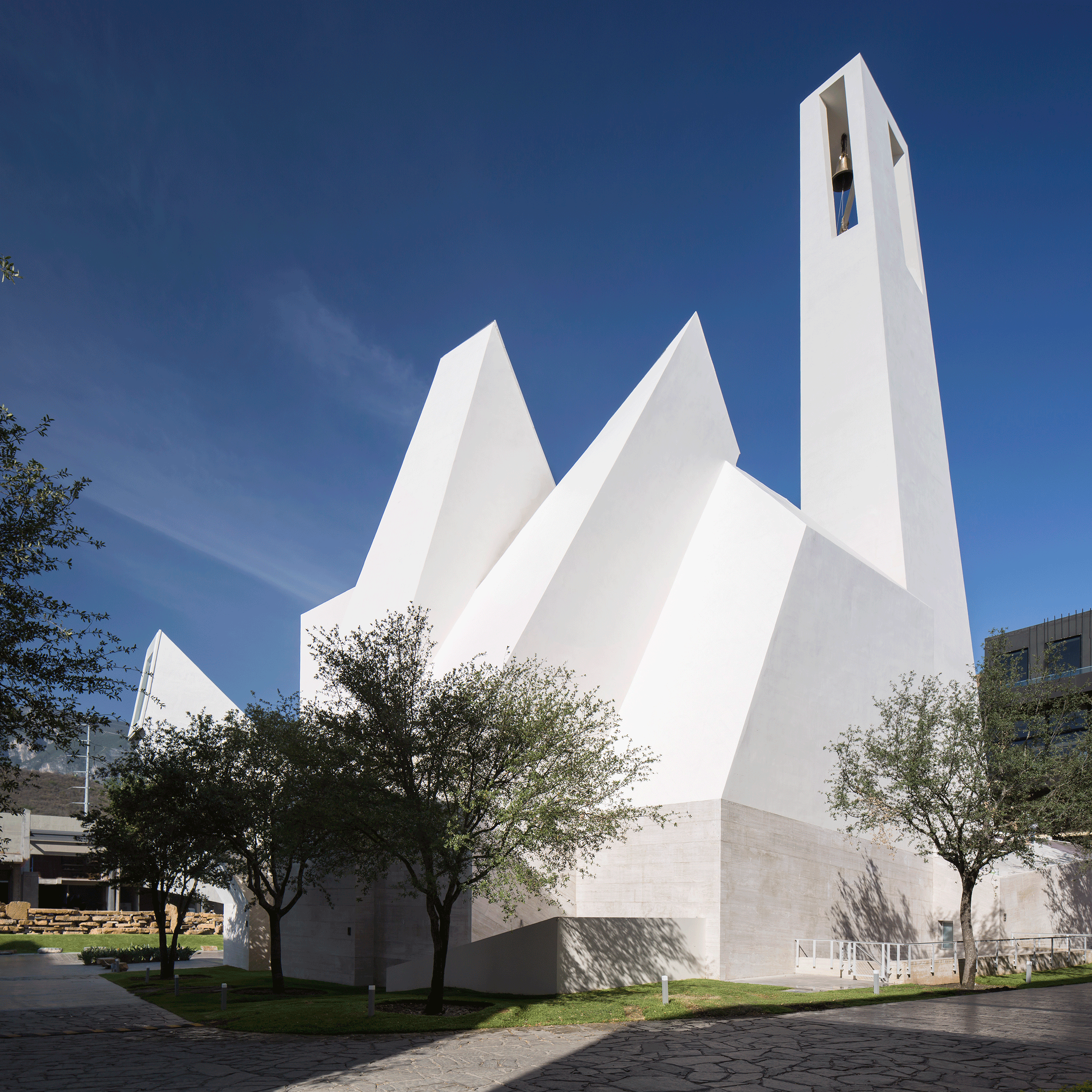
Crystalline church by Moneo Brock sits against a mountainous backdrop in Monterrey

Photography is by Jorge Taboada.

Traditional elements like a bell tower are reinterpreted as pointed protrusions in this sculptural church in Monterrey, designed by architecture studio Moneo Brock. Read more

http://ift.tt/2e5nSD8

Horseshoe Bend – Arizona – USA (by Henrik Johansson) 

Horseshoe Bend – Arizona – USA (by Henrik Johansson

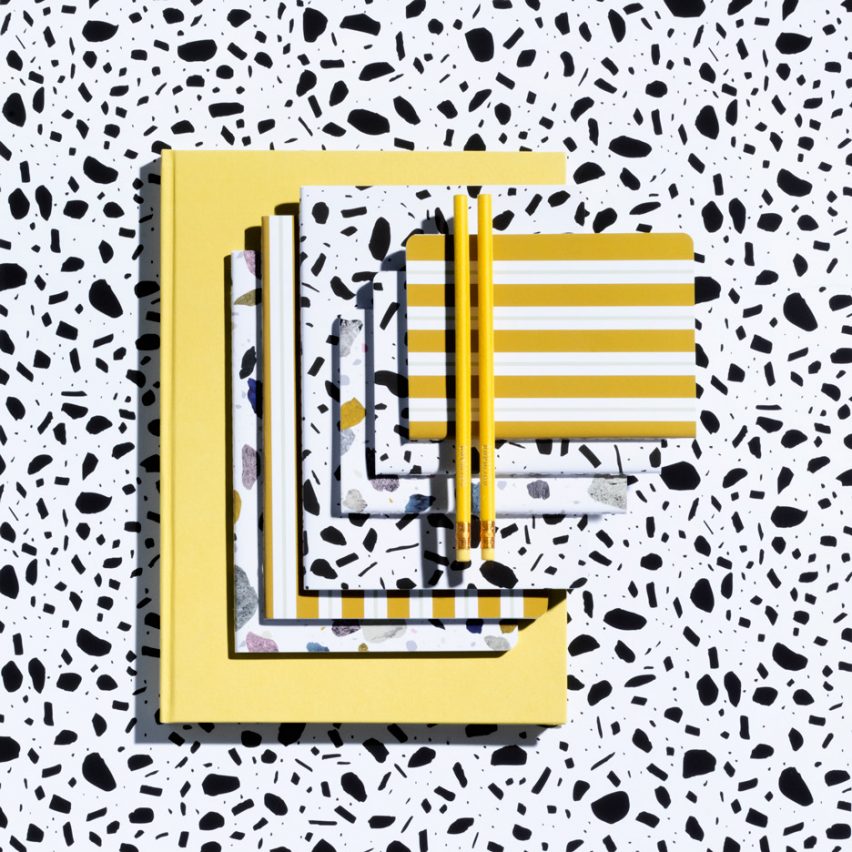
Five design brands dominating the accessories market

Accessories round-up

Design brands are looking for new ways to infiltrate each area of the home and are creating products that cover all the bases. From beautiful stationery to hotel shampoos, we’ve rounded up five of the most successful examples. Read more

http://ift.tt/2dLpgLe

💙 The beauty of the butterfly on 500px by Along Even…

💙 The beauty of the butterfly on 500px by Along Even ☀  Canon… http://ift.tt/1TsTCxN

http://ift.tt/2dLsoa5

9 Practical Ways to Become More Productive Today

Do you want to become more productive? There are many methods and tools you can use for that. Some of them, however, are pretty complicated and take time to apply.

But what if you want to become more productive today, not tomorrow or next week? Then you need something that’s simple and practicalsomething that you can apply right away.

Here are nine practical ways to become more productive today.

1. Exercise

Here is a fact: your productivity depends more on your energy management than time management.

Time management gets a lot of attention, but energy management is actually more important. Why? Because if your energy level is high, then you can get many things done in a small amount of time.

Have you ever felt like you don’t make enough progress despite spending significant time on a task? A likely reason for that is a low energy level, which makes it difficult for you to focus.

A good way to increase your energy level is to exercise in the morning. Even a 15-minute exercise will do. I didn’t have this habit years ago, so I can attest to the difference it makes. It gives me the energy to go through the day with focus and enthusiasm.

2. Prioritize

You might want to accomplish a lot in your day, but the fact is that your resources are limited. So you need to prioritize. You need to choose the few things that can make the most difference.

Ask yourself: what are the few things that – if I accomplish them – will make me feel productive today? Do them, and then delegate or eliminate the rest.

As Rick Warren once said, “You should say to no to good opportunities so that you can say yes to the great ones.”

3. Allocate an Uninterrupted Block of Time

One important factor for productivity is flow, a state where you get absorbed in the task at hand and lose your sense of time. But flow can only happen if you have a large amount of uninterrupted time.

So make sure that you have such a time. Allocate uninterrupted blocks of time for serious work.

4. Turn Off Notifications

To prevent yourself from getting interrupted, turn off notifications before your work sessions. This includes phone notifications, email notifications, etc.

In my case, I turn off all notifications from instant messaging apps. I check them only when I’m not working. This helps me focus on my tasks.

5. Use a Timer

This might not work for everyone, but my favorite way to help myself focus is using a timer.

The rule is this: when the timer runs, I must work on the task at hand. I may not do other things. Whenever I switch to something else (such as checking emails), I must stop the timer first. This requirement makes me aware of the distraction, and I can usually get back to the task quickly.

An added benefit is that I can measure my productivity. I can see how much productive time I have in a day by looking at the timer.

6. Use a White Noise App

If you are in an environment that has distracting sounds, it’s helpful to use a white noise app. It blocks out the noise in your environment. It has ambient sounds that can help you focus, such as the sounds of rain or sea.

Using such an app can also give you the feeling of being in a new environment. You can feel like you’re in a jungle, boat, or some other place. This can help you feel fresh.

7. Use a Checklist

For routine tasks that you do again and again, it’s a good idea to use a checklist.

Using a checklist has many benefits. For instance, you don’t need to remember all the steps to finish a task so your mind is free for creative thinking.

8. Do the Next Simple Thing

One thing that can prevent you from being productive is feeling overwhelmed. If that happens to you, you might become paralyzed and end up taking no action at all.

To avoid that, you should focus on the next simple thing. Ask yourself: what is the next simple thing I can do to move this project forward? Do it and then ask the question again. With this habit of persistent starting, you will eventually finish the big project.

Remember, the way to eat an elephant is to eat it one bite at a time.

9. Write Down Your Ideas

You may have a lot of ideas during the day. But if you don’t write them down, you might lose them forever. That’s why it’s important that you write down your ideas. Writing down your ideas can help you become more productive.

***

These tips are simple, but they can increase your productivity. Choose the ones that work for you and apply them. I’m sure you will be happy with the results.

#####

Get smarter in less time: try Blinkist

http://ift.tt/2e6AlkJ

8 Tips for Coping with Pet Loss

Coping with pet loss is not easy, particularly if you’ve spent a long time caring for your pet. Whether it’s due to aging, illness or an accident, it can take time before you get fully healed.

If you are struggling with this, here are some helpful tips to help you out.

1. Allow yourself to grieve

grief-of-losing-a-pet

Your pet can be your beloved companion, a friend or a family member. No matter how you viewed your pet, it was still special to you.

There’s nothing wrong with expressing your grief because of your loss. There’s no right way to express it, too.

You can cry until you are done or reach out to someone if you need to. Talk to someone who understands your situation. You can call in sick if you really can’t push yourself to work.

You can ask your vet if he knows any pet loss support group in your area which he can refer you to. Joining one can help you go through the process of grieving better.

2. Do NOT allow people who don’t understand to belittle your feelings

If you have people in your life who are not “pet people”, it is possible that you’ll encounter negative comments from them. As much as possible, stay away from them.

If you still hear them give their unsolicited advice, try to respond without rudeness. Walk away from them and just let it go. You have the right to refuse socializing with this type of people.

Personally, I have found out that some people who don’t understand the importance of pets to others actually think they are being helpful by acting this way. Since you won’t be able to change their minds, it’s best to just avoid them instead of spending a lot of time explaining yourself.

3. Memorialize your pet

pet-memorial

Coping with pet loss doesn’t mean that you have to forget all about them. In fact, remembering them can help make things easier for you.

You can go through your pet’s pictures and pick out your favorites. Write down captions and include the dates and locations where they were taken.

Pick out the best pictures and have them made into a portrait or painting. If you can’t choose the best ones, put them together in an album.

Aside from keeping an album, you can also try creating an online account for them. This way, you’ll be able to share your memories of your pet with your friends and family members. If you aren’t comfortable in letting other people see the pictures, you can edit your virtual album’s privacy and only share its access to your close friends.

4. Enjoy the memories of your pet

As you go through its pictures and memorabilia, you can share stories, reminisce and just take your time. If you have children or other grieving family members, it can be very therapeutic to do this as a group activity. It’s a good idea to have each of them share their own fond memories of your pet.

5. Evaluate carefully what you need for closure

If your town offers a pet cemetery, you may want a burial or an actual funeral service. Your vet can arrange cremation and discuss this option with you.

Take note of your financial capability as well as what’s acceptable to your heart. You do not want to soothe grief by overspending.

For some people, coping with pet loss can be as simple as having a box containing their pets’ collars and tags.

6. Recognize that you can still have moments of intense grief after

Coping with pet loss doesn’t end as soon you lay your pet down to rest. In fact, you can still feel the pain even after.

When you come home and there is no wagging tail to greet you at the door, you’ll remember your loss. The same thing can happen when you try to get its food bowl out only to realize that your beloved pet is no longer with you.

These can be hard moments so make sure you’re prepared to deal with them as they come. You can try reaching out to your friends during these tough times.

7. Understand where your guilt and anger are coming from

sick-pet

If you lost your pet due to an accident, you may feel shocked or even be in denial for several days. You can even feel guilty and angry at yourself.

In case you are torn in this situation, it’s a good idea if you can talk to your vet. Reach out to people who can understand your feelings. It can also help if you can reach out to support groups who can educate you on how to prevent such an accident from happening again.

8. Take your time before getting another pet

Be sure you have worked through your grief and emotions before you open your home to a new pet. Make sure that you have completely recovered and that you’re ready to care for another one.

Allowing yourself to grieve and learn can help you become a better person for your new pet.

See Also: How To Get Back a Normal Life After a Loss 

Although your pets can pass away, it doesn’t mean that they can’t uplift you anymore. Memories never die. Use your pet’s memories as a source of comfort and joy to make coping with pet loss a lot easier.


The post 8 Tips for Coping with Pet Loss appeared first on Dumb Little Man.

http://ift.tt/2dISW9C

MAMESTUDIO Designs a Home in Tones of White and Grey

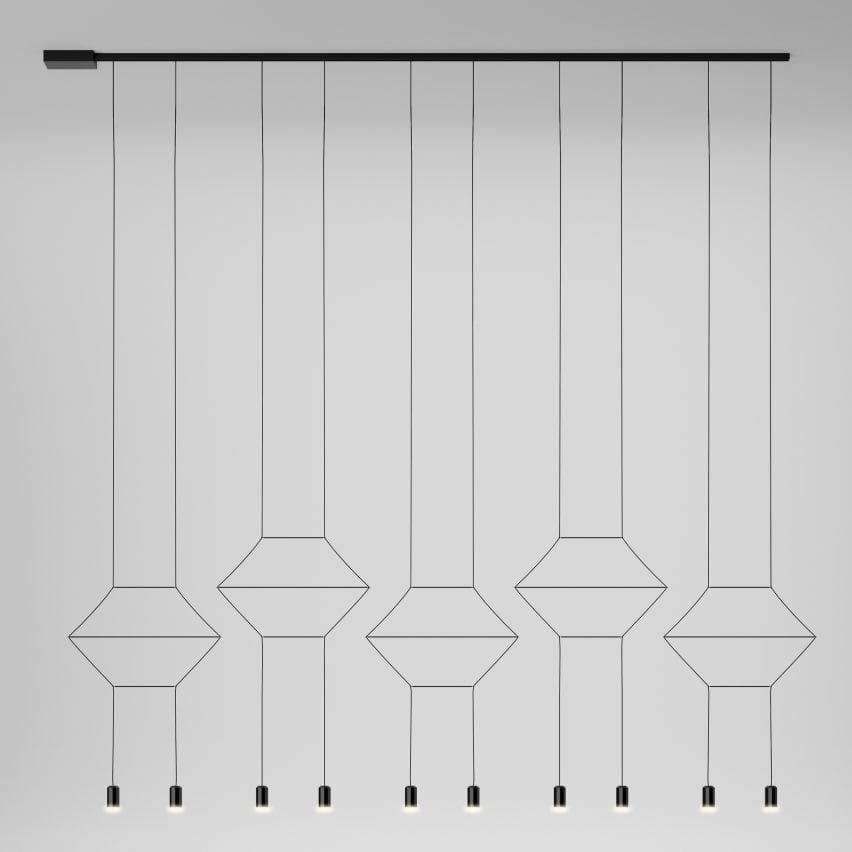
Vibia’s customisable Crea lighting collection is made for designers

wireflow-chandelier-arik-levy-vibia-crea-collections-lighting-design_dezeen_sq

Dezeen promotion: the Crea collection by Spanish lighting brand Vibia is made up of pendant, ceiling and wall lights that can be customised by designers to suit different spaces. Read more

http://ift.tt/2ef1Opi