MVRDV + Zhubo Studio Win Competition for New Sports and Cultural Center in Shenzhen


Located in a residential area which stretches from the Nanshan mountain park to the Yangtai mountain park, the experience centre connects nature, sports and culture to serving wide-ranging age groups and interests.. Image © MVRDV

Located in a residential area which stretches from the Nanshan mountain park to the Yangtai mountain park, the experience centre connects nature, sports and culture to serving wide-ranging age groups and interests.. Image © MVRDV

MVRDV and Zhubo Architecture Design have won a competition to design the Xili Sports and Cultural Centre in Shenzhen, China. The new experience center will consist of four distinct volumes housing a theater, a basketball and badminton arena, a multi-function arena and a swimming pool, as it seeks to “transform the lives of the different generations of people living nearby, through offering a more humanistic model for sports and culture.”


The Xili Sports and Cultural centre is set to become the social and well-being focal point of Shenzhen’s Dasha Green corridor.. Image © MVRDV


The special elevated running track is the signature element as it connects, weaving in and out of all volumes.. Image © MVRDV


The large-scale sports stadium has a social aspect; connecting it with the community through its offering of a wide range of sports and cultural activities in all four volumes.. Image © MVRDV


© MVRDV


The special elevated running track is the signature element as it connects, weaving in and out of all volumes.. Image © MVRDV

The special elevated running track is the signature element as it connects, weaving in and out of all volumes.. Image © MVRDV

As the fastest developing urban region in China, Shenzhen is currently undergoing a transformation from a production-based to a knowledge-driven economy. The resulting boom has already created high-density usage, and stadium-sized sports facilities for entertainment. But there remains a lack of recreational facilities for typical citizens.

“There is now a need for a more human-centred approach; the challenge was to go from bigness to compression through understanding urbanism,” explain the architects. “MVRDV’s design for the densification and development of a sports and cultural centre responds to the growing demand for fitness sports venues, with the intention of introducing a more fun, human, social and sustainable model that departs from populist Olympic-sized sports arenas.”


The Xili Sports and Cultural centre is set to become the social and well-being focal point of Shenzhen’s Dasha Green corridor.. Image © MVRDV

The Xili Sports and Cultural centre is set to become the social and well-being focal point of Shenzhen’s Dasha Green corridor.. Image © MVRDV

The complex will be located in a residential area along Shenzhen’s Dasha Green Corridor, which stretches between the Nanshan and Yangtai mountain parks. Program elements have been arranged to allow for flexible zones, where different sports and social activities can occur, blurring the boundaries between sports and culture to strengthen community interaction.

“We wanted to combine a large-scale sports stadium with a social aspect connecting it with the community. This was achieved by arranging different volumes on the site around a new diagonal (green) bridge linking the Chaguang metro station in the south, with the Tanglan mountains in the north, making this centre a stage for different users – nature, sports and culture”, says MVRDV founding partner, Jacob van Rijs.


The large-scale sports stadium has a social aspect; connecting it with the community through its offering of a wide range of sports and cultural activities in all four volumes.. Image © MVRDV

The large-scale sports stadium has a social aspect; connecting it with the community through its offering of a wide range of sports and cultural activities in all four volumes.. Image © MVRDV

The center’s total 105,000 square meters (1,130,000 square feet) includes a 20,000 square meter (215,000 square foot) theatre-amphitheatre, 15,000 square meter (161,000 square foot) Basketball- Badminton arena, 10,000 square meter (108,000 square foot) multifunctional arena and 6,000 square meter (65,000 square foot) swimming pool. The signature element of the complex is a special elevated running track that connects and weaves between the volumes, inviting visitors to “go for an exciting run around the complex, relax and socialise both inside and outside.”


© MVRDV

© MVRDV

MVRDV designed the project in collaboration with co-architects Zhubo Architecture Design, who are well-revered for their influential works in Shenzhen and throughout China, alongside adopting a humanistic approach to the effect of the design and construction process on health, well-being and fitness.

Xili Sports and Cultural Centre will be MVRDV’s first project under construction in Shenzhen. Construction is slated to begin in 2017.

  • Architects: MVRDV, Zhubo Design Zstudio
  • Location: Xili, Nanshan, Shenzhen, Guangdong, China
  • Mvrdv Team: Winy Maas, Jacob van Rijs, Nathalie de Vries, Wenchian Shi, Gustavo van Staveren, Tiantian Zhang, Daehee Suk, Duong Vu Hong, Patryk Slusarski, Xiaoting Chen, Mikel Vazquez, Bowen Zhu
  • Zhubo Team: Guochuan Feng, Linlong Xiong, Wenbing He, Yixiang Zhang, Zhuo Dai, Xinyan Hu
  • Client: Shenzhen Nanshan Government
  • Program: Urbanism/Mixed use
  • Area: 105000.0 sqm
  • Photographs: MVRDV

http://ift.tt/2d7c90w

How To Get Your First Customers: 4 Strategies That Actually Work

If you are new to your niche and relatively unknown to your market, knowing how to get your first customers can be a tough task. A lot of beginning businesses actually struggle with lead generation and acquiring customers.

In this post, I’ll give you the exact 4 strategies that I used to build up a content marketing company. I still use all of them today. Here’s the video version:

1. Know who you’re targeting

There are plenty of resources online when it comes to business ideas. You can just do a quick search and you’ll get thousands of ideas.

The most common and the easiest ones to start with are the following:

  • Web Design
  • App Development
  • Content Writing
  • Social Media
  • SEO or Pay Per Click Management
  • Whatever skills you have that can be monetized

Once you have a specific industry in mind, your next step is to determine your target customers. Try to be specific as possible when figuring out your market. The more specific you are, the easier and faster your search will be.

Try to look through job titles, company sizes as well as types to know your target group. You can also use their age, gender and habits as criteria.

See Also: 7 Ways to Get Leads For Your Business 

2. Start with your friends or co-workers

customer-friends

My first customers were actually my friends and people I’ve previously worked for. Since they knew me personally, it was easy for them to give me a chance. They were also a convenient choice for me since I already knew their contact numbers and types of businesses.

If you’re still learning how to get your first customers, you can start with this approach. It’ll be easier for you to reach out to them with quick emails or by inviting them out for lunch.

3. Ask your friends for referrals

Ask any professional colleagues or co-workers if they know anyone that matches your criteria. To make it easy for them to recommend, try to be as specific as possible.

For each person you reach out to, you can ask for at least 15 recommendations. This should be enough to help you land your first few clients.

See Also: 4 Tricks To Turn Your Buyers Into Loyal Customers 

4. Reach out to strangers

cold-email

Use this approach only when you’ve used the other three. You can start with LinkedIn and AngelList to create a list of companies that match your criteria.

Once you are able to find these companies, work on identifying who their founders are as well as their key people. If contact credentials do not show up, you can use a free tool called EmailHunter to generate the emails of all the people working there.

After acquiring their email, you can start reaching out to them using a cold email. Make sure to personalize your emails as much as possible.

Knowing how to get your first customer can be tricky, particularly if you’re not sure how to approach them. Since you are reaching out to strangers, it’ll be helpful if you can establish an immediate connection with them.


The post How To Get Your First Customers: 4 Strategies That Actually Work appeared first on Dumb Little Man.

http://ift.tt/2e826ht

The Form of Form (4th Lisbon Architecture Triennale) / Johnston Marklee, Nuno Brandão Costa & Office KGDVS


The making of The Form of Form installation. Image © Tiago Casanova

The making of The Form of Form installation. Image © Tiago Casanova


The Form of Form, Johnston Marklee, Office KGDVS, Nuno Brandão Costa, model. Image © Arménio Teixeira


The making of The Form of Form installation. Image © Tiago Casanova


The making of The Form of Form installation. Image © Tiago Casanova


Reference: Marco Cadioli, Necessary Lines #03, 2014, © marcocadioli.com. Image Courtesy of Lisbon Architecture Triennale


The Form of Form, Johnston Marklee, Office KGDVS, Nuno Brandão Costa, model. Image © Arménio Teixeira

The Form of Form, Johnston Marklee, Office KGDVS, Nuno Brandão Costa, model. Image © Arménio Teixeira

Plan, Sections: The Form of Form, Johnston Marklee, Office KGDVS, Nuno Brandão Costa, 2016. Image Courtesy of Lisbon Architecture Triennale

Plan, Sections: The Form of Form, Johnston Marklee, Office KGDVS, Nuno Brandão Costa, 2016. Image Courtesy of Lisbon Architecture Triennale

From the architects and curatorial team. One of architecture’s fundamental legacies is its own form. Not only is history built from its visual universe, but form is also a common language that brings together architects from all over the world in a collective conversation. In this exhibition, which proceeds from a potentially infinite repository, three architects—Johnston Marklee, Nuno Brandão Costa, and Office KGDVS—build a dialogue that challenges notions of authorship and the limits of form.


The making of The Form of Form installation. Image © Tiago Casanova

The making of The Form of Form installation. Image © Tiago Casanova

Mariabruna Fabrizi and Fosco Lucarelli were invited to reflect upon a selection of examples from their platform, Socks Studio. They highlight the permanence of form and its capacity to condense a set of values into any visible thing. The Socks format has evolved over the years from an online magazine to become a platform for speculation and discussion that also draws on Microcities’ own architectural projects.

Functioning as a “conversation,” the narrative of the exhibition has been developed around a number of spaces that are inspired by examples of architectural designs by the architects. Each of the spaces is designed to house content selected from the extensive Socks database.


The making of The Form of Form installation. Image © Tiago Casanova

The making of The Form of Form installation. Image © Tiago Casanova

The language of architecture is explored through a sample of construction drawings, landscape interventions, urban plans, artistic investigation, and other elements. Originating from different time periods and regions of the world, the content highlights what remains constant and what changes, as well as identifying analogies and affinities in the creation of the built environment. Organized along twelve interlinked spaces, with each space incorporating images related to a core element, the exhibition defines continuous seam of works that are directly inter-related, be it through affinity or opposition.


Reference: Map of the Neolithic settlement of «atalhˆy¸k (Turkey). Image Courtesy of Lisbon Architecture Triennale

Reference: Map of the Neolithic settlement of «atalhˆy¸k (Turkey). Image Courtesy of Lisbon Architecture Triennale

Curated by Diogo Seixas Lopes, The Form of Form exhibition is also a process in itself. The ultimate aim is for it to become a “meeting space” that can demonstrate the meaning of form in architectural design – in the past, present and future.

http://ift.tt/2d7bAE2

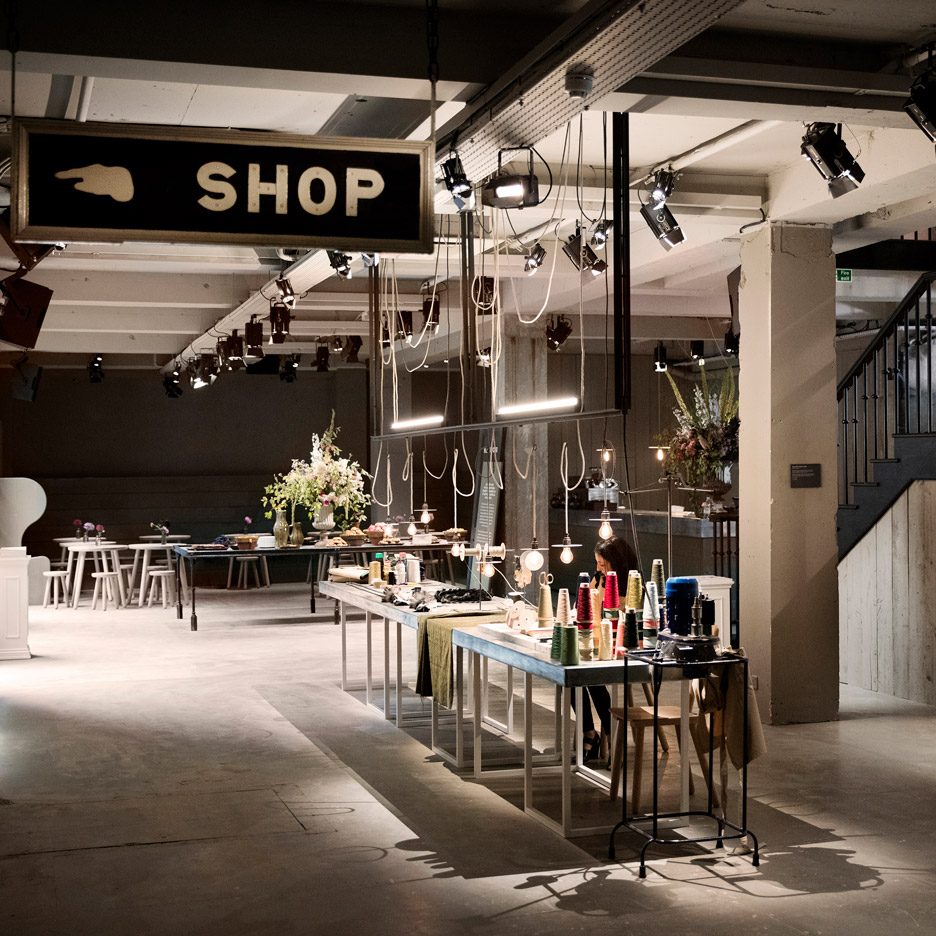
Burberry marries fashion with craft at Makers House


London Design Festival 2016: British fashion brand Burberry has teamed up with The New Craftsmen to showcase the work of designers and craftspeople in an old Soho warehouse (+ slideshow). (more…)

http://ift.tt/2dFDvBA

Dezeen has reached 500k Twitter followers!

jack-bedford-illustration-dezeen-sq

We’ve reached 500,000 followers on Twitter, which happens to be the first social-media platform we ever joined! To celebrate, London-based designer Jack Bedford has created this illustration for us.

If you don’t already, follow us here for all the latest breaking news, projects and reader comments from Dezeen.

http://ift.tt/2dFAnp3

@signordal Nova Scotia Canada

via Instagram http://ift.tt/2dRpe2G

@signordal Milbury Lake Nova Scotia Canada

via Instagram http://ift.tt/2dqqMNr

5 Things Highly Intuitive People Do Differently (and You Can Too)

We are all intuitive!

Let that sink in.

Every person has intuitive senses, thoughts, feelings and even premonitions.  Our intuition is a combination of senses that serve to positively guide us for our highest good.  Some people have a natural gift with being more sensitive and perceptive with their intuition and energy, but anyone can become highly intuitive with practice and faith.  It is something that can be more and more developed over time.

highly_intuitive2The more intuitive you become, the more peaceful your life will be.  Intuitive senses can help you make positive choices and decisions much more easily, they can help you avoid stress, avoid danger, and ultimately make your life easier and less complicated.  Being highly intuitive fosters self-care and self-reliance along with compassion and kindness.  There is truly no down side to developing your intuition and learning to trust your instincts unconditionally.

People who are naturally highly intuitive operate in a different way; they tend to lead with positivity, trust and faith instead of fear and doubt.  Highly intuitive people generally have a more developed sense of self, which supports the self-trust,needed in following your intuition.  Highly intuitive people are also faithful people; they have a sense of and belief in that which cannot be seen or traditionally proven (the metaphysical, spiritual or super natural); and they are not afraid of it.

If you have an interest in becoming more aligned with your intuition, and creating more peace in your life, there are some habits or practices you can cultivate to support those desires.  For highly intuitive people, these things might come more naturally; but truly anyone can foster them.  These practices support our highest good and will have benefits far beyond improving your intuition; they will generally improve all aspects of your life.

Here are 5 things highly intuitive people do differently (and you can too):

1.  Self-trust

Highly Intuitive people trust themselves.  This trust is not based on a complete absence of doubt, it’s comes from knowing that our instincts are based on more than what our minds can fathom.  Our intuitive instincts are based on a combination of energy sensitivity, our higher-self knowledge and our experiences.  Without trust (and faith), the intuitive instincts shut down and we tend to make fear-based decisions.  The best choices in our lives always stem from our intuition.  Developing unconditional trust in yourself is vital to increasing your intuition to higher levels.  Start by becoming more aware of how you question your judgment and discernment on a daily basis.  If you seek the counsel of several different people when making decisions, that is a sign your self-trust is lacking.  Instead, go within and use techniques like meditation to help you become more comfortable with your own counsel.  When in doubt, ask for a sign that helps you feel more confident about the intuitive feelings you are having (guardian angels in particular are great at giving us helpful signs).

2. Understand Energy

Intuitive instincts are a reaction to energy.  People who are energy sensitive tend to have a more natural and stronger connection to these instincts, but they can be heightened even if you aren’t highly energy sensitive.  Understanding that everything is energy is important, because that is the subtle way our intuition communicates to us through our senses and feelings.  Lower vibrating energy, for instance, can result in a sense or feeling of being uncomfortable.  For example, when we are being lied to (lying is very low vibrating energy), we can usually sense it in some way; I feel discomfort in my Solar Plexus chakra or stomach area.  This is a reaction to the energy, it is our intuition communicating to help guide us.  Learning about your chakras, which are energy points in our bodies, is a great start to understanding more about energy and how our bodies react to it.

3. Accept the Unexplained

Our intuition is a guidance system, not an explanation system.  There will absolutely be times you cannot explain your gut feelings about a person, situation or decision.  Highly intuitive people are just fine with not knowing every reason for their psychic feelings.  In order to truly benefit from our intuitive instincts, we have to accept that some things are beyond explanation, or maybe just not for us to know at the present moment.  Getting comfortable with the unexplained opens you up to a more unlimited mindset and aligns you with the flowing, positive energy of abundance.  This is the habit of manifesting miracles; having this kind of faith will benefit your life in so many ways.

4. Follow Intuitive Guidance

Highly intuitive people listen to and follow their intuition on a consistent basis.  This is born of self-trust, but it is so because the times we have gone against our instincts have proven to lead us to unpleasant circumstances.  Following the path you know is right for you takes a lot of self-confidence, especially if it is not the popular opinion.  Strengthening your Solar Plexus chakra can help increase your confidence and support you in following your intuition more and more.  Our intuition is guiding with no other agenda than that which is for our highest and best good.  It brings us peace because we avoid stress when we listen to our true feelings, and in turn this makes our planet more peaceful (one person at a time).

5. Avoid Toxic Energy

Highly intuitive people are more sensitive to energy, they can feel it more.  Exposure to negative energy can literally drain or fatigue them or even make them sick.  The more intuitive your become, the less tolerant you become to negative energy; this is due to a heightened awareness to energy that creates more sensitivity.  Toxic energy simply doesn’t feel good and that is because of its lower vibration.  Negative behaviors, like violence or unkindness, ignite your intuition to warn you that something is not right.  Learning to avoid toxic energy heightens your intuition even more because it allows you to more easily maintain a higher vibration; which is necessary for these senses.  It also

The post 5 Things Highly Intuitive People Do Differently (and You Can Too) appeared first on Change your thoughts.

http://ift.tt/2dqlO3m

Jonk’s Photographs Depict the Abandonment and Beauty of Yugoslavian Monuments


© Jonk

© Jonk

French photographer Jonk drove over 5,000 kilometers through southeast Europe. His subject matter? Yugoslavian monuments, or “spomenik” in Serbian.

Built in the 1960s and 70s under former president Josep Broz Tito, these monuments commemorate the communist resistance during the German occupation. While their sculptors and architects vary (Vojin Bakic, Jordan and Iskra Grabul among others), all of the monuments memorialize WWII battle sites or former concentration camps. Although the monuments attracted a high rate of visitors in the 1980s, many of them have been abandoned or poorly preserved after Yugoslavia’s split. Jonk’s photographs illuminate both the decay and beauty of these sculptures. 


© Jonk


© Jonk


© Jonk


© Jonk


© Jonk

© Jonk

© Jonk

© Jonk

© Jonk

© Jonk

© Jonk

© Jonk

© Jonk

© Jonk

© Jonk

© Jonk

© Jonk

© Jonk

© Jonk

© Jonk

© Jonk

© Jonk

© Jonk

© Jonk

© Jonk

© Jonk

© Jonk

© Jonk

News Via: Jonk

http://ift.tt/2dOajEh

Hotel del Coronado – Coronado – California – USA (by Alan…

Hotel del Coronado – Coronado – California – USA (by Alan English CPA