Cooperative Housing Scheme / Mark Fairhurst Architects


© Morely von Sternberg

© Morely von Sternberg
  • Planning Design: Peter Barber Architects
  • Client/Developer: On the Rise Housing Co-operative
  • Contractor/Developer: Kuropatwa Ltd.
  • Structural Engineer: Hall Davis Consulting Engineers
  • M&E Engineers: Mandick Waring Consulting Engineers
  • Cdm Coordinator: Andrew Worsley
  • Party Wall Surveyor: GKR Associates
  • Acoustic Consultants: KP Acoustics
  • Energy Consultants: Mandick Waring Consulting Engineers
  • Landscape Architect: Buckley Design Associates

© Morely von Sternberg

© Morely von Sternberg

From the architect. Mark Fairhurst Architects were appointed in 2014 by Kuropatwa Ltd. the developer/ contractor for the technical design of the 16 residential apartments at Hafer Road, we were challenged to deliver what was a relatively complex concept design by Peter Barber Architects.


© Morely von Sternberg

© Morely von Sternberg

Located in the London Borough of Wandsworth close to Clapham Common and Lavender Hill, 4-8 Hafer Road is a cooperative housing development replacing 8 existing flats on a former bomb damaged site with 4 maisonettes and a further 12 residential units.


© Morely von Sternberg

© Morely von Sternberg

A new basement provides accommodation for maisonettes naturally lit via two external courtyards to the rear and a continuous light well to the front spanned by entrance bridges to the maisonettes and communal entrances, two stair cores giving access to 8 flats above. Flats are arranged with dual aspects with a combination of external terraces, projecting balconies and recessed terraces at roof level surmounted by a biodiverse brown roof with PV cells for renewable energy.


Section

Section

We developed the detailed design to ensure the successful realization of the scheme and to incorporate the different design requirements of the end users, more challenging than a conventional developer led scheme. Various design enhancements were made to the glazing, internal layouts and finishes during the technical design stage.


© Morely von Sternberg

© Morely von Sternberg

The building was constructed in in-situ reinforced concrete frame with light gauge galvanised steel structural framing system for the external brick cavity wall support. This allows substantial thermal insulation and flexibility in opening positions for various window types and concealing rainwater down pipes within the external wall construction so as not to disrupt the neatness of the façade and internal space.


© Morely von Sternberg

© Morely von Sternberg

The residents were keen to increase views and natural daylight to the rooms surrounding the courtyard. External basement staircases, originally conceived as part of the bespoke fire strategy, were omitted and lobbies introduced at ground floor along with glazed screens to the living spaces.


© Morely von Sternberg

© Morely von Sternberg

The original courtyard glazing, designed as a matrix of smaller composite framed window panels, were replaced with a structural glazed curtain walling system allowing unobtrusive floor to ceiling glass complimented with full height sliding doors with glazed balustrades; the opening up of the courtyard allowing one owner to install a green wall with water feature.


© Morely von Sternberg

© Morely von Sternberg

Larger glazed panels were introduced to the rear gardens along with bi-parting sliding doors. A similar approach was taken to the design of the oriel windows with the opening sash relocated to the side panels to create a single sheet of glazing creating the ‘gold fish bowl’ effect.


© Morely von Sternberg

© Morely von Sternberg

Brick detailing was critical to the final appearance of the building this included integrating the differing window reveal depths. The brick balconies were altered during the original planning process due to the planners concern about the bulk of full brick balustrades facing the road therefore the front balustrades were revised to steel railings.


© Morely von Sternberg

© Morely von Sternberg

The high quality finish of the building was due to the contractor’s ability to offer a bespoke service to the residents allowing them to vary the internal finishes including the cabinets, tiling and sanitary wear. Our collaborative relationship with the contractor and expertise as an RIBA Chartered Practice enabled us to understand the complexity of the planning design and detail sympathetically to the original design intent


http://ift.tt/2e0E3lj

How Millennials Measure Success At Work

Although many people think success can be measured by the amount of money you make or how big your house is, success is actually subjective. Millennials know this better than any other generation since their definition of a successful career is very different than others.

But how do you exactly measure the success of millennials at work? Here are some of the ways:

Balance

A lot of people consider millennials as lazy partly because of how they value work-life balance. For them, a person can only experience true success once he is able to excel at his job while maintaining a happy and healthy personal life.

Because of their preference for this balance, you’ll find most of them asking for the opportunity to work from home occasionally or to get a generous amount of paid time off. They also prefer sales, wholesale distributions or other positions that give them the ability to create a more flexible schedule.

See Also: 5 Lessons Every Millennial Needs to Learn About Success 

Personal Development

personal-development

Although millennials are interested in advancing their careers, they are actually more concerned with personal growth than professional development. This means that millennials will feel successful if they have the opportunity to learn or develop new skills.

If millennials stay in the same position for years without something to challenge them, they’ll feel unsuccessful since they are no longer learning from their work. For millennials, their job is not just about getting promoted or achieving a higher rank, but rather the journey and the lessons they learn along the way.

Respect

Most people think millennials are very confident and sure of themselves. In fact, their co-workers take their opinions and ideas seriously.

If you are responsible for managing a team of millennials at work, make sure you promote collaborative work and recognize team members whenever they reach new goals or come up with fantastic ideas. This recognition allows millennials to feel like they are contributing something valuable to the company.

They feel motivated and successful whenever they are encouraged to chime in with ideas or volunteer to take on additional responsibilities.

Job Satisfaction

job-satisfaction

To millennials, it’s not just about the number on their paychecks; the name of the person signing them counts, too.

Millennials want to work for an employer that gives back to the community and has a strong corporate culture. They also want employers that offer surprising and unique perks. They want to be a part of a team who’ll treat them more like family members than just co-workers.

See Also: Success Tips For The Youth Entrepreneurs

They don’t necessarily define success by their income or by their positions. For millennials at work, there are actually a lot more important things than fame and fortune.


The post How Millennials Measure Success At Work appeared first on Dumb Little Man.

http://ift.tt/2dP0TZ2

What Is Spirituality And What Does It Mean For You?

What is it actually to be spiritual? What does it mean? Is it the same as being religious? Let us take a stab at defining what spirituality is.

You know that ´something´ beyond the physical exists

When you are spiritual, you know that you are part of something much bigger than you. You have left the materialistic worldview behind, and you know that the world cannot be reduced to what you can see and touch. You know that ´something´ beyond the material exists. We can call that spirit, soul or higher self. You know that there is a guiding principle in the universe and that we are all one. You can call this guiding principle God or Source, but you do not subscribe to the old religious concept of an angry and judgemental God. Your God is a loving entity. You know that you must treat others the way you want to be treated yourself, and you know that this is not the only life you live.

spirituality-egoSpiritual science

The Danish visionary and mystic Martinus called his bulk of work, consisting of more than 9000 pages of spiritual wisdom, ´cosmology´ or spiritual science. Martinus´ work reveals the science of the spiritual dimension. He reveals the laws that govern the spiritual world, because obviously the spiritual world is governed by laws in the same way as the physical world is. We all know the law of gravity, which dictates that an object will fall to the ground, when it is no longer sustained. Just as there are laws for the physical world, there are laws for the spiritual world. Let us look at some of these laws:

The laws

The law of movement: this law decrees that there is no straight line in the universe. All matter moves according to this law, be it physical or spiritual matter (energy). What we see as a straight line, is actually a part of a circle, but the circle can be so huge that a part looks like a straight line. Movement is also transformation from one to state to another. Everything is changing constantly, everything is in movement and nothing is exactly the same as it was yesterday. This principle is important as a basis for the understanding of other spiritual laws.

The law of preservation of energy: energy cannot cease to exist. It cannot be dissolved or evaporate. And there is energy everywhere. What was once thought of as empty space is not empty at all. It is full of energy. Energy cannot be seen by the naked eye, but that does not mean that it does not exist. Thoughts are energy, according to Martinus. When we place electrodes on the head, we can measure thought activity, so it is clear that thoughts are a kind of measurable energy. Our own thoughts are identical to our life force, and the huge sea of energy that exists in empty space is also thoughts. Thoughts and consciousness are the same. We live in a conscious universe. A consciousness necessarily has to belong to somebody, as we cannot have consciousness without a living being. The huge and enormous living being whose thoughts permeate the universe is God.

The law of immortality. We are primarily spiritual beings and we eternally have a spiritual body. It is only occasionally that we have a physical body. Because our consciousness consists of energy and energy cannot cease to exist, we are eternal beings living in an eternal universe. Our consciousness, consisting of our ´I´ and thought sphere, cannot cease to exist. What we think of as death is no death at all; it is just an exchange of bodies. When our physical instrument has become useless due to old age or injury, then our consciousness will be carried by one of our several spiritual bodies. But we are exactly the same as we were before, only now lighter, as we no longer have the heavy, physical body. In our spirit body, we will enter the spiritual world on a wavelength that corresponds to the most developed part of our psyche. We stay there until it is again time for us to reincarnate and create a new physical body.

The law of reincarnation. Reincarnation is a fundamental principle and all life forms reincarnate, be they atoms, molecules, cells, organs, plants, animals, humans, planets, suns and galaxies. All these are living beings. It is through reincarnation that the breath of life is blown into the physical plane of existence.  We reincarnate on the physical plane to move on in our evolution. We cannot evolve on the spiritual plane, which is a plane of rest. Therefore, we come to the physical plane in a physical body to learn, experience and evolve. For each life we live, we add to our bulk of experience. We take all our accumulated knowledge with us into our next life. For each life we live, we become wiser, nobler and more moral.

The law of attraction. This law decrees that energies on similar wavelengths attract each other and that energies on dissimilar wavelengths repel each other. This law is absolutely fundamental to the workings of the universe. The heavenly bodies such as planets and suns (stars) are held in place by this law. It is this law that enables us to listen to radio, watch television, receive text messages, talk on a mobile phone and move about in cyber space. Also in our own lives, the law of attraction plays a major role. It is this law that has placed us in our relationships, our jobs, our family and our circle of acquaintances. We can actively make this law work for us, when we consciously decide to ´clean up´ our thought sphere and only focus on things we like and what we want to achieve in life. The law of attraction will bring those things to us, if we focus on them consistently. Our wishes will come true, in either this life or the next. This is decreed by the strongest law of the universe: the law of attraction.

The law of karma. When we send out an energy in the shape of an act, this energy will come back to us eventually. In this way we create our fate, because we reap as we sow. The law of karma decrees that what we do to others, we eventually do to ourselves. Everything we do to others will come back to our own life as fate. If you kill, you will be killed, if you lie, you will be lied to, if you steal, you will be stolen from, if you smile, you will be smiled at and if you love, you will be loved. The law of karma is regulated by the law of movement and the law of attraction. It cannot be recommended enough to only sow what you want to reap.

• The law of prayer. Even when we are sitting alone in our room, we are not alone. Nobody is ever alone. Each and every one of us has guardian angels, and they are around us on a constant basis. We have one ´head´ angel, who is our own personal guardian, and furthermore we have one or two lesser guardians, that can be called in when needed. Our smallest sigh is heard by our guardian angels, and they will always react. If we are in danger, they will come to our rescue, if it is our karma to be rescued. Our guardian angels will always procure the best help for us seen in the broader perspective. They will never interfere in our karma and will always act in our best interest in the long run. It is our guardian angels and other angels that act as God´s listening devices. They hear all our prayers and are always there to assist us. It is an extremely good idea to pray on a daily basis, as there is tremendous help in praying.

Spirituality is not faith based

Spirituality is not based in faith as the religions are. You become spiritual when you have left the dogmatic religions behind, because they did not nourish your intellect. You become spiritual, when you can no longer believe, but have a need to know. Most people will become spiritual after a certain period of atheism, because they need to distance themselves from anything faith based, and have not yet discovered spirituality. Spirituality appeals to our intellect and makes us see a much bigger picture that the one offered by materialist science. With a spiritual outlook, you lose all fear of death and can start enjoying life in a completely new way.

The plan

There is a plan with our existence, but when you only adhere to the materialist science, you are never going to be told what that plan is. The materialistic science, which has brought us a sea of technical benefits, only operates with what can be seen, measured and weighed, so it will never be able to come up with a revelation of the plan. This plan lies behind the creation of the universe and is the raison d´être for our own existence. We are eternal beings on an equally eternal journey because we are all a tiny part of God. Right now, it is part of the plan for us to evolve into becoming all-loving, peaceful human beings who live to serve others. But the plan is much bigger than that and you can read about it in my books.

The post What Is Spirituality And What Does It Mean For You? appeared first on Change your thoughts.

http://ift.tt/2dGfEOx

Museum of Immortality forms annual pavilion for Design Week Mexico


Design Week Mexico 2016: empty cuboids representing both museum vitrines and coffins are stacked to create this installation outside Mexico City’s Museo Tamayo (+ slideshow). (more…)

http://ift.tt/2dqO8Cy

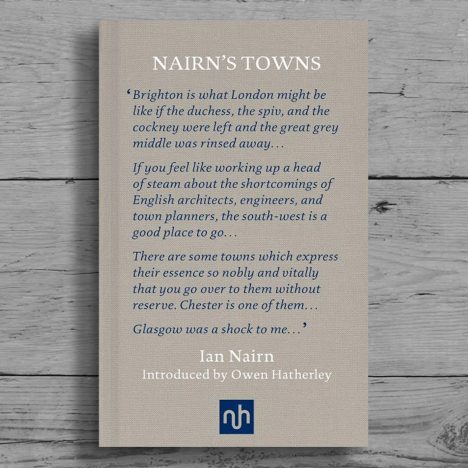
Competition: 10 collections of essays by 20th-century critic Ian Nairn to be won

10 copies of essays by 20th century architecture critic Ian Nairn to be won

Competition: Dezeen has teamed up with publisher Notting Hill Editions to give away 10 copies of a collection of essays by Ian Nairn. (more…)

http://ift.tt/2e3Kfox

Undermountain / O’Neill Rose Architects


© Michael Moran

© Michael Moran


© Michael Moran


© Michael Moran


© Michael Moran


© Michael Moran


© Michael Moran

© Michael Moran

In order to heighten how it relates to its surroundings, the architects took a simple house to the extreme.  One end of this stretched, elongated house is anchored into the hill, while the other floats over marshy wetlands.  When it rains, the water literally runs under the house: next to the entry footbridge, a boulder strewn rain garden cascades underneath the house to the meadow beyond.


© Michael Moran

© Michael Moran

Built for a nature loving couple who is retiring to the countryside, the house integrates ‘aging in place’ into its design.  The house is all on one level, sited so that the landscape rises and plunges on all four sides, in order to visually counteract the future loss of mobility.  In order to maximize the experience of outdoors, the screened porch can be enjoyed year-round, thanks to a large fieldstone fireplace and interchangeable screened and glass wall panels.  Taking human (and canine) centered design into account, windows on all sides frame key vistas; up towards the orchard, down to the lake, and across to the woods.  Two low windows are strategically placed so the dogs can look out as well.


© Michael Moran

© Michael Moran

Plan

Plan

© Michael Moran

© Michael Moran

True to their aesthetic, O’Neill Rose Architects paired their sensitive approach to siting with clean, light filled interiors.  Streamlined references to the rural vernacular can be found in details like the turn buckle ceiling cables.  As with other projects, key furniture and lighting is designed and fabricated by the architects, including the blackened steel light fixtures and the blue cypress wood dining enclosure.


© Michael Moran

© Michael Moran

Product Description. One of the principal materials in this project is cypress.  We like to re-interpret context in a way that highlights both the newness of our work and casts the original context in a new light. The agricultural buildings in the area, which are simple wood framed structures with field stone bases, really resonated with us. The stone bases anchor the buildings to the ground, and the lighter, wood structures engage the surrounding site.  We felt this gesture was really appropriate, and we could use it to really call attention to the building’s position within it’s site.  We chose to clad the building in vertical boards of cypress, stained with ebony, because it is a really beautiful wood, and the translucent stain showcased its beauty.


© Michael Moran

© Michael Moran

We used it at the interior as well; cypress with the same ebony stain as the exterior creates the ‘house within the house’ that the kitchen service bar inhabits, while a special blue stained cypress enclosure plays double duty as a kitchen banquette enclosure, a spatial divider within the open plan.


© Michael Moran

© Michael Moran

http://ift.tt/2dG6dhQ

Evelyn Waugh: A Life Revisited

Waugh Cover Crop

This year marks the fiftieth anniversary of the death of Evelyn Waugh, one of the greatest English writers of the twentieth century and, according to quite a few contemporaries, the most disagreeable man they ever met. Waugh has already been the subject of three important full-scale biographies and countless critical studies, and has played a signal role in a number of histories and memoirs. Now another biography appears in the shape of Philip Eade’s Evelyn Waugh: A Life Revisited. Aside from having been suggested by Evelyn Waugh’s grandson, Alexander, as an anniversary commemoration, the ostensible reason for the book’s existence is that its author has been able to draw on material not previously seen by earlier biographers, chiefly Waugh’s letters to Teresa “Baby” Jungman — for whom he entertained an unrequited passion — and a brief, unpublished memoir written by his first wife, Evelyn, or “She-Evelyn,” as people liked to say.

Arthur Evelyn St John Waugh was the second son of a publisher, a man who preferred his firstborn son, Alec, over the younger Evelyn to a grotesque extent; and in time Waugh returned the favor by despising his father as a sentimental clown. His schooldays were more unhappy than otherwise, but he found joy at Oxford, where he came into one of his personas — that of the homosexual wit, high liver, wine bibber, friend to the great, and entertaining guest at grand country estates. Eade spends more time than previous biographers poring over questions of whom Waugh slept with, what he did in that regard with whom, when, and for how long. To this end, he includes a photograph of the nude person and nice bottom of Alastair Graham, Waugh’s “friend of [his] heart” and one of the models for Sebastian Flyte of Brideshead Revisited.

Waugh left Oxford with a discreditable Third and a devotion to drink (“There is nothing like the aesthetic pleasure of being drunk . . . That is the greatest thing Oxford has to teach”). With no real plans for making a living, Waugh took a stab at becoming an artist but was finally forced by penury to take a position teaching at a ghastly boys’ school in Wales (the model for Llanabba of Decline and Fall). After a year at the place, his future seemed so bleak that — he claimed — he swam out to sea intending to drown himself, but, encountering jellyfish, promptly swam back to shore. He then took up two further teaching posts, a stint of learning cabinetmaking and writing for a newspaper, Waugh published a well-received biography of Dante Gabriel Rossetti, married Evelyn Gardner, and emerged as England’s most celebrated young novelist with the publication of Decline and Fall — one of the funniest novels ever written. His marriage lasted only a little over a year before his wife went off with another man. It was a shaming, scarring experience Waugh never got over, and it clearly contributed to his vision of the world as a place of the damned. Indeed, the betrayal occurred as he was writing Vile Bodies, and Eade notes, as others have, that the darker hue of the novel’s second half reflects this. Its effect is even more directly evident in to A Handful of Dust, which some consider his greatest work.

As a young person, Waugh had shown a religious streak that faded in and out of sight through the years, but, after the breakup of his marriage, it concentrated itself in his decision to become a Roman Catholic in 1930. With regard to more earthly matters, he traveled as a newspaper correspondent to Abyssinia for the coronation of Haile Selassie (and later to cover Mussolini’s invasion), to South America, to the Mediterranean, and to Norway for some unsuccessful glacier climbing, all of which eventually produced travel writing and elements of novels (Black Mischief, Scoop). Meanwhile he was pursuing Baby Jungman and besieging her with billets-doux. Though these letters have not been used by previous biographers, it must be said that they do not really add anything and, judging by the snippets included here, they are pretty dull, especially by Waugh’s standards.

After securing an annulment of his first marriage, he married Laura Herbert, thirteen years his junior, with whom he eventually had seven — six surviving — children. Although he had, in his obnoxious way, supported Mussolini’s invasion of Abyssinia, he gave up his Fascist sympathies with the declaration of war in 1939 and after much trouble and string-pulling managed to join a commando unit, taken on, it transpires, because he was entertainingly funny, and, according to his commanding officer, “could not fail to be an asset in the dreary business of war.” The unit was part of the famous “Layforce,” which, among other things, was forced to evacuate from Crete in 1941. This event has given rise to hot controversy over whether Waugh and his commanding officer, Robert Laycock, jumped the queue in escaping the island, reprehensibly leaving a good number of troops behind to be captured or killed by the Germans. Eade shines in his examination of the affair and convincingly exonerates Waugh and Laycock of dishonorable conduct. It is clear from this biography and from the others that while Waugh possessed many vices and failings — snobbery, spite, cruelty, ire, sloth, arrogance, gluttony, boozery, and pigheadedness, to mention only a few — he was no coward. Still, as Eade also notes, Waugh clearly felt a “sense of moral unease” over the whole thing, which unreconciled feelings found expression in his depiction of Ivor Claire’s ignoble flight in Officers and Gentlemen.

Waugh managed to take some time off from military service to devote himself to writing Brideshead Revisited, the novel he considered his masterpiece at the time, a view he later discarded, though it made him a pile of money, dollars especially. After the war, Waugh’s physical and mental condition began to decline badly, propelled by alcohol, bromides, and barbiturates, one result of which was the wildly funny novel, The Ordeal of Gilbert Pinfold. Somehow, during these years of despair and disintegration, he also managed to come up with what many, myself included, consider his masterpiece, The Sword of Honor trilogy. Evelyn Waugh died at home after Mass on Easter Sunday, 1966.

How does this biography stack up against the previous ones? It is far less tactful than Waugh’s friend Christopher Sykes’s and necessarily less detailed than Martin Stannard‘s rather plodding 1,000-plus-page, two-volume behemoth. It is not written with the pitch-perfect tone, alertness to irony, and all-around panache of Selina Hastings’s 1994 Evelyn Waugh: A Biography, but that book, like Sykes’s, is out of print. So, this one will have to do. There’s nothing really wrong with it except that, with the exception of Eade’s straightening-out of the Crete affair, there is nothing new. The best parts are, as in every biography of Waugh, the quotations from the letters of the great man himself.

Thus I shall conclude with a famous passage from one of them, quoted by Eade, that perfectly conveys Waugh’s sense of the black comedy of life in this vale of tears. Waugh, now with the Royal Horse Guards in 1942, was stationed in Scotland under the command of Col. Dornford-Slater (“Col. D.S. D.S.O.”) with his unit near the estate of Lord Glasgow, whose favor the colonel wished to curry by having his men blow up an old tree stump. Lord Glasgow said he’d be grateful but begged that they not “spoil the plantation of young trees near it because that is the apple of my eye.” They reassured him.

Then they all went out to see the explosion and Col. D.S. D.S.O. said you will see the tree fall flat at just that angle where it will hurt no young trees and Lord Glasgow said goodness you are clever.

So soon they lit the fuse and waited for the explosion and presently the tree, instead of falling quietly sideways, rose 50 feet in the air taking with it ½ acre of soil and the whole of the young plantation.

And the subaltern said Sir I made a mistake, it should have been 7 ½ lbs not 75.

Lord Glasgow was so upset he walked in dead silence back to his castle and when they came to the turn in the drive in sight of his castle what should they find but that every piece of glass in the building was broken.

So Lord Glasgow gave a little cry & ran to hide his emotion in the lavatory and there when he pulled the plug the entire ceiling, loosed by the explosion, fell on his head.

The Barnes & Noble Review http://ift.tt/2dRGFjs

Call for Entries: Architecture-Themed Pumpkin Designs


© Leandro Fuenzalida for ArchDaily

© Leandro Fuenzalida for ArchDaily

We want to see your designs for an architecture Halloween pumpkin! Download the design template below and illustrate/animate/build something that will squash us with your talent. We’ll be accepting entries until October 24, at 12:00 pm EST and we’ll publish our favorites before Halloween!

Competition Guidelines:

  • Design must be submitted as a .jpg/.png/.gif and MUST use the template provided by ArchDaily.
  • Design must be original and suitable for publication on ArchDaily
  • All entries must be received by October 24, 12:00pm EST
  • You may submit more than one entry

Download template:

Template.ai
Template.pdf

How to share a link to your submission:
In the form below, please submit a link to the .jpg/.png/.gif that you have created. We will not accept submissions as zip files, nor do we accept submissions sent via WeTransfer, MegaUpload, or a similar service. Any entry submitted as a zip file or using a file transfer service will be disqualified. If you are sharing a file that has been uploaded to Dropbox, Microsoft OneDrive, Imgur or Google Drive, please ensure that you are sharing a public link that can be accessed by ArchDaily editors. 
How to share a file using Dropbox
How to share a file using Google Drive
How to share a file using Imgur
How to share a file using Microsoft OneDrive

http://ift.tt/2d7ibhG

http://ift.tt/2dZXDsm

The Volcanic Tablelands near Bishop, California, are a vast,…

The Volcanic Tablelands near Bishop, California, are a vast, rugged landscape formed over 700,000 years ago by the Long Valley caldera. In this high desert environment, generations of Paiute and Shoshone Indians once resided, leaving behind an extensive collection of carefully chiseled petroglyphs in the rocks. Now a destination for rock climbers, these fragile treasures are protected by the Bureau of Land Management. Photo by Abhilash Itharaju (http://ift.tt/18oFfjl).

How To Get Your First Customers: 4 Strategies That Actually Work

If you are new to your niche and relatively unknown to your market, knowing how to get your first customers can be a tough task. A lot of beginning businesses actually struggle with lead generation and acquiring customers.

In this post, I’ll give you the exact 4 strategies that I used to build up a content marketing company. I still use all of them today. Here’s the video version:

1. Know who you’re targeting

There are plenty of resources online when it comes to business ideas. You can just do a quick search and you’ll get thousands of ideas.

The most common and the easiest ones to start with are the following:

  • Web Design
  • App Development
  • Content Writing
  • Social Media
  • SEO or Pay Per Click Management
  • Whatever skills you have that can be monetized

Once you have a specific industry in mind, your next step is to determine your target customers. Try to be specific as possible when figuring out your market. The more specific you are, the easier and faster your search will be.

Try to look through job titles, company sizes as well as types to know your target group. You can also use their age, gender and habits as criteria.

See Also: 7 Ways to Get Leads For Your Business 

2. Start with your friends or co-workers

customer-friends

My first customers were actually my friends and people I’ve previously worked for. Since they knew me personally, it was easy for them to give me a chance. They were also a convenient choice for me since I already knew their contact numbers and types of businesses.

If you’re still learning how to get your first customers, you can start with this approach. It’ll be easier for you to reach out to them with quick emails or by inviting them out for lunch.

3. Ask your friends for referrals

Ask any professional colleagues or co-workers if they know anyone that matches your criteria. To make it easy for them to recommend, try to be as specific as possible.

For each person you reach out to, you can ask for at least 15 recommendations. This should be enough to help you land your first few clients.

See Also: 4 Tricks To Turn Your Buyers Into Loyal Customers 

4. Reach out to strangers

cold-email

Use this approach only when you’ve used the other three. You can start with LinkedIn and AngelList to create a list of companies that match your criteria.

Once you are able to find these companies, work on identifying who their founders are as well as their key people. If contact credentials do not show up, you can use a free tool called EmailHunter to generate the emails of all the people working there.

After acquiring their email, you can start reaching out to them using a cold email. Make sure to personalize your emails as much as possible.

Knowing how to get your first customer can be tricky, particularly if you’re not sure how to approach them. Since you are reaching out to strangers, it’ll be helpful if you can establish an immediate connection with them.


The post How To Get Your First Customers: 4 Strategies That Actually Work appeared first on Dumb Little Man.

http://ift.tt/2e826ht