S2OSB Headquarters & Conference Hall / BINAA


© Thomas Mayer

© Thomas Mayer


© Thomas Mayer


© Thomas Mayer


© Thomas Mayer


© Thomas Mayer

  • Architects: BINAA
  • Location: Hendek, 54300 Hendek/Sakarya, Turkey
  • Architect In Charge: Burak Pekoglu
  • Architects : Burcu Kara, Ecenur Yavuz, Yavuz Selim Can
  • Area: 3000.0 sqm
  • Project Year: 2016
  • Photographs: Thomas Mayer
  • Communication Designer: Yavuz Selim Can
  • Client: Sakarya 2nd Industrial District Management
  • Client Representative: Tunay Can (REMA)
  • General Contractor: Yuksel Avsar (AVSAROGLU)
  • Construction Chiefs: Zekai Acar & Huseyin Gumus
  • Structural: EPAS
  • Mechanical: MEKANIK Proje
  • Electrical: BERSIS
  • Mechanical Works: ZIRVE Engineering
  • Electrical Works: BORTEK Engineering
  • Auditorium: DEKORIST
  • Façade Contractor: MAYEM
  • Metal Facade Fabricator: KASSO Engineering
  • Stone Fabricator: KARASU Marble

© Thomas Mayer

© Thomas Mayer

Situated in the Sakarya region—some 170 km east of Istanbul, in Turkey’s Hinterland–S2OSB is a pioneering management building, headquarters and conference hall, of our client, Sakarya 2nd Industrial District’s Board of CEO’s. Uniting the vision of their management and engineering teams, it is also an iconic structure in the area, engaging people into a new way of looking. 


© Thomas Mayer

© Thomas Mayer

A new way of looking leads to a new way of knowing as it can reflect the core concept of industrial development. A new and unexpected presence creates a unique character for the area and provokes people’s thinking: they become curious about the end product: How did this structure come about? What is the story behind it? What collaboration took place behind the scenes? 


© Thomas Mayer

© Thomas Mayer

Axonometric

Axonometric

© Thomas Mayer

© Thomas Mayer

The façade is very important in triggering these questions. The façade is the interplay between exterior and interior; it opens one world into another. The envelope is how a building performs, how it expresses itself, similarly to how a garment makes a fashion statement: it is the building’s character. S2OSB’s façade expresses not only the building’s character but also its function. 


© Thomas Mayer

© Thomas Mayer

Detail

Detail

© Thomas Mayer

© Thomas Mayer

The façade, made of thoughtfully crafted metal, wraps around the building and helps communicate the structure’s multi-faceted purpose: from head offices to the conference hall (170 seats). At the conference hall, the geometrically textured shell starts with mostly solid panels followed by perforated panels, increasing rhytmically until they detach as a double facade that filters controlled daylight to the offices. The interior is camouflaged by the exterior whereas the users can see outside. Daylight continuously changes the look of the anodized, satinated, folded, and mathematically orchastrated metal exterior. At night, the lighting design reiterates a dual purpose: at the solid facades, lighting is integrated into rhytmically distributed perforfated panels, which then gets fully perforated at the offices where the internal lighting expresses an alternative perception of the facades’ pattern. Thus, the façade is dynamic and expressive of the building’s purpose in an artful way. 


© Thomas Mayer

© Thomas Mayer

The interior consists of two separate foyers: one serves the offices and the other—the auditorium. The grand canopy allows access on both sides, which provides a semi-enclosed space for larger activities or programs. The conference hall fits inside the solid panels: the inner shell is made of acoustacilly engineered, geometric, laminated wood panels. The natural stone and wood create a warm atmosphere inside, in contrast to the cold metal exterior. The offices are designed specifically for executives and engineers who are in charge of the industrial district and its shared facilities. The building serves the day-to-day needs of the industrial complex but also becomes a bridge to public use by inviting a global audience to its conference hall, for the exchange of knowledge.  


© Thomas Mayer

© Thomas Mayer

The building’s mission is the convergence of various industries and people. Such convergence, on the one hand, opens people’s minds to the great potential that industries hold, and on the other—shows the important role of design and architecture in beginning to realize that potential in Turkey’s Hinterland.


© Thomas Mayer

© Thomas Mayer

Product Description. Principle material used for the project’s façade is aluminum. Specs of the metal is 3mm aluminum sheet, alloy 5754 & tempered H22. Façade panels making process consists of 1500×3000 mm sized sheets being satinated, folded and anodized.    


© Thomas Mayer
© Thomas Mayer

http://ift.tt/2eMNuDl

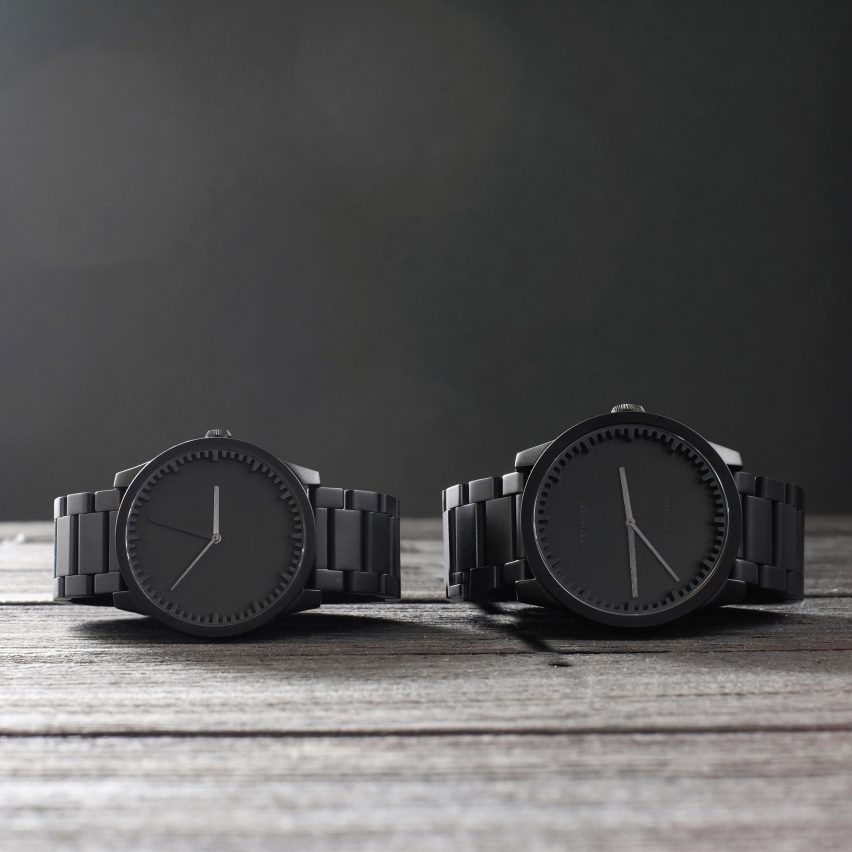
Piet Hein Eek’s scaled-down Tube Watch is available to pre-order from Dezeen Watch Store

tube-watch-piet-hein-eek-leff-amsterdam-dezeen-watch-store-sq

Eindhoven designer Piet Hein Eek‘s Tube Watch for Dutch brand LEFF Amsterdam is now available to pre-order from Dezeen Watch Store in a smaller unisex size. Read more

http://ift.tt/2eXGIr7

A Simple Framework for Maximizing Happiness at Work

I’m a curious person with a wide range of interests. I’m interested in computer programming, writing, personal development, and business. I’m also interested in a few other fields that I haven’t mentioned.

A question that often arises in my mind is this: how should I manage these different interests?

I recently found an answer by reading a summary of The Da Vinci Curse. The goal of the book is to help those who have many interests but can’t determine which ones to focus on. It includes a framework to help them manage their interests and the corresponding opportunities.

The framework—called the BCG matrix—was originally created by Boston Consulting Group to help companies allocate their resources, but the book adapted it to individuals as well.

The framework classifies your activities into four groups based on their financial and fulfillment potential:

  • Dogs: activities that can give you neither wealth nor fulfillment.
  • Cows: activities that can give you wealth but not fulfillment.
  • Question Marks: activities that can give you fulfillment but not wealth.
  • Stars: activities that can give you both wealth and fulfillment.

Let’s take a look at what you should do with each of them. Here are the recommended actions:

  • Eliminate Dogs. Activities in this category are the worst ones because they give you nothing. So obviously you must eliminate them.
  • Prioritize Stars. Activities in this category are the best ones because they give you both wealth and fulfillment. So you should invest most of your resources here.
  • Eliminate Cows. This might be surprising, but the book recommends you to eliminate them. They may give you money, but if they are not fulfilling, then they aren’t worth spending your time on.
    I know this is not easy to do, especially if you need the money from these activities. My recommendation is to not eliminate them right away. Instead, I recommend you to first build a side project out of your Star activities. Then, when the side project becomes mature, you can eliminate the Cows.
  • Nurture Question Marks. This recommendation is also a bit surprising to me. It means that you shouldn’t neglect certain interests just because they aren’t profitable. Instead, you should still develop them while looking for ways to make them profitable.

I like this framework. In my opinion, it’s a good framework for maximizing your happiness at work. If your goal is just maximizing your income, however, it’s not optimal since it recommends that Cows should be eliminated.

The BCG Matrix framework helps me classify my interests. Since I’m already interested in these things, there are only two possible categories for them: Question Marks or Stars.

I’m lucky because I have two Stars: blogging and app development. I started this blog as a side project because I’m passionate about it, but it has also allowed me to quit my day job. I also love developing apps, and it has given me some income as well.

What’s eye opening for me is the book’s suggestion on Question Marks. Don’t eliminate them. Instead, keep working on them while looking for ways to make them profitable.

This suggestion makes me think again about game development. Game development is something I’m passionate about that I have put on the shelf because it’s not profitable. I loved making games in my high school and college years. And—after not making games for years—I built and released an iPhone game in 2014. It wasn’t profitable though, so I no longer make games.

I’m now thinking about it again. Maybe I should do game development just for fun while looking for ways to make it profitable.

What about you? Have you found your Stars? What about your Question Marks? Feel free to share your thoughts in the comments.

http://ift.tt/2e2GxwJ

Czocha Castle, Polandphoto via maria

Czocha Castle, Poland

photo via maria

Lucky Knot / NEXT architects


© Julien Lanoo

© Julien Lanoo


© Julien Lanoo


© Julien Lanoo


© Julien Lanoo


© Julien Lanoo

  • Architects: NEXT architects
  • Location: Di Hua Mei Xi Hu Pan, Yuelu Qu, Changsha Shi, Hunan Sheng, China, 410205
  • Architects In Charge: Bart Reuser, Marijn Schenk, Michel Schreinemachers, John van de Water, Jiang Xiaofei, Jurriaan Hillerström, Luuc Sonke
  • Area: 185.0 sqm
  • Project Year: 2016
  • Photographs: Julien Lanoo
  • Advisor Construction: CERI Engineering Technology Co., Ltd.
  • Advisor Lighting: H.G.lighting
  • Main Contractor: Capital Engineering & Research Incorporation Company limited
  • Client: Municipality of Changsha

© Julien Lanoo

© Julien Lanoo

From the architect. NEXT architects are working on a unique series of bridges all over the world. This time, their latest design isn’t an intriguing bat bridge (nominated for the 2016 Dutch Design Awards), but an iconic bridge in China: the Lucky Knot. The new steel pedestrian bridge in the Chinese mega city Changsha is 185 metres long and 24 metres high and fits perfectly in the sequence of extraordinary bridges that characterise NEXT’s practice; by explicitly engaging with the local context, the bridge designs offer new perspectives.


© Julien Lanoo

© Julien Lanoo

 The eye-catching Lucky Knot has down-to-earth Dutch roots: NEXT architects holds offices in Amsterdam and Beijing. In 2013, after the completion of their breathtaking Melkwegbridge in Purmerend, NEXT was invited to take part in an international competition to design a new bridge to be constructed over the Dragon King Harbour River in Changsha’s rapidly developing ‘New Lake District’. For this special commission, the teams in Amsterdam and Beijing joined forces to come up with the unique, winning design: the Lucky Knot. Combining the Dutch team’s expertise in infrastructure and water management and Chinese team’s perseverance and knowledge of the local context was a crucial part of the process. The bridge has already become an icon, and was selected by CNN as one of the “most spectacular bridges that break the mold.”


© Julien Lanoo

© Julien Lanoo

“NEXT’s designs for both international and national clients distinguish themselves for their singular relationship with their surroundings, their enhancing of the experience of the specific location, and their added value to the site. This is also the case in Changsha. The city is growing and changing rapidly. This context called for a unique gesture to inspire passers-by,” comments Michel Schreinemachers, partner at NEXT architects Amsterdam. 


© Julien Lanoo

© Julien Lanoo

A thousand and one steps

The bridge is a key project in developing the area’s public space, and was designed with recreational, ecological and tourist activities in mind. The bridge connects multiple levels at different heights (the river banks, the road, the higher-placed park as well as the interconnections between them). The final shape of the bridge is the result of -literally and metaphorically- knotting all these routes together. “The shape of the Lucky Knot was inspired by the principle of the Mobius ring, as well as by the Chinese knotting art. In the ancient decorative Chinese folk art, the knot symbolises luck and prosperity,” says John van de Water, partner at NEXT architects Beijing. The bridge owes its imaginative appeal to the combining of tradition and modernity.


Section

Section

“The Lucky Knot is more than a bridge and a connection between two river banks. Its success lays in bringing cultures together, and in the fusion of history, technology, art, innovation, architecture and spectacle,” adds NEXT architects Beijing partner Jiang Xiaofei.


© Julien Lanoo

© Julien Lanoo

The Lucky Knot connects, illuminates and entertains. The bridge offers a spectacular view of the river, Meixi Lake, the city of Changsha and the surrounding mountain range. Thanks to its remarkable LED lightshow, the bridge is set to become a landmark attraction in the light route that traces the path of the Dragon King Harbour River.


Section

Section

http://ift.tt/2eVRkba

Vivid Color / Waterform design


© Kuomin Lee

© Kuomin Lee


© Kuomin Lee


© Kuomin Lee


© Kuomin Lee


© Kuomin Lee

  • Designers : Waterform design
  • Location: Taiwan
  • Space Design: Li Zhixiang, Lv Siting, Chen Xi
  • Area: 100.0 sqm
  • Project Year: 2016
  • Photographs: Kuomin Lee

Design Inspiration

Inspired with paper patterns created by fashion designers for garment making to interpret their imagination, this interior design, taking silhouettes from such patterns, starts dialogues with the young residence owner, a French educated female fashion designer. Just as dress drawings, folding and twisting in pattern making are transformed to clean-cut presentation of sharply defined copper tubing of pendant lamps hanging down from ceiling and wires braided on the glass bookcase.


© Kuomin Lee

© Kuomin Lee

Deco

Fabrics are what it takes to make garments. Prompted by silks and lace, the translucent texture is reinvented as metallic mesh and glass in the bookcase to reflect see-through effects as well as the contrast between the glossy glass and the unadorned slate wall creating an artistic taste with converted optical illusion showcasing the owner’s keen interest in reading fashion books. With the figurative banking out to the minimal abstract design elements of the bookcase incorporate forms and shapes of bow ties and belts from garment accessories and art deco is exhibited as delicate details within bookcase interior.


© Kuomin Lee

© Kuomin Lee


© Kuomin Lee

© Kuomin Lee

Vivid

Inspired by artworks of René Gruau, a well-known fashion illustrator, colors employed in the space take on the look of a French-style vividness and audacity. The study in warm orange, the living room in tranquil blue and the kitchen in sumptuous gold complement and contrast with one another. The thick yet bright colors in large areas bring in a taste of rhythmic and geometric montage collocating the elegant charm of linear adornments.

With a look suggesting a sewing machine the tailor-made base of the dining table breaks through hedging-in traditions of balance with asymmetric fashion deconstructing and echoes Experimentalism in the fashion design trend.


© Kuomin Lee

© Kuomin Lee


© Kuomin Lee

© Kuomin Lee

http://ift.tt/2eSnzYX

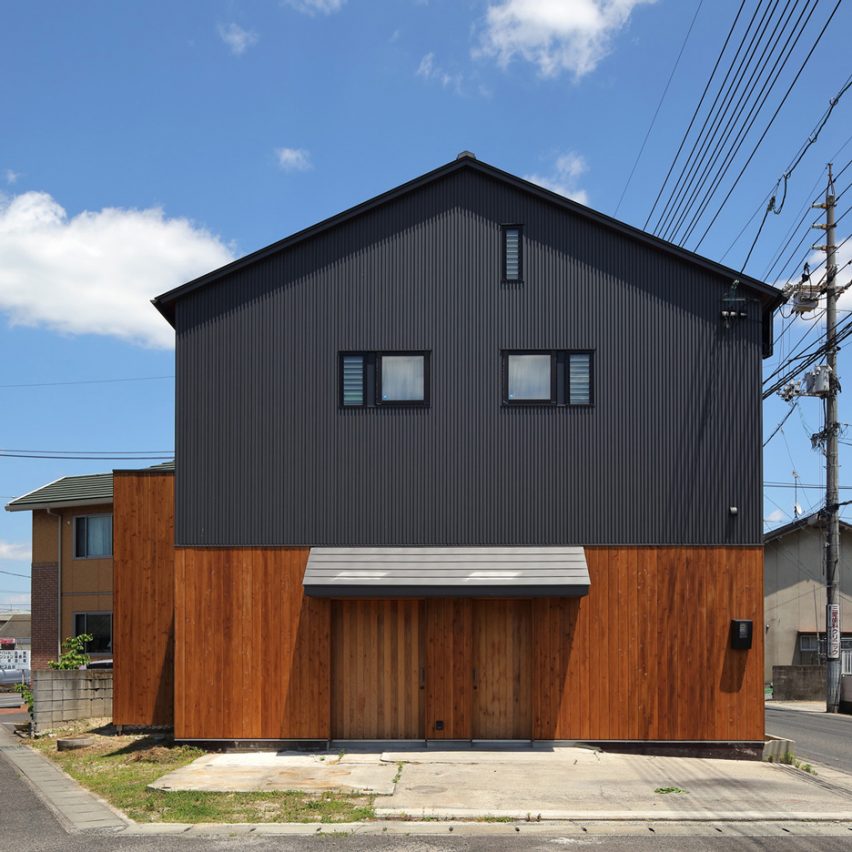
TT Architects transforms furniture factory into family home in Japan

Wood & Steel Frames Renovation by TT architects

TT Architects has converted an old furniture factory in the Japanese city of Okayama into a cedar-and steel-clad home for a carpenter and his family. Read more

http://ift.tt/2fccYeY

The Third Eye-Micro Renovation / Wutopia Lab


© CreatAR (Ai Qing, Mao Yinchen)

© CreatAR (Ai Qing, Mao Yinchen)


© CreatAR (Ai Qing, Mao Yinchen)


© CreatAR (Ai Qing, Mao Yinchen)


© CreatAR (Ai Qing, Mao Yinchen)


© CreatAR (Ai Qing, Mao Yinchen)


© CreatAR (Ai Qing, Mao Yinchen)

© CreatAR (Ai Qing, Mao Yinchen)

Challenges

In this project, the architect was facing two challenges.  First of all, he needed to bring up the video company’s nature within very low budget. Second, the historic building was a former residence of a KMT General, which cannot be changed easily.


© CreatAR (Ai Qing, Mao Yinchen)

© CreatAR (Ai Qing, Mao Yinchen)

According to the local regulation, the illegal structures around General’s former residence built before a certain point are allowed to exist in silent acquiescence. But it is not allowed to build more, and once these illegal structures were removed, new buildings are not allowed to replace them.


© CreatAR (Ai Qing, Mao Yinchen)

© CreatAR (Ai Qing, Mao Yinchen)

Strategies

The architect ignored different material and building time, painting all parts of illegal structures in black, including canopy. Black unified the differences in detail, made allocated units become background of the main building and highlighted the main building. The historical expression of the site was divided into two parts, the white parts are official history while the black parts are the unofficial history. Same design philosophy was applied on the yard, old bricks were relayed, and   new bricks were added. As the old bricks and new bricks were in different sizes, a gap was leaving between two sets of bricks. The architect used grass to emphasize the gap, rather than to bury it.


© CreatAR (Ai Qing, Mao Yinchen)

© CreatAR (Ai Qing, Mao Yinchen)

© CreatAR (Ai Qing, Mao Yinchen)

© CreatAR (Ai Qing, Mao Yinchen)

The biggest move was applied on the porch which is opposite to the door. The architect used two circle to change the façade, the intersection part of two circles is like the third eye. In Chinese fairy tale, the third eye stands for supernatural talent, with which you can see what normal people cannot see. The third eye represents the video company’s pursue of discovering the unusual things that people cannot find in daily life. The architect used two blue glasses on the intersection. The blue stressed the symbol and activated the black to response to people’s moving. The sun shines through the blue glass, leaving a mystery shadow on the floor. The shadow brought life into the yard.


© CreatAR (Ai Qing, Mao Yinchen)

© CreatAR (Ai Qing, Mao Yinchen)

ps: There was no design layout in this project, the handcrafts accomplished the renovation according to draft and instruction.


© CreatAR (Ai Qing, Mao Yinchen)

© CreatAR (Ai Qing, Mao Yinchen)

http://ift.tt/2fkMxTK

The highlands of Iceland are mingling of rocky deserts, jagged…

The highlands of Iceland are mingling of rocky deserts, jagged peaks, volcanoes, ice caps and small green valleys. 

The humans are tiny compared to the glacier in the background