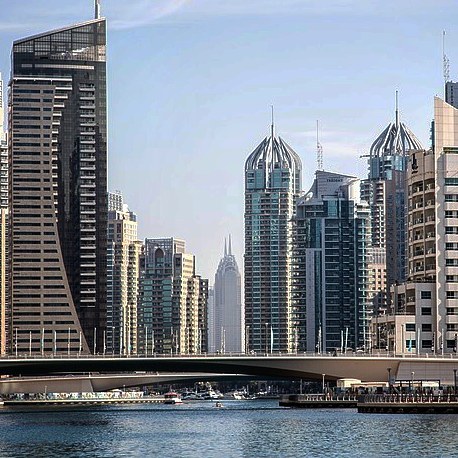
@signordal Downtown Dubai

via Instagram http://ift.tt/2eHtheG

The Internet’s Unanswered Questions And Strange Assumptions About Architecture and Architects

The usefulness (and, at times, unintended hilarity or abhorrence) of Google’s autocomplete function is nothing new. The screenshots, listicles and articles dedicated to exposing humanity’s curiosity, bias and, alas, stupidity have circulated the interwebs since the “Search Suggestion” feature was launched in 2008. As you type a query, topic or name into the the search bar, you are served search predictions, which the company describes as “related to the terms you’re typing and what other people are searching for.”

The explanation continues (emphasis ours):

How search predictions are made
Search predictions are generated by an algorithm without human involvement. The algorithm is:

• Based on objective factors, including how often others have searched for a word.
• Designed to reflect the range of info on the web. Because of this range, the search terms you see might sometimes seem strange or surprising.

In 2013, Memac Ogilvy & Mather Dubai launched an ad campaign for UN Women that used actual search suggestions to reveal staggering assumptions about gender. A few months later, Slate published a story that exposed how the search suggestions for scientists were… less than flattering.

So what can this great algorithm tell us about architecture—and perhaps more intriguingly, about a more universal perception of architecture and its practitioners? Not surprisingly, the algorithm suggests that people want to know why architects wear black, how to pronounce Bjarke Ingels and why it’s “hard” to be an architect. But as we inspect Google’s suggestions we are exposed to less obvious queries. The public wants to know if buildings have 13th floors. (?!?!) They are curious as to whether or not we can have tattoos, piercings and families (yes, yes and YES).  Is the late Zaha Hadid related to model Gigi Hadid? (No.) Do architects work inside or outside? (good question, it depends). 

You may be asking yourself, “Ok… and? This is relevant to me, an ArchDaily reader who clearly knows the answer to all of questions, because…?” We get it. But consider this a handy guide if you meet someone who is just starting architecture school, or if you have to deal with Aunt Martha at Thanksgiving. Tell them what architects do and what architecture is about. Explain your stance on whether or not architecture is art. Tell them that they can’t commission Frank Lloyd Wright to design their house, but Frank Gehry is still in the business. Clarify that architects do need to be licensed but they are not required to drive (or even like) Saabs. And lament that in spite of all of the training and time spent laboring over how to build humanly-habitable spaces, people are most interested in Lego architecture. *sigh*


http://ift.tt/2dzpsvL

Snow Arch – Fljótsdalsheiði, Iceland by orvaratli In the…

Snow Arch – Fljótsdalsheiði, Iceland by orvaratli In the highlands of east Iceland there are endless waterfalls rarely photographed. This one only 10min walk from the road falls sideways into a narrow gorge. In the back a small snow arch can be seen. By now it has probably melted and collapsed. http://flic.kr/p/f6XWmT

http://ift.tt/2evsUsX

St. Stephen’s Tavern, Londonphoto via olga

St. Stephen’s Tavern, London

photo via olga

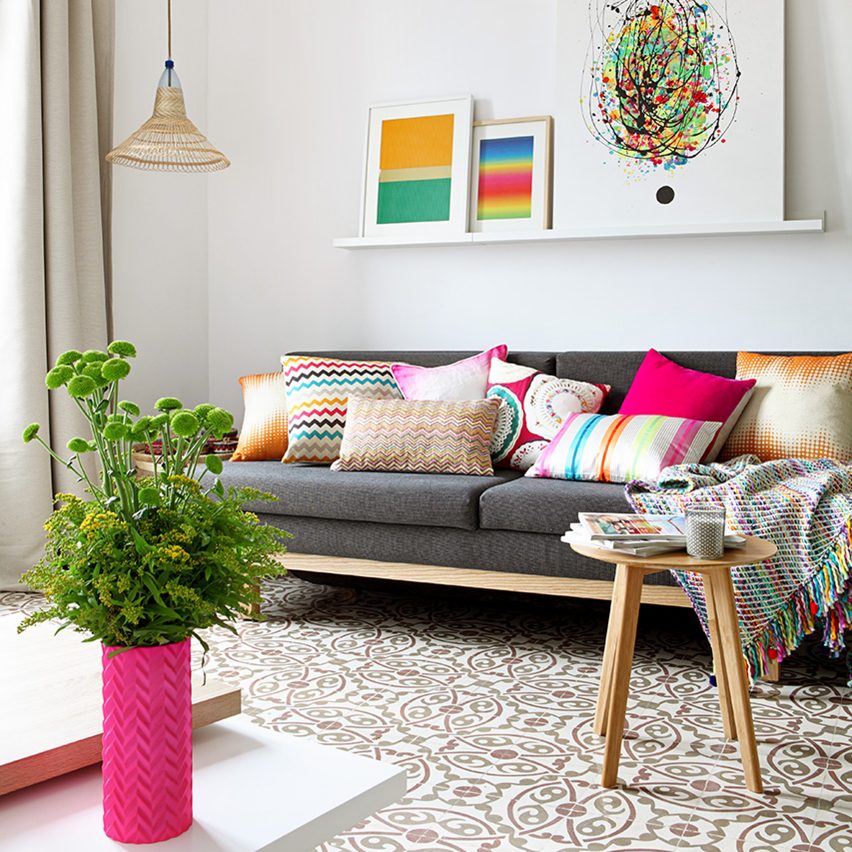
Miel Arquitectos designs Barcelona apartment for “short but vibrant” stays

piso-pereiv44-miel-arquitectos-interiors-barcelona-apartment-residential_dezeen_sq

Miel Arquitectos has added bright pops of colour to a Barcelona apartment that is tailored towards tourists. Read more

http://ift.tt/2eHJQs7

Mehrfamilienhaus Chammerholz / Moos Giuliani Herrmann Architekten


© Sabrina Scheja

© Sabrina Scheja


© Sabrina Scheja


© Sabrina Scheja


© Sabrina Scheja


© Sabrina Scheja


© Sabrina Scheja

© Sabrina Scheja

The new building, with four in it’s size different, residential units, is located on the edge of the village wermatswil. The facade of charred and then brushed wooden laths, gives the building a pavilion-like expression.


Site Plan

Site Plan

Each of the four units, partly lying side by side and partly on above the other, are aligned at the panoramic mountain-view respectively the sunny forrest side. The inner apartments are arranged around two courtyards, lightened with daylight, guiding the sunlight into the kitchen and the living room already early in the morning.


© Sabrina Scheja

© Sabrina Scheja

Floor Plan

Floor Plan

© Sabrina Scheja

© Sabrina Scheja

Product Description.To give the facade a surface-protection, the wood was charred. The surface does not contain any chemicals or artificial colouring.


© Sabrina Scheja

© Sabrina Scheja

http://ift.tt/2el943H

Sin City Embellishment: Expressive or Kitsch?


Randy’s Donuts shop and sign (a “decorated shed”) by Extra Medium (CC BY 2.0). Image via 99 Percent Invisible

Randy’s Donuts shop and sign (a “decorated shed”) by Extra Medium (CC BY 2.0). Image via 99 Percent Invisible

Though the Las Vegas Strip may be garish to some, with its borderline intrusive décor and “pseudo-historical” architecture, some professional architects, most notably Robert Venturi and Denise Scott-Brown, have become captivated by the “ornamental-symbolic elements” the buildings present. The two architects developed the curious design distinction between a “duck” and a “decorated shed”, depending on the building’s decorative form. In his essay for 99% Invisible, Lessons from Sin City: The Architecture of “Ducks” versus “Decorated Sheds”, Kurt Kohlstedt explores how the architects implemented their knowledge of ornamentation in their own works and began an architectural debate still ongoing today.  


Vanna Venturi House by Robert Venturi featuring playful and non-structural ornamentation. Image via 99 Percent Invisible


Longaberger Basket Building image by Barry Haynes (CC BY-SA 3.0). Image via 99 Percent Invisible


Guild House by Venturi, Scott Brown and Associates. Image via 99 Percent Invisible


“Duck” versus “decorated shed, with Big Duck in Long Island (upper right). Image via 99 Percent Invisible


“Duck” versus “decorated shed, with Big Duck in Long Island (upper right). Image via 99 Percent Invisible

“Duck” versus “decorated shed, with Big Duck in Long Island (upper right). Image via 99 Percent Invisible

Venturi and Scott-Brown developed their terminology after studying the Las Vegas Strip over the late 1960s and early 1970s, inspired by the exaggerated incorporation of decoration in the city’s skyline. A “duck” is defined as: “where the architectural systems of space, structure, and program are submerged and distorted by an overall symbolic form.” They took inspiration from an actual duck-shaped building called the Big Duck, where one could buy ducks and duck eggs, making it obvious to passers-by what they would find inside. A “decorated shed” on the other hand, is “where systems of space and structure are directly at the service of program, and ornament is applied independently.” That is what Venturi and Scott-Brown advocated. 


Guild House by Venturi, Scott Brown and Associates. Image via 99 Percent Invisible

Guild House by Venturi, Scott Brown and Associates. Image via 99 Percent Invisible

One of their most well-known buildings is the Guild House, completed in 1963, implemented symbolism and historical references, and came to be an early example of Postmodern architecture. The Guild House was built for elderly residents, featuring Classical orders and structure-specific signage implemented in the façade. Most famous is the golden antenna placed on the roof to symbolize the most popular pastime of the building’s inhabitants: watching television. However, this ornament was later removed. 


Vanna Venturi House by Robert Venturi featuring playful and non-structural ornamentation. Image via 99 Percent Invisible

Vanna Venturi House by Robert Venturi featuring playful and non-structural ornamentation. Image via 99 Percent Invisible

Venturi and Scott-Brown’s criticism towards the “duck” approach was that by “rejecting explicit frivolous appliqué ornament” this Modernist architecture “has distorted the whole building into one big ornament.” Critics have challenged their “duck”-“decorated shed” duality ever since it emerged in the architectural discipline, however, this challenge of ornamentation in contemporary architecture remains. Is minimalism really so far from the dreaded “duck”? Kohlstedt argues that both are examples of “form follows function”, albeit that the “duck” is taking it to extremes. 

To read Kurt Kohlstedt’s full article, visit 99% Invisible, here

http://ift.tt/2e0Sb9f

@signordal Miami FL #twitter #fb

via Instagram http://ift.tt/2f5EaeH

7 Typical Life Situations When You Will Need Public Speaking Skills

You’re reading 7 Typical Life Situations When You Will Need Public Speaking Skills, originally posted on Pick the Brain | Motivation and Self Improvement. If you’re enjoying this, please visit our site for more inspirational articles.

Public Speaking Skills

We all know the feeling—that moment when your heart races along a racetrack of nerves because you need to speak to the public. The audience, whether one dozen people or one thousand, can seem intimidating. Yet speeches, toasts, and other forms of public speaking can sign minds with memorable words. They allow us honor, persuade, and inform. Here are seven typical life situations that call for public speaking. I emphasize a different public speaking tip for each one, so study them well before taking the mic!

The Maid of Honor’s Wedding Toast

If a bride asks you to toast on one of the happiest days of her life, then you can assume your public speaking skills are certainly important for her wedding day. The keys here are a genuine heart and homework. Receive the request as an honor and prepare appropriately. You may start with reading some tips and ready-to-use ideas of MOH speech. Share a special memory that you experienced with the bride. Encourage the newlyweds for the journey that lies ahead. And remember that she wouldn’t have chosen you if she didn’t believe you could do a superb job.

Job Presentation

Some jobs require presentations and even visual aids to emphasize key points. Visual aids such as PowerPoint presentations can really help us to speak well and compel. I love slides because while they help the audience remember key points, those notes can certainly remind the speaker too. Each bullet point or picture should queue your mind on what to say. But beware: don’t read the slides word-for-word! Doing so will surely cause a disconnect from your audience. Rather, keep looking toward them and present!

Prayer at Family Gathering

Every family is different, but praying together is common in many households, especially on holidays like Thanksgiving or Christmas. Picture this: a ring of family stands around the dining room table, absorbing every aroma their nostrils can. Then Aunt Susie asks you to pray. In front of everyone. Keep the prayer simple. This kind of public speaking should be fairly easy because no formal preparation is required. All you need to do is keep a sense of gratitude in mind. Keep the prayer simple and sweet.

Class Presentation (student and teacher p.o.v.)

I’m always amused to see the loudest students grow quiet as butterflies when they need to present a class assignment. These students typically don’t think twice before talking, but the idea of talking to more than a few friends changes everything. For any student who needs to give a presentation, confidence is essential. Speak like you have knowledge on the subject—because you do! With the right amount of research, you can confidently inform or persuade. The confidence rule applies to teachers as well. If you sound unsure of yourself, then students will question your expertise. Be prepared to present with a sense of purpose and authority on your subject.

Testimony

Occasionally someone may ask you to share an inspiring story with an audience. This happens often on missions trips, where people give testimonies of how God healed them. To deliver a testimony, focus on connecting with your audience. Move your eyes around to engage every area of crowd around you. Relax, because people can often tell when you look uptight. Speak clearly and try not to rush. This experience is important to you for a reason, so take them on a story slide ride as you recall a significant event that could impact others.

Sales Pitch

Sometimes a sales pitch can seem like one of the hardest public speaking situations of all. I think of working a sales booth where you must constantly speak lines designed to reel people passing into your booth. Smiling and asking open-ended questions tend to do the trick. It’s hard to frown at someone who’s smiling. And it’s even harder to say “no” to a question that requires any answer but “yes” or “no.”

Party

These events are for fun, right? No pressure, right? Yet many of us do feel public speaking pressure because we need to speak to strangers, sometimes several at once. Consider parties “the perfect opportunity to practice public speaking skills,” as National Speaker Association member Lenny Laskowski notes at ljlseminars.com. So when you attend parties, try to mingle!

Public speaking is not simply for celebrities or keynote speakers. They are those of us who are leaders (see more on leading and public speaking here.) We all lead something, from a simple conversation to a large corporation. Most of us will have several opportunities to speak publicly, but with the right techniques words will flow naturally. Enjoy your opportunities. Become a better speaker with each one.

You’ve read 7 Typical Life Situations When You Will Need Public Speaking Skills, originally posted on Pick the Brain | Motivation and Self Improvement. If you’ve enjoyed this, please visit our site for more inspirational articles.

http://ift.tt/2e0M6JG
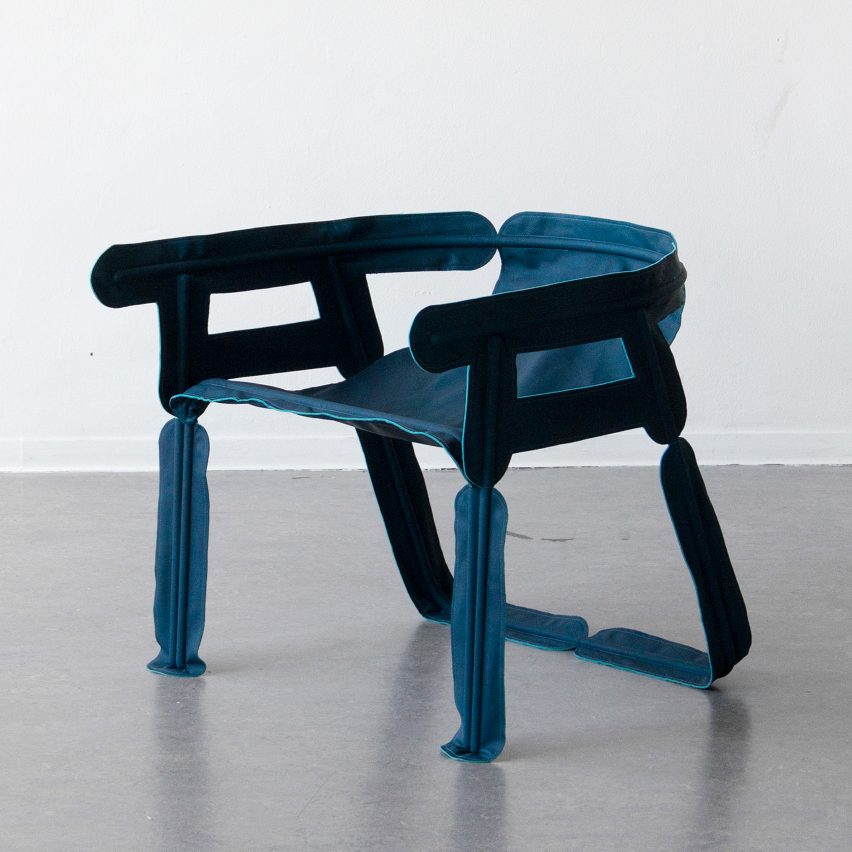
Christian Heikoop’s Glissade furniture is erected from metal rods like a tent

Christian Heikoop Glissade chair

Dutch designer Christian Heikoop has created a flat-pack furniture collection that is assembled in the same way as a tent. Read more

http://ift.tt/2exMou6