Dublin Rotating Bridge Proposal Aims to Catalyze the City


Courtesy of Feng Xue, Helen Chan, and Oscar Reyes (FOH)

Courtesy of Feng Xue, Helen Chan, and Oscar Reyes (FOH)

A team composed of Feng Xue, Helen Chan, and Oscar Reyes (FOH) has won Director’s Choice Award in the AC-CA competition to design a contemporary footbridge in Dublin, Ireland. Entitled The Catalyst, the team’s proposal aims to become “a dynamic link which stimulates diverse urban activities and facilitates a spectacular cityscape.”

Designed around the idea of enhancing the surrounding Dockland neighborhood and Dublin as a whole, The Catalyst acts as both a physical link, as well as a new vantage point, encouraging passers-by to pause and reflect on the city.


Courtesy of Feng Xue, Helen Chan, and Oscar Reyes (FOH)


Courtesy of Feng Xue, Helen Chan, and Oscar Reyes (FOH)


Courtesy of Feng Xue, Helen Chan, and Oscar Reyes (FOH)


Courtesy of Feng Xue, Helen Chan, and Oscar Reyes (FOH)


Courtesy of Feng Xue, Helen Chan, and Oscar Reyes (FOH)

Courtesy of Feng Xue, Helen Chan, and Oscar Reyes (FOH)

Courtesy of Feng Xue, Helen Chan, and Oscar Reyes (FOH)

Courtesy of Feng Xue, Helen Chan, and Oscar Reyes (FOH)

Courtesy of Feng Xue, Helen Chan, and Oscar Reyes (FOH)

Courtesy of Feng Xue, Helen Chan, and Oscar Reyes (FOH)

The organic, curved form of the bridge is a response to significant buildings in the area, such as the Harp Bridge and Convention Center (CCD). Similarly, the design utilizes a symmetrical approach, in order to resonate with the local Georgian heritage architecture.


Courtesy of Feng Xue, Helen Chan, and Oscar Reyes (FOH)

Courtesy of Feng Xue, Helen Chan, and Oscar Reyes (FOH)

Courtesy of Feng Xue, Helen Chan, and Oscar Reyes (FOH)

Courtesy of Feng Xue, Helen Chan, and Oscar Reyes (FOH)

With a pivotal structure driven by a cylindrical motor, the bridge can move for passing boats and larger ships, as well as cultural activities like the Dublin Marine Festival. Moreover, the bridge itself can accommodate film and performances in its amphitheater.


Courtesy of Feng Xue, Helen Chan, and Oscar Reyes (FOH)

Courtesy of Feng Xue, Helen Chan, and Oscar Reyes (FOH)

Functionally, the new bridge is a meeting place, a viewing platform for visitors, a worker’s break-out area, a lover’s dating spot, a shortcut for pedestrians and cyclists, and an amphitheater for buskers, said the design team. Despite the vast functional possibilities, our bridge proposal respects and realizes the rich historical context of Dublin by creating a space that looks back at its urban context. Our response to the enhancement of Dublin is to create a place that acts as a catalyst to activate and exhibit the transformation of the city. The bridge is a book to the stories of Dublin to be discovered.

News via: Feng Xue.

http://ift.tt/2iILsa6

Natural History Museum St. Gallen / Michael Meier Marius Hug Architekten+ Armon Semadeni Architekten


©  Roman Keller

© Roman Keller


©  Roman Keller


©  Roman Keller


©  Roman Keller


©  Roman Keller

  • Architects: Michael Meier Marius Hug Architekten AG, Armon Semadeni Architekten GmbH
  • Location: St Gallen, Switzerland
  • Architect In Charge: Armon Semadeni, Marius Hug, Michael Meier – Anita Emele, Project leader 2009-2013, Martin Dennler, Project leader 2014-2016 – Jonas Krieg, Kirsten García, Anouk Trautmann, Daniel Hediger, Thomas Winkelmann (cand.), Tobias Uhlmann, Murielle Geel, Alexandre Figueiredo (cand.), Estelle Bertholet (cand.), Nina Fruhmann (cand.), Alain Walter (cand.)
  • Area: 600.0 m2
  • Project Year: 2016
  • Photographs: Roman Keller
  • Construction Management: Othmar Brügger, Davos; Baumed Bauleitungen, St. Gallen
  • Landscape: Studio Vulkan Landschaftsarchitekten, Zürich
  • Construction Engineer: Synaxis AG, Zürich
  • Signage: BIV Grafik, Zürich
  • Scenography: 2nd West, Rapperswil


©  Roman Keller

© Roman Keller

From the architect. The new building of the Natural History Museum St. Gallen carries on the existing ensemble of public buildings and facilities surrounding the church St. Maria Neudorf and the botanic garden on the eastern limits of the city centre. Through the urban setting and the use of mostly lithic materials the building acts as a visual and representative landmark towards the street and the church complex. At the same time the new museum respects the strong presence of the church’s silhouette. The visible structure of the roof refers to the functional, modest expression of the existing architectures in the botanic garden. 


Site Plan

Site Plan

©  Roman Keller

© Roman Keller

The three-storey building occupies the parcel almost entirely. A new open-air exhibition space is defined and becomes an important part of the promenade between church, museum and botanic garden. Four precisely set incisions in the corners of the building volume interlock it with its surrounding. According to each specific situation they host several different functions – such as a quiet terrace for the café, a representative forecourt towards the street and a discreet delivery in the back. 


©  Roman Keller

© Roman Keller

The museum premises are organised as an open sequence of spaces, beginning with the connection of the foyer facing the street and the secondary entrance hall towards the garden. The visitor follows the tour of the museum across two shifting floors, past the temporary exhibition, into the “relief room”. With its impressive height, its specific character and the connection to the gallery above, it reminds of classical exhibition spaces from the 19th century. The space constitutes the heart of the two exhibition storeys and offers great possibilities to exhibit large objects. The second exhibition storey provides a vast unsupported skylight-lit hall, allowing a lot of flexibility for diverse exhibition concepts. Quiet lounges and educational spaces, such as the library and the youth lab are arranged around the core zones, inviting to individual studies and contemplation in a pleasant, private atmosphere.


©  Roman Keller

© Roman Keller

©  Roman Keller

© Roman Keller

http://ift.tt/2iRrx4e

💙 Magic Beach on 500px by Bart, Belgium☀ NIKON……

💙 Magic Beach on 500px by Bart, Belgium☀  NIKON… http://ift.tt/2c4kDeb

http://ift.tt/2iRxHkT

Look Inside a Collection of Beijing-Based Architecture Offices, Photographed by Marc Goodwin


ZAO/standardarchitecture – one office interior photographed by Goodwin. Image © Marc Goodwin

ZAO/standardarchitecture – one office interior photographed by Goodwin. Image © Marc Goodwin

Architectural photographer Marc Goodwin has recently completed the third collection of his “ultra-marathon of photoshoots” – this time in Beijing. Following his unique insight into the spaces occupied by Nordic architectural offices (based in Oslo, Stockholm, Copenhagen and Helsinki) and his look at studios both large and small lived in by London-based practices, Goodwin has turned his lens to the burgeoning number of offices in the Chinese capital. From MAD Architects’ magnificent old printing works to ZAO/standardarchitecture’s purpose-built studio, here is a view into the places that architectural offices call home.


URBANUS Architecture & Design, Inc.. Image © Marc Goodwin


Chiasmus Partners, Inc.. Image © Marc Goodwin


ZAO/standardarchitecture. Image © Marc Goodwin


C+ Architects. Image © Marc Goodwin


© Marc Goodwin

© Marc Goodwin

Chiasmus Partners, Inc.

  • In this space since: 2010
  • Number of employees: 15
  • Former use: classrooms
  • Size: 120sqm

Chiasmus Partners, Inc.. Image © Marc Goodwin

Chiasmus Partners, Inc.. Image © Marc Goodwin

Chiasmus Partners, Inc.. Image © Marc Goodwin

Chiasmus Partners, Inc.. Image © Marc Goodwin

URBANUS Architecture & Design, Inc.

  • In this space since: 2014
  • Number of employees: 45 in Beijing
  • Former use: offset printing factory
  • Size: 860sqm (above and below ground)

URBANUS Architecture & Design, Inc.. Image © Marc Goodwin

URBANUS Architecture & Design, Inc.. Image © Marc Goodwin

URBANUS Architecture & Design, Inc.. Image © Marc Goodwin

URBANUS Architecture & Design, Inc.. Image © Marc Goodwin

C+ Architects

  • In this space since: 2016
  • Number of employees: 6
  • Former use: studio
  • Size: 52sqm

C+ Architects. Image © Marc Goodwin

C+ Architects. Image © Marc Goodwin

C+ Architects. Image © Marc Goodwin

C+ Architects. Image © Marc Goodwin

Vector Architects

  • In this space since: 2014
  • Number of employees: 25
  • Former use: university administration office
  • Size: 295sqm

Vector Architects. Image © Marc Goodwin

Vector Architects. Image © Marc Goodwin

Vector Architects. Image © Marc Goodwin

Vector Architects. Image © Marc Goodwin

MAT Office

  • In this space since: 2015
  • Number of employees: 10
  • Former use: hostel (before that a factory)
  • Size: 90sqm

MAT Office. Image © Marc Goodwin

MAT Office. Image © Marc Goodwin

MAT Office. Image © Marc Goodwin

MAT Office. Image © Marc Goodwin

Crossboundaries Beijing

  • In this space since: 2015
  • Number of employees: 25
  • Former use: auditorium, bar, showroom
  • Size: 350sqm

Crossboundaries. Image © Marc Goodwin

Crossboundaries. Image © Marc Goodwin

Crossboundaries. Image © Marc Goodwin

Crossboundaries. Image © Marc Goodwin

ZAO/standardarchitecture

  • In this space since: 2015
  • Number of employees: 30
  • Former use: warehouse
  • Size: 580sqm

ZAO/standardarchitecture. Image © Marc Goodwin

ZAO/standardarchitecture. Image © Marc Goodwin

ZAO/standardarchitecture. Image © Marc Goodwin

ZAO/standardarchitecture. Image © Marc Goodwin

anySCALE Architecture Design Consultants Co., Ltd.

  • In this space since: 2014
  • Number of employees: 25
  • Former use: apartments for diplomats
  • Size: 250sqm

anySCALE. Image © Marc Goodwin

anySCALE. Image © Marc Goodwin

anySCALE. Image © Marc Goodwin

anySCALE. Image © Marc Goodwin

MAD Architects

  • In this space since: 2008
  • Number of employees: 105
  • Former use: printing works
  • Size: 660sqm

MAD Architects. Image © Marc Goodwin

MAD Architects. Image © Marc Goodwin

MAD Architects. Image © Marc Goodwin

MAD Architects. Image © Marc Goodwin

LISPACE Design Ltd.

  • In this space since: 2013
  • Number of employees: 10
  • Former use: factory boiler room
  • Size: 180sqm

LISPACE Design Ltd.. Image © Marc Goodwin

LISPACE Design Ltd.. Image © Marc Goodwin

LISPACE Design Ltd.. Image © Marc Goodwin

LISPACE Design Ltd.. Image © Marc Goodwin

Haskoll Architectural Design Consultancy

  • In this space since: 2015
  • Number of employees: 45
  • Former use: restaurant
  • Size: 1000sqm

Haskoll Architectural Design Consultancy. Image © Marc Goodwin

Haskoll Architectural Design Consultancy. Image © Marc Goodwin

Haskoll Architectural Design Consultancy. Image © Marc Goodwin

Haskoll Architectural Design Consultancy. Image © Marc Goodwin

http://ift.tt/2k7vgvF

Black Clay Family Residence / NEBRAU


Courtesy of Laurynas Avyzius

Courtesy of Laurynas Avyzius


Courtesy of Laurynas Avyzius


Courtesy of Laurynas Avyzius


Courtesy of Laurynas Avyzius


Courtesy of Laurynas Avyzius

  • Architects: NEBRAU
  • Location: Giraitė, Lithuania
  • Architect In Charge: Laurynas Avyzius
  • Landscape Design: Domas Timinskas, Vaidotas Gudeliauskas
  • Area: 145.0 m2
  • Project Year: 2010
  • Photographs: Courtesy of Laurynas Avyzius

Courtesy of Laurynas Avyzius

Courtesy of Laurynas Avyzius

Idea
Lithuanian architecture studio NEBRAU main task was to create minimal architecture with clear lines and simple volumes, using long-live and natural materials, creating natural and minimal landscape surrounding where people can relax from their daily life routine. 


Site plan

Site plan

Integration to the environment
The place of the house in the quarter: square-shaped land plot which continues the row of houses. The area contains a mix of large, contemporary homes and older dwellings dating to the 1970s and 1990s.


Courtesy of Laurynas Avyzius

Courtesy of Laurynas Avyzius

The Function
The building is convenient to use and functional. The young family house is very comfortable by its planning functionality. House is one storey. The main entrance is in the middle of the house, where free-time zone (living room with kitchen) is separated from sleeping zone (bedrooms). 


Courtesy of Laurynas Avyzius

Courtesy of Laurynas Avyzius

The Architecture
Family residence is located in Lithuania, Kaunas city.
House volumes are different height for it’s inside functionality and exterior dynamic. The finish is a solid concrete tiles on walls, which gives horizontal shadow structure for the house. Architectural volumes of the house are separated with a vertical larch wood planks, which left naturally to get grey. Dark colors and natural material merges into the surrounding.
Lithuania is in the weather zone, where temperature is from -35C till +35C. House insulation should be well prepared for all seasons and comfortable living. Energetical class of the house is A.
Heating – geothermal, Windows – wood frame with aluminum outside.


Floor plan

Floor plan

Courtesy of Laurynas Avyzius

Courtesy of Laurynas Avyzius

The Interior
The interior was created as a warm, cosy atmosphere. Natural and reliable decoration materials shall be used such as natural wood look floor tiles of the greater part of the areas, guest room, kitchen, as well as kitchen. We love natural oak mass furniture, which used for table tops in the kitchen.

http://ift.tt/2jvsNMc

G43 / FADD Architects


Courtesy of FADD Architects

Courtesy of FADD Architects


Courtesy of FADD Architects


Courtesy of FADD Architects


Courtesy of FADD Architects


Courtesy of FADD Architects

  • Architects: FADD Architects
  • Location: 1060 Vienna, Austria
  • Architect In Charge: FADD Architects
  • Area: 540.0 m2
  • Project Year: 2015
  • Photographs: Courtesy of FADD Architects
  • Structures: GLÜCK ARKITECTURE
  • Collaborator: LISA IDZIOREK
  • Construction Management: KASWURM IMMOBILIEN & WOHNBAU GMBH

Courtesy of FADD Architects

Courtesy of FADD Architects

This rooftop extension gave us the possibility to create 3 apartments with different size, 190/170/90mq, and 2 terraces with swimming pool. The interior of this penthouses, in one of most attractive district of Vienna, combine classic and modern design, respecting the artistic value of the historical context. For this project, we were responsible of the creative direction and interior project manager, working with local artisans to design bespoke furnitures.


Courtesy of FADD Architects

Courtesy of FADD Architects

The main goal was to reach a sophisticated design, for a luxury real estate market, and to give the simple touch of the “made in Italy”. For that reason we went for brands like Varenna Poliform for the kitchen and Gloster for the outdoor furniture; this gave a distinct Italian flavour to the whole scheme. White walls and chevron oak parquet, minimal lines for the furnitures, wood and concrete materials for the fireplace, have helped us to create the right atmosphere. The terrace with teak floor, outdoor kitchen and pool, give the final touch for take the best of spring and summer.


Courtesy of FADD Architects

Courtesy of FADD Architects

We also worked with an Italian greenhouse and used Atelier Vierkant for the vases, to create what a terrace should never miss: the green. 

Product Description: 

The grey oak wood panels we used for the the kitchen facade were also used for the doors of the bespoke fireplace and to hide the door of the staircase (see top 13). This solution combine with a unique design the living and the kitchen area and integrate them into one open space.


Courtesy of FADD Architects

Courtesy of FADD Architects

Floor Plan

Floor Plan

Roof Plan

Roof Plan

http://ift.tt/2jvkd08

Why Do We Procrastinate?

Procrastination: Putting off from day to day, directly from Latin “procrastinationem” (pro “forward” + crastinus “belonging to tomorrow”).

Procrastination is a problem about 95% of people suffer from, and even though there’s a lot of material regarding how to stop procrastinating, there isn’t a lot said about why we procrastinate in the first place. As a staunch believer of the idea that the first step to fixing any problem is knowing why it happens in the first place, I bring you a list of 5 reasons why people procrastinate:

I don’t like the task I’m supposed to be doing, or the deadline for it is still a while away

The first factor that decides how likely we are to procrastinate is the task itself, or two specific things about the task: the first is how far in the future we’ll have to deal with the reward or punishment from the task, the second is how much we dislike what we’re supposed to be doing. People would rather focus on the here and now than worry about something in the future, always thinking that a nearer task is more pressing and more deserving of time and attention than one that’s far away. The relationship between how much we dislike a task, or task aversion, is even more obvious. We’re a lot more likely to not want to sit down to do something we hate, or something that we find overwhelming.

See Also: 6 Playful Strategies to Beat Procrastination and Boost Your Productivity

I am neurotic

neurotic

Neuroticism is a personality trait that means a person is more likely to be anxious or more prone to bad moods than other people (think Hermoine Granger). The more neurotic a person is, the more they’ll freak out or be anxious about the tasks they have to do, and the more anxious they are over tasks, the less they’ll want to sit down and do them.

I am more rebellious than agreeable

Agreeableness as a trait is related to cooperation and a desire to consent or submit to the wishes of others, and rebelliousness is about the exact opposite. A person who leans more towards rebelliousness than agreeableness is more likely to procrastinate in an attempt at control and at doing things their own way, rather than follow a schedule set by someone else.

I am impulsive

Being impulsive means that a person prefers to act on a whim, rather than sit down and plan everything. An impulsive person is more likely to procrastinate than someone who isn’t impulsive, because they’re more likely to get caught up in the moment or get distracted by a new idea that they just had.

See Also: 7 Tips On How To Overcome Procrastination Everyday 

I am not very self-disciplined

not self disciplined


A self-disciplined person is a lot more accepting of having to sit down and do something unpleasant than someone who isn’t. Self-discipline means not letting yourself get distracted (by checking Twitter every 3 sentences you read, for example), and not allowing yourself to watch a movie instead of work on that report you have to submit in a couple of days. People who have more control of themselves are less likely to procrastinate.

Now you know a little (well, a lot) more about why we procrastinate. So you found yourself relating to the things on this list, what now? Don’t worry, there are a lot of things you can do to stop or lessen procrastination, like cutting big tasks into smaller, less intimidating tasks, removing distractions from your work environment, and practicing more self-discipline in your everyday life.


The post Why Do We Procrastinate? appeared first on Dumb Little Man.

http://ift.tt/2jufSKq

3 Unique Things That Successful People Do Differently

You’re reading 3 Unique Things That Successful People Do Differently, originally posted on Pick the Brain | Motivation and Self Improvement. If you’re enjoying this, please visit our site for more inspirational articles.

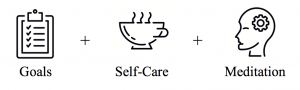
Are you already wavering on your New Year’s resolutions? It’s okay, you’re not alone. If you want 2017 to be the year that they stick, you are going to need some proven routines to keep you going. Where better to look than at the habits of highly successful people?

We all know the typical things that successful people do differently – wake up early, set goals, network – but what does the next level of successful behavior look like? No matter whether your passion is baking or real estate, everyone has something at which they strive to be successful. While there is no one defined behaviour for successful people, anyone who has spent extensive amounts of time reading interviews of and articles by successful people can agree that there are similar attitudes and behaviors that they possess. There are universal traits and practices that are common to all successful people regardless of their background and field of influence. If you want to create a culture of success in your life, here are the most common and effective habits of successful people to get you started. 

They set daily goals.

Most successful people attest to the fact that they do not simply wake up to an agenda filled with random activities. Instead, most successful people come up with large, long-term goals. American Express CEO Kenneth Chenault, for example, states that “at the beginning of each year, I set the key priorities and key objectives”.[1] These priorities and objectives are part of a larger, long-term vision, and are easily achievable when broken down into smaller pieces. Every day, then, successful people take the initiative to set themselves small, daily goals that contribute to the priorities, objectives, and long-term vision. They then plan their day ahead of time to ensure that they have activities and appointments planned that address each of their goals.

They take care of themselves first.

The most valuable resource you have is yourself. Successful people, especially those in the service industry, understand that they need to continually work on their personal brand and physical appearance. They also understand that their social life is as important as their finances and, as such, set aside enough time for leisure activities with friends and family. They know when to stop working. They also know that their bodies need good food, hydration, rest and sleep. On top of physical maintenance, they look out for experiences and relationships that will enhance their lives. They read widely from good authors and engage in positive conversations. They understand that you cannot change the world if you have not taken care of yourself first.

The concept of remembering to attend to one’s own needs is captured by the term self-care. It was coined by and remains a pillar of the work that mental health professionals do every day. There are countless resources that uphold the importance of the practice as well as provide resources in its pursuit. If you are unsure of where to start, I recommend an interactive self-care flowchart by Jace Harr entitled, “You feel Like Shit: An Interactive Self-Care Guide”. It walks the user through his or her needs, beginning with the most basic. As the landing page asserts, it is designed “for people who struggle with self-care, executive dysfunction, and/or who have trouble reading internal signals”.[2] It is a simple, straightforward, and effective first step at attending to yourself when you are not feeling your best.

They meditate.

This may seem trivial to many people, especially given the number of things vying for our attention these days. However, successful people always make time to meditate. What they do during this quiet time varies by personal preference and time of day. If it is the end of a busy day, they might take time to reflect on their goals as well as the day that has passed: their achievements and failures, the status of their personal relationships and their spirituality. The successful people who do this understand that when so much is going on that you do not have time to reflect, it is easy to miss out on the lessons. Since they are continually seeking ways to improve themselves, they take time to reflect on their strengths and areas for growth. If they are feeling particularly drained or negative, they might use the quiet time for positive self-talk. Other times, if they are feeling particularly stressed or overworked, they might choose to focus on their breath and enjoy ten minutes of not thinking at all.

If you are interested in starting a practice but unsure of where to begin, there are many support out there for you, beginning with the mogul Oprah Winfrey. She is a huge proponent of meditation, stating that it has shifted her life in ways that she never imagined. She is such a firm believer in the practice that she has instituted period of “Quiet Time” twice a day in her network offices.[3] For those who do not work for Oprah, she has collaborated with spiritual guide Deepak Chopra to create a number of free 21-day guided meditations. There are others with free meditations available, including Tara Brach. If you prefer music or silence, there are free apps available that help you to time and keep track of your meditation sessions.


While there is no script that successful people follow, there are traits that are common amongst them. If you are seeking practices that will give you a boost in your productivity and overall success in life, consider the importance of goal setting, self-care, and meditation. Make each of these practices a pattern of behaviour and you will surely be on the road to success.


Wheeler del Torro (http://ift.tt/LfD2Mm) is a nutritional anthropologist and author. His most recent book, Boss Up!, provides a step-by-step guide to creating a powerful executive presence in order to be perceived as a leader and reap the benefits that go along with it. When he is not researching, lecturing, or hosting popups, Wheeler is out setting the next culinary trend.


[1] Bulygo, Zach. (n.d.) “Business lessons from American Express CEO Ken Chenault”. Kissmetrics Blog. Retrieved on 23 December 2016 from http://ift.tt/2jlygow

[2] Jace Herr. http://ift.tt/1h50SQg

[3] Interview with Oprah Winfrey. Facebook Live stream. http://ift.tt/2juHnU8

You’ve read 3 Unique Things That Successful People Do Differently, originally posted on Pick the Brain | Motivation and Self Improvement. If you’ve enjoyed this, please visit our site for more inspirational articles.

http://ift.tt/2juH103

Daishan Kindergarten / Atelier Zhouling


Exterior view of East Side

Exterior view of East Side


Exterior view of Daishan Kindergarden


Perspective view of South-East Corner


Perspective view of North-East Corner


Interior Courtyard View of Daishan Kindergarden

  • Architects: Atelier Zhouling
  • Location: Nanjing, Jiangsu, China,
  • Design Studio: School of Architecture And Urban Planning, Nanjing University /Atelier Zhouling, Nanjing Changjiang Metropolitan Design CO. Ltd
  • Principal Architect: ZHOU Ling
  • Design Team: WU Shijia, YANG Hai, Wang Sujing,ZOU Feng, ZHANG Ru,Li Hongrui, Chen Tingting
  • Area: 4279.6 m2
  • Project Year: 2015
  • Photographs: HOU Bowen

Exterior view of East Side

Exterior view of East Side

Site Plan

Site Plan

This is a kindergarten located on a slope, facing the Daishan Primary School in the north and city roads in the east. The site has a large elevation and a limited area.


Perspective view of South-East Corner

Perspective view of South-East Corner

Perspective Section

Perspective Section

To make full use of land, the architects use terraces to set back the upper part of building, offering more outdoor playing fields and sufficient sunshine for each class at the same time.

Inner courtyards in the middle provide abundant sunlight for Administration and services are on the north side of first floor. On the aspect of landscape design, every class has a green space for children to play with.


Interior Courtyard View of Daishan Kindergarden

Interior Courtyard View of Daishan Kindergarden

The initial attempt is to try to reduce the volume of the building, we hope to make the volume of kindergarten as low as possible, looking like two-layer or even one layer. We make use of terrain about entrance area, people enter from the west into the entrance hall on the second floor. After that they can go above or below, the shortest distance from the ground. In this way it looks to be two layers from point of view on the ground.

we then set back volume of the entrance floor, allowing the second floor box to float in the air, further breaking down the volume and making the building look like only one floor. The purpose of the series of treatment is to weaken the building volume, increase the intimacy, to reduce the oppression to children.


Elevation and Section

Elevation and Section

Perspective view of South-East Corner

Perspective view of South-East Corner

Detail

Detail

http://ift.tt/2k8SWDQ

Genoa, Italy photo via millie

Genoa, Italy

photo via millie