Author: signordal

Richard Murphy’s “box of tricks” home named UK house of the year 2016

Secret hatches, moving walls and a sliding ladder all feature inside the Edinburgh home of architect Richard Murphy, which has been named RIBA House of the Year 2016. Read more
General Assembly exposes wooden beams inside revamped Brooklyn loft
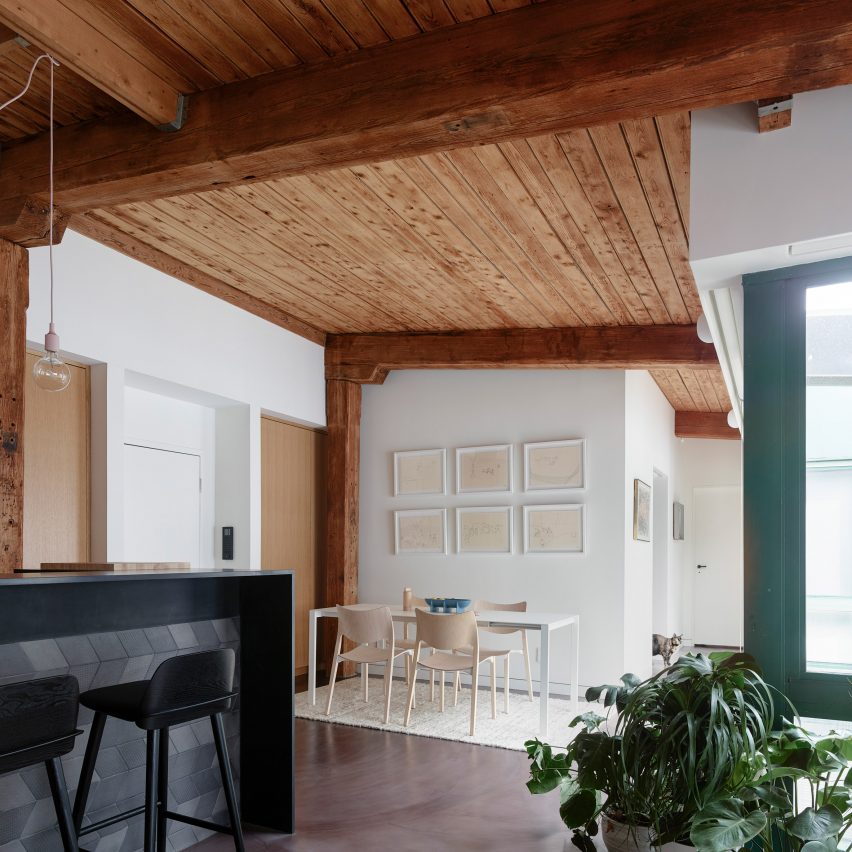
Wooden structural elements at this loft apartment in Brooklyn were uncovered and retreated during renovation work undertaken by local studio General Assembly. Read more
Tom Dixon reveals details of “top-secret” IKEA collaboration
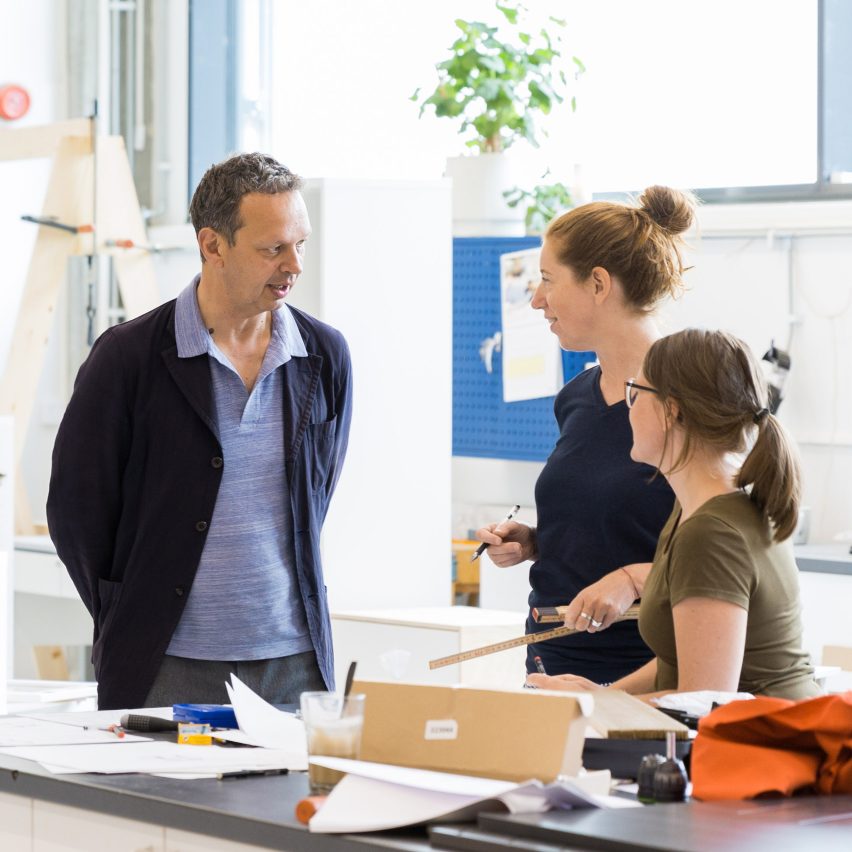
This week’s Dezeen Mail features 3D-knitted IKEA furniture and reaction to 2017’s colour of the year
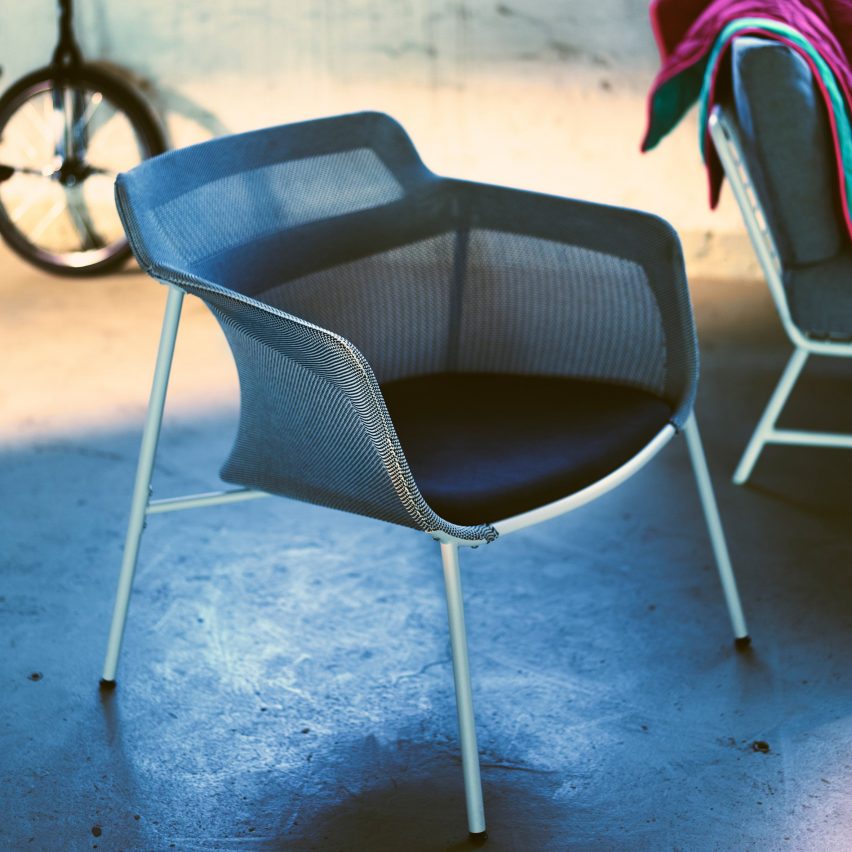
This week’s Dezeen Mail features Richard Meier’s attack on a new crop of “disrespectful” skyscrapers in New York, IKEA’s first 3D-knitted chair and readers reaction to Pantone’s pick for colour of 2017. Subscribe to Dezeen Mail ›
AA director Brett Steele to become dean of UCLA School of the Arts and Architecture
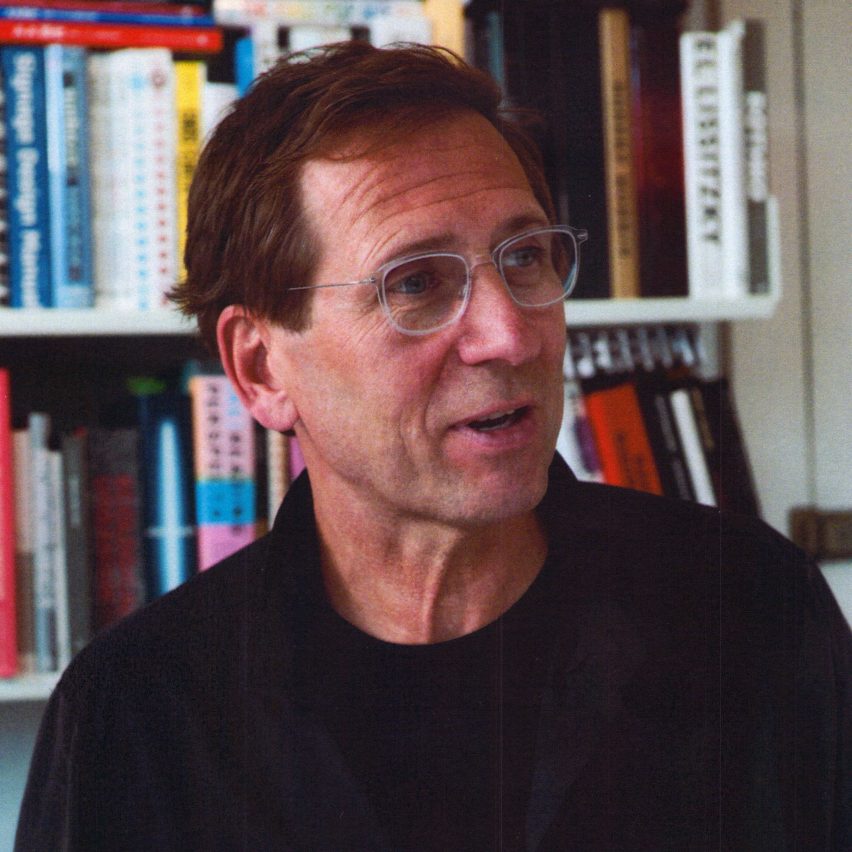
Brett Steele, director of the Architectural Association in London, has been appointed as the new head of the arts school at the University of California, Los Angeles. Read more
10 Things You Didn’t Know About Modern Icon Pierre Chareau

Pierre Chareau, Maison de Verre interior, 1928–32, Paris. Image © Mark Lyon. From the 2016 Organizational Grant to The Jewish Museum for "Pierre Chareau: Modern Architecture and Design."
Known for his collaboration on the legendary Maison de Verre, French architect, and interior designer Pierre Chareau is a celebrated artist cited by Richard Rogers, Jean Nouvel, and more as a major influence on their work.
Completed in 1932, Maison de Verre—or “House of Glass”—has become a prime example of modern architecture, despite the fact that not many people have actually seen the hidden treasure, located on Paris’ Left Bank.
Although his work is currently viewed in high regard, Chareau had a tumultuous career, with large variances between his successes and his failures.
Drawing from a Cultured Magazine spotlight article on the designer, we have compiled a list of facts about Chareau’s life and career that showcase the rollercoaster of his success.
Continue reading for the 10 things you didn’t know about Pierre Chareau.
1. Chareau failed his entrance exams at the École des Beaux-Arts in Paris.
2. Because he failed these exams, Chareau took a job at a Paris-based British furniture manufacturer as an apprentice, and eventually became head designer.
© Wikimedia user: Subrealistsandu
3. In the mid-1920s, Chareau opened two shops in Paris, one that sold cushions and hand-throws, and the other that sold furniture and lighting.
4. Years before being commissioned to build the Maison de Verre for Dr. Jean Dalsace, Chareau designed a study and bedroom for him.
© Wikimedia user: Subrealistsandu
5. Collaborating with modernist architect Robert Mallet-Stevens, Chareau created furniture for three French films by director Marcel L’Herbier.
6. Chareau also dabbled in theater, designing stage sets for Edmond Fleg’s production of Merchant of Paris at the Comédie Française in 1929.
7. Together with his wife, Dollie, Chareau hosted salons for the celebrated artists, writers, and musicians of his time.
8. Once completed, Chareau’s Maison de Verre hosted events attended by Max Ernst, Joan Miró, Louis Aragon, Paul Éluard André Breton, and more.
© Wikimedia user: Subrealistsandu
9. After migrating to New York from Paris, Chareau designed the Motherwell House in 1946. Bad press for the project led to a decline in work for the designer, so he made money by giving cooking lessons to wealthy Americans and by selling art from his personal collection.
10. In the 1950s, Chareau sought out a show at MoMA, but was rejected by the museum’s director of architecture, Philip Johnson.
© Wikimedia user: Subrealistsandu
An exhibit on Chareau will be on display at the Jewish Museum in New York through March 26, 2017.
Find out more about Chareau in the full Cultured Magazine profile, here.
News via: Cultured Magazine.
5 Reasons Why Theodore Roosevelt Is Inspiring
I love to learn from great people and get inspired by their stories. Among them, Theodore Roosevelt (TR) is a favorite of mine. His story never ceases to inspire me.
Here I’d like to give you the reasons why I find TR inspiring. After reading them, I think you will agree with me that he is a great model to learn from.
Without further ado, here are five reasons why TR is inspiring.
1. His achievements are extraordinary.
The list of TR’s achievements is almost unbelievable. He is the youngest ever U.S. president, the winner of Nobel Peace Prize, and a recipient of the Medal of Honor. He also authored more than 30 books despite his busy schedule. He even had time to become America’s first brown belt in judo!
Franklin Roosevelt, his cousin who later became U.S. President, said that TR “was the greatest man I ever knew.”
2. He excelled in all five aspects of life.
There are five aspects of life. While many people excel in just one or two, TR excelled in all five. In fact, I have yet to find another person who excels in all five aspects.
Let’s see how TR did in each:
- Working: The list of achievements above says it all. There is doubt about it.
- Learning: He read three books a day while he was in the White House. Many people can’t read three books a month.
- Physical: As mentioned above, he had a brown belt in judo. He was also a boxer. He thrived in physical activities.
- Social: He was very good at connecting with people. In fact, he became an example in the popular book How to Win Friends and Influence People.
- Spiritual: He maintained his integrity throughout his career. He was also a devout Christian: a Bible was found under his pillow upon his death.
3. He thrived in both “extrovert” and “introvert” activities.
Normally, people thrive in just one kind of activities that matches their personalities, either extrovert or introvert. But TR excelled in both kinds of activities.
He excelled in getting along with people, an “extrovert” activity. But he also excelled in writing, an “introvert” activity. Again, it’s difficult to find someone who excels in both.
4. He was a great learner.
TR was a curious person. He read books in different fields. He also had a photographic memory. He often cited passages from books that he hadn’t seen for years.
I think the main reason for this ability was his focus. While he was reading, he couldn’t even hear his name being called. He was totally immersed in the book.
5. He excelled in energy management.
An important factor behind TR’s achievements is his energy. His energy was so abundant that he was called “steam engines in trousers”. This abundance of energy allowed him to do things with focus and enthusiasm.
This is remarkable because he was physically weak as a child. He got sick often. But one day his dad challenged him to make his body, and he did. He began exercising intensely, and over time became the energetic person he was.
***
These are the reasons why I find TR’s life inspiring.
Any thoughts? Comments here.
Ruth / Urbain Architectencollectief

© Filip Dujardin
- Architects: Urbain Architectencollectief
- Location: Bruges, Belgium
- Architects In Charge: David Niville, David Claus, Dieter Delbaere
- Area: 360.0 m2
- Project Year: 2015
- Photographs: Filip Dujardin
- Structural Engineer: Sileghem & Partners
- Contractor: Babo nv
© Filip Dujardin
From the architect. Because of its position on the corner of the Sint-Jakobstraat and the Ezelstraat in the centre of Bruges, this historical building with a former wedding shop and related sewing workshop, did not have any significant garden or outdoor space, and therefore suffered from a lack of daylight.
© Filip Dujardin
The owner wanted to combine a new duplex shop at street level, a duplex flat and three student rooms with a communal kitchen.
© Filip Dujardin
The plot was stoned, giving place to a much larger and pleasant courtyard. A new glazed staircase was introduced to organise the circulation towards the different components of the program. The staircase was made up of prefabricated white concrete slabs, inserted in a white steel structure and finished with a glazed curtain wall.
© Filip Dujardin
The execution was well prepared because of the complexity of the site and the busy but small road. The steel structure was developped as a series of stacked prefabricated steel cages, which could be easily transported, lifted and assembled on site.
Section
The design aims for a high degree of durability, which is a chalenge in the historical UNESCO centre of Bruges. To preserve the original facade the insulation was placed on the inside, combined with the use of additional windows in line with the insulation.
A few simple operations provide an attractive shopping space.
© Filip Dujardin
Starting from the structural logics, a double heigt space is introduced in the shopat the front, providing attractive relations between the different shopping surfaces.
© Filip Dujardin
Filippo Bombace Architect Creates an Apartment in Blue in Porto Santo Stefano, Italy

Fra Cielo e Mare is a private residence renovated by Filippo Bombace Architect. It is located in Porto Santo Stefano, Italy. Fra Cielo e Mare by Filippo Bombace Architect: “Suspended between sky and sea …’ it is the definition used by the Clients to descrive the beauty of the new house in Monte Argentario (Tuscany). It is exactly this affirmation to define the layout of a beautiful adventure of project..

