Selling to customers in different time zones? Here are seven tips to make it easier to communicate with and serve customers in other parts of the country or world.
Author: signordal
Markarfljótsgljúfur by sntssche http://flic.kr/p/7pD764

Northamptonshire, England photo via dodi

Best architecture photograph of 2016 revealed
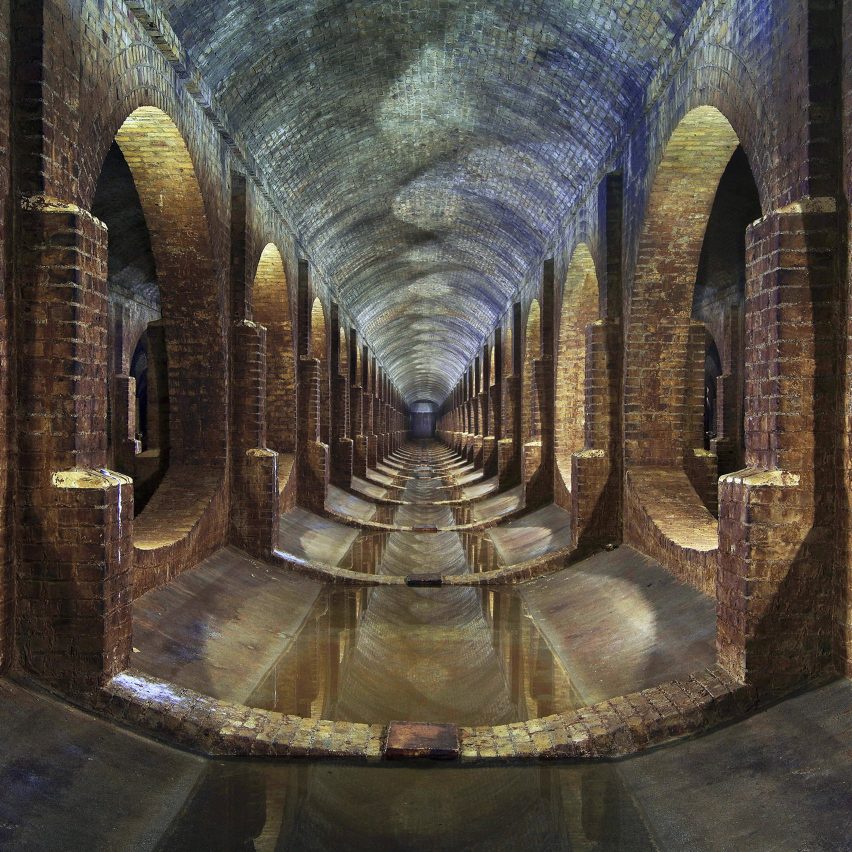
A shot of a brick reservoir in London’s Finsbury Park has been selected as the best architecture photograph of the year at the Arcaid Images Architectural Photography Awards 2016. Read more
OMR Art Gallery / Mateo Riestra + José Arnaud-Bello + Max von Werz

© Rory Gardiner
- Architects: Mateo Riestra, José Arnaud-Bello, Max von Werz
- Location: Calle Córdoba 100, Roma Nte., 06700 Ciudad de Mexico, CDMX, Mexico
- Architects In Charge: Mateo Riestra, José Arnaud-Bello, Max von Werz
- Area: 455.0 m2
- Project Year: 2016
- Photographs: Rory Gardiner
- Collaborators: Javier Moctezuma & Oriam Morales
- Construction: Cantiliver
- Structural Engineering: Ricardo Camacho / DECS
- Facilities Engineering: Taller 2m
© Rory Gardiner
After 30 years in a turn-of-the-century Porfirian villa, the renowned contemporary art gallery OMR decided to move to a new location. The chosen site was an existing brutalist building called Sala Margolin, originally dedicated to the sale of records and books. The building’s design consisted of a single large space covered by a coffered concrete roof slab under which the different sections of the store were organized by subtle changes in floor level. The roof was supported around the perimeter and by four slender concrete columns framing a central skylight, the most important light source for the space.
© Rory Gardiner
The design strategy was to preserve the existing building as much as possible. A central bathroom core was demolished and some interior details toned down so as to bring out the character of the building and transform it into a generous exhibition space. In order to provide the flexibility required by the client, the concrete floor was leveled and structural wall linings were applied to the interiors, allowing the hanging of substantial artworks anywhere within the 5.5 meters room height. Accompanying the main exhibition space on the ground floor are an access courtyard, reception, technical storage space and a rear garden courtyard onto which a bar opens.
© Rory Gardiner
© Rory Gardiner
A vertical extension accommodates supplementary programs in order to not compromise the existing spaces. This new top floor houses a multipurpose space, art storage, offices, a library, meeting room, kitchen and terrace. By thickening the wall that faced the rear courtyard it was possible to resolve the vertical circulation to the new top floor without affecting the structure of the existing slab. This “thickened wall” – a mere two meters wide – allowed the accommodation of a mezzanine with bathrooms as well as the opening up of the newly added interior spaces towards the courtyard by means of a modern and paired down glazed facade. Built on site using standard steel profiles and arranged in rectangular modules this façade integrates projecting windows allowing for passive ventilation. In lieu of a fixed goods lift that would have required the perforation of the existing slab or the introduction of an extra volume infringing on the rear courtyard, the facade has an openable section that allows the movement of large format artworks to the top floor via a mobile lifting platform.
© Rory Gardiner
The newly built top floor is organized according to the structural scheme of the original construction, roughly forming a 9-square grid layout that provides a maximum of flexibility by allowing a variety of ways to subdivide space and distribute circulation. On reaching this floor, visitors discover the large multipurpose space that functions as an extension of the main exhibition gallery, a showroom, a work space and a place for workshops and lectures. In keeping with the position of the original skylight, the library becomes a new central light space that articulates all other functions. Facing the street is a more private space where the meeting room, kitchen, executive office and terrace are situated. The terrace is the result of a 4-meter setback of the top floor which functions as a mediating element towards the street, keeping the proportions of the original facade intact and allowing for a discreet intervention. A lateral staircase leads from here to the rooftop effectively creating an extension of the terrace during larger scale social events. In turn, this space has been conditioned to function as an outdoor workshop where part of the preparatory work for exhibitions is done.
Section
The result is a sober project that amplifies the character of the original building whilst preparing it for a new cultural life without falling back on the international conventions of the sterile white cube.
© Rory Gardiner
Hugh Martin & Partners’ Princes Square Named Scotland’s Building of the Century

© Jean O'Reilly
The Royal Incorporation of Architects in Scotland (RIAS) has announced Hugh Martin & Partners’ Princes Square as Scotland’s Building of the Century at the finale celebration of Scotland’s Festival of Architecture 2016 in Dundee. Open to buildings built in Scotland in the past 100 years, voters selected the winning building from a 10-strong shortlist that included projects by Enric Miralles and Reiach and Hall Architects.
© Jean O'Reilly
Located in the heart of Glasgow’s Style Mile, Princes Square was renovated into an iconic multi-level shopping center and public space by architects Hugh Martin & Partners in 1987, preserving and restoring the original building while creating a modern shopping and dining venue “of quality and distinction.”
Courtesy of Princes Square
Distinctive for its main entrance guarded by a giant metal peacock, the building features whimsical architectural elements throughout, such as symmetrical criss-cross escalators and spiral staircases, and is capped by a airy glass roof.
Hugh Martin & Martin have won numerous awards for the renovation, including the RIBA Scottish Regional Award for Architecture (1988), the Edinburgh Architectural Association Centenary Medal (1989), and a Civic Trust Award (1989).
© Jean O'Reilly
The award was organized as part of the traveling Scotstyle exhibition, which has visited over 30 venues throughout Scotland, telling the stories of Scotland’s top 100 buildings of the past century.
“The Festival of Architecture has tapped into a keen public appetite for architecture and events on an architectural theme,” said Neil Baxter, RIAS Secretary and co-editor of Scotstyle. “With over 460 events and well over a million participants, it is the most substantial ever year-long celebration of a single art form in Scotland’s history. Princes Square is a worthy popular choice for the best building of the last 100 years.”
© Jean O'Reilly
© Jean O'Reilly
More information on the award and the Scotland Festival of Architecture 2016 can be found here.
News via RIAS.
7 Habits of Highly Authentic Leaders
“I realized I was more convincing to myself and to the people who were listening when I actually said what I thought, versus what I thought people wanted to hear me say.” ~ Ursula Burns ~
In the last number of years, there seems to be quite a lot of media attention on bad leaders. We hear a great deal about the ones who are corrupt, egotistical and motivated solely by their own gain and self-aggrandizement. Stories of employee disengagement, bullying by management and other articles around failures of leadership appear frequently. Despite our seemingly endless desire to hear about the bad leadership, most great leaders quietly giving their best for organizations and society. While not drawing attention to themselves and their achievements, these leaders are making a real positive difference with their staff, organizations and society.
Here are the 7 habits that authentic leaders continuously cultivate:
See Their Role as a Privilege and Responsibility, Not a Right
Authentic leaders see their role as one of responsibility for bringing out the best in others and doing what is best for the organization within the context of serving their community. They resist entitlement and seeing themselves as special people ordained with special powers and privileges. While others give in to the urge to use their power, authentic leaders are in the habit of making themselves constantly aware of the responsibilities their position’s place them in. They are truly grateful for the chance to serve others and are always looking for ways to help others advance.
Develop Their Courage and Self-Confidence
Doing what is right, rather than what is popular, takes courage and a belief in oneself and one’s abilities. Authentic leaders know that their decisions will not always be popular and they will be required at times to stand up and defend their beliefs and decisions. They are prepared to do this, believing it is more important to do what is right rather than what is easiest or the most popular. While they face fears and self-doubt like everyone else, they understand the need to push past them in order to grow.
Show Their True Self to Everyone
The reason genuine leaders earn trust and respect is that everyone around them knows that what you see is what you get. The janitor is treated with the same respect as those they are doing business with and those that they report to. Their wives, husbands, families and friends see the same person as do all the people they work with. They are comfortable in their own skin and see no need for feigning or ego stroking.
Acknowledge Their Imperfections and Mistakes
Genuine leaders see others as struggling humans trying to do their best and are willing to give themselves leeway in their own journey of life. They are willing to admit their mistakes and are willing to accept they will never be perfect. Their aim to learn from their mistakes, take the lessons and move on. Those who report to genuine leaders will be more confident in pushing their own boundaries and making mistakes in the process. Creativity and innovation will flow in an organization in which leaders are making and acknowledging their own mistakes and encourage their followers to do the same.
Develop Their Emotional Intelligence
The most important knowledge, of any leader, is self-awareness. Genuine leaders are continually growing and developing knowledge of themselves. They see this as essential for building stronger relationships with others and helping them reach their potential. Personal development is seen as a lifelong journey and developing the leadership in others is seen as being an important component of not only their leadership, but their life’s work. Instead of avoiding challenges they look upon them as essential to their growth and development. They see every challenge as an opportunity to boost their own capabilities and growth opportunities, not only as leaders but as human beings.
Treat Others With Empathy and Respect
We all have preferences when dealing with others; some we like and others just seem to bring out the worst in us. Genuine leaders are aware enough to know when someone is pushing their triggers and attempt to treat everyone reasonably and respectfully. They make a real effort to treat everyone fairly regardless of their personal feelings towards them. They are never beyond sincerely apologizing to anyone if they realize later that they have acted rudely or disrespectfully towards them.
Always Looking For Ways to Give Back
Whether it is flipping burgers at the company barbecue or coaching little league slow pitch, authentic leaders are the first ones to avail themselves to the service of their organization and community. They see themselves and their roles as part of the bigger picture and look for these opportunities to share their skills and knowledge with those around them. While some might view this as a burden, genuine leaders see recompensing as a privilege and an opportunity to give back as a form of gratitude for what they have received in life.
The post 7 Habits of Highly Authentic Leaders appeared first on Change your thoughts.
mikenudelman:Here’s what 200 calories of every Thanksgiving food…

Chanel, COS and Dior revealed as fashion names that Dezeen readers care most about

Call for entries to YAC’s Castle Resort competition
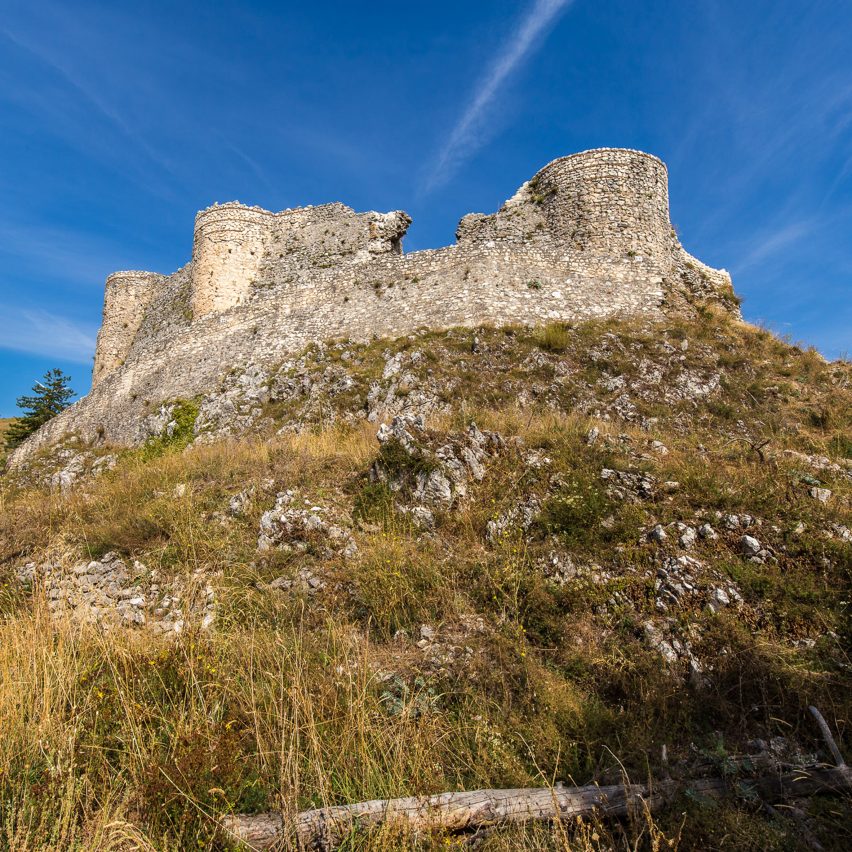
Dezeen promotion: Young Architects Competitions is inviting architects and designers to come up with ideas for transforming the ruins of a medieval castle in Italy into a holiday destination. Read more

