20 Fun Things You Can Do with Family on Thanksgiving

We all know some of the favorite things people like to do on Thanksgiving: watch football, watch The Macy’s Day Parade, and of course taking a nap after gorging on Turkey.

Well the purpose of this article is to inspire everyone who reads it to turn off the TV (web, video games) for part of the day and really spend some quality time with your friends and family. You’ll have have fun doing it and you’ll create fun, fond memories.

1. Take a Walk. Pick an enjoyable destination. All you need to bring are your sneakers and conversation! Or you could join a Thanksgiving road race or road walk.

2. Play Touch Football. Or soccer, tag, hide-n-seek, etc. Just get outside with the gang and do something that involves running around and taking in some nice fresh air.

3. Boardgames! Get out those games you have in the closet since last Christmas and haven’t played yet. Scrabble, Life, Yahtzee, Cranium, Trivial Pursuit, Trouble, Chutes & Ladders, whatever! Have some silly fun!

4. Play Charades. This doesn’t take much. Make your own rules as you go. Have fun!

5. Sing-a-Long. Karaoke. Get out the instruments, guitars, piano. Dust off that accordion. Bring out the tambourines, spoons, etc. Put on a holiday radio station and sing along. Make up a contest. You can really have fun with this.

6. Memory Sharing. Share stories. You can pick a theme such as:

    • The greatest day of my life. 
  • The best thing that happened in my life this year. 
  • My favorite memory from childhood. 
  • The funniest thing that ever happened to me.

Have someone scribe the stories or videotape the event.

7. Share Thanks. At dinner have everyone share what they are thankful for before eating dinner.

8. Silly Dance Contest. Just like it says. Be silly. Dance. Make up your own rules.

9. Kids Talent Show. There’s usually one grownup at family gatherings who likes to get the kids doing activities. If you’re that person maybe you want to have the kids perform for the whole family after dinner. While everyone is watching football you could throw it together. (Of course adults can join the show too!)

10. I Love My Family because…. Gather round as a family and have each person share what they love about the family.

11. Share the Love. Have the family all in one room and have each person tell why they admire the person next to him/her. And then that person says why they admire the person next to him/her, and so on. “I Admire ___________ because…”

12. Treasure Hunt. Create a simple treasure map and “prizes.” There can be one prize or multiple prizes, like an egg-hunt. Ideas for prizes: chocolate turkeys (is there such a thing?) or a packet of coins or a gift certificate wrapped up in a box. Share your ideas in the comments please!

13. Name That Tune. Play the humming game where each teams or individuals have to name the tune.

14. The Questions Game. Here is a link to a family game with very few rules. You get to make up the rules. The idea is to spark conversations, have fun, and get to know each other better.

15. The Craziest Thing …. (that I saw or experienced this year). As a family tell stories that can be true or made up. It can be a little bit like “To Tell the Truth.” Everyone tells a crazy story that is either true or made up and everyone has to guess if it is true or not. And the story doesn’t have to be something that they actually experienced.

16. Our Family Tree. Have everyone imprint a fingerpaint handprint on a big sheet of paper with their name underneath. You can have it framed or take a picture of it to share with everyone.

17. Start a Thanksgiving Day Banner. Starting this year create a banner that can hang in your living room that will have a picture of the whole family from each year. It can become an heirloom for future generations. You could also create a similar item electronically say with a website.

18. Three Legged Races. Link up kids/grownups. You could also try a sack race or create an obstacle course race too. Have some fun silly prizes or simple privilege prizes like the first place team doesn’t have to help with clean up or they get first dibs on the turkey.

19. Family Thanksgiving Journal. Grab a blank notebook. It doesn’t have to be fancy. Write down everyone’s thanks for this year. And then next year do the same so that over time you build a treasured family book of thanks as well as a sort of family history.

20. Make Me Laugh. Tell jokes. You can make it into a game to see if you can get someone to laugh. Can be done as individuals, round-robin, or as teams.

Happy Thanksgiving all! Enjoy!

Please share your favorite Thanksgiving traditions and family fun activities in the comments! We’d love to hear your ideas!

Originally written for Dumb Little Man by K. Stone in 2007. She is the author of Life Learning Today, a blog about daily life improvements. Photo by Cameron Nordholm

The post 20 Fun Things You Can Do with Family on Thanksgiving appeared first on Dumb Little Man.

http://ift.tt/2fKX3D8

Karlovac Freshwater Aquarium and River Museum / 3LHD


© Miljenko Bernfest

© Miljenko Bernfest


© Miljenko Bernfest


© Jure Živković


© Jure Živković


© Jure Živković

  • Architects: 3LHD
  • Location: Ul. Gornje Mekušje, 47000, Karlovac, Croatia
  • Architect In Charge: Saša Begović, Marko Dabrović, Tatjana Grozdanić Begović, Silvije Novak, Irena Mažer Hranuelli, Vibor Granić, Deša Ucović, Ivana Šajn, Nevena Kuzmanić, Romana Ilić
  • Area: 2915.0 m2
  • Project Year: 2016
  • Photographs: Miljenko Bernfest , Jure Živković
  • Structural Engineering: Ivan Palijan, Siniša Lulić (Palijan d.o.o.)
  • Plumbing Drainage And Aquarium Technology: Nenad Šutevski (Vodotehnika d.d.)
  • Plumbing And Drainage: Tomislav Fujs (Vodotehnika d.d.)
  • Electrical Engineering: Erol Čičić, Antonio Praničević (Projekting 1970)
  • Mechanical Installations: Zlatko Jakoplić (Ured 3T d.o.o.)
  • Elevators: Rok Pietri (Lift Modus d.o.o.)
  • Building Physics: Mateo Biluš (AKFZ studio d.o.o.)
  • Landscape Design: Luka Brnić (Uređenje krajobraza d.o.o.), Ines Hrdalo
  • Fire Safety, Health & Safety Project: Nadan Kosanović (ING Labos)
  • 3 D: Boris Goreta
  • Signage And Environmental Graphics Design: Bilić_Muller Studio (Dora Bilić, Tina Müller)
  • Aquarium Technology Project: Franjo Jović (Tehnoekspert)
  • Fish Protection Project: Dražen Oraić (Hrvatski Veterinarski Institut)
  • Concept And Design Of The Exhibition: 3LHD
  • Aquarium Setup: Marko Ćaleta (Faculty of Teacher Education, Zagreb), Zoran Marčić (Faculty of Science, Zagreb)
  • Educational Wall Illustration And Design: Ana Rako and Bilić_Müller Studio
  • Artificial Rock: Igor Lenard
  • Audio Video Installations: Miodrag Gladović (AVC)
  • Aquascaping And Aquarium Lighting Concept: Petra Bašić, Petar Pintar (Aquatic design)
  • Main Contractor: AB Gradnja d.o.o, ENA d.o.o., KGH d.o.o.

© Miljenko Bernfest

© Miljenko Bernfest

From the architect. The Karlovac freshwater aquarium is located by the river Korana. The building volume is partially dug into the ground and covered with earthen embankments and greenery from its outer edges. The design concept was inspired by the city’s historic center “Karlovac star” surrounded by “Šanci” – defensive earthen walls and mounds. The goal was to form a new city focal point and to validate the promenade by the river. Three walking routes were formed: towards the city center and the river; towards the south and the sports and recreational center; and towards east and the road access. A new point is located at the junction of the walking routes – a square around which all of the aquarium facilities are located: entrance spaces, souvenir shop, cafe bar, library and offices.


© Jure Živković

© Jure Živković

Ground Floor

Ground Floor

© Jure Živković

© Jure Živković

The aquarium exhibition displays the flora and fauna of Croatian rivers and their ecosystems. The display layout follows the flow of a karst river – together with its flora, fauna and biodiversity. The exhibition starts outside, with a water surface on the square. It continues inside the building with a system of ramps that wind like a river down into the basement level because specific plant and animal species require complete control of lighting conditions in order to survive. Aquariums are placed along, above and below the visitor paths. Along the pedestrian ramps the fish are first observed from above, as they are when walking along the river; and then from the sides – they can be seen below the water surface. After the headwaters (upper part of a river) the sounds quiet down, visitors plunge into caves that feature endemic species which are often found in subterranean streams. The space expands, lighting comes from the tanks, and visitors can take a break in the central area, listen to the sounds recorded in caves, and observe the exhibited endemic species. After the cave, the visitors arrive to an aquarium with larger specimens of rare species that have disappeared from their natural habitats in Croatia. The visitors can observe the fish and aquatic plants that live in warmer parts of the riverbed. The aquariums are seen from the side, and then from underneath as the visitors walk into a tunnel that evokes immersion into a river. After the tunnel, visitors pass through a series of aquariums with water lilies and rushes usually present downstream, in the marshy habitats of a river. The exhibition ends with a system of cascading aquariums whose biotopes display waterfalls and a travertine barrier.


© Jure Živković

© Jure Živković

© Jure Živković

© Jure Živković

Finally, a stairway and an elevator return the visitors to the entrance hall through the gift shop. A space for analysis of the technological parameters of water, a scientific research center and fish aclamatization spaces are located in the center of the layout.


© Jure Živković

© Jure Živković

© Jure Živković

© Jure Živković

Karlovac freshwater aquarium is co-financed from the European Regional Development Fund under the “Regional Competitiveness” 2007-20013 Operational Programme. The total value of the project is 36.691.939,28 Kuna’s, of which the grant from the European Regional Development Fund is 36,222,282.45 Kuna’s.


© Jure Živković

© Jure Živković

Product Description.

Pigmented concrete

The concrete used on the façade is pigmented and produced by a special in-situ method right on the construction site. A special type and size of grain was selected to achieve the desired effect – to make the façade color resemble the color of ground/soil. First, the concrete is carefully applied on the hull, vibrated in layers and cultivated for a period of time. Before it is mounted on the façade the hull is coated with a cement milk retardant to slow down the binding process in the concrete. After the hull is removed the concrete surface is washed to obtain a specific texture. The mineral grains become visible and clearly define the structure and texture of the complete and solid concrete surface.


© Jure Živković

© Jure Živković

http://ift.tt/2eYRdP4

“Creative Cynic” Peter Cook Explains Why Archigram Designs Were Always Meant to Be Built

Last week ArchDaily attended the 2016 World Architecture Festival in Berlin. We chatted with Sir Peter Cook and asked him about the current state of global affairs (Brexit, the US election, etc). He explained how his experience and work has influenced a career that has spanned over five decades, and reminds us of the inspiring power of architecture. 

Peter Cook: You have to understand that I’m a very particular kind of animal both politically and in my general opinions. I’m what I would call a creative cynic. I’m an old person and I’ve seen a lot of not very good things happen. On the other hand I was privileged as a child to have free education and free college. 


Peter Cook. REAL CITY: Perspective of Everscreened Type, 1986, tracing paper, ink, 64 x 62 cm © Peter Cook

Peter Cook. REAL CITY: Perspective of Everscreened Type, 1986, tracing paper, ink, 64 x 62 cm © Peter Cook

I don’t see things in the extremely black and white. I think there are variants on the not quite right and variants on the nearly possible. And so I think even in the Archigram days my projects were actually based upon a kind of liberal tradition. Although the mechanics looked outrageous, perhaps, the actual society that I was imagining into them was what I would call an North European liberal society, such as I actually grew up in. Of this made—there’s a tendency away from that. And my great belief in Europe, which I did before there was even an EU, was that one had seen all these countries fighting each other—I was a child at the war time, and I heard bombs dropping—and you saw all these countries coming together and that seemed wonderful, irrespective if there was a bureaucracy or not.

In a way, I think the architectures that I make is based upon an optimism. Optimism with a side knowing that it won’t quite happen, but not saying “Oh! All is terrible!” or “Oh! All is wonderful!” It’s, “Yeah, it’s going to be a bit better or a bit worse.” That, of course, is a very English attitude. That we’re survivors. It’s interesting that when sometimes there are these economic downturns, for example in Spain when there was the last economic downtown, everyone said “It’s all collapsing, what are we going to do, what are we doing to do!” The English said, “Hmm it’s not so good, but it’ll get better.” And then things are good in England and they say, “Uh, any minute it’s going to go down.” And it’s a kind of protective tissue which is very funny for foreigners. My wife is not English and she can never understand how we have this—we’re never totally optimistic and we’re never totally pessimistic. We say, “Well, let’s keep going and something will turn up.” And you have to put my architecture in that perspective. It’s what I would call liberal in a traditional sense of liberal. It’s inquisitive, reasonable, it’s to the left but not extreme left, it’s beneficial for the underprivileged, but not in an extreme way. It uses the economic system that we have, as long as it doesn’t go extremely badly. And I think this is difficult, particularly for Latin people or Mediterranean people to understand. They say, “What turns you on?”


Drawing Studio / CRAB Studio © Richard Bryant arcaidimages.com

Drawing Studio / CRAB Studio © Richard Bryant arcaidimages.com

You can use your imagination of course, and when I was doing the Archigram stuff I always thought it could be built. If you looked at it, it had handrails, it had toilets. And the toilets were the right size and the escalators were the right pitch. I always used to get irritated by people from other cultures who’d say, “This is a wonderful scheme; this is the city of the future.” And you thought, “How the f*ck are you going to walk around on it! You’re going to fall off the edge.” So, you have the bear that in mind, and therefore I don’t see any divide between what I was showing before lunch there, the blue thing [Drawing Studio at Bournemouth University], which is actually built, and what I was drawing in Archigram. That [project] looks a bit unusual in an English university, but it’s only what we were doing in Archigram. And Archigram looked a bit unusual but actually it could have been built, and that was what was very interesting when I built the Graz building—that you could do that. And yet, people for years had been saying you couldn’t do our kind of stuff. And they you say, “F*ck you, look there it is!” What do you do then? And I think it’s… in a way a rather cynical background. You somehow can do things because the cynicism is a protective crust for what is fundamentally optimism. And there you are.

http://ift.tt/2fkffTd

Photos from Canada

“On the top of the world” Big Beehive trail around Lake Louise in Alberta 📸: @followmearoundtheworld1 thanks !
Use #travelcanada or tag us @travelcanada_ to share your pics and follow us ! .
.
.
#canada #explorecanada #alberta #explorealberta #lakelouise #banff #banffnationalpark #lake #bigbeehivehike #bigbeehive #beautiful #nature #landscape #mountains #lake #blue #winter #forest #trees #destination #water #hike #hiking #wanderlust #adventure #viewsaddict #camerasnipers (à Big Beehive, Lake Louise)

http://ift.tt/1Re4v3F

Running 184 miles from Washington, D.C., to Cumberland,…

Running 184 miles from Washington, D.C., to Cumberland, Maryland, the Chesapeake & Ohio Canal National Historical Park offers as much adventure as you can handle. Hiking and biking on the towpath is a favorite activity for locals and visitors alike. With so much history and nature to experience, you should #OptOutside this week to enjoy the fall colors. Photo by Kathi Isserman (http://ift.tt/18oFfjl).

7 Surprising Benefits of Coworking Spaces

A co-working space can change a business in profound and positive ways. If you’ve never seen one, it’s a shared office environment that your employees can use for however long is necessary. This concept is really shaking up the corporate world.

Coworking spaces are almost like hotels or rental homes for companies. They can head to one of these facilities to conduct meetings, call clients, and take care of all kinds of other day-to-day operations.

If you’re not sure that such a setup is right for your organization, consider the following benefits of coworking spaces.

1. Coworking spaces are fully equipped

Many of these spaces provide comfortable lounges, spacious conference rooms, mailboxes, and high-quality reception services. Moreover, in most cases, they contain all of the communications technologies and other items that a company would need.

2. You’ll save money

coworking-spaces

Buying or renting an office building can be prohibitively expensive, especially for new and very small companies. It’s no surprise, then, that half of all coworkers have enjoyed higher incomes.

3. These spaces encourage networking

Among the strongest benefits of collaborative working are the myriad networking opportunities. When your staff members mingle with people from other companies, they can discuss solutions to their mutual challenges. You’re sure to pick up some handy new ideas, and you might even find new business partners and clients as well.

4. People can work at any time of the day

Approximately 70 percent of office professionals prefer to work outside of normal business hours at least some of the time. Of course, coworking spaces allow them to set their own schedules.

5. It’s a way of attracting a youthful workforce

coworking

About 78 percent of the people who utilize coworking spaces are younger than 40. The collaborative and innovative nature of these environments seems to attract this demographic. Therefore, if you’re looking to entice younger men and women to work for you, offering them the chance to try coworking could help.

See Also: How Millennials Measure Success At Work 

6. These spaces are scalable

The American workforce is evolving. By 2020, four out of every 10 professionals in the U.S. won’t be connected to any one company. Instead, they’ll be temporary employees, freelancers, or independent in some other way.

Why set up your business in a large office complex when there’s no way to tell how many full-time workers you’ll have in just a few years? By contrast, a shared office space is highly flexible.

See Also: 7 Convincing Reasons for Working as a Freelancer 

7. This type of atmosphere can make you feel good

You might be surprised to find out that 68 percent of coworkers believe they can concentrate more effectively. On top of that, 70 percent feel “healthier” than they would in a typical office setting, and 91 percent say that they communicate better with other people. Perhaps the old-fashioned workplace ― with its small cubicles, petty politics, and occasional fights over parking spaces ― has already outlived its usefulness.

With so many advantages, coworking spaces have a lot to offer to new startups, new businesses, or even businesses that are struggling to stay afloat.


The post 7 Surprising Benefits of Coworking Spaces appeared first on Dumb Little Man.

http://ift.tt/2eYybse

Born a Crime: Stories from a South African Childhood

Born a Crime Cover Crop

We need our comedians now more than ever. The best, from Samantha Bee to John Oliver, were so incisive during the interminable and punishing election season that their work often functioned less as comedy than as vital journalism. There’s a simpler reason many of us need our comedians, too: those of us who voted blue and are feeling, well, blue will need a way to laugh through our grief and anger as we gird ourselves for the coming Trump administration.

It could be that Daily Show host Trevor Noah, the South African comic unexpectedly tapped last year to replace the revered Jon Stewart, will prove particularly adept at wringing satirical humor out of a reality that already feels to many like dark satire. While during his early months in the hosting chair some complained that, as an outsider, Noah didn’t evince Stewart’s impassioned outrage at American political culture, a recent sketch comparing Trump to scandal-plagued South African president Jacob Zuma demonstrated how instructive an outsider’s perspective can be. (Noah made the case that the “inept and self-serving” Zuma and Trump appear to be “brothers from another mother.”) Noah’s new memoir, the rollicking yet tender Born a Crime: Stories from a South African Childhood, provides further indication that Noah’s is a necessary voice for these times.

In addition to that, it’s a great read. The book comprises eighteen autobiographical chapters, each prefaced by a short piece explaining a relevant element of South Africa’s history of apartheid. Many of the chapters center on his relationship with his fearless and devout black Xhosa mother, who risked a prison term of up to five years by having a child with Noah’s white father, a Swiss expat. Noah was indeed “born a crime,” and for the first five years of his life, until apartheid fell, he was mostly kept indoors, whether with his mother in her Johannesburg apartment or with his maternal grandmother in her Soweto township, to minimize the risk that the government would take him away.

“We had a very Tom and Jerry relationship, me and my mom,” writes Noah, a vivid storyteller who fondly recalls epic chases through the neighborhood as his mother sought to punish him for all manner of mischief and as he sought to escape a beating. As he grew fast enough to outrun her, she took to yelling “thief” to get bystanders involved in the pursuit. “In South Africa, nobody gets involved in other people’s business, unless it’s mob justice, and then everybody wants in,” Noah quips. His writing about his mother is loving and bighearted, especially as she becomes involved in an abusive relationship that culminates in a truly shocking outburst of violence that Noah’s mother, miraculously, survives.

Throughout the memoir, Noah slyly illuminates the absurdities of a society built on racial hierarchy. When the light-skinned child was with his mother’s extended family in the township, he was treated as white. Though he was the least well behaved of all the children, he was never beaten by his grandmother as his cousins were. “A black child, you hit them and they stay black,” she told his mother. “Trevor, when you hit him he turns blue and green and yellow and red. I’ve never seen those colors before. I’m scared I’m going to break him. I don’t want to kill a white person.” While he’s somewhat abashed to admit it now, Noah reveled in his special treatment. “My own family basically did what the American justice system does: I was given more lenient treatment than the black kids,” he reports. “Growing up the way I did, I learned how easy it is for white people to get comfortable with a system that awards them all the perks.”

But when Noah’s mother, who worked as a secretary, was eventually able to buy a home in the suburbs, Noah went from being “the only white kid in the black township” to being “the only black kid in the white suburb.” And although biracial, he was excluded from South Africa’s mixed-race “colored” population, an ethnic group that traces its history back to the seventeenth century, to the sexual unions of Dutch colonists and African natives. He didn’t quite belong anywhere, and growing up, he had few friends.

The book, focusing on Noah’s boyhood, doesn’t describe his decision to pursue comedy, but one can imagine that a childhood spent as a perpetual outsider, observing group dynamics to determine where he might fit in, has served Noah well in his chosen profession. There were so many times, he recalls, when he “had to be a chameleon, navigate between groups, explain who I was.” He survived it (and writes about it) well; expect him, in the coming months and years, to help explain us to ourselves.

The Barnes & Noble Review http://ift.tt/2fKJH9J

What is a ‘transitional’ Brexit deal and what would it involve?

Theresa May has signalled she will not let UK simply crash out of EU in 2019 without some sort of parachute for business

Theresa May’s has spoken about the need to have some transitional trading arrangements post-Brexit. That is significant because it amounts to the strongest hint yet that the government will not let the UK simply crash out of the EU in early 2019 without business having the protection of some sort of parachute.

Related: Tories have 33-point lead over Labour on economic competence, ICM poll suggests – Politics live

Continue reading…

Politics blog | The Guardian http://ift.tt/2gdaTwz

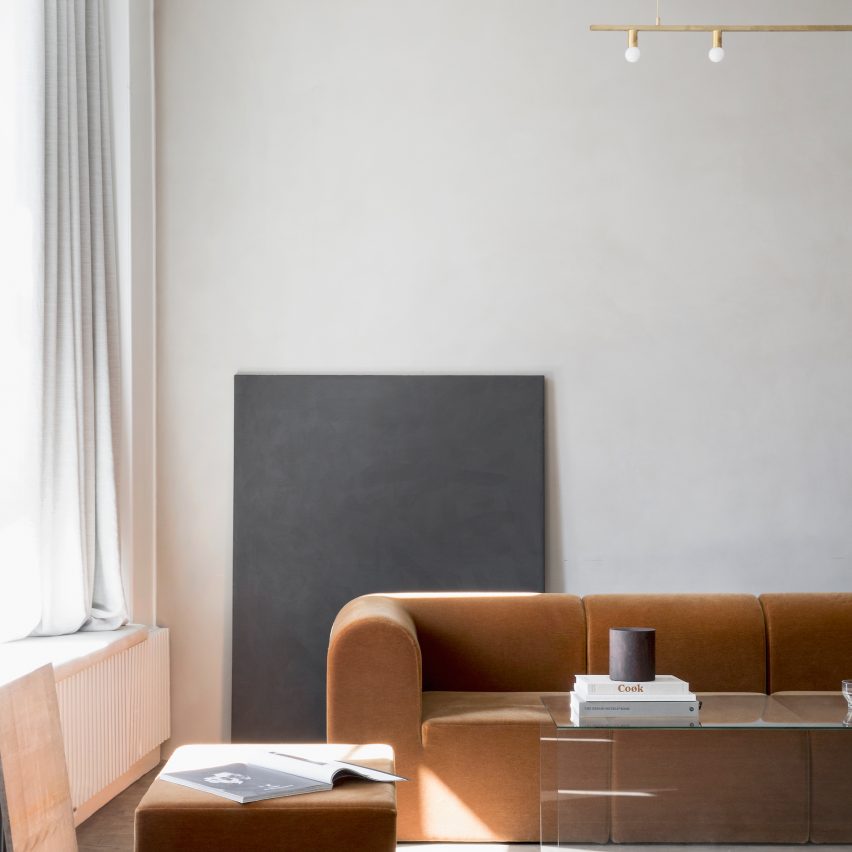
Norm Architects creates minimalist workspace for Kinfolk magazine in Copenhagen

Kinfolk offices by Norm

Danish studio Norm Architects has taken influences from both Scandinavian and Japanese design to create this pared-back gallery and workspace for Kinfolk magazine in central Copenhagen. Read more

http://ift.tt/2fhpAMu