HOK + FXFOWLE + SPEECH Unveil Designs for Moscow City’s Final Skyscrapers


Courtesy of Renaissance Development

Courtesy of Renaissance Development

Visualizations of the last full-scale skyscrapers in Moscow’s new International Business Center (“Moscow City”) have been revealed. Designed by an international team made up of HOK (USA), FXFOWLE (USA) and SPEECH (Russia), the two “Neva Towers” will provide additional residential and office space to the skyscraper district, which includes many of Europe’s tallest structures, including Europe’s tallest building, Federation Tower (sometimes called Vostok Tower); and one of the world’s tallest twisting buildings, Evolution Tower.


Courtesy of Renaissance Development


Courtesy of Renaissance Development


Courtesy of Renaissance Development


© Flickr user v_mats. Licensed under CC BY-ND 2.0

Located on a triangular site in the northwest of Moscow City, the two rectangular towers rise from a 4-story podium, arranged to create an open plaza and green space surrounding the buildings that will be free from future development. The landscaped space will serve as the entry point to the towers, as well as to the aboveground and underground retail galleria and parking deck.


Courtesy of Renaissance Development

Courtesy of Renaissance Development

Program types will be split between the two skyscrapers – the taller of the two buildings will reach a height of 338 meters and will contain 77 floors of residential units, while the shorter tower will provide 63 floors broken up between office and apartment levels. In total, the project will add 1,210 new apartment units.

As they rise, the towers retain a classic form that gradually steps back to a fully glazed top tier to give the structure a visual lightness and provide the penthouse apartments with panoramic views of the city.


Courtesy of Renaissance Development

Courtesy of Renaissance Development

“The tower configuration is expressly laconic: the shape of the flat high-rise buildings is modified by slight shifts of the central parts forming a sort of a core of the towers, which is enveloped on both sides by three tiers tapering upwards,” explain development group Renaissance Development.

“The facades of both towers are decorated with pylons getting narrower from the bottom up. Such design imparts a special appeal to the structure, being both effectively up-to-date and recalling the legendary specimens of the 20th century high-rise construction.”


© Flickr user v_mats. Licensed under CC BY-ND 2.0

© Flickr user v_mats. Licensed under CC BY-ND 2.0

The project has been estimated to be completed by 2019.

News via Renaissance Development.

  • Architects: HOK, FXFOWLE, SPEECH
  • Location: 1-y Krasnogvardeyskiy pr-d, 17-18, Moskva, Russia, 123317
  • Area: 349232.0 sqm
  • Project Year: 2019
  • Photographs: Courtesy of Renaissance Development, Flickr user v_mats. Licensed under CC BY-ND 2.0

Moscow’s High Rise Bohemia: The International Business District With No Business
//cdn.embedly.com/widgets/platform.js

http://ift.tt/2fSynqK

Kenneth Clark: Life, Art and “Civilisation”

Kenneth Clark Cover Crop

With the title of his 1990 book Our Age, Noel Annan gave a name to a tight-knit group of elite dons, politicians, and writers who dominated Britain in the twentieth century. Born around the time of the First World War, these mandarins fought in the Second, then lived through the dissolution of the British Empire, the transformation of Britain’s class structure under Labour socialism, and the revolution in culture and mores during the 1960s. The response of Our Age‘s protagonists to all these challenges was liberal and admirable. Rather than fight a rear-guard action against progress, they tried to guide the institutions they led — from Oxford and Cambridge to the BBC and the House of Lords — into a new, democratic era. They believed passionately in meritocracy — some of them were born rich and noble, but others earned their high places through intelligence and hard work — and they were evangelical about the power of education and culture.

If you had to name a single man — for they were all men — who encapsulated the spirit of “Our Age,” other than Annan himself, you could do no better than Kenneth Clark. Clark, who lived from 1903 to 1983, has receded far enough into the past that he no longer casts much of a shadow, particularly in America. Some readers who pick up James Stourton’s comprehensive and sympathetic new biography, Kenneth Clark: Life, Art and “Civilisation,” will remember him for his greatest achievement, the thirteen-part BBC series Civilisation. Others may have encountered Clark’s popular books on art history, such as The Nude.

But as Stourton shows, Clark was capable of even more than he achieved. His failure to become a world-class scholar and art historian is the great question mark hanging over his story. Instead, Clark’s energies were poured into public and administrative tasks, which brought him honor and a peerage during his lifetime but hold little interest for posterity. Indeed, in the mid-twentieth century, there was hardly a cultural institution in England that Clark did not lead or help to lead. At various times, he was in charge of the National Gallery, the Arts Council, the National Theater, and the Independent Television Authority. He was a regular on the BBC radio program The Brains Trust and a prolific presenter of highbrow TV shows, of which Civilisation was only the most famous. What united all these endeavors was his belief in “the best for the most,” a slogan that serves Stourton as a chapter title. Clark firmly believed that high culture should be open to everyone, without being trivialized or dumbed down.

In part, Clark came to this conviction through the power of richesse oblige. Though he ended life as a lord — “Lord Clark of Civilisation,” he was jokingly called — he was not born into the aristocracy. Rather, he was the descendant of a Scottish manufacturing family that became tremendously wealthy during the Industrial Revolution in the production of cotton thread. This means, of course, that the Clark fortune was founded on slavery, since it was American slaves who produced the cheap cotton exported to England. Stourton doesn’t discuss this, but it is a useful fact to keep in the background of Clark’s story, proving that, as Walter Benjamin wrote, “there is no document of civilization [or in this case, Civilisation] that is not at the same time a document of barbarism.”

Rich, handsome, and brilliant, with a passionate susceptibility to painting and sculpture, the young Clark had a talent for winning the encouragement of powerful men. At Oxford, he was a protégé of the witty, influential don Maurice Bowra. After university, he became an assistant to Bernard Berenson, the world’s leading authority on Renaissance art. At the age of twenty-seven, he was put in charge of fine art at Oxford’s Ashmolean Museum, and three years later he was lured away to become director of the National Gallery in London. But the most dramatic moment in his rise came in 1934, when King George V came in person to the National Gallery to implore Clark to become surveyor of the king’s pictures. Stourton’s book opens with this scene, “the first time a reigning monarch had visited the gallery,” and a dramatic tribute to Clark’s desirability. When it came to art, he was the man everyone wanted.

In private life, too, Clark had the power to seduce. He was married early to Jane Martin, a fashionable and charismatic woman, and together they enjoyed great social success. Clark’s family money fueled a grand lifestyle in mansions full of masterpieces old and new, where the guests included show business people like Laurence Olivier and Vivien Leigh, artists like Graham Sutherland and Henry Moore, dukes and duchesses, even the king and queen. As Stourton shows, candidly but without judgment, Clark’s charm soon overflowed the bounds of his marriage, and he ended up conducting a long series of romances with other women. Some of these were probably platonic, like his flirtation with the (also married) American millionaire Jayne Wrightsman, while others were sexual. But they all took a heavy toll on Jane, who became an alcoholic. Clark’s allegiance to her, even as she became ferociously unpleasant, was much wondered at by his friends, but it makes sense as an expression of both loyalty and guilt.

In public life, however, Clark — known to all as “K” — went from strength to strength. He did not fight in World War II, but he did a double service to England as director of the National Gallery in wartime. First, as Stourton details, he managed the evacuation of the museum’s priceless collection to a bomb shelter in Wales. Second, he opened the now-empty gallery to the public for a series of lunchtime concerts, which became hugely popular and served as a symbol of cultural resistance to Nazism. After the war, he left the gallery but continued to serve the nation in many capacities — so many that they become a bit of a blur, especially to the American reader who is not familiar with the intricacies of British broadcasting or the work of the Arts Council. In addition, he became a celebrity, the public face of high culture, thanks to his TV programs, culminating in Civilisation in 1969.

Most people who get biographies written about them — statesmen, artists — are important but unhappy. Clark had his share of unhappiness, Stourton shows — about his marriage, his children, the tug-of-war between public responsibilities and scholarly pursuits. But on the whole his seems like a very enviable life, pleasant to read about, pleasant to have lived. He enjoyed the high life but escaped its insipidity; he did good for millions and helped art and culture to thrive. Reading Kenneth Clark: Life, Art and “Civilisation” you can only wish that our own billionaires were as conscientious.

The Barnes & Noble Review http://ift.tt/2fRGQfM

4 Ways to Embrace Uncertainty

Uncertainty—it’s something we all encounter in life in varying degrees.  It’s something that most of us avoid at all costs because it’s an uncomfortable space to inhabit.  But what is uncertainty really?  When you pull back the curtain, the motivation comes through.  It’s fear.  I like to think of fear as an acronym for False Evidence Appearing Real.  I used to be a big fear junkie.  At times its grip on me would be so severe it would paralyze me from moving forward or making decisions that were pertinent to living the life I truly wanted.

Right now, in the U.S., there is great uncertainty.  A presidential election just took place and there are many in this country right now that are unhappy, distraught and downright scared for what the future holds.  Uncertainty can get a bad rap, yes.  However, uncertainty can be a tremendous gift.  While looking at it from one perspective may show fear, viewing it from another sheds a different light—one of limitless possibility.

uncertaintyWhen we are in the throes of the fearful side of uncertainty, though, it can keep us stuck.  The fear cycle keeps perpetuating and the situation either goes nowhere or starts a steady decline.  The good news is we always have a choice.  We can take control over the situation by how we react to it and perceive it.  When I realized this, things started to open up and the positive aspects of uncertainty expanded.

How to embrace uncertainty:

Be Kind

It is absolutely essential that you stop beating yourself up.  We can have a tendency to be our own worst critic and that doesn’t serve us one bit.  Take the time to be gentle with yourself.  Regardless of your situation and the level of uncertainty, casting blame or being overly critical does not serve you.  Exercise kindness toward yourself and others because we’re all dealing with something.

Flip It

It is so easy to get caught up in the dreaded “what if” game of worst case scenarios.  That isn’t healthy.  We replay it over and over again and find ourselves worrying about something that hasn’t even happened or may never happen!  Worrying about something takes the same amount of energy as being hopeful.  Why not make the choice to use your energy to be positively minded?  Turn those “what if’s” around to be something positive and get excited about it!  Take the negative, the worry, the doubt and flip it in your favor.  The future doesn’t exist, we have to create it, so why not start creating positive scenarios.

Stillness

Our minds can go a million miles an hour with over 60,000 thoughts a day!  When we’re in uncertainty, we can go into overdrive with chaotic worrisome thoughts that trigger like dominos going from one negative thought to the next and into a very troublesome downward spiral.  When we take the time to get still and centered, we can more easily find ways to quiet those thoughts.  This doesn’t have to look like sitting on a mountaintop for hours on end meditating.  This can be five minutes with your eyes closed, listening to soothing music.  Or five minutes walking through nature.  Or five minutes of reciting a positive affirmation.  Yes, those thoughts will still try to invade your mind.  However, if you let them in and let them pass through without judging them, they won’t stay and you’ll eventually return to a more peaceful state.  Quiet time is essential in this very busy age with constant demands and increasingly fast technology.  Going into stillness not only helps us to get more control over our thoughts, but to slow down and get back into the flow of life.

Be of Value

Giving massive value is one of my favorite ways to move out of shaky uncertainty and into positive possibility.  When we’re spinning in our thoughts and letting fear get its grips on us magnifying the negative end of uncertainty, we are internally focused.  We’re consumed with our own agenda.  However, when we take the focus off of ourselves and elect to give or provide value to others, our negative thoughts and magnification of uncertainty simmer down.  They take a backseat.  When we are in a state of giving from our hearts to contribute value to a person, place, thing, or cause, our focus becomes external.  We not only benefit others by providing value, we receive the benefit of knowing we’ve done something good and as we continue to do this, our feelings of positivity grow, shifting our focus.

As we move through all of these stages, we start to feel better.  When we feel better, we place ourselves in a more advantageous energetic position to get ourselves unstuck, to start moving forward toward what we want, to leave behind the negativity of uncertainty.  We start to embrace the positive aspects of uncertainty like excitement, adventure, and miracles!  When we take the time to move through these four steps, we access our own powers of transformation, our own magical alchemy laced with the potential to move us toward what we desire most.

The post 4 Ways to Embrace Uncertainty appeared first on Change your thoughts.

http://ift.tt/2eTqQWc

50 Ways To Relax Without Spending Money

Simply put, overworking is bad working. Separate estimates suggest that stress costs American business $300B per year, with sleep deprivation alone costing $63.2B in lost productivity. If you’re working for yourself, it may be tougher to make that decision to slow down – but you will feel the benefits more acutely.

Health-wise, researchers at Harvard Medical School have discovered that people who practice relaxation methods such as yoga have far more active ‘disease-fighting genes’. Other approaches to relaxing such as meditation or deep breathing can help you to enjoy lower blood pressure, better immunity, and healthier hormone levels.

Clearly this is beneficial to you, to those you care about, and to your working life.

Getting into the habit of mini-relaxations

If you’re a workaholic or you find yourself in a difficult period, it can be difficult to set the time aside for such pursuits. In fact, it may be more effective both now and in the long run to create a subtle shift in your lifestyle rather than try to lever in hefty new commitments.

It can also work out cheaper to make wiser decisions in your daily routine, instead of investing in expensive solutions that may be short-lived if you find they don’t suit you.

So let’s take a little look at a few such changes you can easily make.

Breakfast time relaxation techniques

morning-relaxation-technique

Breakfast is the most important meal of the day, but it’s not just about what you eat – it’s about your whole attitude.

Tumble out of bed on the third ‘snooze’? Grab a jam-sodden toast from the kitchen as you rush out of the house? These are the kind of habits that will set you in motion for more of the same.

Quick fix gets piled upon quick fix until it all comes tumbling down.

Getting up earlier than is absolutely necessary takes some practice, but after a few weeks you’ll swear by it. It means you can take the time to do some stretches, which will get your metabolism going and those happy-hormones flowing.

Making breakfast should be a ritual, a craft. Make yourself a proper filter coffee, and sniff it deeply before you drink. Eat some fruit and oats for some proper morning fuel. Do something nice for someone you live with.

See Also: 8 Positive Morning Routines to Transform your Day

Tips to help you relax on your lunch break

After a hard morning’s work, you may find your shoulders have risen up around your ears, your palms are sweating and your brain is throbbing. What’s worse, you still have a ton of work left to do in the afternoon. The solution that four out of five of us default to is to work through lunch.

Bad idea.

It is difficult to be creative when you’re staring at the same computer screen all day long. Give yourself a break: Take a walk to help you digest your lunch and to get some more of those exercise-induced endorphins pumping.

Doing something different each lunch break can help to stop the week feeling like one meaningless blob. Instead, you have “that day I went to the museum” or “that day I had a coffee with an old friend.”

If you’re stuck for ideas, follow your local art gallery or library on Facebook – they will advertise free events that are taking place in your town. It could be a lunchtime concert or a pop-up book sale: the important thing is to get some fresh air and sunlight.

And if you really can’t get away, at least take five minutes to tidy up your desk – which can be an effective reboot for the mind.

Relax after work and into the night

dinner-with-family

Home-time.

While you should make sure to leave your desk promptly, don’t be in such a rush to get back indoors. Walking home slowly can be a great opportunity to catch up on some exercise and to clear your head of the day’s thoughts before you rejoin your loved ones at home.

If it’s too far to walk, take public transport rather than driving. Okay, the train can be a pain, but so is getting stuck in traffic – and at least when you hand the driving duties over to someone else, your hands are free to read a book or call a friend.

Once you’re home, there are plenty of ways to relax. A bite of chocolate is scientifically proven to help you de-stress, and eating a good meal that you take care to prepare for your family can also help you to re-engage with the real world.

See Also: 8 Ways to Make Family Meal Times More Fun

Listening to classical music can improve your sleep, immune system and stress levels – as well as marking out your home as a safe refuge from the hustle and bustle of the office, be it a commute away or next door in your study.

It can be simple and cheap to make these little adjustments to your everyday life, from morning until night – and if reading up on stress-busting feels a bit too much like hard work, have a read at this infographic, which shows at a glance how this can be done and offers 50 ways to incorporate mini-relaxations into your day.

Courtesy of: Quid Corner


The post 50 Ways To Relax Without Spending Money appeared first on Dumb Little Man.

http://ift.tt/2ey73A4

10 Habits That Can Prevent Heart Disease

Why would your dear old faithful heart get a heart disease, right? I feel as immortal as you do, trust me. But, my daily patients and recent statistics published by the American Heart Association, the CDC, and the NIH show that heart diseases represent the leading cause of death in the United States.

With a death toll of 375,000 people a year in the U.S. and causing 17.3 million deaths per year on a global level, heart disease is a problem which shouldn’t be taken lightly. Cardiovascular diseases don’t discriminate based on age, gender, or race and researchers all over the world are making incommensurable efforts to minimize their incidence. But there are at least 10 behaviors we can change to silence this merciless enemy.

According to medical specialists in the field, the best way to lower the risks of developing heart disease is getting the right information and implementing preventative lifestyle changes. Adults and children are vulnerable alike to coronary issues.

Therefore, we will further discuss the ten personal habits that can prevent heart disease for all age groups.

1. Quitting Smoking and Exposure to Second-Hand Smoking

quit-smoking

Smoking and exposure to second-hand smoking represent health issues medical experts all over the world are trying to deal with. There is an enormous amount of research data linking smoking and second-hand exposure to coronary diseases and stroke, cancer and chronic lung and respiratory problems.

According to the NIH, quitting smoking and avoiding exposure to second-hand smoking can lower the risk of developing coronary heart disease and stroke in just a few years.

See Also: 4 Surprising Ways Tobacco Use Is Harming More than Your Health

2. Managing High Blood Pressure

Hypertension (known as High Blood Pressure) is considered a “silent killer” affecting over one billion people worldwide and around 33% of American adults. Unfortunately, the underlying causes of hypertension cannot be fully determined, and its symptoms are so discrete that they are overlooked by 14% of American adults. Measuring your blood pressure at home is one of the first steps you can take to prevent a coronary heart disease, because the higher the BP, the greater the health risks.

You need to take into account a pressure threshold of 115/70 mmHg to start worrying. The risk of developing heart disease, such as Dysmetabolic Syndrome X, doubles for each ten mmHg increase in systolic (the large number) and five mmHg increase in the diastolic (the small number). Investing in a high-quality arm BP measuring kit and learning to read it at home is a healthy and wise decision, especially if you have a family history of heart diseases or advanced age.

3. Keeping a Balanced Diet

A heart-healthy diet lowers your risks of developing coronary heart diseases, directly influencing your cholesterol levels (one of the most dangerous known associates of heart disease) and your blood pressure. A balanced diet for adults and children alike should focus on fruits and vegetables, whole grains rich in fiber, fish and fish oil, nuts, and seeds.

Of course, saturated fats, trans fats, and sodium should be avoided. Meat eaters should be careful to choose the leanest cuts possible, and all group ages should lower their sugar intake. If you have no idea where to start, here’s a marvelous suggestion.

4. Regular Physical Exercise

A sedentary lifestyle is one of the risk factors of heart diseases. Therefore, regular physical exercise should become a part of your daily lifestyle. Researchers recommend at least 2 ½ hours of moderate-intensity exercise in adults or at least 1 ½ hours of intense workout every week. If you cannot follow this schedule, then 30 minutes of low-to-moderate physical activity and muscle strengthening exercises a day should keep you in shape. Children should benefit from at least 1 hour of physical activity every day.

5. Cholesterol Control

We all know we deal with good cholesterol and bad cholesterol (LDL) – the latter being responsible for clogging our arteries and leading to heart disease and stroke. Cholesterol control is usually achievable through diet and exercise, but they are not always enough.

A cholesterol screening is recommended for children and adults alike. If your blood tests positive for high LDL, you may need to follow a medication therapy to lower those levels. Ask your doctor to regularly perform a cholesterol screening and prescribe you the proper medication if necessary, but I highly recommend these nine wonderful ways to reduce those pestilent levels of stress.

6. Weight Maintenance

Given the fact that 69% of adults are either overweight or obese, weight control should be taken seriously especially since it is associated with heart disease, stroke, diabetes, respiratory problems and sleep disorders. To clinically lower the risk of heart disease, keep an eye on your Body Mass Index. The higher the BMI is, the higher the risks of developing one or more associated illnesses.

According to the AHA, maintaining a weight loss of 3-5% of your total body weight can significantly decrease your risk of high BP, type-2 diabetes, and high cholesterol.

7. Lowering Sugar Intake

healthy-meal

Introducing fruits and vegetables in your diet is not enough to prevent heart diseases. Lowering your sugar intake, however, adds up to all the other preventative measures that make a healthy lifestyle. If you understand that the heart disease death rate in adults with diabetes are two to four times higher than in adults without diabetes, then you will understand that sugar intake is an issue that cannot be overlooked.

A sensible and smart diet, exercise, and weight loss are the first steps to take to prevent diabetes. However, diabetes tests and screening are mandatory – your doctor can catch early the diseases’ onset and help you keep it under control with the proper medication.

8. Keeping Stress at Bay

A few decades ago people considered stress to be a special type of illness. Today, it is a constant part of our lives and represents one of the many causes which lead to heart diseases in young people (30’ to 40’). Long-term stress usually translates into heart rate increases, BP increases, sleep and eating problems – which in turn may damage your artery walls.

Keeping stress at bay is not easy, but specialists recommend you master stress relieving methods (breathing exercises, meditation, self-development therapy) and engage on a daily basis in activities which make you feel good. Stress has devastating consequences on our bodies, minds and quality of life, so keeping it in control is the smartest lifestyle choice one can make.

9. Keeping Your Sleep Disorders in Check

Adults and children alike suffer from sleep apnea – a condition described commonly by snoring and choking during sleep. The pauses in breathing that occur in sleep apnea can contribute to high blood pressure, irregular heart rate, stroke and heart diseases.

Don’t take your snoring complaints from your family lightly and go see a doctor to help you manage sleep disorders, especially if you are past 35 years of age.

10. Staying Informed About Heart Disease

Ignorance and misinformation probably killed more people than all types of cancer in the world. To preserve your heart health, keep yourself updated with reliable medical information offered by specialists in the field. Ask for a family anamnesis to understand your heritage and your risks, get annual blood tests and screenings and don’t disregard any health issues you might experience.

Understanding the prevalence of heart disease, knowing its signs and contributing factors and embracing a healthy, happy, tolerant lifestyle are some of the most important measures to take against the cruelest killer in the world.

So smile as often as you can, embrace the differences in others, keep curious, do a good deed, surprise someone today with a shower of generosity, make this second, this hour, this day count! Regret, worrying, holding on to the past and those heavy-on-your-heart regrets, don’t do a thing for you or your loved ones. Move on, learn from your mistakes, pick a healthy habit now and show strength by sticking to it. It’s not easy, but nothing important ever is in the beginning!

Good health and good luck, my friend!


The post 10 Habits That Can Prevent Heart Disease appeared first on Dumb Little Man.

http://ift.tt/2f9mg72

3 Natural Home Remedies to Heal Gum Diseases

One of the most underrated human body parts is the mouth, although gum inflammations, cold sores, and cavities are just the tip of the iceberg when it comes to “poor oral health.” Dental hygienists consider gingivitis – the bleeding of gums when brushing and flossing – to be a very mischievous oral health issue.

Gingivitis is easy to treat, reversible and not damaging to the bone and teeth structures if prevented and properly kept under control. If ignored, gingivitis can turn into a periodontal disease which, in turn, is no stranger to heart inflammation. According to specialists in the field, the link between gingivitis and heart disease is inflammation.

Gum disease affects more than half of all Americans aged 30 and older. This fact, while extremely serious, also seems to be overlooked, because few understand that untreated gingivitis can lead to a world of pain and severe health consequences. Fortunately, there are many natural and home products with anti-inflammatory, antibacterial and antiviral properties.

How can you heal gingivitis and gum diseases using natural remedies until you manage to see your doctor? Here are some tips and tricks from experts in the field.

1.  Salt

natural-home-remedy-salt

Salt is a teeth-whitener as well as a proven remedy for gum disease. It has antibacterial and antiseptic properties helping you reduce inflammation and preventing bacteria to further take over your mouth. Salt draws mouth abscess infections out and reduces the risk of developing plaque. If you experience gum swelling, bleeding, or bad breath, use salt to alleviate these gingivitis symptoms.

  • Make a solution of warm water and ½ tablespoon of salt. Stir properly until the salt is dissolved. Thoroughly rinse your mouth with the liquid twice a day until the inflammation is reduced.
  • You can also mix some salt into coconut oil and create a paste to rub your gums with. Coconut oil is one major natural remedy used in oil pulling routine for alleviating gum diseases. Salt will kick-start the oil benefits in case your gum diseases is more severe.

See Also: 10 Easy Ways to Whiter Teeth Without Spending Too Much

2. Garlic

natural-home-remedy-garlic

It may be unpleasant, but chewing garlic can be used both as a preventative measure for oral health and as an herbal remedy to fight against gingivitis. You can ask any dental hygienist, and he will tell you that garlic has scientifically-proven health properties when it comes to gum diseases.

There are many ways to use garlic as a gingivitis healing agent, but these are dental specialists’ top favorites:

  • Chew a few garlic cloves every day.
  • Rub garlic cloves directly against the affected gums: you will notice quick relief from inflammation and discomfort.
  • Make garlic toothpaste. Crush garlic cloves until you get a paste and use it instead of your regular toothpaste. Bbrush your teeth with at least two times a day until the gingivitis symptoms are gone.
  • Mix garlic with turmeric and use as toothpaste. Turmeric has anti-microbial and anti-inflammatory properties. Turmeric can also alleviate pain, eliminate plaque and stop bacterial infections.

3. Baking Soda

natural-home-remedy-baking-soda

When it comes to baking soda, it seems that dental hygienists shook hands with cosmeticians and decided that this common home product is, in fact, a miraculous remedy used to treat various issues from gum disease to cold and flu.

See Also: Cheap Cleaning 101: Use Baking Soda

As natural remedies for gingivitis go, some dental hygienists swear by baking soda. The product has an antacid feature that regulates the pH of your mouth, reducing the risk of tooth decay and gum disease.

  • Mix ½ tablespoon of baking soda in a little warm water to make a paste and brush your teeth with it at least three times a week until the gingivitis symptoms are gone.
  • You can use the same paste to massage your gums with (for at least two minutes) – repeat 2-3 times a week.

All these products can be easily found around the kitchen so there is no reason for you to ignore gum disease symptoms anymore. They can be used not only as remedies but as a preventative adjuvant for oral health.

What you should not disregard, however, is that you still need to consult with your doctor and get a dental check-up at least three times a year. It is true that dental hygienists stand by these home remedies, but this is not a good reason for you to ignore the signs and symptoms of an unhealthy mouth.


The post 3 Natural Home Remedies to Heal Gum Diseases appeared first on Dumb Little Man.

http://ift.tt/2ey8sH4

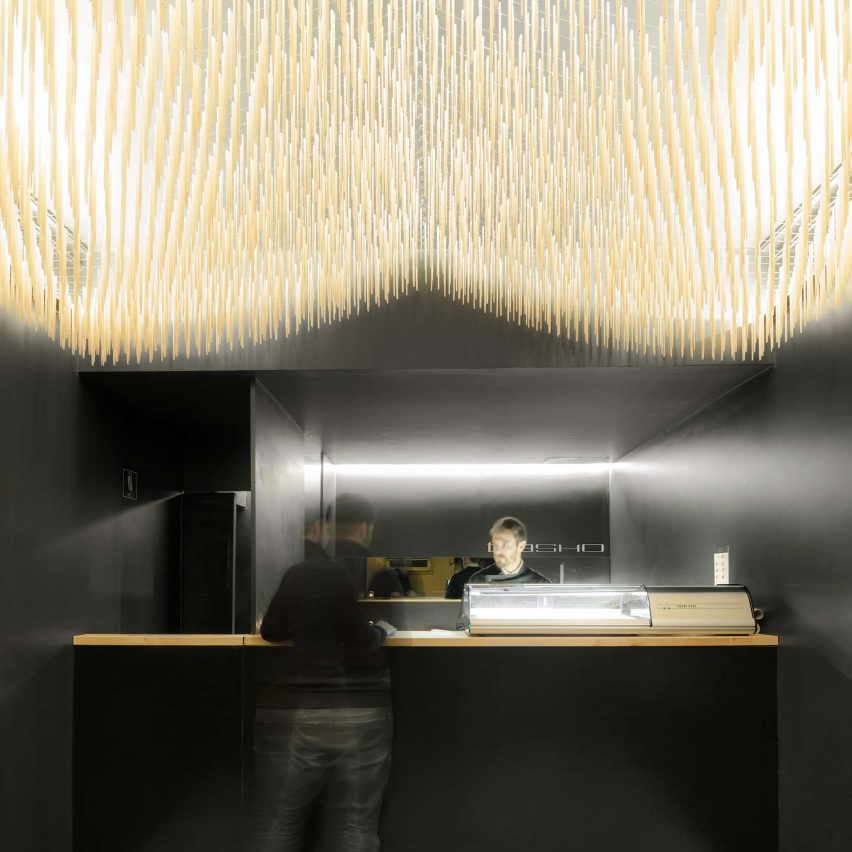
Paulo Merlini suspends chopsticks from ceiling of minimal sushi bar

basho-sushi-house-restaurant-interior-design-paulo-merlini-gondomar-portugal-architizer-a-awards-sqa

A+Awards: over 8,000 wooden chopsticks hang above diners at this “sober and simple” sushi bar in Portugal, which was designed by architect Paulo Merlini and lauded at this year’s Architizer A+Awards. Read more

http://ift.tt/2eXEXgp

5 Ways To Travel The World While Keeping a Full-Time Job

Developments in technology mean you can travel the world AND hold down a full-time job. These days, we don’t necessarily have to choose between one thing or another, but can have it all! Yes, full-time job included.

Whether you are working for a technology company or in academia, all you need is a little planning, the right kit and the drive and you can work on the go. Now, here is an interesting thing – the whole world could be your office! To many it may seem like a dream to work and travel, to set your own schedule and to use your hotel (or the Starbucks) as an office.

However, sometimes it can be trickier than you may think. First, you have to work and stay motivated and driven, though there may be distractions and things that are trying to get your attention. Secondly, you have to set your own schedule, and there is nobody there to tell you what to do and when to do it. However, working AND travelling is, in fact, a growing trend. It can be rewarding and exiting and it will add to your quality of life. Here are five tips on how to work remotely and stay efficient:

1. Find the right job

First, you have to find a job (and an employer) that will allow you to work wherever, whenever. This may appear to be difficult, but nowadays we have all of the technology and infrastructure that will allow you to work on the go, so there is nothing that really stands in your way.

Remote working will allow you to work anywhere in the world, whilst still being a valuable employee for the company. Though, it is still not a rare case that employers see remote working as a let off. Some of them may see it as a way for their workers to get out of responsibilities. Each day more and more HR managers and recruiters change the point of view: they are starting to see it as a way to attract the best staff, to recruit flexible, digitally savvy employees. Now, we have reached the stadium where demographic is irrelevant to getting the best staff for your company, which is exactly why each day more people outsource.

More and more remote full-time positions are offered each day. Should you wish to travel and keep your full-time job, now is the right time to do it.

2. Master the technology

Obviously, you will need a laptop, a phone, and a few tools to keep you alive. Make sure you have these even before getting a remote job. Other hardware and software may come in handy. Make sure you expand your knowledge of platforms, apps, and tools to keep you on the right track while you are on the go. This will make your full-time job and traveling much easier!

See Also: 10 Productivity Musts for Freelancers

3. Keep updating your skills

freelancing

According to Jake Jorgovan at Milo the best way to work remotely around the world is to add value to the organization for which you work. Due the massive developments in technology over the last decade or so one does not need to be physically present to add value to your company. You can work from home, work remotely anywhere in the world and add a huge amount to your quality of life.

Some skills, e.g. copywriting and marketing, do not require physical presence to perform the role. If your skill does require you to be in the office, you can do one of two things: learn a new skill or go to the office.  Jorgovan talks of how he retrained as a web designer to allow him to work on the go. As well as this, you want to familiarize yourself with online networking, and with recruitment sites that offer full-time job positions, such as Jobrack.eu if you are in Eastern Europe. Finding this type of a full-time job opportunity will allow you to work remotely and travel all around (full-time too).

4. Have the right kit.

In order to work you need the correct tools to make sure you do the best job you can.  There are tons of apps that can make your life and job easier. However, if you want to mix these two, here is the survival kit for you:

  • Well, of course – a laptop (and make sure that it is light enough)
  • A cellphone (and make sure that it is unlocked), allows you to use your phone wherever you go.
  • A Tablet (and make sure you have this if your laptop’s too heavy)
  • An Ethernet cable, in case you can’t get WiFi (and make sure you do not forget it)
  • Positive Can-Do Attitude (and make sure not to forget this one!)

5. Do the work!

freelancing-work

Of course, one issue with not having a 9-5 office job is that you may have a lot of distractions. The beach? The cold beer? The museum? All three? Or perhaps your dog is desperate to go chase that neighbor’s cat … again.

Without someone to keep you motivated, it can be a big bone to chew on. However, do not fall in despair! Joining an online community is the smartest thing you can do! You will feel more connected to a group and take advantage of the perks of being a digital nomad.

See Also: 14 Problems Freelancers Usually Face

Forbes reckons that this may even become the norm, with freelancing growing at an average rate of 3 percent a year. Of course, we all want to travel the world. Quitting your full-time job to travel the world is like having a pair of pink glasses, to be honest. It may not be the most realistic prospect. In the end, it’s your work that pays for your hotel rooms, your flights and the numerous pumpkin spice lattes! The tips above can allow you to make a success of being a travelling freelancer and set your office peering over the azure blue of the Mediterranean!


The post 5 Ways To Travel The World While Keeping a Full-Time Job appeared first on Dumb Little Man.

http://ift.tt/2f9qvj2

Top 10 Tips for Buying Stylish Furniture on a Budget

Just as accessorizing an outfit can make or break your look, the furniture choices you make affect the way your home, work establishment or office design is perceived. Enhancing the living or working space is essential, especially with furniture that complements the visual appeal of the area as well as its functionality.

Great furniture choices can do everything from making a small room look larger to transforming even the simplest building into a grand and beautiful space. Of course, the biggest challenge lies in finding stylish and contemporary furniture on a limited budget.

With that in mind, we’ve put together some tips that will help with this process.

Choosing Between Various Types of Furniture

furniture-shop

You can choose between classical and modern styles that reflect your personality, and fusion contemporary designs are also making a splash in interior décor these days. Whether for your own home, a swanky office, an elegant banquet or a grand hotel, these eye-catching variations on standard designs will help set your space apart.

For functional cafeteria, school, restaurant or office furniture, a few styles that are in fashion today are simple and widely used in commercial spaces around the world. These indoor and outdoor furniture designs can easily be adapted for small or large groups of people and are quite easy to maintain.

If you’re looking for high-quality hospital furniture or multi-purpose pieces to set off any other space, don’t worry. Finding cheap furniture that’s also built to last is easier today than it’s ever been before!

How Can You Furnish Your Space with Limited Funds?

used-furniture-shop

If you’re looking to dress up your space on a budget, here are the top 10 tips to keep in mind:

  1. Start with the core pieces – Focus on the most important pieces for any space first, e.g. a sturdy bed for a bedroom or an executive desk and chair for an office. The rest can come later, but core items should be a priority.
  2. Understand the materials used – There are many kinds of wood, plastic, glazes, fabrics and other materials that are used to create furniture. Invest some time in learning about how they work and what they cost, so you can pick the right ones.
  3. Simple contemporary furniture works – Fancy embellished pieces tend to cost a lot more than their unadorned counterparts, and typically fit into any design scheme with ease. This leaves you a lot of room to get creative.
  4. Search for cheap furniture online – Look for deals available online, since websites do not have the same overheads as furniture stores and can offer better prices. Don’t shy away from checking out used furniture either!
  5. Opt for multi-purpose designs – Multi-function home and office furniture is a huge trend, growing in popularity every day. Sofa-cum-beds and stools that double as end tables are great for compact spaces, and will save you a bundle.
  6. Accessorize, customize or DIY it – You can keep your investment minimal by buying plain pieces and adding your own creative touch to dress them up. Colorful cushions, a splash of paint, trendy doorknobs… the possibilities are endless!
  7. Wait for items to go on sale – If you’ve been eyeing a gorgeous dining room set or the perfect garden seating, you’ll find that prices drop drastically if you wait till “sale season” when furniture stores sell old stock at huge markdowns.
  8. Same piece, better deal? – Furniture manufacturers often sell products through different retailers, who mark up the price as they choose. Shop around a little – you could find the same item at a fraction of the price at another store.
  9. Amp up your negotiation skills – Price mark ups on furniture are normally huge, so you may be able to get a better deal if you haggle a little. If you can’t get the price lowered, try for a freebie, discounts on delivery and installation, etc.
  10. Shop in the international market – A sourcing agent can be invaluable when you’re buying furniture, especially in bulk. Shop from low-cost markets like China (the price difference justifies shipping costs) by hiring a China sourcing agent to help you find affordable, high-quality items.

See Also: Easy Decorating Tips for Bachelors 

Think of your limited budget as a challenge rather than an obstacle and you’re sure to have fun hunting down the best stylish furniture for the space you’re decorating.

The post Top 10 Tips for Buying Stylish Furniture on a Budget appeared first on Dumb Little Man.

http://ift.tt/2eyb1c9

Follow Your Bliss

Do you follow your bliss?

There is a moment in people’s lives when they realize that things aren’t as they should be. Somewhere in-between the daily routines are gaps are things that simply don’t connect or make sense.

Most people choose to bury their heads in the soil like an ostrich and ignore these impulses. However, there are those few who are too curious. For them, these questions are like splinters in the brain and the more they choose to ignore them, the more painful they become.

These splinters have followed mankind throughout civilization. Mystics refer to them by many names but they all have a common thread because they lead individuals to a magical place called “BLISS.”

We all in some way have been presented with an opportunity to leap into the void to pursue something far greater than our small minds could imagine. However, fear, anxiety, over thinking or comfort zones force us to turn down the call of nature which could ultimately transform our lives.

For Steve Jobs and Steve Wozniak, it was the call to sell everything they had and create a little box with a screen that would change the way people all over the world use technology. For Walt Disney, it was taking every risk imaginable in creating animated characters that would change family entertainment forever, and for Nelson Mandela it was sacrificing his life and following the call of freeing his people from the chains of apartheid.

Growing up, I was always encouraged by my elders whether it be my pastor, parents or school teachers to just be myself. They always stressed the notion of not trying to be something or someone that I’m not which made perfect sense since we were all created in a unique and special way. Striving to follow in the footsteps of someone else made you a fake, a counterfeit, or as folks back in South Africa would say a, “Fong Kong.”

But looking back now, I disagree. If I had taken their advice, I’d still be a shy, awkward individual afraid to face the world.

So my question is, if someone is unhappy with who they are and what they are doing with their life, should they just simply shrug their shoulders and blindly accept the notion that they were created this way?

Well I say NO!!

Don’t be yourself; change and be who you want to be. Your life is like clay in the hands of an artist. You shape it accordingly to what you want it to be.

mould-yourself

If you are a shy, reclusive individual and you hate this characteristic about yourself, then do everything you can to change this. Napoleon Bonaparte once said, “If you are sickly, surround yourself with the healthy. If you are shy, surround yourself with the gregarious.”

Bonaparte is pointing out a valuable solution in overcoming your deficiencies. He understood that we are weak in certain areas but also strong in some.

The best way to overcome those shortfalls is to learn from those who possess the traits we admire. The biggest problem with people is that they surround themselves with people who share their common interests and values. The danger of doing this is that they cut themselves off from the vast pool of information and skills transferred in daily life.

See Also: Be the Change You Want To See in the World 

The most difficult thing to do in life is to be completely honest with yourself and admit that you aren’t who you think you are. Our ego is a cloud that obscures our ability to recognize who we truly are.

And when I say “Truth” I mean recognizing yourself with all your fears, delusions, addictions, insecurities and not hiding from them but truly understanding that they make you who you are. The world is merely a thought, and most of our thoughts have been molded and conditioned by our parents, teachers, television, friends and family.

The ability to let go of all those things you learned and see things as they truly are is a long and extremely difficult process. The answers you seek in this life are within; all you have to do is trust yourself.

See Also:9 Things to Let Go to Find Ultimate Happiness 

I love my mother and father with all my heart and would move the world for them, but I have realized that their advice and counsel isn’t always the best for me. When making life-changing decisions, your parents aren’t always the people to turn to for advice simply because your parents have a paternal instinct wired in them, to protect you till death.

Their purpose is to protect you from potential danger or failure in life. This is great for raising a little toddler but the problem with this at a later stage in life is that it hinders the growth factor of the child.

Parents impose their fears and anxieties onto their kids, and understanding this is extremely complicated. The reason they don’t see this is because it’s coming from a good place.

But the reality is that they are cutting you off from following your true call in nature of pursuing this mythical journey which is faced with danger, insecurity, fear, and self-doubt. The obstacles you face on this journey are important ingredients which are essential in building a person of self-reliance.

yin-and-yang

When I say “Follow your bliss” I am in no way being oblivious to the challenges individuals have had to overcome or continue to face such as abuse, addiction, physical disability or the lack of money and education. This notion is simply my personal observation of a mysterious world which no one has the answers to. How you choose to look at it is a defining factor. If you see it as a world of hate, fear and misery, then that is what the world will be.

I personally choose to joyfully participate in the sorrows of life. Sometimes it hurts so much that we want it all to end, but that’s part of the game as the Taoist would say, “the Yin and the Yang”.

Like a good tennis game, you have to participate and play as if your life depended on it. If you lose, you go over to congratulate your opponent by shaking his hand. If you win, you graciously celebrate while remembering that without your opponent, the game would not be possible.

“Following your bliss” is something which deeply resonates with me. It’s a journey of abandoning what T.S. Eliot called, “The Waste Land” which is that life of going through the paces in life and simply existing from paycheck to paycheck.

It is following your internal impulses of doing what you were destined to be or do. Whether it is a poet, musician or scientist, “following your bliss” is following that quiet intuitive voice inside which leads you to something that ignites a sense of awe and wonder inside. As Joseph Campbell would say, “It’s not about finding the meaning of life, but rather the deep experience of it.”


The post Follow Your Bliss appeared first on Dumb Little Man.

http://ift.tt/2f9oMtO