House Savukvartsi / Honkarakenne


Courtesy of Honkarakenne

Courtesy of Honkarakenne


Courtesy of Honkarakenne


Courtesy of Honkarakenne


Courtesy of Honkarakenne


Courtesy of Honkarakenne

  • Architects: Honkarakenne
  • Location: Vantaa, Finland
  • Architect In Charge: Jaakko and Elizaveta Parkkonen
  • Project Year: 2014
  • Photographs: Courtesy of Honkarakenne

Courtesy of Honkarakenne

Courtesy of Honkarakenne

From the architect. A modern eco-home for three generations

Savukvartsi was introduced to the public at the Housing fair 2015 in Vantaa, Finland. It’s an ecological duplex house, designed for three generations of a family. Honka Savukvartsi is an excellent example of a new-generation log home, created with the Honka Fusion concept.


Courtesy of Honkarakenne

Courtesy of Honkarakenne

Honka Savukvartsi was designed and built by the architects Jaakko and Elizaveta Parkkonen as their own private home. The house reflects the dream shared by the young couple and their parents of a home for several generations of the same family.


Courtesy of Honkarakenne

Courtesy of Honkarakenne

The house is split into two separate properties, with the larger one occupied by Jaakko and Elizaveta and their son. The smaller property belongs to Jaakko’s parents. The properties share an entrance. If desired, the apartments can be combined to create one larger property.


Courtesy of Honkarakenne

Courtesy of Honkarakenne

The house has the smallest carbon footprint of all the properties showcased at the Vantaa Housing Fair area and is rated B for energy efficiency. Its eco-friendly credentials include natural, low-emission and recyclable materials offering easy maintenance, healthy living and the latest home technology solutions.


Ground Floor Plan

Ground Floor Plan

“The philosophy behind this house is to minimize its climate impact. We used natural and recyclable materials and tried to avoid plastic. The building is heated using solar thermal collectors and a water heating fireplace. The pitch of the roof has been calculated to allow for the perfect angle in relation to the sun. The optimal angle is 35 degrees, and at Savukvartsi, we have gone for 34.” – Jaakko Parkkonen, architect and customer

The young family’s bedrooms are located on the first floor, away from the public areas. The high ceilings add spaciousness and tall French windows let the daylight in. On the first floor, there’s also a home office and a library.


Courtesy of Honkarakenne

Courtesy of Honkarakenne

“The soundscape of a log house is quiet. Combined with the natural warmth of genuine wood and the good indoor air quality, it creates a very comfortable living environment.” – The Parkkonen family


1st Floor Plan

1st Floor Plan

The grandparents apartment is a compact double of 46 square meters, all located on one floor. The smaller apartment consists of a bedroom, kitchen, living room and a bathroom. The shared living area in the bigger apartment serves both families.

The house is created with the non-settling Honka Fusion log (FXL 134) and insulated with wood fiber. The exterior cladding is spruce, treated with iron vitriol to create a beautiful grey finish. Because of the non-settling structure, the log wall could be combined with details like city corners and big windows, free of the wide architraves and settling spaces required in traditional log construction.


Courtesy of Honkarakenne

Courtesy of Honkarakenne

“The Honka Fusion wall structure allowed us to design a contemporary log house with urban, minimalistic details. The non-settling log also simplifies the wall structures which ensures that the house will be there for generations to come.” – Jaakko Parkkonen, architect and customer


Courtesy of Honkarakenne

Courtesy of Honkarakenne

Product Description. The house is created with the non-settling Honka Fusion log (FXL 134) and insulated with wood fiber. The exterior cladding is spruce, treated with iron vitriol to create a beautiful grey finish. Because of the non-settling structure, the log wall could be combined with details like city corners and big windows, free of the wide architraves and settling spaces required in traditional log construction.


Courtesy of Honkarakenne

Courtesy of Honkarakenne

“The Honka Fusion wall structure allowed us to design a contemporary log house with urban, minimalistic details. The non-settling log also simplifies the wall structures which ensures that the house will be there for generations to come.”


Courtesy of Honkarakenne

Courtesy of Honkarakenne

http://www.archdaily.com/799070/house-savukvartsi-honkarakenne

Studio Seilern Architects Unveils Plans for Skyscraper in Manhattan’s Art Quarter


Courtesy of Studio Seilern Architects (SSA)

Courtesy of Studio Seilern Architects (SSA)

Studio Seilern Architects (SSA) has unveiled its design for a new skyscraper in New York, located on the riverfront of the Hudson River, which will offer views to the South West towards the river and Hoboken, as well as to the East towards the Empire State Building and Manhattan skyline. 

The 16.107 square meter building (24 floors) will feature commercial units in the form of a gallery in the plinth—which is reduced to form a sculpture garden—at the lower levels, while upper levels will contain residential units.


Courtesy of Studio Seilern Architects (SSA)


Courtesy of Studio Seilern Architects (SSA)


Courtesy of Studio Seilern Architects (SSA)


Courtesy of Studio Seilern Architects (SSA)


Courtesy of Studio Seilern Architects (SSA)

Courtesy of Studio Seilern Architects (SSA)

Courtesy of Studio Seilern Architects (SSA)

Courtesy of Studio Seilern Architects (SSA)

Courtesy of Studio Seilern Architects (SSA)

Courtesy of Studio Seilern Architects (SSA)

The site being in the art quarter is something that should be capitalized on, said Christina Seilern, principal at Studio Seilern Architects. The nature of the ‘near-corner’ site mean we can offer the gallery a unique dual aspect and sculpture count, as private and jewel like as the one in the MoMA. 


Courtesy of Studio Seilern Architects (SSA)

Courtesy of Studio Seilern Architects (SSA)

Courtesy of Studio Seilern Architects (SSA)

Courtesy of Studio Seilern Architects (SSA)

Floor plans of the building are flexible, so as to adapt in response to fluctuating market conditions.

News via Studio Seilern Architects. 

http://www.archdaily.com/798998/studio-seilern-architects-unveils-plans-for-skyscraper-in-manhattans-art-quarter

New York City – New York – USA (by Thomas Richter)

New York City – New York – USA (by Thomas Richter)

💙 Bonsai on 500px by Cinematic Photography, Trondheim,……

💙 Bonsai on 500px by Cinematic Photography, Trondheim,… http://ift.tt/1S1wktD

http://worldinfocus.tumblr.com/post/152946984734

Dezeen Hot List is live, revealing the 400 hottest forces in architecture and design

dezeen-hot-list-logo

We’ve launched Dezeen Hot List, our comprehensive guide to the architects, designers, brands, schools, events and more that our audience most wanted to read about over the last year. Read more

http://www.dezeen.com/2016/11/09/dezeen-hot-list-reveals-400-hottest-forces-architecture-design/

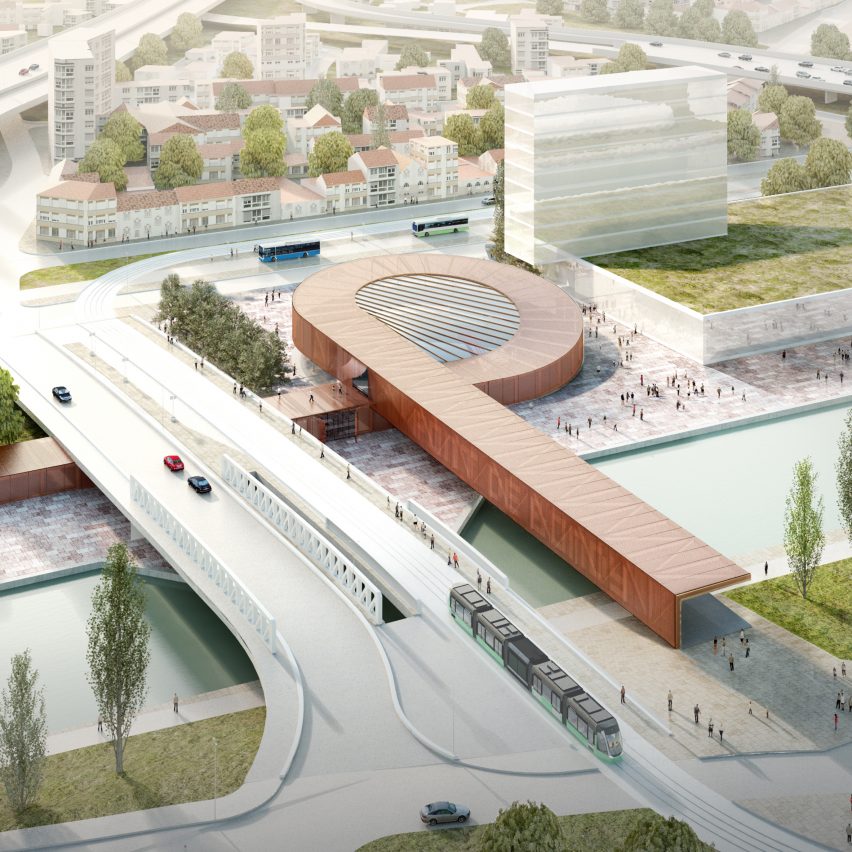
BIG wins Paris Metro competition with looping station design

Job of the day: architect at AL_A

Dezeen Jobs architecture and design recruitment

Our job of the day from Dezeen Jobs is for an architect at Amanda Levete’s firm, AL_A, whose undulating, tile-covered MAAT Museum (pictured) opened in Lisbon in September. Read more stories about AL_A or browse more architecture and design opportunities on Dezeen Jobs.

http://www.dezeen.com/2016/11/09/top-job-experienced-architect-al-a-amanda-levete-london/

10 Models Which Show the Power of Point Cloud Scans, As Selected by Sketchfab


via Sketchfab

via Sketchfab

Traditional 3D models made up of surfaces have for a long time aided us in visualizing buildings and spaces, but they often come at a cost: large models require a lot of storage and processing power, and can become incredibly complex to the point where they are difficult to navigate. As a part of our Selected by Sketchfab series, Sketchfab has their eye on a more efficient, increasingly common method of capturing architectural spaces; namely, point clouds. Point clouds are made up of a set of points located in a three-dimensional coordinate system, that when put together merely give an impression of the surface of an object, or the façade of a building.

The method is fairly simple. The collection of data points is generated by a 3D scanner that rotates while emitting a laser that measures the distance to points on surrounding surfaces. This data can then be converted into a polygonal model that can be rendered like any other 3D model. However, the advantages of keeping the scan in point form are what makes it great; the file sizes are much smaller, and the porosity of the point clouds make it possible to see through walls and surfaces, accessing “hidden” spaces and uncommon views of seemingly familiar surroundings. Read on to find out more about the possibilities and advantages that come with point cloud modelling.

1. Generating Large-Scale Overviews

Getting an idea of the scale and relationships between spaces within a site can be challenging and time consuming using traditional polygon surface modelling, and will certainly produce a large file to work with. Using the point cloud technique minimizes these problems, as can be seen with the model below:

https://sketchfab.com/models/5cb74f613b5c4b5698df42675a3eb3ab/embed

Of course the resolution of a point cloud can be adjusted to include far more details, as in the following models:

https://sketchfab.com/models/8ec8b87123814ca4be3a38c6035efb2b/embed

https://sketchfab.com/models/97535b7163e74a6cb164153cc626da91/embed

2. Accessing “Hidden” Spaces

Due to the low density of points in the clouds, it’s possible to see through what would ordinarily be solid surfaces, as in the case of the passages within the thick stone wall in the model below:

https://sketchfab.com/models/53cad424070e45f39dd096d16913d0ad/embed

The possibilities that come with this simultaneous visualization of multiple layers of space could be a fantastic tool for architects to fully grasp the locations they’re working with:

https://sketchfab.com/models/89f9fef2f8cb488a9aa2a2b28c583d77/embed

3. Experiencing a Space Through Virtual Reality

Scanning an entire building can consequently be paired with a virtual reality headset in order to re-experience, or share an experience of a space with others who may not have had the opportunity to visit the site. While this is also true of other scans with surfaces included, the same advantages of small file size and partial transparency mentioned above come into their own in virtual reality too, providing a smooth viewing experience and a sense of what’s just around the corner, as demonstrated here:

https://sketchfab.com/models/a27a2afd51fc4985938099f55623f7e9/embed

The same can be applied to scanning landscapes, in order to experience the visual results of different typology:

https://sketchfab.com/models/b196c2a548e44c599c80d5092b211e12/embed

When it comes to virtual reality, point cloud scans may be most useful for places with complex and detailed material qualities, where even if the scan is relatively small, the file size of a fully detailed model would be entirely unmanageable. This is the case in the following scan, which gives an excellent impression of the cabin’s rough wood and overgrown roof without having to render the millions of faces that would be required:

https://sketchfab.com/models/3b9fbbd468e54227ad7ef7e74f8f479c/embed

4. Visualizing Simplified Geometry 

Point clouds allow for the saving of models with complex geometry, without sacrificing enormous amounts of space and computing power, by minimizing the points collected in the cloud. Despite the perforated effect, the varied surfaces are easy to detect and view:

https://sketchfab.com/models/438d269fd9ef412a8235385f85a307e8/embed

Here is a model of an interior space, simplified even further due to the dominance of flat surfaces. The contours generated by simplification can sometimes even be more beautiful than the original complexity:

Hack Your Soundscape To Boost Your Productivity

Did you know that you can use music to boost productivity? Often overlooked, optimizing your sound environment is a great hack for improving productivity and staying focused.

Here are the steps you can take to figure out the best soundscape for you and how you can employ it in your everyday life.

Discover the noise, sound or music best for you

work-playlist

The first step in hacking your soundscape is to understand what it should be. This varies from person to person.

For me, chill, atmospheric, instrumental pieces like Enchantment by Tuatara are best, but you might get in the zone listening to speed metal or Justin Bieber (no judgment). Some people are very self-aware and can figure out their ideal soundscape right away.

However, if you are not one of these people, here’s a couple of methods that can help:

Method 1. Imagine your best work environment

Picture every detail. Do you sit or stand? Is it in an office, a coffee shop, a cabin in the woods, beachside, or elsewhere? Is it light and airy or shadowy and comfortable?

Finally, what do you hear, if anything? The low murmur of a busy office, the wind moving through the trees, waves going in and out, Cuban music wafting through the door, a fire crackling, a light classical piece, or unbroken silence?

Whatever it is, it should be something that you enjoy but don’t need to listen to closely.

Method 2. Try out different soundscapes

Write down a list of the music or backgrounds that you enjoy and think might be good for you.

Next, give them a dry run. Try them out for a short time. At least 30 mins is best, but less is workable. Keep track of your productivity and how it felt for each type. Remember, you aren’t trying to figure out what sounds or music you enjoy the most, but what helps you be the most productive.

Make sure you don’t just consider music or nature sounds. Sometimes, the best option is silence, white noise, or pink noise (white noise’s lesser known cousin). In any case, you now have your Productivity Sound (PS).

The last step is finding out if your PS is good for all tasks. Does it help your productivity with all the different tasks you do? If not, take the time to find your productivity sound for each task category.

See Also: Get “In the Zone” on Command with a Focus Song 

Evaluate your workspace soundscape

Is your work environment compatible with the sound you find most productive? This is easy to check. For example, unless your PS is the sound of a noisy office and you work in a noisy office, the answer is no. If you don’t already know the answer to this question, take a second to consider it.

Hack your environment

workplace-soundscape

If you’re a writer, self-employed, or work from home, you probably have the flexibility to choose where you work. In some cases, all you need to change is your work location.

However, if this isn’t possible, there are still a number of possible solutions. Here are some that I’ve discovered:

• White Noise devices or programs

I personally llike pink noise over white noise. If you prefer any of these two, there are a number of devices and programs out there that can generate these and other background noises.

A quick search will turn up plenty of apps, YouTube videos, and tracks to download, any one of which would do the trick.

• Create a work playlist

If your PS is a type of music, do a little searching in that category to create a long playlist. Remember, the goal isn’t to find songs you love, but instead to find songs that help you get work done. This means finding a song that you can listen to a hundred times without getting sick of it.

• Recording your favorite environment yourself

If your PS is someplace you can visit but can’t work at, you can always record it. You can use your cellphone, laptop or tablet to do this. There are plenty of free recording apps or programs out there like Audacity for my laptop.

Once you’ve recorded a good amount like 15 to 30 minutes of sound, you can just set it to play on repeat. Plus, having a recording that repeats helps you keep track of time even when you’re “in the zone” since you know how long each repetition is.

• Get a good pair of noise cancellation headphones or earbuds

For most of these solutions, a good pair of headphones or earbuds is required especially if you work with other people. Also, if silence is your thing, you either need noise cancellation headphones, total control over your workspace, or, if all else fails, a pair of earplugs.

See Also: 10 Productivity Musts for Freelancers

Sound supplements

It’s a little-known fact that certain kinds of music can help you accomplish certain tasks, focus, be creative, relax, and meditate. This is known as binaural beats music which uses different tones played in each ear to strengthen brain waves.

The brain waves being strengthened change depending on the difference between the two tones. For example, 200 Hz and 210 Hz tones bolster 10 Hz brain waves.

A quick web search will turn up numerous scientific studies that have proven this effect. Put simply, if you listen to 10-20 mins of the right binaural music when you start a task, it will help you get it done.

Binaural music comes in various ranges. For concentration tasks, the beta range is best (13-40 Hz). For creativity or meditation, alpha is best (7-13 Hz).

For deep relaxation and sleep, delta and theta ranges are best (.5-7 Hz). You can get binaural beats tracks from apps, on YouTube, and various companies that make products that use this brain-hacking sound.

Isochronic tones, on the other hand, are a more powerful alternative to binaural beats. While more effective, they are less popular due to the way they sound.

Isochronic tones are made by turning a tone on and off rapidly, which results in a ‘click’ or ‘buzz’ sound that many people find unpleasant. Personally, I listen to a 35 min advanced concentration isochronic tone whenever I need to focus. Most of this article was written while listening to this.

So, there you have it! The best way to make your sonic environment more conducive to your work, no matter what it is.  Just remember to continue to take regular breaks and never listen to anything for too long!


The post Hack Your Soundscape To Boost Your Productivity appeared first on Dumb Little Man.

http://www.dumblittleman.com/2016/11/music-for-productivity.html

Ministerstwo Spraw We Wnętrzach Design a Colorful and Stylish Apartment in Gdansk, Poland