Gentrification’s Image Problem and How It Has Been Villified


Revitalização da High Line, linha férrea desativada de Nova York, elevou os preços dos imóveis da região. Image © Steven Severinghaus, via Flickr. CC

Revitalização da High Line, linha férrea desativada de Nova York, elevou os preços dos imóveis da região. Image © Steven Severinghaus, via Flickr. CC

The idea of revitalizing a public space by bringing improvement that brings people together should not generate suspicion or fear. However, specific examples of places that have seen the cost of living greatly increase after their revitalization have been creating paradoxes. After all, does this “new villain” called gentrification have any relation to placemaking?

The answer, unfortunately, is yes. Although it’s not a direct relation of cause and effect, it is impossible to deny the tenuous line between the two concepts. By definition, gentrification, or “ennoblement,” refers to the social, cultural, and economic improvement of a neighborhood or, on a larger scale, of an entire region. Placemaking is the process of planning quality public spaces that contribute to the well-being of the local community. The concepts may be similar, but the methods and consequences of the two are very different.

The idea behind placemaking originated in the 1960s when writers like Jane Jacobs and William H. Whyte began to develop innovative ideas about creating cities that catered to people, focusing on the importance of inviting and living neighborhoods. The term gentrification was coined in 1964 by the British sociologist Ruth Glass to describe the flow of people of the middle class that displaced inhabitants of low class of urban districts. Glass illustrated gentrification by citing the example of the Islington neighborhood in north London where modest and old cottages were bought up and turned into elegant, expensive residences when their permits expired. 


© Dylan Passmore, via Flickr. CC

© Dylan Passmore, via Flickr. CC

Today, it is this same process that turns gentrification into a villain. Residents are displaced when they can no longer pay for housing, utilities, school fees, and other services offered in the neighborhood due to the growing wealth of the area. The blurring between terms begins when investments in public spaces are likely to result in even greater potential investments for the area.

In this complex process, it is difficult to deny the relationship between the improvement or development of a public space and the consequent increase in the value of the surrounding land. However, the placemaking process is not a direct cause of gentrification. The difference lies in the factors that motivate the two processes.

Placemaking is no longer placemaking when it stops considering the opinion of those living and working in the area. Making decisions with the genuine contribution of the community and the recognition of their needs and wants is what defines the process. The transformations must start with the very community that uses the space. Gentrification is guided, with or without the influence of the government, by economic objectives, involved in the process of enhancement and devaluation of urban spaces over time. This can happen especially when upper-class districts can no longer sustain the number of inhabitants, who then look to settle elsewhere.


Mural no Mission District sinaliza gentrificação. Image © torbakhopper, via Flickr. CC

Mural no Mission District sinaliza gentrificação. Image © torbakhopper, via Flickr. CC

This process is widely debated in the US city of San Francisco. Urban Displacement, a University of Berkeley site, has developed a map showing the types of displacements in the region and indicates several areas in the advanced stage of gentrification. The relocation of various tech companies is commonly given as the culprit for the transformation of the city. The cost of housing and the large amount of a new class of workers has made neighborhoods like the Mission, famous for the presence of Latin American immigrants, enter a phase of transformations.

Luxury condominiums, organic ice cream stores, cafes that serve soy lattes, and chocolate shops that offer samples from Ecuador and Madagascar are rapidly replacing 99-cent stores, corner shops and rent controlled apartments in the Mission District , (San Francisco’s) working-class Latino neighborhood – writes The New York Times.

In São Paulo, the Minhocão Park project has been carefully studied due to fears that it will become another example of gentrification. The project, sanctioned in March by Mayor Fernando Haddad, aims to gradually transform an elevated highway that cuts through São Paulo’s city center into a recreational area. Currently, Minhocão is closed for almost 40 hours during the weekends. “We are concerned about gentrification in the area because we don’t want to drive anyone out,” said the mayor. To this end, Haddad said he would suggest to the sub-prefect of the area to create a Management Council made up of residents.

Although the phenomenon of gentrification is becoming common in large cities, local improvements shouldn’t be seen as threats. What the urban critic Matthew Yglesias calls “gentrificationphobia” can generate an excessive fear of progress and delay projects that communities need. Advances may increase the value of land, but don’t need to evict the inhabitants.

The way projects are run is what determines their results. Knowledge about gentrification and placemaking emphasizes the importance of creating spaces for all, spaces that connect areas, rather than dividing them. Neighborhoods need to be identifiable and maintain their natural qualities, things that have been developed over time. Avoiding gentrification keeps history from being erased.

http://ift.tt/2gBIJyy

16 Tips To Improve Your Model-Making Skills


© Tim Viktorsson

© Tim Viktorsson

Virtual 3D Modeling has for decades been increasing in its popularity, yet hand-made models are far from extinct. Perhaps a reason for this is that despite the “3D” in “3D modeling,” viewing those models on a screen or print is still, effectively, two-dimensional. A physical model of course can be held in your hand, examined and understood spatially in a way that a CAD model can’t. It can also be used as a quick and intuitive 3D sketch to get some ideas going. Whether it’s for a client or a professor, models are almost always necessary in order to produce a complete understanding of the relationship between spaces in your design. To make the most use of this tool, read on for tips on how to improve your modeling:


© Fruzsi Boutros


© Jakob Breidablik, Panuela Aasted, Ane Norderhus, Christian Graugaard


© Tim Viktorsson, Aja Borby Ørtenblad, Andreas Zacho, Klaus Wahid Knudsen


© Tim Viktorsson


© Ariana Zilliacus

© Ariana Zilliacus

1. Use the Right Tools

Having the right tools for building your model may not be everything when it comes to model making, but it sure will separate a good model from a great one. You don’t want to waste time trying to find a less-than-suitable substitute for a missing tool. However, listing all the essential tools calls for a post in itself; take a look at this one to get started.


© Fruzsi Boutros

© Fruzsi Boutros

2. Use High Quality Cutting Tools

When building a model you will always need to cut up some material or another in order to suit your needs, making this specific tool somewhat more important than many of the others (with the exception of glue perhaps – more on that later). Getting that clean edge adds another level of neatness; it may not be fully appreciated, but trust us, its absence is always noted. Get your hands on a good utility knife with a set of exchangeable blades; a blunt knife is often more dangerous than a sharp one. A good pair of sharp scissors comes in handy too, especially when you don’t want to spend hours making delicate cuts using a knife for a simple sketch model.


© Fruzsi Boutros

© Fruzsi Boutros

3. Carefully Choose Your Materials

Although your model may not always be an exact miniature of a full-scale building, the materials you select to represent it are important. Firstly, you want your model to narrate something about your project; having carefully chosen materials, as opposed to a model entirely made of card, will help to immerse others in that narrative far more effectively. Secondly, you want to make sure that the materials you use are easy enough for you to work with; a model should supplement your project, not hijack all of your time.


© Tim Viktorsson

© Tim Viktorsson

4. Use a Laser Cutter if Necessary

It’s not uncommon to already have a CAD model on your computer, but it is uncommon, in such a situation, to have the motivation to recreate the entire thing by hand. In this case, laser cutting may be a favorable alternative. The trick with laser cutting is to set up your virtual model correctly, in order to make it possible to cut and piece together. It’s likely that you’ll be more restricted regarding your geometry, and tip 3 comes into play here too: unless you want to start a fire, the thickness of the material you use may be limited, and if you’re planning to use wood then you should have a plan to remove or cover up those freshly-burned edges. If you’re trying to get something very organic produced from a 3D model, 3D printing is probably the way to go.


© Ariana Zilliacus

© Ariana Zilliacus

5. Use Sketch Models

Thinking spatially is a tricky thing, even for architects. Sketch models, especially flexible ones that aren’t permanently glued together, can be excellent tools in themselves when trying to figure out how to compose the finished model or overall architectural design. These models have the appeal of not needing to look so polished, nor do they take too much time to make.


© Jenny Plym Askim

© Jenny Plym Askim

6. Think About Your Lighting

Ensuring that your working environment is properly lit is essential in preventing your eyes from straining themselves, as well as enabling you to see the details in your model and avoid mistakes. Models can also result in beautiful photographs, but only if you have proper lighting set up.


© Ariana Zilliacus

© Ariana Zilliacus

7. Make Sure You Have Enough Space

Making enough space for yourself before beginning on a model is something your future self will thank you for. Model making can get messy and confusing very quickly if one doesn’t have a big enough or organized space. Setting up a trashcan, for example, for left over scraps, or having a cutting area separated from an assembly area, can make the experience much more pleasant and prevent you from losing your gumption.


© Jakob Breidablik, Panuela Aasted, Ane Norderhus, Christian Graugaard

© Jakob Breidablik, Panuela Aasted, Ane Norderhus, Christian Graugaard

8. Select the Right Adhesives

As mentioned earlier, alongside cutting tools, getting your adhesives right is one of the most essential parts of model making. Nothing, nothing is worse than showing up with a model that is ready to fall apart at the slightest touch—except, perhaps, showing up with a model covered in drips and strings of glue. Here is an extensive list summarizing the best types of glue and tape for different types of models and materials. Bookmark it and use it wisely.


© Tim Viktorsson

© Tim Viktorsson

9. Wash Your Hands

One source suggests washing your hands every 30 minutes, and while this may be a tad excessive for some, washing your hands more often than usual is probably a good thing, especially when working with a white material. The oil and dirt that begins to accumulate on your fingers may not be obvious to you until you see it on your completed model. By that point, it’ll be too late.


© Tim Viktorsson

© Tim Viktorsson

10. Anchor the Model

A model always represents a real building project, which always has a site or context; don’t forget the context! Having a solid base is so much better than having a model floating in thin air. Models require something to anchor them down and give them that final touch, or as one source calls it, the equivalent of a “picture frame.”


© Tim Viktorsson, Aja Borby Ørtenblad, Andreas Zacho, Klaus Wahid Knudsen

© Tim Viktorsson, Aja Borby Ørtenblad, Andreas Zacho, Klaus Wahid Knudsen

11. Decide on a Scale

Scale can be a game changer. Not only will it determine the level of detail and space that can be seen, but also the amount of time you spend on your model—and contrary to popular belief, smaller isn’t always faster. Spending hours cutting meticulous, small elements using your X-Acto knife is something you’ll regret when you could just as well have chosen a larger scale and used scissors.


© Fruzsi Boutros

© Fruzsi Boutros

12. Be Selective in What You Show

There will never be enough time or money to include everything in a model, so make sure you know what your model is aiming to communicate. Is it illustrating the essence of your project or concept, or is it showing a technical section of a wall? This will help you to cut out materials and time, including only what’s essential.


© Ariana Zilliacus

© Ariana Zilliacus

13. Show Something New

In certain cases, models are near-replicas of drawings, however in an ideal world they shouldn’t be. A model should enhance a set of drawings, showing another level of depth that drawings may not be able to communicate. Develop your project a step further in your model, in order to get the most out of your time and resources.


© Fruzsi Boutros, Ariana Zilliacus, Andrea Ougaard, Aniella Goldinger

© Fruzsi Boutros, Ariana Zilliacus, Andrea Ougaard, Aniella Goldinger

14. Make a Time Plan

Before getting started on your model, write up a time plan to keep you on track for your deadline. This is to ensure that you show up with a model that can stand on its own and withstand the examination of others (in other words, a completed model) but also so that you don’t end up sacrificing too much of your time that should be allocated to other work. Be realistic with your time plan; as stated earlier, nothing is worse than a model ready to fall apart.


© Fruzsi Boutros

© Fruzsi Boutros

15. Ask for Advice

It’s difficult, if not impossible, to know everything about every material and tool that you may need to make you model. Don’t be afraid to ask for help or advice from friends or experts; “there’s no such thing as a stupid question,” or so the saying goes.


© Jakob Breidablik, Panuela Aasted, Ane Norderhus, Christian Graugaard

© Jakob Breidablik, Panuela Aasted, Ane Norderhus, Christian Graugaard

16. Practice

Make mistakes and learn from your experience. The more models you make, the better they will become. Writing down the difficulties you’ve had, and what you’ve learned in order to solve them, could be a valuable resource to have a few months down the road when you run into a similar problem on your next model. Practice makes perfect.

All images are courtesy of students at the Danish Royal Academy of Fine Arts.

http://ift.tt/2ge8FwF

Jony Ive and Marc Newson create room-size interpretation of a Christmas tree

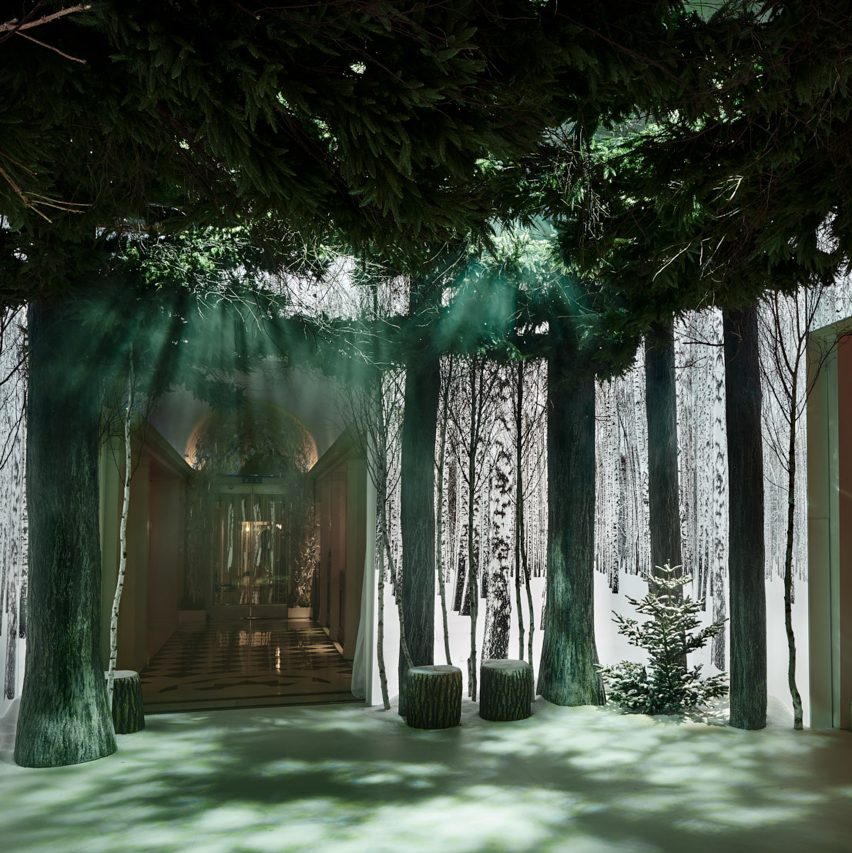
Claridge's Christmas tree by Marc Newson and Jony Ive

An immersive Christmas tree installation by Apple’s Jonathan Ive and industrial designer Marc Newson has been unveiled in London. Read more

http://ift.tt/2fKhQXp

Caesarstone reflects on designer collaborations with Jaime Hayón, Raw Edges and more

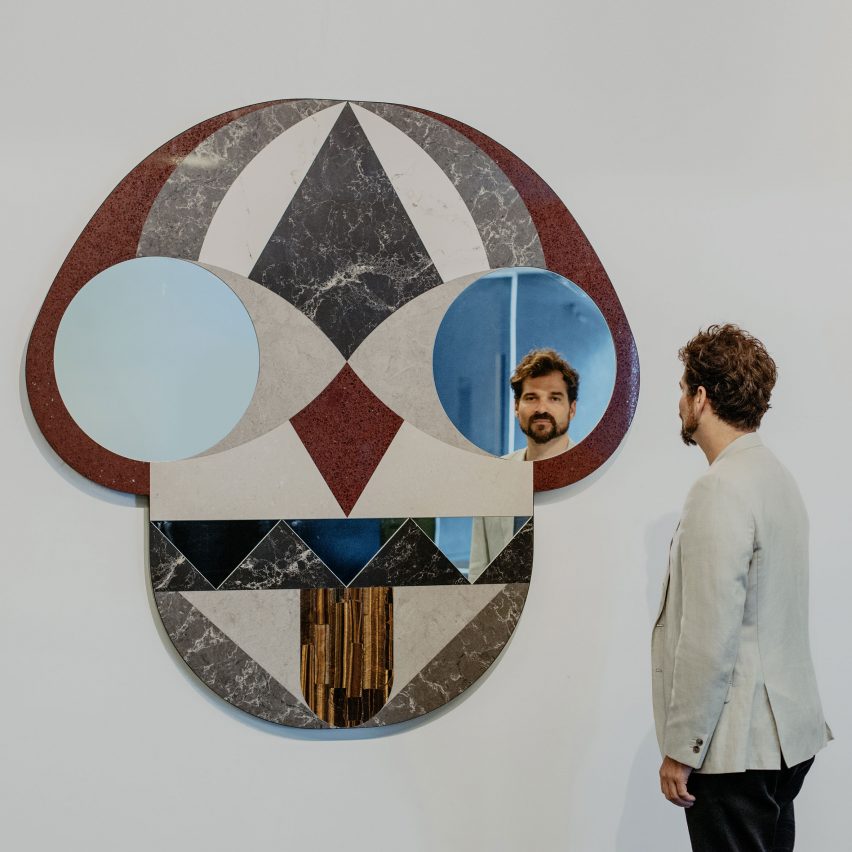
Jaime Hayon's mirror for Caesarstone

Eli Feiglin of Caesarstone reflects on the quartz surface manufacturer’s collaborations with designers including Raw Edges and Jaime Hayón in the latest movie Dezeen produced for the brand. Read more

http://ift.tt/2fTLHdv

Nava Yavetz Architects Design a Spacious Contemporary House in Ashdod, Israel

House in Ashdod by Nava Yavetz Architects (20)

House in Ashdod is a residential project completed by Nava Yavetz Architects in 2014. Completed in 2014, the home is located in Ashdod, Israel. House in Ashdod by Nava Yavetz Architects: “Situated in southern Israel, in the city of Ashdod, steps away from the beach. The house overlooks the Mediterranean waves, sand and wind. The design aims to accentuate this connection with the sights and sounds of the sea. The..

More…

Alexandra Fedorova Designs an Elegant Contemporary House in Pestovo, Russia

Castle Resort: Call For Entries


Courtesy of YAC

Courtesy of YAC

Young Architects Competitions YAC and Marlegno s.r.l. launch Castle Resort, an open architectural competition aiming at the landscape renewal of the area around the Castle off Roccamandolfi, in Southern Italy. The competition is in cooperation with the Italian State Property Agency – Italian Government, the Municipality of Roccamandolfi, Touring Club, Associazione Italiana Confindustria Alberghi, the University of Bologna. The internationally-renowned jury gathers, among the others, Eduardo Souto de Moura, Todd Saunders, Alain Laurens of  “La Cabane Perchée”. A total of € 20.000 in prize money will be awarded and winner projects will be published on international architecture and design platforms. 

There are places which belong to the inner being. There are destinations first engraved into the unreal, then on a map. Architectures of the soul, capable of helping us escape from our everyday life and freeing us from space and time.

Castles are among the architectures that can, in a more pronounced way, whisper into the heart of human beings. They often are located in marvelous spaces, sheltered in inaccessible and isolated places. These are oftentimes magical places, full of plots and heroism, uncontrolled passions and unspeakable secrets.

Located in a fairy‐tale landscape, the Castle of Roccamandolfi seems to come out from the ancient legends of chivalry. A medieval fragment which encompasses the ancient times and can still fascinate with its long‐standing charm. The castle stands on a steep hill, towering over a cliff, forests, and sunsets. Sketching out over an enchanting landscape, in need of new forms and ideas to allow its protection and the ongoing promotion of such a priceless heritage.

“Valore Paese”, the Italian State Property Agency’s project for the reprocessing of the national architectural heritage, moves into this direction. Aimed at enhancing the historic and landscape value, it builds dream tourist facilities which take advantage of their own natural background to involve visitors in this unique and unforgettable holiday experience.

How does one convert a medieval fortress into an exclusive tourist facility? How do you combine architecture and nature and aspire to become a worldwide destination?

Using these intriguing questions as inspiration, Marlegno, in partnership with the Italian State Property Agency – Italian Government, wants to promote Castle Resort and invites designers to let themselves get swept away by the charm of this abandoned fortress. To conceive a fabulous accommodation facility, plunged into a majestic nature and set among the traces of an impressive castle. A dream place, capable of inspiring the imagination of every tourist who visits and offering a timeless holiday. All wrapped up by the comfort of modern life mixed in with ancient remains.

Jury

  • Eduardo Souto de Moura
  • Todd Saunders, SAUNDERS ARCHITECTURE
  • Alain Laurens, LA CABANE PERCHÉE
  • Giorgio Palmucci, ASSOCIAZIONE ITALIANA CONFINDUSTRIA ALBERGHI
  • Lamberto Mancini, TOURING CLUB
  • Edoardo Maggini, ITALIAN STATE PROPERTY AGENCY – ITALIAN GOVERNMENT
  • Giacomo Lombardi, MUNICIPALITY OF ROCCAMANDOLFI
  • Angelo Luigi Marchetti, MARLEGNO s.r.l.
  • Elena Mucelli, UNIVERSITY OF BOLOGNA
  • Remo Capitanio, CAPITANIO ARCHITETTI

Prizes 

  • 1° Prize € 10.000
  • 2° Prize € 4.000
  • 3° Prize € 2.000
  • 4° “Gold” Honorable Mentions € 1.000 each
  • 10 Honorable Mentions
  • 30 Finalists

Calender

  • 21/11/2016 early birds registrations – opening
  • 28/12/2016 (11.59 pm GMT) early birds registrations – ending
  • 29/12/2016 standard registrations – opening
  • 31/01/2017 (11.59 pm GMT) standard registrations – ending
  • 01/02/2017 late registrations – opening
  • 28/02/2017 (11.59 pm GMT) late registrations – ending
  • 03/03/2017 (11.59 pm GMT) materials submission’s deadline
  • 07/03/2017 jury summoning
  • 10/04/2017 results announcement

For more information visit: http://ift.tt/IXd70i
Contact us at: yac@yac-ltd.com
Download the information related to this competition here.

  • Title: Castle Resort: Call For Entries
  • Type: Competition Announcement (Ideas)
  • Organizers: YAC
  • Registration Deadline: 28/02/2017 23:59
  • Submission Deadline: 03/03/2017 23:59
  • Venue: Roccamandolfi, Italy
  • Price: 75 €

http://ift.tt/2fTUxb5

Scenario Architecture Renovates a Private Residence in London, England

Clapton Home by Scenario Architecture (7)

Clapton Home is a private residence located in London, England. It was designed by Scenario Architecture in 2016. Clapton Home by Scenario Architecture: “Our clients have been living in their ground floor flat for several years, before deciding to renovate it. The existing flat had a very old glass conservatory, which was freezing cold in winter and overheated in summer. It was blocking the light to the inner sitting room..

More…

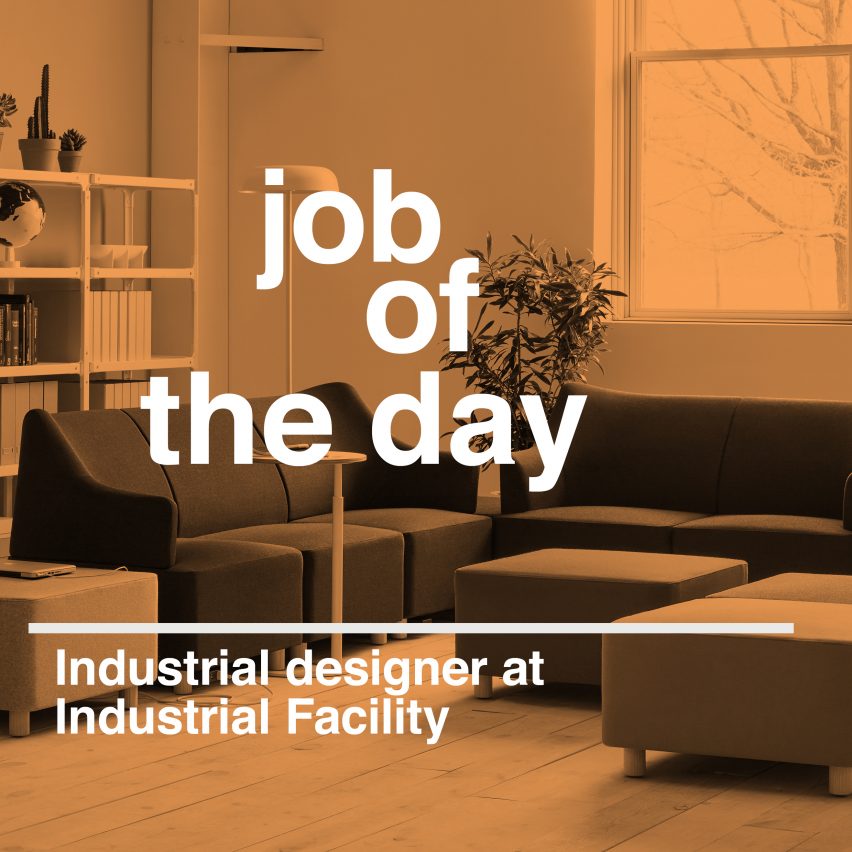
Job of the day: industrial designer at Industrial Facility

Dezeen Jobs architecture and design recruitment

Our job of the day from Dezeen Jobs is for a middleweight industrial designer at Industrial Facility, which created a modular seating system for US furniture brand Herman Miller (pictured). Read more stories about Industrial Facility or browse more architecture and design opportunities on Dezeen Jobs.

http://ift.tt/2gBlyVk

Article 25’s “10×10” Auction Features Work by Zaha Hadid, Kengo Kuma, Richard Meier & Antony Gormley


Kyle Henderson. Image Courtesy of Article 25

Kyle Henderson. Image Courtesy of Article 25

In celebration of their 10-year anniversary, Article 25, the world’s largest architectural charity, will hold this year’s “10×10 Drawing the City Londonevent on November 29 at the Royal Institute of British Architects. Each year, representatives from UK’s top architecture studios and property and design industries gather to raise funds for Article 25’s work in developing countries. The event features an auction of artwork by 100 prominent rising artists, designers, and architects; this year’s participants include Kengo Kuma, Richard Meier, Antony Gormley, Zaha Hadid Design, and David Adjaye.


Eva Jiricna. Image Courtesy of Article 25


Roger Fitzgerald. Image Courtesy of Article 25


Time Gledstone. Image Courtesy of Article 25


David Adjaye. Image Courtesy of Article 25


Roger Fitzgerald. Image Courtesy of Article 25

Roger Fitzgerald. Image Courtesy of Article 25

Article 25 works for human rights by designing, building, and managing projects that provide necessary buildings in the world’s most vulnerable communities. The organization has completed 82 projects and raised over £500 thousand for their work to date. Current projects include the reconstruction of a hospital in Nepal, design of a solar system installation training center in Burkina Faso, and planning of an inclusive preschool in Tanzania for disabled children.


Will Alsop. Image Courtesy of Article 25

Will Alsop. Image Courtesy of Article 25

Fuller. Image Courtesy of Article 25

Fuller. Image Courtesy of Article 25

Peter Murray. Image Courtesy of Article 25

Peter Murray. Image Courtesy of Article 25

Karl Singporewala. Image Courtesy of Article 25

Karl Singporewala. Image Courtesy of Article 25

Laurie Chetwood. Image Courtesy of Article 25

Laurie Chetwood. Image Courtesy of Article 25

Charles Holland. Image Courtesy of Article 25

Charles Holland. Image Courtesy of Article 25

You can support Article 25 through their live online auction here.

News via: Article 25

http://ift.tt/2eWKTHO