10 Teams Shortlisted in Competition for New National Holocaust Memorial in London


Victoria Tower Gardens and Parliament from the Thames. Image © Malcolm Reading Consultants/Emily Whitfield-Wicks

Victoria Tower Gardens and Parliament from the Thames. Image © Malcolm Reading Consultants/Emily Whitfield-Wicks

The Government of the United Kingdom and competition organizer Malcolm Reading Consultants have announced the ten architect teams selected to envision designs for the new National Memorial to the Holocaust, to be located next to the UK Parliament. Designs will encompass a “striking” new National Memorial in Victoria Gardens, as well as a possible below ground Learning Center.

The 10 shortlisted teams were selected from nearly 100 entries from teams across the globe by a jury made up of notable figures in British culture, religion and architecture, including Director of Stanton Williams Architects, Paul Williams; former Serpentine Galleries Director Dame Julia Peyton-Jones; and National September 11 Memorial and Museum Director, Alice M Greenwald.


Aerial view of Victoria Tower Gardens. Image © Malcolm Reading Consultants/Emily Whitfield-Wicks

Aerial view of Victoria Tower Gardens. Image © Malcolm Reading Consultants/Emily Whitfield-Wicks

The shortlisted teams are as follows:


Victoria Tower Gardens and Parliament from the south bank of the Thames. Image © Malcolm Reading Consultants/Emily Whitfield-Wicks

Victoria Tower Gardens and Parliament from the south bank of the Thames. Image © Malcolm Reading Consultants/Emily Whitfield-Wicks

An exhibition of the ten conceptual designs will be on display in central London and select locations around the UK beginning in January 2017, seeking views and comments from all communities across the UK. The winning team will be selected by the independent jury chaired by Sir Peter Bazalgette, Chair of the United Kingdom Holocaust Memorial Foundation and the ITV Board.

“These teams are challenged with creating a vision for the Memorial which sensitively reflects the loss of life and humanity during the Holocaust. But it must also speak to everyone, with an unwavering commitment against all hatred and intolerance. The design will inspire people of all ages and backgrounds to commemorate and learn,” said Bazalgette.


Victoria Tower Gardens. Image © Malcolm Reading Consultants/Emily Whitfield-Wicks

Victoria Tower Gardens. Image © Malcolm Reading Consultants/Emily Whitfield-Wicks

The complete jury members include:

  • Sir Peter Bazalgette (Jury Chair), Chair, United Kingdom Holocaust Memorial Foundation and Chair, ITV Board
  • Chief Rabbi Ephraim Mirvis, Chief Rabbi of the United Kingdom
  • Rt Hon Sajid Javid MP, Secretary of State for Communities and Local Government
  • Rt Hon Sadiq Khan, Mayor of London
  • Ben Helfgott MBE, Holocaust Survivor, Honorary President, ’45 Aid Society and President, Holocaust Memorial Day Trust
  • Sally Osman, Director of Royal Communications
  • Loyd Grossman CBE, Chair of Royal Parks
  • Alice M Greenwald, Director, National September 11 Memorial and Museum
  • Lord Daniel Finkelstein OBE, Journalist
  • Baroness Kidron OBE, Film director and crossbench peer
  • Dame Julia Peyton-Jones, Former Director of the Serpentine Galleries
  • Paul Williams OBE, Director, Stanton Williams Architects
  • Charlotte Cohen, Prime Minister’s Holocaust Youth Commissioner
  • Natasha Kaplinsky, Broadcaster, Natasha recently recorded the testimony of over 100 Holocaust survivors and camp liberators. 

Victoria Tower Gardens. Image © Malcolm Reading Consultants/Emily Whitfield-Wicks

Victoria Tower Gardens. Image © Malcolm Reading Consultants/Emily Whitfield-Wicks

To learn more about the project, visit the competition website, here.

News via Malcolm Reading Consultants.

http://ift.tt/2f7AxQP

Dining Room by Gisele Taranto – Week 5: Religion – Casa Cor 2016

Dining Room by Gisele Taranto – Week 5: Religion (3)

For Casa Cor Rio 2016, the most important architectural and interior design event in Brazil, Gisele Taranto Arquitetura was challenged to create six different designs for a dining room. The 26th edition of the event takes place in a house surrounded by Burle Marx gardens in Gávea, an affluent residential neighborhood located in the South Zone of the city of Rio de Janeiro. Ovoo Dining Room by Gisele Taranto –..

More…

Getaway Cabin No. 3 – “The Clara” / Wyatt Komarin + Addison Godine + Rachel Moranis


© Getaway

© Getaway


© The Bearwalk


© The Bearwalk


© The Bearwalk


© The Bearwalk


© Getaway

© Getaway

The cabin was conceived as an exploration of the potential for a productive lack of fit between program and inhabited surface. The space is comprised of a series of levels, each charged with programmatic intent, but with a degree of non-specificity such that use can be defined by the user. A sitting surface becomes a sleeping surface becomes an eating surface becomes a walking surface.  The cabin’s external logic was governed by the limits of vehicular transport to the site, in which a cantilevering volume pushes beyond the constraints of a vehicular transport bed. 


© The Bearwalk

© The Bearwalk

Plan

Plan

© The Bearwalk

© The Bearwalk

Section

Section

© The Bearwalk

© The Bearwalk

http://ift.tt/2gqh0Rz

California College of the Arts Selects Studio Gang for New San Francisco Campus


Courtesy of California College of the Arts

Courtesy of California College of the Arts

The California College of the Arts (CCA) has selected Studio Gang out of three finalists to design an expanded art and design college campus for the school in San Francisco. Currently split between San Francisco and Oakland, CCA’s expansion in San Francisco will allow all of the school’s programs to be housed in one location. 

Over the next five years, Studio Gang and CCA will collaborate to create a new campus to host 2,000 students, 600 faculty members, 250 staff members, and 34 academic programs, and to be a model of sustainable construction and practice.


Courtesy of California College of the Arts

Courtesy of California College of the Arts

Courtesy of California College of the Arts

Courtesy of California College of the Arts

The selection process was extremely thorough, involving intense review and significant input from many constituencies, commented CCA Board Chair C. Diane Christensen. Studio Gang’s visionary work, commitment to innovation and sustainability, and collaborative work style makes the firm an excellent fit for this project and for CCA. Jeanne Gang leads an extraordinary team that is very familiar with San Francisco and our still-emerging neighborhood at the intersection of the city’s innovation corridor, the new DoReMi arts district, and Mission Bay. We are thrilled with the prospect of working with Studio Gang and have high hopes that our new campus will help redefine 21st-century arts education.


Courtesy of California College of the Arts

Courtesy of California College of the Arts

The project will be built on a 2.4-acre lot bordering the college’s existing San Francisco campus buildings.

News via the California College of the Arts (CCA).

http://ift.tt/2g3gN5j

How Toyo Ito is Embarking on a “New Career Epoch” With Small-Scale Community Architecture


Steel Hut, Toyo Ito Museum of Architecture in Omishima, Japan. Image © Daici Ano

Steel Hut, Toyo Ito Museum of Architecture in Omishima, Japan. Image © Daici Ano

This article was originally published on Autodesk’s Redshift publication as “Toyo Ito’s Next Architectural Feat: Revitalizing Omishima Island in Japan.”

Last year, as construction at his National Taichung Theater in Taiwan was winding down, Toyo Ito found himself at a crossroads.

A 10-year project in the making, the gargantuan cultural beacon is made of biomorphically curved concrete walls that wind together like a knot of arteries, creating an otherworldly experience for arts patrons. It’s every bit the landmark project you’d expect from 2013’s Pritzker Prize Laureate, but its rapidly approaching completion triggered a vital question: Where to go from here?

Toyo Ito’s Taichung Metropolitan Opera House Photographed by Lucas K Doolan//cdn.embedly.com/widgets/platform.js

“With the completion of the opera house, I feel as if the first epoch of my architectural career is also coming to an end after 40 years,” Ito says. “Since we began designing residences in the early years of our firm, my colleagues and I have searched for beautiful spaces and architectural uniqueness. The opera house is the culmination of that search. I cannot imagine creating a more innovative work where the beauty of space is paramount.”

So rather than trying to top the formal exploration and structural innovation of the opera house (which opened last month on September 30), Ito is now focused crafting spaces that define themselves by social interaction rather than experiential delight.


National Taichung Theater in Taichung City, Taiwan. Image Courtesy of Toyo Ito & Associates

National Taichung Theater in Taichung City, Taiwan. Image Courtesy of Toyo Ito & Associates

Most recently, this recasting of architecture can be seen in the work of Ito’s Pritzker successors and some of the biggest architecture exhibitions. As for Ito, he began this endeavor several years ago, working on disaster-relief plans in his native Japan. It has culminated in applying these lessons to rural communities with humble aims that are far from the affluent megacities—geographically and culturally—that architects of his caliber generally frequent.

In 2011, after a devastating earthquake and tsunami in northern Japan killed 19,000 people, Ito began working on a series of community centers in towns still reeling from the disaster. These “Homes-for-All” are loosely defined community sites that aren’t homes exactly, but are instead spaces that can feel like home when everyday patterns of life and living have been ripped away by catastrophe. They are places for events and meetings, and incubators for businesses displaced by the tsunami—a place to meet your neighbors, get your bearings, and catalog what was lost and what you still have.


Toyo Ito and fellow architects at a Home-for-All building in Rikuzentakata, Japan. Image Courtesy of Toyo Ito & Associates

Toyo Ito and fellow architects at a Home-for-All building in Rikuzentakata, Japan. Image Courtesy of Toyo Ito & Associates

Ito worked on the Homes-for-All with a few other architects, including Kazuyo Sejima and Riken Yamamoto, but these buildings weren’t “designed” so much as “workshopped” with extensive community input.

“Many architects say that they create architecture for society,” Ito says. “But the architecture created may be actually for architects themselves. Architects create architecture by seeing the society and people through architects’ eyes. I would like to reconsider architecture through residents’ eyes.”

The Home-for-All in Rikuzentakata weaves three stories of simple gabled structures through wooden stairs and catwalks, held aloft by cedar log columns and heated with a wood-burning stove. In Miyatojima, a rounded pavilion roof shelters a simple meeting and event space. Each Home-for-All (designed using Autodesk AutoCAD) looks quite different, but the form isn’t what’s important. What happens inside is. Fifteen have been built so far, with one more to go.

The lessons in grassroots community engagement Ito learned with his Homes-for-All project made him consider whether these same principles could be applied to entire communities—to not just repair damage, but to revitalize a place culturally and economically. Fortunately, he already had strong ties to a potential candidate.

In 2007, Ito first came to the island of Omishima in southern Japan to design expansions of the Tokoro Museum (the Steel Hut and Silver Hut, which were completed as part of the Toyo Ito Museum of Architecture in 2011). “I reached the island on a ferry, and Omishima looked really impressive, as if I were entering an unknown world,” Ito says.


Silver Hut, Toyo Ito Museum of Architecture in Omishima, Japan. Image © Daici Ano

Silver Hut, Toyo Ito Museum of Architecture in Omishima, Japan. Image © Daici Ano

It’s a lightly populated island, with 6,400 residents living across 13 small villages—anchored by the Oyamazumi Shrine. “The hillsides are covered with mandarin orange orchards, which create a serene, beautiful landscape,” Ito says. “The sunsets from the western side of the island are indescribably beautiful.”

But little commercial and industrial development has taken place there. Omishima has lost half of its population from its peak in the 1940s and ’50s, and 50 percent of residents are 65 or older. The next phase of Ito’s career, he says, will be dedicated to helping the island regain this lost vigor.

Ito calls his effort, “Making Omishima the Best Island to Live on in Japan,” with the cheerfulness of a man trading in his starchitect globe-trotting frequent-flier miles for pastoral purity and respite. Omishima does sound like the type of place you might retire to, but Ito is there to work.

Collaborating with local residents, architecture students from Harvard, and his own school, Ito’s plans are a take on the classic chamber of commerce approach: Build on existing institutions and traditions, organically extend more programmatic depth and economic activity, and, hopefully, attract new residents.

Using local earthen plaster, he’s renovated a vacant house along the road to the Oyamazumi Shrine into a Home-for-All. “This Home-for-All is used as a café at noon and a wine bar at night on weekends,” Ito says.


Home-for-All by Kumamoto Artpolis Tohoku Support Group in Miyagino-ku, Sendai, Japan. Image © Ito Toru

Home-for-All by Kumamoto Artpolis Tohoku Support Group in Miyagino-ku, Sendai, Japan. Image © Ito Toru

The plan will include an agricultural school and a vineyard. The first Omishima wine will be ready in 2019, under the brand “Winery-for-All.” Additionally, Ito intends to establish a small hotel, add more lodging for part-time residents, and renovate an existing “agritourism lodge.” To better connect these amenities, Ito wants to use electric or pedal-powered vehicles to carry residents and visitors through Omishima’s picturesque hills. Funding for all this, Ito says, will come from the community and its institutional pillars—no corporate solicitations necessary.

These plans don’t add up to any dramatic revision of how a small island village in Japan looks or functions. They don’t posit top-shelf aesthetics from one of Japan’s greatest architects as a way to solve any problem. Instead, they form a framework for planting new seeds of economic vitality and letting these seeds grow into whatever form they might.

Ito sees this as a 10-year-process, like his National Taichung Theater. It’s a sort of “slow architecture,” akin to “slow food”—using locally sourced materials and ingredients, assembled with local means.

If Omishima is like Ito’s own personal garden, it’s because he’s taken the time to cultivate fertile soil through his long-standing community involvement, and has just now placed the first sprouts in the ground.

http://ift.tt/2gmVuML

Iryna Dzhemesiuk Designs a Cozy Apartment in Kiev, Ukraine

Job of the day: project editor at Phaidon

Dezeen Jobs architecture and design recruitment

Our job of the day from Dezeen Jobs is for a project editor at architecture and design book publisher Phaidon, whose catalogue includes a monograph on late British designer James Irvine. Read more stories about Phaidon or browse more architecture and design opportunities on Dezeen Jobs.

http://ift.tt/2f6UerT

Zaha Hadid Architects reveals plans for Infinitus Plaza in Guangzhou

infinitus-zaha-hadid-architects-china_dezeen-sq2

Zaha Hadid Architects has begun work on a multipurpose complex in Guangzhou, which is modelled on the looping infinity symbol used in mathematics. Read more

http://ift.tt/2f6xhoG

Dezeen Watch Store highlights bestselling timepieces with new category

by-popular-demand-dezeen-watch-store-sq

Dezeen Watch Store has launched two new Christmas shopping categories dedicated to its most popular watches and exclusive collaborations. Read more

http://ift.tt/2g4dQPP

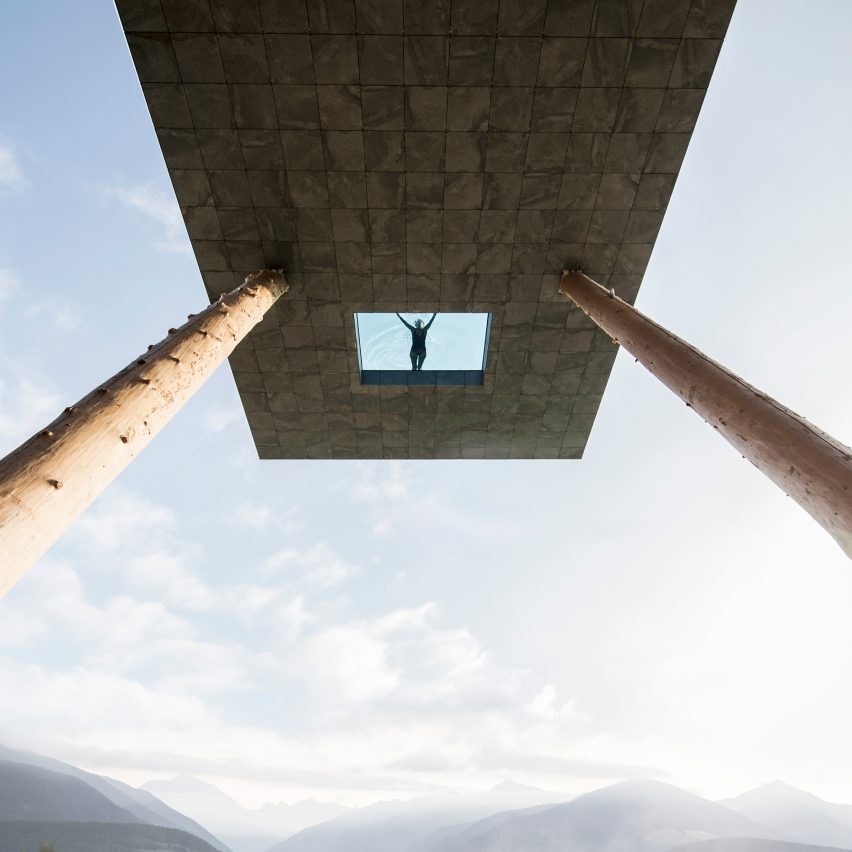
Glass-bottomed pool by NOA projects out from Alpine hotel

Cantilevering sky pool by noa

A glazed panel in the base of this cantilevered swimming pool by architecture studio NOA gives bathers dramatic views of the South Tyrolean Dolomites. Read more

http://ift.tt/2fKiIZz