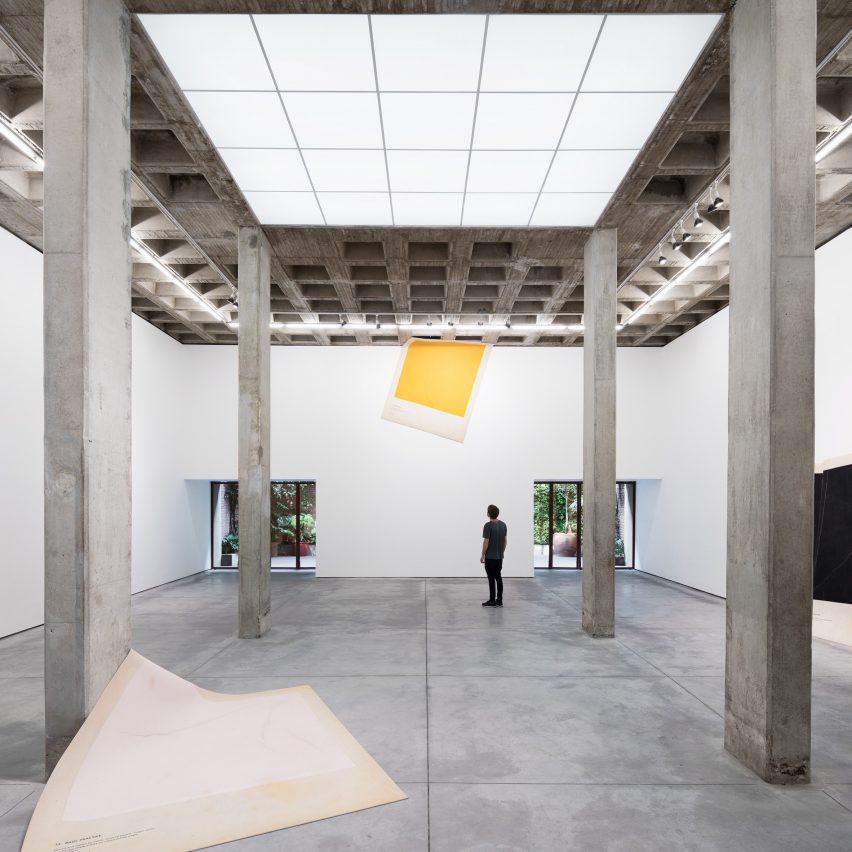
A mid-century concrete structure in the heart of Mexico City has been renovated and extended to accommodate a contemporary art gallery. Read more
A mid-century concrete structure in the heart of Mexico City has been renovated and extended to accommodate a contemporary art gallery. Read more
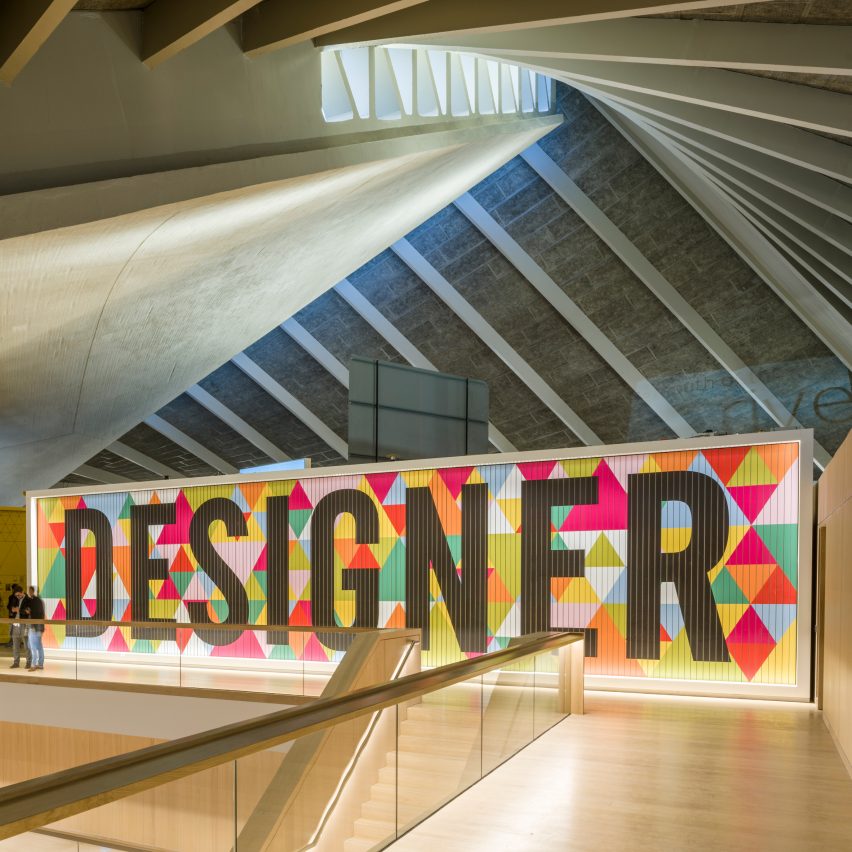
These photographs taken by Gareth Gardiner offer a glimpse of the interiors created by John Pawson for the new Design Museum ahead of its official opening next week. Read more

Zaha Hadid Architects has unveiled the design of the Guangzhou Infinitus Plaza in Baiyun New Town, Guangzhou, China, coinciding with the project’s groundbreaking ceremony. The 167,000 square meter complex will consist of two building footprints, connected in the air through twin green-roofed skybridges to create a vertical campus for LKK Health Products Group (LKKHPG) and the Infinitus health products brand.
Employing ZHA’s trademark flowing forms, the building design follows the concept of the infinite, arranged as a series of endless rings that enhance connectivity and following the form of the symbol for infinity “∞”.
Within the complex, different departments and program pieces, including a new global center for R&D, a Chinese herbal medicine research and safety assessment center, an exhibition center and a gallery, have been arranged around four central atria and courtyards to encourage interaction between employees. On the roof, walking and jogging paths weave between gardens of Chinese herbal plants, providing a place of respite for employees.
“Zaha Hadid developed the design of Guangzhou Infinitus Plaza with concepts of integration, connectivity and fluidity. This groundbreaking ceremony continues her renowned legacy,” said Satoshi Ohashi, Zaha Hadid Architects Director, China.
“LKKHPG has a vision for nurturing better health and wellbeing through their work and important community programs. Zaha translated this vision to create a new workplace environment and corporate culture that fosters openness and communication. The design connects with the city and implements the latest technological solutions and construction methods to create a functional, adaptable and enjoyable workplace.”
The building utilizes a “unitised insulated glazing system” to maximize available natural light while also reducing energy loss through the facade. Over the glazed wall, perforated aluminum screens serve as a rainscreen to protect from direct solar heat gain, as well as allow for rainwater collection. The screens have been developed with digital intelligence to include sensors that allow the building to adapt based on weather and energy-use, allowing for further reduction of energy consumption.
Guangzhou Infinitus Plaza is planned to become a new gateway into the new Baiyun Central Business District, which will include 6 communities developed surrounding the former Baiyun Airport. Running between the two building footprints is Line 2 of the Guangzhou’s Metro, ensuring the site will be connected to the rest of the city.
The project cost is expected to reach 4.5 billion RMB (approximately $659 million USD). Constructed is slated for completion in Spring 2020.
News via Zaha Hadid Architects.

From the architect. WilkinsonEyre was appointed for the redevelopment of the former River Plate House, Finsbury Circus, following a design competition in 2011. Their scheme works to the client’s overall requirements for an ‘exemplary’ new office building in this historic City setting. The site, which is adjacent to the listed Britannic House by Edwin Lutyens, has access from both Finsbury Circus and South Place.
Full planning permission was granted in 2012 to replace the existing 1980s building with the new scheme, which provides more than 15,000m2 of Grade A, flexible office space with ground floor retail.
The main challenge was convincing the City Planners to allow the demolition of the existing building. Further constraints required that the new building should retain a mansard, as other buildings in the Circus, and that the building should not be seen above the height of the existing mansard when viewed from the south side of the Circus. Careful modelling resulted in stepping back the upper levels to create generous terraces, allowing the net area on the site to increase by approximately 23%.
WilkinsonEyre’s interpretation of a traditional City building has resulted in deeply modelled Portland stone and bronze facades, detailed in a contemporary manner. A portion of the north façade, dating from the 1920s, has been retained with an existing colonnade opened up to form a new entrance. Juliet balconies and dormer windows within the mansard with their crisp, frameless glazing continue the theme of traditional elements given a modern twist. Castings from the building’s original railings have been retained and embodied into the walls of the entrance.
WilkinsonEyre’s proposals maximise the full development potential of the extremely constrained site, whilst respecting the surrounding listed buildings. Entrances on both the north and south provide access to a generous lobby that runs through the length of the ground floor anticipating the change in the movement of office workers to the building following the opening of new ticket halls at Liverpool Street and Moorgate for Crossrail in 2018, also designed by WilkinsonEyre.
The building is configured around a central core, providing large column free office space at all levels. A sculptural main circulation stair has been positioned with good visibility from the core to encourage use of the stair between floors.
Within the impressive reception a traditional palette of stone, bronze and walnut is imaginatively detailed to provide an uplifting environment for the occupiers. The lift shafts, in translucent glazing, provide both a source of light and movement, with the lift cars casting shadows as they rise and descend. WilkinsonEyre has designed two walnut veneered sculptures which act as focal points within the large space and provide a place to sit.
A walnut clad recess in the curved stone wall on the east side of the reception houses a sleek reception desk and provides views into the lower levels of the lightwell. The lightwell brings daylight down through the building and provides a visible connection between floors. An art installation by Carpenter Lowings, commissioned for the project, runs the full height of the lightwell. The dynamic piece, composed of folded stainless steel panels, was developed in response to a brief prepared by WilkinsonEyre that sought both a focal point and device to introduce reflected light into the depth of the building.

With the aim of supporting the design work of our readers, the company UrbanPlay has shared with us a series of files in .DWG format for different models of children’s games, playgrounds, and equipment for public space. Files can be downloaded directly in this article and include 2D and 3D files.
See all 15 below.

Audience sightlines, accessibility and acoustics all make theater seating a hugely precise art. As part of their set of online resources for architects and designers, the team at Theatre Solutions Inc (TSI) have put together a catalog of 21 examples of theater seating layouts. Each layout is well detailed, with information on the number of seats, the floor seating area and row spacing. These layouts fall under three general forms; to supplement this information, alongside TSI’s diagrams we’ve included the pros and cons of each type, as well as examples of projects which use each format. Read on for more.
In the End Stage form, the entire audience faces the stage in the same direction. Sightlines are kept simple, making these layouts perfect for lectures, films and slide-based presentations. They also fit well into conventional rectangular plans.
However, End Stages are not overly successful at creating a close relationship between performer and spectator. Theatres in this form also can’t be too large due to acoustic limits.
Examples:
The Blyth Perfoming Arts Centre / Stevens Lawson Architects
Municipal Theatre of Guarda / AVA Architects
In this form, theatre seats are placed within a 130-degree angle of inclusion. This brings in the audience closer to the performer, establishing a more intimate experience.
This angling also means that the form is better geared towards speech-related performances. Film presentations would be trickier in these spaces, with screens requiring proper positioning – perhaps further back from the stage, to compensate for seats that find their sightlines distorted.
Examples:
National Grand Theatre of China / Paul Andreu
Ulumbarra Theatre / Y2 Architecture
Limoges Concert Hall / Bernard Tschumi Architects
¾ arenas see a 180-270-degree angle of inclusion. Hearing and visual contact between spectator and performer is improved, and as audience members can see each other when facing ahead, the sense of inclusion is increased even more.
However, conventional film presentations are almost impossible and would require an alternative screen layout, such as a number of smaller screens arranged throughout the space.
Examples:
Han Show Theatre / Stufish Entertainment Architects
Dee and Charles Wyly Theatre / REX + OMA
Hardelot Theatre / Studio Andrew Todd
While the above three tend to be the most common forms of seating layout, they are by no means the only ones. Further options include Arena seating where the audience wraps around the stage a full 360 degrees, common for extra-large theaters like the Royal Albert Hall, and the Vineyard style where seats are arranged in cascades of mini-blocks of varying levels, including the rear of the stage, as seen in the Hamburg Elbphilharmonie.
Or even more differently, Bijlmer Park Theatre is a hybrid between End Stage and ¾ Arena, with flexible pull-out seating turning it from one to another, while The Wave’s seating takes after its namesake.
For more detail on designing auditoriums, including info such as seat spacing and the slope of the auditorium, check out TSI’s comprehensive article here.

This edition of Section D, Monocle 24’s weekly review of design, architecture and craft, explores London’s new Design Museum – a significant expansion for the institution at an entirely new location in West London. The interior spaces of the former Commonwealth Institute Building in Kensington, which is Grade II-listed, have been renovated by John Pawson. Alongside the museum’s Deputy Director, Alice Black, the Monocle team investigate the thinking behind the relaunch and how the spaces are designed to accommodate a shifting audience.
Find out more about Monocle 24’s Section D here.

Competition organizers Bee Breeders have just announced the results of their Trans-Siberian Pit Stops Competition. At 9,289 kilometers, the Trans-Siberian Railway connects Moscow to Russia’s far eastern cities. While it historically attracted many adventurers who would later write about their journeys, the railway is largely used for domestic travel today.
First place was awarded to Kamvari Architects, who proposed elegant pit stops inspired by the vernacular traditions and materials. Strong geometric forms become striking objects in the barren Russian landscape, while the building configurations allow stabilized interior conditions during winter and summer climates.
“The winning project stood out for its unique combination of traditional forms of architecture and the dynamic nature of the railway” – explained the judges.
The second place entry, by Jacopo Abbate and Matrina Mitrovic, used a wood fire hut as inspiration for their landmark-style project. Centered around a fireplace, the pit-stop creates light and warmth for fellow travelers. Additionally, the fireplace serves as a structural element for the building.
“The nature of a large fireplace is inviting and welcoming, and its slight peculiarity gives it a unique and symbolic appearance that can be recognized immediately from every station along the Trans-siberian railway route” – commented the jurors.
Anamorphosis, the third place project by Godfathers, integrates itself with its surrounding environment through a mirrored facade. Because of its diverse nature in different environments, the pavilion can be placed throughout the railways, offering various facades.
“What made this design stand out to the jury panel is the dichotomy of its nature, its impressive design making it stand out while at the same time reflecting on the world around it” – commented the jurors.
Other honorable mentions include Bee Breeders’ Green Award — presented to Liam Morrow and Elvira Hoxha’s Trans-Siberian pods. Nolan Loh’s Trans-Siberian Pit Stops was also selected as the Student Award.
Read full details of each design including honorable mentions can be found here.
News via: Bee Breeders
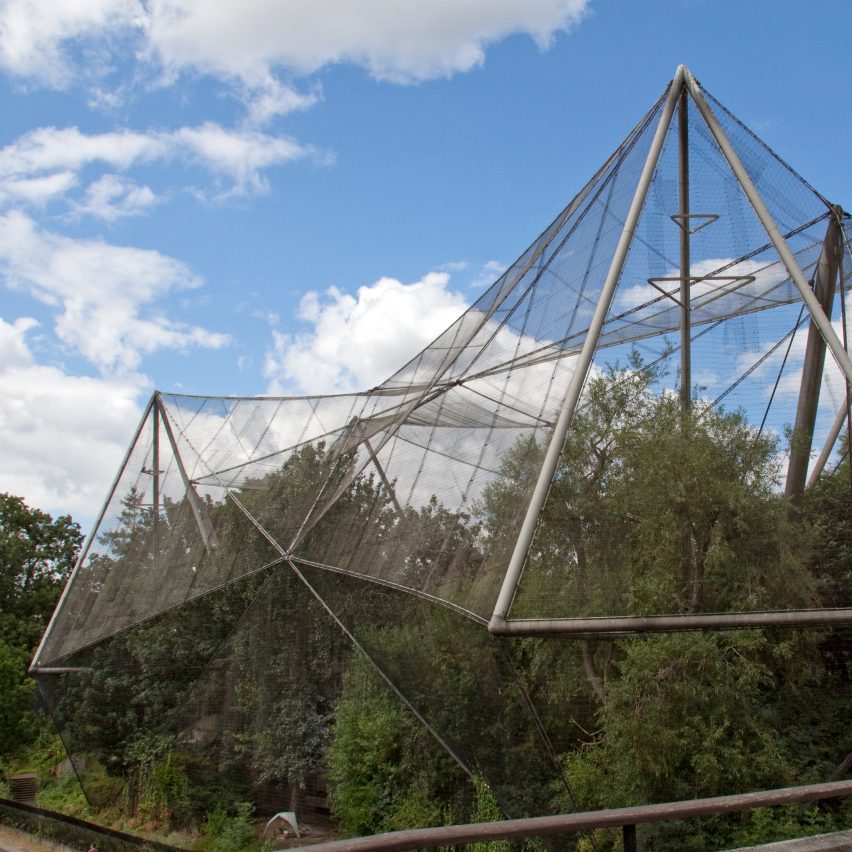
Norman Foster’s firm has been appointed to revamp the Snowdon Aviary at London Zoo – one of the most iconic designs of the late British architect Cedric Price. Read more
Our job of the day from Dezeen Jobs is for a product developer at Swedish furniture giant IKEA, which topped the brands category in the Dezeen Hot List. Read more stories about IKEA or browse more architecture and design opportunities on Dezeen Jobs.
 Sig Nordal