In this latest photoset, photographer Laurian Ghinitiou gives us a first look at BIG’s Transitlager, a new mixed-use arts complex located within and around an existing warehouse building in Basel, Switzerland. Now nearing completion, the renovation and expansion is characterized by its reaction to the existing geometries of the nearby industrial infrastructure, taking the form of two distinct buildings, one placed on top of the other. The complex will contain a series of multifunctional floors for art, commerce, working and living in becoming the center of the new arts district of Dreispitz.
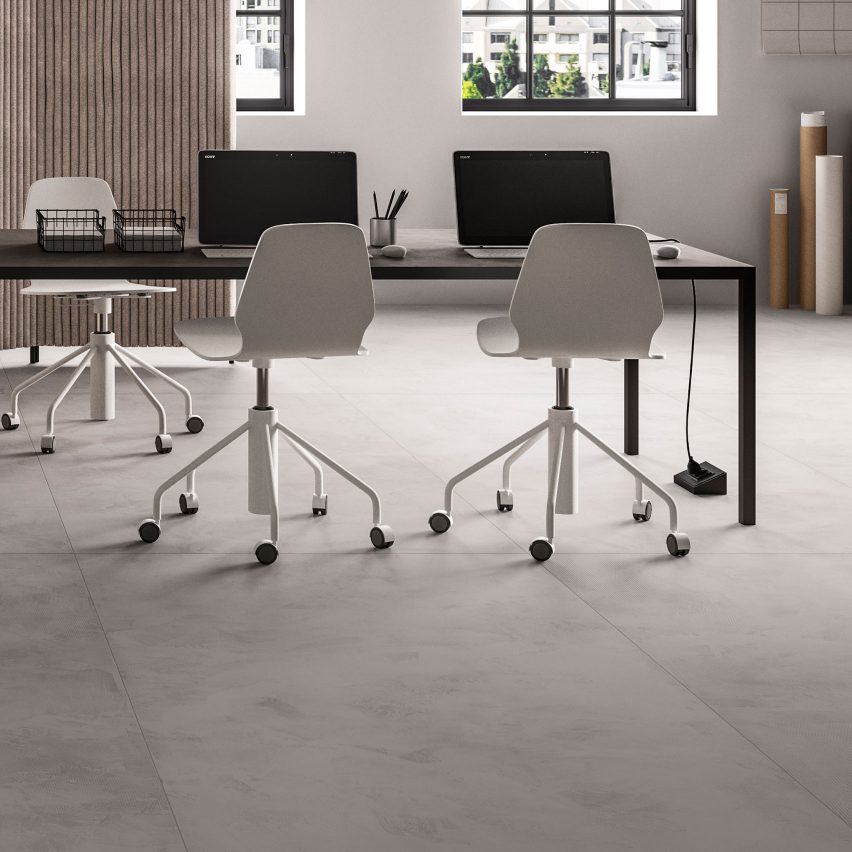
Dezeen promotion: the latest porcelain tile collection from Italian manufacturer Ceramiche Refin features patterns based on textured cement finishes. Read more
Location: Amsterdam-Noord, Amsterdam, The Netherlands
Team: Joost Baks, Gijs Baks, Remi Versteeg, Stijn de Weerd, Bram van der Heuvel, Ines van Sandick, Lars Goossens, Naomi Cheung San, Carlos Callejo, Vincent van Leeuwen
From the architect. Space Encounters won the pitch to design and construct the new Joolz headquarters in a former machine factory building in Amsterdam-Noord. The designer and manufacturer of ergonomic pushchairs is a fast-growing Dutch company from Amsterdam which aims to do things differently. Joolz has a strong ideological agenda when it comes to responsible entrepreneurship. Key to the new building should be their core value: positive design.
The new office measures 1.600 m2 and is located in the developmental area of Amsterdam-Noord and consists of a spacious industrial hall and a generic office building. It’s obvious where the quality and character resides, but unfortunately, the office blocks the hall from view from passersby. The first step to nullify this disbalance in quality is taken by removing all the walls on the ground floor, making the hall visible from the street. Subsequently large openings are made in the office buildings facade, further removing all associations of mediocrity.
Section
The new glazing is placed under an angle to -in line with the brands beliefs – improve transparency. But the main intervention are three lavish gardens filled with trees, plants, birds and fish. Extruded from three of the existing roof lights, they echo the scale and logic of what was already there. Next to express the Joolz ideology by providing a pleasant backdrop for the daily routines, these large glazed gardens also improve the internal climate and provide employees with some more exotic choices to pick as their work location for the day.
Design Academy Eindhoven is regarded as one of the most influential schools in the world, so much so that it placed third in our schools Hot List. We’ve rounded up eight of the most promising designers from this year’s graduation show, which took place during Dutch Design Week. Read more
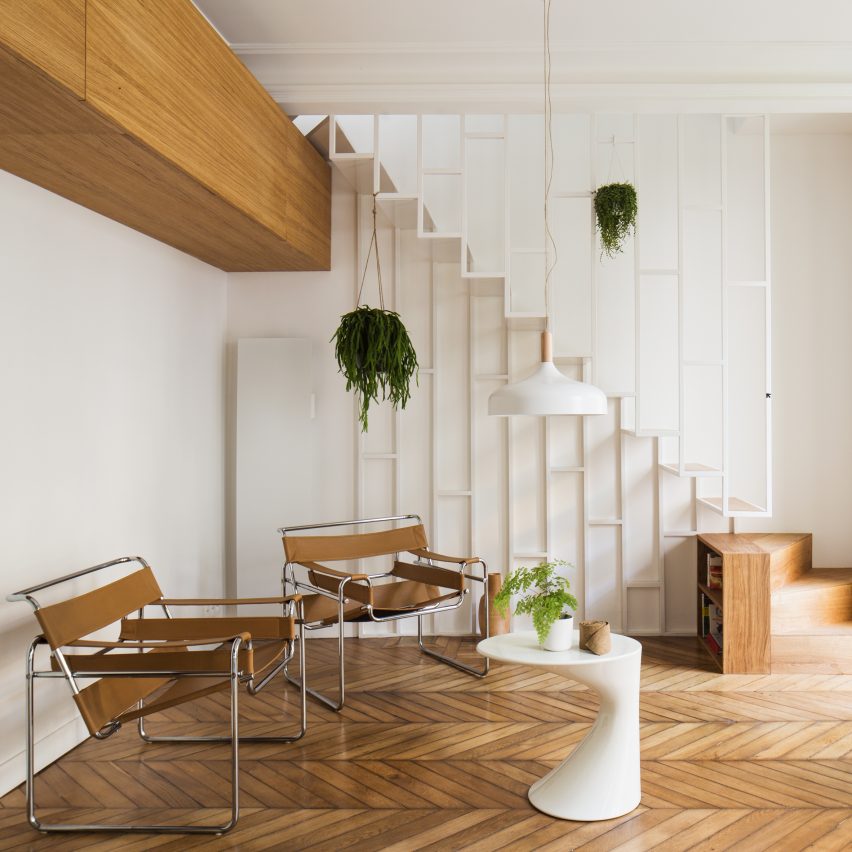
A white metal-framed staircase connects the two floors of this Parisian apartment, which local studio Les Ateliers Tristan & Sagitta has overhauled to make room for the clients’ two young children. Read more
Hancher Widely recognized for commissioning new works of dance and music, Hancher reaches audiences well beyond the University of Iowa. The new home for this renowned institution occupies a prominent location in Iowa City.
Overall Planning/Massing The design responds to its site and context on the exterior, and to its program and planning adjacencies on the interior. The exterior building design is specifically influenced by the Iowa River to its east, Park Road and City Park to its north, the Levitt Center to its west, and the Arts Campus to its south. The long sweeping curves of the building respond to the bend and flow of the Iowa River and its surrounding topography. Its tapered and cantilevered forms allow for the maximum amount of transparency at all levels of the public lobbies. Smaller scaled elements along Park Road echo the forms of the adjacent Levitt Center. The Levitt Center’s rotunda, along with the Hancher Rehearsal Room volume, forms a metaphorical gateway to the Arts campus.
Site Plan
There are two ADA accessible, pubic entrances at the south east and south-west corners of the building. The loading dock and loading court off of Park road was designed to accommodate large turning radii required by semi-trucks. Three berths/truck-docks load into the scene dock/transfer area, which is directly adjacent to the main stage. The dressing rooms, the production offices, crew rooms are all designed for maximum efficiency and convenient stage relationships.
Exterior Materials The exterior skin is comprised of stainless steel and glass ribbons. The cypress wood soffits lend a welcoming and inviting quality to the building, enhancing the natural warmth of the spaces as it transitions from exterior to the interior.
Lobby All public spaces offer panoramic views of the river and the campus. The lobby atrium is a light filled space with a ribbon like terrazzo grand stair threading and connecting the four lobby levels on its ascent. The west wall of the lobby expresses the shaping and movement of the building and is finished in a special pearlescent plaster. The skylights that appear on different levels reinforce the shape of the building and allows for dramatic secondary lighting and transparency.
Hall The new auditorium creates an intimate experience between the patrons and the performers on stage. The curved, sweeping balconies and terraces continue the idea of the exterior ribbons throughout the interior of the hall. The individually adjustable arced LED lighting fixtures reinforce the shape and geometry of both the building and the hall and creates a dramatic theatrical experience. A collapsible orchestra shell, adjustable acoustics, AV systems and production lighting allow the hall to be tailored specifically for performances ranging from orchestra and opera to Broadway presentations and dance.
Rehearsal Room Although the rehearsal room has its own exterior entrance, a grand gallery connects it to the main lobby. This acoustically and theatrically flexible room can host events ranging from receptions to experimental theater, including potential events utilizing the acoustically glazed north wall and intimate outdoor amphitheater.
Product Description. The exterior stainless steel panel system was custom manufactured by AWS, Architectural Wall Systems, of Iowa. This rain screen panel system is made of 18”x60” 2mm thick stainless steel panels. The panels utilize a non-directional brushed finish that diffuses the light and reflection. They are installed in a staggered pattern and are non-sequential, allowing individual panels to be changed at any time. Architecturally, this results in a taught and subtly textured skin that sublimely reflects the ever-changing sky, sunlight, and landscape.
Earlier this year, Hyperloop One announced a list of design partners that included Aecom, Arup, and Bjarke Ingels Group. Now, RB Systems—which was a finalist in the SpaceX Hyperloop One Pod Competition—has released a speculative design vision for a Hyperloop station and passenger pod. The spatial and programmatic concepts are largely experimental, as there are no precedents for this futuristic building typology.
Due to the rapid projected turnover rate of a 1 pod per minute, the design demands a high degree of automation, a carefully considered sequence of spaces, and a well-developed circulation plan for the pods to perform their many operations in a short time. Rustem Baishev of RB Systems proposes solving this challenge with a difference in levels: once a pod enters the station, it is carried on tracks to a platform, after which passengers and luggage unload; finally, an elevator lifts the pod to an upper level, where it is prepared for departure. All these maneuvers would be operated by an automatic dispatching system. A concrete rail shift inside the station will help to streamline this sequence and serves to dictate the station’s overall layout.
The interior of the station is intended to celebrate and generate excitement for the new technology. The space is, therefore, expansive, brightly colored, and filled with light, while adopting space-age aesthetics. A user-friendly wayfinding system includes easily visible timetables, spacious waiting halls, and a transparent service block. The proposed structural system is an experimental space-truss assembled from fiberglass; PV cells are molded into the glass assembly to block excess solar heat.
Elon Musk of Tesla and SpaceX first proposed Hyperloop, a tubular transit system that relies on magnetic levitation technology to transport passengers at over 700 mph, in 2013. The specific machinery and safety strategies to be implemented in RB Systems’ proposal remain to be resolved.
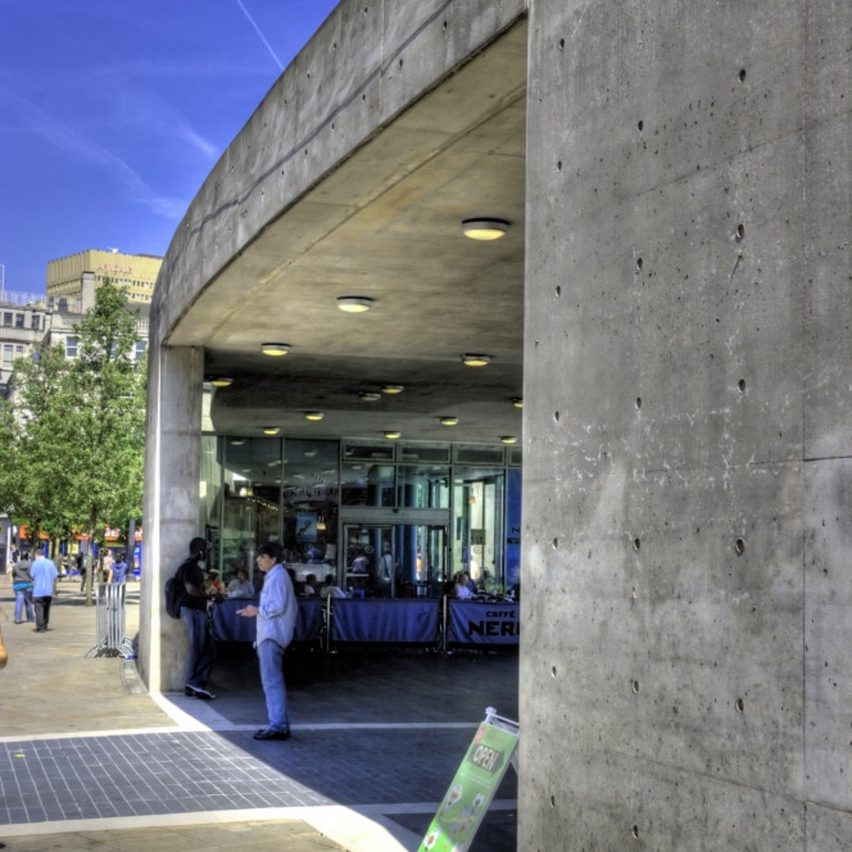
Plans are underway to demolish and replace Tadao Ando‘s concrete pavilion at Piccadilly Gardens in Manchester, the Japanese architect’s only building in the UK. Read more
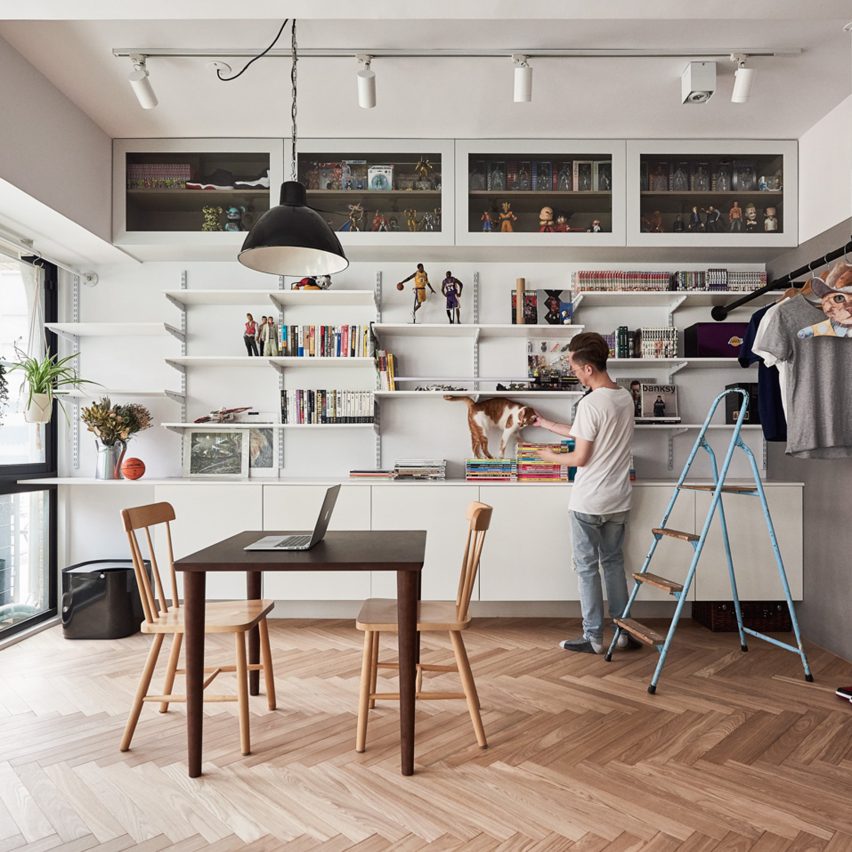
Taiwanese design practice ST Studio has opened up the interior of a Taipei apartment to create a flexible space for the owner and his two cats. Read more





 Sig Nordal