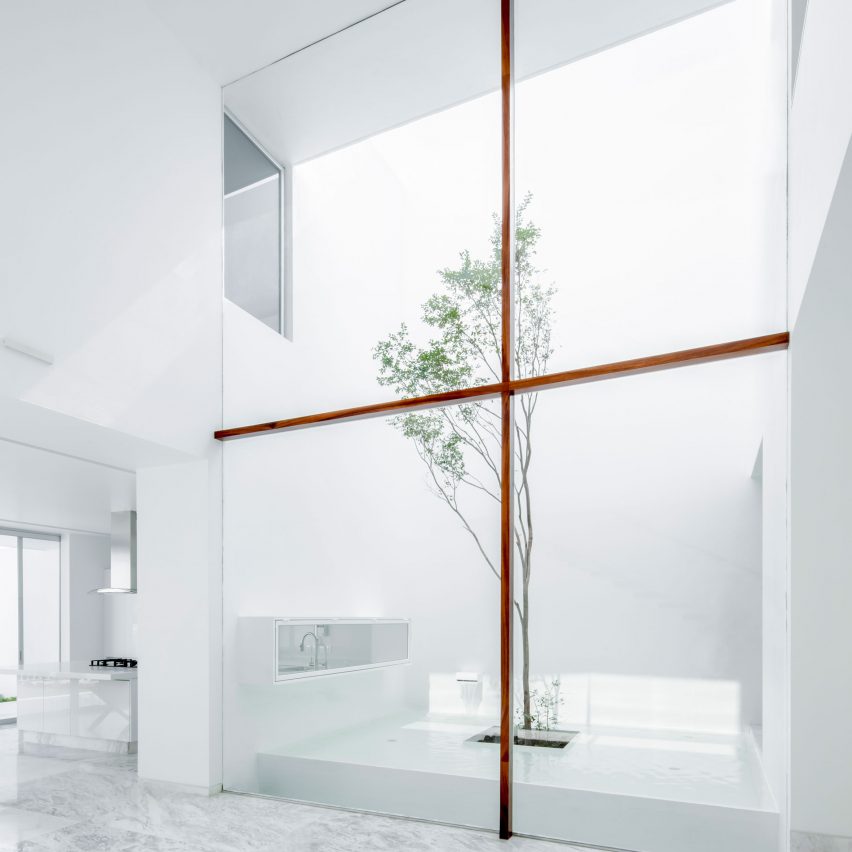
Guadalajara is emerging as Mexico‘s architecture hotspot, as young firms forgo Mexico City for better chances to test ideas and stand out. Read more
Guadalajara is emerging as Mexico‘s architecture hotspot, as young firms forgo Mexico City for better chances to test ideas and stand out. Read more

Quality over quantity, so the saying goes. With so many concepts floating around the architectural profession, it can be difficult to keep up with all the ideas which you’re expected to know. But in architecture and elsewhere, the most memorable ideas are often the ones that can be condensed textually: “form follows function,” “less is more,” “less is a bore.” Though slightly longer than three words, the following lists a selection of texts that don’t take too long to read, but impart long-lasting lessons, offering you the opportunity to fill gaps in your knowledge quickly and efficiently. Covering everything from loos to Adolf Loos, the public to the domestic, and color to phenomenology, read on for eight texts to place on your reading list:
A lesser-read piece from the co-author of the seminal Learning From Las Vegas, is Denise Scott Brown’s witty essay Planning the Powder Room. Penned in 1967 but still capable of making one sigh in agreement throughout, the essay gives an honest critique on public bathrooms—the all too often hookless cubicles, and the always hookless sinks that leave one awkwardly sandwiching belongings between legs. Scott Brown then shows how simple design can end the everyday impracticalities easily brought about by unaware able-bodied male architects. The essay shows how toilets are worthy of thoughtful design as well, and that it should be at least a number two, if not number one, priority.
Adolf Loos was prolific in his architectural writing, penning many articles across various journals and newspapers, with Ornament and Crime being the most famous. However, Loos would come to be disenchanted by the sloganizing and radicalization of a strictly anti-ornament stance. Wanting to distance himself and to clarify his own position, he later wrote Ornament and Education. Published 14 years after Ornament and Crime, Loos rejects those who misread his original essay to mean that “ornament should be systematically and consistently eliminated.” Giving a more holistic view than before, he reaffirms that “modern people, with modern nerves, do not need ornament,” while acknowledging that “classical ornament brings order into the shaping of our objects or everyday use.”
Part fiction, part architectural model eye candy, the ten short stories in this collection imaginatively weave together narrative and architecture. “The ultimate purpose of this book is to demonstrate that architectural representation need not be a neutral tool… that there are alternatives to the reductive working methods of contemporary architectural practice,” introduces CJ Lim. The seamless combination of the real and unreal, architecture and fiction, models and text, results in one of the most enjoyable architectural reads out there.
Drawing on the likes of Hannah Arendt, Paul Ricœur, Walter Benjamin and Martin Heidegger, Kenneth Frampton explores architecture’s role in proliferating a “universal placelessness” through artificial light and bulldozing land into tabula rasas. These are but a few of the consequences of what Frampton identifies as architecture’s polarization between a “‘high-tech’ approach predicated exclusively upon production” and “the provision of a ‘compensatory facade’ to cover up the harsh realities of this universal system.” Across six salient points, the case for Critical Regionalism is made, offering an architecture that values universal aspirations and geographic context, rather than “the Western tendency to interpret the environment in exclusively perspectival terms.”
“It is we who have caused this stirring called colour. Nevertheless, we cannot control it. When we stumble against limits we blush. Disproportion and fragility are shameful and funny,” writes Lisa Robertson. Part historical chromatic discourse, part literary fiction, the essay is a refreshing look at the mystery and affect of color. How to Colour is just one of many short essays on buildings, space, place, art and everyday interactions with the environment in Robertson’s book Occasional Work and Seven Walks from the Office for Soft Architecture. The complete book, with a free open-source PDF version, can be found here.
Making appearances on many first-year reading lists (and often therefore appearing perpetually closed on the floors of student bedrooms), The Eyes of the Skin is worthy of a proper reading despite its misunderstood cliche position in architectural literature. The book is written with great readability, revealing the ties between architecture and our own bodies, memories, senses and time, almost conversationally. For a word, phenomenology is long, but for a book, Eyes of the Skin is not—making it the perfect text to revisit (or finally get around to reading).
Published in 1933, Junichiro Tanizaki’s essay remains relevant, if not even more charged, in today’s increasingly multicultural society. By considering shadows, light is shed on the all-consuming cultural influences we blindly accept. Pondering a non-colonial environment where hospitals are tatami-ed, brushed pens melt into soft, thick paper, where toilet trips become “a physiological delight,” Tanizaki poetically uses Japanese aesthetics as a lens to discuss architecture, objects, and contrasts between Western and Asian cultures.
It’s common knowledge that Le Corbusier is a “problematic fave” of the architecture world, and no-one explains this quite as well as Beatriz Colomina. In Window, an especially accessible essay in Privacy and Publicity: Modern Architecture as Mass Media, Colomina uses the window and Le Corbusier case studies to discuss the public, the private, the representation of buildings and the representation of women.

Our job of the day from Dezeen Jobs is for a CAD technician with Stella McCartney, who teamed up with Adidas to design the uniforms for Team GB at the 2016 Rio Olympics (pictured). Read more stories about Stella McCartney or browse more architecture and design opportunities on Dezeen Jobs.

Fitzroy Loft is a private home located in Melbourne, Australia. The 2,690-square-foot home was designed by Architects EAT. Fitzroy Loft by Architects EAT: “This project is a conversion of a gritty 250m2 (2,690ft2) brick warehouse in the old industrial area of Fitzroy into a family home. The former industrial building is a mixture of intimately scaled family spaces and vast entertaining voids. Two full height voids act as the lungs..

UK transport minister John Hayes has declared war on Brutalist architecture, The Independent reports. Citing public distaste for the functional, modern designs characterized by exposed concrete and brick masonry, Hayes warned against a revival of the style, referring to it as “aesthetically worthless, simply because it is ugly.” Meanwhile, Hayes named Boris Johnson’s New Routemaster and the redeveloped St. Pancras, Blackfriars, and King’s Cross stations as specimens of exemplary design. At the heart of this ire is a push to rebuild a Doric arch outside Euston station, which was demolished in 1962.
Learn more about the campaign and its reception here.
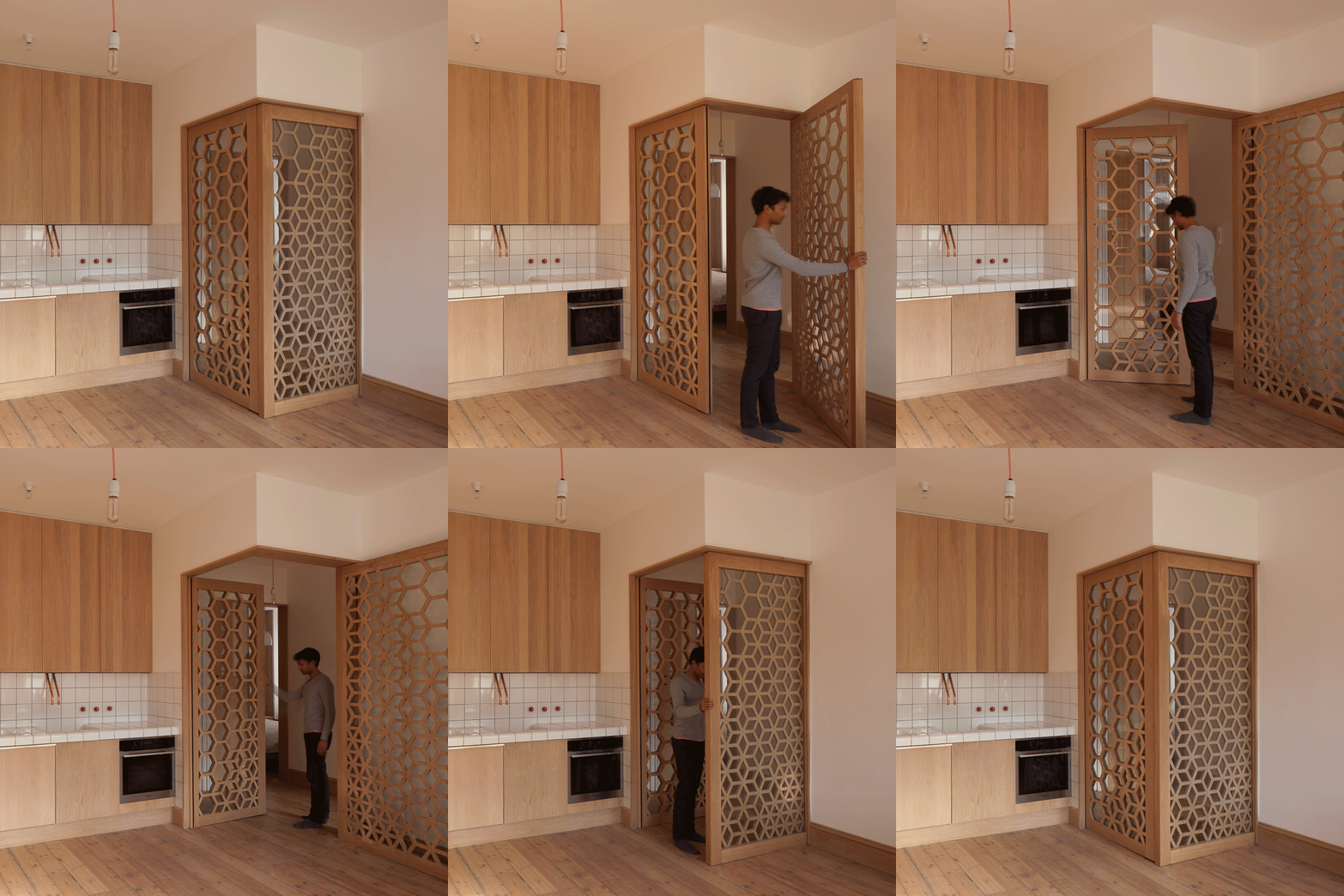
Movable, perforated screens allow this north London apartment to be adapted to suit various situations. Read more

This self-build project for the practice director Jake Edgley’s own family home, was initiated, designed and contracted by Edgley Design.
The concept began with a 100 year old pear tree, a remnant of the site’s history as a Victorian fruit orchard. The house has been built around the tree, creating an internal courtyard that brings light and air to the centre of the plan, while turning the house inward to remain private from the surrounding terraced houses.
The site is long and thin, and the layout is arranged around the changing light of the day, with the kitchen looking to the north east for morning light, the living areas looking south west onto the pear tree courtyard for light from midday, and the lowered snug in the centre of the building as a cosy retreat in the evening.
In terms of inclusivity, the house is open plan with circulation designed to flow generously as space rather than corridor. The layout and structure allow varied flexibility to provide for future disabled occupants, either with stairlifts or platform lifts.
The intention is for the house to blend into its wooded backland context as far as possible. To this end the details emphasise the vertical articulation of the building, and views through the building are defined by slender vertical elements which echo the experience of looking through trees.
Product Description. The ground floor walls are cast in concrete with vertical timber formwork, with a natural grain and texture that blends into the surroundings, and a robust finish where the walls meet the ground and are exposed to the weathering of nature and occupants. The internal staircore has a smooth ply finish to give a softer surface where it is touched by the inhabitants. These staircores provide lateral stability and create dramatic, naturally lit spaces from the rooflights above.

Grândola is a residential project completed by ColectivArquitectura. It is located in Grândola, Portugal. Grândola by ColectivArquitectura: “The choice of location for deployment of the buildings aimed to make the most of the view of the terrain. At the same time it takes a small promontory to the location of a yard, located to the west of the dwelling, for the parking and maneuvering of vehicles. The outside form resulted..

Located south of the city’s core, in the business district of EUR, the complex follows the simple orthogonal lines of the surrounding 1930s rationalist architecture.
The spaces surrounding the centre will serve as two public squares. Integral to the new complex and the neighbourhood, these new spaces will provide citizens with places for various leisure and outdoor activities, offering a new meeting area in this busy part of Rome.
The New Rome/EUR Convention Hall and Hotel ‘the Cloud’ comprises three distinct architectural concepts: the basement, the ‘Theca’ and ‘Cloud’, and the ‘Blade’.
The basement is accessed on Viale Cristoforo Colombo, via a staircase that leads into the building’s main foyer and information point. Past this area, a large concourse feeds into an expansive congress and exhibition hall that can host up to 6000 people.
The ‘Theca’ is the stunning outershell and façade of the convention Hall and Hotel, which has been made from a combination of metal, glass and re-enforced concrete. Inside the building, 7,800 square metres of new public space will play host to public and private conferences, exhibitions and large-scale events. Suspended inside the ‘Theca’ is the ‘Cloud’ – the interplay between these two spaces is essential to the complex – symbolising the connection between the city of Rome and the convention centre. The ‘Cloud’ is an independent cocoon-like structure that is covered in 15,000 square metres of highly advanced membrane fiber glass and flame-retardant silicone and is supported laterally at points by the ‘Theca’. It lies at the heart of the complex and is accessed by the ‘Forum’ – an artery walkway that fuses the two structures together. Inside the ‘Cloud’, five levels (supported by escalators and walkways) lead to a 1,800 capacity auditorium. In order to ensure that the ‘Cloud’ system does not interfere with the rest of the complex, the auditorium is clad in wooden cherry panels.
The final architectural concept is the ‘Blade’ – an autonomous building split into 17 floors and containing a new 439-room hotel built to provide accommodation to visitors to the centre and the city of Rome. Spread over 18,000 square metres, the ‘Blade’ will also include seven boutique suites, a spa and a restaurant.
The building has been constructed from 37,000 tons of steel- the equivalent weight of four and a half Eiffel Towers. Additionally, 58,000 metres of glass has been used for the centre’s exterior and interior design, which is enough to cover the surface of 10 football pitches.
The centre is fully earthquake-proofed – the stiffness of its vertical structure is able to withstand both small and large seismic waves.
In addition, the building’s insulators have a horizontal rigidity, which works against the movements of small earthquakes, whilst their low rigidity enables large oscillations with low accelerations during more violent tremors.
An eco-friendly approach underscores the design of the centre, with integrated air- conditioning that will be carried out by a reversible heat pump. This system is capable of achieving high energy performances whilst reducing electricity consumption. A natural ventilation system is also in place – with the cool water of the nearby EUR lake extracted and filtered into the system. The roof’s photovoltaic panels(glass and silicon wafer)help to produce energy and protects the building from overheating through the mitigation of solar radiation.
When fully operational, the basic power load of the New Rome /EUR convention Hall and Hotel ‘the Cloud’ will be supplied by the power station of cogeneration as well as any power generated by the buildings’ geothermal and photovoltaic network. The mutual interdependence of these systems ensures that the complex is able to function in any instances of a technical failure.
The centre’s eco features also comprise a rain water harvesting system, where exterior panels collect rainwater and filter it into a storage tank. The water can then be pumped, on demand, from the tank to the internal water system.
Fuksas’ design for the complex was created with flexibility in mind –spaces are interchangeable and can be amended to accommodate large or small conferences, lectures and events with a maximum seating allowance of nearly 8,000 seats, divided between the auditorium inside the ‘Cloud’, (1,800 capacity), and large conference rooms in the basement (6,000 seats). The underground level of the building also has more than 600-place parking area.
Many of the complex’s Interior details have also been realised by Studio Fuksas. In the Auditorium, the red armchairs have been made by Poltrona Frau and specially designed by Fuksas architects. The building’s bespoke ‘Cloud’ lamp has been produced by iGuzzini and conceived by the studio.