Winter Cabin on Mount Kanin / OFIS arhitekti


© Janez Martincic

© Janez Martincic


© Janez Martincic


© Ales Gregoric


© Janez Martincic


© Janez Martincic

  • Client: PD Bovec
  • Structural Engineers: CBD structural engineers
  • Collaboration: PZS, PD Bovec, JZS, Permiz d.o.o. and Ortar in Jerman d.o.o.
  • Project Team: Rok Oman , Spela Videcnik , Janez Martincic, Andrej Gregoric, Sara Carciotti, Jamie Lee, Maria Della Mea, Vincenzo Roma, Andrea Capretti, Jade Manbodh, Sam Eadington, Roberta Costa, Soo Woo,Bruno Dujic, Jure Jancar
  • Structural Engineering And Principal Contractor: CBD Contemporary Building Design Execution Team: Jure Jancar, Ziga Stepisnik, Martin Gradisnik
  • Contractor: Permiz, Bostjan Perme – Matevz Jerman, Ortar in Jerman d.o.o.
  • Organization Support: PZS Planinska zveza Slovenije, Matej Planko, Dusan Prasnikar – PD Bovec,Robert Rot – Turistično društvo Bovec, Janko Humar
  • Winter Cabin Maintainance: PD Bovec (Rober Rot, Milivoj Sulin)
  • Helicopter Flights: Slovene Armed Forces helicopter crew, Chief pilot Davorin Draginc, Co-pilot Peter Paskulin, Pilot technican Grega Ponikvar, Pilot rescuer Dusan Hrncic
  • On Site Construction Team: Janez Martincic, Andrej Gregoric, Isa Plibersek, Matevz Jerman, Davor Rozman, Nikolaj Gregoric, Robert Rehar, Claudio Bratos, Andrej Fratnik, Matej in Jernej Naglost, Marko Plevelj, Gregor Plevelj, Miha Luzar, Aljaz Hribar, Marjan Kogovsek, Kristina Seljak, Tjasa Rutar, Gregor Basiaco, Luka Zalokar, Zdenka Zitko, Blaz Ortar, Jernej Ortar, Uros Grilj, Erik Cudr, Marina Pintar, Gregor Pintar, Matej Blatnik , Marjan Baricic, Andrej Drevensek, Jerry Ruditser, Robert Rot
  • Sponsors And Donators: Lidl Slovenija, Komenda, Slovenia and Zavarovalnica Triglav, Slovenia

© Janez Martincic

© Janez Martincic

From the architect. The challenge is to install real objects, shelters in 1:1 on remote sites and study their response to extreme weather, radical temperature shifts, snow and rugged terrain. The harsh conditions of wind, snow, landslides, terrain, and weather require a response of specific architectural forms, structures and concept.


Structure Exploded

Structure Exploded

Courtesy of OFIS arhitekti

Courtesy of OFIS arhitekti

Axonometric

Axonometric

The site is accessible only by climbing or helicopter – the modules and loads are prepared according to the maximum weight and equilibrium limits.


© Janez Martincic

© Janez Martincic

Its position within the wilderness requires respect of natural resources ensuring the shelter stability while having a minimal impact on the ground.


Courtesy of OFIS arhitekti

Courtesy of OFIS arhitekti

Diagram

Diagram

Courtesy of OFIS arhitekti

Courtesy of OFIS arhitekti

Kanin is a mountain above a small town, Bovec, with beautiful resorts around the valley. The area is also important due to battles that took place during the World War I. Soldiers were fighting along the Isonzo front and many remains of the battle can still be found in the area. In collaboration with Slovenian mountaineer association and PD Bovec, this particular site was chosen because of its 360-degree views over Slovenia and Italy, and spectacular views to Triglav, Soca Valley and Adriatic sea. It will become a destination for hikers, climbers, cavers, mountaineers, nature lovers and romantics.


© Ales Gregoric

© Ales Gregoric

Weather conditions are very harsh, especially during the winter. Snow cover lasts more than half of year.
The area of Kanin is known for rainfall and extreme snow records. During the winter more than 10 meters of snow can fall. Strong rainstorms and winds can hit this place – rainfall record in Bovec for one day is 363 litres/m2. Mountain area is full of caves and abysses, earthquakes occasionally occur.


© Janez Martincic

© Janez Martincic

Concept
Kanin Winter Cabin forms a compact wooden volume organized with three floor resting platforms. These platforms are hanging towards the valley and a large glazed panoramic window offers astonishing views. A cantilevered overhang, resting part of the cabin, reaches the smallest footprint on the rock. The interior design dictates modesty, subordinate to the function, providing accommodation for up to nine mountaineers.


© Janez Martincic

© Janez Martincic

The cabin settlement and transportation was an extremely difficult task. It was realized by the Slovene Armed Forces helicopter crew. Bad weather and unexpected turbulences lead to the cabin being placed and fixed on site at the third attempt. However, the challenge of the project is to gain new knowledge through unexpected weather conditions.


© Ales Gregoric

© Ales Gregoric

Winter cabin has been fully implemented with donations, also the setup resulted a lot of hard working volunteer hours.

The research for the Cabin was initiated by OFIS arhitekti and CBD structural engineers in collaboration with PZS, PD Bovec, JZS, Permiz d.o.o. and Ortar in Jerman d.o.o. to develop Self-contained wooden shell, which resist extreme conditions on top of the mountain.


© Janez Martincic

© Janez Martincic

http://ift.tt/2eHRtNE

Wheat Youth Arts Hotel / X+Living


© SHAO Feng

© SHAO Feng


© SHAO Feng


© SHAO Feng


© SHAO Feng


© SHAO Feng

  • Architects: X+Living
  • Location: No. 9, Tai’an Road, Binjiang District, Hangzhou, Zhejiang, China
  • Design Director: LI Xiang
  • Design Team: FAN Chen, CHEN Dan, WU Feng, ZHANG Xiao, REN Li-Jiao
  • Area: 4500.0 sqm
  • Photographs: SHAO Feng

© SHAO Feng

© SHAO Feng

From the architect. Hangzhou, a city enjoys a long history, modern civilization and striking features. How could it be possible missing a starting point that makes tourists excited about the trip to Hangzhou even when booking hotel on Ctrip.


© SHAO Feng

© SHAO Feng

Target customers of Wheat Youth Arts Hotel are young people or people who think they are still young. The goal is to design a hotel which itself will flirt with tourists, and a place welcomes tourists to tease at each other.


© SHAO Feng

© SHAO Feng

The hotel is located in Binjiang District, Hangzhou, and within the trade area of Avenue of Stars. The entry is not eye-catching and it is inside a shopping mall; it is on the 7th floor. Upon approaching, two simple words “Mai Jian (Wheat)” could be seen on the small, simple and white door of the hotel. The designer creates a small lobby at the door; guests need to go through the small lobby when they see the name of the hotel, and then they will arrive at the hall. At the end of the small lobby, instead of using decorations like traditional pictures and work of art, it is a vertical display of all necessary supplies for hotel guest room. All the items are painted into white and sealed with glass to form a showcase. At the exterior side of the glass, it is the word “hallo” in orange-yellow. It makes people feel like that all items in the guest room are gathering here to welcome future guests.


© SHAO Feng

© SHAO Feng

Entering the the lobby, the space looks like a study and a living room. Book shelves are against four walls, the white wall and glass folded-paper styled partition separate the resting area from the book shelves. The big dog in front of the bar is like a hospitable steward who welcomes the guests on behalf of the host, and the chain fastens him has become a queue line. The designer uses Chinese checkers to describe people, so he decorates a map of the world on one of the walls using Chinese checkers, which carries a message that the hotel welcomes friends from all over the world to gather here. Also the designer uses Chinese checkers to represent the service personnel of the hotel, thus Chinese checkers – like stools are designed. Sitting on them, makes guests feel like being served.


The design of the corridor is concise but powerful and is winding forward. There are paintings and graffiti on every corner of the corridor and part of the ceiling is decorated with colored Chinese checkers, which is as sweet as skittles.


© SHAO Feng

© SHAO Feng

The designer uses music, painting and reading which are loved by people in our daily life to decorate the whole atmosphere of the hotel. There is piano in the corridor of every floor, this allows guests to amuse themselves and share the charm of music and take music as a tool of silent communication between strangers.


© SHAO Feng

© SHAO Feng

The easel next to the window is specially designed for guests, the designer hopes every guest could leave some cherished moments. The TV is blocked by a huge painting which is slidable and with greetings on it. The designer wants to use simple furniture to present a concise space. The function and aesthetics of desk, bed and clothes hanger combines with each other smartly.


© SHAO Feng

© SHAO Feng

© SHAO Feng

© SHAO Feng

When the sun falls, guests could come to the coffee shop of the hotel to enjoy their leisure time. On the ceiling, seven small figures fall from the sky carrying parachutes. Flying is the most graceful posture to embrace the world, the designer believes.


© SHAO Feng

© SHAO Feng

Hallo! How is going today! Very happy to see you! What’s up man! And the greeting said by hotel stuffs humorously in which they use Chinese pronunciation “Beng Zhu” to express the French word “Bonjour”. A sense of caring and communication could be felt everywhere, personified words are appeared in wherever in sight to interact with guests. This is a hotel who says hello to guests with walls, a hotel looks like a gallery, a hotel that is willing to accompany you, and a hotel that makes you willing to sing a song or draw a painting for others. This is Wheat Youth Arts Hotel!


© SHAO Feng

© SHAO Feng

http://ift.tt/2fGy0PM

Indigo Slam / Smart Design Studio


© David Roche

© David Roche


© David Roche


© Sharrin Rees


© Sharrin Rees


© Sharrin Rees

  • Architects: Smart Design Studio
  • Location: Chippendale NSW 2008, Australia
  • Architects In Charge: William Smart, Nicole Leuning, Luke Moloney, James Ho, Joey Cheng
  • Project Year: 2016
  • Photographs: David Roche, Sharrin Rees
  • Structural Engineer: Brian Wood
  • Electrical Engineer: Renata Oliveira
  • Hydraulic Engineers: Leon Dimino, Scott Murray
  • Project Managers: Chris Peter, Paul Ishak
  • Furniture Design: Khai Liew
  • Landscape Architect: Christopher Owen
  • Lighting Design : Emrah Baki Ulas
  • Quantity Surveyor: Janet Lum
  • Geotechnical Engineer: Todd Hore
  • Civil Engineer: Kelvin Holey
  • Basix: Graham Hunt
  • Australia Certifier: Peter Antcliffe
  • Mechanical Engineer: Michael De Maio, Michael Whytlaw
  • Facade Engineer: Peter Romeos
  • Surveyor: Stuart De Nett

© Sharrin Rees

© Sharrin Rees

From the architect. A piece of sculpture to be lived in, this exciting project fronts newly-built Central Park in Sydney’s Chippendale and creates an inspiring residence for an art collector. Behind a façade of sculpted concrete, serene living spaces and monumental halls create a dynamic spatial interplay of spare interiors in which the main decorative element is light.


© Sharrin Rees

© Sharrin Rees

The concrete façade of Indigo Slam is alive to the changes wrought by light, shade, sun and cloud, providing the new urban park across the road with a lively backdrop to public life. Approaching from O’Connor Street, a patterned steel screen opens to lead the visitor into a generous coved vestibule.


© Sharrin Rees

© Sharrin Rees

From here, the space compresses to a low and narrow corridor before suddenly opening to a cavernous stair hall lit from concealed roof lights overhead. This room is a space unique in Australian residential architecture – grand and austere in its size and sparseness, but inviting and exciting as it leads one upwards through the building.  


© David Roche

© David Roche

As a counterpoint to this dramatic spatial sequence, the living areas leading off it are informal and intimate. Bedroom suites occupy the first floor, overlooking the public park to the north. The curves and planes of the façade here act as screens to provide privacy and shade for the occupants.


© Sharrin Rees

© Sharrin Rees

On the second floor, sitting and dining rooms overlook the park. A sky-lit kitchen and study look back into the building, creating views across the stair hall. To the south, a small garden flat and three car garage address Dick Street.


Ground Floor Plan

Ground Floor Plan

First Floor Plan

First Floor Plan

2nd Floor Plan

2nd Floor Plan

Spaces are large but not ostentatious. Internal finishes are modest and pared-back: floors are brick-paved, walls are set render, fittings are simple.


© Sharrin Rees

© Sharrin Rees

The brief was for Indigo Slam to last 100 years. Materials are selected to wear and endure and fittings to last, with operable elements mechanically rather than digitally operated. These include oversized vertical timber blinds that turn and retract by means of hanging chains and awning windows operated by geared winders. The brass armatures for these moving parts lend a finely grained detail to the interior and to the steel, glass and concrete of the building façade.


Section

Section

The project aspires to an exemplary level of environmentally sustainable design with natural lighting, cross-ventilation, rainwater harvesting and adherence to passive solar design principles reducing the energy and water load of the building. Geothermal heating and cooling have also been incorporated into the design and solar hot water and photovoltaic cells populate the roof.


© Sharrin Rees

© Sharrin Rees

Indigo Slam represents a rare opportunity to add a large residence of substantial quality and architectural merit to the diverse neighbourhood of Chippendale, and participate in the reinvigoration this part of Sydney as a place of architectural and cultural interest.


© David Roche

© David Roche

Product Description. To explore an innovative new way of designing the skin of a building, a language of cutting, folding and stitching together was established; something once flat is made three dimensional and something once blank creates and enfolds space. The sculpted façades of Indigo Slam became alive to the changes wrought by light, shade, sun and cloud. The curves and creases of the concrete façade fold, open or close, concealing and revealing, to create privacy, open to the light, form a balcony or maintain outlook as the rooms demand. The plasticity of concrete was essential to creating the forms of the façade and the texture and colour of the white concrete provide the new urban park across the road with a lively backdrop to public life.


© Sharrin Rees

© Sharrin Rees

http://ift.tt/2eGqstX

Office in Sendagaya / Yoshi Kishida/2001


© Shimizu Ken

© Shimizu Ken


© Shimizu Ken


© Shimizu Ken


© Shimizu Ken


© Shimizu Ken

  • Construction: ROOVICE

© Shimizu Ken

© Shimizu Ken

The project is a renovation of two rooms of 50-year-old rein forced concrete apartment building for renting offices.


© Shimizu Ken

© Shimizu Ken

What is needed to a renting office in this times when anyone easily access to property information and have a comparative review, that is office space is available environment for a diversified work styles and business model.


Plan

Plan

Then, We planned a hypothetical ceiling that flexibly correspond to a borrower by turning vinyl cable that is usually intertwined complicatedly into a grid form with backing materials for construction of suspended ceiling, such as threaded rods and ceiling joints. The function necessary for a office space is storage to the ceiling, and let the floor free to tolerate any office environment and the things that it belong to there. 


© Shimizu Ken

© Shimizu Ken

Furthermore, We put other new things carefully to adjust the contrast of the space for that the space acquires a specific characters of renovation.


© Shimizu Ken

© Shimizu Ken

The area that is usually invisible from a skeleton to a ceiling is given a resolution, and appears a kind of homogeneity. We handle the specific character as the open environment, which support the office space.  


© Shimizu Ken

© Shimizu Ken

The space obtains “Ambiguous border / The various flow lines and contact point / A free layout” and create scenery like no one has ever seen.

http://ift.tt/2eGkxou

Assembly Apartments / Woods Bagot


© Trevor Mein

© Trevor Mein


© Trevor Mein


© Trevor Mein


© Trevor Mein


© Trevor Mein

  • Interiors Designers: Woods Bagot
  • Location: 366/392 Queensberry St, North Melbourne VIC 3051, Australia
  • Design Team: Nik Karalis, Peter Miglis, Kate Frear, Sarah Alessi, Lisa Jennings, Kwok Lee, Ian Munroe, Carl Mitchell, Alisha Renton, Lawrence Ng, Glen Crawford, Karl Engstrom
  • Area: 9000.0 sqm
  • Project Year: 2016
  • Photographs: Trevor Mein
  • Developers: Cbus Property
  • Scope: Architecture and Interior design
  • Project Manager: PDS Group
  • Structural Engineer: 4D Workshop
  • Services Engineer: Aurecon
  • Landscape Design: Jack Merlo
  • No Of Apartments: 137

© Trevor Mein

© Trevor Mein

From the architect. Designed by global architecture and consulting practice Woods Bagot, the Assembly apartments on the corner of Capel and Queensberry Streets draws on North Melbourne’s architectural vernacular and DNA.


Ground Floor

Ground Floor

The starting point for Assembly came from the many saw-tooth roofed factory buildings in the neighbourhood The area, primarily made up of low-rise buildings and sculptural roof pitches, offered Woods Bagot the opportunity to create a design which ‘carved into the block’, delivering four separate buildings with a warehouse-inspired aesthetic.


© Trevor Mein

© Trevor Mein

Working with Cbus Property, a developer synonymous with high-end luxury residential developments, Woods Bagot has conceived an assemblage of individual buildings to create a village-like environment featuring pedestrian laneways and a central courtyard.


© Trevor Mein

© Trevor Mein

Through the crafting of raw, earthen materials, the individuality of each building is expressed via the use of metal and zinc cladding, producing a light-industrial aesthetic with a strong contemporary edge.


© Trevor Mein

© Trevor Mein

Woods Bagot Principal and lead designer Peter Miglis said each apartment offered a level of intimacy and privacy as a result of splitting the site into four buildings.


© Trevor Mein

© Trevor Mein

“Carefully considered elements and details were brought together; from the walls, cladding and window reveals to the ceilings: the design provides a sensitive human scale for residential living,”

“Intimacy and privacy is often ignored in typical apartment projects; by carving up the mass the design encourages good cross ventilation as well as abundant natural light.”


© Trevor Mein

© Trevor Mein

Exposed concrete ceilings complement rich timber floors, while the open plan kitchen and living areas are loosely defined by ceiling shifts. The finishes used on the balconies extend the periphery of living areas, blurring the division between indoors and out.


© Trevor Mein

© Trevor Mein

Streamlined joinery ensures a pared-back contemporary aesthetic while a refined materials and colour palette comprising exposed concrete and porcelain tiles creates a simple canvas for bespoke bathroom fittings.


© Trevor Mein

© Trevor Mein

The windows and balconies are expressed as a series of punctuated openings within each apartment working to provide framed views towards the Melbourne CBD and surrounds.


© Trevor Mein

© Trevor Mein

Drawing on the archetypal architecture of the area, Miglis said Assembly featured a series of laneways to ensure the buildings are permeable.

“With this development we were able to divide the built form to create a more human scale environment, focused on community and a connection to nature.” Peter Miglis


© Trevor Mein

© Trevor Mein

A European-style courtyard at ground level creates a protective and private space for residents year round. while the roof terrace provides an extension of the residents’ living rooms overlooking the local neighbourhood and city vista beyond.

http://www.archdaily.com/799150/assembly-apartments-woods-bagot

The 2017 Moriyama RAIC International Prize for Excellence in Architecture is Now Accepting Submissions


 Liyuan Library by Li Xiadong, 2014 Winner, RAIC

Liyuan Library by Li Xiadong, 2014 Winner, RAIC

Founded by the Royal Architectural Institute of Canada (RAIC) and the Canadian architect Raymond Moriyama, the $100,000 prize was created in 2014 to raise the international stature of the RAIC and the Canadian architectural profession, and to encourage Canadian architects to aspire to international excellence.

The prize is open to international architects, architectural firms, or collaborations for an outstanding building or project that is judged to be transformative within its societal context and expressive of the humanistic values of justice, respect, equality and inclusiveness.

The winner is selected in an open, juried competition. An international jury of experts will consider a range of criteria in the evaluation of submissions and intends to include site visits to shortlisted projects in the search for a work of architecture that is inspired as well as inspiring.

In 2014, the inaugural winner of the Moriyama RAIC International Prize was Li Xiaodong, of China.

“Winning this award has brought me honor, international recognition and greater credibility and support for my approach to architecture,” says Li, who will sit on the 2017 jury.

“It’s a very important Prize for me because it encourages meaningful ideas and is one of the few international Prizes that sends jury members to visit the finalist buildings,” says Li. “The definition of the Prize is also very special: how one single project can contribute to the human environment. The architectural culture of Canada is positive and eager to make a difference,” he adds. “I’m excited to take part in the jury and thank the RAIC for this opportunity.”

The members of the 2017 Moriyama RAIC International Prize jury are:

  •       Monica AdairMRAIC: Co-founder of Acre Architects and 2015 Recipient of the RAIC Young Architect Award.
  •       Manon AsselinMRAIC: Co-founder of Atelier TAG and Associate Professor of Architecture at the University of Montreal.
  •       Bryan Avery, MBE: Founder of Avery Associates Architects, London, England, author and lecturer. 
  •       George BairdFRAIC: Founding Principal of Baird Sampson Neuert Architects, former Dean of the John H. Daniels Faculty of Architecture, Landscape, and Design at the University of Toronto, and Recipient of the 2010 RAIC Gold Medal.
  •       Peter CardewFRAIC: Founder of Peter Cardew Architects, and Recipient of the 2012 RAIC Gold Medal.
  •       Barry JohnsFRAIC: Jury chair, Chancellor of the College of Fellows.
  •         Li Xiaodong: Winner of the inaugural Moriyama RAIC International Prize.

All submissions are due on March 8, 2017. For more information on the 2017 Moriyama RAIC International Prize and how to submit your application, please visit: https://moriyama.raic.org

Download the information related to this competition here.

  • Title: The 2017 Moriyama RAIC International Prize for Excellence in Architecture is Now Accepting Submissions
  • Type: Call for Submissions
  • Organizers: 2017 Moriyama RAIC International Prize
  • Submission Deadline: 08/03/2017 00:00
  • Price: Free

http://www.archdaily.com/799195/the-2017-moriyama-raic-international-prize-for-excellence-in-architecture-is-now-accepting-submissions

New Science Building / Sheppard Robson


© Hufton + Crow

© Hufton + Crow


© Hufton + Crow


© Hufton + Crow


© Hufton + Crow


© Hufton + Crow

  • Architects: Sheppard Robson
  • Location: Hertfordshire International College, Hatfield AL10 9AB, United Kingdom
  • Area: 9000.0 sqm
  • Project Year: 2016
  • Photographs: Hufton + Crow
  • Qs And Project Manager: Turner & Townsend
  • Main Contractor: Bouygues UK
  • Structural Engineers: Aecom
  • M&E: Couch Perry Wilkes
  • Landscape Architect: The Landscape Partnership

© Hufton + Crow

© Hufton + Crow

From the architect. Work is complete on the 9,000m2 Sheppard Robson-designed New Science Building, which occupies a prominent site at the heart of the University of Hertfordshire’s College Lane Campus, Hatfield. A major element of the university’s 2020 Vision, the building has been designed as a simple orthogonal structure that is derived from the cellular grid of the flexible laboratory spaces within.


Site Plan

Site Plan

Whilst optimised internally, the external envelope has been carefully finessed and tuned to signal the arrival of a major new facility at the university: a distinctive cladding system animates the building, whilst also helping the structure achieve BREEAM Excellent.


© Hufton + Crow

© Hufton + Crow

Cutaways from the regular shape of the building work to articulate the position of the entrance and this key access point is further emphasised by a high-level terrace above. This main entrance will align with a new prominent route through the campus, with a new vista visually connecting the building with a major new student residential development and new public space.


Floor Plan

Floor Plan

Section

Section

Floor Plan

Floor Plan

The entrance and outdoor terrace are also punctuated by a copper mesh that is encased in glass; this maintains the rich colour of the material which creates a dialogue with the patinated copper-coloured cladding that characterises the exterior of the building.


© Hufton + Crow

© Hufton + Crow

A feeling of robustness and quality also runs through the internal spaces. The building’s main atrium has large expanses of exposed concrete, with drama added to the main circulation space – which includes a café – through a steel cantilevered staircase.


© Hufton + Crow

© Hufton + Crow

Tony Poole, Partner at Sheppard Robson, said: “The building had to do more than provide technically excellent and controlled spaces within a box. We wanted the architectural language to be a beacon for the University’s ambitions, with a finely tuned and bold response that did not comprise on efficiency.”


© Hufton + Crow

© Hufton + Crow

Product Description. Fins – made from expanded aluminium mesh – wrap around the three solar exposed elevations of the five-storey building and act as a veil, unifying the architectural form of the structure. The regular, vertical elements allow the internal spaces to be easily and flexibly reconfigured, whilst also covering the extensive plant on the upper floor, which is required for creating the carefully controlled internal spaces required. The façade design boosts the sustainable credentials of the project by providing solar shading whilst allowing natural light to penetrate through into the deep floorplates.


© Hufton + Crow

© Hufton + Crow

Further animating the façade, the fins change direction depending on the type of internal space, with the lab areas ranging from 300m2 teaching spaces to more focused, specialist environments.  This is a subtle variation, but when the building is viewed in bright conditions or illuminated at night, it brings a richness of depth and variation to the façade. 


© Hufton + Crow

© Hufton + Crow

http://www.archdaily.com/797482/new-science-building-sheppard-robson

American architects pledge to work with Donald Trump

News: AIA to work with Trump

The American Institute of Architects will work with US president-elect Donald Trump to improve the country’s infrastructure, says the organisation’s chief Robert Ivy. Read more

http://www.dezeen.com/2016/11/10/american-institute-architects-aia-work-with-president-elect-donald-trump-architecture-news-us-election/

Dsignedby creates space-saving kitchen unit for millenials

Dsignedby creates space-saving kitchen unit for millenials

Dezeen promotion: Serbian brand Dsignedby has packed all the appliances needed for cooking into this space-saving wooden kitchen island. Read more

http://www.dezeen.com/2016/11/10/dsignedby-space-saving-kitchen-unit-millenials-kitcht-cabinet-design/

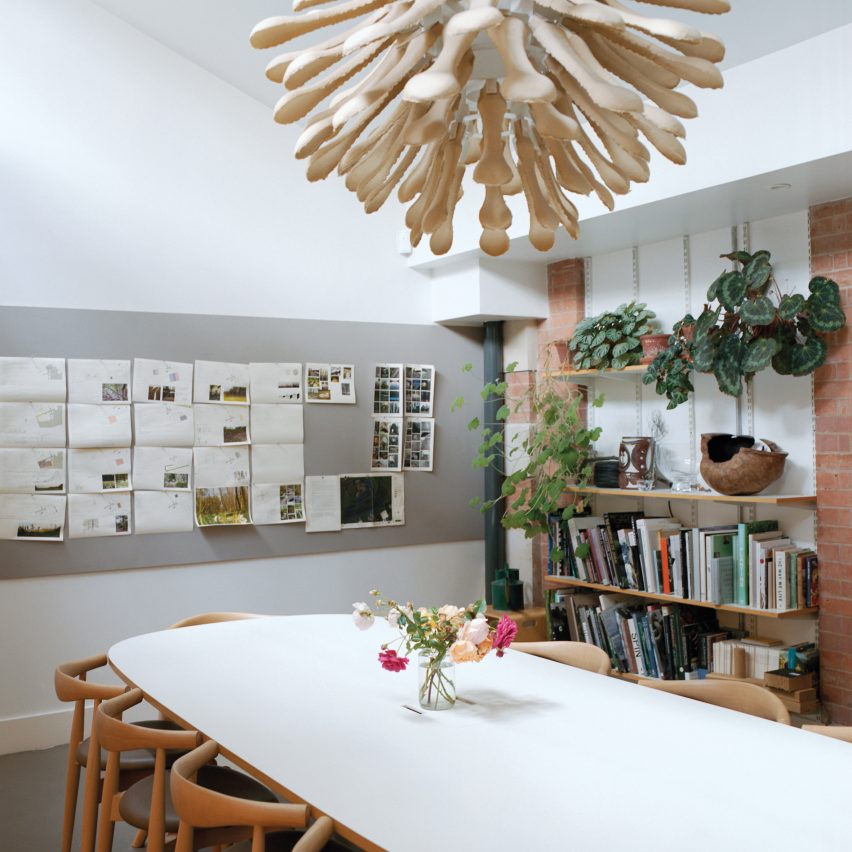
Designer brothers Dan and Luke Pearson reveal their London workplaces

Dan and Luke Pearson – Port interview

These new images offer a look inside the office of garden designer Dan Pearson, as well as the workplace of his younger brother Luke, who is co-founder of industrial design studio PearsonLloyd. Read more

http://www.dezeen.com/2016/11/10/dan-luke-pearson-reveal-london-workplaces-office-interiors/