Wave Housing / AHAKNAP + SAAHA


© Anida Krečo

© Anida Krečo


© Anida Krečo


© Anida Krečo


© Anida Krečo


© Anida Krečo

  • Architects: AHAKNAP, SAAHA
  • Location: Sarajevo, Bosnia and Herzegovina
  • Architect In Charge: Kenan Brčkalija, Adnan Harambašić
  • Area: 10800.0 sqm
  • Project Year: 2016
  • Photographs: Anida Krečo
  • Project Team: Amer Sadiković, Merdžana Mujkanović, Asmir Šabić, Hana Kevilj
  • General Contractor: Butmir Ltd
  • Client: Compact Invest Ltd

© Anida Krečo

© Anida Krečo

From the architect. Wave Housing is situated in Otes, the suburban neighbourhood of Sarajevo, with the river and mountains as its close and distant surroundings. In order to extend the interior space of the apartment towards outside and the views, the wave-like structure is added to the regulated building volume from 2nd floor upwards. In this way, each unit is given a lavish and unique outdoor area/terrace, making it a defining architectural element of the project. While the inner facade of the building is clad in warm wooden ribs, outside is kept simple in white plaster with metal screens providing additional visibility protections to the apartment terraces.


Diagram

Diagram

© Anida Krečo

© Anida Krečo

© Anida Krečo

© Anida Krečo


© Anida Krečo

© Anida Krečo

Product Description: Local materials Facade: Composite wooden vertical panels 4x4cm made from local spruce and fir tree. Panels are placed vertically at intervals of 1 cm and skirting laths 4×7 cm with vertical reveal façade openings and the thermal insulation boards of rock wool 12 cm thick laminated with black fibreglass mat. Glass: Triple pane glass units – combination of 4.2.2 + 16 Argon +6 Low E Safety network on the balconies: Galvanized iron profiles painted in white colour with all necessary preparation work. The network consists of squares derived from iron sheet 40×4 mm external size of 114×114 mm with all the peaks associated with cross stitch of iron with a diameter of 8 mm. Hresa stone: local stone quarried from the surrounding hills highly resistant to cold and heat. Used for lining the main staircases and entrance hall.


© Anida Krečo

© Anida Krečo

http://www.archdaily.com/798571/wave-housing-ahaknap-plus-saaha
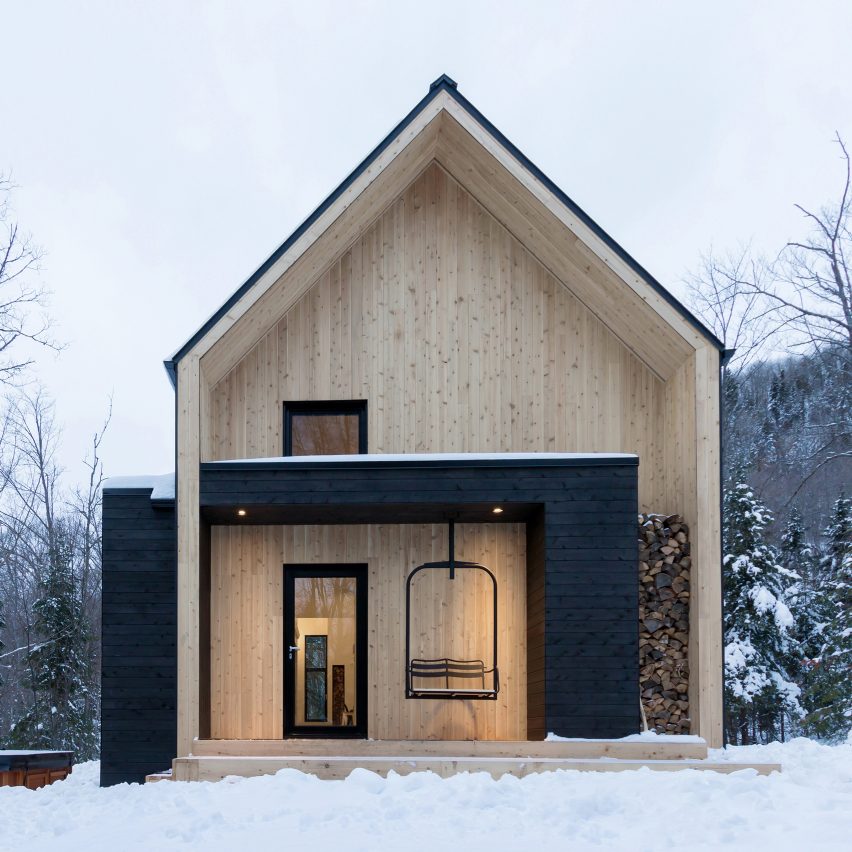
10 of the best cabins in the Canadian woods

villa-boreale-cargo-architecture-residential-quebec-canada-dave-tremblay_dezeen_sq

The US election result has driven some Americans to search for a way out across the northern border – so many that the website for Canadian Immigration has been crashing from demand. For those keeping that daydream alive, here are ten cabins in Canada that would be perfect to escape to. Read more

http://www.dezeen.com/2016/11/09/ten-best-cabins-woods-canada-retreat-roundups/

Boeing Develops World’s Lightest Metal


© HRL Laboratories. Via Interesting Engineering.

© HRL Laboratories. Via Interesting Engineering.

A metal microlattice developed by Boeing and HRL Laboratories has just been awarded the Guinness World Record for lightest metal.

Made from nickel phosphorus, the microlattice emulates human cell structure, reaching a density and surface area similar to lung tissue. So light it can be balanced on the top of a dandelion seed head, the material weighs in at approximately 100 times lighter than styrofoam.

“The point of achieving the record for lightest metal was to show the flexibility of the manufacturing process,” said Bill Carter, Director of the Sensors and Materials Laboratory at HRL. “With the same process we can produce a strong and useful material that can be made with the density of aluminum all the way down to well below the density of air (excluding the air inside). Achieving a density at any point between those requires only a small change in the creation process. It can be done quickly, relatively inexpensively, and made to order.”

To build the microlattice, a customizable polymer template is constructed through a “self-forming photopolymer waveguide process” and then electroplated with a layer of nickel-phosphorus with a thinness of approximately 80 nanometers, about 1,000 times thinner than the width of a human hair. The polymer is then removed using a chemical process.

The resulting product is the ultra-thin material and is capable of absorbing large amounts of energy throughout its structure.

The manufacturing process is both rapid and scalable, leading HRL to anticipate the microlattice could viably be used in applications including insulation, heat exchange devices, catalytic converters, airplane wings, military helmets, vehicle blast protection, and even to develop an artificial lung.

News via HRL Laboratories, H/T Interesting Engineering.

http://www.archdaily.com/799124/boeing-develops-worlds-lightest-metal

COP22 Village / OUALALOU+CHOI


© Luc Boegly

© Luc Boegly


Courtesy of OUALALOU+CHOI


© Luc Boegly


Courtesy of OUALALOU+CHOI


© Luc Boegly

  • Landscape : OUALALOU+CHO
  • Scenography: OUALALOU+CHO, Stéphane Malka
  • Team: GL events, Capital events, Agence Publics, Leni, Manzeh Diafa Contractors: IASO (canopy) / ITC (plenary gate) / GL Events (temporary structures) France Agencement (restaurants) / Eve (landscaping)
  • Client: Comité de pilotage de la COP 22
  • Budget: 43 M €

© Luc Boegly

© Luc Boegly

From the architect. TEMPORARY URBANISM
Every year for the past twenty years, thousands of delegates from 195 countries have met for the United Nations conference on climate change in order to address questions concerning the future of the planet. This year, the office OUALALOU+CHOI was chosen to design the exhibition spaces for the COP22 which will take place from the 7-18 of November in Marrakech. This project, which addresses questions of architecture’s role in creating temporary urbanism, continues the office’s research, evident in such projects as the Pavilion of Morocco at the world exposition EXPO 2015 in Milan and the installation of a temporary tensile structure on the plaza of the Institut du Monde Arabe in Paris in 2014.


Master Plan

Master Plan

THE VILLAGE
The design of the exhibition grounds is based upon a temporary urbanism created by the installation of a village of canopies, entirely demountable and reusable. The exhibitions grounds were constructed within a span of fi ve months on an empty piece of land, facing both the historical wall of the city and the Atlas mountains. The main axis of the site connects to two of the principal roads of the city. The central spine, 680 meters long and 18 meters wide, unites all the elements of the program and is covered by a gigantic canopy along its entire length.


Courtesy of OUALALOU+CHOI

Courtesy of OUALALOU+CHOI

THE CANOPY
The tent is a primitive and universal form of architecture that speaks to the common needs of man on this planet. The enormous tented structure over the central space covers 12 000m2 and arises from a collaboration between OUALALOU+CHOI and the manufacturer Serge Ferrari. The prestressed membrane is of an openwork design to create an effect of transparency while still remaining completely waterproof. The COP22 provided the opportunity to create an innovative tensile project, both in terms of its structure and its materiality.


© Hakim Benchekroun

© Hakim Benchekroun

© Luc Boegly

© Luc Boegly

THE GATEWAY
This monumental installation, 12 meters high and 50 meters long, serves as a gateway to the plenary sessions. A complex geometry is constructed from a layering of elevations; the motif of a traditional doorway is carved out of the multitude of layers. Made of a stacking of identical wooden pieces locally sourced in Morocco, the structure is built in such a way as to enable the pieces to be taken down and reutilized to construct a series of pavilions in public gardens throughout the city.


© Luc Boegly

© Luc Boegly

Courtesy of OUALALOU+CHOI

Courtesy of OUALALOU+CHOI

THE RESTAURANT
The two restaurants have been designed as interlocking structures that have been pulled apart to create a public agora at the heart of the village. This transversal landscape creates a transition between the zones of the negociators and the plenary halls. Built as an accretion of volumes and voids, the restaurants and adjacent gardens allude to traditional urban compositions in the villages around Marrakech. They are built of modular wooden panels as temporary structures that will be dismantled, reassembled, and reused after the end of the COP22.


© Luc Boegly

© Luc Boegly

http://www.archdaily.com/799115/cop22-village-oualalou-plus-choi

BIG Joins Kuma, Perrault and EMBT in Designing Stations for the Grand Paris Express Metro


© BIG - Silvio d'Ascia - Société du Grand Paris / Gare Pont de Bondy, (line 15 East) par BIG et Silvio d'Ascia

© BIG – Silvio d'Ascia – Société du Grand Paris / Gare Pont de Bondy, (line 15 East) par BIG et Silvio d'Ascia

BIG and French studio Silvio d’Ascia have been selected to design the new Pont de Bondy metro station in Paris. The station is the latest design to be announced as part of the Société du Grand París’ Grand Paris Express project, which is seeking to modernize the existing transport network through the addition of nearly 200 kilometers of rail lines and a series of architect-designed stations throughout the city.

Of a total of 68 new stations, nine have been labeled as “emblematic,” meaning that they are expected to serve as significant neighborhood nodes within the larger masterplan. The Pont de Bondy station will constitute one of these emblematic projects, joining designs from Kengo Kuma, Dominique Perrault, Enric Miralles Benedetta Tagliabue (EMBT) and Bordas+Peiro, Agence Duthilleul, and Elizabeth de Portzamparc.


© Agence Miralles Tagliabue EMBT - Société du Grand Paris / Gare Clichy-Montfermeil (line 16) by Agence Miralles Tagliabue EMBT with Bordas + Peiro Architecte


© Kengo Kuma & Associates - Société du Grand Paris / Gare Saint-Denis Pleyel (lines 15, 16 and 17) by Kengo Kuma & Associates


© Jean-Marie Duthilleul - Société du Grand Paris / Gare Noisy - Champs (line 15 South) by Agence Duthilleul and Arep


© Dominique Perrault Architecture - Société du Grand Paris / Station Villejuif Institut Gustave-Roussy (lines 14 and 15 South) by Dominique Perrault Architecture


© Agence Miralles Tagliabue EMBT - Société du Grand Paris / Gare Clichy-Montfermeil (line 16) by Agence Miralles Tagliabue EMBT with Bordas + Peiro Architecte

© Agence Miralles Tagliabue EMBT – Société du Grand Paris / Gare Clichy-Montfermeil (line 16) by Agence Miralles Tagliabue EMBT with Bordas + Peiro Architecte

‘Significant urban projects will emerge along this transport route: new neighborhoods with an array of features including housing, economic activities, university centers and cultural facilities – especially around the strategic, structural points provided by the stations,’ explains the Société du Grand Paris. ‘the idea is to enable business clusters to take root while rebalancing the paris region, opening it up to its more remote, isolated areas.’


© Kengo Kuma & Associates - Société du Grand Paris / Gare Saint-Denis Pleyel (lines 15, 16 and 17) by Kengo Kuma & Associates

© Kengo Kuma & Associates – Société du Grand Paris / Gare Saint-Denis Pleyel (lines 15, 16 and 17) by Kengo Kuma & Associates

© Jean-Marie Duthilleul - Société du Grand Paris / Gare Noisy - Champs (line 15 South) by Agence Duthilleul and Arep

© Jean-Marie Duthilleul – Société du Grand Paris / Gare Noisy – Champs (line 15 South) by Agence Duthilleul and Arep

The Pont de Bondy station will be located along Line 15, a ring line that passes through suburban Paris. BIG and Silvio d’Ascia’s design uses a looping form to connect upper and lower levels of the site and to bridge across an adjacent canal.


© Dominique Perrault Architecture - Société du Grand Paris / Station Villejuif Institut Gustave-Roussy (lines 14 and 15 South) by Dominique Perrault Architecture

© Dominique Perrault Architecture – Société du Grand Paris / Station Villejuif Institut Gustave-Roussy (lines 14 and 15 South) by Dominique Perrault Architecture

© Elizabeth de Portzamparc - Société du Grand Paris / Le Bourget RER station (lines 16 and 17) by Elizabeth de Portzamparc

© Elizabeth de Portzamparc – Société du Grand Paris / Le Bourget RER station (lines 16 and 17) by Elizabeth de Portzamparc

Additionally, the Société du Grand Paris announced the appointment of six further architects for the designs of 10 stations on Line 15, including Grimshaw, Bordas + Peiro, Brenac-Gonzalez & Associates, Scape/Offscape, Vezzoni & Associés and Explorations Architecture.


Courtesy of Grand Paris Express

Courtesy of Grand Paris Express

The complete Grand Paris Express masterplan is expected be completed before 2030.

News via Société du Grand Paris.

http://www.archdaily.com/799111/big-joins-kuma-perrault-and-embt-in-designing-stations-for-the-grand-paris-express-metro

Illustrators react to Donald Trump’s shock US election win

Make America Vote Again? illustration

Illustrators are taking to Instagram and Twitter to express their feelings about Donald Trump becoming the next president of the USA. Read more

http://www.dezeen.com/2016/11/09/illustrators-react-donald-trump-shock-us-election-win/

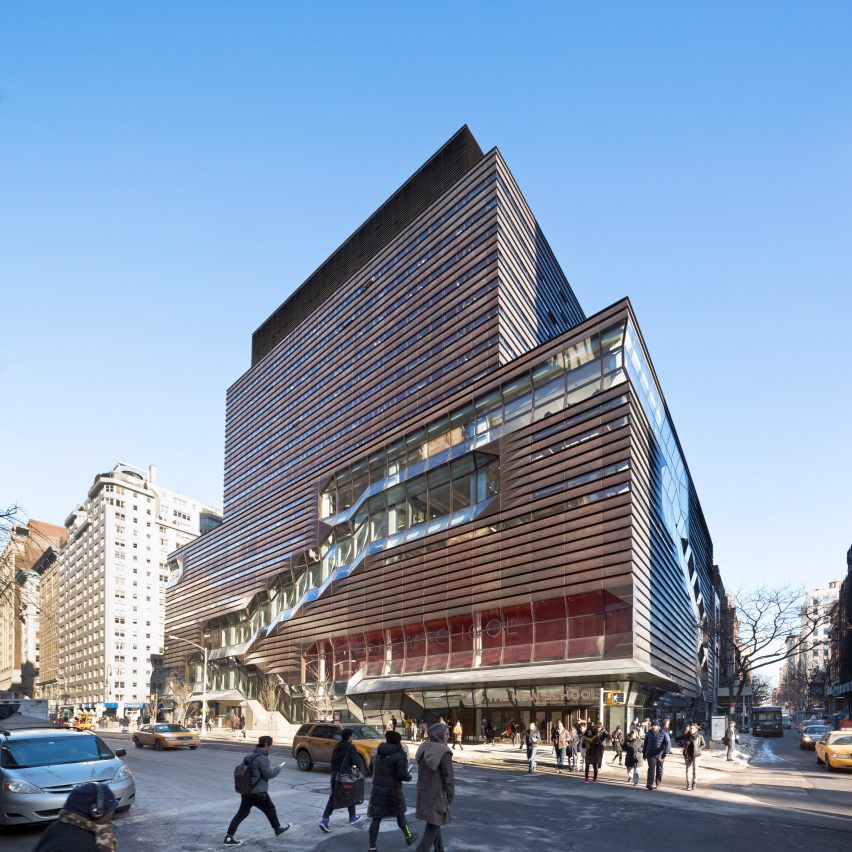
Parsons School of Design launches new digital design masters programme

Parsons School of Design launches new digital design masters programme

Dezeen promotion: Parsons School of Design in New York has introduced a digital product design course to its masters programme. Read more

http://www.dezeen.com/2016/11/09/parsons-school-of-design-new-digital-product-masters-programme-new-york/

“How Donald Trump will solve America’s infrastructure problems is completely unclear”

donald-trump-election_sq

Hillary Clinton’s plans to improve infrastructure in the USA weren’t ambitious enough, but at least she had plans, says Aaron Betsky in this Opinion column. Read more

http://www.dezeen.com/2016/11/09/opinion-donald-trump-america-infrastructure-problems-aaron-betsky/

The Stealth Building / WORKac


© Bruce Damonte

© Bruce Damonte


© Bruce Damonte


© Bruce Damonte


© Bruce Damonte


© Bruce Damonte

  • Architects: WORKac
  • Location: New York, NY, United States
  • Team: Dan Wood, FAIA, Amale Andraos (principals); Sam Dufaux (associate principal); Karl Landsteiner (construction administration project architect); Chris Oliver (design project architect); Maggie Tsang, Timo Otto, Patrick Daurio
  • Area: 14000.0 ft2
  • Photographs: Bruce Damonte
  • Client/Construction Manager: Knightsbridge Properties
  • Interior Designer/Landscape: WORK Architecture Company
  • Mechanical/Electrical Engineer: Plus Group Consulting Engineering
  • Structural Engineer: Robert Silman Associates
  • Lighting Designer: Tillotson Design Associates
  • Restoration Architect: CTS Group
  • Artist, Column Capitals: Michael Hansmeyer
  • Code Consultant: CCBS Consulting

© Bruce Damonte

© Bruce Damonte

From the architect. This residential development consists of a complete gut renovation and new construction behind one of New York’s most beautiful and oldest cast-iron facades. It required a careful approach to the blending of contemporary architecture with historic preservation. New York City’s Landmarks Commission required any rooftop addition to be invisible. The building, however, is located on a highly-visible corner with a low, two-story building across the street. This meant that the building’s roof was visible from almost three blocks away.


© Bruce Damonte

© Bruce Damonte

Roof Evolution Diagram

Roof Evolution Diagram

© Bruce Damonte

© Bruce Damonte

Tracing the cone of vision from the furthest point from which the building was visible, WORKac utilized three rooftop projections to mask the bulk of an addition: the triangular pediment of the historic Carey Building next door, and the circular pediment and an abandoned elevator bulkhead  at the top of the building itself. The “shadow” created by these three projections created a sizeable zone for the addition and the opportunity for a distinctive angled form for the new roof. The result is a sculptural form that is – at the same time – completely invisible from the street below.


Floor Plans

Floor Plans

© Bruce Damonte

© Bruce Damonte

Section

Section

For the apartment interiors and public area, WORKac created spaces that combine nature-inspired elements and systems with new ideas about urban living. From the tessellated green wall at the lobby to generous planters and balconies at the second, sixth and seventh floors, connections to the outdoors are emphasized. Within each apartment, a “third space” between bedrooms and living spaces is created at the top of the volume containing storage and bathrooms. Less than four-feet high, this “bonsai apartment” is outfitted with a futon, seating areas, and an herb garden above the kitchen. Its main feature is a fern garden connected to the master shower below. Steam from the shower collects on the glass walls of the garden and waters the plants.


© Bruce Damonte

© Bruce Damonte

Section

Section

© Bruce Damonte

© Bruce Damonte

The penthouse combines sleeping spaces and a family room within the old fifth floor of the building with new entertaining and dining spaces under the new roof at the sixth floor. A secluded terrace is sunken behind the pediment with views to the Woolworth Building; the old elevator bulkhead is repurposed with a hot tub. The height afforded by angle formed by the cone-of-vision allows for a rear mezzanine with views toward downtown and the Freedom Tower.


© Bruce Damonte

© Bruce Damonte

The 1857 façade is completely restored. The new charcoal color chosen by WORKac references the building’s history of being painted in dark contrast with its lighter neighbors. As all of the building’s Corinthean column capitols had been lost to history, WORKac collaborated with the artist Michael Hansmeyer to create new versions. Hansmeyer created a computer script that allowed the classical floral elements of the Corinthean order to “grow” fractally, resulting in a new design that adheres to the old proportions but is composed of clearly new forms and idiosyncrasies.  Like the rooftop addition, these capitals at first glance appear quite ordinary; it is only on closer inspection that the stealthy strategy of strategic injection of contemporary design becomes clear.


© Bruce Damonte

© Bruce Damonte

http://www.archdaily.com/799080/the-stealth-building-workac

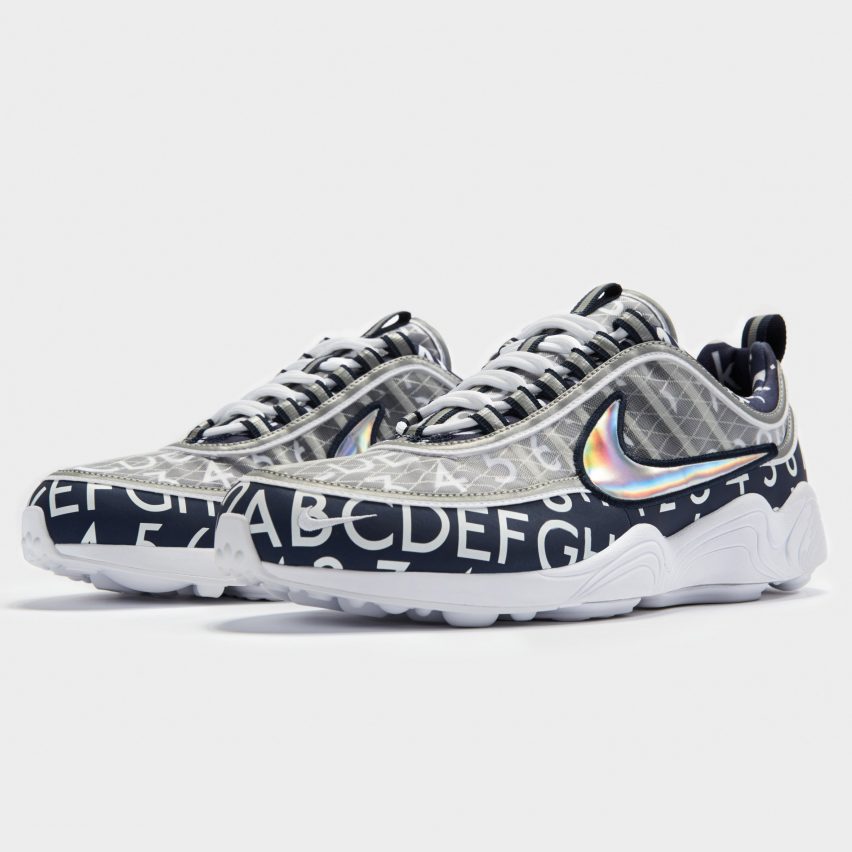
Nike’s Zoom Spiridon trainers have been covered in London Underground font

Nike x Roundel Zoom Spiridon

Nike has released a pair of trainers patterned with the Johnston100 typeface – the font used by Transport for London. Read more

http://www.dezeen.com/2016/11/09/nikes-zoom-spiridon-trainers-london-underground-johnston-100-font-fashion-design/