House Savukvartsi / Honkarakenne


Courtesy of Honkarakenne

Courtesy of Honkarakenne


Courtesy of Honkarakenne


Courtesy of Honkarakenne


Courtesy of Honkarakenne


Courtesy of Honkarakenne

  • Architects: Honkarakenne
  • Location: Vantaa, Finland
  • Architect In Charge: Jaakko and Elizaveta Parkkonen
  • Project Year: 2014
  • Photographs: Courtesy of Honkarakenne

Courtesy of Honkarakenne

Courtesy of Honkarakenne

From the architect. A modern eco-home for three generations

Savukvartsi was introduced to the public at the Housing fair 2015 in Vantaa, Finland. It’s an ecological duplex house, designed for three generations of a family. Honka Savukvartsi is an excellent example of a new-generation log home, created with the Honka Fusion concept.


Courtesy of Honkarakenne

Courtesy of Honkarakenne

Honka Savukvartsi was designed and built by the architects Jaakko and Elizaveta Parkkonen as their own private home. The house reflects the dream shared by the young couple and their parents of a home for several generations of the same family.


Courtesy of Honkarakenne

Courtesy of Honkarakenne

The house is split into two separate properties, with the larger one occupied by Jaakko and Elizaveta and their son. The smaller property belongs to Jaakko’s parents. The properties share an entrance. If desired, the apartments can be combined to create one larger property.


Courtesy of Honkarakenne

Courtesy of Honkarakenne

The house has the smallest carbon footprint of all the properties showcased at the Vantaa Housing Fair area and is rated B for energy efficiency. Its eco-friendly credentials include natural, low-emission and recyclable materials offering easy maintenance, healthy living and the latest home technology solutions.


Ground Floor Plan

Ground Floor Plan

“The philosophy behind this house is to minimize its climate impact. We used natural and recyclable materials and tried to avoid plastic. The building is heated using solar thermal collectors and a water heating fireplace. The pitch of the roof has been calculated to allow for the perfect angle in relation to the sun. The optimal angle is 35 degrees, and at Savukvartsi, we have gone for 34.” – Jaakko Parkkonen, architect and customer

The young family’s bedrooms are located on the first floor, away from the public areas. The high ceilings add spaciousness and tall French windows let the daylight in. On the first floor, there’s also a home office and a library.


Courtesy of Honkarakenne

Courtesy of Honkarakenne

“The soundscape of a log house is quiet. Combined with the natural warmth of genuine wood and the good indoor air quality, it creates a very comfortable living environment.” – The Parkkonen family


1st Floor Plan

1st Floor Plan

The grandparents apartment is a compact double of 46 square meters, all located on one floor. The smaller apartment consists of a bedroom, kitchen, living room and a bathroom. The shared living area in the bigger apartment serves both families.

The house is created with the non-settling Honka Fusion log (FXL 134) and insulated with wood fiber. The exterior cladding is spruce, treated with iron vitriol to create a beautiful grey finish. Because of the non-settling structure, the log wall could be combined with details like city corners and big windows, free of the wide architraves and settling spaces required in traditional log construction.


Courtesy of Honkarakenne

Courtesy of Honkarakenne

“The Honka Fusion wall structure allowed us to design a contemporary log house with urban, minimalistic details. The non-settling log also simplifies the wall structures which ensures that the house will be there for generations to come.” – Jaakko Parkkonen, architect and customer


Courtesy of Honkarakenne

Courtesy of Honkarakenne

Product Description. The house is created with the non-settling Honka Fusion log (FXL 134) and insulated with wood fiber. The exterior cladding is spruce, treated with iron vitriol to create a beautiful grey finish. Because of the non-settling structure, the log wall could be combined with details like city corners and big windows, free of the wide architraves and settling spaces required in traditional log construction.


Courtesy of Honkarakenne

Courtesy of Honkarakenne

“The Honka Fusion wall structure allowed us to design a contemporary log house with urban, minimalistic details. The non-settling log also simplifies the wall structures which ensures that the house will be there for generations to come.”


Courtesy of Honkarakenne

Courtesy of Honkarakenne

http://www.archdaily.com/799070/house-savukvartsi-honkarakenne

Studio Seilern Architects Unveils Plans for Skyscraper in Manhattan’s Art Quarter


Courtesy of Studio Seilern Architects (SSA)

Courtesy of Studio Seilern Architects (SSA)

Studio Seilern Architects (SSA) has unveiled its design for a new skyscraper in New York, located on the riverfront of the Hudson River, which will offer views to the South West towards the river and Hoboken, as well as to the East towards the Empire State Building and Manhattan skyline. 

The 16.107 square meter building (24 floors) will feature commercial units in the form of a gallery in the plinth—which is reduced to form a sculpture garden—at the lower levels, while upper levels will contain residential units.


Courtesy of Studio Seilern Architects (SSA)


Courtesy of Studio Seilern Architects (SSA)


Courtesy of Studio Seilern Architects (SSA)


Courtesy of Studio Seilern Architects (SSA)


Courtesy of Studio Seilern Architects (SSA)

Courtesy of Studio Seilern Architects (SSA)

Courtesy of Studio Seilern Architects (SSA)

Courtesy of Studio Seilern Architects (SSA)

Courtesy of Studio Seilern Architects (SSA)

Courtesy of Studio Seilern Architects (SSA)

The site being in the art quarter is something that should be capitalized on, said Christina Seilern, principal at Studio Seilern Architects. The nature of the ‘near-corner’ site mean we can offer the gallery a unique dual aspect and sculpture count, as private and jewel like as the one in the MoMA. 


Courtesy of Studio Seilern Architects (SSA)

Courtesy of Studio Seilern Architects (SSA)

Courtesy of Studio Seilern Architects (SSA)

Courtesy of Studio Seilern Architects (SSA)

Floor plans of the building are flexible, so as to adapt in response to fluctuating market conditions.

News via Studio Seilern Architects

http://www.archdaily.com/798998/studio-seilern-architects-unveils-plans-for-skyscraper-in-manhattans-art-quarter

Dezeen Hot List is live, revealing the 400 hottest forces in architecture and design

dezeen-hot-list-logo

We’ve launched Dezeen Hot List, our comprehensive guide to the architects, designers, brands, schools, events and more that our audience most wanted to read about over the last year. Read more

http://www.dezeen.com/2016/11/09/dezeen-hot-list-reveals-400-hottest-forces-architecture-design/

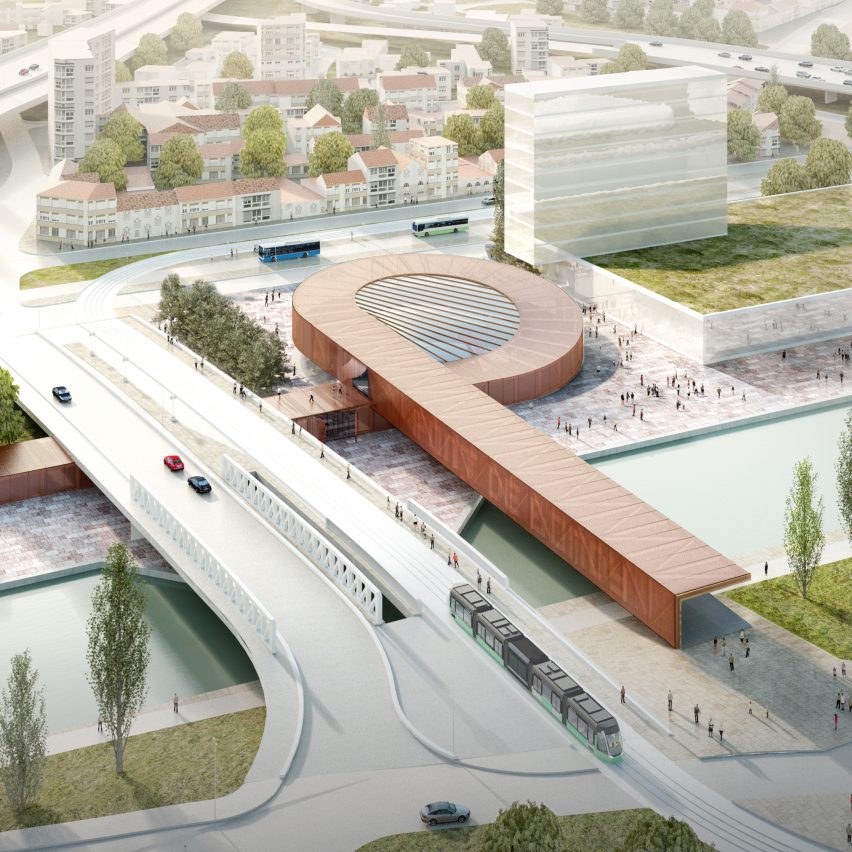
BIG wins Paris Metro competition with looping station design

Job of the day: architect at AL_A

Dezeen Jobs architecture and design recruitment

Our job of the day from Dezeen Jobs is for an architect at Amanda Levete’s firm, AL_A, whose undulating, tile-covered MAAT Museum (pictured) opened in Lisbon in September. Read more stories about AL_A or browse more architecture and design opportunities on Dezeen Jobs.

http://www.dezeen.com/2016/11/09/top-job-experienced-architect-al-a-amanda-levete-london/

10 Models Which Show the Power of Point Cloud Scans, As Selected by Sketchfab


via Sketchfab

via Sketchfab

Traditional 3D models made up of surfaces have for a long time aided us in visualizing buildings and spaces, but they often come at a cost: large models require a lot of storage and processing power, and can become incredibly complex to the point where they are difficult to navigate. As a part of our Selected by Sketchfab series, Sketchfab has their eye on a more efficient, increasingly common method of capturing architectural spaces; namely, point clouds. Point clouds are made up of a set of points located in a three-dimensional coordinate system, that when put together merely give an impression of the surface of an object, or the façade of a building.

The method is fairly simple. The collection of data points is generated by a 3D scanner that rotates while emitting a laser that measures the distance to points on surrounding surfaces. This data can then be converted into a polygonal model that can be rendered like any other 3D model. However, the advantages of keeping the scan in point form are what makes it great; the file sizes are much smaller, and the porosity of the point clouds make it possible to see through walls and surfaces, accessing “hidden” spaces and uncommon views of seemingly familiar surroundings. Read on to find out more about the possibilities and advantages that come with point cloud modelling.

1. Generating Large-Scale Overviews

Getting an idea of the scale and relationships between spaces within a site can be challenging and time consuming using traditional polygon surface modelling, and will certainly produce a large file to work with. Using the point cloud technique minimizes these problems, as can be seen with the model below:

https://sketchfab.com/models/5cb74f613b5c4b5698df42675a3eb3ab/embed

Of course the resolution of a point cloud can be adjusted to include far more details, as in the following models:

https://sketchfab.com/models/8ec8b87123814ca4be3a38c6035efb2b/embed

https://sketchfab.com/models/97535b7163e74a6cb164153cc626da91/embed

2. Accessing “Hidden” Spaces

Due to the low density of points in the clouds, it’s possible to see through what would ordinarily be solid surfaces, as in the case of the passages within the thick stone wall in the model below:

https://sketchfab.com/models/53cad424070e45f39dd096d16913d0ad/embed

The possibilities that come with this simultaneous visualization of multiple layers of space could be a fantastic tool for architects to fully grasp the locations they’re working with:

https://sketchfab.com/models/89f9fef2f8cb488a9aa2a2b28c583d77/embed

3. Experiencing a Space Through Virtual Reality

Scanning an entire building can consequently be paired with a virtual reality headset in order to re-experience, or share an experience of a space with others who may not have had the opportunity to visit the site. While this is also true of other scans with surfaces included, the same advantages of small file size and partial transparency mentioned above come into their own in virtual reality too, providing a smooth viewing experience and a sense of what’s just around the corner, as demonstrated here:

https://sketchfab.com/models/a27a2afd51fc4985938099f55623f7e9/embed

The same can be applied to scanning landscapes, in order to experience the visual results of different typology:

https://sketchfab.com/models/b196c2a548e44c599c80d5092b211e12/embed

When it comes to virtual reality, point cloud scans may be most useful for places with complex and detailed material qualities, where even if the scan is relatively small, the file size of a fully detailed model would be entirely unmanageable. This is the case in the following scan, which gives an excellent impression of the cabin’s rough wood and overgrown roof without having to render the millions of faces that would be required:

https://sketchfab.com/models/3b9fbbd468e54227ad7ef7e74f8f479c/embed

4. Visualizing Simplified Geometry 

Point clouds allow for the saving of models with complex geometry, without sacrificing enormous amounts of space and computing power, by minimizing the points collected in the cloud. Despite the perforated effect, the varied surfaces are easy to detect and view:

https://sketchfab.com/models/438d269fd9ef412a8235385f85a307e8/embed

Here is a model of an interior space, simplified even further due to the dominance of flat surfaces. The contours generated by simplification can sometimes even be more beautiful than the original complexity:

Ministerstwo Spraw We Wnętrzach Design a Colorful and Stylish Apartment in Gdansk, Poland

Rehabilitation of Netherlands Complex Wins World Monuments Fund/Knoll Modernism Prize 2016


© Molenaar & Co. architecten/Bas Kooij

© Molenaar & Co. architecten/Bas Kooij

Molenaar & Co architecten (Rotterdam), Hebly Theunissen architecten (Delft), and landscape architect Michael van Gessel (Amsterdam) have won the 2016 World Monuments Fund/ Knoll Modernism Prize for the preservation and rehabilitation of the Justus van Effen complex in Rotterdam, the Netherlands.

Originally designed by Michiel Brinkman in 1919-1921 and completed in 1922, the Justus van Effen complex is a strong example of the ideals embodied in the modern movement, particularly with its use of an elevated “street” as a means of facilitating social cohesion, which became very influential for subsequent generations of designers. 


© Healy Theunissen architecten


© Molenaar & Co. architecten/Bas Kooij


© Molenaar & Co. architecten/Bas Kooij


© Molenaar & Co. architecten/Bas Kooij


© Molenaar & Co. architecten

© Molenaar & Co. architecten

© Molenaar & Co. architecten/Bas Kooij

© Molenaar & Co. architecten/Bas Kooij

The recent preservation of this site is a part of the revitalization of Rotterdam’s Spangen neighborhood, which has been transformed from dangerous to livable and affordable over the past 20 years.


© Molenaar & Co. architecten/Bas Kooij

© Molenaar & Co. architecten/Bas Kooij

© Healy Theunissen architecten

© Healy Theunissen architecten

The project additionally reflects the commitment of the property’s owner—Woonstad Rotterdam—to the preservation of the complex for future generations.


© Molenaar & Co. architecten/Bas Kooij

© Molenaar & Co. architecten/Bas Kooij

© Molenaar & Co. architecten/Bas Kooij

© Molenaar & Co. architecten/Bas Kooij

© Molenaar & Co. architecten/Bas Kooij

© Molenaar & Co. architecten/Bas Kooij

The biennial award will be presented at The Museum of Modern Art (MoMA) in New York on December 5 at a free and public event.


© Molenaar & Co. architecten/Bas Kooij

© Molenaar & Co. architecten/Bas Kooij

© Molenaar & Co. architecten/Bas Kooij

© Molenaar & Co. architecten/Bas Kooij

Learn more about the award winner here.

News via the World Monuments Fund.

http://www.archdaily.com/798996/rehabilitation-of-netherlands-complex-wins-world-monuments-fund-knoll-modernism-prize-2016

Leman Locke / Grzywinsi + Pons


© Nicholas Worley

© Nicholas Worley


© Nicholas Worley


© Nicholas Worley


© Nicholas Worley


© Nicholas Worley


© Nicholas Worley

© Nicholas Worley

Leman Locke is a new 168 room hotel that we designed in the rapidly evolving East London neighborhood of Aldgate. This commission allowed us to continue our interrogation of the intersection of hotel and residential programs. We (and our client) had in mind that young, creative professionals who are increasingly nomadic for purposes of their work might like to have an option that combines the best of two worlds from a hospitality perspective: The design-led and convivial atmosphere one often finds in good boutique hotels, mixed with the convenience of an extended stay product. Our process was driven by the search for a way to hold on to the aspirational excitement of a hotel stay while enjoying the advantages of something more akin to a home in one’s adoptive city no matter how long – or short – the stay.


© Nicholas Worley

© Nicholas Worley

© Nicholas Worley

© Nicholas Worley

We faced an additional challenge in that the scheme was to be built within a newly constructed and rather sterile tower (that we did not design) so we couldn’t lean on the building to augment the character of the spaces. As the construction of the frame and envelope were still underway when we were working, we were able to intervene and make some changes to structural aspects that we were positively disposed to on the interior. The reception and the cafe-bar space are bifurcated by the lift lobby and we designed them to be distinct from one another yet congruent in their prioritization of light, warmth and texture. We also created a feature stair that almost demands to be climbed to foster the connection between the cafe-bar-forthcoming restaurant space (that we are currently designing) that spans the ground and first floors and is sectionally legible from the street.


© Nicholas Worley

© Nicholas Worley

Detail 4

Detail 4

© Nicholas Worley

© Nicholas Worley

We designed nearly all of the furniture within the rooms, from the sofas and beds to some of the light fixtures and tables. Much of this was driven by the desire to create a unique and harmonious aesthetic, but our other imperative was maximization of function and economy of space. We wanted to avoid the “transformer” vibe apparent in a lot of current micro-residential products that include murphy beds, retractable desks and flip up tables. While that approach appeals to the “inventor” side of us as architects, we hoped to spare guests from the chore of clearing up and manipulating their furniture when finishing a meal or getting ready for bed. Our intention was to dispel the underlying sense of being unsettled which complicates our self imposed directive to inculcate the feeling of being at home while away.


© Nicholas Worley

© Nicholas Worley

Detail 3

Detail 3

© Nicholas Worley

© Nicholas Worley

Product Description. We used Viroc Cement Bonded Particle Board as an interior finish material both on the walls and some soffits. It is not only very robust and functional but helped tie in some of the spaces that were more finished with some of the areas where we chose to expose and celebrate the concrete superstructure.


© Nicholas Worley

© Nicholas Worley

http://www.archdaily.com/798990/leman-locke-grzywinsi-plus-pons

Julie Firkin Architects Design a Contemporary Residence in the Melbourne Suburb of Fitzroy