Sebrae Bonito / Gil Carlos de Camilo


© Erich Sacco

© Erich Sacco


© Erich Sacco


© Erich Sacco


© Erich Sacco


© Erich Sacco

  • Architects: Gil Carlos de Camilo
  • Location: Bonito, MS, Brazil
  • Design Team: Gina Mathias, Karina Escalante, Suzanna Amado
  • Project Year: 2016
  • Photographs: Erich Sacco
  • Concrete Structure And Foundations: Pró-Cálculo
  • Metal Work: DEME
  • Electric Installations: Engelumen
  • Lighting Design: Gil Carlos de Camillo and Engelumen
  • Hydraulic Installations: TLL Projetos
  • Air Conditioner: Termoline
  • Work Planning: Planenge
  • Construction: RVA

© Erich Sacco

© Erich Sacco

The municipality of Bonito, located 265 km from the capital Campo Grande, has gradually become one of the main destinations for ecotourism in Brazil.


© Erich Sacco

© Erich Sacco

In a region where extensive livestock predominated in the past, the promotion of tourism has given rise to new activities.


Plan 1

Plan 1

Following its expansion plan, Sebrae chose to deploy its new headquarters in Bonito, aiming to support micro and small enterprises that are emerging in that region of the state.


© Erich Sacco

© Erich Sacco

The architectural project was designed with an emphasis on sustainability, both in construction and in operationalization of the building. It also features references to the natural attractions of the region, where the transparency and color of the water are unique aspects.


© Erich Sacco

© Erich Sacco

When preparing the project, we sought to intervene minimally in the natural terrain profile, which has an uphill triangular conformation, with an area of ​​6,771.26 square meters.


Section

Section

The building suggests floating on a water mirror, coated in porcelain tiles that refer to the tone of the waters of the Formoso River, the municipality’s main tributary.

Similarly, the color indigo adopted in certain internal spaces refers to the waters of the blue lake grotto, the city’s most iconic place.


© Erich Sacco

© Erich Sacco

In order to mitigate the environmental impact of the construction process, its structure was designed predominantly in trusses and metal pillars.

Inclined planes in insulated eco-lite glass decrease sunlight in the environments.


© Erich Sacco

© Erich Sacco

External seals are contain thermal insulation in polyurethane and melamine coating panels. The interior, in turn, is made in plasterboard.


Plan 2

Plan 2

Linear openings in the cantilevered floor end over the water surface, plus the ridge vent along the thermoacoustic coverage, promote aeration while reducing the need for mechanical ventilation systems in the lobby.


© Erich Sacco

© Erich Sacco

The building is equipped with photovoltaic panels to provide energy self-sufficiency, as well as systems for reusing rainwater.

It has 718.40 square meters in built area, distributed over two stories. It houses administrative offices, internal and external training rooms (through the dock truck adapted for itinerant courses) and a lobby, designed as a multipurpose space to be used also by the community, as needed.


© Erich Sacco

© Erich Sacco

http://ift.tt/2eAk5ZL

BIG’s VIA 57 West Wins the 2016 International Highrise Award


© Kirsten Bucher

© Kirsten Bucher

BIG’s VIA 57 West has been unanimously chosen as the winner of the 2016 International Highrise Award (IHA) for the world’s most innovative highrise.

One of the world’s most important architectural prizes for tall buildings, the award is presented by Deutsches Architekturmuseum (DAM) every two years to the project that best exemplifies the criteria of future-oriented design, functionality, innovative building technology, integration into urban development schemes, sustainability, and cost-effectiveness.


© Kirsten Bucher


© Kirsten Bucher


© Kirsten Bucher


© Kirsten Bucher


© Kirsten Bucher

© Kirsten Bucher

Described by DAM as a “grandiose building sculpture [representing] a varied and sensual experience from all perspectives,” the winning project was selected from over 1500 highrises commissioned worldwide over the last two years, which was narrowed down to 30 nominated buildings and later a 5-strong shortlist.

“It is a great honor that VIA 57 West receives the International Highrise Award 2016,” said BIG founder Bjarke Ingels. “It is a rare new breed of building combining the communal qualities of a european courtyard with the density and views of a highrise. I see this prize as an invitation for us and others to think differently about how we want inhabit our future cities”


© Kirsten Bucher

© Kirsten Bucher

Project Description via DAM

In the west the site is separated from the Hudson River by a multi-lane motorway, in the north stands a historical electricity plant, in the south there are the noises and smell of the newly built waste sorting centre, while a conventional, blue-glazed, 130-metre-high residential tower rises up in the east, whose view of the Hudson River may not be obstructed – these were the unattractive framework conditions in the very mixed district “Hell’s Kitchen”.


© Kirsten Bucher

© Kirsten Bucher

© Kirsten Bucher

© Kirsten Bucher

The architects responded to this with the innovative concept of a “courtscraper”. The hybrid of an American high-rise and a European perimeter development turns away from the building to the north-east and is orientated towards a green interior courtyard. The balconies integrated into the roof surface afford protected views of the Hudson River in the West. Almost all of the 709 apartments enjoy a view of the river and the sunset, which would have been geometrically impossible for a normal perimeter development. This sculptural prototype therefore offers a quiet, sheltered oasis within the loud city, without being closed off from it. BIG Architects have created great innovations with this building.


© Kirsten Bucher

© Kirsten Bucher

© Kirsten Bucher

© Kirsten Bucher

“Basically, this project is a major milestone for housing, and not only in the extreme residential market of New York,” said DAM Director and jury member Peter Cachola Schmal.

“It not only brings in an exciting new typology, a hybrid of a skyscraper and a perimeter development, but also shows how impulses from current European movements, building groups, and cooperatives can be applied to quite different residential areas. The metropolitan inhabitant residing alone is no longer lonely, but finds the necessary social contact with like-minded fellow beings within the same block. “


© Kirsten Bucher

© Kirsten Bucher

© Kirsten Bucher

© Kirsten Bucher

The Jury also awarded a special recognition to the Housing & Development Board (HDB) of Singapore for their “exemplary leadership as a public agency realizing innovative high-rise sustainable residential community projects.”


© Kirsten Bucher

© Kirsten Bucher

© Kirsten Bucher

© Kirsten Bucher

Led by 2014 IHA winner Stefano Boeri, the competition’s world-class jury also featured Lamia Messari-Becker (civil engineer, Professor at the University of Siegen), Ole Scheeren (architect, Buro-OS, Beijing/Berlin), Brigitte Shim (architect, Shim-Sutcliffe Architects, Toronto), Horst R. Muth (Head of Project Management at Deka Immobilien GmbH, Frankfurt/Main), Peter Cachola Schmal (Director of Deutsches Architekturmuseum, Frankfurt/Main), Thomas Schmengler (CEO of Deka Immobilien GmbH, Frankfurt/Main) and Felix Semmelroth (Former Deputy Mayor in charge of Culture and Science for the City of Frankfurt/Main). Substitutional Jury members were: Claudia Meixner (architect, MEIXNER SCHLÜTER WENDT Architekten, Frankfurt am Main) and Holger Techen (civil engineer, imagine structure, Frankfurt am Main).

An exhibition on all 30 nominated projects, titled “Best Highrises 2016/17 – International Highrise Award 2016,” will be on display at Deutsches Architekturmuseum in Frankfurt from November 4, 2016 through January 15, 2017.

News via DAM.

http://ift.tt/2enQgxS

Villa M House / Liag Architects


© Ben Aarts

© Ben Aarts


© Germano Borrelli


© Ben Aarts


© Ben Aarts


© Ben Aarts

  • Interior Design: Arnie van Dun interieurarchitectuur
  • Lighting Design: FLOS lighting

© Ben Aarts

© Ben Aarts

LIAG has designed a sustainable residential villa for a private client. The design consists of a distinct framework, finished in Western Red Cedar cladding, that contains the different functions of the building. 


© Ben Aarts

© Ben Aarts

The kitchen and swimming pool form two volumes that protrude out on either side of this framework. In the front yard the main volume floats above a rising landscape of Marram grass. The facade takes a step back to create space for a breakfast patio with a grand view of the inland shipping in the ever-busy canal. The terrace at the rear forms an extension to the living room, connected via expansive glazed sliding doors.


Section

Section

Section

Section

Through the use of mobile hanging cabinets in the form of room dividers the villa has a wide variety of options for interior transformation, giving it variable arrangements and atmosphere. This way the kitchen can be completely separated from the living area but also connected to serve as an open kitchen. The same goes for the study room. It can be part of the living area to create a vast open space, or can be separated when required.


© Ben Aarts

© Ben Aarts

Parking is made easy and convenient by creating a carport underneath the main floor to allow direct access to the house. The lower floor accommodates a cinema, storage areas and guest bedrooms.


© Germano Borrelli

© Germano Borrelli

© Germano Borrelli

© Germano Borrelli

The heating and cooling is provided by an Aquifer Thermal Energy Storage system. The villa has demand-controlled ventilation. The swimming pool has a separate heating installation using a heat pump system. The villa is also designed with 78 solar panels on the roof for a sustainable supply of electricity. By giving them a 10-degree angle the panels are not visible from the street.


© Ben Aarts

© Ben Aarts

http://ift.tt/2fb9Z5g

Jaime Hayón designs cake creature for Häagen-Dazs

The Häagen-Dazs Ice Show - Jaime Hayon

Spanish designer Jaime Hayón has created this festive ice cream cake for Häagen-Dazs. Read more

http://ift.tt/2fvcKzB

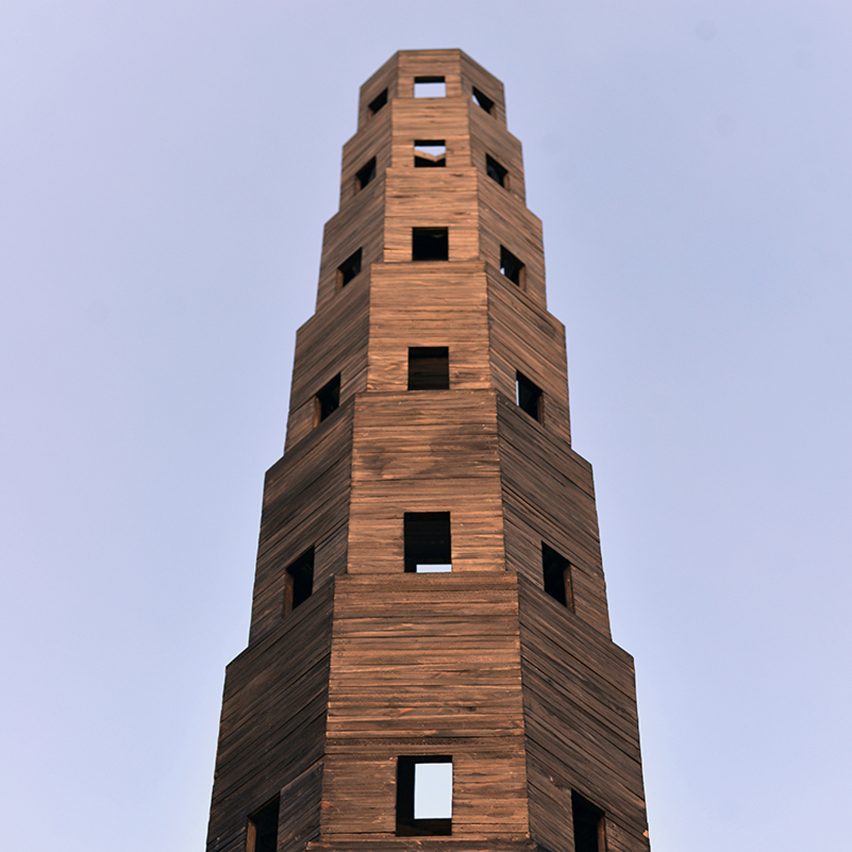
Pezo von Ellrichshausen uses octagonal drums to build skinny tower

pavilion-fiac-paris-pezo-von-ellrichshausen-architecture-france_dezeen_sqa

There is only enough room for one person inside this tall skinny pavilion that Chilean studio Pezo von Ellrichshausen has built in the Jardin des Tuileries in Paris. Read more

http://ift.tt/2fcidry

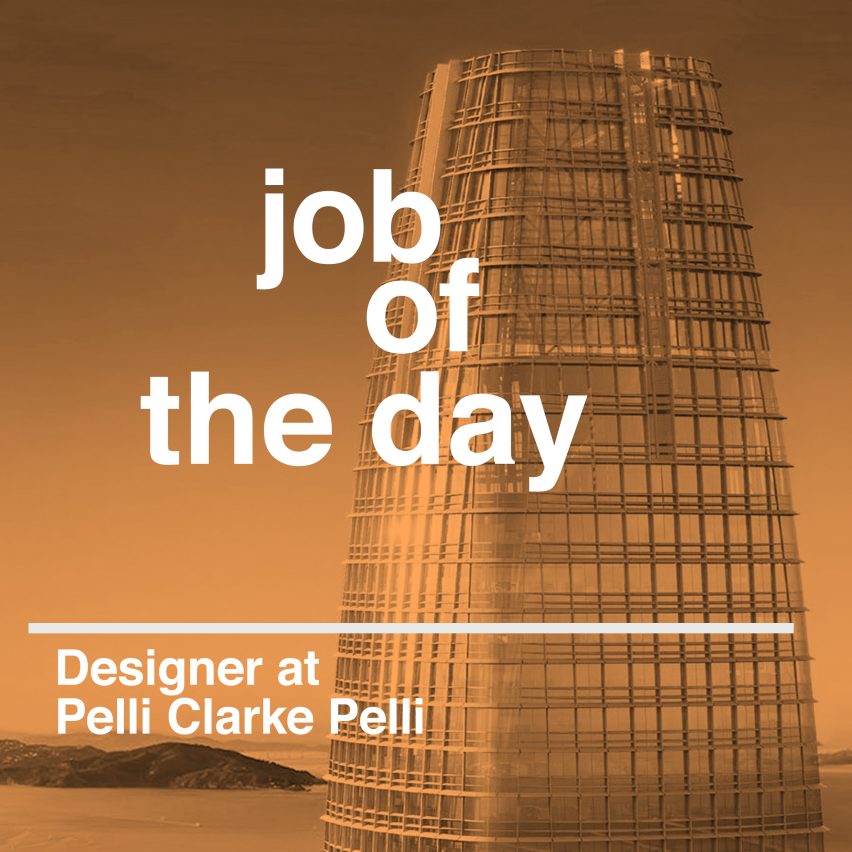
Job of the day: designer at Pelli Clarke Pelli

Dezeen JObs architecture and design recruitment

Our job of the day from Dezeen Jobs is for a designer at Pelli Clarke Pelli’s New York studio, whose glass Salesforce Tower (pictured) is under construction in San Francisco. Browse more architecture and design opportunities on Dezeen Jobs.

http://ift.tt/2faDvYH

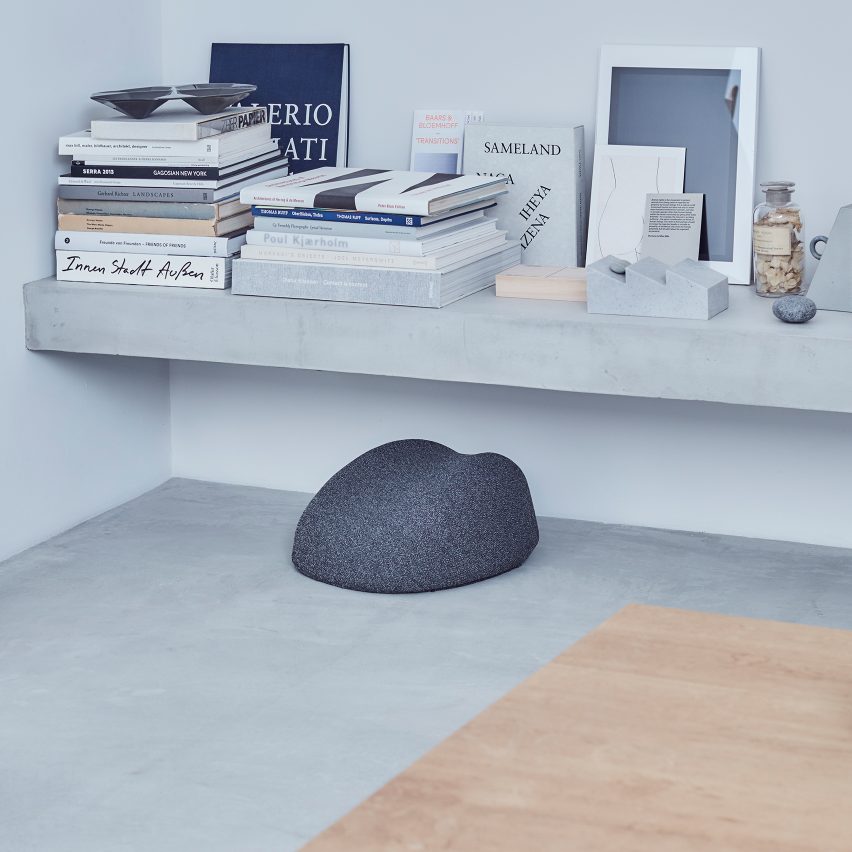
Claesson Koivisto Rune models vibrating massage pillow on pebbles

Claesson Koivisto Rune Stone Pillow

Claesson Koivisto Rune based the stone-like appearance of these massaging pillows on pebbles found on Sweden’s beaches. Read more

http://ift.tt/2emI3Ky

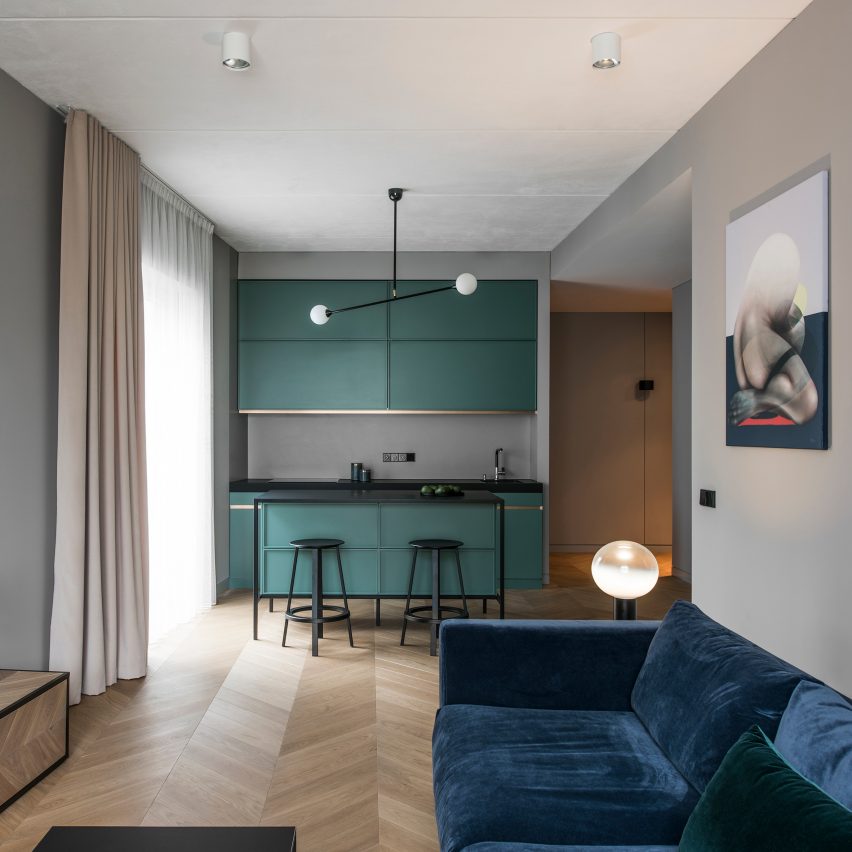
Colourful accents offset grey walls in Vilnius apartment renovation by AKTA

Basanavičiaus by AKTA Studio

The kitchen, dining and living room of this apartment in the Lithuanian capital Vilnius features grey-painted walls and black-metal details, which are offset by colourful cabinets and furniture. Read more

http://ift.tt/2fgGMlP

Eindhoven graduate designs a gun for firing her tears

Tear gun by Yi Fei Chen

After an altercation with a tutor, Design Academy Eindhoven graduate Yi-Fei Chen created this visual metaphor to show her personal struggle with speaking her mind. Read more

http://ift.tt/2f8YnzP

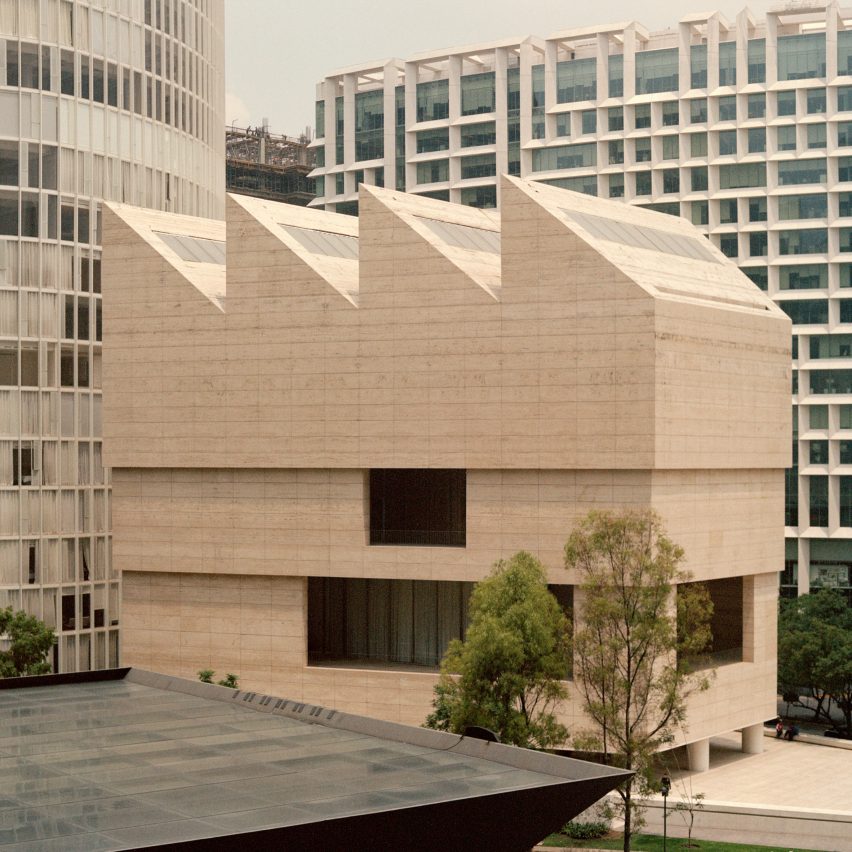
David Chipperfield’s Museo Jumex photographed by Rory Gardiner

Museo Jumex by David Chipperfield Architects and photographed by Rory Gardiner

These new images by photographer Rory Gardiner capture the striking sawtooth form of the Mexico City gallery designed by architect David Chipperfield to host one of the largest modern art collections in Latin America. Read more

http://ift.tt/2fbFM3W