3 Winners of the 2016 Young Talent Architecture Award Announced


Courtesy of Fundació Mies van der Rohe

Courtesy of Fundació Mies van der Rohe

The Fundació Mies van der Rohe has announced the three winners of the inaugural Young Talent Architecture Award (YTAA) 2016. Established this year to “support the talent of recently graduated Architects, Urban Planners and Landscape Architects who will be responsible for transforming our environment in the future,”  9 finalists were selected from a shortlist of 30 projects, which was then narrowed down to 3 winners.

Winners

A symbiotic relation of cooperative social housing and dispersed tourism in Habana Vieja / Iwo Borkowicz, Faculty of Architecture, University of Leuven


A symbiotic relation of cooperative social housing and dispersed tourism in Habana Vieja / Iwo Borkowicz, Faculty of Architecture, University of Leuven. Image Courtesy of Fundació Mies van der Rohe

A symbiotic relation of cooperative social housing and dispersed tourism in Habana Vieja / Iwo Borkowicz, Faculty of Architecture, University of Leuven. Image Courtesy of Fundació Mies van der Rohe

The project proposes a simple and sustainable way to react to the dynamics of the demand of accommodation for tourists. The Jury appreciated the ‘glocal’ thinking which supports the local community in obtaining the tools to face the urban, economic and social changes that the city is undergoing.


A symbiotic relation of cooperative social housing and dispersed tourism in Habana Vieja / Iwo Borkowicz, Faculty of Architecture, University of Leuven. Image Courtesy of Fundació Mies van der Rohe

A symbiotic relation of cooperative social housing and dispersed tourism in Habana Vieja / Iwo Borkowicz, Faculty of Architecture, University of Leuven. Image Courtesy of Fundació Mies van der Rohe


A symbiotic relation of cooperative social housing and dispersed tourism in Habana Vieja / Iwo Borkowicz, Faculty of Architecture, University of Leuven. Image Courtesy of Fundació Mies van der Rohe


A symbiotic relation of cooperative social housing and dispersed tourism in Habana Vieja / Iwo Borkowicz, Faculty of Architecture, University of Leuven. Image Courtesy of Fundació Mies van der Rohe


A symbiotic relation of cooperative social housing and dispersed tourism in Habana Vieja / Iwo Borkowicz, Faculty of Architecture, University of Leuven. Image Courtesy of Fundació Mies van der Rohe


A symbiotic relation of cooperative social housing and dispersed tourism in Habana Vieja / Iwo Borkowicz, Faculty of Architecture, University of Leuven. Image Courtesy of Fundació Mies van der Rohe

S’lowtecture. Housing structure in Wroclaw-Zerniki / Tomasz Broma, Faculty of Architecture, Wroclaw University of Technology


S'lowtecture. Housing structure in Wroclaw-Zerniki / Tomasz Broma, Faculty of Architecture, Wroclaw University of Technology. Image Courtesy of Fundació Mies van der Rohe

S'lowtecture. Housing structure in Wroclaw-Zerniki / Tomasz Broma, Faculty of Architecture, Wroclaw University of Technology. Image Courtesy of Fundació Mies van der Rohe

Housing is a key topic in Europe today and the project understands the impermanence of our habitat. The Jury considered the importance of understanding architecture as an open process in an ever-changing environment and the potential to create a real time experimental FabLab connected to an innovative housing experience.


S'lowtecture. Housing structure in Wroclaw-Zerniki / Tomasz Broma, Faculty of Architecture, Wroclaw University of Technology. Image Courtesy of Fundació Mies van der Rohe

S'lowtecture. Housing structure in Wroclaw-Zerniki / Tomasz Broma, Faculty of Architecture, Wroclaw University of Technology. Image Courtesy of Fundació Mies van der Rohe


S'lowtecture. Housing structure in Wroclaw-Zerniki / Tomasz Broma, Faculty of Architecture, Wroclaw University of Technology. Image Courtesy of Fundació Mies van der Rohe


S'lowtecture. Housing structure in Wroclaw-Zerniki / Tomasz Broma, Faculty of Architecture, Wroclaw University of Technology. Image Courtesy of Fundació Mies van der Rohe


S'lowtecture. Housing structure in Wroclaw-Zerniki / Tomasz Broma, Faculty of Architecture, Wroclaw University of Technology. Image Courtesy of Fundació Mies van der Rohe


S'lowtecture. Housing structure in Wroclaw-Zerniki / Tomasz Broma, Faculty of Architecture, Wroclaw University of Technology. Image Courtesy of Fundació Mies van der Rohe

GeoFront. Strategic development plan for the frontier territories / Policarpo del Canto Baquera, Madrid School of Architecture, Polytechnic University of Madrid


GeoFront. Strategic development plan for the frontier territories / Policarpo del Canto Baquera, Madrid School of Architecture, Polytechnic University of Madrid. Image Courtesy of Fundació Mies van der Rohe

GeoFront. Strategic development plan for the frontier territories / Policarpo del Canto Baquera, Madrid School of Architecture, Polytechnic University of Madrid. Image Courtesy of Fundació Mies van der Rohe

The project addresses the topic of cohabitation and how borders (both political and geographical) can be transformed in order to make this cohabitation possible. This proposal approaches the role of design as a political tool, as a spatial practice within a new emergent socio-political space. The Jury was positively impressed by the amount of overlapping layers of complexity created and by the skillful designs and modeling to explain a newly imagined world.


GeoFront. Strategic development plan for the frontier territories / Policarpo del Canto Baquera, Madrid School of Architecture, Polytechnic University of Madrid. Image Courtesy of Fundació Mies van der Rohe

GeoFront. Strategic development plan for the frontier territories / Policarpo del Canto Baquera, Madrid School of Architecture, Polytechnic University of Madrid. Image Courtesy of Fundació Mies van der Rohe


GeoFront. Strategic development plan for the frontier territories / Policarpo del Canto Baquera, Madrid School of Architecture, Polytechnic University of Madrid. Image Courtesy of Fundació Mies van der Rohe


GeoFront. Strategic development plan for the frontier territories / Policarpo del Canto Baquera, Madrid School of Architecture, Polytechnic University of Madrid. Image Courtesy of Fundació Mies van der Rohe


GeoFront. Strategic development plan for the frontier territories / Policarpo del Canto Baquera, Madrid School of Architecture, Polytechnic University of Madrid. Image Courtesy of Fundació Mies van der Rohe


GeoFront. Strategic development plan for the frontier territories / Policarpo del Canto Baquera, Madrid School of Architecture, Polytechnic University of Madrid. Image Courtesy of Fundació Mies van der Rohe

Finalists

Death and Life of a Small French city, Alix Sportich du Réau de la Gaignonnière / Alice Villatte from School of architecture of Marne-la-Vallée, France


Death and Life of a Small French city, Alix Sportich du Réau de la Gaignonnière / Alice Villatte from School of architecture of Marne-la-Vallée, France. Image Courtesy of Fundació Mies van der Rohe

Death and Life of a Small French city, Alix Sportich du Réau de la Gaignonnière / Alice Villatte from School of architecture of Marne-la-Vallée, France. Image Courtesy of Fundació Mies van der Rohe

Brewing Democracy: The Assembly of Le Balai Citoyen in Ouagadougou / Lorenzo Perri from AA, London, UK


Brewing Democracy: The Assembly of Le Balai Citoyen in Ouagadougou / Lorenzo Perri from AA, London, UK. Image Courtesy of Fundació Mies van der Rohe

Brewing Democracy: The Assembly of Le Balai Citoyen in Ouagadougou / Lorenzo Perri from AA, London, UK. Image Courtesy of Fundació Mies van der Rohe

Genesis of a place towards the project / David Gonçalves Monteiro from FAUP, Porto, PT


Genesis of a place towards the project / David Gonçalves Monteiro from FAUP, Porto, PT. Image Courtesy of Fundació Mies van der Rohe

Genesis of a place towards the project / David Gonçalves Monteiro from FAUP, Porto, PT. Image Courtesy of Fundació Mies van der Rohe

Living in a cultural environment / Clàudia Carreras Oliver from ETSALS, Barcelona, ES


Living in a cultural environment / Clàudia Carreras Oliver from ETSALS, Barcelona, ES. Image Courtesy of Fundació Mies van der Rohe

Living in a cultural environment / Clàudia Carreras Oliver from ETSALS, Barcelona, ES. Image Courtesy of Fundació Mies van der Rohe

Living in offices. The alive triangle of Bordelongue in Toulouse / Jaufret Barrot, Cinthia Isabel Carrasco Fuentes from ENSA, Toulouse, FR


Living in offices. The alive triangle of Bordelongue in Toulouse / Jaufret Barrot, Cinthia Isabel Carrasco Fuentes from ENSA, Toulouse, FR. Image Courtesy of Fundació Mies van der Rohe

Living in offices. The alive triangle of Bordelongue in Toulouse / Jaufret Barrot, Cinthia Isabel Carrasco Fuentes from ENSA, Toulouse, FR. Image Courtesy of Fundació Mies van der Rohe

Subversions Minhocao / Laura Abbruzzese from DA, Ferrara, IT


Subversions Minhocao / Laura Abbruzzese from DA, Ferrara, IT. Image Courtesy of Fundació Mies van der Rohe

Subversions Minhocao / Laura Abbruzzese from DA, Ferrara, IT. Image Courtesy of Fundació Mies van der Rohe

The YTAA 2016 Jury consisted of: 

  • Jose Luis Vallejo, Architect, Principal at Ecosistema Urbano, Madrid (President)
  • Inge Beckel, Architect, Editor at Swiss-Architects.com, Zurich
  • Michał Duda, Architecture Historian, Curator at the Museum of Architecture, Wroclaw
  • Juulia Kauste, Sociologist, Director at the Museum of Finnish Architecture, Helsinki
  • Triin Ojari, Architect, Director at the Museum of Estonian Architecture, Tallinn 

For more information on the award, check out the website, here.

News via Fundació Mies van der Rohe.

http://ift.tt/2fk01jk

Hockey Club Oranje-Rood Clubhouse / Diederendirrix Architecture & Urban Development


© Arthur Bagen

© Arthur Bagen


© Pieter de Ruijter


© Pieter de Ruijter


© Arthur Bagen


© Arthur Bagen


© Arthur Bagen

© Arthur Bagen

Eye-catching, Functional and Sustainable

Diederendirrix architecture & urban development designed a striking pavilion for hockey club Oranje-Rood. The large canopy built from laminated wooden joists in a triangular grid, supported by a few pillars, is extraordinary. The structure extends from the outside into the inside and creates a special interior with an unobstructed view of the fields. This year, Oranje-Rood originated from a merger between the successful topclass sports club Oranje-Zwart (first division champions for the last three years) and recreational sports club EMHC. This new start called for a new, modern clubhouse. The pavilion was festively opened in September 2016.


© Arthur Bagen

© Arthur Bagen

Splendid View Over All Hockey Fields

The triangular building with rounded corners is fitted in on a wedge-shaped area between the hockey fields. The pavilion is located on a plinth consisting of an overgrown slope on one side and a stand with 1600 seats on the other side. Underneath, comfortable changing rooms and a physiotherapy room were built, which meet the requirements of a top-class sport accommodation.

On the raised level the luxurious canteen is located, from where you can view the club’s eight hockey fields. The very large canopy will always keep you dry while watching the matches outside. There is room for a business club on the pavilion’s level.


© Pieter de Ruijter

© Pieter de Ruijter

Smart and Sustainable Building

The smart façades consist of light grey, preserved pine slats. The vertical slats accentuate the rounded corners. The inside is also dominated by concrete and wood, including in the long bar. As commissioner, the city of Eindhoven set high sustainability goals. The EPC (Energy Performance Coefficient) is 0.3 due to the building´s triangular shape, the solar panels on the roof and the high insulation levels.


© Pieter de Ruijter

© Pieter de Ruijter

Frans van Duivenboden, president of Oranje-Rood: “Not the largest clubhouse of the Netherlands, but definitely the coolest.”


Ground Floor Plan

Ground Floor Plan

Product Description. We gave the clubhouse a distinctive triangle shape to fit it carefully in the context, in this way you have a beautiful view on all the surrounding hockey fields from the building. We rounded the corners and gave the facade a certain softness, because we didn’t want to make the building to hard and detached.


© Pieter de Ruijter

© Pieter de Ruijter

Therefore we chose to give the facade a wooden covering. However, not only a uniform flat finish with shelves, but we’ve added vertical ribs at a distance of 132mm from each other, that form a consistent vertical grid over the facade. Because the view of the building is almost always from an angle, the facades and the receding canopy have a tactility that makes the pavilion much kinder and gentler.


Section

Section

A very light gray color enhances the lightness and friendliness of the building. There is however consciously decided not to use a grey aging natural wood. This would after some time give a splotchy image, especially at the transitions between the canopy and facade. Hence the choice not to use hardwood, but modified pine wood treated with a light gray stain as to remain its beauty in the future.


© Arthur Bagen

© Arthur Bagen

The facade builder hanged the boards and slats in prefabricated panels to the rear structure, whereby the fixation was on the backside of the panels, therewith leaving the rhythm of the ribs undisturbed by visible fasteners.

http://ift.tt/2eb8q6b

This Maple Leaf Shaped Tunnel Commemorates Hungarian Refugees in Canada


© Gergely Szinnay

© Gergely Szinnay

In memorial of the 1956 Hungarian Revolution, which resulted in the emigration of over 37,000 Hungarians to Canada, architectural studio Hello Wood has created Tunnel Through Time, a contemporary interpretation of the historic event that remembers the heroes of the revolution and especially honoring the Canadian people who welcomed Hungarian refugees. 

Composed of 37,565 pieces—one for each Hungarian refugee accepted into Canada—the tunnel begins with a Hungarian flag with a hole in the middle, representing how protesters cut the communist coat of arms out of the Hungarian flag during the revolution. The tunnel then morphs—as a representation of the journey of the refugees—until it reaches an exit, which is shaped like the national symbol of Canada, the maple leaf.


© Gergely Szinnay


© Gergely Szinnay


© Gergely Szinnay


© Gergely Szinnay


© Gergely Szinnay

© Gergely Szinnay

© Soraya Hegyesi

© Soraya Hegyesi

© Gergely Szinnay

© Gergely Szinnay

The welcoming of Hungarian refugees was a huge turning point in the history of Canadian immigration policy that shaped the country’s open-minded attitude towards immigrants in general. Hungarian immigrants added value to the economy of Canada, like those 200 young engineers arriving from the Faculty of Wood Sciences of the University of Sopron who helped to shape the world famous Canadian wood industry. Canada welcomed 37 565 Hungarians after the Uprising, molding the image of Canadian society so much, that in 2010 it was designated a Canadian national historic event and part of Canadian heritage – explained the architect in a press release. 


© Gergely Szinnay

© Gergely Szinnay

© Gergely Szinnay

© Gergely Szinnay

The installation was commissioned by the Consulate General of Hungary in Toronto, who, in addition to local Canadian Hungarians from around the country, assisted with construction.


© Gergely Szinnay

© Gergely Szinnay

We wanted to create a memorial that could be interesting to a Canadian youngster, who does not necessarily have Hungarian roots, said Péter Pozsár, co-founder of Hello Wood. The Tunnel Through Time is a visually exciting object, and if someone steps closer, they will get a piece of history by meeting the story of the events of 1956. Canadians of Hungarian origin can be proud of the old country and to Canada, which gave them a new home, and the culturally diverse local community can experience a piece of world history.


© Gergely Szinnay


© Soraya Hegyesi


© Gergely Szinnay


© Gergely Szinnay


© Gergely Szinnay

© Gergely Szinnay

Tunnel Through Time is currently on display in Budapest Park in Toronto, and will be moved to Niagara Falls, where it will be in custody of a Canadian-Hungarian scout group.


© Gergely Szinnay

© Gergely Szinnay

© Gergely Szinnay

© Gergely Szinnay

© Gergely Szinnay

© Gergely Szinnay

Learn more about the project, here.

News via The 1956 Hungarian Revolution and Freedom Fight 60th Anniversary Memorial Board.

http://ift.tt/2e0UUid

Peter Zumthor’s Therme Vals Through the Lens of Fernando Guerra

In this stunning photo shoot Fernando Guerra, of Últimas Reportagens, captures the Therme Vals, one of the most iconic works of the 2009 Pritzker Prize-winner Peter Zumthor.


© Fernando Guerra | FG+SG


© Fernando Guerra | FG+SG


© Fernando Guerra | FG+SG


© Fernando Guerra | FG+SG


© Fernando Guerra | FG+SG

© Fernando Guerra | FG+SG

Built between 1993 and 1996, the building is part of the hotel complex in Vals. Constructed over a thermal spring, it serves the hotel guests, the local community and other visitors in search of the healing and relaxing properties of hot water.


© Fernando Guerra | FG+SG

© Fernando Guerra | FG+SG

© Fernando Guerra | FG+SG

© Fernando Guerra | FG+SG

The design of the project arose from a restriction which prevented the construction of a building height that would damage the guests’ views of the valley. This led to one of the main design features of the building, with a facade and half of the building buried in the hill blending with the topography of the valley, and a flat green roof that combines with the sloping hill to create a continuous lawn.


© Fernando Guerra | FG+SG

© Fernando Guerra | FG+SG

© Fernando Guerra | FG+SG

© Fernando Guerra | FG+SG

The space within the spa is organized around two large pools, one outdoor and one indoor, surrounded by high stone walls. The building’s main access is via a tunnel from the hotel, serving as a transition that prepares the visitor to experience the architecture imagined by Zumthor. Internally, you can move through the various spaces freely, without a preordained path, with views to the landscape highlighted and blocked masterfully through the building’s external openings.


© Fernando Guerra | FG+SG

© Fernando Guerra | FG+SG

© Fernando Guerra | FG+SG

© Fernando Guerra | FG+SG

© Fernando Guerra | FG+SG

© Fernando Guerra | FG+SG

The facade, with a striking alternation between solid and void, clearly shows the construction technique. The volume of the building consists of 15 subsidiary volumes, all distinct from each other. These fragments are assembled as a large three-dimensional puzzle, thus the roof coverage is not continuous but broken at each of the connections between these blocks. These subtle gaps of just 8 centimeters allow the entry of a sliver of natural light. Despite its appearance as a massive, monolithic volume, the building is a composition of slightly spaced apart structures that make up the whole. The project addresses these contrasts masterfully; between the straight lines of the architecture and the movement of water, or between the gray of the rocks and the play of light and colors.


© Fernando Guerra | FG+SG

© Fernando Guerra | FG+SG

In each block the architect explores different sense, utilizing colors, the scale of the space or even the water itself, and its temperature, state, smell, and so on. Overnight, the experience is drastically altered, as most of the light in the building emerges from the water itself.


© Fernando Guerra | FG+SG

© Fernando Guerra | FG+SG

© Fernando Guerra | FG+SG

© Fernando Guerra | FG+SG

The Therme Vals / Peter Zumthor//cdn.embedly.com/widgets/platform.js

http://ift.tt/2eWp9v6

Luca Zanaroli Designs a Spacious Home in Bari

Sunwheel / Moradavaga


Courtesy of Moradavaga

Courtesy of Moradavaga


Courtesy of Moradavaga


Courtesy of Moradavaga


Courtesy of Moradavaga


Courtesy of Moradavaga

  • Architects: Moradavaga
  • Localization : Porto, Portugal
  • Area: 54.0 sqm
  • Project Year: 2016
  • Photographs: Cortesia de Moradavaga
  • Collaborators : Rossana Ribeiro, Myrto Lantza

  • Production: Euphoric Generation Unipessoal, Lda

  • Structure : Radical e Positivo Unipessoal, Lda

  • Logistic: Catari Portugal, Lda

  • Partners : Cavaco & Coquet, Lda

Courtesy of Moradavaga

Courtesy of Moradavaga

Following an invitation by Porto Lazer to rethink São João’s popular cascades, Moradavaga took inspiration from one of its icons, the wheel of the traditional water mills, and linked it to the old pagan cults to the Sun related to the summer solstice, from which the traditional festivities in honor of the city’s christian patron are derived, developing a site-specific interactive artistic piece implanted inside the fountain of Porto’s main avenue. 


Courtesy of Moradavaga

Courtesy of Moradavaga

Courtesy of Moradavaga

Courtesy of Moradavaga

The rotation of the 8 meters diameter “sun-wheel”, made of hundreds of little golden moving plates, produces changing effects throughout day and night, according to wind and light variations and the speed given by users, also creating varying reflections and movements on the existent water mirror.

http://ift.tt/2eIugyg

Tan Tik Lam Architects Design a Contemporary Residence Surrounded by Lush Vegetation in Bandung, Indonesia

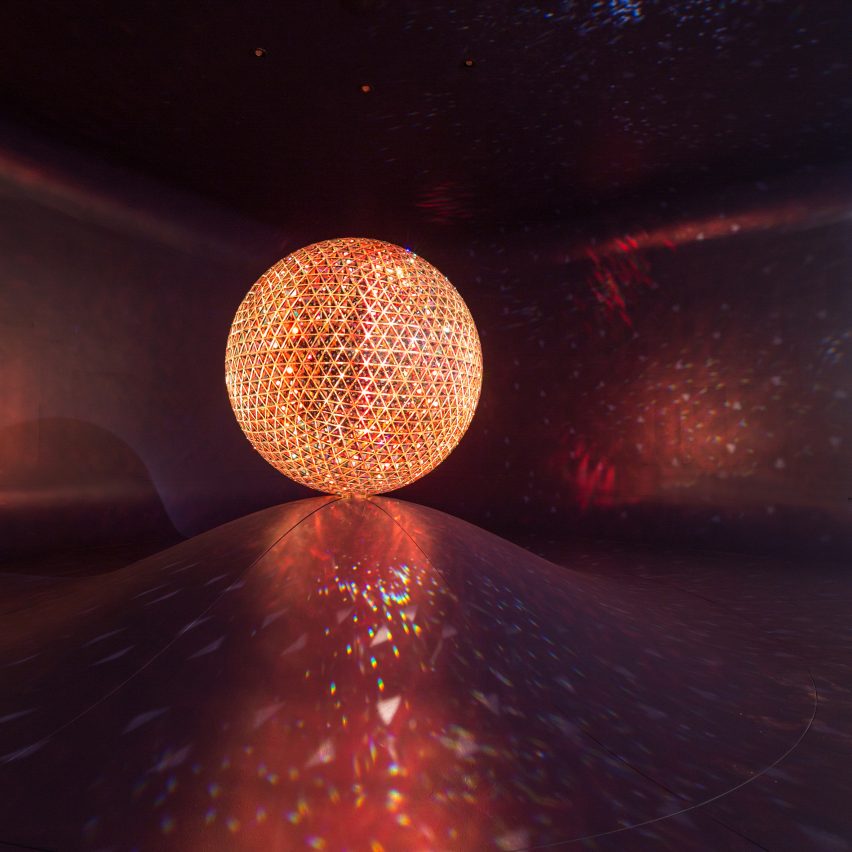
Dezeen’s latest Pinterest board shines a light on Diwali

el-sol-diwali-dezeen-sq

Today is Diwali, the festival of lights celebrated by Hindus, Sikhs, Jains and Buddhists. To celebrate, we’ve pinned dozens of lighting installations to a new Pinterest board, such as a canopy of pulsating lanterns designed for New York’s Winter Garden and a glowing red sun made from thousands of crystals. Follow Dezeen on Pinterest ›

http://ift.tt/2dSclWS

Clever Park / VOX Architects


© Sergey Ananiev

© Sergey Ananiev


© Sergey Ananiev


© Sergey Ananiev


© Sergey Ananiev


© Sergey Ananiev

  • Client, General Constructor: Alfa Story
  • General Designer Of Existing Building: R1
  • Navigation Consultant: Smart Heart
  • Architecture Concept Of Building Of Parking And Masterplan: Twelve Architects & Masterplanners

© Sergey Ananiev

© Sergey Ananiev

From the architect. A Large-scale project development of Clever Park business center is the result of successful collaboration between Alfa-Story construction company and Boris Voskoboynikov architectural studio since they were working together on Koltsovo (Yekaterinburg airport).


© Sergey Ananiev

© Sergey Ananiev

The client uses VOX architects projects with great attention and almost everything is realized unchanged. The bureau designed all important elements forming the face and image of the business quarter: entrances, the management company office, navigation, restaurants and cafes.


© Sergey Ananiev

© Sergey Ananiev

Projects are skillfully integrated into the existing architectural environment with a clear understanding of the territory development direction. The business center is planned to be a growth point of the residential area. «When we were asked to design a riverside building with a restaurant and offices, we drew client attention to the fact that the territory should not only be developed in the context of offices, but also with the thought that soon there will be houses, – says project designer Maria Akhremenkova, – so we offered to give the quarter some urban value. As a result our studio set up waterfront development concept which is ideal for relaxing and walking, and has great views of the Iset River».


Site Plan

Site Plan

While developing a number of projects for the business district, studio VOX architects conceptually revealed massive task of creating links between the various architectural and interior elements. They created an image of a modern business center using public spaces and efficient navigation system.


© Sergey Ananiev

© Sergey Ananiev

© Sergey Ananiev

© Sergey Ananiev

Further plans include the organization and development of the Iset River embankment: landscaping, construction of buildings and small architectural forms, installation and application of the information signs. After the completion of the Clever Park project a large-scale 16th hectares park will be made. Green area is an important part of the quarter image and panoramic windows will bring the garden atmosphere to the lower floors of the buildings. There is a two-storey office building with a restaurant and a sales office pavilion also provided in terms of development and improvement of the whole complex. On completion of all project the quarter will be a socially significant object, fully harmonized with the architectural surroundings and meeting the needs of all employees of the business center and residents of the surrounding city. The park and Iset River green areas located on the campus, will improve whole Yekaterinburg architectural scene. An important feature of this project are technologies aimed at sustainable development of the Ural region, and the use of building supplies produced from local raw materials by a company-builder. There are also solutions aimed at energy savings. Yekaterinburg has its first time-ever electric vehicles chargers on a parking lot.


© Sergey Ananiev

© Sergey Ananiev

http://ift.tt/2fstuqn

Cristian Hrdalo Designs a Contemporary Home in Linderos, Chile