Architecture
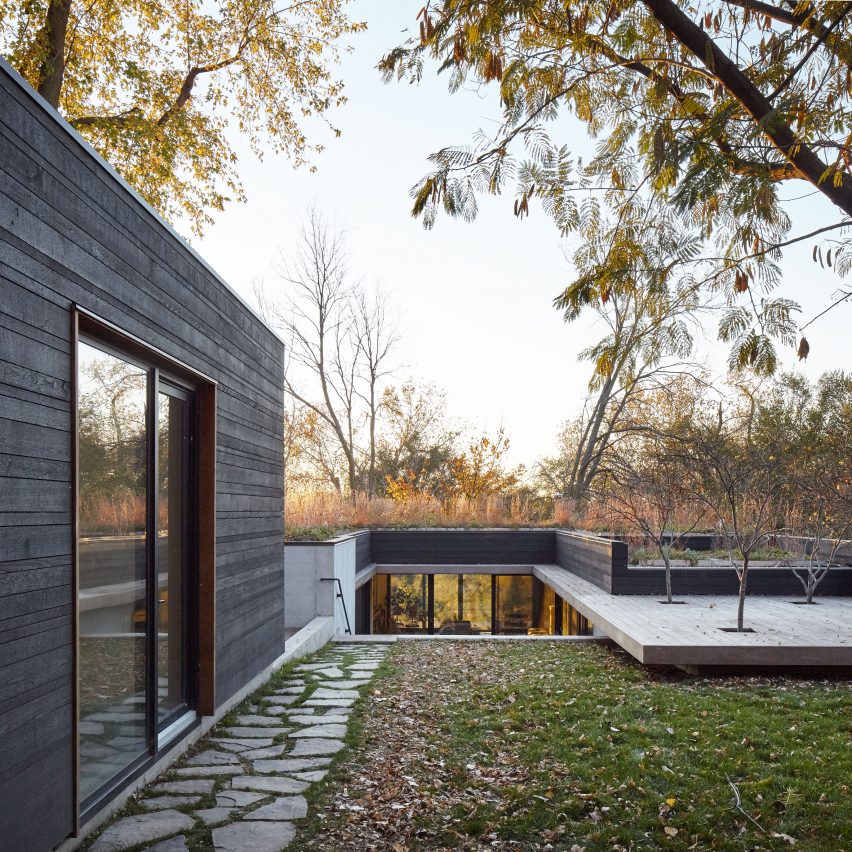
Water Way / EKA Sisearhitektuur

© Tõnu Tunnel
- Architects: EKA Sisearhitektuur
- Location: Riisa Rabarada, 86815 Pärnu maakond, Estonia
- Architect In Charge: Sami Rintala (Finland), Pavle Stamenovic (Serbia), b210 architects (Estonia), Hannes Praks (Estonia)
- Organization: Summer School organised by Estonian Academy of Arts Interior Architecture department (EKA Sisearhitektuur)
- Area: 14.44 sqm
- Project Year: 2016
- Photographs: Tõnu Tunnel
- Students Participating In The Wilderness Summer School: Alden Jõgisuu, Andrea Tamm, Andres Mutis, Berglind Erna Tryggvadóttir, Brigita Kasperaitè, Dan Theman Docherty, Finlay Barge, Gabriel Müller, Gerda Kaasik, Kadri Erdel, Kristiina Veinberg, Laura Müürsepp, Siim Karro, Stefano Prevosti, Triin Mänd, Tuva Ina Sofia Björk
© Tõnu Tunnel
Floating structure Veetee (Water Way) was created in 2016 during a ten-day summer school titled 5th Season: Wilderness, organised by Estonian Academy of Arts interior architecture department and bringing together students from Estonia, Iceland, Denmark, Latvia, Lithuania, etc. With its biggest wetlands in Estonia and changing water levels, Soomaa was the inspiration for creating a structure that could inhabit different functions: a shelter, a fireplace to meet the needs of a traveller or a local, either by land or by a boat. Floating was conceived as a way to adapt to the ever changing conditions of the Soomaa context, especially the extensive flooding of the so-called “5th season”, which happens in the area every year, during two weeks in springtime.
Plans
Two of the three objects have now been opened to the public as part of local forest infrastructure in Soomaa, testing how experimental forest infrastructure could provide for the needs of people living in the area or visiting it. However, one of the structures, the sauna, did not persist the testing, and sunk to the watery depths: an experience described by both the participants and tutors as unforgettable and incredibly useful opportunity to truly comprehend how materials function in different conditions.
© Tõnu Tunnel
The wooden installation is now part of larger network of forest infrastructure organized by the State Forest Management Centre of Estonia, similar to the forest megaphones Ruup, built by students in the forests of South Estonia last year. The Estonian Academy of Arts interior architecture department has been focussing on forest infrastructure for a few years, with all students getting a chance to explore, design and also build in the forests during their studies.
© Tõnu Tunnel
Diagram
© Tõnu Tunnel
Soomaa is a mixture of boglands and meandering rivers that flood over seasonally, mostly in spring, when the water raises several meters higher for weeks. The water flows over flood-plain grasslands and forests and covers fields, forests and roads, disrupting connection with the rest of the world. Locals and visitors use boats to navigate the altered territory, but the students took up the challenge to see what types of floating space they could create, responding to the needs of people in the area.
© Tõnu Tunnel
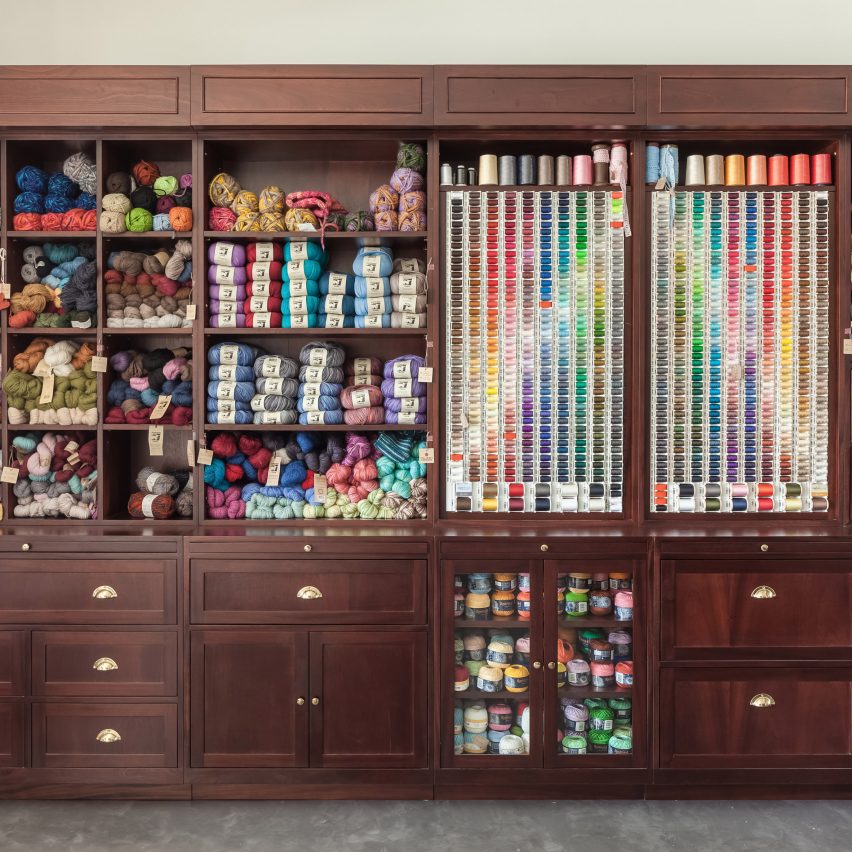
PHDD Arquitectos mixes old and new for renovated Portuguese yarn store
Experience LA’s Architecture Through This Spectacular Panoramic Time-Lapse

From the Griffith Observatory to the LAX Airport, LACMA’s Urban Light installation, the Bradbury Building, Walt Disney Concert Hall, The Broad, and more, Los Angeles is full of inspiring architecture. In his new 10K x 4K resolution video, photographer and filmmaker Joe Capra of Scientifantastic captures the beauty of LA through panoramic footage. Over a span of two years, Capra stitched time-lapse footage from two synced DSLR cameras together resulting in a spectacular view of the city.
Find out more about Capra’s work here, or view his timelapse of Rio de Janeiro here.
News via Joe Capra.
Step Inside Myrtle Hall and Jerome Robbins Theater With Redsquare Productions
Redsquare productions in collaboration with Think! Architecture has just produced new videos on two of the firms projects: the Jerome Robbins Theater and Pratt Institute’s Myrtle Hall. Both videos explore their respective project’s design strategies in addition to featured interviews with the architects.
Created with “regional, recycled, and low volatile organic compound-emitting materials, Pratt Institute Myrtle Hall is the first institutional building in Brooklyn to be LEED Gold certified. The video provides further information on the environmental standards and the structure’s solutions to them.
The Jerome Robbins Theater was actually converted from a standard concrete box into the stunning space it is today. “Everything sprang from one defining factor: the severe limitations of the pre-existing physical space,” said architect Marty Kapell.
Think! Architecture is a Brooklyn-Based firm founded in 2013 by Martin Kapell.
News via: Redsquare Production
Myrtle Hall / think!
//cdn.embedly.com/widgets/platform.js
Baryshnikov Arts Center, Jerome Robbins Theater / think!
//cdn.embedly.com/widgets/platform.js
Toyo Ito’s Museo Internacional del Barroco photographed by Edmund Sumner

These new images by British photographer Edmund Sumner show the fluted concrete structure of the Museo Internacional del Barroco in Mexico, which is designed by Japanese architect Toyo Ito. Read more
Light / TAMEN arq

© Alexander Potiomkin
- Architects: TAMEN arq
- Location: Hermosillo, Sonora, Mexico
- Project Area: 800.0 m2
- Project Year: 2016
- Photographs: Alexander Potiomkin
- Team: Alejandra Vidal Salcido, Andrea Azpe Valenzuela, Ana Karen Novoa Arvizu
© Alexander Potiomkin
From the architect. The project is the restoration of an existing dance club, making the general area the most impressive element of this place. We create a hexagon grid with integrated lighting in each element projecting different sets of lights and environments in sync with the music.
Plan
The facade is a play on geometric volumes that are more sober than the interior, creating mystery on the elements found within it.
© Alexander Potiomkin
Access is a transition space between the facade and the general area. Multiple panels with organic movement were created to represent a three-dimensional and infinite effect with mirrors at the ends, playing with indirect lighting that has an important role in giving more depth and movement to this space.
Axonometric
The bathroom area also uses lighting as part of the design, creating a space with a starry sky effect and reflections with mirrors and glass mosaics in front of the sinks.
© Alexander Potiomkin
The bar has as its main element a golden lamp with a diameter of 3 meters framing this area. Three-dimensional mosaics are used to continue the concept portrayed on the facade, access and general area. A tapestry with organic lines is also used to create some depth for the space, framing the rear exit with green foliage that contrasts the curved and angular elements of this space.
© Alexander Potiomkin
Aptum Architecture’s Floating Concrete Act as Mangroves for Shorelines

Courtesy of Aptum Architecture
Mangroves are vital for stabilizing shorelines, but their recent depletion presents impending doom for coastal habitats.
Aptum Architecture and CEMEX Research Group might have a solution. Their collaborative project, Rhizolith Island (Isla Rhizolith), is a prototype that explores the potential for floating concrete structures to revitalize deteriorating shorelines. The structure was just installed in Cartagena, Columbia as part of the RC 2016 (Reunion del Concreto), an international Expo and Academic Conference on Concrete.
Courtesy of Aptum Architecture
Due to sedimentary imbalance, rising sea-levels, and flooding, coastal erosion along the Colombian coast has increased its span. Rhizolith Island attempts to emulate the mangroves, which control sediments through their roots, thereby preventing shoreline decay. Essentially comprised of “root-like” concrete components and planted mangroves, the project’s natural and artificial elements create an organic Rhizolith — a root system encased in mineral matter.
Courtesy of Aptum Architecture
Courtesy of Aptum Architecture
The design is constructed from two separate pieces: a head and a fin made from concrete mixes and casting. Because the head’s concrete mixture is lighter than water, the two elements can float in addition to allowing mangrove roots to grow through the head. In contrast, the fin’s mixture (UHPC: ultra high-performance concrete) is denser and strengthens the foundation, promoting marine life and barnacle growth.
Courtesy of Aptum Architecture
Courtesy of Aptum Architecture
Through the system’s porosity and form, the force of the water is mitigated. For the first phase of the project, the planted mangroves will be protected by encasement tubes to harbor mangrove seedlings. Anchored at the top of the concrete pieces, the mangrove’s roots will eventually be able to spread and even grow onto the shore in the second phase.
Courtesy of Aptum Architecture
Courtesy of Aptum Architecture
Cienaga de la Virgen Lagoon and Isla Grande are two sites chosen for further development. Their locations offer the same type of long-term restoration (5-10 years), allowing the mangroves to flourish into an organic buffer zones for the coastlines.
Courtesy of Aptum Architecture
News Via: Aptum Architecture
Shaman leads people into psychedelic forest in Empire of the Sun’s music video
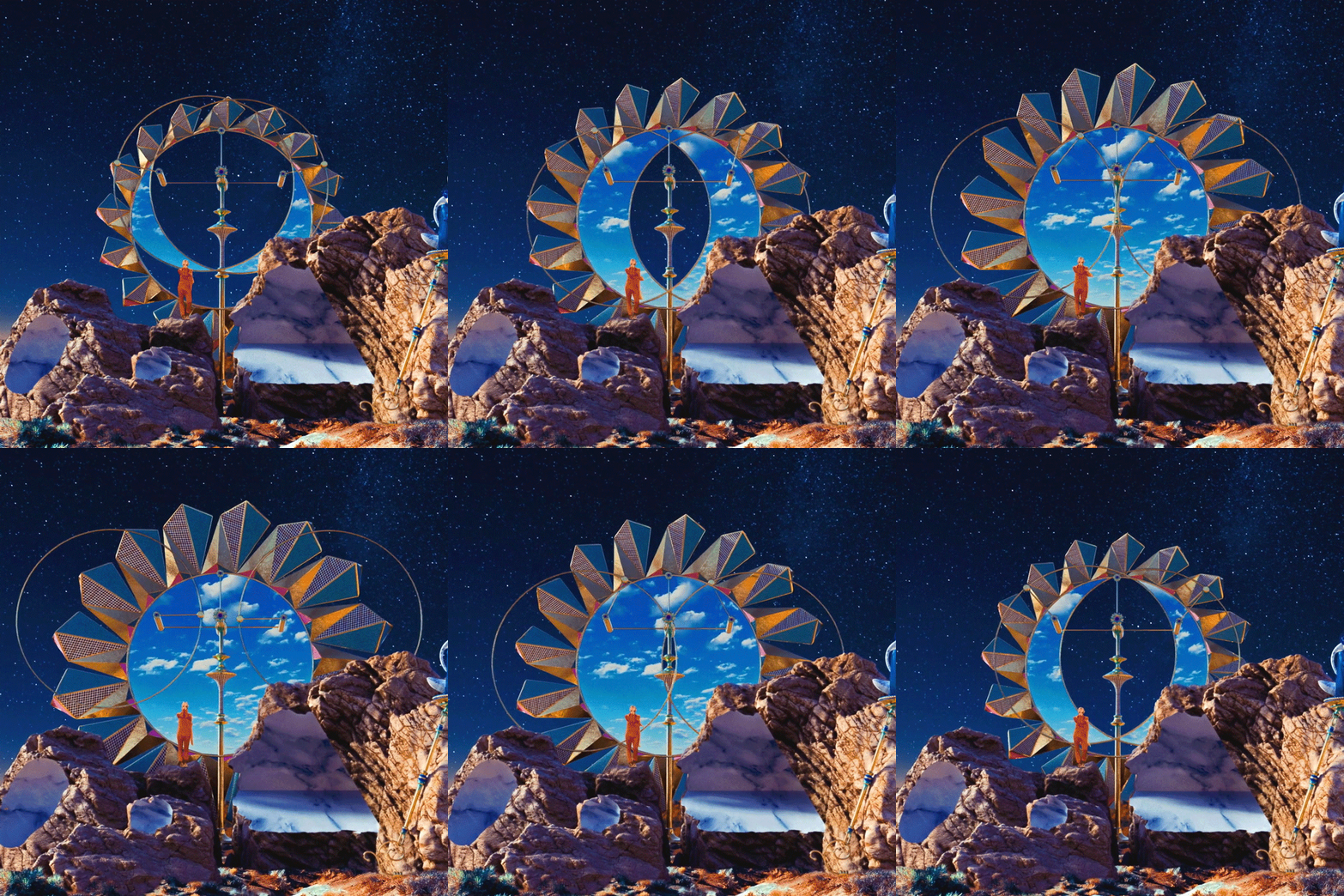
Eyeballs, tentacles and weird machinery inhabit the peculiar forest Roof Studio designed for Empire of the Sun’s High and Low music video. Read more
Dori updates 1950s apartment in Tel Aviv with open-plan spaces and glazed partitions
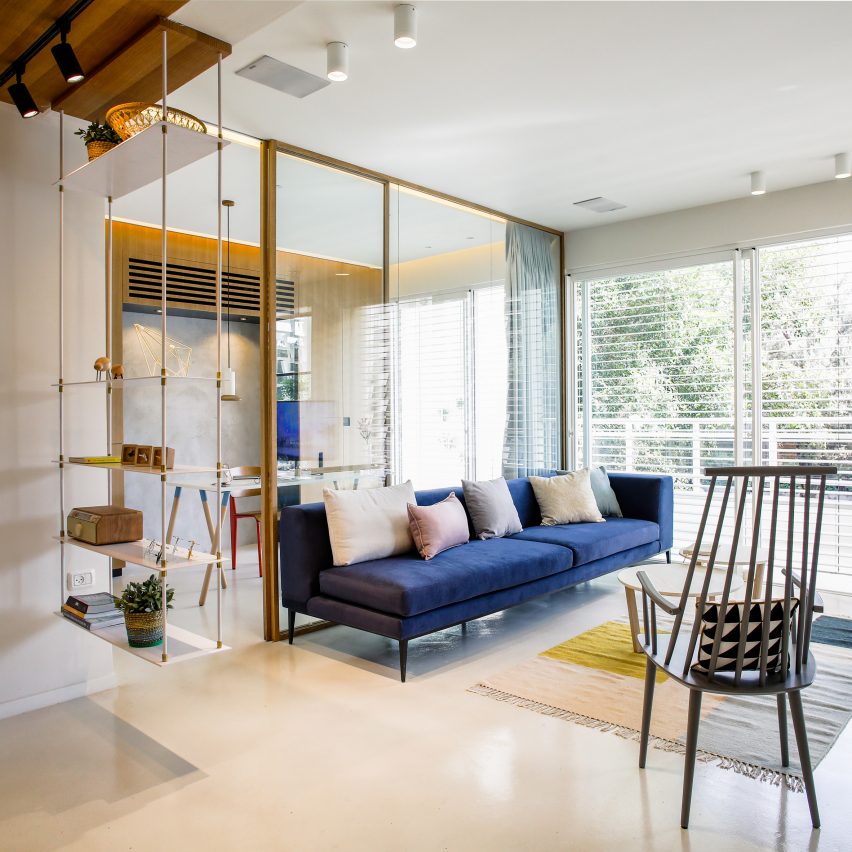
A light and spacious kitchen, dining and lounge opens onto a latticed balcony in this Tel-Aviv apartment, which has been completely overhauled by Dori interior design studio. Read more

