Nikki Beach Torba / Gokhan Avcioglu


© Daniel Schäfer

© Daniel Schäfer


© Daniel Schäfer


© Daniel Schäfer


© Daniel Schäfer


© Daniel Schäfer

  • Project Team: Semih Acar, Teoman Basaran, Kerem Demircan, Gülden Acar, Gizem Kiroglu , Aysu Aysoy, Karun Tugay Candir, Begum Evirgen, Asli Genc, Yildiz Gergün, Efe Ilgen, Tahsin Inanici, , Müge Tan, Mert Turkozu, Senay Undemir, Hasan Yaren, Bilgen Dinç, Derya Arpac
  • Producer: Walter Fischer
  • Client: Adilbey Holding

© Daniel Schäfer

© Daniel Schäfer

From the architect. Bodrum is one of the most popular holiday destinations in Turkey. Nikki Beach Resort is located in Torba on a private peninsula surrounded by crystal clear waters and nature. Torba is a small sea-side village covered by olive groves and pine forests.  Despite its close proximity to Bodrum and growth in popularity and amenity, Torba has retained a relaxed, rural ambience.  It is a unique location which can fulfill the visitor’s needs via physical comfort and mental pleasure. Despite the density of Bodrum city, the green belt surrounding Bodrum remains untouched. The site and surrounding area was studied in regards to the physical characteristic and sociological factors. The hotel units were designed in a fragmented organization creating more flexibility than if they were integrated into the site as a monolithic mass much like the architecture of the locality. Cross ventilation is established through landscaping between the units. Blurring the boundaries between the interior, exterior and recreational areas is the main source of the context inspiration. Despite this fragmentation, there is continuity in hypetated between the lines of the hotel blocks. 


Site Plan

Site Plan

Gökhan Avcıoğlu & GAD designed the facilities based on the Mediterranean lifestyle. The necessity of privacy and the enjoyment of the location are perfectly balanced.  The designers were inspired by the concept of a water drop a high energy center and circular rings radiating outwards. The scale of the resort is very much in keeping with the historical context of Bodrum.  The buildings are a maximum of 2 levels, and are finished in the recognizable white color specific to the region. Sleek and contemporary architectural forms are a key attribute, announcing the high level of luxury of the resort. Timber screens are also introduced to offer both climatic respite, and to create a unique visual feature. A series of buildings built on tiers cascade down to the water front. Inbetween the terraces, lush gardens with a variety of plants and trees can be found. The programmatic requirements create a cell like structure with a nucleus at the center.  The qualities in the Forum and Agora are also incorporated into the design where several programs are integrated together to provide a network of public and private areas. 


© Daniel Schäfer

© Daniel Schäfer

Among the hotel’s remarkable facilities, the guests will have access to a rare sandy beach, a truly unique feature in a part of Bodrum that is rocky, an exclusive deck that provides dinghy services to accommodate yachters. In line with all Nikki Beach properties around the world, the Beach Club at Nikki Beach Resorts & Spa Bodrum encompasess high energy and unique entertainment that the brand is known for and where guests will be able to enjoy a day at the beach in true Nikki Beach style. Nikki Prive, an ultra-VIP lounge prolongs this oneofakind experience by night and set a new benchmark for Bodrum’s vibrant nightlife scene.


© Daniel Schäfer

© Daniel Schäfer

Locally quarried natural stone, sustainably sourced timber and water are the main materials within the interior design scheme.  These materials not only offer a timeless quality, but, since they are sourced locally, they pour in thousands of years of history of Bodrum.  The local quarries use the same stone found in all the local ancient ruins including the Tomb of Mausolos at Halicarnassus, one of the seven wonders of the ancient world.


© Daniel Schäfer

© Daniel Schäfer

B Tipe Villas

B Tipe Villas

© Daniel Schäfer

© Daniel Schäfer

Each villa maximizes sea views whilst respecting and utilizing the existing site topography.  They are designed to allow a range of guest configurations, from a group of friends, a family, or the individual guest, whilst retaining perfect privacy and separation.  Each ground floor room contains a plunge pool, private terrace and garden that the users can relish.


© Daniel Schäfer
© Daniel Schäfer

http://ift.tt/2eXcjux

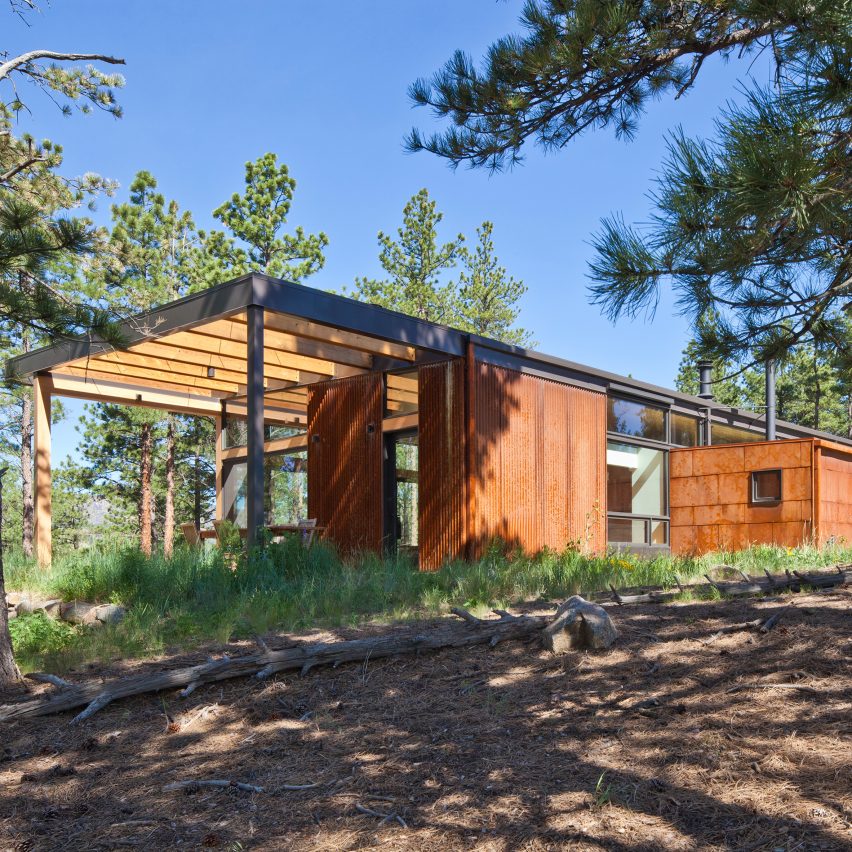
Dynia pairs wood with weathering steel for Colorado mountain residence

Boulder cabin by Dynia

US firm Dynia Architects has completed a home in the mountain town of Boulder, Colorado, where the main living spaces are separated with thick partitions of Corten steel. Read more

http://ift.tt/2eWp5cJ

Villa No. 02 / ShaarOffice


© Parham Taghioff

© Parham Taghioff


© Parham Taghioff


© Parham Taghioff


© Parham Taghioff


© Parham Taghioff

  • Design Associate: Maryam Nazemolboka, Mohamad Ghodrat
  • Construction Associate: Reza Fathi, Reza Ghodsimanesh, Afshin Zare
  • 3 D Modeling: Parisa Panahi
  • Graphic: Parichehr Dehbozorgian, Nastaran Jenabali
  • Topographer: Mehdi Sobhani
  • Structure: Ali Radman

© Parham Taghioff

© Parham Taghioff

Designing of a 2000 m2 Villa is one of the project which was firstly offered and finally implemented by our architecture studio in 2014. The villa is located in SadraCity (near Shiraz). The client had two adjacent 1000 m2 lands and wanted to construct a small villa by limited budget for his leisure time at weekends. 


© Parham Taghioff

© Parham Taghioff

After sightseeing, strengths and weaknesses of the region drew our attention. Locating on the hillside and having an overview of villas and gardens are the main features of the site. In contrast, the steep slope in both longitudinal and transect directions was controversial issue which should have been considered. Also, to hinder the sightseeing from adjacent mountain a solution should have been taken to account.


Plan

Plan

Despite urban legislation to construct two stories villa (since building’s height directly connected to the climbers sightseeing); after a long negotiation with municipality, we decided to design the villa in two separated masses for private and public zone in a same floor, to solve transverse slope of the region’s topography. Furthermore, assessment of mountainous public spaces, resulted in locating the masses in a way that outdoor spaces have the least view to the public spaces of the mountain. Finally, those two masses were located on the floor based on the topography slope. After stabilizing of the main volumes and approximated preliminary plan formation, the exterior faces of the building were assessed. To get widest view of plain in one shot, the public part of the building rotated to some extent. Also, due to the spectacular view to the mountain, several windows located at the back side of the building.


© Parham Taghioff

© Parham Taghioff

The inseparable part of the designing during the whole designing procedure was to use large windows to provide the building with the most of daylight during the day time and having a wide view to the plain.


© Parham Taghioff

© Parham Taghioff

In landscaping, designing has been conducted based on the minimum amount of excavation and embankment. Also, minimum damage to the natural features of landscape has been considered by following topographical lines.

Moreover, using abandoned stones from constructional activities of municipality in constructing the façade of the villa, helped to create organic nature and make it more economical. 


© Parham Taghioff

© Parham Taghioff

The white of the villa allows it to stick out as a man-made object on the landscape during the changing colours of the season.

Based on the consultant civil engineer opinion, concrete structure was considered for the building.


© Parham Taghioff

© Parham Taghioff

According to the mild climate of the region, it is heated by radiators, packages and fireplace and is cooled by evaporative coolers.

Finally, the construction of the project was started in February 2015 and it was completed in March 2016.

http://ift.tt/2eQQAq4

Small Room-Small Green / JAM


Courtesy of Jun Murata

Courtesy of Jun Murata


Courtesy of Jun Murata


Courtesy of Jun Murata


Courtesy of Jun Murata


Courtesy of Jun Murata

  • Architects: JAM
  • Location: Osaka, Osaka Prefecture, Japan
  • Architect In Charge: Jun Murata
  • Area: 24.0 sqm
  • Project Year: 2016
  • Photographs: Courtesy of Jun Murata

Courtesy of Jun Murata

Courtesy of Jun Murata

This is a renovation of collective housing in Osaka.The small which was renovated is filled with natural light and refreshing wind going through the inside. Flowing clouds and flying birds are reflects on the glossy floor.As time has passed, this white space is dyed by various color of sky. 


Courtesy of Jun Murata

Courtesy of Jun Murata

Several handmade flowerpots made of concrete are displayed inside. Warped shape. Simple texture. Small plants are dissolving in daily life. 


Courtesy of Jun Murata

Courtesy of Jun Murata

Trains and cars. Moving crowds. Voices of children echoing in the distance. Various tone of city is passing in the peaceful interior.I want dwellers to enjoy small life in the city with feeling the nature. 


Courtesy of Jun Murata

Courtesy of Jun Murata

http://ift.tt/2dV7gbx

Bain&Company Istanbul Office / Net Mimarlik


© Ali Bekman

© Ali Bekman


© Ali Bekman


© Ali Bekman


© Ali Bekman


© Ali Bekman

  • Architects: Net Mimarlik
  • Location: Istanbul, İstanbul, Turkey
  • Architect In Charge: Ali Doruk, Ozan Bayer
  • Area: 500.0 sqm
  • Project Year: 2016
  • Photographs: Ali Bekman
  • Project Architects: Karin Ender, Sara Cansın Gungor

© Ali Bekman

© Ali Bekman

From the architect. The challenge: using the building circular geometry and creating efficient spaces. The design process starts with creating radial axis from core and split it with circulation torus; it creates straight trapeziums spaces for open /closed offices and meeting rooms.


Axonometric

Axonometric

Focus point: Another design principal is creating a multipurpose interactive unit to gather people both business and social proposes. Area located the most common part of the office faced both circulation and office areas. Row wood layered design hides all the hardware units but act as see through partition.


© Ali Bekman

© Ali Bekman

© Ali Bekman

© Ali Bekman

Organic fluidity: Designing chamfered ceiling edges at the circular form building creates homogenous lighting reflections. Diffused light breaks side effects of the low ceiling.


© Ali Bekman

© Ali Bekman

Natural light: Creating radial axis perpendicular to the facade for transmitting natural light to inner core. While transmitting natural light over radial axis,  gathering light due to translucent material.


Axonometric

Axonometric

Coherent material usage: Material decision made by the identity of the global firm and light fluidity. To create light circulation geometry and light used together. Lighter colors reflect the light all around the area with the smooth effect of chamfered edges. Neutral touch of grayscale colors provides to create identity in order to usage of powerful red identity. Using fabric products such as acoustic carpet and acoustic wall coverings on reflected surfaces provides acoustic comfort at low ceiling space.


© Ali Bekman

© Ali Bekman

http://ift.tt/2eNQf4s

St Kilda East Townhouses / Jost Architects


© John Gollings

© John Gollings


© John Gollings


© John Gollings


© John Gollings


© John Gollings

  • Collaborators: Bacchus Constructions, BDD Engineering, Deery Consulting Engineers, Energylab

© John Gollings

© John Gollings

From the architect. The initial core aim of the St Kilda East Townhouses was as a family development generating two typical dwellings that can functionally house downsizing grandparents in one (my parents), and comfortably accommodate a young family of five in the other (myself, wife and kids). It had to be cost effective but with a good aesthetic outcome. The site being located on a corner with a dog leg in the street and a street address to the long boundary meant that the dwellings needed to run end to end, parallel to the street. This breaks from the more traditional side by side mirrored plan townhouse. It also meant that along with particular site and planning conditions, in this case, daily living is somewhat exposed to the local community.


© John Gollings

© John Gollings

While the building itself is a striking and prominent presence, the architectural success of these dwellings is how they embrace genuine social interaction in an increasingly prohibitive culture, avoiding obsessions with technology, regulation and total privacy. Kids lean over the fence to say hi to grandparents & passers-by, dogs bark in unison and neighbours honk as they drive pass.

The two read as one, with a long, elevated oblong containing the more secluded areas which still remain very connected to the neighbourhood with a long continuous strip window that still maintains suitable privacy. It presents itself as an extension to the streetscape as the site falls and tapers to the short southern boundary, maintaining its elevation with the open living areas below and floating out over the street corner.


Ground Floor

Ground Floor

1st Floor

1st Floor

Functionally the layout efficiently minimises egress zones, opting for room to room movement giving this space back to living areas. A multipurpose airlock separates the dining room from the study/4th bed and powder room. This also doubles as an ensuite when a cavity slider is used to close it off to the living area so it can service the study/4th bed. Both townhouses are crowned by roof decks that provide generous entertaining areas with amazing 180° views of Port Phillip Bay, Indented Head, and the You Yangs right through to the city skyline. The sunsets are regularly spectacular and it dangerously invokes excessive entertaining, especially when passing friends, both in the car and on foot, look up to see who’s up there, stop and come in for a “quick drink”.


© John Gollings

© John Gollings

Through thermally passive design, the challenging western exposure is controlled by a modest eave which supports removable external blinds at ground floor, while level 1 has a reduced horizontal glazing area but fully openable sliding windows to its full length and more window openings to the eastern side which allows extensive cross ventilation to all rooms. The stair can be closed off at level 1 to act as a thermal chimney which draws the air up from the ground floor up and out of the fully openable bi-fold doors to the roof deck to generate a breeze in any wind direction. The whole building is double glazed and while there is heating and cooling available in extreme conditions, in most instances it is very much a case of the occupants utilizing and operating the house to properly benefit from these passive features.


© John Gollings

© John Gollings

Careful selection of hardwearing, economic materials combined with controlled portions of higher end detailing, enabled the dwellings to be delivered for a construction budget of approx. $600,000 each. At 174m2 and 189m2, the efficient footprints happily accommodate & facilitate the requirements of two very different demographics and are a great example of multi-functional medium density living which has been neglected by recent government and we believe could be a very important part of trying to rectify the problem of the current housing situation in Victoria.


© John Gollings

© John Gollings

The outcome is two aesthetically interesting, modestly sized and very efficient homes that successfully draw on how the architecture responds to the site more than how the site responds to the architecture. Both households will have an extremely hard time deciding when the time will come to move onto the next nuclear family project!

http://ift.tt/2eEuczw

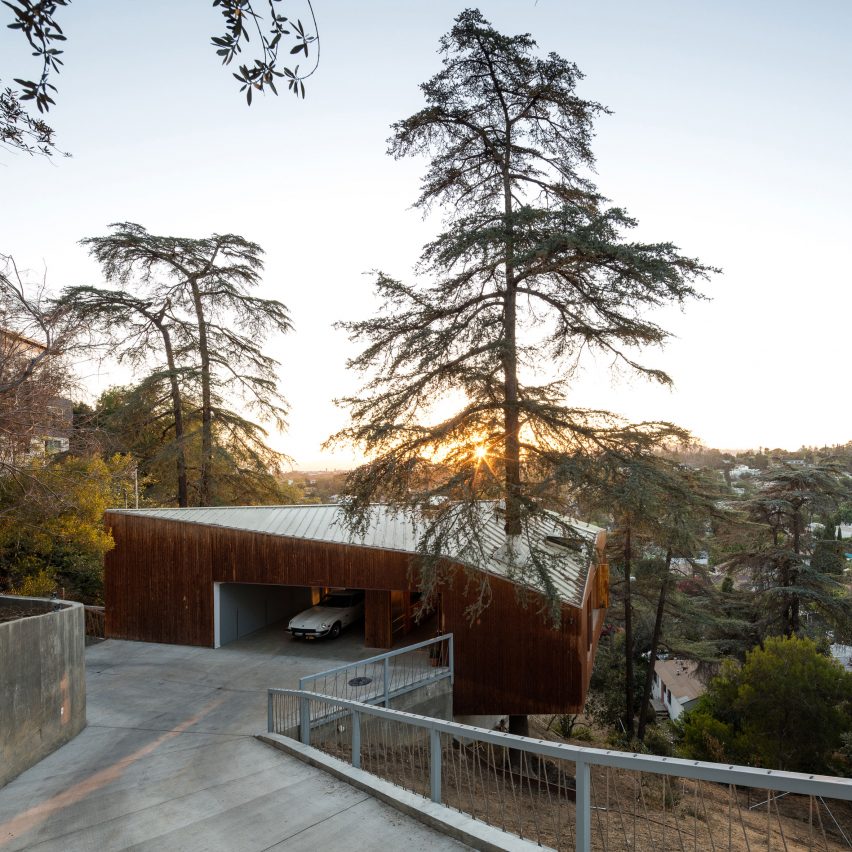
Anonymous Architects builds LA house around existing cypress tree

House in Trees by Anonymous Architects

Instead of chopping down a tall tree in the middle of a Los Angeles site, American studio Anonymous Architects incorporated it into this cantilevered cedar-clad residence. Read more

http://ift.tt/2eQ9Cgf

Final Designs Revealed for BIG’s East Harlem Development


© Blumenfeld Development Group. Via Curbed NY

© Blumenfeld Development Group. Via Curbed NY

Final renderings of BIG’s latest New York City project, 149 East 125th Street in East Harlem, have been revealed at the project’s groundbreaking ceremony. In contrast to original images showing a bright red facade, the undulating, rotating building will instead feature a gray exterior that Bjarke Ingels has referred to as “inspired by an elephant’s skin.”


© Blumenfeld Development Group. Via Curbed NY


© Blumenfeld Development Group. Via Curbed NY


© Blumenfeld Development Group. Via Curbed NY


© Blumenfeld Development Group. Via Curbed NY


© Blumenfeld Development Group. Via Curbed NY

© Blumenfeld Development Group. Via Curbed NY

The 11-story building will encompass a total of 275,566 square feet containing nearly 40,000 square feet of retail space and 233 studio, one-bedroom and two-bedroom rental apartments, of which 46 will be rented at affordable rates through the NYC housing lottery.

As the structure rises, the volume turns to pass over top of an existing New York DMV building. On the roof will be a communal garden and lounge area.


© Blumenfeld Development Group. Via Curbed NY

© Blumenfeld Development Group. Via Curbed NY

© Blumenfeld Development Group. Via Curbed NY

© Blumenfeld Development Group. Via Curbed NY

Inside the building, common areas will be clad in a burst of colors and patterns inspired by Ingels’ recent travels to the Caribbean, while individual units will be finished with more neutral tones to allow for personalization.

Building amenities will include a fitness center, roof garden, game room and lounge, as well as a dedicated area of the lobby exhibiting works from local artists.

News via Curbed NY, NY Yimby.

http://ift.tt/2eQ369f

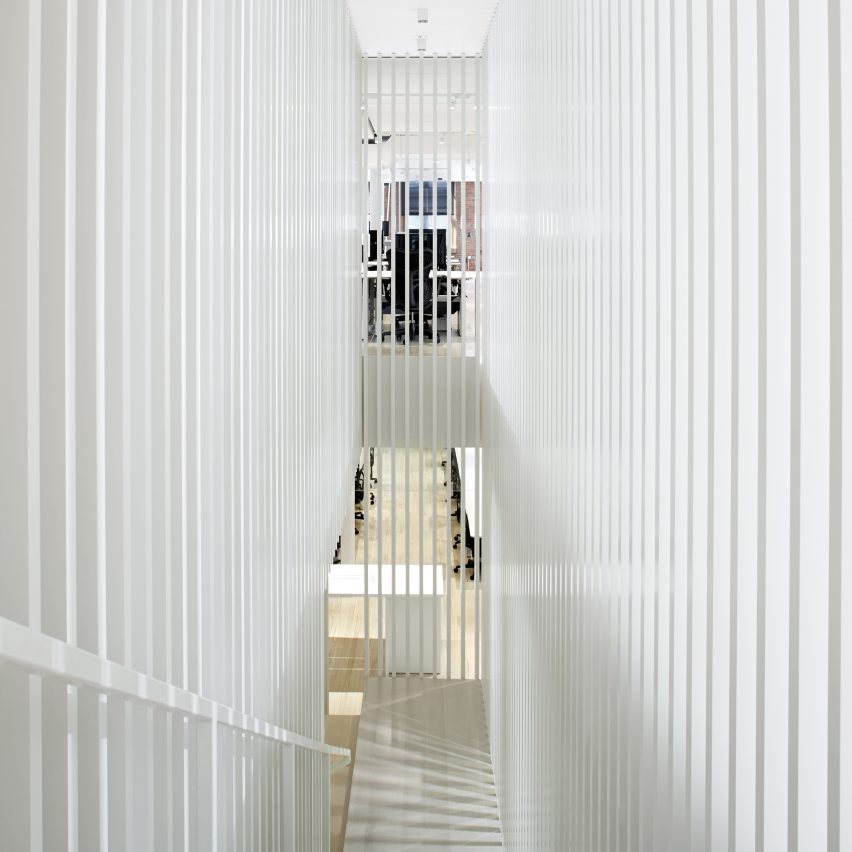
White staircase cuts through Square’s New York office by Magdalena Keck

Square NY by Magdalena Keck

A staircase surrounded by vertical white ribs sits at the centre of tech company Square’s offices in New York, by interior designer Magdalena Keck. Read more

http://ift.tt/2f05K90

Sports Hall La Dehesa de Navalcarbón / Pablo Notari Oviedo + SUMAR + CONURMA


© Imagen Subliminal

© Imagen Subliminal


© Imagen Subliminal


© Imagen Subliminal


© Imagen Subliminal


© Imagen Subliminal

  • ["Architects", "Architects"]: Encarnación González-Menaya, Sascha Bursian, Diana Ramos, Zuriñe Elorduy, Claudio Acaro, Juan Peters
  • Drawings: José Luís Paredes Conde
  • Measurements And Budget: Manuel Sevilla Seoane
  • Facilities Engineer: David Torremocha Mesto
  • Calculation Of Structure: InfoTaller de Estructuras S.L.
  • Architect Construction Management: Pablo Notari Oviedo
  • Collaborators: Steffen Ringler, Encarnación González-Menaya, arquitectos Arquitecto técnico: Manuel Sevilla Seoane
  • Project Management: Raúl Ortega Carballo
  • Client: Ayuntamiento de las Rozas de Madrid
  • Construction: ACCIONA
  • Budget: 10.774.666 €

© Imagen Subliminal

© Imagen Subliminal

© Imagen Subliminal

© Imagen Subliminal

From the architect. The project involves an extensive refurbishment of the existing sports facilities and its extension.


Plan 0

Plan 0

The refurbishment required to conserve the old sports hall. The project includes two new separate buildings, and a new entrance hall that links the old and the new constructions.


© Imagen Subliminal

© Imagen Subliminal

The two new buildings are conceived as two regular prisms. One houses the indoor pool, its locker rooms, spa area and multipurpose rooms, and the other the Municipal Sports Department and a small auditorium.


© Imagen Subliminal

© Imagen Subliminal

By contrast, the entrance hall is a completely irregular distribution volume. It adapts its shape to successfully integrate new buildings with the existing one. It is cladded entirely in zinc sheet, to be read as a unitary element, with no difference between facades and roof.


© Imagen Subliminal

© Imagen Subliminal

Section

Section

© Imagen Subliminal

© Imagen Subliminal

The pool building prism is a glass volume on three sides, South, East and West. In summer, its lower part opens to the grassland, through guillotines windows 9 m. high. Above, the glasses are protected from the sunshade with horizontal aluminum louvers. The roof, formed by four large skylights, it can also be opened. On the North side are located the locker rooms and the spa area, with saunas, Jacuzzis, Scottish showers, cold water swimming pools, and a solarium overlooking the park. Below the pool, technical rooms (purification and air conditioning) and multi-purpose sports halls are located.


© Imagen Subliminal

© Imagen Subliminal

The prism which houses the offices of the Sport Department is formed on the ground floor by three volumes (auditorium, warehouse and the staircase) forming a concrete podium. Above this podium, the first office floor is solved with ventilated facades of high pressure laminated panels finished on wood on three sides. The fourth facade, facing south and with the best views of the garden, is a curtain wall protected from the sun with wooden louvers.


© Imagen Subliminal

© Imagen Subliminal

The project is completed with the refurbishing of the existing facilities. A new gym is located in the old swimming pool, opening one of its facades entirely to the garden. Under the gym, medical units and monitors offices replace the old technical rooms. All these rooms open to a new inner courtyard, which serves as connecting element with the new building, where also overlooks the new multipurpose rooms and the swimming pool lockers.


© Imagen Subliminal

© Imagen Subliminal

http://ift.tt/2f08Dqq