Municipal Auditorium of Lucena / MX_SI architectural studio


© Pedro Pegenaute

© Pedro Pegenaute


© Pedro Pegenaute


© Pedro Pegenaute


© Pedro Pegenaute


© Pedro Pegenaute

  • Architects In Charge: Mara Partida, Boris Bezan, Héctor Mendoza
  • Location: 14900 Lucena, Córdoba, Spain
  • Area: 6700 sqm
  • Project Year: 2015
  • Photographs: Pedro Pegenaute
  • Client: Ayuntamiento de Lucena
  • Mx Si Collaborators: Elsa Bertrán, Filipe Fonseca, Oscar Espinosa, Olga Bombac
  • Structure: BOMAIMPASA
  • Facilities: JG Ingenieros
  • Area Phase 1: 4.500 sqm
  • Original Budget: 12.000.000 €
  • Budget Phase 1: 4.125.000 €

© Pedro Pegenaute

© Pedro Pegenaute

The building project housing the Municipal Auditorium at Lucena recognizes the importance of the proximity to the river, the city’s exhibition centre and integration with the landscape as well as the extreme climatic conditions of the area.


© Pedro Pegenaute

© Pedro Pegenaute

The walk along the river provides a spatial sequence based on different gradients
of open, semi-covered, covered and enclosed spaces. As a prelude, a large space or open forum is created for crowds to congregate at concerts and outdoor events. Access to the building is via a ramp with a porch overhang recreating a foyer terrace to enjoy the views of the river and generates a cool, shaded microclimate that encourages not only the auditorium public to stay, but those from the city as well. The terrace-foyer culminates in an enclosure or patio that leads into the closed spaces of the building.


Elevation

Elevation

Elevation

Elevation

The shape of the building is simple yet forceful; it identifies with and integrates into the landscape, as just another pavilion incorporating itself into the urban planning of the exhibition grounds. The new facility gives a new entrance image on the access routes into the city. The building consists of two main architectural elements: a solid base and light roof. The base acts as an extension of the topography which can be adjusted, if required, to integrate with the environment promoting the continuity of public space and the landscape towards the inside of the building. The light roof is detached from the base, allowing striking spans and openings to bring in the interior spaces.


© Pedro Pegenaute

© Pedro Pegenaute

The auditorium is designed for maximum flexibility to accommodate different types of programs. The large open space or forum located in the access area benefits from the facade of the auditorium that can be opened and the stage projected to the exterior. The interior of the auditorium has been carefully designed in response to the acoustic requirements and with the incorporation of telescopic grandstands to obtain a multipurpose room with a flat floor for all kinds of events and entertainment needs. The functional versatility of the stage, with varying dimensions and equipment, enables different artistic disciplines to be hosted.


© Pedro Pegenaute

© Pedro Pegenaute

Economics, Tectonics and Outward appearance

The structure is designed carefully to absorb the large gaps that a programme of this magnitude demands, in an economic and reasoned manner. The construction of the building, enshrouded in the midst of economic crisis, forced a rethink regarding the phases of construction, with a more efficient, lightweight and economical construction system, supporting the local industry. A special light-weight acoustic cover system mounted on trays was used to remove any secondary beams or structural reinforcement elements that would be subject to increased cost and structural load. Moreover, the facade consisting of variable section aluminium trays, allows a quick and dynamic assembly to close the building, optimizing time and costs.


© Pedro Pegenaute

© Pedro Pegenaute

The construction of the building underwent adjustments in terms of dimension, variety of uses, rational structure, construction system, hence managing to be delivered on time but coming in at half the anticipated budget without compromising the main spirit of its architecture.


Section

Section

Of the four floors to be equipped, two have been fully executed and equipped during the first stage, housing main elements such as dressing rooms, the pit and storage area and an indoor and an outdoor dual stage. The second phase will see the completion of the first floor with a conference room, press room, gallery and boxes and amphitheatre.


© Pedro Pegenaute
© Pedro Pegenaute

http://ift.tt/2eIpTkH

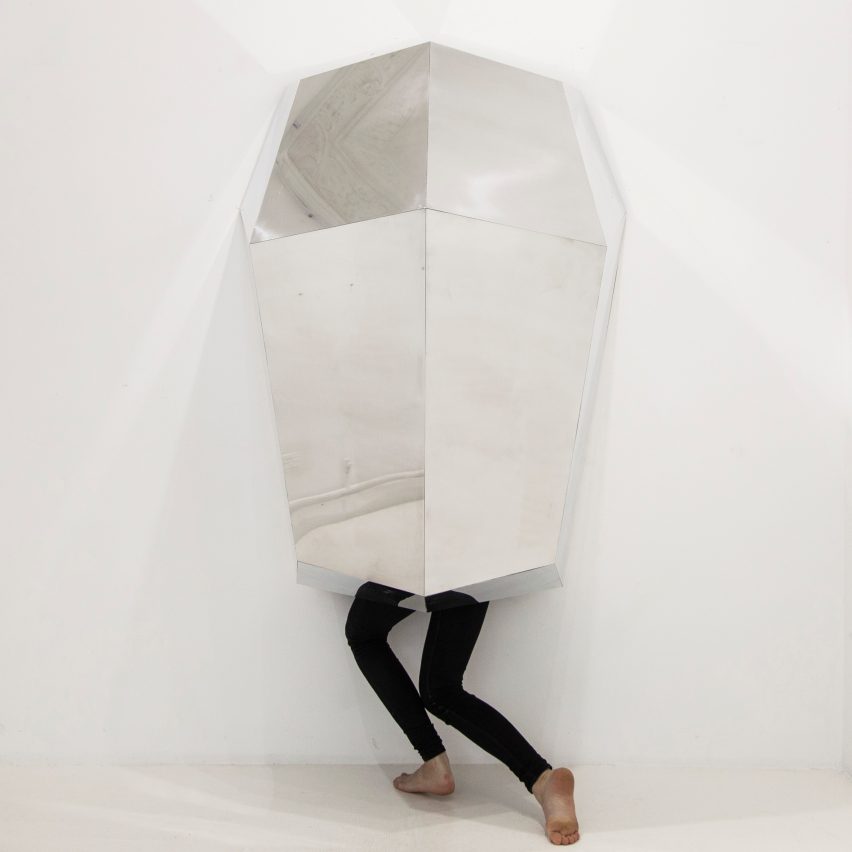
Wall-mounted cubby by Yasmine Benhadj-Djilali provides a private escape for office workers

Interieur 2016: Soft targets by Yasmine Benhadj-Djilali

Berlin-based designer Yasmine Benhadj-Djilali has proposed a new piece of office furniture to allow employees a moment of private reflection. Read more

http://ift.tt/2dKzQB3

The R01 Villa / IDA Studio


© Hossein Farahani

© Hossein Farahani


© Hossein Farahani


© Hossein Farahani


© Hossein Farahani


© Hossein Farahani

  • Architects: IDA Studio
  • Location: Taleqan, Alborz Province, Iran
  • Lead Architects: Ali Mohammad Khakbazan, Golshan Norasteh far, Niloofar Khodabandehloo
  • Design Team: Ramin Haj Rezaie, Sahand Khodabandehloo, Minoo Soleymani, Mojtaba Alirezaloo, Amirhossein Azadegani, Sheida Beiki Ashkezari, Zeinab Fahimi, Hamidreza Bagherzadeh
  • Area: 570.0 sqm
  • Project Year: 2016
  • Photographs: Hossein Farahani
  • Manufacturers: QCell, SGP, Pirag Pooya, Choopex
  • Contractor: IDA Studio

© Hossein Farahani

© Hossein Farahani

The R01 villa is an energy self-sufficient, two story building which is designed as an old couple’s second house. Simple but attractive spaces, Taleghan lake view from all around the villa, conformity with site, location and climate and using clean energy are the most discussed points of the house. Flexibility and simplicity are the main design policies of the project.


© Hossein Farahani

© Hossein Farahani

The owner’s most wanted concept was to have a wide view over the lake which is located in the north of the site, to overcome the climate conditions and privacy: very cold weather in winter. Simple yet most sufficient methods have been chosen: the building has been designed as a big eye, facing the lake. To achieve this, an opening has been added to the villa’s cubic form and the northern side is fully covered with glass. To overcome cold winters of the Taleghan area, floor heating system has been laid all over the place, even in the balcony. The southern wall hosts minimum possible number of windows in order to create maximum privacy for the residents. Increasing the inner privacy, poplar trees are planted to block the view from outside to inside.


© Hossein Farahani

© Hossein Farahani

The site is located in a mountainous, sloped area, and the elevation code of the southern neighbor of the site is 4/50 meters higher than the site itself. On the other hand, a number of walnut trees are located on the northern border of the site. Having the trees blocking the view of the lake, the main story of the building has been lifted up to the southern neighbor’s elevation code. As the primary spaces are located on the first floor, secondary spaces -such as parking, sanitary and a guest suit- has been designed on the ground floor. 


© Hossein Farahani

© Hossein Farahani

The R01 villa is designed as a simple, minimal form with an optimized sloped roof to achieve the most solar energy. Using solar panels, the roof has to be sloped towards the south. Two different kinds of solar panels -photovoltaic and solar water heater-  are used for this villa to make it self-sufficient for both electric and heating energy. In addition, the surplus electric energy is imported to the electricity grid, as the villa is not in use all the time. 


Section

Section

This is achieved using a combination of microgeneration technology and low-energy building techniques, such as: passive solar building design, insulation and careful site selection and placement. On the other hand, the building’s location in the site has been chosen based on the location of the trees in the site, in order to prevent cutting the trees during the construction. 


© Hossein Farahani

© Hossein Farahani

Another aspect of sustainability of the building is flexibility. The versatility used in the design of the house, indicates the property of space that allows for multiple uses. Light weight and mobility have been manufactures in various forms using different materials and systems, such as extending furniture, in-wall-bed and partitions, etc.


© Hossein Farahani

© Hossein Farahani

http://ift.tt/2eHYjE1

Koumori-An 1945-2015 / Atsumasa Tamura Design Office


© Sohei Terui

© Sohei Terui


© Sohei Terui


© Sohei Terui


© Sohei Terui


© Sohei Terui

  • Site Area: 256.13 sqm
  • Building Area: 153.54 sqm

© Sohei Terui

© Sohei Terui

Value in Keeping

The 70-years old house was inherited from Owner’s aunt, who bought the original structure to teach Tea Ceremony. A new living quarter was added later to complete this wooden single-story building. It had been left as storage for years and was too damaged, yet Owner chose to keep the old characters, despite cost & time, than to build a new. Inspired by his wish, the renovation began not just to restore but rather to create a space where the old section merges into the new in a harmonious way. The “Koumori-An” house offers the concept of “Value in Keeping” which no new house can imitate.


© Sohei Terui

© Sohei Terui

Style of the House

The seventy-years old building was not at all an iconic structure but just an ordinary house with Kirizuma roof.  Yet the style of the house should not be changed drastically as it was a part of the landscape and its memory. It is valuable not because it is aged, but because it has been there shaping the local scenery as a part of town.

What must be changed was not the style of the house – but the style to live in.  


© Sohei Terui

© Sohei Terui

5 Shaku 7 Sun (Traditional Metrics)

How to incorporate the history of 70 years into the modern life style, how can it be remodeled into a new living space? If New Section had been renovated to suit the modern living style, the inside measurement would have become too different from Old Section which was built in the traditional Japanese metrics. Naturally the life style on Tatami differs from the contemporary style with chairs. If two set of metrics had been introduced in adjoining space, Old Section would have been recognized as simply out-of-date and there would have been no harmony.


Sketch Plan

Sketch Plan

Therefore the traditional Japanese metrics, “5 Shaku 7 Sun”, was applied to New Section. With the same inside measurement, Old and New are connected in a harmonious way, and by keeping the proportion, the design of New Section was free from the restriction of the traditional Japanese Style.


Floor Plan

Floor Plan

Terrace of Space

An open and spacious terrace was arranged in the middle of the house complex, as the intersection of Old and New Sections, and inside and outside space. The terrace is accessible from New Section, Corridor and Old Section, implying that both new and old parts are in unison. Also the terrace roof is extended to the Living room, as if to show the terrace, Corridor and Dining area are one connected room.


© Sohei Terui

© Sohei Terui

The old space is not there to make a contrast to the new, but to produce the harmony using the same metrics. By doing so, the design is able to expand further. Newly renovated space has become a place where the history of 70 years can be felt and enjoyed, establishing the concept of “Value in Keeping”.


© Sohei Terui

© Sohei Terui

Covered in Snow

On the day the house was completed, a rare snow fell in Wakayama.

The traditional Japanese styled garden with white camellia blossoms, dry landscape, maple and moth, was all in white. Light, wind, rain, snow – all natural aspects can be felt in the house. Such a feeling is essential to enjoy the richness in Life.


© Sohei Terui

© Sohei Terui

http://ift.tt/2eHK0zs

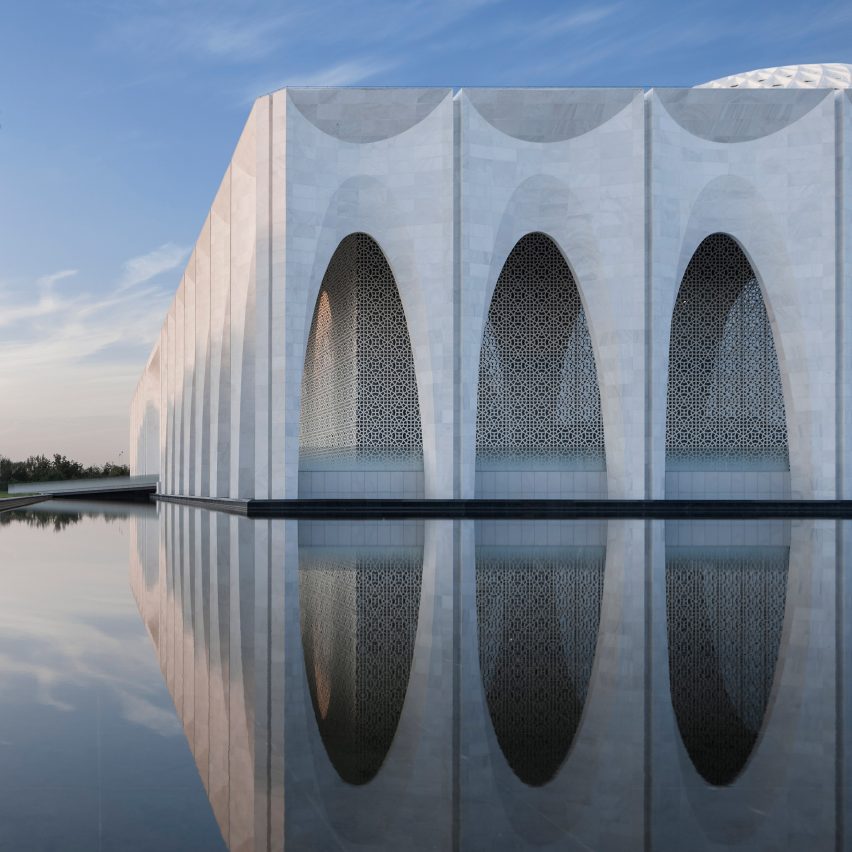
Arched walkway wraps Muslim centre near Beijing by He Jingtang

da-chang-muslim-cultural-center-he-jingtang-beijing-china-architecture-cultural_dezeen_sqb

A colonnade of petal-shaped arches creates an illuminated walkway around the perimeter of this Muslim cultural centre designed by Chinese architect He Jingtang. Read more

http://ift.tt/2eSRFdq

Hong-Hyun Bukchon Information Office and Facilities / Interkerd Architects


© Jaeyoun, Kim

© Jaeyoun, Kim


© Jaeyoun, Kim


© Jaeyoun, Kim


© Jaeyoun, Kim


© Jaeyoun, Kim

  • Architects: Interkerd Architects
  • Location: Bukchon-ro, Jongno-gu, Seoul, South Korea
  • Architect In Charge: Yoon Seunghyun, Lee Jisun
  • Area: 150.08 sqm
  • Project Year: 2016
  • Photographs: Jaeyoun, Kim
  • Client: Jongno-Gu Office

© Jaeyoun, Kim

© Jaeyoun, Kim

Bukchon village where tradition and the present meet; residences, tourist attractions and shops are all in harmonious formation alongside Jeongdok Public Library of 33,000㎡ and its rich green area. However, the location is higher than the surrounding area and the enclosed space layout is accessible only via one entrance, which makes the site poorly connected to the village. 


© Jaeyoun, Kim

© Jaeyoun, Kim

As the same interests are shared by the Jeongdok Public Library, which wanted to restore a relationship with the village by demolishing a 35m long concrete wall along the street, the Jongno-gu Office have planned to build community and tourism supporting facilities, devising a cooperative endeavour between these two public sectors. A 4m tall retaining wall was demolished to make fundamental improvement to the entrance of Seoul Education Museum and to create a pedestrianized area outside Jeongdok Public Library. 


© Jaeyoun, Kim

© Jaeyoun, Kim

First Floor Plan

First Floor Plan

© Jaeyoun, Kim

© Jaeyoun, Kim

A tourist information, a public toilet, and the Bukchon Gallery were built at the boundary area. Each building of about 50㎡ is organised as a separated mass along Hwadong-gil and the gap between them was planned to form the main façade along the street. This scheme has aimed to facilitate a relationship between the inside and outside of the site and to vitalize the public role of Jeongdok Public Library by providing a resting place as a compromising space for local people and tourists.  


© Jaeyoun, Kim

© Jaeyoun, Kim

http://ift.tt/2eHC15o

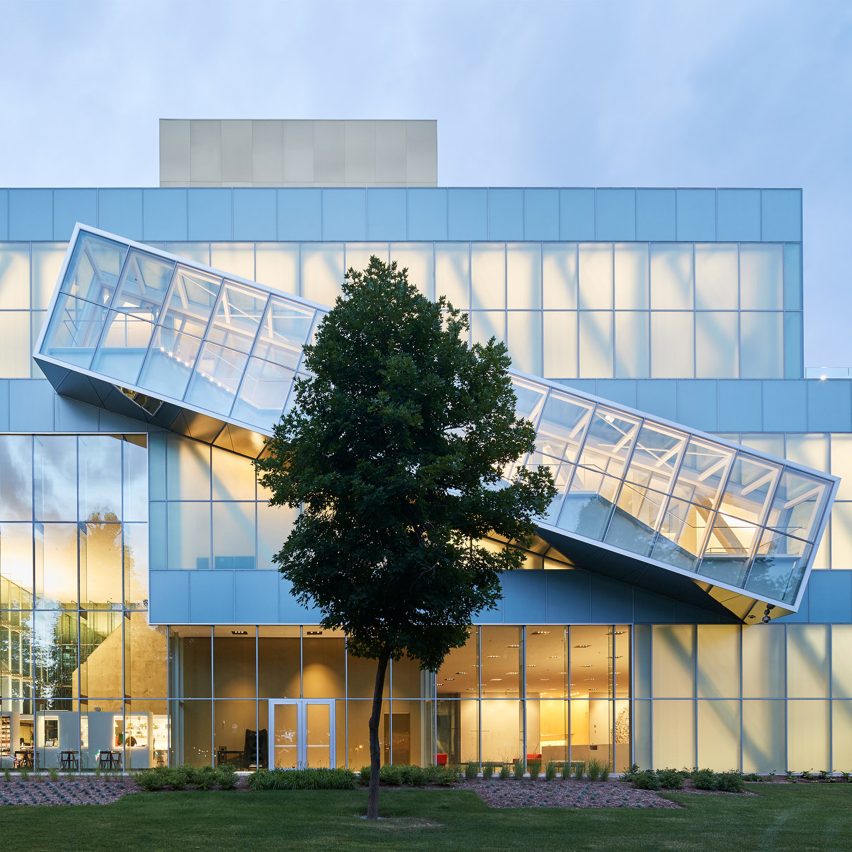
OMA’s Quebec art museum extension shown in new images

MNBAQ by OMA photographs

These photographs provide a more detailed look at OMA’s extension to the Musée National des Beaux-Arts du Quebec, described as the largest cultural project in the Canadian province when it opened this summer. Read more

http://ift.tt/2eSy6Su

Seaforth House / IAPA Design Consultant


© Nick Tsang

© Nick Tsang


© Nick Tsang


© Nick Tsang


© Nick Tsang


© Nick Tsang

  • Architects: IAPA Design Consultant
  • Location: Sydney NSW, Australia
  • Architect In Charge: Paul Bo Peng, Jessica Paterson
  • Area: 300.0 sqm
  • Project Year: 2014
  • Photographs: Nick Tsang
  • Structural Engineer: Jack Hodgson Consultants
  • Home Entertainment And Automation : Infared

© Nick Tsang

© Nick Tsang

SEAFORTH HOUSE is located in Sydney’s stunning Northern Beaches. Perched on a quiet street in close proximity to Middle Harbour, Seaforth, it offers magnificent views of the South. Clever design ensured we maximized the surrounding landscapes as well as the site itself, taking full advantage of the views facing the harbor and the sunlight from the North.


© Nick Tsang

© Nick Tsang

Section

Section

© Nick Tsang

© Nick Tsang

Central to the house’s design aesthetic are two contrasting wooden cubes. These ‘cubes’ – one larger than the other – form the major structural component of the house. The larger cube contains the living areas and three bedrooms, while the garage and a fourth bedroom are located in the smaller one. 


© Nick Tsang

© Nick Tsang

In order to capture the stunning harbour views, the house is orientated to the South. This presented a challenge to capturing the natural sunlight from the North, so the large ‘cube’ was developed with a width of only seven metres from North to South. Full-height windows, combined with adjustable external louvers, let the owner both maximise and control internal light. While the living room is at street level, the bedrooms are positioned on the lower level below. Designed with sliding windows on both North and South sides, they enhance the ventilation and illuminate the house in natural light.


© Nick Tsang

© Nick Tsang

Paved with solid timber decking, the outdoor area is perfect for both relaxing and entertaining. While the feature is undoubtedly a 19-metre long swimming pool that stretches from the undercover cantilever to the open area where it is bathed in sunlight, the design takes full advantage of the stunning surrounds to offer 180-degree views. Planter boxes running the length of the pool provide low-maintenance landscaping and have been juxtaposed to present an intriguing design when viewed from upstairs. They also offer privacy, acting as a boundary and screen. And a stone-pebble path between the pool and the planter boxes provides complete accessibility while also building on the linear lines central to the overall house design.  


© Nick Tsang

© Nick Tsang

Product Description.The Zego wall system has higher fire resistance, insulation and sound transmission rating compared to traditional wall system, the sustainable and energy efficient Zego system also alow for fast on-site construction.

The material palette of steel, glass, timber-clad facade, works in harmony with the site’s natural plantation, with the house modestly blending into the street’s landscape.

http://ift.tt/2eSBjkU

New Tool Takes 3D Models into VR with One Click


via Tech Crunch

via Tech Crunch

The emergence of virtual reality applications for architecture has been one of the big stories of the past few years – in the future, we’ve been told, VR will become an integral part not just of presenting a project, but of the design process as well.

That future may now be upon us, thanks to new tool from New York City startup IrisVR. The company has released Iris Prospect, a program that enables you to send your plans and models directly into VR with a single click.

A beta version of the software is currently available for free download from their website, making VR accessible to anyone.

The software can be installed as a plugin and is compatible with Revit, Sketchup and .obj files, as to integrate fully into your workflow. The VR experience can then be viewed on all leading VR headsets, including Oculus Rift, HTC Vive, GearVR and Cardboard.

Once in VR, Prospect will allow you to toggle between layers and design options, change atmospheric conditions and make annotations. The model can be experienced through a variety of walkthrough options, and can be controlled a mouse and keyboard or game controller.

But perhaps the best feature is how quickly it works. On their website, IrisVR claims: “In less time than it takes to print, your 3D files will be converted into a VR experience. “

IrisVR also offers Iris Scope, which will convert panoramic images into VR experiences for smartphones.

After raising raising $8 million in Series A funding, the company now hopes for an official launch before the end of the year, so if you want to test it out for free, it’s worth checking out soon.

Try it out for yourself, here.

News via TechCrunch.

http://ift.tt/2dJu02W

Five satirical designs created in response to Donald Trump

Dump Trump pin by Sagmeister & Walsh

The design community doesn’t seem to like Donald Trump very much. With just two weeks until the US presidential election, here are five products and proposals influenced by the Republican Party candidate. Read more

http://ift.tt/2fgwgil