Alpine Shelter ‘Bivak na Prehodavcih’ / Premica Architects


© Anze Cokl

© Anze Cokl


© Anze Cokl


© Anze Cokl


© Anze Cokl


© Anze Cokl

  • Architects: Premica Architects
  • Location: Triglav National Park, 4265 Bohinjsko jezero, Slovenia
  • Architects In Charge: Aleksandra Penca, Petra Lešek, Goran Djoki, Nataša Voga
  • Area: 39.0 sqm
  • Project Year: 2013
  • Photographs: Anze Cokl
  • Coordinator: Danilo Istenič
  • Construction Projects: CBD, d.o.o., dr. Bruno Dujič, Jurij Jančar
  • Lead Contractor: Rudi Rudnik s.p. and members of PD Radeče
  • Client: PD Radeče

© Anze Cokl

© Anze Cokl

World War 1 left countries devastated. After the signing of Treaty of Rapallo (1920) on a territory of the latter Yugoslavia, Italy started to build a huge alpine fortification system, which was an enormous engineering feat, consisting of supply roads and paths that led to high-alpine fortresses, outposts and other military infrastructure.


© Anze Cokl

© Anze Cokl

Nearly a century later, Premica Architects from Celje, Slovenia, turned the former shelter – bunker into an alpine shelter for mountaineers. The entire alpine bivouac stands on concrete foundations, on the remains of a former shelter. Supply roads and paths remain almost intact in places and serve as marked hiking paths nowadays. There are hundreds of (parts of) them remaining, offering relatively easy and safe access with even inclination to the high alpine world of this part of the Alps.


© Anze Cokl

© Anze Cokl

Section

Section

© Anze Cokl

© Anze Cokl

The entire bivouac was manufactured and preassembled in a workshop in the valley. The disassemblebled cross-laminated panels were then transported to the location by helicopter. To make transport possible, they were divided into 20 packages of similar weight.

The bivouac stands on concrete foundations, more specifically on the remains of a former bunker from WW1. Shelter features no running water or electricity apart small solar panel for a single wall-light inside. Toilet is a tiny separate building 50 m away. 


© Anze Cokl

© Anze Cokl

Presenting the fundamental contrast between people’s needs and their relationship with nature, bivouacs address the surrounding terrain with understanding, which is of key significance in interventions into sensitive wild environments. On the one hand, the Prehodavci bivouac continues the tradition of light prefabricated alpine shelters, and on the other, it further develops it by exploring the boundaries of comfort.


© Anze Cokl

© Anze Cokl

Despite technological simplicity and robustness, the structure brings a touch of modernity and coziness into this alpine wilderness. Bivouacs address the fundamental gap between people’s needs and their attitude to nature through the understanding of the surrounding terrain, which is of key significance in interventions into sensitive wild environments.


© Anze Cokl

© Anze Cokl

Product Description. Storaenso timber construction and cross-laminated wooden panels were chosen for two main reasons: pleasant and cozy final look of the interior and good strength to weight ratio with relatively easy and quick installation. Wood is a natural element and thus blends in perfectly with the sensitive nature of the Triglav National Park.

The assembled construction has the final natural wood look and feel on the inside, whereas the high quality Prefa façade and roof panels protect the outside. The asymmetric walls ensure wind retention and offer natural snow shedding capabilities, preventing any kind of accumulation on top. Materials are time tested and proven to withstand the
http://ift.tt/2dEEkck

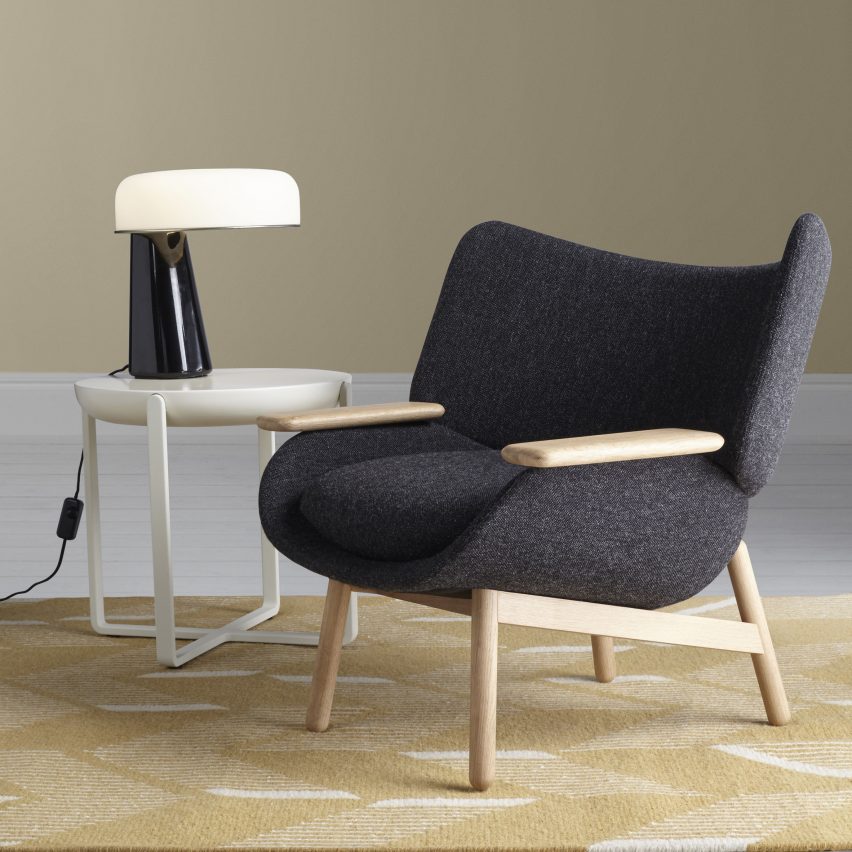
Doshi Levien creates furniture collection for high-street retailer John Lewis

doshi-levien-furniture-collection-john-lewis-design_dezeen_sq

London studio Doshi Levien has created a furniture range for John Lewis that it hopes will bridge the divide between high-end design and the high street. Read more

http://ift.tt/2eiH0dN

Garden House / Ho Khue Architects


© Hiroyuki Oki

© Hiroyuki Oki


© Hiroyuki Oki


© Hiroyuki Oki


© Hiroyuki Oki


© Hiroyuki Oki

  • Architects: Ho Khue Architects
  • Location: 678 Điện Biên Phủ, Thanh Khê, Q. Thanh Khê, Đà Nẵng, Vietnam
  • Architect In Charge: Ho Khue
  • Design Team: Huynh Thanh Hai, Huynh Van Khanh
  • Area: 700.0 sqm
  • Project Year: 2016
  • Photographs: Hiroyuki Oki
  • Design And Construction: ALPES Green Design & Build

© Hiroyuki Oki

© Hiroyuki Oki

The house land dimensions are narrow 4 meters (w) x 40 meters (l).   Key elements and challenges are related to the ratio of the length to the width which effect natural lighting and ventilation. Breakthrough design solutions created two separate blocks with a natural green garden located in the central core.

© Hiroyuki Oki

© Hiroyuki Oki

Beautiful bridges connect the two blocks through corridors landscaped with trees and          decorative brick.   This centralized open garden area allows breathing and ventilation throughout the house in addition to allowing natural light into all rooms.


© Hiroyuki Oki

© Hiroyuki Oki

Facade

The façade of this 4 story home covered with trees and planter boxes with captures the imagination of people travelling on this very busy commercial road Dien Bien Phu near the recently completed overpass. The concrete slabs and rustic tiles are stacked close together with just enough trees growing to reduce dust and noise from the street.  This offers natural and ongoing purification of the air inside the house.


© Hiroyuki Oki

© Hiroyuki Oki

Open Central Core

The 3rd floor garden space connects the parent’s master bedroom and the family room. The path that leads through the central core garden is peaceful, cool, and quiet.  The cooling air and natural light provides ideal living conditions throughout the house.


Diagram

Diagram

Sky garden: Beauty, Entertainment, and Cooling

The idea and design solution of the “Green House” includes a 4th floor space with an  open “sky garden” planted with tall trees and lush grass, wanting to put a Green  Space  into a townhouse which is situated in a noisy and cramped area.


© Hiroyuki Oki

© Hiroyuki Oki

The entire roof of the house will also be planted with clean vegetables and flowers providing the family with food and flowers throughout the year.  The rooftop garden is created to reduce heat radiation into house and drastically reduce home heating. Solutions for the roof garden began as phase 1 (completed) of the technical construction. Plans to complete the rooftop garden are expected to be completed early next year.


Roof Plan

Roof Plan

Brick Design: Natural Air Flow

The rear of the building borders a road 5.5 m wide, and is heavily influenced by the hot sun and strong winds from the north-west. The back wall of the rear stairs is constructed using our brickwork with small vents throughout the wall. These are designed to prevent the rain from entering the home while providing ventilation at every level. This facade is always cool, dry, and provides natural light without any heat typical of larger windows and opening.


© Hiroyuki Oki

© Hiroyuki Oki

Natural Materials: Strong and Beautiful

The house is a “Green House” because of design solutions for natural ventilation and cooling, natural lighting, green trees and plants covering the entire house and roof.  Environmentally friendly materials like unburned brick, concrete slabs, natural stone, and plantings produce a beautiful and strong surface.


© Hiroyuki Oki

© Hiroyuki Oki

YKK Windows and Products

YKKap Green Certified Windows and doors are used throughout the project.  These are lightweight, beautiful, extremely strong, and are the most advanced windows available today.


© Hiroyuki Oki

© Hiroyuki Oki

http://ift.tt/2eMGSm5

Secret Garden House / Wallflower Architecture + Design


© Marc Tey

© Marc Tey


© Marc Tey


© Marc Tey


© Marc Tey


© Marc Tey

  • Architects: Wallflower Architecture + Design
  • Location: Bukit Timah, Singapore
  • Architects In Charge: Robin Tan, Cecil Chee, Sean Zheng, Shirley Tan & Eileen Kok
  • Project Year: 2015
  • Photographs: Marc Tey

© Marc Tey

© Marc Tey

The Secret Garden House, designed by Singapore based Wallflower Architecture + Design, is situated in the good class bungalow area of Bukit Timah. The owner’s brief was to have a luxurious, tropical, contemporary family home. Being the owners of a construction company and by building it themselves, it would also showcase their professional capabilities. 


© Marc Tey

© Marc Tey

Diagram

Diagram

© Marc Tey

© Marc Tey

The house sits on an L-shaped site with a narrow and unassuming frontage; On all sides it is surrounded by neighbouring homes. Further in and on a slight rise, the bulk of the land is not visible from the entrance. Most local home buyers would regard the uneven terrain, narrow frontage and lack of prominence as a disadvantage. The architect saw an opportunity in using the terrain to camouflage the bulk of a large house, and the lushness of a secret garden to screen it from prying eyes.


© Marc Tey

© Marc Tey

1st Floor Plan

1st Floor Plan

© Marc Tey

© Marc Tey

As the spatial and functional requirements were substantial, the architect positioned over a third of the house into the rising land profile, effectively hiding this mass by leveraging on the unique site. The perceived ground floor was set one level above. It allowed for greater privacy from the entrance road and a ‘plateau’-like terrace to compose the rest of the living spaces and gardens.


© Marc Tey

© Marc Tey

Visitors are welcomed into the house via a granite cave entrance leading to an ‘underground’ lobby. The prominence of a steel and glass spiral staircase leads visitors up to the living room. The owners had liked the idea of detaching the living and dining spaces and surrounding these by pools and gardens. This ‘plateau’ ground level was planned to be a space that blended indoor and outdoor, soft-scape and hard-scape. It was to be one-space, with several programs, rather than many spaces with determined boundaries and fixed functions. Trees planted heavily around the perimeter form a very private enclosure. Visually secure from outside, the ground plain architecture could then be open and transparent without the owner’s privacy being compromised. 


© Marc Tey

© Marc Tey

Conceptually, the above ground architectural composition is of two rectangular travertine blocks sitting on slender pilotis. The blocks are connected at the second floor by an enclosed bridge floated above the ground plane. A ribbon window cuts around the travertine stone façade. Adjustable vertical timber louvers lined strategically along this band of windows shield the glazing and regulate how much sunlight reaches the interior, as well as ensuring privacy when required.


© Marc Tey

© Marc Tey

An outdoor living deck and roof garden tops-off the composition, and is usefully spacious enough for social gatherings and parties. The deck’s facing is angled to enjoy views to scenic Bukit Timah Hill, the highest point in Singapore.


© Marc Tey

© Marc Tey

Attic Floor Plan

Attic Floor Plan

© Marc Tey

© Marc Tey

Basic architectural principles of orientation, thermal mass, sun-screening and natural ventilation are fundamental to the design. It is a house designed for the tropics, expressed by modern materials and contemporary aesthetics. Every floor is designed to be cross-ventilated. Primary to the design ethos are that breezes are to be encouraged and unhindered. In the basement, air flows through the large cave-like garage opening, through the timber slatted lobby and exits via a sizable sunken garden courtyard at the rear that is open to the sky. Above ground, the lifted bedroom blocks are kept passively cool by layers of masonry, air cavities, travertine stone cladding, roof gardens and pergolas. Windows cut heat entry via low-emission glass and timber sunscreens filter the strong tropical sunlight, and transform it into a pattern of light and shadows that play into the interior spaces. Skylights further animate the experience in the course of the day through ever-shifting shafts of light. When the situation necessitates, the entire home can be closed off to tropical rain storms or the haze from pollutive burning.  


© Marc Tey

© Marc Tey

The environment engifts you when there is respect and collaboration with both its strengths and weaknesses. In spite of being on an intensely urbanized island with one of the highest population densities in the world, the house recaptures what it is to privately enjoy living in the tropics, with its lushness, vibrancy and beauty ensconced in a secret garden.


© Marc Tey

© Marc Tey

http://ift.tt/2ezgv5q

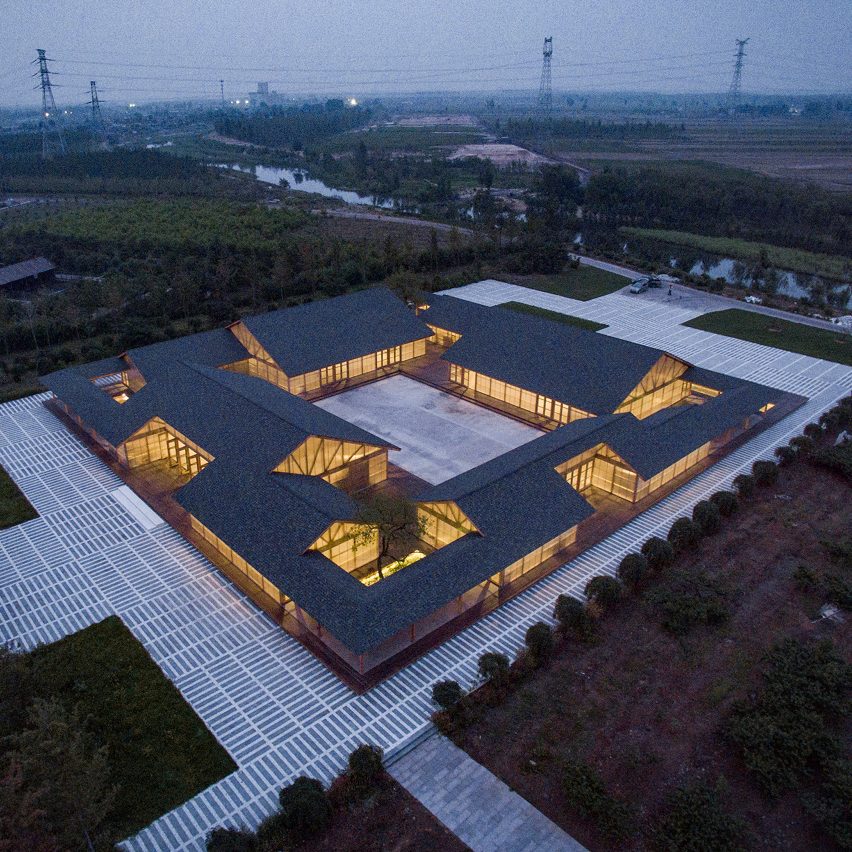
Organic food plant by Arch Studio references China’s hutong housing

Organic Farm by Arch Studio

This organic food-processing plant in China’s Hebei Province has been designed by Beijing practice Arch Studio as a series of individual buildings set around courtyards. Read more

http://ift.tt/2dDZnfl

SND Cultural & Sports Centre / Tianhua Architecture Planning & Engineering Ltd.


© CHEN Hao

© CHEN Hao


© CHEN Hao


© CHEN Hao


© Arch-Exist


© Arch-Exist

  • Architects: Tianhua Architecture Planning & Engineering Ltd.
  • Location: Suzhou New District, Jiangsu Province, China  
  • Architectural Design: Huang Xiangming, Han Jian, Chen Yan, Zhou Xin, Bai Yu, Xiao Fei, Wang Xiaoyang, Lv Xiaoyu, Zeng Zhe, Feng Bo, Lu Yi, Liu Yang, Bi Zehao, Liu Pei, Yuan Jiani, Du Peng, Ni Ziyu, Ma Lina, Li Xinmeng, Zhang Jiangwei
  • Area: 170000.0 sqm
  • Project Year: 2016
  • Photographs: CHEN Hao, Arch-Exist
  • Structural Engineering: Xie Wanglan, Li Weixing, Nie Yan, Miao Yongzhi, Shen Jie, Deng Dejun, Feng Liangbo, Li Tingting, Ji Shaokai, Xiong Weijian, Wu Lei, Wang Jiajie, Liu Wei, Yang Sheng, Lu Xiaoyong
  • Mechanical And Electrical Engineering: Chen Tao, Wang Guanyue, Jin Jing, Wang Hengzhi, Zheng Keyan, Zeng Qiao
  • Water Supply & Drainage Engineering: Wang Rongmei, Wang Xiaoning, Hu Hongmei
  • Heating & Ventilation Engineering : Wang Junqiang, Liu Huaqing, Zhao Yunli, Luo Yuan, Yin Jiajie, Xue Fei
  • Landscape Design: Brearley Architects + Urbanists, Suzhou Gold Mantis Construction Decoration Co., Ltd.
  • Steel Structure/Metal Roofing Consultants: Jinggong Steel Building Group
  • Curtail Wall Consultants: Suzhou Kelida Building & Decoration Co.,Ltd., Suzhou Gold Mantis Construction Decoration Co., Ltd. 
  • Lighting Consultants: Nanjing Langhui Lighting & Electric Technology Co.,Ltd.
  • Interior Design: Suzhou Kelida Building & Decoration Co.,Ltd., Suzhou Guomao Jiahe Construction Engineering Co., Ltd.
  • Logo Design: Suzhou Ushare Science & Technology Co.,Ltd.
  • Client: Suzhou New District Cultural & Sports Development Co.,Ltd.

© CHEN Hao

© CHEN Hao

From the architect. The SND Cultural & Sports Centre is located in Suzhou Science & Technology Town, hemmed in by the Taihu Avenue and the Huguang Canal and backed by the Little Dragon Hill. It covers an area of more than 200,000sqm and a floor area of 170,000 sqm.


© CHEN Hao

© CHEN Hao

The aim is to make the Centre an extension of the hills in a bid to merge the entire complex into the context. The scheme, therefore, is an attempt to create an architecture that perfectly fits into its surroundings instead of a detached “square box”.


© CHEN Hao

© CHEN Hao

Diagram

Diagram

© Arch-Exist

© Arch-Exist

As part of the urban space and people’s day-to-day life, the enormous Centre is designed in the form of a pyramid of program units to appear less formidable and become an integral part of the city. Such spatial structure that is closely linked with the functions defines the core idea of  “cloud-shaped rockery”.


Ground Floor Plan

Ground Floor Plan

In a digital era, architects aim to create spaces as intricate as the Taihu stones out of simple, abstract square units arranged in a Rubik’s Cube-like way.


© CHEN Hao

© CHEN Hao

The concept of “cloud-shaped rockery” carries on the city’s tradition and symbolizes its future. In compliance with the unique spatial layout of classical gardens, the flexible spaces are designed to create further operational potential. It is perhaps this strategy that can make the programs more flexible and keep the design concept as it is when there is a need for change in the future, amid uncertainties in the domestic construction climate.


© Arch-Exist

© Arch-Exist

© Arch-Exist

© Arch-Exist

The scheme shifts its focus away from serving the project’s original program to become part of our daily life, even kind of an extension: the high street, along which pedestrians are able to take a shortcut and access elsewhere, and the open spaces crisscrossing the site enable the huge complex to host residents’ daily activities.


© Arch-Exist

© Arch-Exist

The terraced square on a six-meter-high platform serving as the site’s main transit area, alongside the high street, is an encapsulation of the diverse and complex urban life, in which inhabitants routinely shift between activities of stroll, shopping, short breaks and interaction. As a multi-purpose cultural and sports complex, the SND Cultural & Sports Centre is mainly designed for cultural, sports and commercial purposes, with facilities such as cultural centre, library, stadium, fitness centre , cinema and open-air recreation square.


© CHEN Hao

© CHEN Hao

http://ift.tt/2dQD1FF

BIG Unveils Fully-Operational Hyperloop Model in UAE

This is about creating a love for the new possibilities out there. Suddenly you can live in a forest, take the hyperloop, go into work everyday, and it’s only gonna take 10 minutes. Suddenly you spread out the possibilities for everybody to live where they want: by the sea, by the water, in the forest – wherever.

In this video for Dezeen, BIG partner Jakob Lange explains their plans for the Hyperloop One high-speed transportation system – and how it may be closer to coming to fruition than you may think.

A fully-operational model of the system linking the cities of Abu Dhabi and Dubai in the United Arab Emirates has already been constructed, and is preparing for its official unveiling on November 7 in Dubai.


via Dezeen

via Dezeen

In May of this year, BIG, along with Arup and AECOM, partnered with business magnate and global innovator Elon Musk to design and develop the vehicles and spaces necessary to make the Hyperloop system human-friendly. Initial tests earlier this year on a system built in the desert outside of Las Vegas saw the model pods reach speeds of 187 km/h (116 mph) in just 1.1 seconds.

Lange is director of BIG Ideas, an internal technology-driven special projects unit within BIG that creates prototypes, products and new materials within the building industry. Previous projects have included the product design collaborative KiBiSi and the Smoke Ring chimney at the BIG-designed waste-to-energy plant in Copenhagen.

News via Dezeen.

http://ift.tt/2eD73Nj

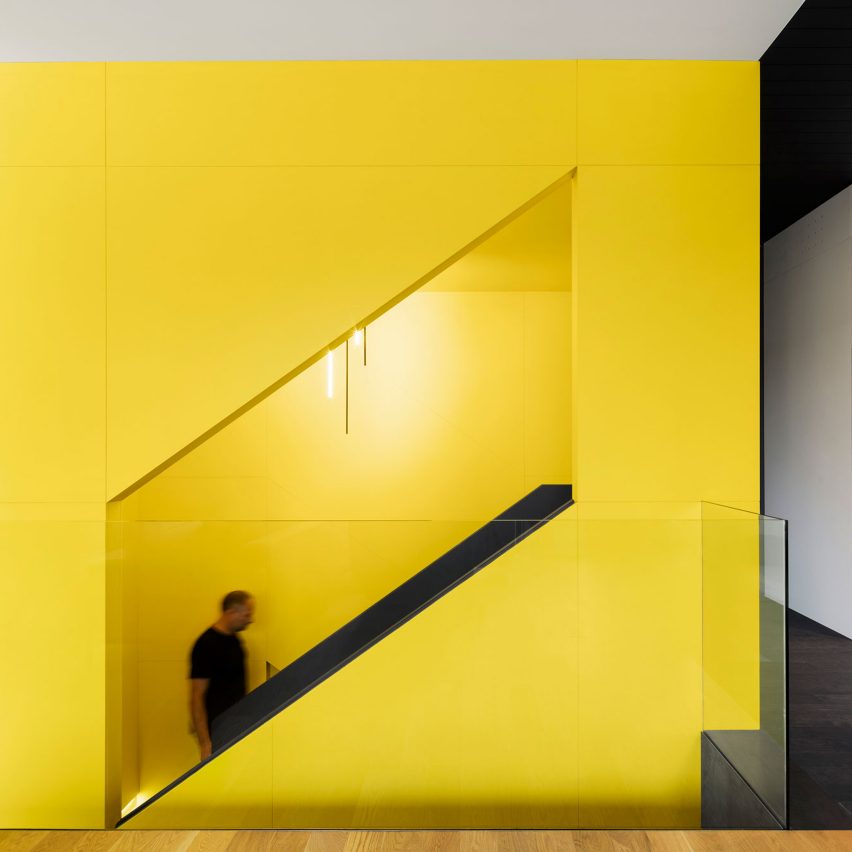
Naturehumaine adds sculptural black and yellow staircase to historic Montreal home

Canari House by Naturehumaine

Canadian studio Naturehumaine has transformed a 1930s brick building into a contemporary home featuring a sculptural stairway that brings a “vibrant tone to the project”. Read more

http://ift.tt/2eyPOxG

Parihoa / Pattersons


© Simon Devitt

© Simon Devitt


© Simon Devitt


© Simon Devitt


© Simon Devitt


© Simon Devitt

  • Architects: Pattersons
  • Location: Muriwai, New Zealand
  • Design Director: Andrew Patterson
  • Project Architect: Andrew Mitchell
  • Area: 472.0 sqm
  • Project Year: 2009
  • Photographs: Simon Devitt, Jean Luc-Laloux
  • Team: Andrew Patterson, Andrew Mitchell, Luke Douglas, Grant Scurr
  • Builder: Ross Seward Builders
  • Electrical: Craig Scobie Electrical
  • Painter: PJS Painting Contractors
  • Plumber: Chris Wilson Plumbing
  • Engineer: CPG New Zealand

© Simon Devitt

© Simon Devitt

The ancient architype of The Castle as an Outpost or Fort is rarely articulated in the modern world. This New Zealand farmhouse project explores this typology by being both commanding and defensive in one form.


© Simon Devitt

© Simon Devitt

There is no modification to the landscape other than the sentry of the form itself. Wind and sea spray thunders up from the ocean some 60 metres below and the form wraps around to protect a circulation courtyard from the rugged and harsh coastal environment. The resulting structure defends that same environment.


© Simon Devitt

© Simon Devitt

A simple strategy of formal juxtapositions such as converging and expanding walls create varied spatial experiences throughout the form. An entry lobby is guarded by a portcullis to keep the sheep out and sections of the perimeter wall also pivot open unexpectedly.


© Simon Devitt

© Simon Devitt

Plan

Plan

© Simon Devitt

© Simon Devitt

The home is arranged as a series of spaces linked by way of the circulation courtyard and secret doors, discovering forms and shapes seemingly arbitrarily positioned, yet suggesting a history; a sense of transcended time. Long views across the protected courtyard end on the all persuasive horizon, moving toward the edges of the structure, the ocean and sky open up above and below, until the view’s full breadth is revealed.


© Simon Devitt

© Simon Devitt

http://ift.tt/2eLne8G

Architecture Research Office Selected to Renovate Philip Johnson’s Rothko Chapel


© Chad Kleitsch

© Chad Kleitsch

New York’s Architecture Research Office (ARO) has been selected to lead in the renovation and master planning of the Rothko Chapel in Houston, Texas. The project aims to modernize and improve the renowned structure, which houses 14 monumental paintings by Mark Rothko in an interior space designed to meet the artist’s precise specifications, and its surrounding plaza and reflecting pool. The original building was largely designed by Rothko himself, with consult from a trio of architects including Philip Johnson.


© flickr user euthman. Licensed under CC BY 2.0

© flickr user euthman. Licensed under CC BY 2.0

“We are honored to be entrusted with work at the Rothko Chapel,” says Stephen Cassell, partner at ARO. “For more than 40 years, the Chapel has been a deeply moving experience of personal contemplation that furthers the Chapel’s mission of social action. We feel enormous responsibility toward its future.”

The firm will be tasked with the renovation of the Chapel’s entry vestibule and skylight, and will collaborate with lighting designer George Sexton to make improvements to the interior light baffle and electric lighting. The project scope will also include updating the building’s HVAC system and acoustics. All changes will be made with extreme sensitivity to Rothko’s original intent for the space.

Outside, a new master plan will include improvements to the plaza and reflecting pool containing Barnett Newman’s sculpture “Broken Obelisk,” as well as provide additional space for the public and staff. New pathways and visual corridors will connect the complex to its two neighboring institutions, the Menil Collection (master planned by David Chipperfield and home to two buildings by Renzo Piano) and University of St. Thomas, both of which are currently involved in ambitious campus redesigns. The project is hoped to raise visibility for the Chapel and to accommodate future increases in foot traffic, while allowing the site to continue functioning as a quiet sanctuary.

ARO has experience renovating the environments of minimalist artists: in 2013, the firm completed the restoration of 101 Spring Street, a 19th century cast-iron SoHo warehouse that served as the home and studio of Donald Judd until his death in 1994. The project included extensive renovation and refurbishment of exterior and interior finishes to update the building with minimal visual intrusion.

News via Architecture Research Office.

AD Classics: Rothko Chapel / Philip Johnson, Howard Barnstone, Eugene Aubry
//cdn.embedly.com/widgets/platform.js

http://ift.tt/2ehxlE4