Freight Residences / Dynia Architects


© JC Buck

© JC Buck


© JC Buck


© JC Buck


© JC Buck


© JC Buck

  • Architects: Dynia Architects
  • Location: Denver, CO, United States
  • Architects In Charge: Stephen Dynia, FAIA and Doug Staker, AIA
  • Area: 55.386 ft2
  • Project Year: 2016
  • Photographs: JC Buck, Stephen Dynia
  • Architect Of Record: Barker Rinker Seacat Architecture
  • Owner: Zeppelin Development
  • Structural Engineer: KL&A
  • Landscape Architect: Plot
  • Mechanical Engineers: MEC
  • Electrical Engineers: Technicus

© JC Buck

© JC Buck

From the architect. Housing development in Denver is booming, especially in the newly revitalized River North (RiNo) neighborhood of Denver.  Unlike the majority of apartment buildings in the area, Dynia Architects’ Freight Residences rejects the typical models of development.  The building has a sense of intimacy and privacy, reduces the homogony of multifamily development, and targets the underserved urban family market. 


© JC Buck

© JC Buck

Freight Residences is the newest addition to the mixed-use TAXI development, situated between the train tracks and the Platte River in RiNo.  The building is Dynia’s fourth completed project on the site, with two more to be scheduled for completion by 2018.  This 48-unit, four-story urban housing development was designed for professionals and young families with urban sensibilities.  The one-, three-, and four-bedroom units are configured as a stacked, repeating module of 18-foot sections.  All but the one-bedroom units offer two floors of living space with through-unit ventilation and light infiltration.  Each unit has an operable glass garage door that opens the living spaces to the gardens on the first floor, generous private balconies on the fourth floor, and to incredible mountain views to the west from the third floor one-bedroom units.  


© JC Buck

© JC Buck

Floor Plans

Floor Plans

© JC Buck

© JC Buck

This urban residential block is unconventional, having a single corridor located on the third floor providing access to the one-bedroom and three-bedroom top floor units.  Generous windows at each end of the hallway offer a street-like experience.  The four-bedroom units are accessed through private entrances on the first floor of the building, either from the car-port parking area in the back or through the garden terraces on the front of the building.  This configuration of the first and second floors offers privacy and creates a row house sensibility rather than the feel of a double loaded apartment block. These two-story units allow light and air to flow from east to west on each floor. 


© JC Buck

© JC Buck

The utilization of day lighting and natural ventilation has positive health benefits while reducing energy costs. The building’s HVAC systems use efficient domestic hot water heaters and energy efficient fan coils. On site storm water detention basins are built into the landscaped terraces off of the east side of the building providing natural irrigation and filtering excess water.  


© JC Buck

© JC Buck

Freight Residences taps into the amenities serving the entire TAXI campus.  The site features a unique shipping container pool, fitness center, multiple community gathering areas, green spaces, a restaurant, coffee shop, and an early childhood education facility.  The creative recreation room on the ground floor of Freight Residences is an additional amenity space for the building and the surrounding TAXI community. Separated from the elevator vestibule by a hanging plastic strip curtain door, the creative recreation room was designed as a learning and play space.  The vibrant orange room features a large garage door, connecting the space to the outdoors.


Section Diagram

Section Diagram

Freight Residences is clearly a unique and innovative building.  It’s location, design features, and sense of community appeal to its tenants. The building has become fully occupied in less than six months from its doors opening to residents.


© JC Buck

© JC Buck

Products Information. Light and height are central to the Dynia planning strategy; operable walls of windows or garage doors are incorporated into most projects.  At the recently completed Freight Residences, located on the TAXI campus in RiNo, the garage doors on all levels connect interior spaces with the outdoors in a city with a passion for outdoor activity.  Generous private balcony spaces provide an additional outdoor room with iconic mountain or urban views.  These elements also allow for through-unit ventilation and ample light infiltration. Garage Doors by Clopay.

Located along the Rocky Mountain Range, Freight Residences is heavily exposed to the elements.  As an exterior material, whether corrugated or flat, steel siding is impervious to weather and offers maintenance free durability. Corrugated Steel Siding by Corrugated Industries. 

Amerimax vinyl windows include tilt-turn and fixed unit types, with excellent U-values.

http://ift.tt/2eoGk8p

27 of the Best Google Doodles Celebrating Architects and Architecture

Since 1998, Google has been manipulating their iconic logo to celebrate holidays, anniversaries and the lives of famous artists, pioneers and scientists, creating what they call Google Doodles. Since the very first doodle (used to indicate founders Larry Page and Sergey Brin’s attendance at Burning Man that year), Google has produced over 2000 fun, colorful drawings to inform their users about the important milestones that fell on that date.

Of these doodles, numerous have featured the works or lives of some of history’s most prominent architects. Check out a sampling of some of our favorites, after the break!

March 27, 2012 – Mies van der Rohe’s 126th Birthday


via Google Doodles

via Google Doodles

August 4, 2011 – Roberto Burle Marx’s 102nd Birthday


via Google Doodles

via Google Doodles

December 15, 2011 – Friedensreich Hundertwasser’s 83rd Birthday


via Google Doodles

via Google Doodles

March 9, 2013 – Luis Barragan’s 111th Birthday


via Google Doodles

via Google Doodles

January 27, 2014 – Eugène Viollet-le-Duc’s 200th Birthday


via Google Doodles

via Google Doodles

April 3, 2013 – Henry van de Velde’s 150th Birthday


via Google Doodles

via Google Doodles

October 20, 2014 – Christopher Wren’s 382nd Birthday

April 18, 2012 – Jan Kaplický’s 75th Birthday


via Google Doodles

via Google Doodles

April 21, 2012 – Brasilia’s Anniversary


via Google Doodles

via Google Doodles

July 12, 2011 – 450th Anniversary of St. Basil’s Cathedral


via Google Doodles

via Google Doodles

September 4, 2010 – 25th Anniversary of Buckyball

October 20, 2008 – 35th Anniversary of the opening of the Sydney Opera House


via Google Doodles

via Google Doodles

May 17, 2008 – 125th Birthday of Walter Gropius


via Google Doodles

via Google Doodles

June 8, 2005 – Frank Lloyd Wright’s 138th Birthday


via Google Doodles

via Google Doodles

June 25, 2013 – Antoni Gaudí’s 161st Birthday


via Google Doodles

via Google Doodles

August 6, 2014 – Anna Castelli Ferrieri’s 94th Birthday


via Google Doodles

via Google Doodles

January 19, 2016 – Sophie Taeuber-Arp’s 127th Birthday


via Google Doodles

via Google Doodles

March 4, 2016 – 42nd Anniversary of Rio-Niteroi Bridge Opening


via Google Doodles

via Google Doodles

May 4, 2016 – Jane Jacobs’ 100th birthday


via Google Doodles

via Google Doodles

May 20, 2013 – Exposición Universal de Barcelona’s 125th anniversary


via Google Doodles

via Google Doodles

May 27, 2012 – 75th Anniversary of the Golden Gate Bridge


via Google Doodles

via Google Doodles

January 9, 2013 – 150th Anniversary of the Tube


via Google Doodles

via Google Doodles

November 17, 2009 – Isamu Noguchi’s Birthday


via Google Doodles

via Google Doodles

January 15, 2014 – The 255th anniversary of the British Museum


via Google Doodles

via Google Doodles

September 4, 2013 – Kenzo Tange’s 100th Birthday


via Google Doodles

via Google Doodles

April 3, 2013 – Henry van de Velde’s 150th Birthday

March 31, 2015 – 126th Anniversary of the public opening of the Eiffel Tower


via Google Doodles

via Google Doodles

You can find even more architecture-related doodles, here.

News and images via Google Doodles.

http://ift.tt/2dGUr7L

10 of the best Scandinavian home interiors from Dezeen’s Pinterest boards

Latymer Upper School Sports Centre / FaulknerBrowns Architects


© Guy Archard

© Guy Archard


© Guy Archard


© Guy Archard


© Guy Archard


© Guy Archard

  • Structural Engineer: Elliott Wood Partnership Ltd
  • M&E Consultant: Hoare Lea
  • Quantity Surveyor: Synergy
  • Planning Supervisor: Synergy
  • Lighting Consultant: White Light Ltd
  • Audio Consultant: Autograph Sound Ltd
  • Main Contractor: Jerram Falkus Construction Ltd
  • Client: Latymer Upper School

© Guy Archard

© Guy Archard

From the architect. The elegant and efficient sports centre at Latymer Upper School maximises the available space on a tightly constrained site, to create a centre for sporting excellence and ambition.


© Guy Archard

© Guy Archard

 Latymer Upper School is an independent school for 1,200 pupils in Hammersmith, west London. The existing sports facilities were completed in 1980 and served the school well, helping to establish its reputation for sporting excellence. Fast forward to 2014, and the building was no longer fit for purpose. 


© Guy Archard

© Guy Archard

The school’s ambition to maintain this strong sporting pedigree led to the decision to redevelop its existing offer with a state of the art swimming pool and sports centre. It was hoped that this would not only cultivate the next generation of world-class athletes, but also develop a wider appreciation of fitness and wellbeing within the whole student body.


© Guy Archard

© Guy Archard

The ambitious brief established the need for:

-A six lane swimming pool (25m) with a floating floor, to enable a water depth of two metres for speed orientated competition swimming, and shallower water for teaching and community use.
-Spectator seating.
-Fitness suite.
-Three large multi-purpose studios which could be combined to produce an exam hall.
-Renovation of the existing six court sports hall.
-Support accommodation for staff.


© Guy Archard

© Guy Archard

The site presented considerable challenges from both a physical perspective and a planning context.


Site Plan

Site Plan

The physical constraints included; a pedestrian underpass beneath the A4, a busy arterial route which arrives on the site in the centre of the northern boundary; and the existing sports hall, which had to remain in its present position. These constraints largely dictated the location of the new building, which would need to fill the available site to accommodate the school’s requirements.

From a planning perspective, whilst this was replacing an existing facility, the site was located within the vicinity of two listed buildings in a conservation area.


© Guy Archard

© Guy Archard

The design solution linked the two simple geometric volumes of the sports hall and pool block with a spine of accommodation that encompasses the main horizontal and vertical circulation routes. By stacking the studio spaces on top of the pool hall, this block supports a wide range of activities in a very small footprint. The creation of a large basement allowed for much of the building’s plant to be removed from the main body of the plan. This has the benefit of increasing the available space for the core functions and reducing the overall height of the structure, thereby producing a very elegant and efficient building 


Sections

Sections

Externally, the expression of the building is very simple and restrained, with a palette of fibre-cement and glass. The primary volumes of the sports hall and swimming pool are clad in grey fibre–cement panels, modulated with different shades and sizes. The studio space is expressed as a cast-glass box ‘floating’ above the perimeter wall. Utilising a mixture of clear and translucent panels, the movement within the studios will present a constantly changing appearance: a living canvas which will, through shadow and silhouette, animate the elevation by day and night


© Guy Archard

© Guy Archard

Product Description. The architectural concept was a glass box – containing activity studios and fitness – over a concrete box containing a pool. The glazing to the upper box needed to be translucent with limited transparency to provide privacy, and insulation to provide thermal efficiency. Self-supporting, frameless Profilit panels were used – sandblasted and clear – which fulfilled these objectives. 

http://ift.tt/2eqF3ML

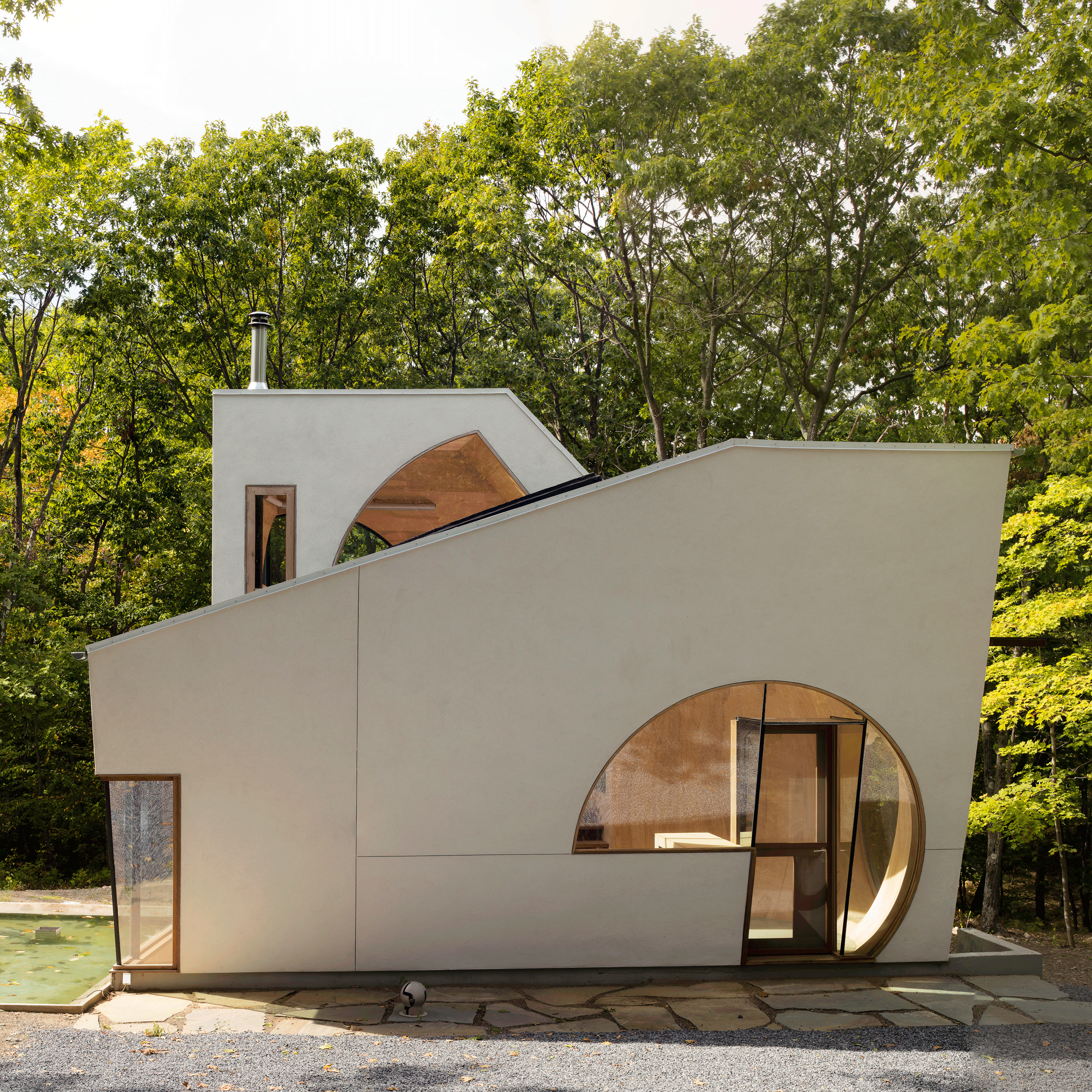
Steven Holl carves boolean voids from artist hideaway in New York state

Ex of In House by Steven Holl

Three-dimensional shapes are cut out from areas of this artist residence in Upstate New York by Steven Holl Architects, which claims the house can sleep five guests despite having “zero bedrooms”. Read more

http://ift.tt/2eP6bYv

MVRDV Wins Competition in France with Residential Development Inspired by Rock Formations


The complex offers green balconies, loggias and terraces, with trees and greenery from the public square connecting upwards following the curve of the façades.. Image © L’Autre Image (Paris)

The complex offers green balconies, loggias and terraces, with trees and greenery from the public square connecting upwards following the curve of the façades.. Image © L’Autre Image (Paris)

A team consisting of MVRDV, ALL + Giboire has won a competition for the project Ilot de l’Octroi, a new residential redevelopment in the city of Rennes, France that will transform the area into a socially adhesive green community along the Ille et Vilaine rivers.


The complex offers green balconies, loggias and terraces, with trees and greenery from the public square connecting upwards following the curve of the façades.. Image © L’Autre Image (Paris)


The curved typology makes the rooftop and second-floor garden accessible and inviting for all residents. Image © L’Autre Image (Paris)


At night, the tops of the buildings light up and provide a silhouette of the confluence. Image © L’Autre Image (Paris)


Masterplan. Image © MVRDV


Masterplan. Image © MVRDV

Masterplan. Image © MVRDV

The city of Rennes dates back to the 18th and is often considered one of the most attractive areas to live in France due to its diverse heritage. Recent growth has led to a recent focus on the city’s fringe districts, connected by the pedestrian street, Mail François Mitterrand. This population burst has also required changes to increase housing density and optimize transportation routes. MVRDV, ALL and Giboire respond directly to this deficiency by creating a sustainable housing community that will contribute to the expansion of the centre by “breathing new life and refocusing communities along the rivers.”


The curved typology makes the rooftop and second-floor garden accessible and inviting for all residents. Image © L’Autre Image (Paris)

The curved typology makes the rooftop and second-floor garden accessible and inviting for all residents. Image © L’Autre Image (Paris)

The 8,200 square meter (88,000 square foot) complex will contain a mix of 135 private residences and subsidized housing, each with outdoor spaces facing the waterfront, loggias and terraces. As they are positioned on split levels, no views go into units directly opposite. Trees and greenery visually connect the public square on the ground floor to the terraced private areas. At night, the top of the buildings are lit to create a new silhouette on the skyline.

“The project is intentionally very open. Open to the Vilaine, open to the city and open towards nature,” explains Nathalie de Vries, co-founder of MVRDV. “As part of the expansion of Rennes, we designed a dense urban area that offers more public access to nature, private greens and fantastic views. Densification only works when it comes with added qualities, and that is our ambition for these inhabitants.”


At night, the tops of the buildings light up and provide a silhouette of the confluence. Image © L’Autre Image (Paris)

At night, the tops of the buildings light up and provide a silhouette of the confluence. Image © L’Autre Image (Paris)

The development’s curving, terraced facade is clad in three different grey textures to create coloring and gradations that resemble natural rock formations. In this way, a variety of unit types can come together into a single defined volume that takes inspiration from the surrounding landscape.


Plan. Image © MVRDV

Plan. Image © MVRDV

Additionally, a rooftop garden on the second floor is accessible to all residents, and will contain a workshop and diverse botanical garden, while the complex’s public square will provide a setting for dining and socializing, as well as easy access to the riverbanks and the nearby floating garden, Jardin de Confluence.

The competition shortlist saw Aires Mateus, LIN, MVRDV, Vergely and Zucchi all compete for the design, with the team of MVRDV-ALL-Giboire chosen as the winners. Construction on the project will begin in 2018 and is expected to be completed in 2020.

News via MVRDV.


Typology 2. Image © MVRDV

Typology 2. Image © MVRDV

Typology 3. Image © MVRDV

Typology 3. Image © MVRDV

Typology 4. Image © MVRDV

Typology 4. Image © MVRDV

Typology 5. Image © MVRDV

Typology 5. Image © MVRDV
  • Architects: MVRDV
  • Location: Rennes, France
  • Design Team: Winy Maas, Jacob Van Rijs, Nathalie De Vries, Bertrand Schippan, Mikaël Pors, Quentin Rihoux, Roxana Aron, Boris Tikvarski, Maxime Cunin, Jean-Rémi Houel, Antoine Muller, Lisa Bruch
  • Co Architects: ALL
  • Client: Groupe Giboire
  • Consultants: Franck Boutté Consultant and SNC Lavalin
  • Area: 8200.0 sqm
  • Project Year: 0
  • Photographs: L’Autre Image (Paris), MVRDV

http://ift.tt/2eo1Oly

Lisbon Triennale exhibition spotlights advancements at building sites

building-site-exhibition-cartoons-drawings-chipperfield-oma-lisbon-architecture-triennale-2016_dezeen_sqc

Cartoon representations of construction sites, a report on labour conditions and pioneering materials feature in an exhibition focusing on the development of the building site at the Lisbon Architecture Triennale. Read more

http://ift.tt/2e7A6rP

House KD / GWSK Arkitekter


© Linus Flodin

© Linus Flodin


© Linus Flodin


© Linus Flodin


© Linus Flodin


© Linus Flodin

  • Architects: GWSK Arkitekter
  • Location: 386 96 Bläsinge, Sweden
  • Architect In Charge: Timo Karasalo
  • Area: 100.0 sqm
  • Project Year: 2016
  • Photographs: Linus Flodin
  • Structural Engineering: Henrik Moegelin, Stockholm

© Linus Flodin

© Linus Flodin

From the architect. The idea of ”modern barn” came up quite early in the sketching phase. A building typology that naturally connected to the village’s current scale and grammar. The materials and the details however was designed to give clear signals that this was built in our time. In this way a new “growth ring” could be added to the village’s long history of utility buildings.


© Linus Flodin

© Linus Flodin

The outstretched and narrow volume was ideal for the project’s spatial and functional program. And the traditional barn pitched roof shape gave good possibilities to create significant internal qualities.


© Linus Flodin

© Linus Flodin

Floor Plan

Floor Plan

© Linus Flodin

© Linus Flodin

Client’s requests for maintenance-free facades together with the advantages of fast installation of the building’s exterior walls led to the choice of precast concrete elements. The exact dimensions of elements was dictated by the maximum allowed transport dimensions. The gables that were cast in one piece thus had a maximum height of 4,2m. And the height of the long facades was due to doorway hight by 2.1m with overlying concrete beam.


© Linus Flodin

© Linus Flodin

Product Description.The UBAB precast concrete elements was one of the starting points for this project. Mainly for two reasons: the fast installation of the building exterior walls and maintenance-free facades in the future.


Section

Section

By designing the outside surface (as explained below) the facades even connected in a modern way to the traditional barn facades in the area.


© Linus Flodin

© Linus Flodin

http://ift.tt/2efenBA

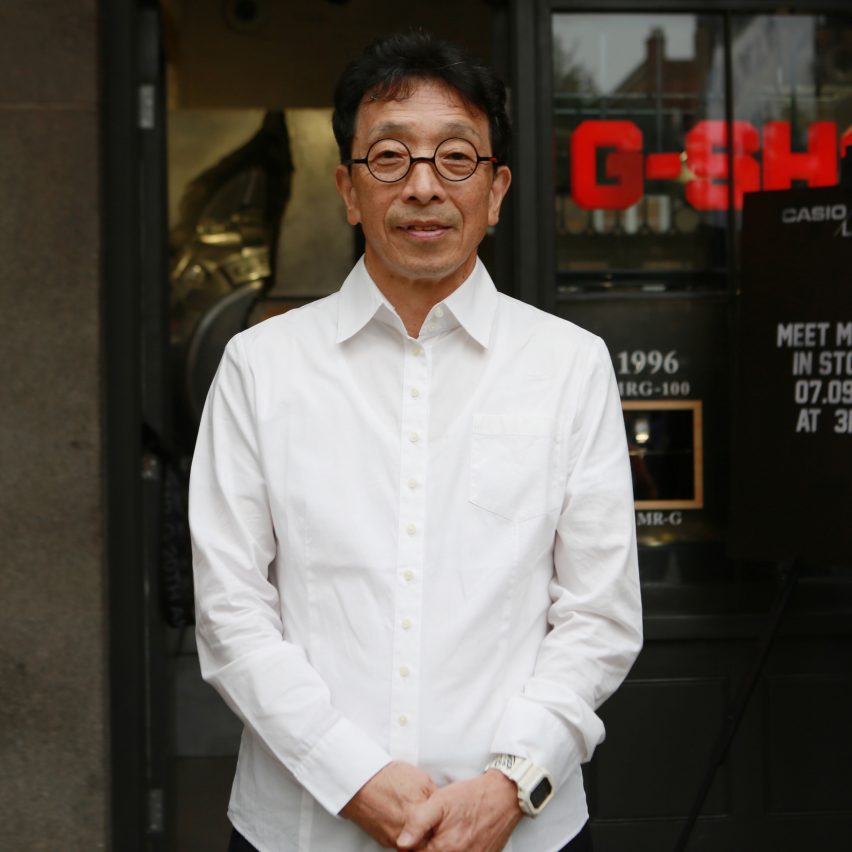
“I threw more than 200 prototypes out of a bathroom window” says G-Shock inventor

Kikuo Ibe

In 1983, a young engineer at Casio invented the indestructible G-Shock watch. Kikuo Ibe, now the Japane brand’s research and development chief engineer, told Dezeen how he developed the cult product. Read more

http://ift.tt/2dUJVHO

How Physico-Realistic Rendering Helps Architects Choose the Right Glass for Facades

The physical properties of glass are invaluable and unequaled when it comes to the architect’s material palette. From the time of the cathedrals and the the brilliantly colored stained glass that served a functional and didactic purpose, to the modernist liberation of the floor plan and the exquisitely-framed horizontal views provided by ample windows, architects have turned to glass to achieve not only aesthetic but performative conditions in their projects.

Today, Architects face an increasing array of choices in specifying and designing with glass for building facades, as glass manufacturers propose a greater variety of colors, textures and patterns than ever before. A wider range of coatings and treatments has also been developed, allowing for a finer selection of glass panes with a combination of light transmittance, reflectance and absorption to meet the needs of outstanding architectural projects. These options affect the aesthetics and energy performance of the glass, and therefore of the overall building.

Thanks to advanced calculation tools, energy performance can now be anticipated accurately, but the graphic representation of glass is still a challenge, and yet a crucial need for architects.


Traditionally, glazing would be chosen based on the perception architects get from a small glass mock-up. But the observation depends on the lighting and environmental conditions, and the process is neither fast nor efficient, as it is harnessed by production and logistics constraints. 3D modelling and computer generated renderings today complete the picture, allowing architects to make an educated guess about how the glass façade of a building will look.

//s.imgur.com/min/embed.js

But even in the best renderings, the depiction of glass remains  quite inaccurate, as the rendering is not based on actual data about the lighting conditions on site or the type of glass suggested. Hence, this is not enough to choose the perfect glass for a project.  

Physico-realistic rendering is completely changing this landscape, and Saint-Gobain is proud to be part of the revolution. The #1 European glass manufacturer has developed a unique new tool: the Glass Pro app.  

GlassPro is an application for Apple iPad which enables the user to visualize virtually all SG Glass for Facade products, on a standard building façade.

This is not just about 3D images or photorealism. The big innovation is that Glass Pro app generates close to 4000 physico-realistic images, rendering the real color and physical properties – such as light transmission and reflection – of the selected glass. The visualization can be done under different angles, various lighting conditions (overcast or sunny), several interior design settings (with or without white/gray blinds), and urban or countryside environments. Additionally, the Glass Pro app allows you to compare the aesthetics and properties of two glass products, displaying them simultaneously on the screen.

//s.imgur.com/min/embed.js

And all this is done within seconds, on your iPad.

But how do we achieve this physico-realistic rendering?

The physical characteristics of glass products are first obtained by measuring real glass samples. Then, specific scenarios are built using 3D modelling software that employs computer graphic technics to represent the exact geometry of glazing units, to light the 3D scene, to define viewpoints and to apply the glass material definition. The information is finally processed by Indigo Renderer to produce digital images.

With an advanced physical camera model, a super-realistic materials system and the ability to simulate complex lighting situations through Metropolis Light Transport, the renderer is capable of producing the highest levels of realism demanded by architectural and product visualization.

//s.imgur.com/min/embed.js

This advanced technology makes Glass Pro a reliable decision-making assistant for glazing products throughout the different stages of a building construction. A first step towards visualizing the glazing of your building, before it’s even built…

Download the app here.

http://ift.tt/2eYWF4q