
This residential project designed in 2016 is situated in France. This historically charming equestrian property was renovated in a contemporary style. It is currently for sale for $6 million. Buy it now! Photography by: Matt Watts
Bernardo Bader Architekten models larch-clad community centre on Austrian farmhouses
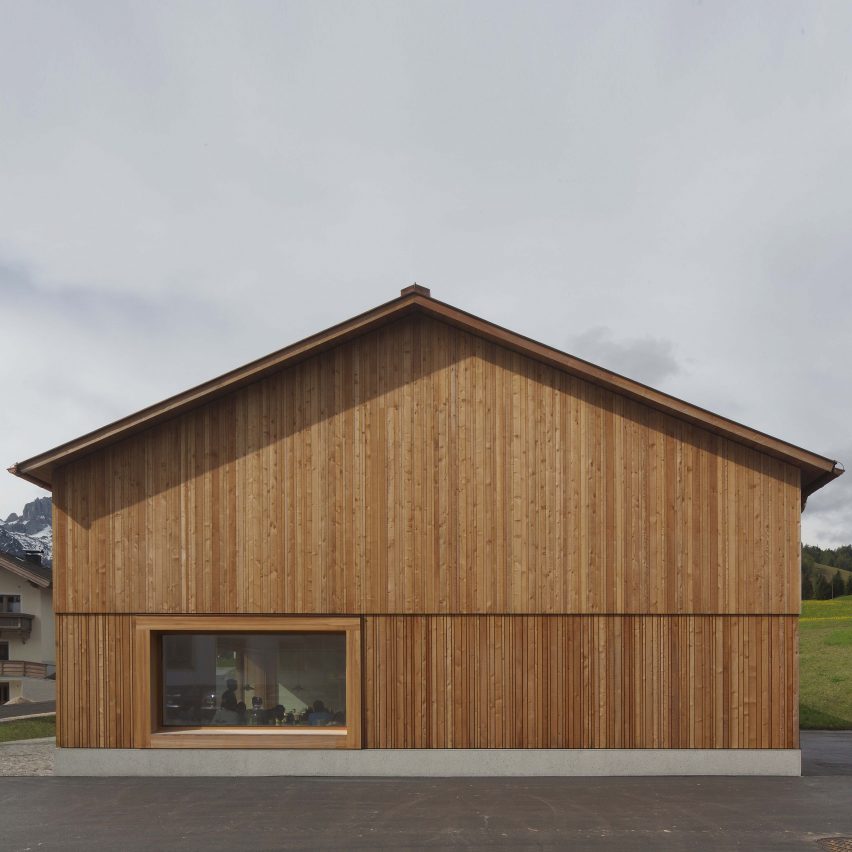
This timber-clad community centre by Bernardo Bader Architects is set at the heart of a village in rural Austria, and designed to reference the surrounding gabled farmhouses. Read more
Cascina Merlata Social Housing / B22

© Filippo Romano
- Architects: B22
- Location: Via Pier Paolo Pasolini, 2, 20151 Milano MI, Italy
- Architect In Charge: Stefano Tropea
- Area: 7900.0 sqm
- Project Year: 2015
- Photographs: Filippo Romano
- Project Team: Mikel Martinez Mugica with Maddalena Corti, Claudio Natalini, Andrea Piovesan, Muyun Zhao
- Client: EuroMilano S.p.A.
- Structural Design : SCE Project
- Mep Design: Ariatta Ingegneria dei Sistemi, Qb service
- Executive Project: Teknoarch
- Fire Prevention: Studio Zaccarelli
- Sustainability: Emanuele Naboni, e3Lab
- Construction Management: Intertecno
- Contractor: COVEXPO
© Filippo Romano
The building is located in the Cascina Merlata area in the city of Milan, close to the Rho-Pero Trade Fair pole and to the Expo 2015 site. It’s part of the Villaggio Expo residential cluster, a new development built within the frame of a masterplan designed by Antonio Citterio & Partners and Caputo Partnership, with the aim of temporarily hosting the representatives and the staff of the 97 countries participating to the 2015 Universal Exposition throughout the event.
Axonometric
Consequently, specific requirements have to be met in terms of energy efficiency, construction planning, costs control and dwellings flexibility: a specific apart-hotel layout has been designed in order to be easily remodeled at the end of the event and the apartments converted into affordable but highly equipped housing units.
© Filippo Romano
The building consists of 56 dwellings, with a high variety of housing types raging from 45 to 100 m2, on 14 floors. The communal ground floor has been conceived to host specific activities and events during the Universal Exposition. A number of technological and design solutions have been introduced since the beginning of the design process, in order to optimize the energy efficiency in the building, including a sunscreen facade protecting the loggias on the southern side and a neighbor waste-to-energy heating-cooling system.
© Filippo Romano
© Filippo Romano
© Filippo Romano
Product Description. Baumit products and Baumit color systems are used on the façades: the high rise body of the building, emphasized by an irregular patchwork of different tones of grey contrasting with the dark recesses, extend upwards and dissolves into a white screen on the South side.
© Filippo Romano
Woodpeckers / Ström Architects

© Luke Hayes
- Architects: Ström Architects
- Location: New Forest District, United Kingdom
- Architect In Charge: Magnus Ström
- Area: 194.0 sqm
- Project Year: 2015
- Photographs: Luke Hayes
- Structural Engineer: Barton Engineers
- Quantity Surveyor: Patrick Swift Associates
© Luke Hayes
The design for the house, which is used by the family mainly as holiday home, was constrained by planning issues that to some extent dictated the built footprint and its position on the site. Very tight size restrictions forced the design to push windows to the outside of the envelope, not allowing any overhangs which would be included in an area calculation, therefore reducing the actual built area. However, within the allowable area there was provision for the inclusion of a conservatory, and one challenge was how to successfully integrate this with architecture devoid of the normal connotations of a lean-to structure.
© Luke Hayes
© Luke Hayes
The very simple building is also driven by economics of construction. The superstructure consists of a timber frame that was erected onsite. Spans as well as the width of the house are decided by the performance restrictions of standard timber truss components. Fenestration is generated by floor-to-ceiling gaps in the timber façade.
Floor Plan
Floor Plan
The house sits on a platform that creates a terrace to the south and the east. This platform connects with a masonry chimneybreast that provides an internal fireplace and a concrete hearth with integrated seating. The platform, being raised slightly off the ground, allows a level connection between inside and outside terraces as well as raises the house off the ground, which in the winter months can be quite wet.
The building is finished in larch cladding that will weather to a silver grey colour.
© Luke Hayes
Product Description. The Matclad brickslip flooring extends from the external terraces throughout the entire of the ground floor, giving a more connected feeling between the internal and external environments. The brick plinth unites the whole scheme; whether they are entertaining indoors, looking out across the terrace towards the garden, or dining al fresco between the house and the formal lawn, the clients are always aware of their relationship with the outdoors.
© Luke Hayes
Concept Saltin Designs a Scandinavian Attic Apartment in Stockholm

Attic Apartment in Stockholm is a residential project completed by Concept Saltin. The Scandinavian-style apartment is located in Stockholm, Sweden. Photos by: Henrik Nero
Void’s thinnest ever timepiece arrives at Dezeen Watch Store
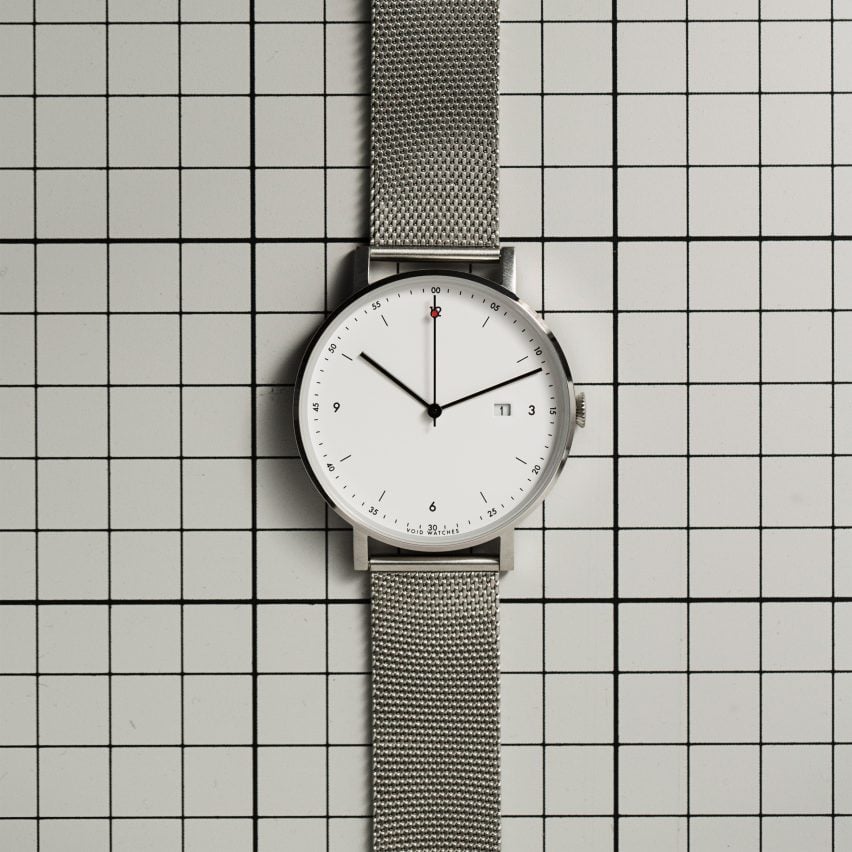
Swedish brand Void has launched a watch that is only seven millimetres thick, which is now available to buy from Dezeen Watch Store. Read more
Brutal Variety / Ero Architects

© Deed Studio
- Architects: Ero Architects
- Location: Ehteshamiyeh, Tehran, Tehran Province, Iran
- Architects In Charge: Sina Ehsani, Ali Abdolbaghi, Amir Akbarzad
- Area: 430.5 sqm
- Project Year: 2015
- Photographs: Deed Studio
- Design Team: Sina Ehsani, Ali Abdolbaghi, Amir Akbarzad, Shayan Anvari, Ziba Golemola,, Neda Bozorgi, Erfan Shabani
- Designing Manager: Sina Ehsani
- Civil Engineering: Hossein Naghizadeh
- Mechanical: Eng. Dalili
- Electrical: Atrina Co.
- Executive Manager: Ali Abdolbaghi
- Executive Associate: Behnoud Ghasemloo
- 3 D: Shayan Anvari
- Model: Soroush Ehsani
- Client: Karim Shirzad, Ali Hajinoormohammadi
- Ground Floor Area: 285 sqm
- Built Area: 2280 sqm
© Deed Studio
The Clients need was to design a 5 unit apartment, located in northern Tehran. First of all, private spaces (bedrooms) were located in north of the building and kitchen and bedroom and living room on the south to face the wooded view and sunlight. The building access is through a short and tiny dead end and the north facade faces it. One important challenge in the design of the north façade was to bold it so that it could appear enough in the dead end alley, without any extra element or ornament. On the other words, windows and the façade texture were the only important elements to be designed.
© Deed Studio
On the first step, northern windows ( bedroom windows) were randomly moved in each bedroom to diversify the façade design. Next, the windows were rotated to bold the façade dimension so that it could be seen better from the beginning of the dead end. These rotated windows are between folded walls that are made by exposed concrete with wooden texture, to be better expressed without any covering material preventing them to be thick. Playing of light and shadow on the volumes of façade and the concrete texture has made the design more attractive.
© Deed Studio
Floor Plan
© Deed Studio
The green touch of the flowers is an inseperable element of the design and therefore the flowerboxes are automatically been irrigated. In southern façade, sunlight and view were the main parameters. The wide windows of living rooms are open to the neighboring garden and to control the sunlight, shading frames are used all around the windows. The interior of units have various spaces and has completely modern design by using high quality materials instead of diversity of colors and textures. Finally, the design elements are familiar to each other while they are variable and different and altogether making a Brutal Variety.
© Deed Studio
Oyamadai House / frontofficetokyo

© Takumi Ota
- Architects: frontofficetokyo
- Location: Tokyo, Japan
- Architect In Charge: Will Galloway, Koen Klinkers, Misuzu Yoshikawa, Joris Berkhout
- Area: 120.0 sqm
- Project Year: 2016
- Photographs: Takumi Ota
- Design: Koen Klinkers, Will Galloway, Misuzu Yoshikawa, Joris Berkhout
- Structure: Low Fat Structure; Taro Yokoyama, Tomoyuki Kudoh
© Takumi Ota
With a flag shaped site, bound on every side by close neighbors, the understandable instinct might be to step away from the city, retreat behind walls where privacy is better assured. The family that purchased the site saw instead a chance to be as open as possible, using the small degree of isolation as an opportunity to connect to the metropolis from a slight remove. Although the neighbors are close, the tendency in Tokyo is to reject the city and build closed walls, ironically allowing the family to take the opposite stance and open their home without loss of privacy. In this way the site is not unlike a clearing in the midst of a forest.
© Takumi Ota
The deck and landing for the stairs to the roof are oversized so the family can spread out in every direction during the day. On the ground floor a similar openness defines the plan. The concrete floor extends outwards and becomes a landscape, softened by an abstract form that blurs boundaries – not between inside and out, but between city and home. As megacities go, Tokyo is particularly suitable to this approach. Benign and accepting of individual expression, it affords access to sun, air, and space if the starting point is one of acceptance rather than rejection of the urban condition.
© Takumi Ota
A small budget required that we built with wood, and as simply as possible. A wooden structure in a disaster prone area normally works against our ambitions, requiring substantial sheer walls or braces to resist earthquakes. To answer this need large X-shaped walls are placed at either end of the home. Acting like buttresses, the structure is set outside the plan without interfering with the desire for openness.
© Takumi Ota
Floor Plans + Site
© Takumi Ota
The first floor and second floor are each treated as single rooms, with boxes holding bath and toilet working as rough dividers in the open plan. The height of the second floor was set so the family could see out to the river valley from their living room, looking over the roofs of their neighbors in the hilly site. Taking advantage of the 3 meter high ceilings on the first floor, a large long-term storage is hung from the ceiling, freeing up floor space for daily life. The storage defines the master bedroom and is incidentally used to hang a group of large doors that can close off the bath and the bedroom as needed.
© Takumi Ota
Product Description. Compressed concrete panels were used as the principal exterior finish and on the interior to cover the wood brace structure as well as the WC on both floors. The finish connects inside and out, applied with screws and a rain screen on the exterior, and glued on the interior over a plywood underlay.
© Takumi Ota
FORUM OF THE FUTURE

CMPorto
The Forum of the Future is an annual international festival dedicated to thought-provoking debates and performances, held in Porto, whose main objective is to invite guests from different disciplines to discuss key issues facing contemporary societies. Founded and organised by Porto Municipal Council since 2014, the Forum of the Future’s strategic partners are the Serralves Foundation, Casa da Música, the São João National Theatre and the University of Porto.
Amongst many possible definitions, a “liaisons” may be defined as a union, tie or bond. There are of course many other definitions. One that lies closer to the goal behind this year’s Forum of the Future – whose theme, “Liaisons”, is no accident – concerns the idea that a connection articulates different ways of seeing and thinking.
This is the core idea underpinning this ‘festival of thought’ – to use the poignant definition coined by Paulo Cunha e Silva. The festival aims to focus on paths which will open up new channels towards knowledge and intervention in the city of Porto.
Paths that will adopt a panoptic and plural gaze, and enable us to think about Life, Death, War, Peace, Faith and Culture; reflect about the ways we relate to each other in the contemporary era; or think about the manner in which Europe is handling terrorism, racism or the tragedy of the refugee crisis. This gaze also extends to ideas emerging from Africa or the Middle East, and the use of communication by artists from other continents, which undermines a Eurocentric vision and reveals the universal reach of their works. This gaze also highlights those in the West who explore the limits of the relationship between the arts and sciences, in the search not so much of a connection per se, but rather the long list of possibilities offered by connections.
From November 1-6, connect to the Forum of the Future.
Download the information related to this event here.
- Title: FORUM OF THE FUTURE
- Type: Event
- Website: http://ift.tt/2dEn0ma
- Organizers: Câmara Municipal do Porto
- From: November 01, 2016 05:00 PM
- Until: November 06, 2016 06:00 PM
- Venue: Teatro Rivoli, Casa da Música, Teatro Nacional de S. João e Serralves
- Address: Praça D. João I Porto – Portugal
Wedge-shaped balconies front Carlos Marín’s apartment block in Mexico City
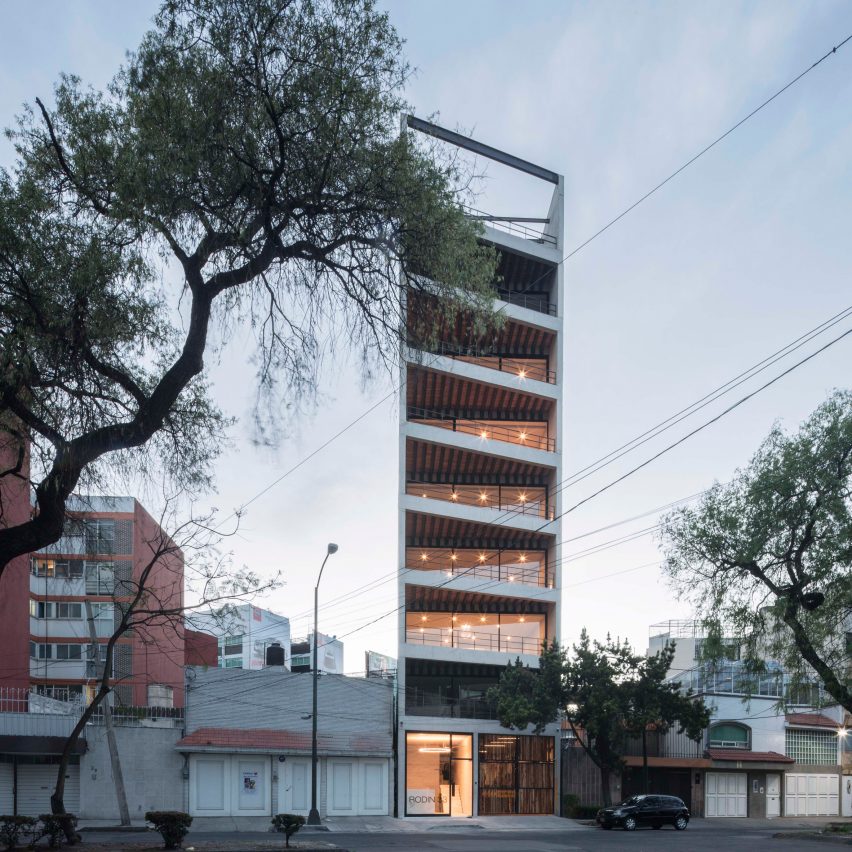
Each apartment in this crisply detailed concrete and glass block in Mexico City features a full-width balcony lined with sliding glass doors. Read more

