Ansarada Chicago Office / Those Architects


© Luc Remond

© Luc Remond


© Luc Remond


© Luc Remond


© Luc Remond


© Luc Remond

  • Architects: Those Architects
  • Location: Chicago, IL, United States
  • Design Team: Ben Mitchell (project director), Simon Addinall (project architect), Karoline De Mendonça, Luke Hallaways
  • Area: 880.0 sqm
  • Project Year: 2016
  • Photographs: Luc Remond
  • Builder: Knudsen Construction Inc
  • Millwork: Siebert Millwork Inc
  • Client: Ansarada

© Luc Remond

© Luc Remond

From the architect. Perhaps the last thing you would expect to encounter on entering a financial services workspace is a luxurious ‘collaboration room’ with woollen sphere seats, more akin to a fine art installation than a meeting room. Certainly not then, a full scale baseball batting cage complete with pitching machine – a nod to the projects location in Chicago, Illinois, USA.


© Luc Remond

© Luc Remond

Both are part of a sophisticated new office fit-out for the Sydney based global financial services company with which THOSE Architects have a long standing relationship, having delivered their multi award winning and widely published headquarters in Sydney, Australia.


© Luc Remond

© Luc Remond

“We deal in a virtual, data-driven world but our most valuable asset is the people behind the scenes”, says Ansarada CEO Sam Riley. “We aim to simplify, not complicate, not just in our product interface but for our clients, and the way we work as a team. So we wanted our office to be a truly wonderful space. Serious and at the same time, playful, simple and sophisticated, fresh yet experienced, authentic and contemporary. Our workplace should reflect these values, and make a positive difference to our lives, and to our clients lives. THOSE Architects fit-out does all of those things for us”.


© Luc Remond

© Luc Remond

The 880 sqm (9500 sqft) project is located in Chicago’s river north district, a stylish urban neighbourhood bordering the magnificent mile. The office occupies the entire fifth floor of a grand old warehouse richly textured with hand pressed bricks, douglas fir posts and beams, finely detailed windows and hardwood floors and ceilings.


Floor Plan

Floor Plan

As the building was not heritage listed by the City of Chicago, nor the state of Illinois, THOSE Architects were able to take a more aggressive architectural approach to the fit-out than was possible in the heritage-sensitive Sydney project. “While remaining respectful to the grand old lady we inherited, we were able to insert some substantial architectural elements into the space to enable us to better establish functional zones throughout this project” says THOSE Architects director Ben Mitchell.


© Luc Remond

© Luc Remond

The Chicago space functions primarily as a marketing, sales and client services office which to a large extent dictated the performance brief to THOSE Architects. “It is a simple concept, but we had to ensure the space functioned acoustically and aesthetically to reflect the brand’s mantra of sophisticated simplicity while seamlessly integrating a great deal of technological infrastructure to allow the staff to perform at their best”. Ben says.


© Luc Remond

© Luc Remond

The project’s main move was to insert a bold black plywood box down the centre of the space in order to clearly define the three zones of the office. The main utility functions are carried out in this zone with provision of a kitchen, mud room, shower room, laundry and storage facilities. Also covertly located in this architectural element are a collaboration space and reading room, both of which gain considerable acoustic and visual privacy as a result of this location. Not only does the central black plywood box provide the main architectural element in the space, it is detailed with hundreds of thousands of peg holes that enable the staff to utilise the entire surface in myriad of ways. Brushed solid brass pegs sleeve perfectly into the peg holes and are used for anything from writing your colleague a message to hanging a coat.


© Luc Remond

© Luc Remond

The recreation and informal meeting rooms are located kitchen-side of the black box with a jaw dropping view over the Chicago skyline. This zone features the entry reception complete with custom detailed couches and light fixture, staff breakout area featuring custom soft furnishings, dining zone, gaming area and ultra refined meeting rooms.


© Luc Remond

© Luc Remond

Far-side of the black box, the workstations are accommodated and feature soft grey woollen carpets and ceiling panels with intricate brass and timber detailing. Secret doors abound throughout the space, concealing everything from storage to a full scale library.


© Luc Remond

© Luc Remond

Four years on from the inaugural Sydney fit-out, Ansarada has matured as a company which is reflected in the architecture of the Chicago project. THOSE Architects have retained the playful essence of the Australian philosophy, however have imbued this project with a layer of sophistication rarely seen in the corporate workplace.


© Luc Remond
© Luc Remond

http://ift.tt/2ehLVuZ

Urgent listing application seeks to block Ryan Giggs and Gary Neville’s Manchester plans

gary-neville-skyscrapers-make-architects-manchester_dezeen_sqa

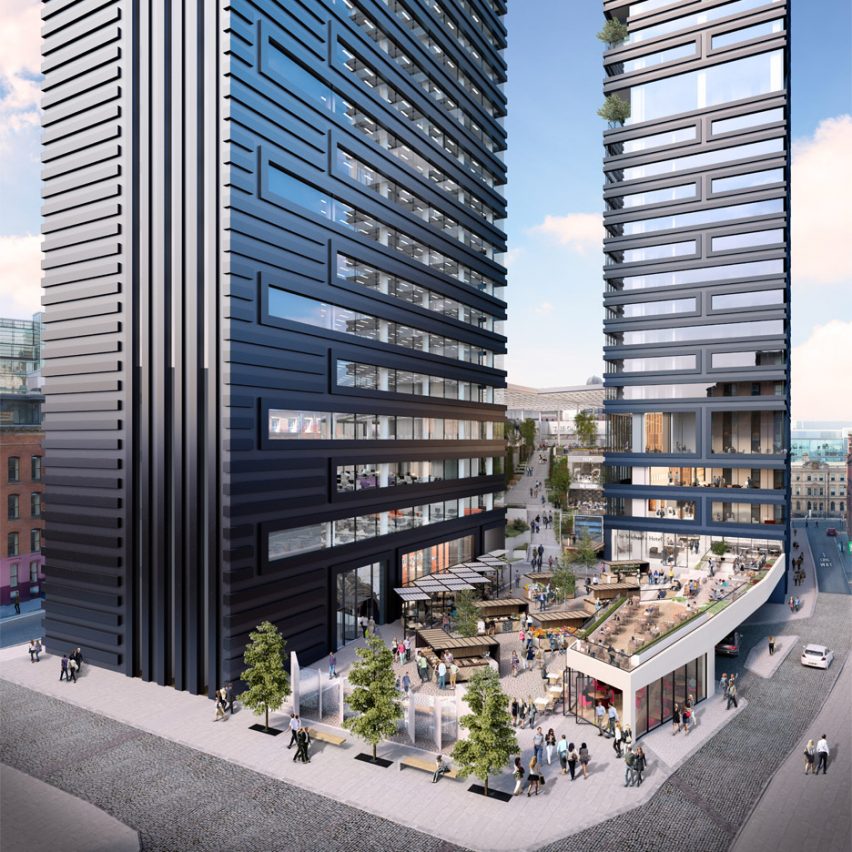
Plans by former footballers Gary Neville and Ryan Giggs to build a luxury hotel and shopping centre in Manchester may be scuppered as the Twentieth Century Society seeks emergency heritage listing for a synagogue on the site. Read more

http://ift.tt/2ernFWT

ESPAÑA8477 / Diseño Norteño


© Lorena Darquea

© Lorena Darquea


© Lorena Darquea


© Lorena Darquea


© Lorena Darquea


© Lorena Darquea

  • Collaborators: Mauricio Kuri, Oscar González, Manuel Álvarez, Marco Montaño
  • Construction: Luvier Ingeniería

© Lorena Darquea

© Lorena Darquea

The project España 8477 is generated when searching for a typology for a small-scale vertical housing building, where all users can enjoy a different spatial quality and at an affordable price. The multifamily building that is common in the city is a repetition of a typical plan for ‘n’ number of levels. Where outdoor spaces are limited to the access corridors or stairs and inside the views are determined by the height of the building.


© Lorena Darquea

© Lorena Darquea

This building has 10 housing units, with a flexible distribution inside, 80 to 90 m2, with 1 and 2-level units due to the composition of the structural design.


© Lorena Darquea

© Lorena Darquea

Two main volumes linked by their circulations are mounted on the exposed metal structure. The variation of the plans generates very large outdoor spaces. Each unit can double the size of the social area when opening sliding doors, creating an indoor-outdoor environment, taking advantage of the best views of the neighborhood, without relying on them. The atmosphere of each unit changes according to their orientation and relationship with their terrace, allowing each one to have a different atmosphere. The gaps between volumes function as light cubes that light up the lower floors, allowing the building to ventilate naturally through all of its facades.


© Lorena Darquea

© Lorena Darquea

Plan

Plan

© Lorena Darquea

© Lorena Darquea

The 2-level units allow access to the apartments in the first four of five levels, freeing the building from depending on an elevator. The scale of the construction remains friendly to pedestrians and respects the existing urban scale, which we consider very important in the neighborhood.


Section

Section

http://ift.tt/2eNf5Vu

“I’ll be curious to see the hammer prices”

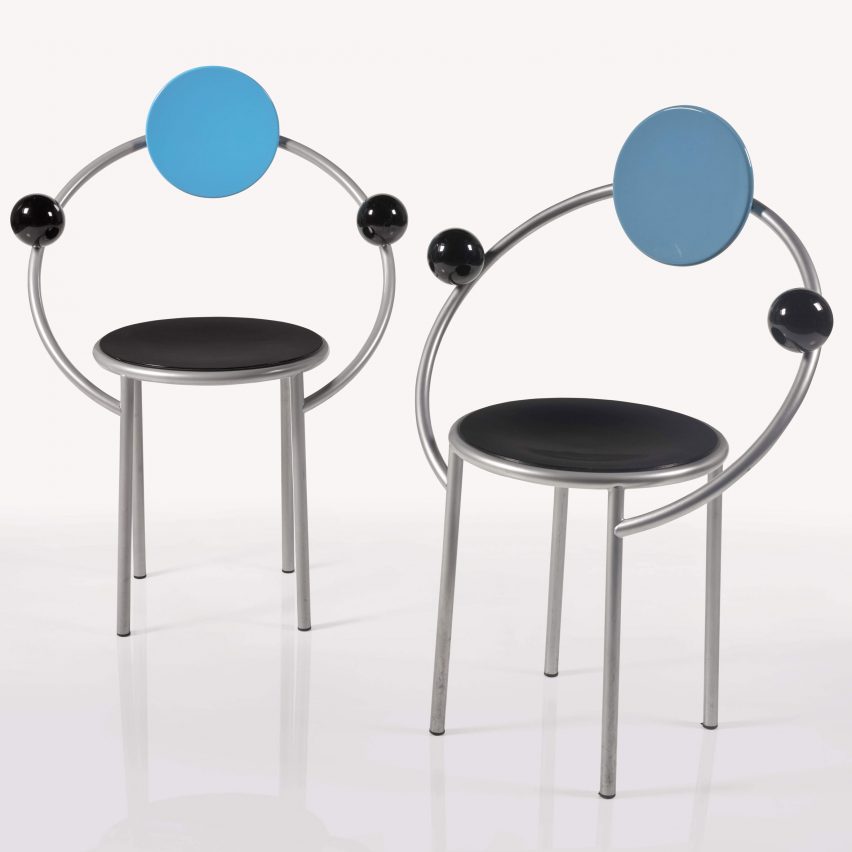
david-bowie-memphis-auction-product-design-sothebys-london-uk_dezeen_sqa

Dezeen readers were surprised to discover that David Bowie was an extensive collector of Memphis furniture last week, and speculated how much his collection will sell for in our comments section this week. Read more

http://ift.tt/2e2FP3k

MAD Architects Unveils Design for Translucent China Philharmonic Hall in Beijing


Exterior View. Image Courtesy of MAD Architects

Exterior View. Image Courtesy of MAD Architects

MAD Architects has unveiled the design of the new China Philharmonic Hall in Beijing. Conceived in collaboration with renowned acoustic expert Yasuhisa Toyota (Walt Disney Concert Hall, Philharmonie de Paris, Suntory Hall, etc.), the concert hall will serve as the China Philharmonic Orchestra’s first permanent residency while becoming “a cultural exchange and China’s new locus for classical music.”

To be located at the south side of the Workers Stadium East Gate in Beijing’s Central Business District, the 26,587 square meter (286,000 square foot) building has been envisioned as a “hidden gem” and a place of peaceful respite within the city.

“We wanted to create a pure and sacred oasis in the midst of the bustling city,” says Ma Yansong, founder & principal partner of MAD Architects. “From the moment you enter the building, you will be taken to another time and space.”


Bird's Eye View. Image Courtesy of MAD Architects


Lobby. Image Courtesy of MAD Architects


Main Concert Hall. Image Courtesy of MAD Architects


Philharmonic Hall diagram. Image Courtesy of MAD Architects


Bird's Eye View. Image Courtesy of MAD Architects

Bird's Eye View. Image Courtesy of MAD Architects

Surrounded by a lotus pond and lush greenery, the building’s draped, translucent façade lifts at the entrances to invite in visitors. Once inside, the soaring lobby will provide access to the two performance halls and serve as an area for mingling within the soft light.

“Audiences will experience a transition from an urban setting to one of music and nature, preparing them for a journey of self-discovery,” says Ma Yansong.


Lotus Pond View. Image Courtesy of MAD Architects

Lotus Pond View. Image Courtesy of MAD Architects

Lobby. Image Courtesy of MAD Architects

Lobby. Image Courtesy of MAD Architects

The design of the 1,600-seat main concert hall draws inspiration from the natural, with “vineyard style” seating rising around the stage in a series of sloping terraces and white sound reflection petals on the ceiling will take the form of segments of a lotus flower. During the day, natural light will filter through the ceiling elements, while at night, lighting and visualizations can be projects onto the interior surfaces to create natural scenes that harmonize with the musical performances.


Main Concert Hall. Image Courtesy of MAD Architects

Main Concert Hall. Image Courtesy of MAD Architects

Main Concert Hall. Image Courtesy of MAD Architects

Main Concert Hall. Image Courtesy of MAD Architects

On the south side of the building, a 400-seat rehearsal hall will be nestled within curved wooden walls. An adjustable sound reflection panel at the back of the stage can be configured for different performance types; in its most dramatic arrangement, it can be raised to allow the natural lotus pond outside to serve as the backdrop for the performance.


Small Concert Hall. Image Courtesy of MAD Architects

Small Concert Hall. Image Courtesy of MAD Architects

Cafe. Image Courtesy of MAD Architects

Cafe. Image Courtesy of MAD Architects

Lobby. Image Courtesy of MAD Architects

Lobby. Image Courtesy of MAD Architects

The building will also contain professional recording studio, a library, a collection gallery, offices, rehearsal rooms, and other auxiliary function spaces. MAD Architects hopes the design will become “a new formula for concert hall design and introduce a space within the busy city that promotes conversations between people, nature, and music.”

Construction on the China Philharmonic Hall will begin later this year, and is expected to be completed in 2019.


Philharmonic Hall diagram. Image Courtesy of MAD Architects

Philharmonic Hall diagram. Image Courtesy of MAD Architects

Rehearsal Room. Image Courtesy of MAD Architects

Rehearsal Room. Image Courtesy of MAD Architects

Model. Image Courtesy of MAD Architects

Model. Image Courtesy of MAD Architects

Exterior View. Image Courtesy of MAD Architects

Exterior View. Image Courtesy of MAD Architects

News via MAD Architects.

  • Architects: MAD Architects
  • Location: Beijing, China
  • Architect: MAD Architects
  • Directors: Ma Yansong, Dang Qun, Yosuke Hayano
  • Design Team: Kin Li, Liu Huiying, Fu Xiaoyi, Brecht Van Acker, Zeng Hao, Li Guangchong, Jacob Hu, Xiao Ying, Dora Lam, Zhao Wei, Shen Chen, Dmitry Seregin, Zhu Jinglu, Yukan Yanagawa, Wang Deyuan, Hiroki Fujino, Zheng Fang, Sear Nee
  • Client: China Philharmonic Orchestra
  • Interior Design: MAD Architects
  • Acoustics: Nagata Acoustics
  • Construction Engineer: Radio Film & Television Design & Research Institute (DRFT)
  • Structural Consultant: China Construction International (Shenzhen) Design Consultant Co., Ltd.
  • Façade Consultant: RFR Asia
  • Lighting Consultant: SIGN Lighting
  • Interior Executive Architect: Beijing Honggao Interior Design Co., Ltd.
  • Landscape Design: Palm Design Co., Ltd.
  • Planning Of Traffic Facilities: Beijing Homedale Institute of Urban Planning & Architectural Design
  • Type: Concert Hall
  • Status: Design development
  • Building Height: 24m (79ft)
  • Main Concert Hall Capacity: 1600
  • Area: 11600.0 sqm
  • Project Year: 2019
  • Photographs: Courtesy of MAD Architects

http://ift.tt/2dYsLe1

Yves Behar’s robotic Snoo crib rocks babies to sleep itself

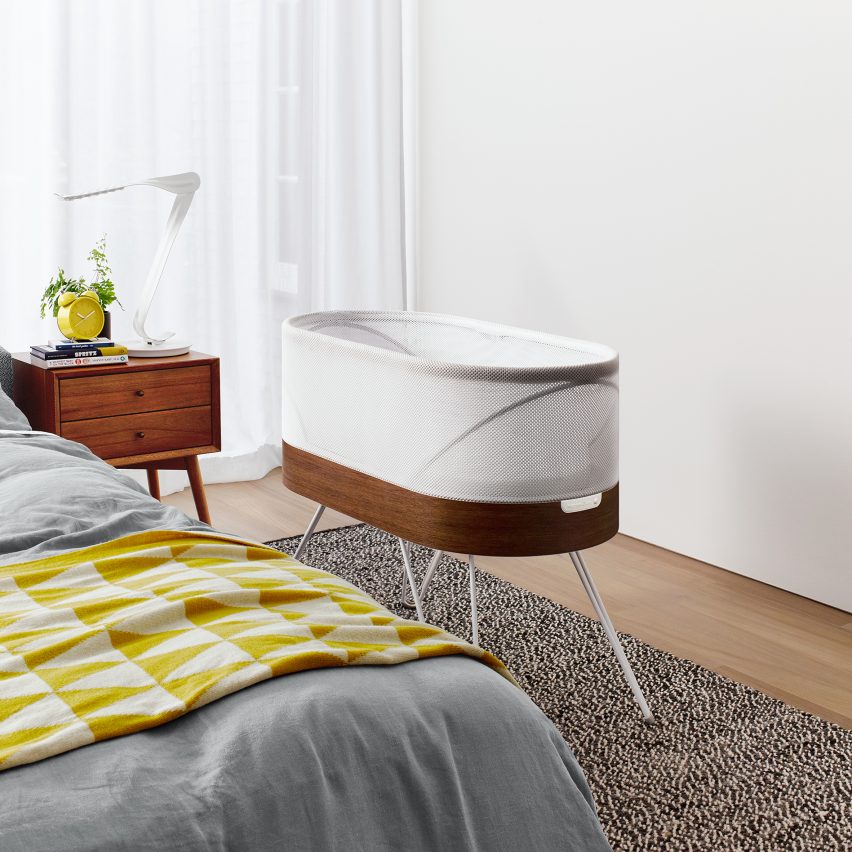
Yves Behar crib

Exhausted parents can stay in bed while this bassinet designed by Yves Behar rocks their babies back to sleep with a “womb-like motion” whenever it hears them cry. Read more

http://ift.tt/2doukzd

Building O / META Architectuurbureau


© Filip Dujardin

© Filip Dujardin


© Filip Dujardin


© Filip Dujardin


© Filip Dujardin


© Filip Dujardin

  • Architects: META Architectuurbureau
  • Location: Universiteitsplein 1, 2610 Antwerpen, Belgium
  • Architects In Charge: Niklaas Deboutte, Eric Soors
  • Area: 8520.0 sqm
  • Project Year: 2016
  • Photographs: Filip Dujardin
  • Client: University Of Antwerp
  • Meta Project Leader: Frederik Bogaerts
  • Meta Project Staff: Stijn Elsen, Simone Valerio, Rob Wesselink
  • Stability, Technology, Epb Reporting, Acoustics: Tractebel

  • Project Management Board Tractebel: Marc De Smet
  • Project Manager Tractebel: Veerle Van Geldre
  • Project Staff Tractebel: Jeroen De Wael, Kevin Morlion, Ive De Maeseneire, Magda Morel, Hinde El Kassmi, Marjolein Vandersickel
  • Art Integration: Perry Roberts

  • Collaboration: Storimans Wijffels Architecten
  • Landscape Design: Urban Design & Landscape Architecture West 8
  • Safety Coordinator: François Jordaens (Ua)
  • Main Contractor: Thv Atro Cfe

© Filip Dujardin

© Filip Dujardin

From the architect. Building O by META strengthens the heart of the UA-campus in Antwerp. META and TRACTEBEL with Storimans Wijffels architects completed for the University of Antwerp an auditorium and research building. Building O houses 3 faculties.


© Filip Dujardin

© Filip Dujardin

“By paying special attention to the structure, we were able to dispense with several layers of finishing. The result is a solid, student-resistant construction.” [ Niklaas Deboutte, META architectuurbureau ]


“Building O is a bright and compact volume, an eye catcher for the campus but with the smallest possible spatial stamp.” [ Eric Soors, META architectuurbureau ]


© Filip Dujardin

© Filip Dujardin

Mirror symmetry in a readable building 
Building O is a bright and compact volume that, on the one hand, is intended to be an eye-catcher on the campus. On the other hand, it was also required to leave the smallest possible spatial stamp on the site. 
The balance between affirmation and integration, and the unifying role of Building O, resulted in a universal building with a double entrance section that is mirrored diagonally. The four auditoria on each of levels -1 and +1 are arranged around the central atrium, the large skylight of which permits zenithal daylight to penetrate to the underground level. The ground floor accommodates shared functions and the large entrance-cum-meeting rooms. Four compact stairwells lead off from this area. The upper level (+3) is reserved for the laboratory and microscopy rooms.


Plan 0

Plan 0

Maximum light ingress with floating volume clad 
in golden perforated aluminium sheets
By positioning the ground-floor facade inwards to a depth of 1 module META creates a covered interior circuit. The floating volume is enveloped in golden perforated aluminium plates that function as fixed blinds. These allow a soft filtered light to permeate the building while also permitting views outside. The panels on the 3rd floor can be opened to allow maximum light into the practice spaces. Using the same material for both the façade and ceiling of the interior circuit, as well as the foyers, gives rise to a floating volume that, in the diffuse evening light, reveals a glimpse of its inner life to passers-by. 

Prominent role for art with artist Perry Roberts
Art was integrated through the work of Perry Roberts (UK). A photograph of students and teachers was punched into the golden aluminium facade panels. A reference to traditional class photographs, the image was rasterized into dots with 5 different diameters. When viewed close-up, the image appears to be abstract, but becomes readable at a greater remove. 


© Filip Dujardin

© Filip Dujardin

Structural work is finishing work
META also deployed the ‘structural work is finishing work’ principle. By paying special attention to the basic structure, it was possible to dispense with several layers of finishing. The end result is a solid, student-resistant construction.


Plan 1

Plan 1

Durable shell
The University Antwerp attaches great importance to a reliable and well-insulated exterior shell. The compact nature of the volume and use of multiple layers of suitable insulation enabled us to obtain low U-values that resulted in a very favourable K16.


© Filip Dujardin

© Filip Dujardin

© Filip Dujardin

© Filip Dujardin

Product Description. The floating volume is enveloped in golden perforated aluminium plates that function as fixed blinds for the auditoriums, microscopy and laboratory rooms. These allow a soft filtered light to permeate the building while also permitting views outside. The panels on the 3rd floor can be opened to allow maximum light into the practice spaces. Using the same material for both the façade and ceiling of the interior circuit, as well as the foyers, gives rise to a floating volume.


© Filip Dujardin

© Filip Dujardin

http://ift.tt/2eMNofu

The Key Architectural Elements Required to Design Yoga and Mediation Spaces


AYC / DX Arquitectos. Santiago de Chile. Image © Pablo Blanco

AYC / DX Arquitectos. Santiago de Chile. Image © Pablo Blanco

For several decades, a set of oriental practices and techniques have strongly infiltrated the western world. A new program that, as architects, we must start solving more often, and that poses interesting challenges from the point of functional, environmental, and aesthetic.

These disciplines are completely focused on the human being, as they seek to work and satisfy their physical, psychological and spiritual needs, and that’s why it seems important to analyze how these needs are being met spatially by architects. Many of the operations taken in these spaces create enabling environments for reflection, introspection, healing, and therefore could also be applied in other relevant programs, such as housing, educational, hospital, and even office spaces.

This article seeks to draw lessons from some projects already published on our site, in order to perform a kind of guide for designs that helps our community of readers to find inspiration more effectively.


Estudio Para Yoga-Kamadhenu / Carolina Echevarri + Alberto Burckhardt. Cundinamarca, Colombia. Image © Juan Cristobal Cobo


AYC / DX Arquitectos. Santiago de Chile. Image © Pablo Blanco


Centro Holístico Punto Zero / Dio Sustentable. Putaendo, Chile. Image © Jean Pierre Marchant y Fernando J. Romero


Ritual House de Yoga / goCstudio. Seattle, Estados Unidos. Image © Kevin Scott

Spaces

Although each practice may require specific characteristics, most take place in a large open central space, accompanied by a set of support rooms.


Ritual House de Yoga / goCstudio. Seattle, Estados Unidos. Image © Kevin Scott

Ritual House de Yoga / goCstudio. Seattle, Estados Unidos. Image © Kevin Scott
  • Main Room

This is the central space of the building where people gather for practice, and generally is a free plan, flexible and adaptable to different uses. To determine its dimensions, we can use the standard measures of a yoga mat, which unfolds fully stretched in an area of approximately 1.70 x 60 meters. It is suggested to leave at least 50 cm between the mats, to allow the free movement of users during the exercises.

Some of these rooms have a small platform or elevated area where the instructor or guide of the session is located, and it is good to add shelves or countertops where people can leave their ‘tools’ during the class (water bottles, towels, blankets, slippers). Usually, the room has mirrors on one or more walls, but this depends on the needs and the taste of the client.


YogaOne Mandri / Studio Shito. Barcelona, España

YogaOne Mandri / Studio Shito. Barcelona, España

YogaOne Mandri / Studio Shito. Barcelona, España. Image © Marcela Grassi

YogaOne Mandri / Studio Shito. Barcelona, España. Image © Marcela Grassi

We think about the architecture of the temples, in introverted and silent spaces, in places that look inward, of dim and changing light. (…) We think of the space we need to look at us inward.
DX Architects, about their project ‘AYC’ in Santiago de Chile


Ritual House de Yoga / goCstudio. Seattle, Estados Unidos

Ritual House de Yoga / goCstudio. Seattle, Estados Unidos

Ritual House de Yoga / goCstudio. Seattle, Estados Unidos. Image © Kevin Scott

Ritual House de Yoga / goCstudio. Seattle, Estados Unidos. Image © Kevin Scott
  • Bathrooms / Dressing Rooms

Not all centers include dressing rooms, but if there are resources and space, it is good to add. In the case adding them in, you can increase the size of the bathrooms allowing dual use. To achieve this objective and allow the space to be occupied by more than one person at a time, in several projects toilet area is separated from the sink, that is being associated with a kind of small dressing room, which may also include lockers, shelves, and benches.

Toilets should be located adjacent to the main room, with a quick and easy access from the main entrance area.


AYC / DX Arquitectos. Santiago de Chile

AYC / DX Arquitectos. Santiago de Chile

AYC / DX Arquitectos. Santiago de Chile. Image © Pablo Blanco

AYC / DX Arquitectos. Santiago de Chile. Image © Pablo Blanco
  • Circulations

Circulations gain great importance in this kind of projects, because not only can function as corridors or hallways, but also can contain storage spaces, waiting and resting areas, or even a reception. Some cases also take advantage of the walls to incorporate built-in shelves.


Yoga Deva / Blank Studio. Gilbert, Estados Unidos

Yoga Deva / Blank Studio. Gilbert, Estados Unidos

YogaOne Mandri / Studio Shito. Barcelona, España. Image © Marcela Grassi

YogaOne Mandri / Studio Shito. Barcelona, España. Image © Marcela Grassi

YogaOne Mandri / Studio Shito. Barcelona, España. Image © Marcela Grassi

YogaOne Mandri / Studio Shito. Barcelona, España. Image © Marcela Grassi
  • Others

Depending on the order received, the building may include several classrooms, plus massage cabins or jacuzzi, sauna and swimming pools areas. The height of the spaces is a choice of each client and architect, but the main room, at least, is designed in most cases with a greater height.


Centro Holístico Punto Zero / Dio Sustentable. Putaendo, Chile

Centro Holístico Punto Zero / Dio Sustentable. Putaendo, Chile

Centro Holístico Punto Zero / Dio Sustentable. Putaendo, Chile. Image © Jean Pierre Marchant y Fernando J. Romero

Centro Holístico Punto Zero / Dio Sustentable. Putaendo, Chile. Image © Jean Pierre Marchant y Fernando J. Romero

Environmental Conditions

  • Acoustics

There is a belief that these spaces must be completely silent, but precisely the idea of these disciplines is to be developed in spite of the ambient noise. In fact, in many cases, it is recommended to fully perform in exteriors, as many sounds of nature can help a better realization of different practices. In the case of closed rooms, these sounds (and even smells) can be integrated by incorporating indoor courtyards or gardens that attract birds, including moving water, and/or allow the flow of the wind.

Obviously, if a practice requires complete silence, the design must allow that the space can be completely isolated.


Spa Querétaro / Ambrosi I Etchegaray. Santiago de Querétaro, Mexico. Image © Luis Gordoa

Spa Querétaro / Ambrosi I Etchegaray. Santiago de Querétaro, Mexico. Image © Luis Gordoa

The design premise was to create a center in constant contact with nature. For this we planned a flagstone garden around the property, with a set of perforations to create interior courtyards where gardens were generated. The spaces and their uses are constantly related through the courtyards and gardens.
Ambrosi I Etchegaray, about their project Spa Querétaro in Querétaro, México

  • Ventilation

This is a fundamental issue in these practices, since they all use breath as the basis for its development. It is important to allow cross ventilation across the room, making sure that there is a certain current renew of oxygen inside, during the session or at the times when the room is not being occupied. For this, we should generate a first opening in the facade that receives the prevailing winds, and a second opening (preferably bigger) on the opposite wall.


Meditation Pavilion & Garden / GMAA. Geneva, Suiza. Image © A.Korour

Meditation Pavilion & Garden / GMAA. Geneva, Suiza. Image © A.Korour
  • Ilumination

The light allows to qualify environmentally the space and can help to lead the intension of the practice being done. In the case of Yoga, direct connection to the sun is essential in many of their exercises. That’s why we should always favor natural lighting, and is necessary, to incorporate systems to regulate their intensity, allowing darken the room completely if necessary.


AYC / DX Arquitectos. Santiago de Chile. Image © Pablo Blanco

AYC / DX Arquitectos. Santiago de Chile. Image © Pablo Blanco

In order to avoid glare, in most of the projects presented in this article, light does not fall directly on people, and have been used zenithal openings, windows at floor level, fuzzy screens, and light courtyard surrounding the main room.

If practices are carried out at night, artificial lighting choice should be warm and also adjustable.


Estudio Para Yoga-Kamadhenu / Carolina Echevarri + Alberto Burckhardt. Cundinamarca, Colombia. Image © Juan Cristobal Cobo

Estudio Para Yoga-Kamadhenu / Carolina Echevarri + Alberto Burckhardt. Cundinamarca, Colombia. Image © Juan Cristobal Cobo

The construction is transformed with light changes, thus achieving a balance with its natural surroundings, which is transmitted into their spaces and therefore to project users.
Carolina Echevarri + Alberto Burckhardt, about their project ‘Yoga-Kamadhemy’ in Cundinamarca, Colombia

  • Aesthetics and Materials

The aesthetics of space depends entirely on the client requirement, but generally, you should avoid distracting elements or exaggerated decorations. It is recommended using warm materials and soft colors (or directly white) to help attendees achieve a certain degree of initial concentration. As practices carried out in permanent contact with the ground, floors are usually covered with wood or materials rather ‘soft’ and warm to the touch.


YogaOne Mandri / Studio Shito. Barcelona, España. Image © Marcela Grassi

YogaOne Mandri / Studio Shito. Barcelona, España. Image © Marcela Grassi

The aim of the project is the creation of spaces where materials, furniture, lighting and colors accompany yoga practice, creating a smooth transition in the path. It is relaxed and limited spaces that allow the user to stop their busy lifestyle and connecting slowly, with body and a serene mental space.
Studio Shito about their project ‘YogaOne Mandri’ in Barcelona, España

  • Orientation and Geometry

Some of the projects are based spatially and geometrically in the traditional tenets of the different practices, as many claim that certain orientations and configurations may enhance the effectiveness of the exercises.


Centro Holístico Punto Zero / Dio Sustentable. Putaendo, Chile. Image © Jean Pierre Marchant y Fernando J. Romero

Centro Holístico Punto Zero / Dio Sustentable. Putaendo, Chile. Image © Jean Pierre Marchant y Fernando J. Romero

For example, we talk about some beneficial cardinal directions, like the East (where would travel certain subtle energies accompanying the movement of the Earth) or Magnetic North (near the geographic North, which would allow us to align with the magnetic field of our planet). Other cases have based their design in the studio of the sacred geometries, and have even made dowsing ground surveys to learn of benign energies present at the project site.


Centro Holístico Punto Zero / Dio Sustentable. Putaendo, Chile

Centro Holístico Punto Zero / Dio Sustentable. Putaendo, Chile

These organic references allow us to drop some stiffness of a more practical design, moving to generate curves or circular shapes that could impact positively on the user experience inside of the building.

Have you designed one of these spaces, or do you perform one of these practices often?

Ritual House of Yoga / goCstudio
//cdn.embedly.com/widgets/platform.js

AYC / DX Arquitectos
//cdn.embedly.com/widgets/platform.js

Spa Querétaro / Ambrosi I Etchegaray
//cdn.embedly.com/widgets/platform.js

Kamadhenu Yoga Studio / Carolina Echevarri + Alberto Burckhardt
//cdn.embedly.com/widgets/platform.js

Yoga Deva / Blank Studio
//cdn.embedly.com/widgets/platform.js

Meditation Pavilion & Garden / GMAA
//cdn.embedly.com/widgets/platform.js

http://ift.tt/2e4dCLX

MAD reveals plans for translucent China Philharmonic Hall in Beijing

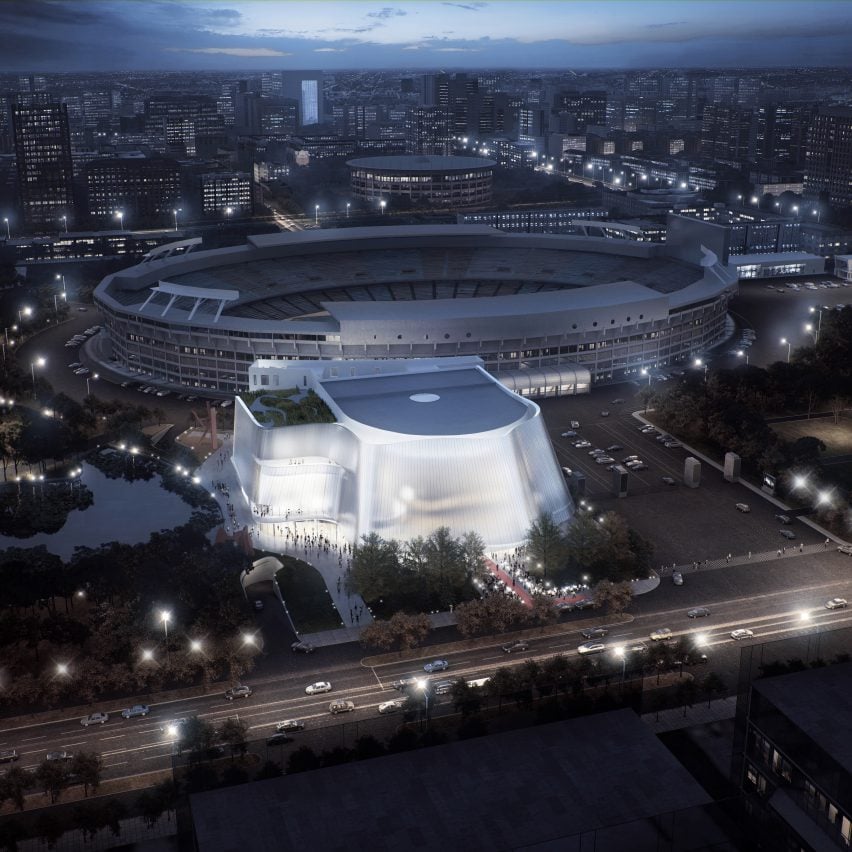
China Philharmonic Hall by MAD

Chinese studio MAD has released visuals for its new concert hall in Beijing, which will be draped in a translucent fluted facade. Read more

http://ift.tt/2edNj2I

Sliding walls create various layouts inside Garden House by Caspar Schols

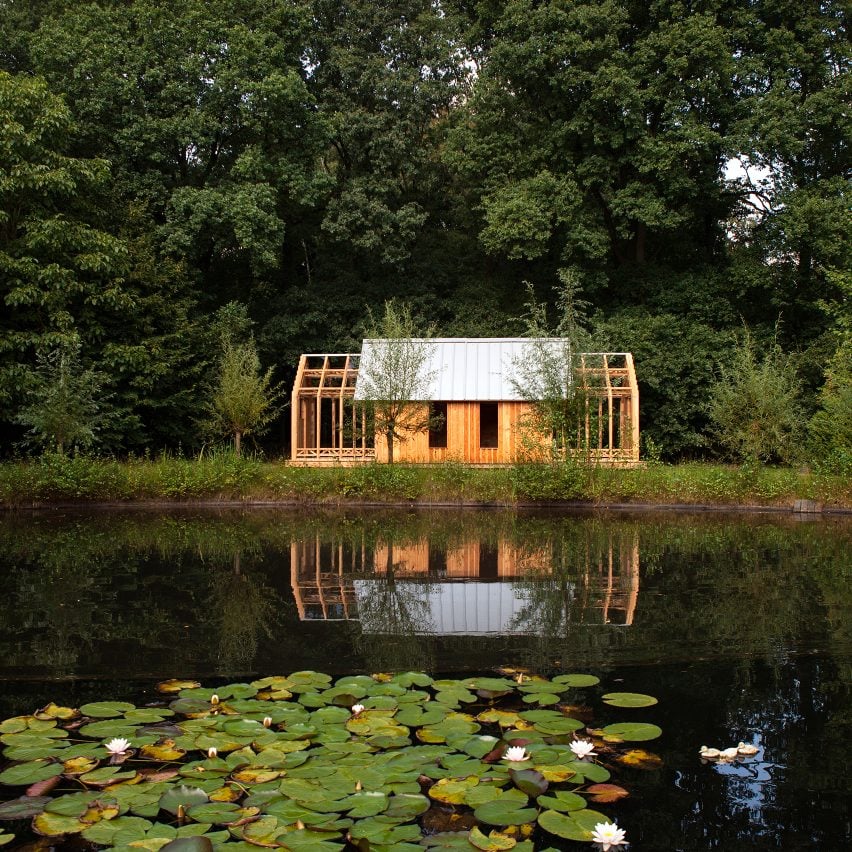
Garden House by Caspar Schols

Timber and glass walls slide along runners to reveal or enclose this gabled garden shed in Eindhoven, designed and built by Caspar Schols as a hobby space for his mother. Read more

http://ift.tt/2ehaojj