
House Luxembourg is a residential project designed by EPAD in 2015. It is located in Luxembourg City, Luxembourg. House Luxembourg by EPAD: “The renovation and interior transformation works in a 1920ies manor house in Luxembourg City proved to be a challenge for everyone involved in the project, above all for the client who has been living in the house during the four months long operations. The bad condition of the..
Boulogne-Billancourt Office / Studioninedots + Ateliers 115

© Peter Cuypers
- Architects: Studioninedots , Ateliers 115
- Location: 44 Rue Traversière, 92100 Boulogne-Billancourt, France
- Design Team: Albert Herder, Vincent van der Klei, Arie van der Neut, Metin van Zijl
- Area: 9300.0 sqm
- Project Year: 2016
- Photographs: Peter Cuypers
- Project Team: Wouter Hermanns, Daniel Aw, Freddy Koelemeijer, Eliano Dias Felicio, Pedro Piernas
- Engineering And Project Manager: Jean-Marc Saurer
- Partner: Ateliers 115 Architectes, Paris: Jean-Claude Martinez, Eric Brunel
- Contractor: AGB
- Facade Consultant: Interface; Dennis Soules, Fabrice Bourgon
- Structural And Services Consultant: Egis
© Peter Cuypers
From the architect. Boursorama Banque has moved into its new Parisian head office in Boulogne-Billancourt designed by Studioninedots. In collaboration with Ateliers 115, Studioninedots created a robust and clear building distinguished by its subtle recesses and terraces but foremost by the striking facade that interplays rhythms of bronze-coloured blades.
© Peter Cuypers
The bank building is situated on a section of the old Renault factory site in Paris. The plot Lot YA sits within a dense urban fabric and points with its southern tip towards the adjacent Parc Billancourt and the river Seine. This resulted in a paradox: optimal views of the park were desired but, simultaneously, incoming direct sunlight should be blocked.
Concept
Concept
Concept
Studioninedots approached the challenge with a clear solution: vertical aluminium blades. By placing them at an angle, the blades function to block sunlight during the harshest hours while retaining views. The spacing of the blades is determined by the amount of sunlight and the orientation, resulting in a large variety of facade compositions. As one moves around the building, the facades continuously change appearance. Placing the main entrance in the southern tip positions the bank prominently amongst the ‘front row’ on the park and also establishes an interesting vista through the inner court.
© Peter Cuypers
The building is designed to stand its place among the high rises on Avenue Pierre Lefaucheux. Utilising horizontal layers, for example in the form of recesses and terraces, connects it better to the smaller scale residential buildings in the neighbourhood.
© Peter Cuypers
Diagram
© Peter Cuypers
This site comprises the last large scale development within Greater Paris and will accommodate approximately 15,000 residents and occupants. The urban plan is designed by Patrick Chavannes. Renowned architects including Jean Nouvel, Dominique Perrault, KCAP, LAN and Baumschlager&Eberle have designed individual plots. Studioninedots won the invited competition in 2012 for the development of Lot YA, which was commissioned by an innovative, open-minded client.
YOU, Lot YA is the first project completed by Studioninedots in France.
© Peter Cuypers
Vo Trong Nghia Architects & ICADA Design a Private Home with a Roof Garden in NHA Trang

A House in Nha Trang is a residential project completed jointly by Vo Trong Nghia Architects & ICADA. It is located in NHA Trang, Khanh Hoa Province, Vietnam. A House in Nha Trang by Vo Trong Nghia Architects & ICADA: “The house is located in Nha Trang, a city in central Vietnam surrounded by the beautiful ocean and mountains. The client wanted a large house with a large garden. Answering..
Carl Hansen & Søn adds black frame to Hans J Wegner lounge chairs
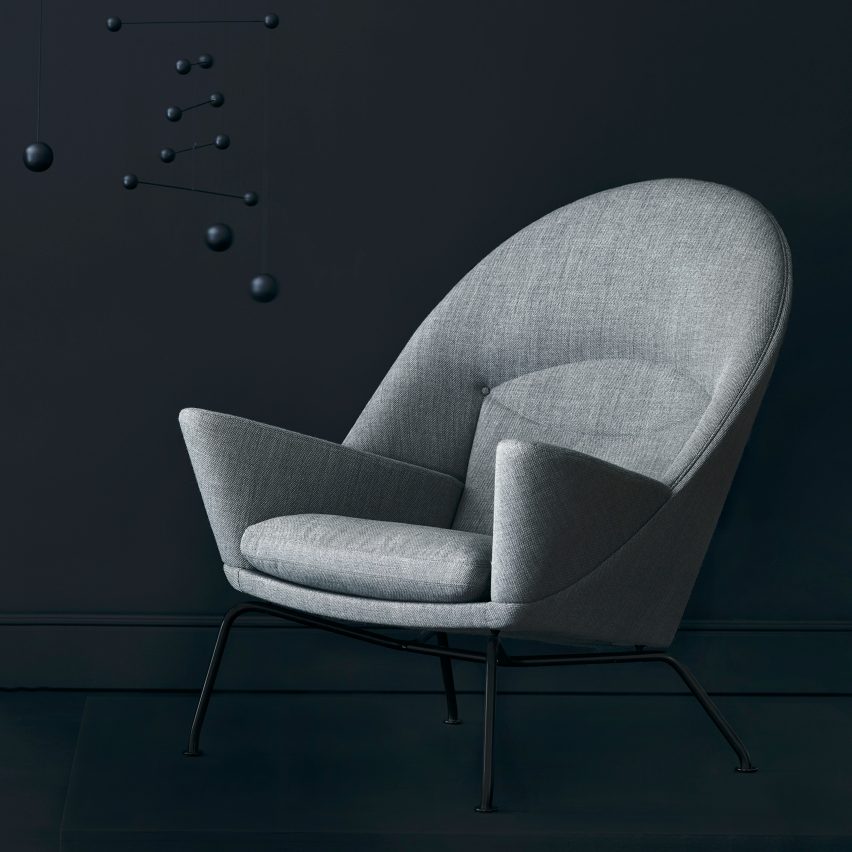
Hans J Wegner‘s Wing and Oculus armchairs have been updated with black frames by Danish brand Carl Hansen & Søn. Read more
House Z / Closer Architects

© http://www.aiphotography.eu
- Architects: Closer Architects
- Location: Prague, Czech Republic
- Architects In Charge: Martin Cermak, Matej Beranek
- Area: 240.0 sqm
- Project Year: 2016
- Photographs: www.aiphotography.eu
© http://www.aiphotography.eu
The Villa “Z” was designed on a south sloping plot in a residential part of Prague, Czech Republic. The property is quite small–about 650 square meters. There are walls of the neighbor’s houses on the south and east borders. On the west side there is a house just 2,5 meters from the property line. Its windows are right on the facade facing the client’s house. On the positive side there is 10 meters of space from the road on the north, which makes the plot optically bigger. A major requirement of the client was to design the best house with a maximum of 350 m2 of living area which included four bedrooms, a garage, living rooms, spa etc.
© http://www.aiphotography.eu
These limitations were the most significant in designing the concept for the house. There are neighbors on the east and west sides close to the property, who can watch what is happening on the site what we wanted to get rid of. This inspired us to design the house to be open to south and within itself using a central patio in the second floor. This takes advantage of the nice south view to the hills and a scenic forest on the horizon. On the south sides, we made all the living areas with private terraces which are always hidden or somehow covered from the view of neighbors. Other facades are using just wide narrow windows on the top of the rooms to bring light into utility rooms like bathrooms and the staircase, but keep privacy.
© http://www.aiphotography.eu
The house is vertically divided into three levels. The first level is partly underground and it opens to the terrace and the garden on the south side. On this floor there is a utility room with all technical equipment, the main staircase and the spa zone (with sauna and bathroom). On the side facing the garden, there is a bedroom for guests and a party room or fitness room which is focused to the outside terrace. This area is mostly covered by the middle floor. This is useful when you want to use the terrace, even in rainy weather. The facade of this level is covered by a special black plaster so this basement is a hidden foundation for the white house above which optically lets it levitate above the ground.
Courtesy of Closer Architects
The middle floor is accessible at the same elevation as the road on the north side. On this level there is a garage for two cars, an entrance hall, main staircase, restroom, two kitchens (open and closed/caterer’s), a dining area and a living room. Along the south façade, especially in front of the kitchen, there is a big terrace which is cantilevered above the garden. This is also partly covered by the construction of the top floor. This is used mostly as a dining terrace and is accessible through the sliding windows from the kitchen. The living room is covered by a sloping roof which allows the direct vertical connection through the master staircase with the gallery and master bedroom on the top floor. The sloping roof brings the feeling of continual super elevated space. This idea is also supported by placing a triangular window on the facade heading to the private master terrace in front of the master bedroom and the gallery. This window brings light to the interior, even if the main windows on the south are covered. The triangular window also allows the visual connection between the private master terrace and the living room or gallery. The master staircase railing brings a dynamic shape into the interior as does the other furniture like the kitchen made of white tri-stone and the black painted oak book case. To the east, behind the master staircase there is a sloped window with a nice view to the Zen garden with a proposed stone statue, which would be illuminated from below. Next to the window, there is a built in couch, where you can have a nap with a book while looking at the statue.
© http://www.aiphotography.eu
The top floor is accessible either by the main staircase on the west side of the house – this is primarily used by two children, who have their bedrooms and restroom in the west wing, or by the master staircase from the living room. This is mostly used by the parents going to their bedroom (which has a private en-suite bathroom as well). There is a private, almost triangular master terrace, in front of the bedroom, which is also accessible from the gallery. It is bordered on three sides by a facade on the west, by windows on the north and east. A scenic view opens to the south through a small gap. This shape allows the owners to use the terrace with 100% privacy and still have a nice view to the forest on the opposite side of the valley and the distant horizon.
© http://www.aiphotography.eu
The middle and the top floor exteriors create dynamic black and white sloped spiral blocks which are twisted together. The black part – made of high glossy black painted glass panels and windows – divides the white cantilevered volumes which helps them appear like they are floating in the air. Additionally, the volume of the middle and top floor floating above the black basement—increases the sense of the Villa’s overall interlocking three dimensional volume. Together these high contrast components, allow the house to embody the dynamic energy of a statue while optically decreasing its apparent volume (more than if it were monochrome).
© http://www.aiphotography.eu
The interior design elements flow continuously from the exterior to the interior. The same dynamic shapes and colors are used for the furniture’s angles, staircase railings and even ceilings, all reinforced by LED light stripes.
© http://www.aiphotography.eu
We took extensive care to create and design the architectural details to support the client needs through the Closer Architects vision. We give many thanks to the talented sub-contractors who were really partners and helped to finish such a complex building within a reasonable budget.
A Home-Remodeling for a Young Couple in Brescia, Italy

Lodge is a private home located in Brescia, Italy. Completed in 2015, it was designed by FLUSSOCREATIVO DESIGN STUDIO. Lodge by FLUSSOCREATIVO DESIGN STUDIO: “A traditional apartment, a young couple and a big desire of living modern. To buy a house is always a complicated moment, where desires and compromises often clash, where budget and expectations don’t always correspond. In this apartment, located in Brescia province, the clients found come..
Our new Pinterest board features stunning architecture in Mexico
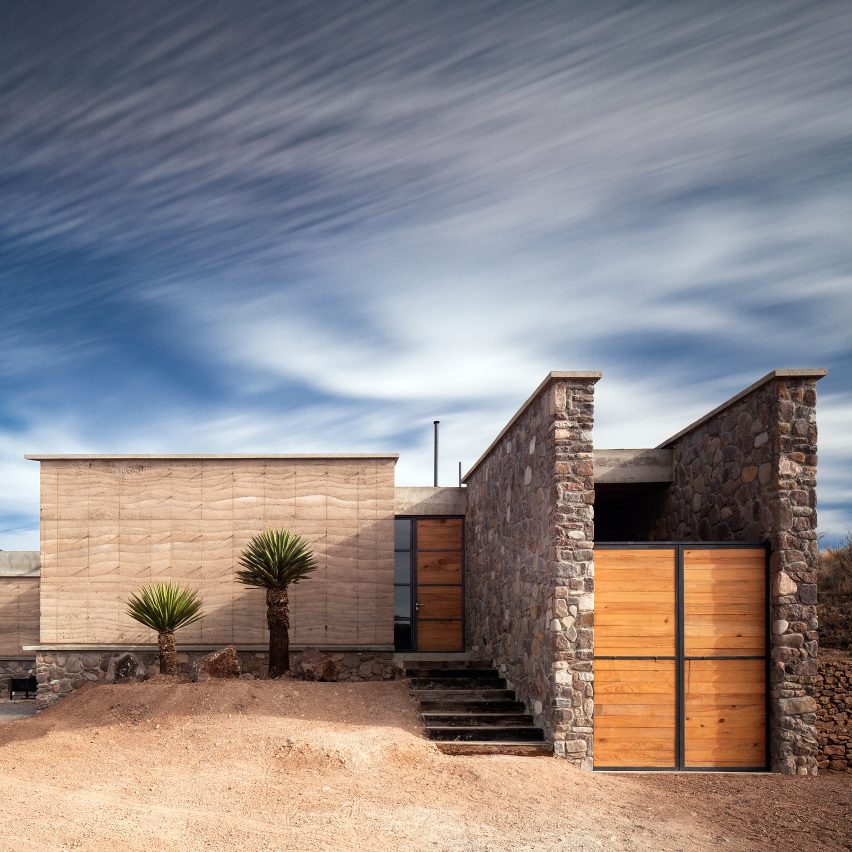
We’ve just got back from Design Week Mexico, so we’re spotlighting beautiful architecture projects from the country on our latest Pinterest board. Examples include a white crystalline church and a rammed-earth villa. Follow Dezeen on Pinterest ›
Happier Café – Paper Space / JCA

© Zachary C. Hone
- Architects: JCA
- Location: Taipei, Taiwan
- Lead Designers: Johnny Chiu, Nora Wang, Maria Isabel Lima
- Area: 315.0 sqm
- Project Year: 2016
- Photographs: Zachary C. Hone
- Function: Space Furniture, Commercial Space
- Outdoor: 212 sqm
© Zachary C. Hone
A collaboration that started with a discussion of what makes one feel happy, whether tangible or a feeling, from small pleasures tolife conquests. Happier cafe is a place for change and evolution, where people feel comfortable but also are key attributes to the space. For that, we believe each person sharing the space should be able to change and contribute to its creation.
Diagrams
Diagram
We imagined it as an art installation, given the lease was granted for only six months, something perhaps temporary, nonetheless imaginative and playful. Using paper was an ideal scheme to allow people to express, build, and adjust the environment according to their mood. Paper became a simple tool that records the change of the space, and the idea that each one of us can seek and manipulate their own search for balance and transformation.
© Zachary C. Hone
Plan
© Zachary C. Hone
Large paper rolls create a time machine installation, forming walkways, niches, and intimate spaces for coach sessions, gatherings and relaxation. The cafe bar is designed as an open counter where users hand pick their snacks and prepare their drinks, and are trusted to pay and collect their own change, enabling and sharing the responsibility and maintenance of the space to the community, an overall feeling that directly connects the people and space together.
© Zachary C. Hone
Gracia Studio lifts steel-box house in Tijuana on a concrete base
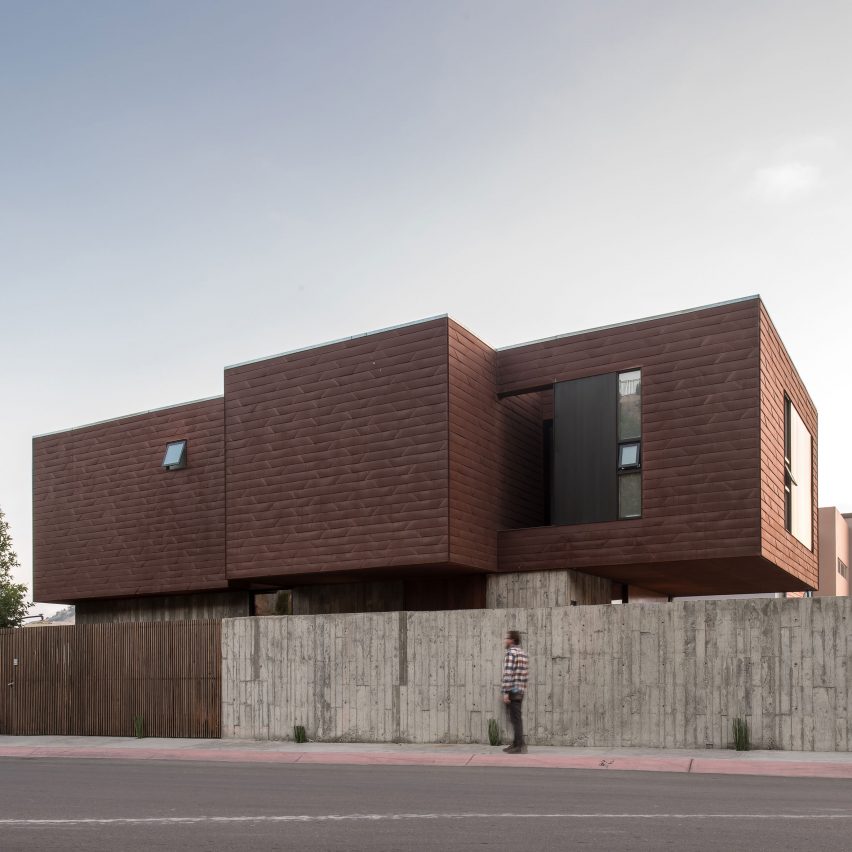
Mexican-American firm Gracia Studio has completed a single-family home in the city of Tijuana that comprises a weathering-steel volume perched atop a monolithic concrete ground floor. Read more
Design Week Mexico and Museo Tamayo Launch Museum of Immortality Pavilion

Courtesy of Design Week Mexico
Now in its eighth edition, Design Week Mexico, in collaboration with Museo Tamayo, has unveiled the design for a major public architectural pavilion designed by leading German architects Nikolaus Hirsch and Michel Müller. Until Spring 2017, the installation will be a cultural attraction at Chapultepec Park, Mexico City’s largest public park.
Courtesy of Design Week Mexico
Entitled Museum of Immortality II, the project is based on an unrealized concept by German-Russian philosopher Boris Groys, and draws on 19th Century Russian philosopher Nikolai Federov’s “notion of the ‘Common Task,’ which envisions the creation of the social and political conditions necessary to achieve technological immortality and material resurrection for all men who have ever lived. Federov believed that museums provided the ideal setting for such resurrections to take place, having developed preservation and conservation techniques.”
Courtesy of Design Week Mexico
Made up of modules assembled into a six-by-six and eight-meter-high hexagonal arrangement, the installation is situated in Museo Tamayo’s gardens in a vertical configuration—opposite of that of the project’s arrangement while it was on display in Beirut as Museum of Immortality I, when its configuration was horizontal.
Courtesy of Design Week Mexico
The architectural structure is additionally accompanied by a 30-minute video by Anton Vidokle and Oleksiy Radynski that explored the theoretical premises of the project.
Courtesy of Design Week Mexico
Courtesy of Design Week Mexico
We are thrilled to show a prototype for the Museum of Immortality in Mexico City, said architects Hirsch and Müller. Its deep fascination with death cults makes Mexico a very special context for such a speculative project. Based on theories of cosmism and resurrection by philosopher Boris Groys and artist Anton Vidokle, we try to speculate on the limits of what we call design and the material world. We ask: can we design after-life? Can—as the context of the Museo Tamayo suggests—humans be preserved like museum artifacts?
Courtesy of Design Week Mexico
Courtesy of Design Week Mexico
News via Design Week Mexico.

