The Gardens of Gabriel / 5+1AA Alfonso Femia Gianluca Peluffo


© Luc Boegly

© Luc Boegly


© Luc Boegly


© Luc Boegly


© Luc Boegly


© Luc Boegly

  • Architects: 5+1AA Alfonso Femia Gianluca Peluffo
  • Location: 92600 Asnières-sur-Seine, France
  • Architect In Charge: Alfonso Femia, Gianluca Peluffo, Simonetta Cenci, Nicola Spinetto
  • Design Team: Étienne Bourdais, Roxana Calugar, Sara Massa, Marzia Menini, Francesca Recagno, Francesca R. Pirrello, Sara Traverso
  • Area: 10518.0 sqm
  • Project Year: 2016
  • Photographs: Luc Boegly
  • Client: SCI Asnières Seine AB represented by COFFIM and Eiffage Immobilier Île-de-France
  • Structure: Eiffage Construction Fluides
  • Acoustique: Meta Acoustique AMO
  • Economy : Tohier
  • Sps: OTCC
  • Eiffage Immobilier Bdc: BTP Consultants
  • Project Director: Nicola Spinetto
  • Project And Site Manager: Aude Robert
  • Collaborators: Caterina Pini, Vittoria Paternostro, Maud Laronze
  • Site Team : Alfonso Femia, Nicola Spinetto, Aude Robert
  • Artist Ceramics Frames: Danilo Trogu – La casa dell’arte Albisola
  • Stonemason Stone Angels: Frédéric Thibault – Louis Geneste Paris
  • Price : 18.7 M euros

© Luc Boegly

© Luc Boegly

From the architect. After two years of work, 5+1AA Alfonso Femia Gianluca Peluffo architecture agency ends a housing complex of four buildings with a shop in Asnières-sur-Seine (92).


© Luc Boegly

© Luc Boegly

The project is situated between the end and the beginning of an urban axis of fundamental importance for the whole city because of the forthcoming opening of a major train station for the Grand Paris Line. The trapezoidal shape of the area of the project is particularly evident in aerial images. A first reflection arises: how to manage this arrangement? How to present the project towards Grésillons Avenue and the train station, since this area represents a structural interface from a functional point of view? How to dilate, in addition to the space already provided, this area and make it a true gateway to the neighbourhood?


Courtesy of  5+1AA Alfonso Femia Gianluca Peluffo

Courtesy of 5+1AA Alfonso Femia Gianluca Peluffo

The project was developed thanks to an analysis of possibilities: the atmosphere, the landscape light, the environmental constraints and the formal game that consists in a series of cuttings, openings, slidings defining the three bodies of the building. The city is in continuous dialog with the internal park, creating a building/landscape rhythm. The architectural writing of the project is based on this notion of rhythm (openings, materials, treatment of the top floors): it favors, in a common grammar, the diversity of the urban landscape created between city and nature.


© Luc Boegly

© Luc Boegly

The project is characterised by a reafirmation of the decor with the use of ceramics and the ornamentation of the façades represented by six angels. This reafirmation invites to reconsider housing as a home, a place to live, and not only an addition of requirements to satisfy. Unity, urban rhythm, classical vertical stratification, a unique matter that integrates some shades able to foresee the soft metamorphosis towards the sky, where are the ancestors of the cities, observing us, looking towards the horizon, towards the sky. The decoration reappears in the city as a means of identity and pleasure, beauty and culture.


Courtesy of  5+1AA Alfonso Femia Gianluca Peluffo

Courtesy of 5+1AA Alfonso Femia Gianluca Peluffo

The two façades situated on the edge of the site bene t from a specific treatment. The northern façade gives onto the area in front of the RER regional high-speed train station and acts as an entrance to the urban development zone. The shop on the ground floor has a completely glass façade. As for the south façade it presents the urban face of the project along with the car park, it is in total contrast with the glassfronted façade to the north.


© Luc Boegly

© Luc Boegly

The programme consists of 144 affordable housing units and 39 social housing units going from R+1 to R+8, and includes 360 square metres of commercial space. The project’s composition of volumes is divided up into three buildings developed mainly along the length of the RER line C. This segmentation allows for the central section to remain completely visible, a reduction in the number of solely north-facing units and the creation of a supplementary southfacing façade. The different blocks are interlocked, in a way that highlights the unitary elements of the composition and encourages urban diversity.


© Luc Boegly
© Luc Boegly

http://ift.tt/2e7o5FZ

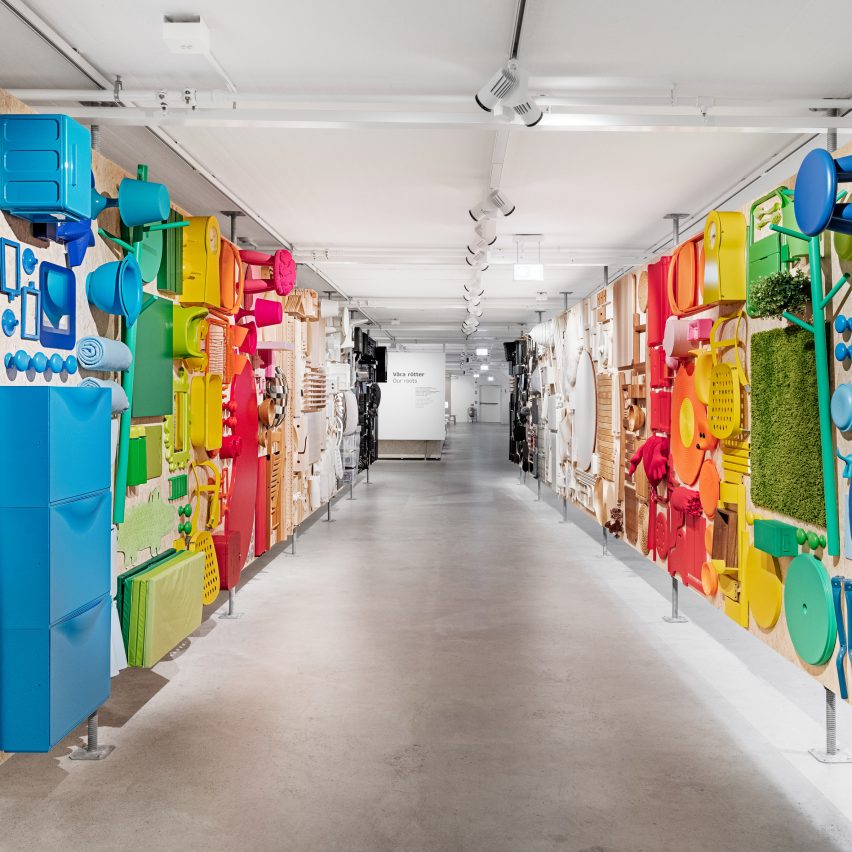
Form Us With Love designs interactive exhibitions for IKEA Museum in Sweden

ikea-museum-form-us-with-love-museum-interiors-sweden_dezeen_2364_sq

Form Us With Love has designed the exhibitions for the new IKEA museum in Älmhult, including a giant marble run and a rainbow-hued retrospective of the company’s most famous products. Read more

http://ift.tt/2e9pMx7

Kfar Saba Primary School / Regavim + architects


© Yoav Peled

© Yoav Peled


© Yoav Peled


© Yoav Peled


© Yoav Peled


© Yoav Peled

  • Architects: Regavim + architects
  • Location: Kefar Sava, Israel
  • Architect In Charge: Eran Zilberman
  • Area: 2800.0 sqm
  • Project Year: 2016
  • Photographs: Yoav Peled
  • Building Team: Yehuda Reuven, Liya Ozer
  • Interior And Funiture Team: Liya Ozer, Amit Haas
  • Client: Engineering department, Kfar Saba municipality

© Yoav Peled

© Yoav Peled

From the architect. In accordance to the guidelines given by the Israeli ministry of education (who is financing a substantial part of the building cost of educational facilities in the country) the site was provided by the municipality for this project. It was enough space to contain a primary school, a gymnasium, two basketball courts and exterior areas for the entertainment of the 700 children attending this compound.


© Yoav Peled

© Yoav Peled

The site position plan resembles a “Tetris” game structure. Each part of the whole creates the negative space of the other, making the site organization – simple, straight forward, and coherent.


© Yoav Peled

© Yoav Peled

The entrance to the compound is from the south east corner, through a public square. As one passes the guard booth and enters the compound, the school building is revealed in all of its glory and function as a barrier enclosing the front playground for the youngest students.


© Yoav Peled

© Yoav Peled

The 2 story building, a rectangular elongated shape was designed with two distinguished wings: The Entrance hall and Administration wing, and the classrooms with its appendix wing.


© Yoav Peled

© Yoav Peled

The building designs leading idea was to create a simple homorganic envelope. A simple building but not simplistic, an elongated box, dignified and at the same time humoristic and loose.


Section

Section

Section

Section

Section

Section

Mostly cladded with white stone, the envelope has twists in it –  a plastic, 3 dimensional and staggered fenestrations, resembling the random, chaotic nature of the young students. These fenestrations were cladded with “Fundermax” 8 mm exterior HPL to appear in contrast to the white monolithic walls.


© Yoav Peled

© Yoav Peled

The sun direction in the mornings changes the façade and highlights its 3-dimensional appearance giving the fenestrations impressive depth.

The simplistic structure hides within itself two main exterior spaces that were the seeds of the whole design – the Patios.


© Yoav Peled

© Yoav Peled

Those two patios were designed as “exterior classrooms” for the enjoyment of the young students. The patios are wide and intimate at the same time and are an integral part of the building, accessible from within and from outside. Their harmonious atmosphere and peaceful design makes them attractive for the young users who find them a joyful-shaded-protected play area.


© Yoav Peled

© Yoav Peled

Moreover, the patios location in the structure makes them easy spaces for future growth in the next decade as the neighborhood population grows. They can be closed and built upon adding usable space to the building without harming and damaging the appearance and the integrity of the façade.


© Yoav Peled

© Yoav Peled

Each patio includes seating areas and two poplar trees giving them a peaceful “Zen” feeling. The design is in a way a dialogue with the “Mediterranean court yard” known in these part of the world due to the harsh climate and hot temperatures.


© Yoav Peled

© Yoav Peled

The general design derives its logic from that same courtyard idea so that the building is not a simple closed envelope, rather it’s a long folded shape with many exist and exterior spaces enclosed between the building volumes.


© Yoav Peled

© Yoav Peled

As a result, the building is highly ventilated, lit, and shaded simultaneously. The corridors function as transparent hallways –  lighting and reflecting the activities inside and outside, and still being protected from the sun.


© Yoav Peled

© Yoav Peled

According to the program given from The Ministry of Education, the building was designed to have three sections that could have been built in stages without harming the ability to learn during construction.

The design commission also included designing the interior and the furniture. A holistic approach led to the concept of using “quiet-calm” soft bright colors. Finishing materials were chosen to look young and fresh.

http://ift.tt/2e2He7y

The South Yard / Advanced Architecture Lab + Atelier UPA


© Arch-exist photography

© Arch-exist photography


© Arch-exist photography


© Arch-exist photography


© Arch-exist photography


© Arch-exist photography

  • Client: Chuanlan Investment

© Arch-exist photography

© Arch-exist photography

From the architect. The South Yard, namely a southern courtyard, is located in Sanjia, Yangshan Village, Guling Town, Mashan County, Nanning, Guangxi Province. Through ages, this tranquil and plain village has been settled by three clans: Huang, Liang and Tang, thus named Sanjia (Three Surnames). The unparalleled Karst Landform surrounds the village, forming a green barrier naturally. In the bottom of mountains, a brooklet flows slowly through the village, with children swimming and housewives washing vegetables and clothes beside it. The melodious sound of three-part folk music comes from far away, attractive and pleasant to the ear.


© Arch-exist photography

© Arch-exist photography

The birth of the South Yard begins with the ‘Beautiful Village Reconstruction Project’. Under the dramatic reconstruction of village, most of old houses were removed, leaving a lonely old cob-brick house beside a creek, hidden in a corn field. Originally as a private dwelling with a history of more than sixty years, the house has been repaired many times by its owner, ended up abandoned. And its owner built a new brick-concrete house in the opposite of the river. Partly dilapidated, its adobe walls was mottled and ruined and the inner space was cramped and dim. But surprisingly the gable wall forward brooklet was intact with a angle of its roof nearly 45°. Shaded by verdant hills in the distance and surrounded by new houses of village, It looks considerably unique.


© Arch-exist photography

© Arch-exist photography

Floor Plan

Floor Plan

© Arch-exist photography

© Arch-exist photography

Living in Nanning, owner teacher Huang always devotes herself to rural building construction and children’s natural education activities. With her persistence and effort, this old house has been preserved integrally, being the only memorial of this village. The South Yard is the connector between city and country. Architects conceived an ‘old and new’ method: reconstructing the old house completely and constructing a new open building in an open area beside it. 


© Arch-exist photography

© Arch-exist photography

Section

Section

© Arch-exist photography

© Arch-exist photography

Because of many interlaced walls inside the old house,internal space was narrow. Therefore, architects removed the internal walls and rebuilt them with steel structure to form larger space and to add a layer inside. The steel structure and brick walls support a new roof and make the dilapidated wall more stable. Workers rebuilt the collapsed wall with cob bricks removed from internal walls, torn down tiles from roof and then put down them again carefully. Old and new materials, earthly yellow bricks, white steel structure and brown boarding, are blended in the old house, producing gallery-like artistic effect. Brilliant sunshine pouring from skylights and flickering shadows make people feel the flight of time, and make this 60-year-old house revitalization.


Isometric

Isometric

Isometric

Isometric

Architects built a new house in a corn field between the old house and the brooklet to enlarge the space and increase the functions of the old house. In order to preserve the gable wall, the new house was built separately from the old one. The majority of walls made from glass not only ensure transparency of the new house but also serve as a foil for the dignified old one. The main structure of the new house is made from high strength bamboo fiber composites which are as slender and warm as woods. Courtyards with different scales planned in every direction of the new building and glass with various transparency bring outside picturesque views into the building. The only cob-brick wall of the new house is installed on one side of the kitchen, which is design to correspond to the texture of the old one. The cob-brick walls of these two buildings will show similar trace of time after many years. These two buildings, a new one and an old one, a heavy one and a light one, provide the perfect foil for one another.


© Arch-exist photography

© Arch-exist photography

Although villagers did not fully understand why this kind of house was built in the village after project of South Yard was completed, all of them said they like these two buildings because of the familiar bricks and tiles of the old one and the kindly new one. Children in the village like coming here and because of many courtyards inside the building they can run, play and read lightheartedly. Tourists like coming here as well and they find this is a place completely open and full of the color of living. So they like to have a rest and take a picture of the buildings.


© Arch-exist photography

© Arch-exist photography

The South Yard is the last old building of Sanjia Village. It witnesses the transition of village’s history and keeps close watch on the stunning natural beauty with a brand new living posture.


© Arch-exist photography

© Arch-exist photography

http://ift.tt/2dKEfmh

A Simple Home for a Growing Family / Pencil Office


© Khoo Guo Jie

© Khoo Guo Jie


© Khoo Guo Jie


© Khoo Guo Jie


© Khoo Guo Jie


© Erik L’Heureux


© Khoo Guo Jie

© Khoo Guo Jie

From the architect. A Simple Home for a Growing Family addresses one of the more ubiquitous challenges of raising a family of five; preserving spaces for adult entertaining and relaxation while permitting the joys and mess of childhood to playout simultaneously. The ability to be together and open or be separate and contained allows the home to be reconfigured based on a variety of daily inhabitations; from the afternoon childhood play time returning from school, to the early evening baby nap, to the noise and excitement of a family dinner in the kitchen, to entertaining with adult guests in the dining room enjoying a glass of wine. 


© Khoo Guo Jie

© Khoo Guo Jie

The design utilizes a series of operable screens to open or separate space depending on the needs of the family. The design allows for four states of enclosure and openness; from cross ventilated, breezy and open to the exterior, to air conditioned and internally open yet distinct from the exterior, to separations between public and private use internally allowing children play areas distinct from formal entertaining areas, and finally to a completely separated state for quietude, evening entertaining, and concurrent sleeping for children. This flexibility also creates a variety of atmospheres and relationships to the equatorial climate of Singapore.


Floor Plan

Floor Plan

The timber screens allow for a visual interference while permitting light to pass through in a veil like quality of hazy diffuse daylight and noise reduced ambience. Laminated glass, positioned between the timber verticals break down space both acoustically and climatically, articulating one space from the other in quietude with distinct states of comfort. The vertical screen pattern likewise mitigates sound reverberation in the public areas of the home creating a hushed atmosphere even with high levels of noise with children at play.


© Erik L’Heureux

© Erik L’Heureux

A series of modifications to the original apartment maximize reuse of existing materials. The original marble floor is retained, re-polished and extended, as is the existing timber floor. The cerused oak used throughout the home is selected to match the existing tonality while allowing daylight to reflect into the relatively deep floor plate naturally illuminating the interior. A long gallery, wrapped in cerused oak center to the sleeping area links four bedrooms into a distinct private zone. Two long balconies flank the home, providing additional space for evening relaxing to the master bedroom and living space on the east elevation, while the western facing balcony is repurposed for service areas while minimizing heat gain from the afternoon sun.


Diagram

Diagram

A minimal material palette, select furniture choices to complement the existing collection and an overall attention to craftsmanship tie the design together into a simple yet intelligent design for a growing family all attune to the realities of family life on the equator. 


© Khoo Guo Jie

© Khoo Guo Jie

http://ift.tt/2dx86Ml

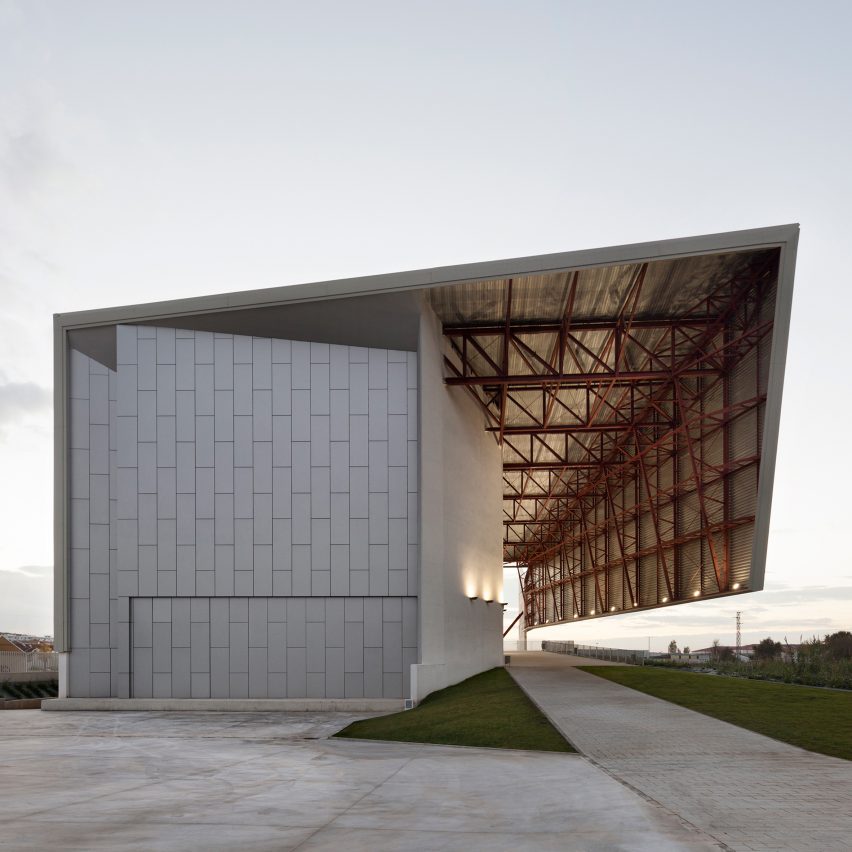
Dramatic folded canopy shelters riverside terrace of MX_SI Architects’ auditorium in Spain

Lucena auditorium by MX_SI

A huge canopy extends from one side of this auditorium in the Spanish province of Córdoba and folds over a riverside terrace, encouraging visitors to loiter around before and after performances. Read more

http://ift.tt/2e6IRpf

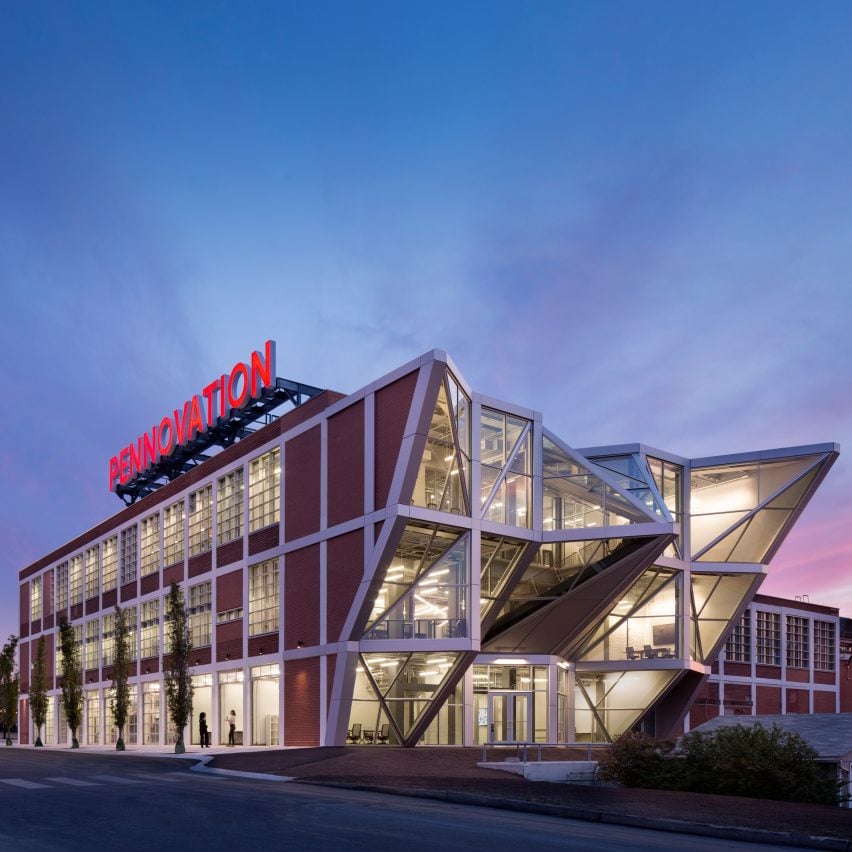
Hollwich Kushner creates University of Pennsylvania incubator space with spiky glass facade

Pennovation Center by Hollwich Kushner

US studio Hollwich Kushner has transformed an old paint factory into the Pennovation Center, which contains labs, co-working areas and social spaces for entrepreneurs and researchers. Read more

http://ift.tt/2dwSjwU

The Whittaker Cube / Dravitzki & Brown


© Alister Brown

© Alister Brown


© Alister Brown


© Alister Brown


© Alister Brown


© Alister Brown

  • Architects: Dravitzki & Brown
  • Location: Kakanui, New Zealand
  • Architect In Charge: Alister Brown, Katrina Dravitzki
  • Area: 142.0 sqm
  • Project Year: 2016
  • Photographs: Alister Brown
  • Landscaping Designer: Paul Whittaker
  • Construction: Bravo Construction

© Alister Brown

© Alister Brown

The Whittaker Cube was designed as two levels of just 8 metres x 8 meters with immaculate detailing of durable materials and a cost effective structure. 


© Alister Brown

© Alister Brown

Despite the compact footprint the house features three bedrooms and the upstairs living spaces feel light and spacious.


Plan 1

Plan 1

Located in the small sea side settlement of Kakanui near Oamaru although maximizing sea views was important this had to balance the need for privacy from the street and neighboring properties.


© Alister Brown

© Alister Brown

Plan 2

Plan 2

© Alister Brown

© Alister Brown

The cedar cladding is used as a rain screen and allows flashing’s to be hidden, which creates a simple uncluttered look, the modern interior features American Oak feature throughout.


© Alister Brown

© Alister Brown

http://ift.tt/2dMSNEy

OBR with Michel Desvigne Wins Competition to Design New Central Park in Prato, Italy


© OBR Paolo Brescia and Tommaso Principi with Michel Desvigne Paysagiste

© OBR Paolo Brescia and Tommaso Principi with Michel Desvigne Paysagiste

OBR Paolo Brescia and Tommaso Principi and Michel Desvigne Paysagiste have been announced of the winners of first prize in the international competition to design the new Parco Centrale (Central Park) in Prato, Italy.

The 230-team competition asked architects to design a new 3-hectare urban park in Prato’s historical city center on the site of the former city hospital, within the perimeter of the city walls. The project is intended to meet the needs of a contemporary city while driving socio-economic development of the city center through “enhancements to its touristic vocation, sustainability and accessibility.”

The jury, chaired by architect Bernard Tschumi, unanimously selected the winning proposal for “its ability to offer to the city of Prato an original, innovative and practical solution.” Commented Tschumi on the design, “The project is remarkable in the way it understands and celebrates the history of Prato and of its medieval walls. At the same time, it looks to the future and to the development of the city and its diverse population.”

The jury also released the full rankings of the 10 finalist teams. Learn about the winning design and see the entries from all 10 of the finalists, after the break.

Winner: OBR Paolo Brescia and Tommaso Principi + Michel Desvigne Paysagiste


© OBR Paolo Brescia and Tommaso Principi with Michel Desvigne Paysagiste

© OBR Paolo Brescia and Tommaso Principi with Michel Desvigne Paysagiste

Description via Il Parco Centrale di Prato Competition.

The winning project pays a lot of attention to the urban fabric of the city of Prato and to its extreme regularity: an orthogonal grid which, as a trace of the ‘cardo’ and the ‘decumano’ of the Roman grid, is still very persistent and is striking for its spatial and temporal diffusion. The project hence starts from the memory of the place and from its original urban forms to manipulate them, through abstraction. It enhances the historical city wall, it evokes traces of the Italian Renaissance gardens, organized according to perspectives, pergolas and hedges, and reinterprets them in a contemporary language. To the north of the site, the pavilion is a one-storey structure, open towards the park. Beside restaurants and other park-related facilities, it accommodates ample spaces for artists’ ateliers and temporary exhibitions.


© OBR Paolo Brescia and Tommaso Principi with Michel Desvigne Paysagiste

© OBR Paolo Brescia and Tommaso Principi with Michel Desvigne Paysagiste

© OBR Paolo Brescia and Tommaso Principi with Michel Desvigne Paysagiste

© OBR Paolo Brescia and Tommaso Principi with Michel Desvigne Paysagiste

In the words of the designers: “The park itself soars to the status of open-air museum. In the heart of the park contemporary sculptures are exhibited, along with a collection of plants that will be selected not merely for their botanical features, but also for their aesthetic qualities, their colors, their exuberance. Displayed in such manner, these natural elements will become art pieces themselves.”


© OBR Paolo Brescia and Tommaso Principi with Michel Desvigne Paysagiste

© OBR Paolo Brescia and Tommaso Principi with Michel Desvigne Paysagiste

© OBR Paolo Brescia and Tommaso Principi with Michel Desvigne Paysagiste

© OBR Paolo Brescia and Tommaso Principi with Michel Desvigne Paysagiste

The project for the new 3-hectare park consists of two functional lots. The first lot includes the complete creation of the green areas and therefore of the park, as well as a built volume with a minimum area of 500 square meter of gross floor area containing, among other things, the services essential to the park itself. The second functional lot includes the creation of other buildings, up to a maximum of 3,000 square meters of gross floor area. 


© OBR Paolo Brescia and Tommaso Principi with Michel Desvigne Paysagiste

© OBR Paolo Brescia and Tommaso Principi with Michel Desvigne Paysagiste

© OBR Paolo Brescia and Tommaso Principi with Michel Desvigne Paysagiste

© OBR Paolo Brescia and Tommaso Principi with Michel Desvigne Paysagiste

For the city, the creation of the urban park in the former hospital area represents an exceptional and unrepeatable occasion. The new urban park must first of all be able to change the vision and perception not only of the new place that will be created, but it must also alter the perception of the downtown areas adjacent to it, conferring awareness that a new part of the city has been created inside the walls. We will not come upon an area closed off by walls and gates, but we will detect a prevalently open area capable of becoming a hub of vitality for the center and for the city outside the walls.


© OBR Paolo Brescia and Tommaso Principi with Michel Desvigne Paysagiste

© OBR Paolo Brescia and Tommaso Principi with Michel Desvigne Paysagiste

2nd place: Ferdinand Ludwig (Baubotanik)


© Ferdinand Ludwig (Baubotanik)

© Ferdinand Ludwig (Baubotanik)

© Ferdinand Ludwig (Baubotanik)

© Ferdinand Ludwig (Baubotanik)

© Ferdinand Ludwig (Baubotanik)

© Ferdinand Ludwig (Baubotanik)

3rd place ex aequo: Benedetta Tagliabue (EMBT | Enric Miralles – Benedetta Tagliabue)


© Benedetta Tagliabue (EMBT | Enric Miralles – Benedetta Tagliabue)

© Benedetta Tagliabue (EMBT | Enric Miralles – Benedetta Tagliabue)

© Benedetta Tagliabue (EMBT | Enric Miralles – Benedetta Tagliabue)

© Benedetta Tagliabue (EMBT | Enric Miralles – Benedetta Tagliabue)

© Benedetta Tagliabue (EMBT | Enric Miralles – Benedetta Tagliabue)

© Benedetta Tagliabue (EMBT | Enric Miralles – Benedetta Tagliabue)

3rd place ex aequo: ELEMENTAL


© ELEMENTAL

© ELEMENTAL

© ELEMENTAL

© ELEMENTAL

© ELEMENTAL

© ELEMENTAL

4th place ex aequo: Alvisi Kirimoto + Inside Outside


© Alvisi Kirimoto with Inside Outside

© Alvisi Kirimoto with Inside Outside

© Alvisi Kirimoto with Inside Outside

© Alvisi Kirimoto with Inside Outside

© Alvisi Kirimoto with Inside Outside

© Alvisi Kirimoto with Inside Outside

4th place ex aequo: Dogma + Elia Zenghelis


© Dogma with Elia Zenghelis

© Dogma with Elia Zenghelis

© Dogma with Elia Zenghelis

© Dogma with Elia Zenghelis

© Dogma with Elia Zenghelis

© Dogma with Elia Zenghelis

4th place ex aequo: MAXWAN Architects + Urbanists


© MAXWAN ARCHITECTS + URBANISTS

© MAXWAN ARCHITECTS + URBANISTS

© MAXWAN ARCHITECTS + URBANISTS

© MAXWAN ARCHITECTS + URBANISTS

© MAXWAN ARCHITECTS + URBANISTS

© MAXWAN ARCHITECTS + URBANISTS

5th place ex aequoDGT Architects (DORELL.GHOTMEH.TANE)


© http://ift.tt/2dd4lKY

© http://ift.tt/2dd4lKY

© http://ift.tt/2dd4lKY

© http://ift.tt/2dd4lKY

© http://ift.tt/2dd4lKY

© http://ift.tt/2dd4lKY

5th place ex aequo: Jakob + MacFarlane Architects with Coloco


© Jakob + MacFarlane Architects with Coloco

© Jakob + MacFarlane Architects with Coloco

© Jakob + MacFarlane Architects with Coloco

© Jakob + MacFarlane Architects with Coloco

© Jakob + MacFarlane Architects with Coloco

© Jakob + MacFarlane Architects with Coloco

5th place ex aequo: TURENSCAPE


© TURENSCAPE

© TURENSCAPE

© TURENSCAPE

© TURENSCAPE

© TURENSCAPE

© TURENSCAPE

Along with the commission for the project, the winning team has been awarded an prize of 40.000 Euro. Each finalist will receive a reimbursement of 13.000 Euros.

OBR and Michel Desvigne Paysagiste will now work with the city to finalize plans for the new Parco Centrale di Prato.

More information about the competition and the finalist designs can be found on the competition website, here. You can also follow the competition through Facebook and Twitter.

News via Il Parco Centrale di Prato Competition.

http://ift.tt/2dXdx8z

“Designers and diplomats must work more closely together”

Opinion: Ian Klaus on design and foreign policy

The design community and foreign policymakers need to attend each other’s events and communicate, if we are to find solutions to global urbanisation issues, says US Department of State advisor Ian Klaus. Read more

http://ift.tt/2dStMof