Church St. Ana / Urbis


© Francesco Scarpa

© Francesco Scarpa


© Francesco Scarpa


© Francesco Scarpa


© Francesco Scarpa


© Francesco Scarpa

  • Architects: Urbis
  • Location: Rijeka, Croatia
  • Architect In Charge: Dino Krizmanić, Leonid Zuban, Saša Putinja
  • Area: 1275.0 sqm
  • Project Year: 2016
  • Photographs: Francesco Scarpa
  • Collaborators: Franko Andrijančić, Silvana Pilar
  • Lighting Design : Skira d.o.o., Dean Skira, Božidar Pustijanac
  • Structural Engineer: TGI d.o.o. Pula
  • Client: Archdiocese of Rijeka

© Francesco Scarpa

© Francesco Scarpa

The context of the project is already contained in the same title of the project task: Church St. Ana and Social center Vežica. This public and social context is only enhanced by the presence of a school in direct contact with the location of the project, but also the park that connects everything, and functions as a certain ‘green spine’. The church is therefore in direct dialogue with the social center and park, so the project puts emphasis on these two spatial relations by means of an ‘atrium’ and a ‘porch’, two strong architectural elements trough which a place becomes a ‘position’.


© Francesco Scarpa

© Francesco Scarpa

The interior of the church already begins in the access square that connects the church with the social center, where the church leans above it forming an inner atrium as the spatial extension of the square. The rise starts in our own reflection in the glass façade of the ground floor, and continues on the central stairs leading to the atrium. The atrium has a task to gather and connect people, surround them and protect them, get them to jointly participate in religious events. It also refers to the monastic cloister, which is peripherally framed by a full wall, while in the middle is the void, the connection with the access square and the ground floor of the church. The atrium also covers one part of the main square. Following the atrium are the sacred spaces of the church at the park level with which the church is linked directly through the porch. So instead through one door, the exterior and interior of the church are separated over the atrium and the porch of the church that are directly connected (semi-public space). This spatial proximity of the church, the park and the access square is articulated as the area of procession, where the liturgical and secular spaces meet and give life to the church. The building itself shows its presence in one essential gesture: the white volumetric dematerialized mass looms over the main square.


Floor Plan

Floor Plan

Section

Section

The difference between ‘secular’ and sacred part of the church is emphasized by partially shifting and different materialization of the facade – glass wall in relation to the wood panelling and concrete slabs compared to the stone pavement of the atrium. White walls define the outer perimeter of the church and create a distance between the inner spiritual world and outside of the city.


© Francesco Scarpa

© Francesco Scarpa

The spatial growth of the church through the atrium, nave that ends at the presbytery of the church is followed by a graduation of the interior lighting. Access Square bathed by daylight, rises in the mysterious dimmed atrium, and ends in the light-filled main hall. The church hall is characterized by three basic elements. The first of these elements is a longitudinal and cross-section of the hall, which follows the growth of the hall to the presbytery. The second are the visible reinforced concrete angled ribs, which draw the side, diffuse light in the hall of the church. Third are spatial niches, which draw direct daylight in the altar, baptistery and tabernacle. Artificial light follows the same principle of natural daylight by means of color and the type of lighting (warm – liturgical spatial niches, cold – diffuse side lighting). The mediterranean ambient of the church is also narrated through shadows that alternate on the porch towards the park and on the covered square in front the entrance of the church.


Diagram

Diagram

http://ift.tt/2esKcpa

Bahá’í Temple / Hariri Pontarini Architects


Courtesy of Asamblea Espiritual Nacional de los Bah·'Ìs de Chile + Hariri Pontarini Architects

Courtesy of Asamblea Espiritual Nacional de los Bah·'Ìs de Chile + Hariri Pontarini Architects


© Daniela Galdames


© Daniela Galdames


© Daniela Galdames


© Daniela Galdames

  • Architects: Hariri Pontarini Architects
  • Location: Diagonal Las Torres, Penalolen, Peñalolén, Región Metropolitana, Chile
  • Architect In Charge: Siamak Hariri
  • Project Manager: Doron Meinhard
  • Project Architect: Justin Ford
  • Area: 1200.0 sqm
  • Project Year: 2016
  • Photographs: Courtesy of Asamblea Espiritual Nacional de los Bah·’Ìs de Chile + Hariri Pontarini Architects, Daniela Galdames
  • Project Team: Michael Boxer Tiago Masrour, Jin-Yi McMillen, Adriana Balen, Donald Peters, John Cook, George Simionopoulos, Tahirih Viveros, Jaegap Chung, Mehrdad Tavakkolian, Jimmy Farrington.
  • Structural Assistance: TROW/Carruthers & Wallace (Canada), Universidad de Toronto (Canada), SIRVE S.A. – Carl Lüders y Juan Carlos de La Llera (Chile), DICTUC – Pontificia Universidad Católica de Chile.
  • Local Architect: Benkal y Larrain Arquitectos
  • Landscaping: Juan Grimm (Chile).
  • Project Management: Desarrolllo y Construccion del Templo Bahá’í de Sudamerica Ltda.
  • Superstructure And Cladding: Gartner Steel and Glass GmbH Glass Casting: Je Goodman Studio and CGD Glass
  • Stone Fabrication: EDM
  • Structural Consultants: Simpson Gumpertz & Heger Halcrow Yolles EXP, Patricio Bertholet M.
  • Cladding Consultants: Simpson Gumpertz & Heger
  • Mechanical, Electrical, Plumbing, Hvac Consultants: MMM Group, Videla & Asociados, The OPS Group
  • Lighting Consultant: Isometrix, Limari Lighting Design Ltda
  • Acoustics: Verónica Wulf

Courtesy of Asamblea Espiritual Nacional de los Bah·'Ìs de Chile + Hariri Pontarini Architects

Courtesy of Asamblea Espiritual Nacional de los Bah·'Ìs de Chile + Hariri Pontarini Architects

From the architect. A temple of light expressing a faith of inclusion is poised to become an architectural landmark in Chile. Set within the Andean foothills just beyond the metropolis of Santiago, the complex- curved temple is designed by the distinguished Canadian architect Siamak Hariri as an invitation for spiritual contemplation and architectural pilgrimage.


© Daniela Galdames

© Daniela Galdames

Surrounded by reflecting pools and a landscape of native grasses, the Bahá’í Temple of South America is a domed, luminous structure that echoes the rolling topography of the Andes while appearing to oat some 30 metres above the earth. Its nine monumental glass veils frame an open and accessible worship space where up to 600 visitors can be accommodated on curved walnut and leather seating. Looking up to the central oculus at the apex of the dome, visitors will experience a mesmerizing transfer of light from the exterior of cast glass to an interior of translucent Portuguese marble. At sunset, the light captured within the dome shifts from white to silver to ochre and purple.


Courtesy of Asamblea Espiritual Nacional de los Bah·'Ìs de Chile + Hariri Pontarini Architects

Courtesy of Asamblea Espiritual Nacional de los Bah·'Ìs de Chile + Hariri Pontarini Architects

Fourteen years in the making, the South American House of Worship represents the last of the eight continental temples to be completed as part of a remarkable portfolio of landmark sacred architecture commissioned by the Bahá’í Community. The temple will be unveiled on its stunning 10-hectare site outside of Santiago in mid-October, 2016 with a series of press and public events.


© Daniela Galdames

© Daniela Galdames

© Daniela Galdames

© Daniela Galdames

© Daniela Galdames

© Daniela Galdames

Without ritual or clergy, without icons or images, Bahá’í Temples are conceived to reflect an ideal of universal worship where women, men and children can gather together as equals. The Bahá’ís believe in the critical role of volunteerism (known as service) to heighten their prayer and reflection within a House of Worship. In time, universities and hospitals are to be erected in proximity to the temples. In Chile, connecting to the community has inspired the repurposing of an existing golf clubhouse on the property into an education centre for youth.

http://ift.tt/2dLpzlX

Openness and transparency are fundamental to both the structure and its site. The Bahá’í House of Worship can be accessed by nine entrances located at regular intervals around the domed structure, while curving paths lead visitors on walking meditations through the sloped landscape. The acclaimed Chilean landscape architect,Juan Grimm, has transformed a barren golf course into a lush, colourful landscape planted with native, drought-resistant varieties that extend generously around the temple. According to Grimm’s landscape design and working in partnership with the Municipality of Peñalonen, the Bahá’ís are planting native Quillay trees to support an environmental program called “Crece Verde” or “Green Growth”. In total, more than 6000 trees have been planted or are currently growing in a nursery established for the temple landscape.


© Daniela Galdames

© Daniela Galdames

Visitors to the spectacular site will be amazed first by the epic scale of the surrounding Andes. Walking toward the House of Worship up stone stairs and along pathways visitors will experience gardens that foreground the temple. As the path cuts between a rise in the landscape, the temple disappears momentarily only to reappear alongside a monumental reflecting pool. Standing next to the temple, visitors will appreciate the complex subtlety of the exterior cladding manufactured from melted glass that recalls the configuration of snowflake crystals.

Access to the mountain site was previously di cult. To open the House of Worship to all peoples as a place of prayer and meditation, the Bahá’ís have invested significantly to build a new road to the site, allowing for easy access for locals visiting from Santiago. Of the new South American temple, Francisco Chahuán, Senator of the Republic of Chile said: “I have no doubt that this place is destined to be a center of prayer, meditation and gathering, that will also invite all of the inhabitants of Peñalolén and the whole country to seek a place of tranquility and introspection.”


© Daniela Galdames

© Daniela Galdames

Designing a structure as complex and varied as nature required the most advanced computer technology. Led by Siamak Hariri, the team at Hariri Pontarini Architects innovated its own system of rendering the sculptural building, using machine-to-machine fabrication to create highly irregular, organic shapes in glass.

http://ift.tt/2d7UQ4A

http://ift.tt/2dLpApS

http://ift.tt/2d7XOFW

http://ift.tt/2dLpTB4

Step into this Digitally Reconstructed House from Ancient Pompeii

Researchers from Lund University in Sweden have digitally reconstructed a house in Pompeii to envision what life in the city would have looked like before the destructive eruption of Mount Vesuvius in 79 AD. The large house, thought to have belonged to a wealthy banker named Caecilius Iucundus, is among the first 3D models created by the research team to document and preserve the city. The team has now released video material of their work, showing their creation of a 3D model of an entire block of houses.

Following a catastrophic earthquake in Italy in 1980, which shifted the tectonics under the ancient city, causing the remaining ruins to deteriorate even further, curators from the city of Pompeii launched a call seeking international researchers to help document and preserve the city. As a result, in 2000, the Swedish Pompeii Project was founded.

The project now includes a branch of advanced digital archaeology tasked with developing 3D models of remaining and destroyed buildings.

“By combining new technology with more traditional methods, we can describe Pompeii in greater detail and more accurately than was previously possible”, says Nicoló Dell´Unto, digital archaeologist at Lund University.


via Lund University

via Lund University

The team uses archaeological findings to infer what different structures may have been used for. So far, they have, among other things, uncovered floor surfaces from AD 79, performed detailed studies of the building development through history, cleaned and documented three large wealthy estates, a tavern, a laundry, a bakery and several gardens. In one of the gardens, they were even able to identify a faucet that had been running during the time of the destruction, frozen beneath the rain of ash and pumice that fell onto the city.

Also preserved were three completely intact crystalline gypsum windows from a former Roman shop. The team has also conducted in-depth research into the infrastructural systems of Pompeii to understand how citizens used water and how the city changed throughout its existence.

More information about the Swedish Pompeii Project can be found on their website, here.

News via Lund University. H/T Interesting Engineering.

http://ift.tt/2dWU4Fd

JSa lines Hotel Carlota courtyard with black concrete blocks

Hotel Carlota by JSa

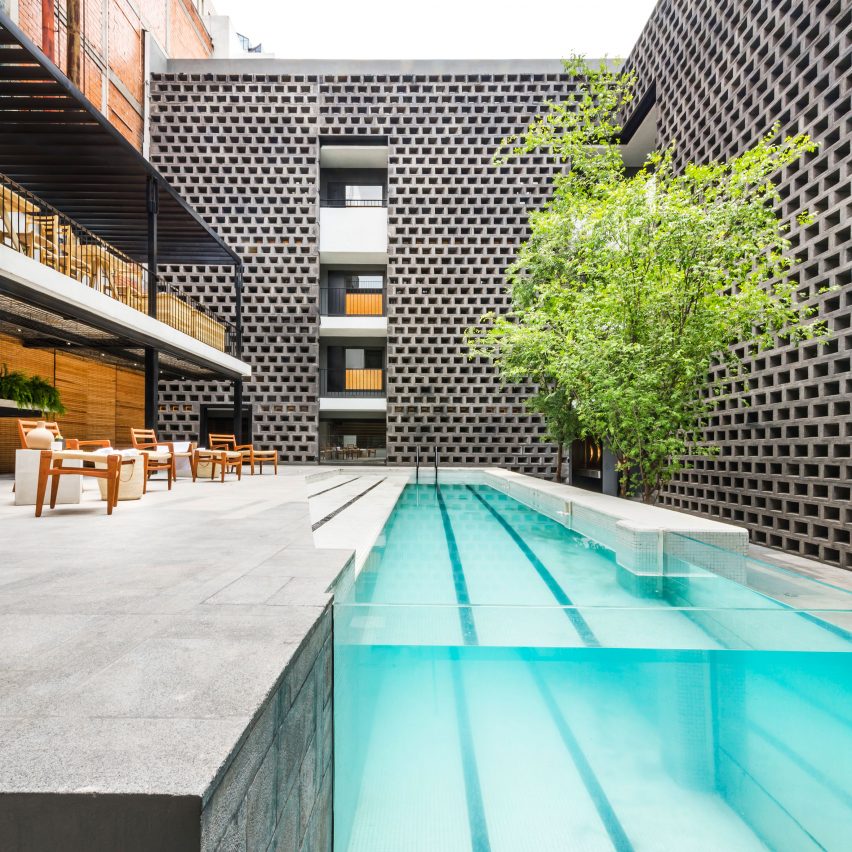
Lattices of dark blockwork wrap around a verdant courtyard and narrow swimming pool at this hotel in Mexico City, overhauled by local firm JSa. Read more

http://ift.tt/2dWO2o1

Design brand FontanaArte sold to Italian Creation Group

fontane-art-lighting-design-products_dezeen_sq-c

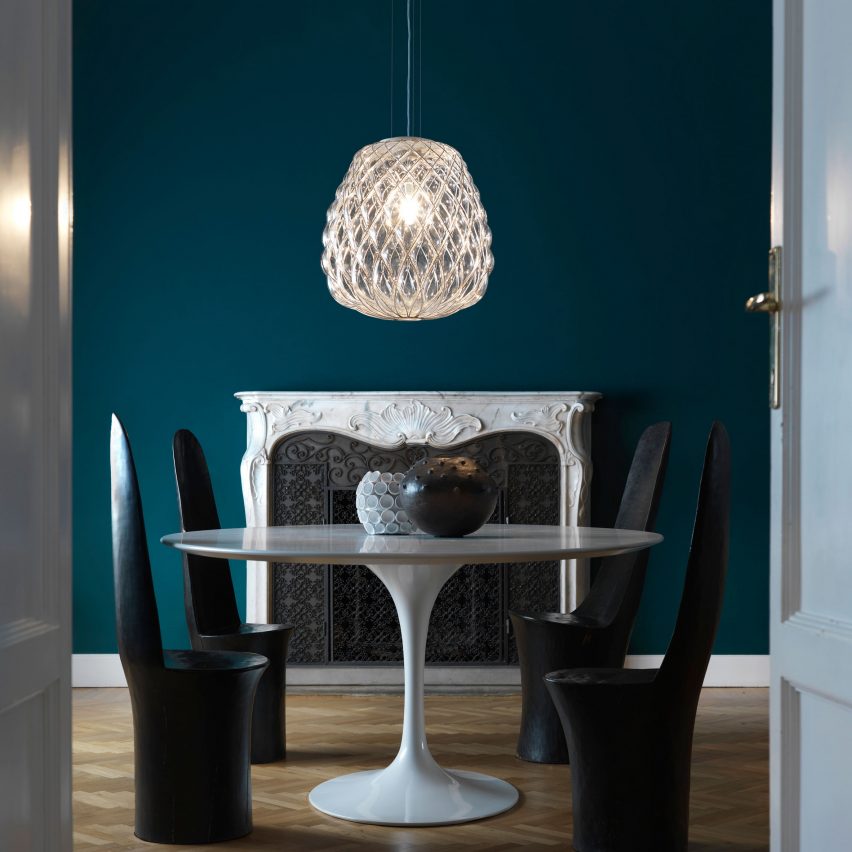
Lighting brand FontanaArte has been sold to a private finance company, continuing the consolidation of the Italian furniture industry. Read more

http://ift.tt/2dXIpYt

Casa del Limonero / Taller Estilo Arquitectura


© David Cervera

© David Cervera


© David Cervera


© David Cervera


© David Cervera


© David Cervera

  • Architects: Taller Estilo Arquitectura
  • Location: Barrio de Santiago, Centro, 97000 Mérida, Yuc., Mexico
  • Project Architects: Víctor Alejandro Cruz Domínguez, Iván Atahualpa Hernández Salazar, Luís Armando Estrada Aguilar
  • Project Area: 164.96 sqm
  • Project Year: 2016
  • Photographs: David Cervera
  • Collaborators: Arq. Silvia Cuitún Coronado, Arq. Carlos Marrufo Tamayo, DI. Alberto Góngora Brito

© David Cervera

© David Cervera

From the architect. The Casa del Limonero is a house on two floors; compositionally divided into two clear sections: the first area is where the main access from the street is located, occupied by a pre-existing construction and a rear one, with the bedrooms and central courtyard, which has different programs: terrace, pool and connections to the new building. It also serves as a hall because it contains the landing of the staircase and access to the rear bedrooms.


© David Cervera

© David Cervera

The staircase and its triple function: besides being the access to the upper floor, it is a service area and has the formal strength of a sculptural element within the central courtyard.


Ground Floor Plan

Ground Floor Plan

The rescue and rehabilitation of the existing building seeks to create a fusion between the old space and the new one in a natural way. Lighting and ventilation are primary factors to create atmospheres of enjoyment and comfort for users. A house completely linked to the outside, making spaces that are enriched by the aesthetics of all materials and maximizing passive conditioning systems to reduce energy costs in the home.


© David Cervera

© David Cervera

The traditional concept is retaken and transformed into a modern design. Both in the old and the new areas similar construction systems were used with a limited number of materials. The predominant materials are stone, wood, traditional flooring, metal, and white cement as wall cladding.


© David Cervera

© David Cervera

Traditional houses in the historic center of Mérida used cement floors in the shape of mosaics with colorful and different designs, forming mats in the spaces and marking a pattern in the decor of each room. Our proposal takes up the material and concept but turns them into large areas of white cement and other surfaces with integrated mineral green pigment, strongly defining the color palette that becomes one of the characteristic features of the house.


© David Cervera

© David Cervera

The merger of the historic character of the building and contemporary architecture create a perfect and harmonious amalgam, allowing a clear and sober language that supports the incorporation of functional and yet formally unique elements, enhancing the material they were made from while remaining outside our natural environment and the great possibilities that it provides through its proper use.


© David Cervera

© David Cervera

Traditional techniques and regional materials point toward the spatial and aesthetic composition of the project; revealing the labor of our builders who manufacture our identity.


© David Cervera

© David Cervera

At the end, a house that respects the environment, harnesses the landscape, converses with the human scale and the spatial sense.


© David Cervera

© David Cervera

http://ift.tt/2esdswg

“Who wants to look out through painted windows?”

les-magasins-generaux-by-betc-paris-offices-architecture_dezeen_2364_sq

Was advertising agency BETC right to remove the extensive graffiti during its overhaul of a derelict flour and grain warehouse? Find out what readers thought in this week’s comments updateRead more

http://ift.tt/2dwnE2I

Artist Miguel Chevalier Projects Imaginary Starscapes onto the Ceiling of a Gothic Cathedral in Paris

Digital artist Miguel Chevalier has transformed the ceiling of the Saint-Eustache Church into a dynamic, imaginary sky chart for the 2016 Nuit Blanche Festival in Paris. The installation, titled Voûtes Célestes, illuminates the soaring ceilings with 35 different colored networks to create glowing webs of light that highlight the church’s gothic architecture.


Screenshot of Voûtes Célestes


Screenshot of Voûtes Célestes


Screenshot of Voûtes Célestes


Screenshot of Voûtes Célestes


Screenshot of Voûtes Célestes

Screenshot of Voûtes Célestes

Screenshot of Voûtes Célestes

Screenshot of Voûtes Célestes

Screenshot of Voûtes Célestes

Screenshot of Voûtes Célestes

Screenshot of Voûtes Célestes

Screenshot of Voûtes Célestes

Screenshot of Voûtes Célestes

Screenshot of Voûtes Célestes

Screenshot of Voûtes Célestes

Screenshot of Voûtes Célestes

Screenshot of Voûtes Célestes

Screenshot of Voûtes Célestes

Screenshot of Voûtes Célestes

Screenshot of Voûtes Célestes

Screenshot of Voûtes Célestes

Screenshot of Voûtes Célestes

The virtual performance is accompanied by an ominous organ score played by  Baptiste-Florian Marle-Ouvrard. Visitors to the piece were invited to roam throughout the structure or lie on the floors to fully take in the visual and sonic environment.

You can find more of Chevalier’s work on his website, here.

H/T Colossal, Designboom.

http://ift.tt/2dcz9LC

David Bowie’s personal collection of Memphis furniture goes up for auction

David Bowie Memphis auction

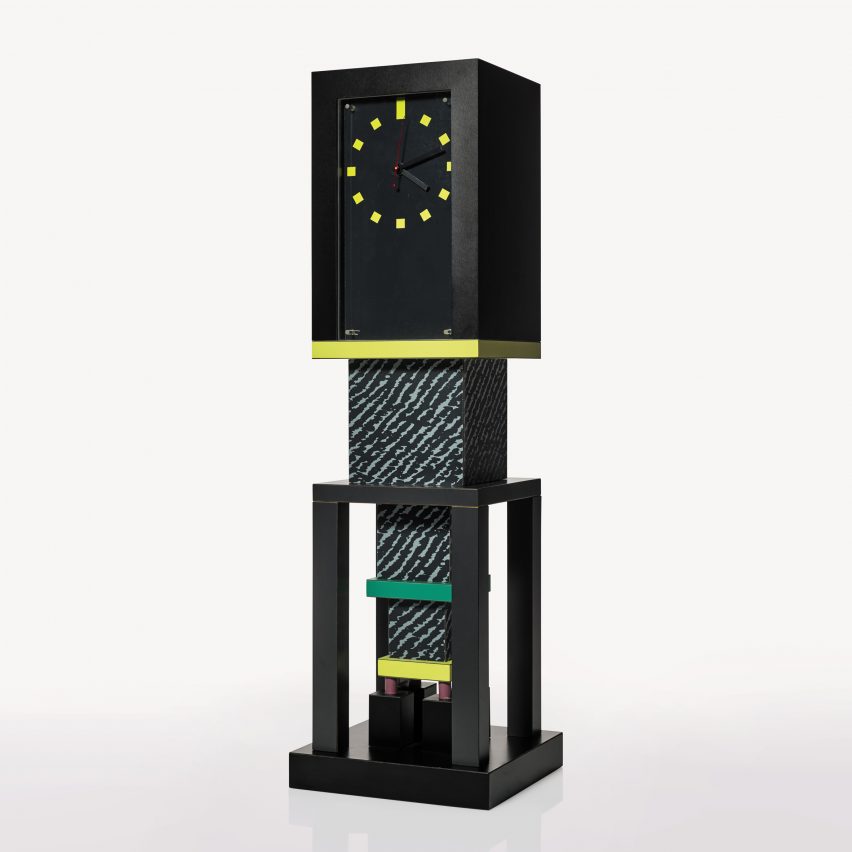
David Bowie‘s extensive collection of pieces by the Memphis group is set to be auctioned in London. Read more

http://ift.tt/2dJCPsi

RB House / Fritz + Fritz Arquitectos


© Quiroga + Caraffa

© Quiroga + Caraffa


© Quiroga + Caraffa


© Quiroga + Caraffa


© Quiroga + Caraffa


© Quiroga + Caraffa

  • Project Team: Hernán Feldmann
  • Structural Engineering: José Zaldua

© Quiroga + Caraffa

© Quiroga + Caraffa

The “House RB” is characterized by its conceptual synthesis, formal and material.

Being a home for a young couple, the design should be flexible enough to adapt in the future, with the arrival of children, allowing to modify its distribution, and even adding new bedrooms.


© Quiroga + Caraffa

© Quiroga + Caraffa

The house is organized by a series of patios that allow the natural ventilation of every room, and the inside/ outside connection, creating different situations of permeability.


© Quiroga + Caraffa

© Quiroga + Caraffa

The use of massive inverted beams located on the roof, allow a “column free”  “living room” area and a 60 sqm gallery.


Floor Plan

Floor Plan

As for the material aspect of the house, the concrete ceiling contrasts with travertine floors and white interior walls.


© Quiroga + Caraffa

© Quiroga + Caraffa

The structural solution also  generates a gallery of 60 m2 partially covered by a cantilevered slab 4 m x 15 m, devoid of props.


Structure Diagram

Structure Diagram

As for the outside, the facade is conceibed by the use of large glass panels in relation to the concrete beams of the roof and in contrast to the white brick walls and travertine.


© Quiroga + Caraffa

© Quiroga + Caraffa

Towards the front, a white brick masonry latching system generates a visual screen to the kitchen´s patio, providing both permeability and privacy at the same time.

http://ift.tt/2e5IThb