The Enchanted Shed / Sue Architekten


© Andreas Buchberger

© Andreas Buchberger


© Andreas Buchberger


© Andreas Buchberger


© Andreas Buchberger


© Andreas Buchberger

  • Structural Engineering: DI Margarete Salzer, Vienna

© Andreas Buchberger

© Andreas Buchberger

How an old outbuilding became a writer’s workshop, a garden room for guests, and a children’s paradise. The workmen from the village wanted to tear down the black shed from 1934: draughty, weather-beaten and worm-eaten it was, they said. But we liked this black outbuilding of the mansard-roof house in the Vienna Woods that we had just renovated in a radical yet respectful manner.


Plan

Plan

The special appeal of this project lay in the rediscovery of these old outbuildings in the shadows of the Vienna Woods villas. Back in the 1930s, few people could afford a basement, let alone a garage. And so they built their own sheds to store wood, raise rabbits or boil laundry, which was then hung up to dry in the attic.


© Andreas Buchberger

© Andreas Buchberger

Over the past few decades these structures have lost their original purpose, and many are falling apart. This is a real pity. Converted into small, cosy ‘hideaways’, they become affordable, magical places of retreat for families and their guests.


© Andreas Buchberger

© Andreas Buchberger

We inserted a large pane of glass into the front wall of the attic floor and carefully insulated the trusses. The walls were panelled with varnished grey fir wood, and an elevated section was upholstered so that the attic can also be used as an out-of- the-ordinary guest room.


Section

Section

An elegant brass trapdoor closes off this enchanted place, from where you can watch the squirrels play in the treetops. The ground floor is still used for storing garden tools, the lawn mower and fruit crates, while upstairs it is snug and comfortable. Spotlights illuminate the brass in the evening, creating a warm light – even in freezing winter when the unheated room is used for cooling down after a sauna session. 


© Andreas Buchberger

© Andreas Buchberger

Ventilation of the attic is via an already existing window and small air vents installed along the sides. We didn’t touch the roof, though. It is full of moss. And we like that.


© Andreas Buchberger

© Andreas Buchberger

Product Description. From outside you can still see and smell the mossy roof and the old wooden cladding covered with coal tar (carbolineum). But inside a new cave is disguised, containing precisely crafted spruce planks of a micaceously grey varnish and a brass trapdoor. At night a hidden light illuminating the brass creates a cozy gloom.


Detail

Detail

http://ift.tt/2dMEWe6

Block722 Designs a Summer Residence on the Island of Syros in Greece

Residence in Syros I by Block722 (1)

Residence in Syros I is a project designed by Block722 in 2014. It is located on Syros, an island in the Aegean, in Greece. Residence in Syros I by Block722: “Situated in the island of Syros, this summer house hosts a couple and their guests. The design process was defined by the clients’ desire to maximize the view of the Plagia bay. The main intention was to unify the various..

More…

Bellecombe Holiday House / ACAU


Courtesy of ACAU

Courtesy of ACAU


Courtesy of ACAU


Courtesy of ACAU


Courtesy of ACAU


Courtesy of ACAU

  • Architects: ACAU
  • Location: 39310 Bellecombe, France
  • Architect In Charge: Abdelkader Chaoui
  • Area: 140.0 sqm
  • Project Year: 2016
  • Photographs: Courtesy of ACAU

Courtesy of ACAU

Courtesy of ACAU

From the architect. In a hamlet situated in the heart of the Drôme Provençale, the project concerns the construction of a holiday house able to host a dozen persons. The sloping terrain is South oriented and have an exceptional panoramic view on the far landscape and the Ventoux mountain.


Courtesy of ACAU

Courtesy of ACAU

Located in the north of the parcel and totally open in the far landscape and the south light, the project have been made to ensure that the roof level does not exceed the street level.


Courtesy of ACAU

Courtesy of ACAU

The architecture of this house is a reference to the typical farm hangar present in this region and present the advantage to reduce the cost of the building.


Courtesy of ACAU

Courtesy of ACAU

This inspiration leads us to conceive a super-rational supporting structure. Indeed nine concrete porticos have been installed and it’s covering all the living areas. South oriented and withdrawal from the supporting structure, each living space of the house have an extension towards the outside.


Floor Plan

Floor Plan

Theses terraces recovering of timber truss define a transition space between the inside and the outside but also formed a solar protection system.

View from inside the installation of this porticos expose a beautiful painting of living nature.


Courtesy of ACAU

Courtesy of ACAU

Product Description. The architecture of this house is a reference to the typical farm hangar present in this region and present the advantage to reduce the cost of the building. This inspiration leads us to conceive a super-rational supporting structure. Indeed nine concrete porticos have been installed and it’s covering all the living areas. South oriented and withdrawal from the supporting structure, each living space of the house have an extension towards the outside.


Courtesy of ACAU

Courtesy of ACAU

http://ift.tt/2d4eyhk

Bornelo Interior Design Creates a Stunning Penthouse with Spectacular Views in Palma de Mallorca

Penthouse in Mallorca by Bornelo Interior Design (5)

Penthouse in Palma de Mallorca is a residential project designed by Bornelo Interior Design in 2015. It is located in Palma de Mallorca, Spain. Penthouse in Palma de Mallorca by Bornelo Interior Design: “The project started along with th contruction of the building, we have done changes on the projected distribution and on the finishing materials. Studing all together, distribution of spaces and furniture leaves us the freedom to offer..

More…

Valley Villa / arches


© Norbert Tukaj

© Norbert Tukaj


© Norbert Tukaj


© Norbert Tukaj


© Norbert Tukaj


© Norbert Tukaj

  • Architects: arches
  • Location: Vilnius, Lithuania
  • Lead Architects: A.Liola, R.Liola, E.Neniškis, M.Kaučikaitė, E.Geštautaitė
  • Area: 415.0 sqm
  • Project Year: 2016
  • Photographs: Norbert Tukaj
  • Structural Engineers: Dainius Dubaka

© Norbert Tukaj

© Norbert Tukaj

Just a few hundred meters from the active city street and you can find yourself in exclusive surrounding of the park. Calm and harmony of nature. This sensation is enhanced by natural valley, the old Raguva. Sunny slope of the valley. Outskirts. Place of the former wooden farmstead. Regional park territory. Regulated architectural solution. Territory limitations for architectural expression and clients vision to live in contemporary house – these were starting points.


© Norbert Tukaj

© Norbert Tukaj

Section

Section

© Norbert Tukaj

© Norbert Tukaj

How to harmonize all of this? 

The object is located in the sunny part of the slope next to the outskirts. It is designed in the former farmsteda place. Existing slope and all valuable trees in the site are preserved. The idea of the building is to ,,hang“ it over the valley and open it to the valley by continues  windows. The ground floor is partly hidden in the slope. Due to black shale finish the ground floor disappears in otskirt shadow. Only the  first floor volume, finshe wit natural wood, is exibited .  Laconic, sculptural form of volumes interprets the silhouette of traditional  sloped house. Divided volume, varying forms forms, humane proportions, glass and wood harmony creates the impression of lightness.  Interior  spaces follows forms of the volume. Integral natural wood finish of the facades and roof creates impression of form solidity.  The volume with its materials and coloring flourishes in forest and valley background. By dividing the volume, micro-spaces –  courtyards  are created.  This is the building in nature. Therefore all main interior spaces have  entrances into exterior spaces- courtyards. Courtyards are arranged in different levels, creating sensation of wholeness and privacy, enables to enjoy both morning and evening sun.  The hanging volume of the first floor naturally creates the terrace. Windows of the ground floor are partly covered with the vertical wooden lamelles, they serve as protection from overheat and becomes a part of the interior. Suroundings are planted with grass, the path to the enrance is of granite tiles in order to minimize the intervention to the nature. The plot is surounded with the open work fence. 


© Norbert Tukaj

© Norbert Tukaj

Plan 2

Plan 2

© Norbert Tukaj

© Norbert Tukaj

Product Description. For building facades exclusively natural finishing materials were selected. The main finishing material is pine wood manufactured by ,,Kebony“ technology. Pine was selected as typical tree for the surrounding. Using unique ,,Kebony“ technology  wood becomes particularly resistant, stable, durable and there is no need for any additional maintenance. It is ecological product and this becomes important factor in regional park territory. Within time, pine wood grays ant fits the environment even more by fading in pine trunk background.


© Norbert Tukaj

© Norbert Tukaj

© Norbert Tukaj

© Norbert Tukaj

Because of the exclusive qualities of ,,Kebony“ technology, manufactured wood allowed to create visually solid volumes. Finish is applied not only for the facades but also for varying geometry of roof planes, visible from the slope.  The wood is attached to stainless steel profiles system within self-fixate plastic holders. The accurate wood geometry allowed to combine wooden finish planes, form vertical wooden blinds by creating accurate graphics. The graphics is continued by natural shale finish. Black ,,Rathscheck“ shale is used for finish of the lower parts of the volume. Shale finish is also attached to stainless steel profile system fixing with fixating glues in vertical stripes. The graphical expression is enhanced by metal railing stripes fixed above the shale contunueing its vertical division. Different materials, different elements supplement  each other fulfilling the facade graphical expression. It is all about the graphical interpretation of park trees trunks. 


© Norbert Tukaj

© Norbert Tukaj

The other reason for choosing natural wood as the main finishing material of the volume is the aim to interpret Lithuanian traditional wooden house. The main characteristics of Lithuanian traditional houses are laconic volume, double pitched roof, wooden blinds, wooden finishing and granite rocks foundation.  Considering that the project site is in regional park territory, the idea was to remind qualities of traditional farmstead house by interpreting it in a contemporary way.


© Norbert Tukaj

© Norbert Tukaj

http://ift.tt/2dXSpy0

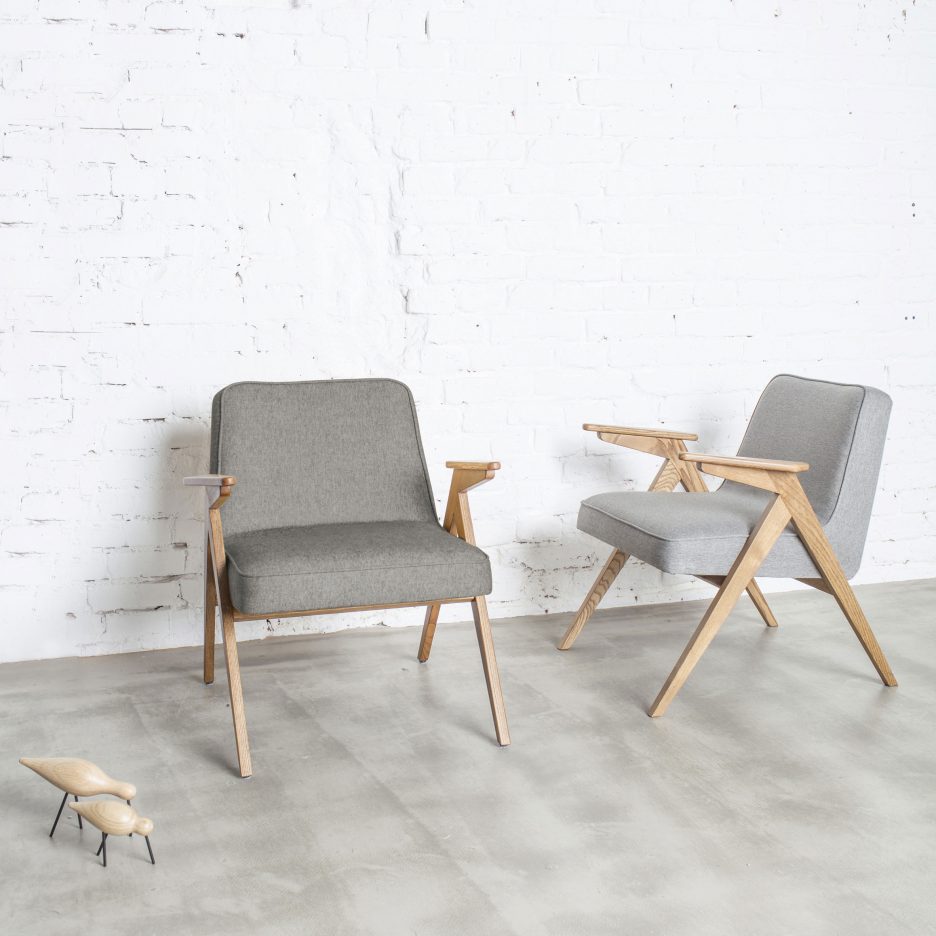
366 Concept brings back a forgotten Eastern Bloc mid-century classic


London Design Festival 2016: a Polish-designed chair that was once a common sight in the living rooms of the formerly Soviet Bloc country has been reissued by new brand 366 Concept. (more…)

http://ift.tt/2e2dgzz

Chetian Cultural Center / West-line studio


© Jingsong Xie

© Jingsong Xie


© Jingsong Xie


© Jingsong Xie


© Jingsong Xie


© Jingsong Xie

  • Architects: West-line studio
  • Location: Chetian Village, Guizhou, China
  • Architecture And Interior Design: Haobo Wei, Jingsong Xie
  • Exhibition Design And Curator: Martina Muratori
  • Area: 715.0 sqm
  • Project Year: 2015
  • Photographs: Jingsong Xie

© Jingsong Xie

© Jingsong Xie

From the architect. The cultural center is located in the rural Chetian Village, 30 km from Guiyang, the capital of Guizhou province, in South-West China. The village has more than 400 years of history and is famous for its ‘stone houses’ built with local materials. 41 families, out of the 207 living in the village, belong to the Miao (苗) ethnic minority, one of the oldest minority groups in China, most of whom live in Guizhou province. The square outside the cultural center, surrounded by the river, is often used as a stage for local Miao dance and drama performances.


© Jingsong Xie

© Jingsong Xie

Section

Section

© Jingsong Xie

© Jingsong Xie

The architecture of the cultural center is strongly characterized by 40 cm thick walls, built according to the local traditional methods, using the stone coming from the village’s pit. The stone has a very unique blue shade, which is why it is commonly called ‘blue stone’. It comes from sedimentary rocks and its major components are limestone and dolomite. The strong and obsessive presence of the stone creates an intimate interior space and shows the architects’ deep respect for the historical masonry traditions of Chetian Village.


© Jingsong Xie

© Jingsong Xie

© Jingsong Xie

© Jingsong Xie

http://ift.tt/2e50IIQ

The Bad Cafe / Nudes


© Sameer Chawda

© Sameer Chawda


© Sameer Chawda


© Sameer Chawda


© Sameer Chawda


© Sameer Chawda

  • Architects: Nudes
  • Location: Mumbai, Maharashtra, India
  • Architect In Charge: Nuru Karim
  • Area: 3250.0 ft2
  • Project Year: 2015
  • Photographs: Sameer Chawda
  • Design Team: Nuru Karim, Himika Lakhanpuria, Shreya Pate

© Sameer Chawda

© Sameer Chawda

The human skin is an anatomical barrier in bodily defense from pathogens and damage between the internal and external environment. It also contains nerve endings that react to touch, pressure, vibration, tissue injury, heat and cold.


© Sameer Chawda

© Sameer Chawda

The average sq. inch of skin holds 650 sweat glands . . . on an average there are 100,000 strands of hair on a young adult amounting to approx. 2200 strands of hair per square inch . . . the human tongue has approx. 2000 to 8000 taste buds, taste buds are the receptors of taste and are involved in detecting the five elements of taste perception; sweet, sour, salty, bitter and spicy…the BAD Yoga project has 25,992 recycled pvc electrical conduits  grafted onto its anatomy with surgical precision.


Courtesy of Nudes

Courtesy of Nudes

There are several compound words containing yoga in Sanskrit. Yoga can take on meanings such as “connection”, “contact”, “union”, “method”, “application”, “addition” and “performance”. In simpler words, Yoga also means, “Combined”. For example, guṇáyoga means “contact with a cord”. Yoga is a physical, mental and spiritual discipline, the BAD experience is all of the above and much more. Designed as a tactile, sensory experience the project harbors a range of hybrid activities.


© Sameer Chawda

© Sameer Chawda

The architectural component was designed to facilitate yoga, gastronomical experiences, and cultural event spaces for music, art, performances, intellectual discourse and fashion. These activities are stacked vertically over three levels, including an open to sky terrace courtyard. 


© Sameer Chawda

© Sameer Chawda

Situated in a historical village settlement in Bandra West (which has morphed in recent times due to socio-economic pressures and increasingly high land costs), the project is accessible by foot and cycle from parking zones in close proximity. Remotely located from traffic snarls and insulated from typically high levels of air and sound pollution, the project is sheathed in tranquility and peace. The dynamic “skin”, all of 25,992 black cylindrical conduits grafted into CNC’d aluminum composite box panels with acupuncture-like precision shares a peaceful co-existence with its neighbors, its presence gradually unveiled as one meanders through the narrow by-lanes of the historical urban fabric. 


Courtesy of Nudes

Courtesy of Nudes

The porous, perforated nature of the skin allows the project to breathe and ventilate thereby reinforcing the relationship between the inside and outside, between body and soul. The architectural component was designed to facilitate yoga, gastronomical experiences, and cultural event spaces for music, art, performances, intellectual discourse and fashion. These activities are stacked vertically over three levels, including an open to sky terrace courtyard. Rough tactile “true to material” textures draped in a striking “black” and “black” composition complete the user experience.


© Sameer Chawda

© Sameer Chawda

Product Description. The architectural skin is composed of re-cycled PVC pipes. The dynamic “skin”, all of 25,992 black cylindrical conduits are grafted into CNC’d aluminum composite box panels.Digital design and fabrication tools were deployed to compose the entire system.


Courtesy of Nudes

Courtesy of Nudes

http://ift.tt/2e1zbqA

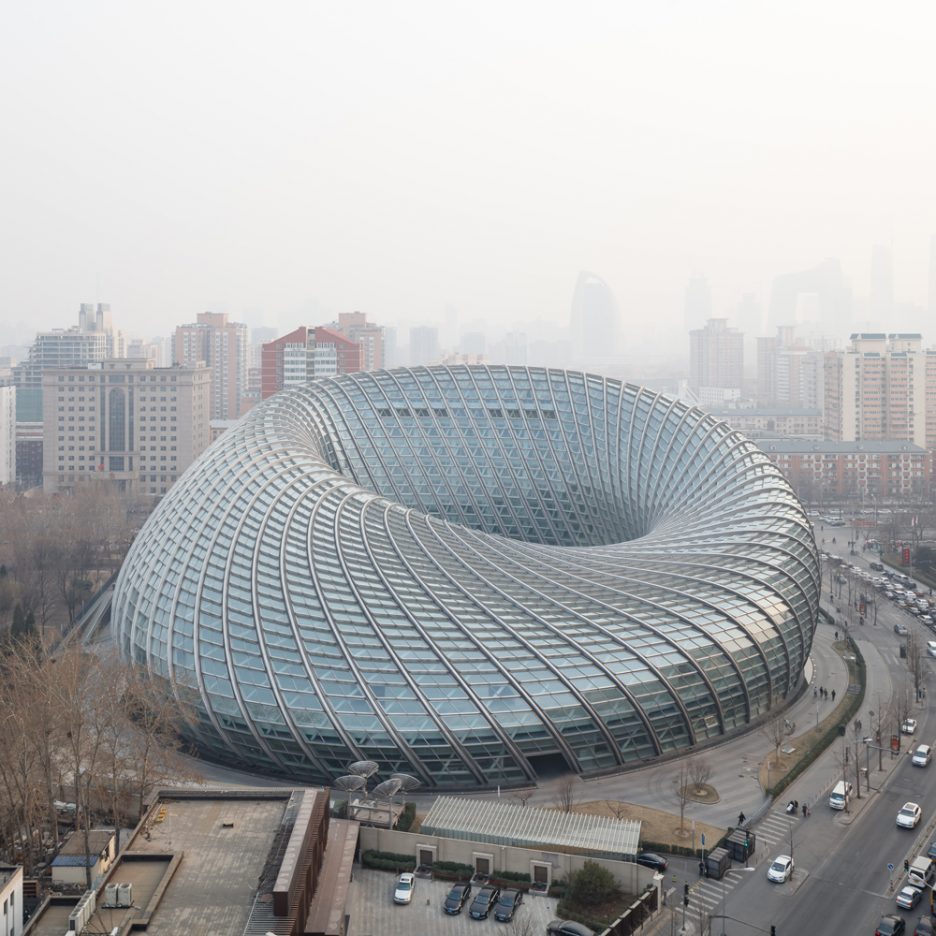
Doughnut-shaped television studio in Beijing is enclosed in a latticed shell


Wrapped in a latticed glass and steel skin, this ring-shaped building by architecture studio BIAD UFO provides the new headquarters for Chinese broadcaster Phoenix Television (+ slideshow). (more…)

http://ift.tt/2dPY5uV

UNPLAN Kagurazaka / Aida Atelier


© Tatsuya Noaki

© Tatsuya Noaki


© Tatsuya Noaki


© Tatsuya Noaki


© Tatsuya Noaki


© Tatsuya Noaki

  • Interior Architect: Tomoro Aida / Aida Atelier
  • Mep Engineer: RS Setsubi Kikaku
  • Lighting Design: Izumi Okayasu Lighting Design
  • Textile Design: Yoko Ando Design
  • Sign Graphic: INSENSE
  • Plants: Kojien
  • Interior: Benefit Line
  • Bunk Beds: Aoki Kagu Atelier
  • Site Area: 359.78 sqm
  • Building Area: 202.65 sqm
  • Client: FIKA

© Tatsuya Noaki

© Tatsuya Noaki

From the architect. UNPLAN Kagurazaka is a newly opened hostel in central Tokyo, built to accommodate various guests such as international backpackers and domestic business travellers. The hostel houses 78 bunker styled beds and three fully enclosed rooms along with an open lounge and other supporting functions.


© Tatsuya Noaki

© Tatsuya Noaki

As the sole tenant of this new three-story building, our aim was to simply insert elements for accommodation in furniture form into a rather banal looking building. As the result, the façade with a large glass opening is characterized with a series of cubic wood bunk beds facing the street.


© Tatsuya Noaki

© Tatsuya Noaki

The design intention of these bunk beds was to create a minimal yet fully comfortable and private environment for guests. While natural light and views to the streets are provided, each guest is able to control the level of privacy by using the curtain of each unit. Each bed is also equipped with a headboard containing a security box, a lighting fixture for both direct and ambient lightings, and an electrical outlet.


Floor Plan

Floor Plan

The lobby area is welcomed by a giant table around the central column which stands out as a signage for the hostel. This table serves as a reception, a concierge desk, and also as a café table, replacing a traditional reception counter. This eliminates any sense of boundary between the host and guests, promoting the social interaction within the hostel.


© Tatsuya Noaki

© Tatsuya Noaki

As its name suggests, this hostel hopes to become a place with unplanned encounters between the travelers and with the local community.


© Tatsuya Noaki

© Tatsuya Noaki

Section

Section

© Tatsuya Noaki

© Tatsuya Noaki

http://ift.tt/2dXmcHi