Journey House / Nic Owen Architects


© Christine Francis

© Christine Francis


© Christine Francis


© Christine Francis


© Christine Francis


© Christine Francis


© Christine Francis

© Christine Francis

From the architect. A renovation and extension to the rear of a modest sized ‘ex’ housing commission semi-detached clinker brick 1940’s house in Hampton, located on a generous allotment.


© Christine Francis

© Christine Francis

The owners required more space, updated amenities and desired a strong connection to the outside. The well travelled couple wanted a tranquil, calm and relaxing environment to call home.


© Christine Francis

© Christine Francis

Often it’s the journey and not exclusively the destination that brings joy and excitement to life. The journey through this project begins by entering through the renovated house which includes all new / updated facilities. The existing hallway then directs you through a black timber clad curved tunnel where the end is not visible. The destination is a surprise, the mystery a waits as you track on. A large light weight timber structure emerges that presents the new open plan living spaces. This tent like space is orientated to the north surrounded with glass and timber and extends outside with a timber deck. Your destination has been reached – for now, a place to relax and dream of traveling.


Courtesy of Nic Owen Architects

Courtesy of Nic Owen Architects

Courtesy of Nic Owen Architects

Courtesy of Nic Owen Architects

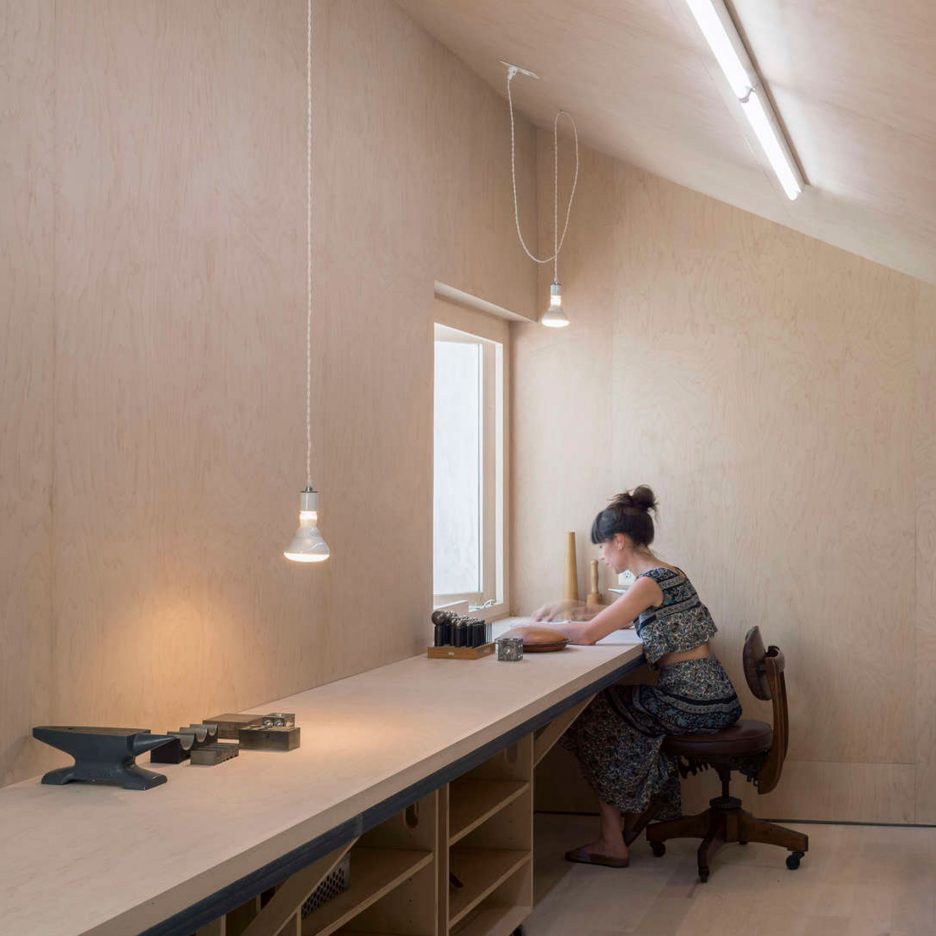
A monolithic external skin wraps around the new extension defining the new space in a tent like manor. The single vaulted roof line rises up to the north providing a feeling of space whilst still maintaining an intimate human scale. This increased vertical height gave the opportunity for high windows to capture extended views of neighboring trees.


© Christine Francis

© Christine Francis

A curved dark tunnel separates the original house from the new works providing an element of mystery and surprise.


© Christine Francis

© Christine Francis

The extension runs along the south boundary to capitalize on northern solar gain, reorientating the existing relationship to the backyard.


© Christine Francis

© Christine Francis

Very little of the works are visible from the street. The new works respect the original clicker brick 1940’s house celebrating the original features. Most of the original house remains and new works are hidden at the rear. From the street it is unclear what is at the back of the existing house.


© Christine Francis
© Christine Francis

http://ift.tt/2dGK4Um

Davidson Rafailidis tops studios for artist and ceramicist with three angular roofs


A+Awards: a trio of mono-pitched roofs shelter this set of studios designed for a painter and ceramicist couple, which was one of the winners at this year’s Architizer A+Awards (+ slideshow). (more…)

http://ift.tt/2dGK0DZ

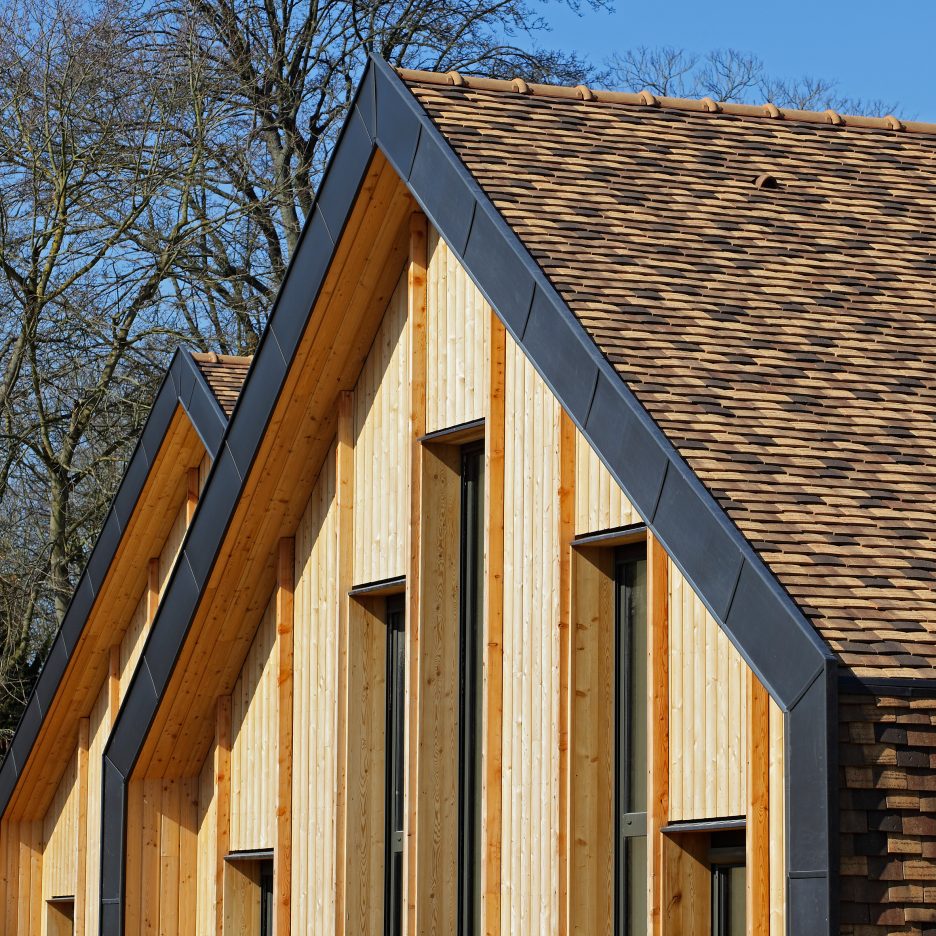
Brown ceramic shingles cover Nomade Architectes’ village-inspired nursery near Paris


Earth-coloured ceramic tiles cover the roofs and walls of this nursery located on the outskirts of Paris, which is designed by French studio Nomade Architectes to look like a cluster of buildings (+ slideshow). (more…)

http://ift.tt/2ekBut5

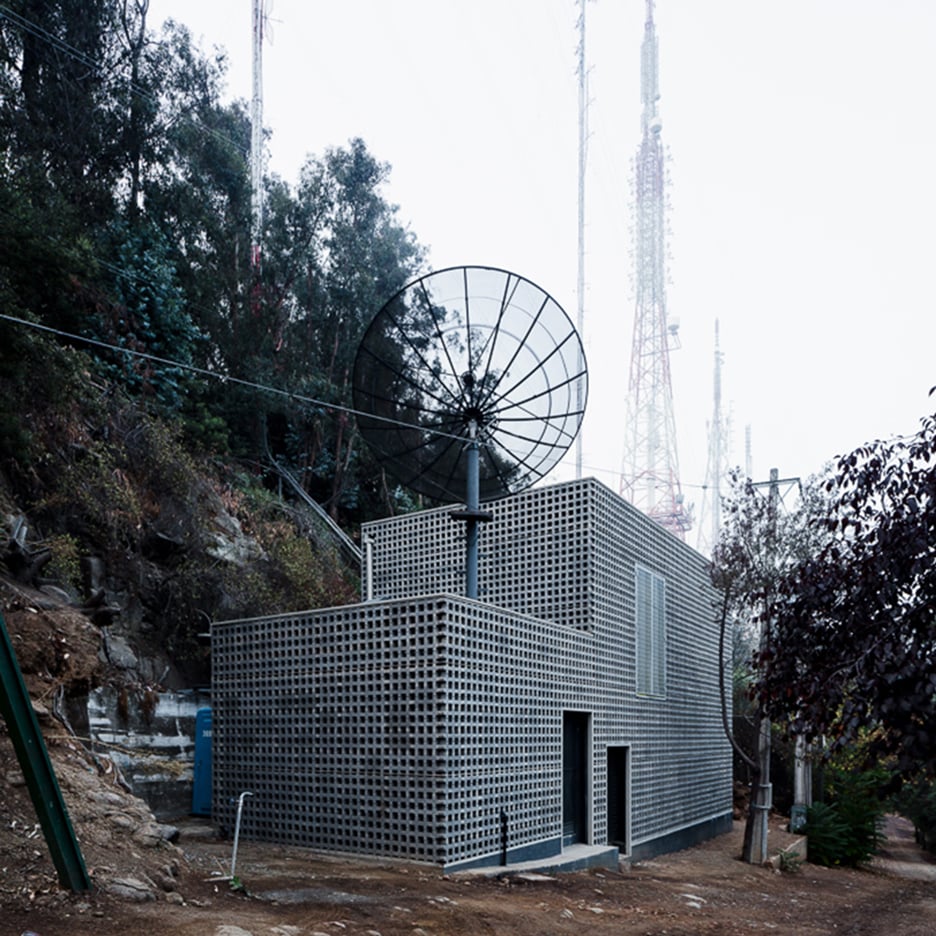
An introduction to Lisbon Triennale Début Award winner Umwelt


Lisbon Architecture Triennale 2016: Chilean studio Umwelt has been awarded the Début Award for early career architects at the Lisbon Triennale. To celebrate, we take a look back at the projects to come out of the studio so far (+ slideshow). (more…)

http://ift.tt/2e4emMj

Silent House IV / Leonardo Jáuregui + Leandro Zapata


© Federico Cairoli

© Federico Cairoli


© Federico Cairoli


© Federico Cairoli


© Federico Cairoli


© Federico Cairoli

  • Construction: Carlos Madrid
  • Sqm Cost: U$S 445

© Federico Cairoli

© Federico Cairoli

From the architect. The Silent Houses have much to say. They are searching for new experiences of living. They are isolated from the world, because they feel somewhat hostile. They are not interested in the context, but sometimes they can look the outside . They are hard and dry, but the inside is neutral, appropriated and unstable. They are home to a hermit life.


© Federico Cairoli

© Federico Cairoli

The property is located in a residential neighborhood of medium density.

The proximity to the sea with its particular climate, low traffic and low occupancy of the homes in the area at certain times of year, are definite circumstances to decide the location as a succession of indoor experiences.


Diagram

Diagram

A succession of courtyards and filters organizes the house.

The garage functions as a first filter access from the outside. The first court announces the arrival of the living space.


© Federico Cairoli

© Federico Cairoli

Through the corridor you enter to another courtyard, this time covered (winter garden), which functions as a central space.

This works as a hub from which you can access to all rooms of the house. As in the ovenbird nest, the central space avoids “contamination” of the external environment, generating an “extra suitable- space” which can function as recreational space, work or simply as expansion.


© Federico Cairoli

© Federico Cairoli

A living room  area integrated makes most of the wide of the plot and a large glazed surface is related (or not) with the backyard.


Plan

Plan

Facade

Facade

“We feel that nowadays,  one of the needs of people is more freedom, at least in spatial terms. They want to avoid the constrictions and we feel that if you give them more possibilities they will thank them, because then they can develop their own freedom. In this sense, modernity is interesting because, according to our interpretation, there are no fixed territories, no fixed functions in a space. So you can imagine how easily you can move in the space, but in order to  do that it has to be greater than the minimum. “Anne Lacaton

Extra space, Extra apropiable.


© Federico Cairoli

© Federico Cairoli

http://ift.tt/2dKLslz

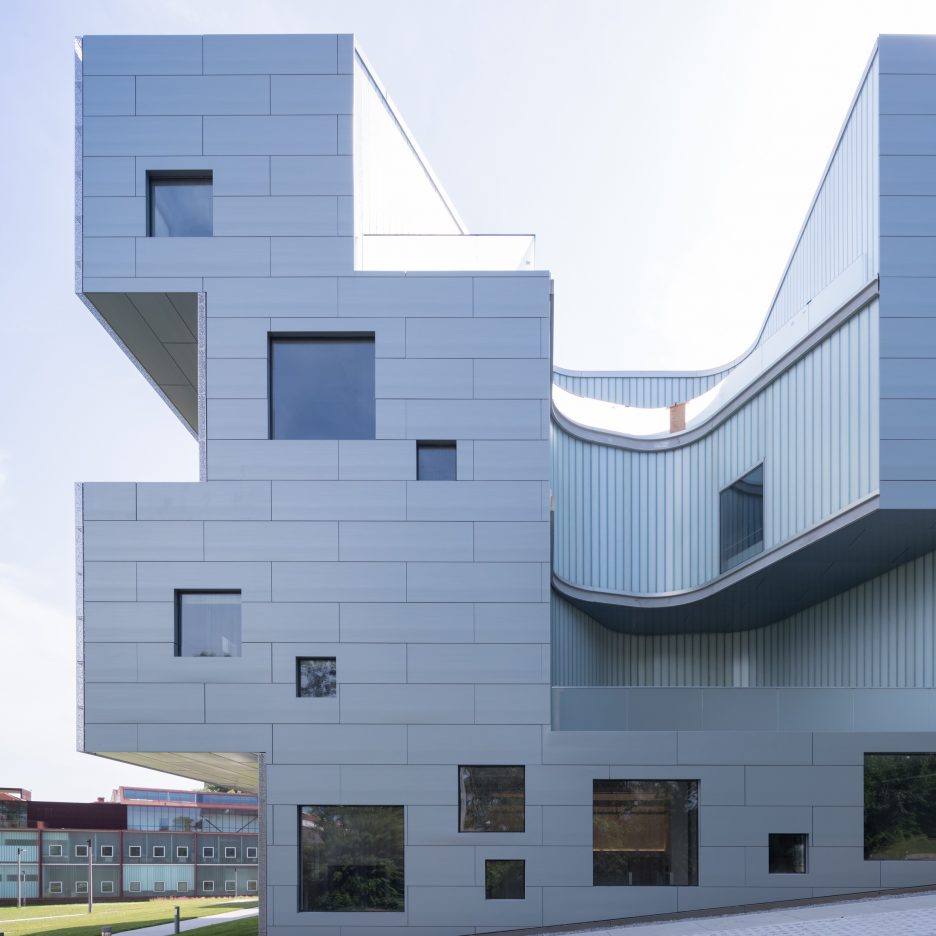
Visual Arts Building by Steven Holl opens at the University of Iowa


American firm Steven Holl Architects has completed an Iowa art school that consists of irregularly stacked concrete volumes sheathed in weathering zinc and stainless steel. (more…)

http://ift.tt/2dS6cJq

2016 BCO Awards Name the Best Office Buildings in the UK


Courtesy of British Council for Offices

Courtesy of British Council for Offices

The British Council for Offices (BCO) has announced the winners of the 2016 National Awards. The BCO Awards program was established to recognize “ top quality office design and functionality and sets the standard for excellence across the office sector in the UK,” providing a benchmark for excellence in design and functionality. This year’s ‘Best of the Best’ winner was The Enterprise Center at the University of East Anglia by Architype.

“This year we have once again seen a fantastic range of diverse and innovative workplaces, highlighting Britain’s position at the forefront of the global office sector. The Enterprise Centre stands tall as both a dynamic and collaborative work and event space, and as a benchmark in sustainable design,” said Emma Crawford, Managing Director of Central London Leasing at CBRE and BCO National Awards Chair.

Continue reading to see this year’s winners.

‘Best of the Best’ & Corporate Workplace: The Enterprise Center, University of East Anglia, Norwich / Architype


Courtesy of British Council for Offices

Courtesy of British Council for Offices

The University of East Anglia’s The Enterprise Centre was praised by judges for showcasing low carbon and sustainable design at its best. Judges commented that the workplace offered a wide range of highly flexible accommodation with incubation and collaborative spaces for new and developing businesses in a building equipped to deliver for the 21st century.


Courtesy of British Council for Offices

Courtesy of British Council for Offices

Commercial Workplace: The Leadenhall Building, London / Rogers Stirk Harbour + Partners


Courtesy of British Council for Offices

Courtesy of British Council for Offices

The Leadenhall Building holds its own in the London’s ‘City Cluster’ with its striking form the result of the elegant resolution of a myriad of issues.


Courtesy of British Land and Oxford Properties

Courtesy of British Land and Oxford Properties

Refurbished/Recycled Workplace: Alphabeta, London / Studio RHE


Courtesy of British Council for Offices

Courtesy of British Council for Offices

The restoring and reformatting of a series of historic buildings to create Alphabeta has created an active and vibrant communal “village.”


Courtesy of British Council for Offices

Courtesy of British Council for Offices

Fit Out of Workplace: Berghaus HQ, Sunderland / Rock Townsend

Sunderland’s Berghaus HQ was praised for strongly reflecting the brand’s ethos of ‘live for adventure’ through impressive solutions such as the sky rail and climbing rope staircase

Project up to 2,000m2: Bunker, Littlewoods Complex, Liverpool / Shedkm Architects

The flexibility of space offered by The Bunker in Liverpool impressed the judges, with the open plan floor plate giving the space the potential to be split into two, three or four units on each floor.

Test of Time: BBC North, Salford / Wilkinson Eyre Architects + Chapman Taylor + ID:SR

BBC North was selected by the judges for its quality of design and in-built flexibility, enabling quality content to be consistently produced as occupier numbers steadily increased.

Innovation: LandRover BAR Team HQ, Portsmouth / HGP Architects

Portsmouth’s LandRover BAR Team HQ was awarded for innovation due to its highly sustainable and energy efficient design coupled with an incorporation of impressive facilities such as F1 style meeting rooms and a state-of-the art gym.

The BCO also awards regional winners in each category, which become the shortlist for the national award. More information on the award, along with the regional lists, can be found at the BCO website, here.

Entries for the 2017 awards open on Wednesday 5th October 2016.

News via BCO.

http://ift.tt/2ekilYl

Germany moves to ban internal combustion engine by 2030


One of Germany’s legislative bodies has resolved to prohibit the use of petrol- and diesel-powered cars as of 2030, marking a potentially major step in the move towards electric vehicles. (more…)

http://ift.tt/2ekanhL

Cooperative Housing Scheme / Mark Fairhurst Architects


© Morely von Sternberg

© Morely von Sternberg
  • Planning Design: Peter Barber Architects
  • Client/Developer: On the Rise Housing Co-operative
  • Contractor/Developer: Kuropatwa Ltd.
  • Structural Engineer: Hall Davis Consulting Engineers
  • M&E Engineers: Mandick Waring Consulting Engineers
  • Cdm Coordinator: Andrew Worsley
  • Party Wall Surveyor: GKR Associates
  • Acoustic Consultants: KP Acoustics
  • Energy Consultants: Mandick Waring Consulting Engineers
  • Landscape Architect: Buckley Design Associates

© Morely von Sternberg

© Morely von Sternberg

From the architect. Mark Fairhurst Architects were appointed in 2014 by Kuropatwa Ltd. the developer/ contractor for the technical design of the 16 residential apartments at Hafer Road, we were challenged to deliver what was a relatively complex concept design by Peter Barber Architects.


© Morely von Sternberg

© Morely von Sternberg

Located in the London Borough of Wandsworth close to Clapham Common and Lavender Hill, 4-8 Hafer Road is a cooperative housing development replacing 8 existing flats on a former bomb damaged site with 4 maisonettes and a further 12 residential units.


© Morely von Sternberg

© Morely von Sternberg

A new basement provides accommodation for maisonettes naturally lit via two external courtyards to the rear and a continuous light well to the front spanned by entrance bridges to the maisonettes and communal entrances, two stair cores giving access to 8 flats above. Flats are arranged with dual aspects with a combination of external terraces, projecting balconies and recessed terraces at roof level surmounted by a biodiverse brown roof with PV cells for renewable energy.


Section

Section

We developed the detailed design to ensure the successful realization of the scheme and to incorporate the different design requirements of the end users, more challenging than a conventional developer led scheme. Various design enhancements were made to the glazing, internal layouts and finishes during the technical design stage.


© Morely von Sternberg

© Morely von Sternberg

The building was constructed in in-situ reinforced concrete frame with light gauge galvanised steel structural framing system for the external brick cavity wall support. This allows substantial thermal insulation and flexibility in opening positions for various window types and concealing rainwater down pipes within the external wall construction so as not to disrupt the neatness of the façade and internal space.


© Morely von Sternberg

© Morely von Sternberg

The residents were keen to increase views and natural daylight to the rooms surrounding the courtyard. External basement staircases, originally conceived as part of the bespoke fire strategy, were omitted and lobbies introduced at ground floor along with glazed screens to the living spaces.


© Morely von Sternberg

© Morely von Sternberg

The original courtyard glazing, designed as a matrix of smaller composite framed window panels, were replaced with a structural glazed curtain walling system allowing unobtrusive floor to ceiling glass complimented with full height sliding doors with glazed balustrades; the opening up of the courtyard allowing one owner to install a green wall with water feature.


© Morely von Sternberg

© Morely von Sternberg

Larger glazed panels were introduced to the rear gardens along with bi-parting sliding doors. A similar approach was taken to the design of the oriel windows with the opening sash relocated to the side panels to create a single sheet of glazing creating the ‘gold fish bowl’ effect.


© Morely von Sternberg

© Morely von Sternberg

Brick detailing was critical to the final appearance of the building this included integrating the differing window reveal depths. The brick balconies were altered during the original planning process due to the planners concern about the bulk of full brick balustrades facing the road therefore the front balustrades were revised to steel railings.


© Morely von Sternberg

© Morely von Sternberg

The high quality finish of the building was due to the contractor’s ability to offer a bespoke service to the residents allowing them to vary the internal finishes including the cabinets, tiling and sanitary wear. Our collaborative relationship with the contractor and expertise as an RIBA Chartered Practice enabled us to understand the complexity of the planning design and detail sympathetically to the original design intent

http://ift.tt/2e0E3lj

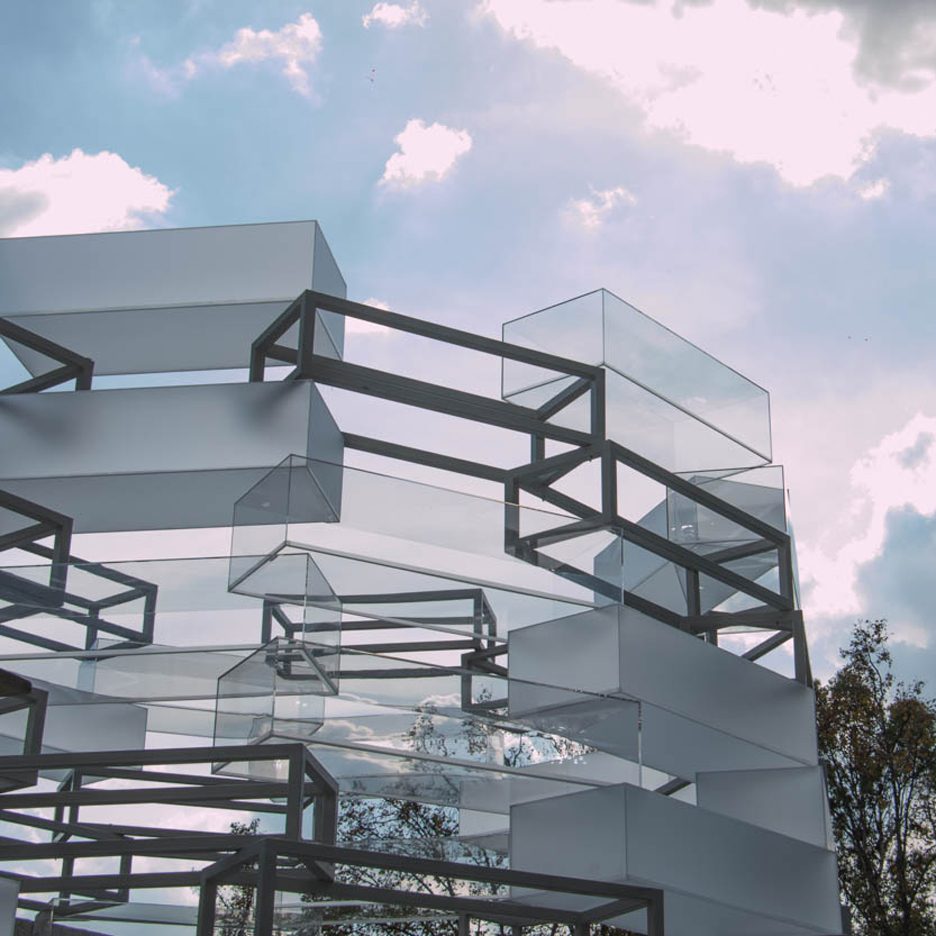
Museum of Immortality forms annual pavilion for Design Week Mexico


Design Week Mexico 2016: empty cuboids representing both museum vitrines and coffins are stacked to create this installation outside Mexico City’s Museo Tamayo (+ slideshow). (more…)

http://ift.tt/2dqO8Cy