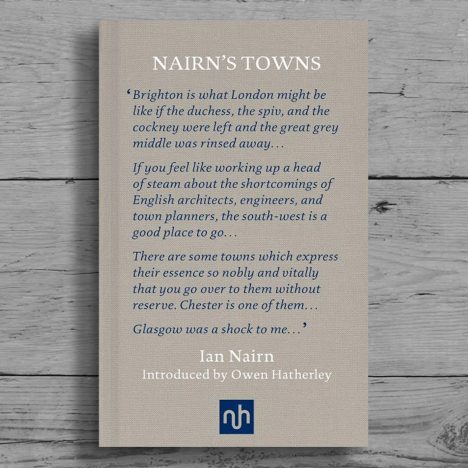
Competition: Dezeen has teamed up with publisher Notting Hill Editions to give away 10 copies of a collection of essays by Ian Nairn. (more…)
Competition: Dezeen has teamed up with publisher Notting Hill Editions to give away 10 copies of a collection of essays by Ian Nairn. (more…)

In order to heighten how it relates to its surroundings, the architects took a simple house to the extreme. One end of this stretched, elongated house is anchored into the hill, while the other floats over marshy wetlands. When it rains, the water literally runs under the house: next to the entry footbridge, a boulder strewn rain garden cascades underneath the house to the meadow beyond.
Built for a nature loving couple who is retiring to the countryside, the house integrates ‘aging in place’ into its design. The house is all on one level, sited so that the landscape rises and plunges on all four sides, in order to visually counteract the future loss of mobility. In order to maximize the experience of outdoors, the screened porch can be enjoyed year-round, thanks to a large fieldstone fireplace and interchangeable screened and glass wall panels. Taking human (and canine) centered design into account, windows on all sides frame key vistas; up towards the orchard, down to the lake, and across to the woods. Two low windows are strategically placed so the dogs can look out as well.
True to their aesthetic, O’Neill Rose Architects paired their sensitive approach to siting with clean, light filled interiors. Streamlined references to the rural vernacular can be found in details like the turn buckle ceiling cables. As with other projects, key furniture and lighting is designed and fabricated by the architects, including the blackened steel light fixtures and the blue cypress wood dining enclosure.
Product Description. One of the principal materials in this project is cypress. We like to re-interpret context in a way that highlights both the newness of our work and casts the original context in a new light. The agricultural buildings in the area, which are simple wood framed structures with field stone bases, really resonated with us. The stone bases anchor the buildings to the ground, and the lighter, wood structures engage the surrounding site. We felt this gesture was really appropriate, and we could use it to really call attention to the building’s position within it’s site. We chose to clad the building in vertical boards of cypress, stained with ebony, because it is a really beautiful wood, and the translucent stain showcased its beauty.
We used it at the interior as well; cypress with the same ebony stain as the exterior creates the ‘house within the house’ that the kitchen service bar inhabits, while a special blue stained cypress enclosure plays double duty as a kitchen banquette enclosure, a spatial divider within the open plan.

We want to see your designs for an architecture Halloween pumpkin! Download the design template below and illustrate/animate/build something that will squash us with your talent. We’ll be accepting entries until October 24, at 12:00 pm EST and we’ll publish our favorites before Halloween!
Competition Guidelines:
Download template:
How to share a link to your submission:
In the form below, please submit a link to the .jpg/.png/.gif that you have created. We will not accept submissions as zip files, nor do we accept submissions sent via WeTransfer, MegaUpload, or a similar service. Any entry submitted as a zip file or using a file transfer service will be disqualified. If you are sharing a file that has been uploaded to Dropbox, Microsoft OneDrive, Imgur or Google Drive, please ensure that you are sharing a public link that can be accessed by ArchDaily editors.
How to share a file using Dropbox
How to share a file using Google Drive
How to share a file using Imgur
How to share a file using Microsoft OneDrive

MVRDV and Zhubo Architecture Design have won a competition to design the Xili Sports and Cultural Centre in Shenzhen, China. The new experience center will consist of four distinct volumes housing a theater, a basketball and badminton arena, a multi-function arena and a swimming pool, as it seeks to “transform the lives of the different generations of people living nearby, through offering a more humanistic model for sports and culture.”
As the fastest developing urban region in China, Shenzhen is currently undergoing a transformation from a production-based to a knowledge-driven economy. The resulting boom has already created high-density usage, and stadium-sized sports facilities for entertainment. But there remains a lack of recreational facilities for typical citizens.
“There is now a need for a more human-centred approach; the challenge was to go from bigness to compression through understanding urbanism,” explain the architects. “MVRDV’s design for the densification and development of a sports and cultural centre responds to the growing demand for fitness sports venues, with the intention of introducing a more fun, human, social and sustainable model that departs from populist Olympic-sized sports arenas.”
The complex will be located in a residential area along Shenzhen’s Dasha Green Corridor, which stretches between the Nanshan and Yangtai mountain parks. Program elements have been arranged to allow for flexible zones, where different sports and social activities can occur, blurring the boundaries between sports and culture to strengthen community interaction.
“We wanted to combine a large-scale sports stadium with a social aspect connecting it with the community. This was achieved by arranging different volumes on the site around a new diagonal (green) bridge linking the Chaguang metro station in the south, with the Tanglan mountains in the north, making this centre a stage for different users – nature, sports and culture”, says MVRDV founding partner, Jacob van Rijs.
The center’s total 105,000 square meters (1,130,000 square feet) includes a 20,000 square meter (215,000 square foot) theatre-amphitheatre, 15,000 square meter (161,000 square foot) Basketball- Badminton arena, 10,000 square meter (108,000 square foot) multifunctional arena and 6,000 square meter (65,000 square foot) swimming pool. The signature element of the complex is a special elevated running track that connects and weaves between the volumes, inviting visitors to “go for an exciting run around the complex, relax and socialise both inside and outside.”
MVRDV designed the project in collaboration with co-architects Zhubo Architecture Design, who are well-revered for their influential works in Shenzhen and throughout China, alongside adopting a humanistic approach to the effect of the design and construction process on health, well-being and fitness.
Xili Sports and Cultural Centre will be MVRDV’s first project under construction in Shenzhen. Construction is slated to begin in 2017.

From the architects and curatorial team. One of architecture’s fundamental legacies is its own form. Not only is history built from its visual universe, but form is also a common language that brings together architects from all over the world in a collective conversation. In this exhibition, which proceeds from a potentially infinite repository, three architects—Johnston Marklee, Nuno Brandão Costa, and Office KGDVS—build a dialogue that challenges notions of authorship and the limits of form.
Mariabruna Fabrizi and Fosco Lucarelli were invited to reflect upon a selection of examples from their platform, Socks Studio. They highlight the permanence of form and its capacity to condense a set of values into any visible thing. The Socks format has evolved over the years from an online magazine to become a platform for speculation and discussion that also draws on Microcities’ own architectural projects.
Functioning as a “conversation,” the narrative of the exhibition has been developed around a number of spaces that are inspired by examples of architectural designs by the architects. Each of the spaces is designed to house content selected from the extensive Socks database.
The language of architecture is explored through a sample of construction drawings, landscape interventions, urban plans, artistic investigation, and other elements. Originating from different time periods and regions of the world, the content highlights what remains constant and what changes, as well as identifying analogies and affinities in the creation of the built environment. Organized along twelve interlinked spaces, with each space incorporating images related to a core element, the exhibition defines continuous seam of works that are directly inter-related, be it through affinity or opposition.
Curated by Diogo Seixas Lopes, The Form of Form exhibition is also a process in itself. The ultimate aim is for it to become a “meeting space” that can demonstrate the meaning of form in architectural design – in the past, present and future.
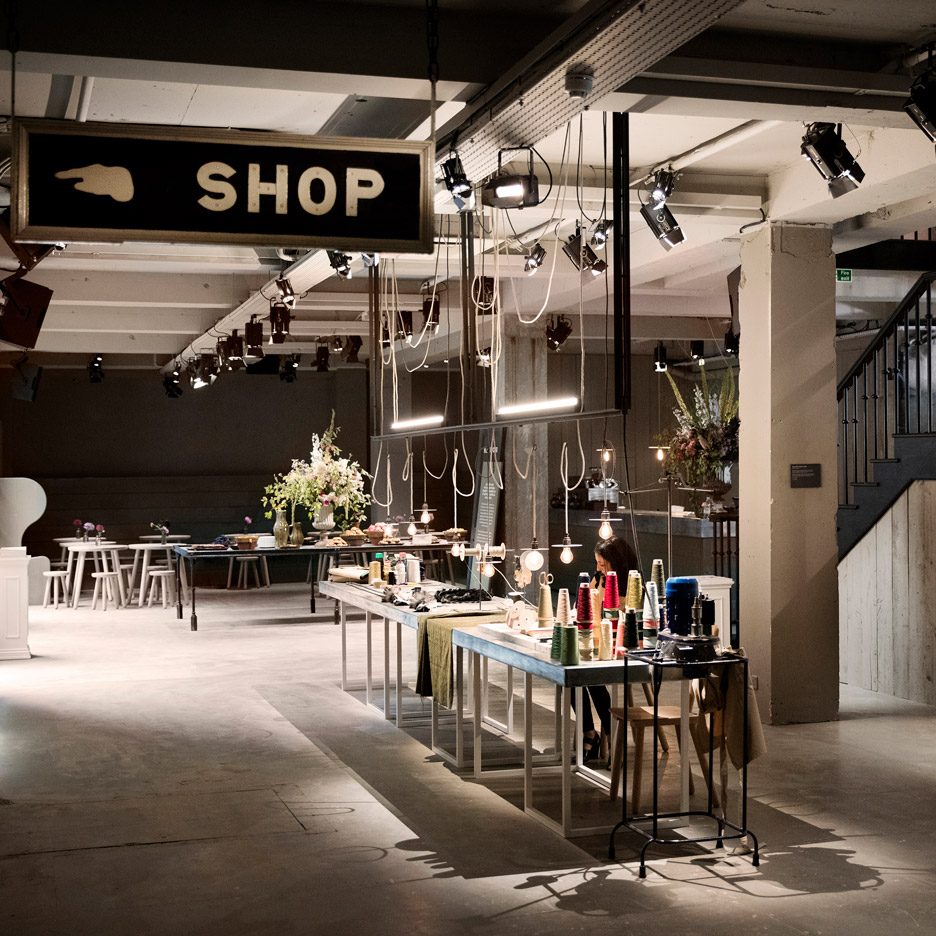
London Design Festival 2016: British fashion brand Burberry has teamed up with The New Craftsmen to showcase the work of designers and craftspeople in an old Soho warehouse (+ slideshow). (more…)

We’ve reached 500,000 followers on Twitter, which happens to be the first social-media platform we ever joined! To celebrate, London-based designer Jack Bedford has created this illustration for us.
If you don’t already, follow us here for all the latest breaking news, projects and reader comments from Dezeen.

French photographer Jonk drove over 5,000 kilometers through southeast Europe. His subject matter? Yugoslavian monuments, or “spomenik” in Serbian.
Built in the 1960s and 70s under former president Josep Broz Tito, these monuments commemorate the communist resistance during the German occupation. While their sculptors and architects vary (Vojin Bakic, Jordan and Iskra Grabul among others), all of the monuments memorialize WWII battle sites or former concentration camps. Although the monuments attracted a high rate of visitors in the 1980s, many of them have been abandoned or poorly preserved after Yugoslavia’s split. Jonk’s photographs illuminate both the decay and beauty of these sculptures.
News Via: Jonk
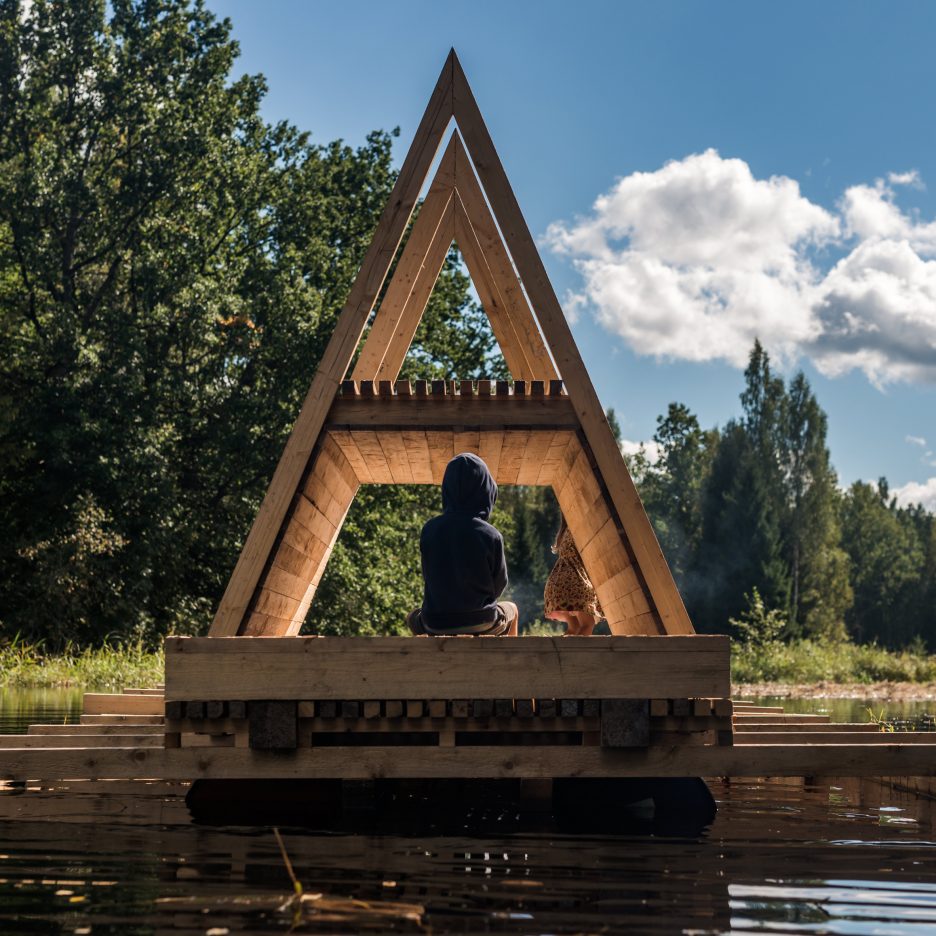
Estonian interior architecture students designed this floating timber pavilion to provide a shelter, sauna and campfire for visitors to the Soomaa National Park wetlands during flooding (+ slideshow). (more…)

See the latest from our recruitment site Dezeen Jobs, including positions at San Francisco State University, Schmidt Hammer Lasssen Architects and Heatherwick Studio, which recently unveiled a honeycomb of staircases for New York (pictured). This is also the last chance to apply for roles with the Foster + Partners, NBBJ, John Smart Architects and more… (more…)

