School in Alto de Pinheiros / Base Urbana + Pessoa Arquitetos


© Pedro Vannucchi

© Pedro Vannucchi


© Pedro Vannucchi


© Pedro Vannucchi


© Pedro Vannucchi


© Pedro Vannucchi

  • Architects: Base Urbana , Pessoa Arquitetos
  • Location: Alto de Pinheiros, São Paulo – State of São Paulo, Brazil
  • Architect In Charge: Catherine Otondo (Base Urbana), Marina Grinover (Base Urbana), Jorge Pessoa (Pessoa Arquitetos)
  • Area: 796.0 sqm
  • Project Year: 2015
  • Photographs: Pedro Vannucchi
  • Team: Florencia Testa, Leandro Leão, Lívia Marquez, Luisa Fecchio, Matheus Tonelli, Tânia Helou, Tiago Testa, Patricia Mieko
  • Management And Construction: Marcondes Ferraz Engenharia
  • Foundation: Geobrax
  • Wood Structure : Ita Construtora
  • Steel And Concrete Structure : Stec Do Brasil
  • Hidraulic And Eletric Installation : Elaine Hammoud E Jds Projetos

© Pedro Vannucchi

© Pedro Vannucchi

From the architect. The Project brief determined that the time allotted to finish the building should guide the design concept: the schedule was 150 days to build a 790m2 school.


© Pedro Vannucchi

© Pedro Vannucchi

Floor Plan

Floor Plan

© Pedro Vannucchi

© Pedro Vannucchi

Thus build-ability and construction logistics which are usually analysed in a basic later phase had to be taken into account from the very first studies.


© Pedro Vannucchi

© Pedro Vannucchi

The architectural design concept was anchored on simultaneous building plans: the concrete structure that would span longer voids  (11 x 8 meters) and hold the sports courts on the top floor. The top slab was to be supported by metal profiles and since there was no time to wait for the concrete slab to set in place, we used a pre-formed slab.


Section

Section

Finally, a wooden structure would line the inside, shaping the bulk of the building itself.


© Pedro Vannucchi

© Pedro Vannucchi

After the concrete structure and the pre-formed slab were in place, two different work plans were carried out. On one hand, setting up  the wooden structure which would shape the classrooms, patios, library and on the other hand laying the top cover over the concrete slab. As these two systems were being completed in parallel, precious time was saved.


© Pedro Vannucchi

© Pedro Vannucchi

From then on, work progressed fast and efficiently. The materials used for that phase of the building were all pre-manufactured: cement plates, melanin laminated panels (TS) and dry walls. In other words, a dry building process was used.


Floor Plan

Floor Plan

Floor Plan

Floor Plan

Using pre-cut wood to build the main body of the building was of the essence to reach our goals. Wooden structures demand “to the inch” precision   to be properly installed. It had to fit the concrete voids and there was no time for further measurements. That constraint was the guiding principle for the whole work. In other words, the use of wood determined the overall character of the building, adding to the agility of the work and to financial resources and time savings.


© Pedro Vannucchi

© Pedro Vannucchi

Also, beyond any other constructive considerations, wood by itself adds visual beauty and tactile comfort to the space. The good use of natural resources evokes the idea of nature preservation and environment. These are important values to a school that intends to have an extremely practical, and at the same time agreeable pedagogical space that enhances communications between the students, the environment and the learning experience.
http://ift.tt/2dyid5n

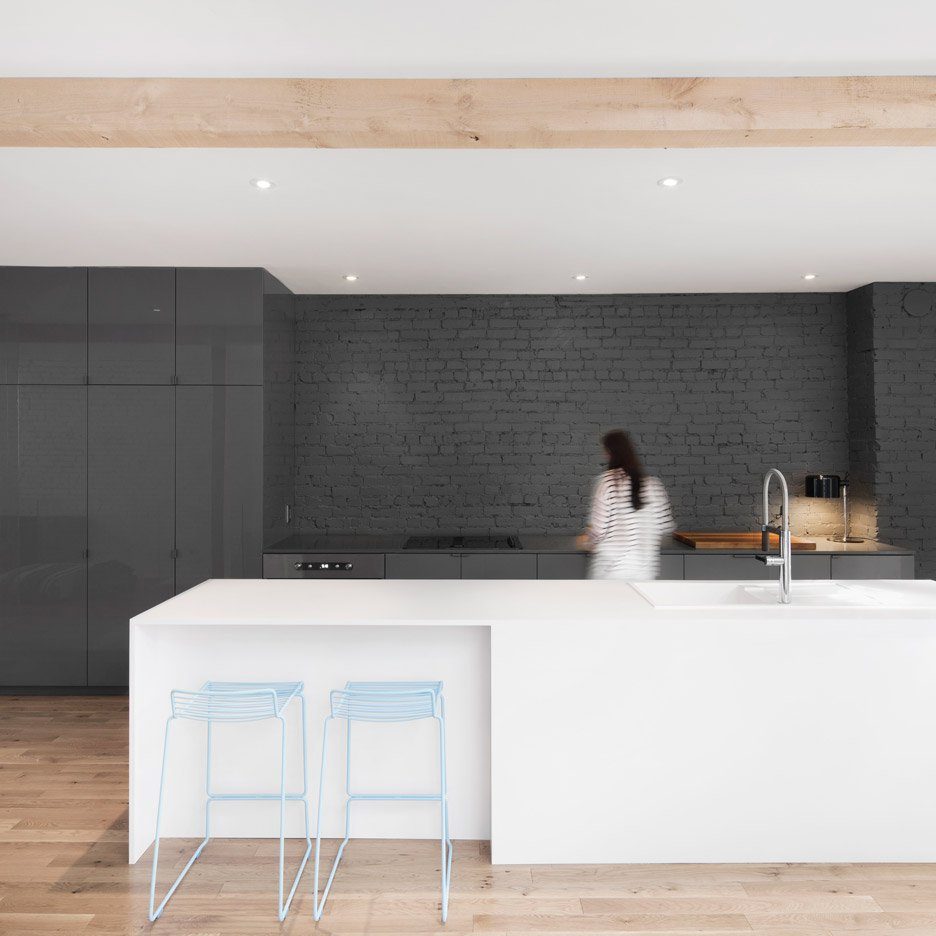
10 of the most pristine minimalist kitchens


With the demand for minimalist homes increasing, architects are coming up with innovative ways to hide bulky appliances and storage units. We’ve rounded up 10 of the most stripped-back kitchens on Dezeen, including one concealed behind perforated metal screens and another crafted from raw materials (+ slideshow). (more…)

http://ift.tt/2dPjE2p

30 Projects Shortlisted for 2016 Young Talent Architecture Award


© YTAA - Young Talent Architecture Award

© YTAA – Young Talent Architecture Award

The Fundació Mies van der Rohe has announced a list of 30 projects that will compete for the inaugural Young Talent Architecture Award (YTAA) 2016. The award was established this year to “support the talent of recently graduated Architects, Urban Planners and Landscape Architects who will be responsible for transforming our environment in the future,”  and joins the Foundation’s European Union Prize for Contemporary Architecture – Mies van der Rohe Award “in promoting high quality work amongst emerging and established architects through the acknowledgement of the value of good buildings.”

More than 200 projects were submitted from over 100 European architecture schools, which were narrowed down to a shortlist of 30 projects by an esteemed jury of architects and curators. Three winners will be selected at the Teatro Piccolo Arsenale in Venice on October 28th 2016 as part of the 2016 Venice Biennale.

The shortlisted projects are:

A City of Opportunities – Opening Up to Refugees as a Trigger of Urban Regeneration / Francesca Esposito, Violetta Gambino, Francesca Icardi, Marina Mori from PSG_Genoa_IT

A Symbiotic Relation of Cooperative Social Housing and Dispersed Tourism in Havana Vieja / Iwo Borkowicz from KUL_Brussels_BE

A Theatre for la Fura dels Baus / Ivo Oberholzer from HSLU T&A_Horw_SW

Bagwall Handbook / Andrea Chiabrera, Attilio Delucchi Baroni from PSG_Genoa_IT

Borrowed Scenery: Miyato Salt Farm Onsen / Shenpei Ha from The CAss_London_UK

Brewing Democracy: The Assembly of Le Balai Citoyen in Ouagadougou / Lorenzo Perri from AA_London_UK

Butterfly Landing / Maria Cerdà from UIC_Barcelona_ES

Carp Fishing in the Market of Tokyo / Izaskun Gonzalez from ETSAB_Barcelona_ES

CHT-AHM / Almudena Ballarín from ETSAM_Madrid_ES

Death and Life of a Small French City / Alix Sportich du Réau de la Gaignonnière, Alice Villatte from eav&t_Champs-sur-Marne_FR

Dialogues between city and landscape / Matteo Cervini and Eleonora Loca from SCHOOL AUIC_Milan_IT

Genesis of a place towards the project / David Gonçalves Monteiro from FAUP_Porto_PT

Geo Front / Policarpo del Canto Baquera from ETSAM_Madrid_ES

Greenwich Archipelago Village / Ioana Gherghel from University of Westminster DA_London_UK

Las Delicias’ Center for the Elderly / Blanca Gómez Gálvez from eAM’_Malaga_ES

Linear Landscapes / Silvia Lucchetta from IESAD_Segovia_ES

Little Hamburg Hybrid Housing / Michał Sapko from SUT-FA_Gliwice_PL

Living in a cultural environment / Clàudia Carreras Oliver from ETSALS_Barcelona_ES

Living in offices. The alive triangle of Bordelongue in Toulouse / Jaufret Barrot, Cinthia Isabel Carrasco Fuentes from ENSA_Toulouse_FR

Radius / Julian Meisen from UdK_Berlin_DE

Revisited Waters / João Veríssimo from FA-UL_Lisbon_PT

Sacred / Pia Mendaro Larramendi from ETSAM_Madrid_ES

Sand Motor in Costa Brava / Daniel Mira García from ETSAM_Madrid_ES

S’lowtecture: housing structure, Wroclaw – Zerniki / Tomasz Broma from FoA_Wroclaw_PL

Storm surge zones – An architectural intervention / Alexis Damian Valencia Cordova from BFH AHB_Burgdorf_CH

Subversions Minhocao / Laura Abbruzzese from DA_Ferrara_IT

The Munch Atelier: Common Ground / Vincent François from KUL_Brussels_BE

The reuse of the neglected areas and the rebirth of the city / Fabrizio Furiassi from DIAP_Rome_IT

The English Mall // The Comercial Garden / Miriam Alonso Barrio from ETSAM_Madrid_ES

Vallecas 2048, Erika Mazza and Roberto Bonutto from PSG_Genoa_IT


A shot from the jury deliberation. Image © YTAA - Young Talent Architecture Award

A shot from the jury deliberation. Image © YTAA – Young Talent Architecture Award

Projects were nominated by architecture schools throughout Europe. The three YTAA winners will receive support through the Fundació Mies van der Rohe network of architects and critics as well as a prize of 5,000 Euro, a profile in World-Architects.com, a exhibition at the EUMiesAward, a Vectorworks license, USM furniture for designing a workspace and a diploma.

This year’s jury included:

  • Jose Luis Vallejo, Architect, Principle at Ecosistema Urbano, Madrid (President)
  • Inge Beckel, Architect, Editor at the Swiss-Architects.com eMagazine, Zurich
  • Michał Duda, Architecture Historian, Curator at Museum of Architecture, Wroclaw
  • Juulia Kauste, Sociologist, Director at Museum of Finnish Architecture, Helsinki
  • Triin Ojari, Architect, Director at Museum of Estonian Architecture, Tallinn

YTAA is organised by the Fundació Mies van der Rohe with the support of Creative Europe – European Commission and World-Architects.com as Founding Partner. Sponsors to date include Vectorworks, A Nemetschek Company (USA), Albrecht Jung GmbH (Germany) and USM Modular Furniture (Switzerland).

More information can be found on the award website, here.

News via Fundació Mies van der Rohe.

http://ift.tt/2dPdwXI

Google and Monotype collaborate on font that spans all written language


International font company Monotype has worked with Google to create one typeface that can be used by everyone in the world, writing in any language (+ movie). (more…)

http://ift.tt/2dObeDc

Blackbirds / Bestor Architecture


© Iwan Baan

© Iwan Baan


© Laure Joliet


© Iwan Baan


© Iwan Baan


© Iwan Baan

  • Landscape Architect: Mia Lehrer + Associates
  • Branding/Logo: Bestor Architecture
  • General Contractor: Pacific Empire Builders
  • Structural Engineer: Nishkian Chamberlain
  • Civil Engineer: CRC Enterprises
  • M/E/P Engineer : Shamim Engineering
  • Client : LocalConstruct

© Iwan Baan

© Iwan Baan

Blackbirds is a cluster of 18 homes nestled in the bohemian hills of Los Angeles’ Echo Park neighborhood designed by Bestor Architecture. The multi-house development is a progressive design solution for high quality dense housing in a city with little available land. The houses are 1,930 square feet or less, are a mix of two and three bedrooms, and are built around a living street: a central courtyard that comprises both landscape and parking areas, as well as serving as the stage for larger community functions and play. 


Axonometric

Axonometric

The placement of the houses in the hills mimics the early 20th century craftsman cabins of the area, and deploys a strategy of “stealth density”, combining several houses into a single house shaped volume. For instance two free-standing houses are connected by flashing and the roofline creates the illusion of one house mass. Three houses, whose separation is masked has the illusion of being two houses. This conceals the actual density of units by maintaining the neighborhood shape and landscape context across the .82 acre site. The 18 houses are situated in a drought tolerant landscape with mature trees that is woven into the surrounding neighborhood fabric. The community is a thoughtful blend of private, semi-private and public space, and promotes connections with neighbors and the community by encouraging interaction and exchange. The emphasis of the design is on a higher quality of life within an urban context by promoting interactions between neighbors, links between units with native landscaping, and medium density with sensitive scale and massing.


© Iwan Baan

© Iwan Baan

Section

Section

© Laure Joliet

© Laure Joliet

Section

Section

© Iwan Baan

© Iwan Baan

The homes feature expansive windows with city and mountain views that bring in abundant natural light and ventilation in a city with a temperate climate. The shared “street” is slightly sloped so rain water can be collected and filtered for watering the site.


© Iwan Baan

© Iwan Baan

http://ift.tt/2d6ltoU

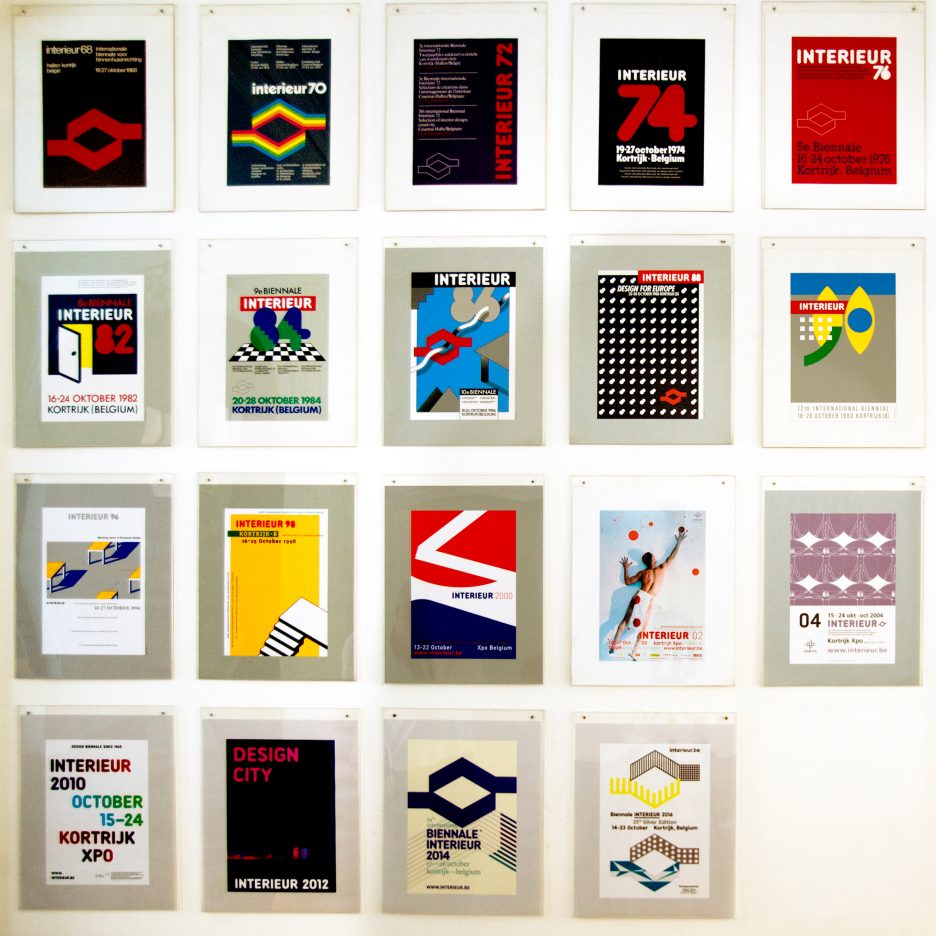
Competition: win a trip to Biennale Interieur 2016


Competition: Dezeen has teamed up with Biennale Interieur to give away five travel packs to this year’s event, including transport, accommodation and dinner. (more…)

http://ift.tt/2dVxzn8

Brexit’s impact on education is a disaster for design says Ben Evans


EU students are deferring or cancelling their offers from UK design schools over Brexit with major implications for the future of the sector, according to London Design Festival co-founder and UAL governor Ben Evans. (more…)

http://ift.tt/2dP4lqn

Learn About the History of the RIBA Stirling Prize and See Inside the 2016 Finalists

As the winner of the 2016 RIBA Stirling Prize is set to be announced later today, Architects’ Journal has released a documentary looking at the award’s 21-year history and its impact on the buildings and architects that have been named to the prestigious list.

The video, commissioned by AJ’s Laura Mark and filmed by Jim Stephenson, features exclusive interviews with Richard Rogers, and Sheila O’Donnell and John Tuomey, and profiles past winners and each of the 6 buildings shortlisted for this year’s prize. The film also reveals AJ’s pick for this year’s winner.

Watch the full video above or check out AJ’s videos on each of the finalists, below.

Blavatnik School of Government, University of Oxford / Herzog & de Meuron

Newport Street Gallery, Vauxhall, London / Caruso St John Architects

City of Glasgow College, Riverside Campus / Michael Laird Architects + Reiach and Hall Architects

Outhouse Gloucestershire / Loyn & Co Architects

Weston Library, University of Oxford / WilkinsonEyre

Trafalgar Place, Elephant and Castle, London / dRMM Architects

RIBA Announces 2016 Stirling Prize Shortlist
//cdn.embedly.com/widgets/platform.js

News via Architects’ Journal.

http://ift.tt/2dNHiaO

Vancouver architect Bing Thom dies aged 75


Architect Bing Thom, designer of several major buildings in Vancouver, has died aged 75 following a brain aneurysm. (more…)

http://ift.tt/2dvjKwu

CENTRO / TEN Arquitectos


© Luis Gordoa

© Luis Gordoa


© Luis Gordoa


© Luis Gordoa


© Luis Gordoa


© Luis Gordoa

  • Architects: TEN Arquitectos
  • Location: Av Constituyentes 455, América, 11820 Ciudad de México, D.F., México
  • Architect In Charge: Enrique Norten
  • Area: 7315.0 sqm
  • Project Year: 2015
  • Photographs: Luis Gordoa
  • Structural Engineer: CTC Ingenieros Civiles
  • Interior Design: Grupo Diarq
  • General Contractor: Grupo GA&A
  • Leed Certification & Comissioning: AKF
  • Leed Consultant: IBALCA
  • Acoustics: SAAD Acustica
  • Lighting Consultant: Ideas en Luz

© Luis Gordoa

© Luis Gordoa

From the architect. On one of Mexico City’s busiest avenues, Avenida Constituyentes, the new campus for CENTRO University is a multi-building complex of four volumes above grade, and three below-grade parking levels. This 78,740 sf, LEED Platinum certified new construction will also house public spaces, studios and study areas, an art gallery, a 400-seat auditorium and faculty and administrative offices. The volumes above grade are layered and interconnected to create the new dynamic central home and much-needed expanded facilities for the Design and Communications University.


© Luis Gordoa

© Luis Gordoa

Axonometric

Axonometric

© Luis Gordoa

© Luis Gordoa

Section

Section

Building A, a six-story building located on the rear side of the lot, houses studios and a cafeteria. The offices, double-height movie forum and five projection rooms are located in the three-storied Building C at the front of the complex, which serves as the facade to Constituyentes Avenue and the main entry point into the campus. Building B floats perpendicularly over Buildings A and C. It houses a 4-story mediatheque, along with study areas and an art gallery. Finally, Building D is a 40-foot-wide two level stair, under which the double-height auditorium and a snack bar are located


© Luis Gordoa

© Luis Gordoa

The overlapping and volumetric composition of the complex creates a serene courtyard at the center of the campus which aims to amplify the sense of openness within, while blocking noise and visual traffic from Constituyentes Avenue. The building facades surrounding the courtyard will offer exhibition space for student works. Communal spaces, such as the mediatheque and study areas, are strategically located to take optimal advantage of the views to the 7,000 sf of interior courtyard and to nearby Chapultepec Park, one the largest city parks in Latin America.


© Luis Gordoa

© Luis Gordoa

http://ift.tt/2dVcFoi