House at Lake Biel / Markus Schietsch Architekten


© Andreas Buschmann

© Andreas Buschmann


© Andreas Buschmann


© Andreas Buschmann


© Andreas Buschmann


© Andreas Buschmann

  • Construction Management: “Das beste Einfamilienhaus 2016”, audience award, Switzerland .“Häuser des Jahres 2016”, architecture award, Europe,

© Andreas Buschmann

© Andreas Buschmann

Situated in the shore zone of Lake Biel amidst lush vegetation, wild willows and natural meadows the house keeps strong spatial connection to the surrounding nature. Therefore the interior spaces get extended by a large porch on the ground floor and two terraces on the first floor. Porch and terraces generate inbetween spaces where the clients can experience the play of nature, the change of the seasons and the twittering of birds but still be protected and feel safe. Large windows connect inside and outside. The sunlight enters the interior spaces through a filter of timber lamellas framing the outside of the porch.


© Andreas Buschmann

© Andreas Buschmann

Plan 0

Plan 0

© Andreas Buschmann

© Andreas Buschmann

Since slight floodings may occur the house is elevated eighty centimeters above the ground. The living area on the ground floor is designed as a free-flowing open space opening up towards the garden side of the house. Freestanding elements as the fireplace and the kitchen island partition the space and create different spatial qualities. The private rooms are located in the upper floor and each room has access to an outside terrace which gets formed through a setback of the ouside wall. The setbacks on the first floor create more privacy for the inside and help to interlock the house with the surrounding.


© Andreas Buschmann

© Andreas Buschmann

© Andreas Buschmann

© Andreas Buschmann
http://ift.tt/2dNeGTj

Carlson Design Home Creates a Private Home in Jurmala, Latvia

Private House in Jurmala by Carlson Design Home (6)

Private House in Jurmala is a private residence designed by Carlson Design Home. The 3,013-square-foot home is located in Jurmala, Latvia. Private House in Jurmala by Carlson Design Home: “Interior design of premises developed in the context of the building architecture, which is dominated by accuracy, shape purity, high-quality materials and modern equipment. Tonal space solutions are a natural earth-tone combinations with bright accents in soft furniture. In order to..

More…

Urban Rigger / BIG


Courtesy of  BIG

Courtesy of BIG


Courtesy of  BIG


© Laurent de Carniere


© Laurent de Carniere


© Laurent de Carniere

  • Architects: BIG
  • Location: Copenhagen, Denmark
  • Partners In Charge: Bjarke Ingels, Jakob Sand
  • Project Leader: Joos Jerne
  • Area: 680.0 sqm
  • Project Year: 2016
  • Photographs: Courtesy of BIG, Laurent de Carniere, Frederik Lyng
  • Team: Aaron Hales, Adam Busko, Agne Tamasauskaite, Aleksandra Sliwinska, Andreas Klok Pedersen, Annette Birthe Jensen, Birgitte Villadsen, Brage Mæhle Hult, Brigitta Gulyás, Carlos Soria, Christian Bom, David Zahle, Dimitrie Grigorescu, Edda Steingrimsdottir, Edmond Lakatos, Elina Skujina, Finn Nørkjær, Ioana Fartadi Scurtu, Jacob Lykkefold Aaen, Jakob Lange, Kamila Rawicka, Lise Jessen, Lorenzo Boddi, Magdalene Maria Mroz, Nicolas Millot, Perle van de Wyngert, Raphael Ciriani, Stefan Plugaru, Stefan Wolf, Tobias Hjortdal, Toni Mateu, Tore Banke, Viktoria Millentrup
  • Collaborators: BIG Ideas, Danfoss A/S, Grundfos DK A/S, Hanwha Q CELLS Ltd., Miele, NIRAS A/S, Dirk Marine/House on Water

Courtesy of  BIG

Courtesy of BIG

Recent years have demonstrated a substantial and sustained increase in the number of student applicants throughout Denmark. As the number of students continues to grow, additional student housing will be needed to accommodate them. There are few strategies that allow cities to expand. Yet, Copenhagen’s harbor remains an underutilized and underdeveloped area at the heart of the city. By introducing a building typology optimized for harbor cities we can introduce a housing solution that will keep students at the heart of the city.


© Laurent de Carniere

© Laurent de Carniere

Meanwhile, the standardized container system has been developed to allow goods to be transported by road, water or air, to anywhere in the world in a complex network of operators at a very low cost. By making use of the standard container system we are offered the framework for an extremely flexible building typology.


© Laurent de Carniere

© Laurent de Carniere

By stacking 9 container units in a circle, we can create 12 studio residences which frame a centralized winter garden; this is used as a common meeting place for students. The housing is also buoyant, like a boat, so that can be replicated in other harbor cities where affordable housing is needed, but space is limited.


Courtesy of  BIG

Courtesy of BIG

http://ift.tt/2dsBUKS

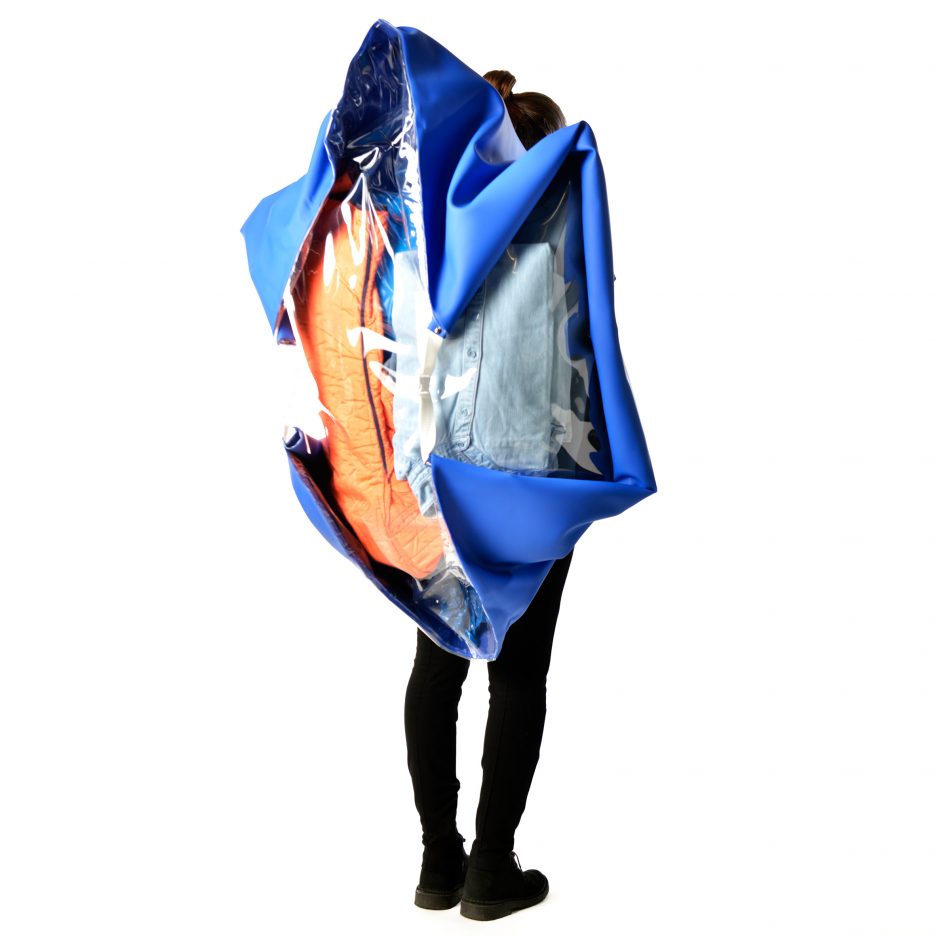
Increase Decrease backpack is based on China’s overstuffed cargo bikes


Beijing Design Week 2016: Dutch designer Casper Notenboom has created a collection of bags that references the way that people in China transport large stacks of goods on their bikes (+ slideshow) (more…)

http://ift.tt/2cZhoTq

Hikari Terrace / NKS architects


© Kouji Okamoto - Techni Staff

© Kouji Okamoto – Techni Staff


© Kouji Okamoto - Techni Staff


© Kouji Okamoto - Techni Staff


© Kouji Okamoto - Techni Staff


© Kouji Okamoto - Techni Staff


© Kouji Okamoto - Techni Staff

© Kouji Okamoto – Techni Staff

In Japan, the funeral ceremony used to be an event in the entire regional community. But due to shift in lifestyle such as trend of nuclear families and aging of population, the funeral is changing into a small family’s event and become diversified. This ceremony hall is not for busy traditional funerals many people visit, but for relaxed small funerals that are held by only the close relatives. By doing so, the bereaved family can have much final time with the deceased in contrast to conventional funerals.


© Kouji Okamoto - Techni Staff

© Kouji Okamoto – Techni Staff

This funeral hall has a similar structure to a settlement in that it is made up of a cluster of roofs. There are two main guest rooms which the bereaved family stay the night to protect the coffin until the tomorrow funeral. One is the bigger room, which has the living room, dining room and kitchen, and the other is the small Japanese style room. Basically, the funeral ceremony is held at the guest rooms, but we can use the ceremony hall as well. The ceremony hall is also used for occasional Buddhist memorial service. Because the ceremony hall and dining hall are connected through the courtyard, by opening the doors and using them as one space, this space is applicable to large-scale events.


Plan

Plan

The building is closed completely from the real world by concrete wall and has no openings to the outside. But each room faces onto the private courtyard and has the big glass windows toward it. We can see nothing but sky from the courtyards and spend time without any interruption. The courtyards also serve as daylights and natural ventilation.


© Kouji Okamoto - Techni Staff

© Kouji Okamoto – Techni Staff

Axonometric

Axonometric

© Kouji Okamoto - Techni Staff

© Kouji Okamoto – Techni Staff

The main structure is a box frame type RC construction and the roof structure is a wooden construction. Y shaped beams is put on the top of the concrete walls. These beams are enhanced horizontal stiffness of wooden roof frames and enable big roofs without additional reinforcement. Y shaped beams also function rainwater gutter and facilitate the maintenance of drains. The windows at top of the roofs can be opened or closed by remote control easily and ventilate the room efficiently and give the daylight.


Detail

Detail

This space offers full of warmth of woods and daylight with home-like feelings. We hope visitors will feel a strong connection to the deceased and make the cherished memory in this hall.


© Kouji Okamoto - Techni Staff

© Kouji Okamoto – Techni Staff

http://ift.tt/2dzXP4V

Peter Zellner to launch Free School of Architecture in California

Peter Zellner

US architect Peter Zellner has announced plans to open a post-graduate architecture school in Los Angeles that won’t charge tuition fees. (more…)

http://ift.tt/2dmP3cy

Hubba-to / Supermachine Studio


© Wison Tungthunya

© Wison Tungthunya


© Wison Tungthunya


© Wison Tungthunya


© Wison Tungthunya


© Wison Tungthunya

  • Architects: Supermachine Studio
  • Location: Onnuch Junction, Krung Thep Maha Nakhon, จังหวัด กรุงเทพมหานคร 10110, Thailand
  • Architect In Charge: Yupadee Suvisith
  • Area: 989.0 sqm
  • Project Year: 2016
  • Photographs: Wison Tungthunya
  • Client: Hubba in collaboration with Sansiri

© Wison Tungthunya

© Wison Tungthunya

From the architect. With their ambition, Hubba, a co-working space operator, wants to create their new edition of their space differently than their first one. They collaborate with Sansiri, one of the biggest developers in Thailand, to curate their space in Habito, Sansiri’s brand new mall locating in the center of the residential territory they created. Hubba came up with the idea of enlarging the portion of “making” within the ecosystem of “working” to suit the new neighborhood. They call it “Artisan space”, which consists of several handmade facilities such as pottery and wood studio, open kitchen and photography dark room. Screening room for different lectures, workshops and seminars is also added. The intention is to expand their already wide networks, strengthen the concept of being a “hub” and reinforce their “co-working” philosophy.


© Wison Tungthunya

© Wison Tungthunya

Diagram

Diagram

© Wison Tungthunya

© Wison Tungthunya

 The design of Hubbato space takes shape from the a funny idea of extending networking lines of Hubba’s original logo and multiply them to occupy/unify space on ground and second floor. We realized that the scheme could be made possible thinking that there are supposed to be quite a number of M&E lines to be installed in the project for functional reason already. Our main operation is to add more into the system and design the organization of these conduits. We color them turquoise to make them visually present (or even emphasize them) throughout the space. We, as designers, usually struggle with M&E elements in our project but, in case of this project, we decide to make it excessive to the degree that it has become an incorporated ornament in architectural space.


© Wison Tungthunya

© Wison Tungthunya

http://ift.tt/2dqQOSj

Studio Mumbai presents MPavilion 2016 built using seven kilometres of bamboo


Studio Mumbai founder Bijoy Jain has unveiled his completed MPavilion in Melbourne – a square structure built from bamboo and wood, but not the cow dung originally planned (+ slideshow). (more…)

http://ift.tt/2do6ZAn

Bijoy Jain’s 2016 MPavilion Opens in Melbourne


© John Gollings

© John Gollings

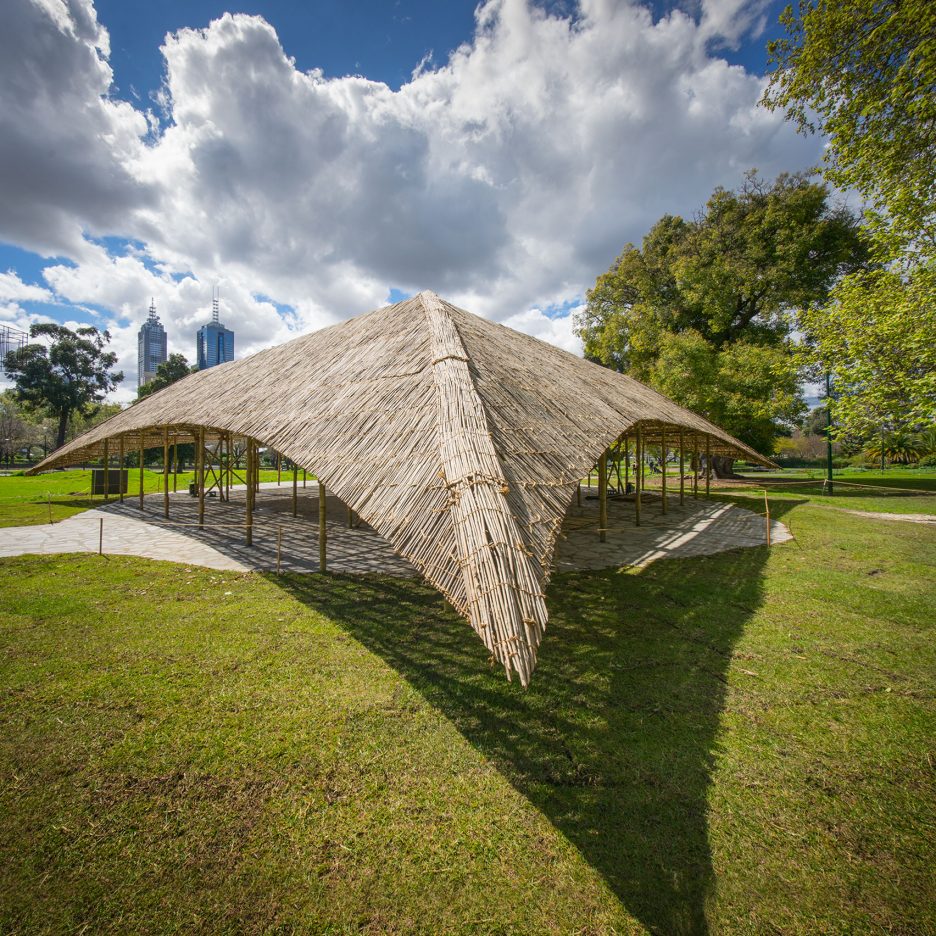
The 2016 MPavilion, designed by Indian architect Bijoy Jain of Studio Mumbai, has opened in Melbourne’s Queen Victoria Gardens. Over the next four months, the bamboo structure will play host to a free public program of over 400 talks, workshops, performances and installations.

Bijoy Jain’s design joins the growing international trend of “handmade architecture” as it becomes the largest bamboo structure in Australia, utilizing 7 kilometers of Indian bamboo, 50,000 kilograms of Australian bluestone, 5,000 wooden pins and 26 kilometers of rope to cover a 16.8 square meter area. The slatted roof panels are constructed from sticks of the Karvi plant and were woven together by craftspeople in India over a four month period.


© John Gollings


© John Gollings


© John Gollings


© John Gollings

“MPavilion is a space for the people of Melbourne to gather, talk, think and to reflect,” said Bijoy Jain. “My objective has not just been to create a new building, but to capture the spirit of the place by choosing the right materials, respecting the surrounding nature and working collaboratively with local craftspeople to share design and construction ideas.”


© John Gollings

© John Gollings

© John Gollings

© John Gollings

An large opening at the center of the roof provides a connection between earth and sky, with a golden well placed below to symbolize the importance of water to place and community. Adjacent to the pavilion, a traditional Indian ‘Tazia’ tower welcomes and directs visitors toward the shelter. At night, the pavilion will feature a lighting design by Ben Cobham of Bluebottle, coordinated with a specially commissioned soundscape by artists Geoff Nees and J David Franzke.


© John Gollings

© John Gollings

“Bijoy’s handcrafted MPavilion is a calming and thoughtful space which will inspire the people of Melbourne. As a utopian space for the creative industry and community, MPavilion continues to challenge the way we see and engage with the world by encouraging design debate and cultural exchange,” commented Naomi Milgrom AO, Chair of the Naomi Milgrom Foundation and project commissioner.


© John Gollings

© John Gollings

MPavilion’s 2016 program will include an opening public forum hosted by architect Peter Maddison along with MPavilion creator Naomi Milgrom and architect Bijoy Jain on Thursday October 6 at 6.15pm. The trio will discuss MPavilion 2016’s vision for cultural exchange and the collective construction process. A special exhibition of Jain’s work and design process will also be displayed at the RMIT Gallery from September 9 to October 22.


© John Gollings

© John Gollings

To learn more about the 2016 MPavilion, check out our post on the design, here. For more about this year’s programming, visit the MPavilion website, here.

News via MPavilion.

http://ift.tt/2dnPUra

Blue Bottle Coffee ROPPONGI Cafe / Schemata Architects


© Takumi Ota

© Takumi Ota


© Takumi Ota


© Takumi Ota


© Takumi Ota


© Takumi Ota

  • Architects: Schemata Architects
  • Location: Roppongi, Minato, Tokyo 106-0032, Japan
  • Architect In Charge: Jo Nagasaka
  • Design Team: Ryosuke Yamamoto, Yui Matsushita
  • Area: 139.0 sqm
  • Project Year: 2016
  • Photographs: Takumi Ota
  • Construction: TANK
  • Collaboration: SOUP DESIGN(sign), hoshizaki(kitchen), WHITELIGHT.Ltd(sound plan), 1lux(lighting plan)
  • Floors: B1F

© Takumi Ota

© Takumi Ota

Blue Bottle Coffee opened the fourth shop in Japan in Roppoingi, Tokyo. The shop is located on a back street at a distance from the busy avenue, facing a small sunken public plaza like a park where people can freely enter.


© Takumi Ota

© Takumi Ota

Plan

Plan

© Takumi Ota

© Takumi Ota

Our design is based on our vision of a cafe staying beside the plaza and quietly embracing the environment.


© Takumi Ota

© Takumi Ota

Main interior finish material is basswood plywood, and the entire walls are composed of regular repetition of wall cabinets with doors, while the strict regularity is moderated by inserting irregular grids of frames encasing several doors. 


© Takumi Ota

© Takumi Ota

http://ift.tt/2cO1RaC