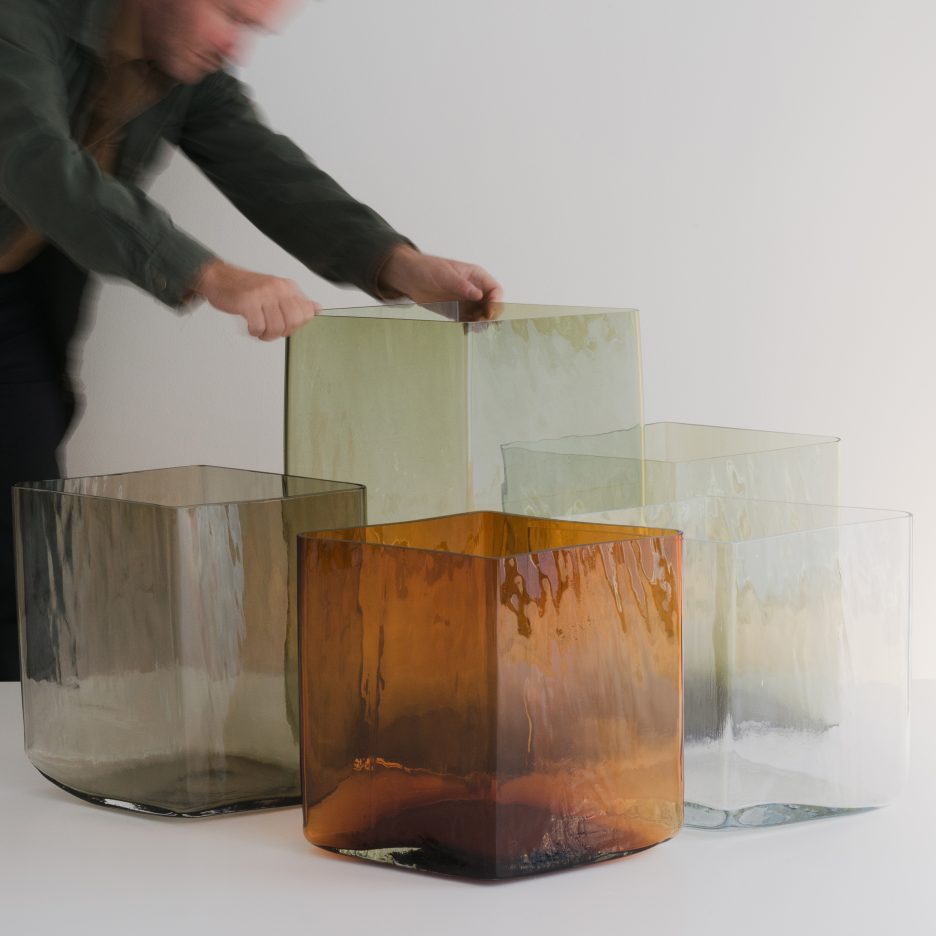
French designers Ronan and Erwan Bouroullec have used wooden moulds to create a series of giant versions of their diamond-shaped Ruutu vases (+ movie). (more…)
French designers Ronan and Erwan Bouroullec have used wooden moulds to create a series of giant versions of their diamond-shaped Ruutu vases (+ movie). (more…)

Great Expectations
What would you expect, when entering a 250 m2 loft at De Rotterdam, the biggest building of The Netherlands, (designed by OMA/Rem Koolhaas), at the height of 143 meters, on the 43rd floor? Rotterdam seen from the air shows the omnipresence of water flowing through the city centre. The 25 meter total glass façade stretching from floor to ceiling, offers you a view of the Maas river, flowing through the city towards the Rotterdam harbour. You will look down upon the Erasmus Bridge (designed by UN Studio), the Markthal (designed by MVRDV), the city centre, Delft and on a clear day even The Hague is part of the view.
Flow like the river
Suppose you go up 143 meters high and enter a living room with a 35 meter wide panoramic view on the Rotterdam cityscape. Which interior could match this overwhelming view? From above you will discover that the city is a flow: the water is an important part of the city. We took ‘flow’ as a design language for the interior. We used it for wavy floor and ceiling patterns and a 20 meter long curvy walnut wooden wall. With these gestures we were able to create a big open 150 m2 living area with grandeur and create places within this open space that feel intimate as well. The curvy walnut wall hides all the living necessities such as the television and storage room, as well as hidden entrances to bedrooms. To avoid that the huge glass walls will evoke an ‘unprotected’ experience of the open space, the long wavy screen of wood is used as a background. It covers the cupboards of the living room and kitchen. It guides you to the bedroom area, as the wall and doors are part of the bedroom. An 8 meter long ‘flowing’ cooking island transforms from a cooking area into a bar area and will give you one of the best panoramic views. This furniture is designed for small family rituals as well as big party events.
Two apartments, one luxury penthouse
In order to create a spacious home, 2 properties are combined into this one luxury penthouse. One apartment is designed as one big living area including kitchen. The second apartment includes 3 bedrooms, 2 bathrooms, a jacuzzi and a sauna – 6 meter long bathroom for the master bedroom with a view towards the Rotterdam harbour – a jacuzzi besides the bed in the master bedroom – a glass sliding door behind for semi outside experience. Even from the 2 person shower you can enjoy the view because you can look all the way through the 13 m long bathroom and bedroom.

André Chiote’s newest series of illustrations focuses on the seminal architectural works of Danish firm Schmidt Hammer Lassen Architects, in celebration of the 30th anniversary of the firm’s founding this year. Established in Aarhus, Denmark, in 1986 by architects Morten Schmidt, Bjarne Hammer and John F. Lassen, the firm has since grown into an award-winning, international practice (with offices in Aarhus, Copenhagen, Shanghai and London) whose design philosophy begins with the Nordic architectural traditions of democracy, welfare, aesthetics, light, sustainability and social responsibility.
To commemorate the important date, SHL selected a set of 6 emblematic buildings to be illustrated through Chiote’s personal vision. Check out the collection and links to the projects after the break.
Dokk1, Aarhus, Denmark
Malmö Live, Malmö, Sweden
International Criminal Court, The Hague, The Netherlands
The Black Diamond (Royal Danish Library), Copenhagen, Denmark
The Crystal, Copenhagen, Denmark
University of Aberdeen New Library, Aberdeen, Scotland
Schmidt Hammer Lassen’s Dokk1 Wins Public Library of the Year Award 2016
//cdn.embedly.com/widgets/platform.js

Competition: Dezeen has teamed up with Dezeen Watch Store to give away one of only 200 numbered watches designed in collaboration with Void. (more…)

Photos have been released of the undulating, tile-covered Museum of Art, Architecture and Technology by Amanda Levete’s firm AL_A, ahead of its opening in Lisbon next week (+ slideshow). (more…)

(Combination of geometry and sculpture with technics used in Fallas festival from Valencia, Spain. A reinterpretation of grotesque decorations from Valencia Silk Market, UNESCO Heritage building from XV century.
A golden cube in the desert to attract people to its inside, where they become part of an art installation that mixes the contemporary language of the latticed architecture of the pavilion with the cardboard pieces and molds of a traditional Fallas guild.
The cube lays over a wooden mosaic of 25.321 pieces assembled by social collectives. The debate between tradition and contemporary is held over the floor that has been built by the collectivity. Nor the tradition nor the experimentation have a future without communal effort.
Valencia, home of Fallas fire festival and Da Vinci have a point in common. The Borgia family. While Da Vinci worked in Rome for Pope Alexander VI. The Borgia family built a palace that is now house of our government. While in Valencia the Holy Inquisition had the power, the civil society was building a building for trade. The Silk Market is one of the most important medieval secular buildings in Europe. It is adorned with many grotesque scenes and obscene figures that was how people was facing against powerful church. That spirit that Valencia people has to face against power is part of our culture and the main reason of Fallas. To make fun of power.
And is all this tradition but also its evolution during years that we want to bring to Burning Man. The project will mix:
– An structure made only of cardboard to generate the bigger space with the minimum resources and that can be burned in a clean way. Structure covered with medieval decoration.
– Mosaic design in floor with the idea to make participate at its construction to the community. This mosaic will be inspired in Nolla’s ceramic, a traditional Valencian ceramic which production was lost at the end of 19th century.
– Figures made in cardboard in the traditional way of building Fallas. The figures will be inspired in the grotesque and erotic figures of the Silk Market in Valencia.

Danish firm COBE has been announced as the winner of a competition for the revitalization of Deutzer Hafen, the harbor district of Cologne, Germany. Unanimously selected over proposals from Lorenzen, Diener & Diener Architekten, Scheuvens + Wachten, and Trint + Kreuder dna, the winning design will transform the old industrial harbor into a vibrant, sustainable neighborhood through the addition of a new city landmark: a new public pool and huge waterfall at the end of the harbor.
The pool will be sustained through environmentally-friendly methods, utilizing collected rainwater and excess heat expelled from buildings to provide the public with an exciting new attraction.
COBE’s design reinterprets the context of the historic harbor to create a dense urban fabric surrounding the waterway. The 35 hectare masterplan includes a variety of activate and climate-proofed public spaces, connected by an innovative system of traffic solutions. These features have been arranged around what is undoubtedly the project’s centerpiece, the large public pool and associated waterfall.
“COBE is very smartly questioning which of the existing buildings to keep and how to translate the old structures into a new harbour district. Out of all the insights gained in the public process, COBE has developed highly specific answers for the harbour development. All in all their concept visualizes a lively, colorful mixed neighbourhood, where the industrial heritage is tangible”, said Franz-Josef Höing, director of urban development in the municipality of Cologne and chairman of the competition jury.
One specific challenge native to the site are the strong tides from the Rhine River. Rather than fight against the tides, COBE’s design works with them, creating different zones that are either intended to flood or to remain dry. During high tide periods, the promenade will flood, while buildings and plazas remain safely above the water level.
”We have created a consistent sustainable project that is carefully adapted to the local climate. Flooding from the Rhine River is a serious problem in Cologne. Therefore, we have been working with a consistent proofing of the whole district by collecting rainwater in a big public pool, which is heated from waste heat from the neighbourhood. It solves a serious problem and simultaneously creates a unique attraction for the citizens. The project is already informally referred to as ”Der Pool ist cool!” by locals”, says Dan Stubbergaard, founder and creative director of COBE.
The new neighborhood will integrate itself into Cologne’s existing fabric through new bicycle and pedestrian paths, and well as new public transportation routes. A bicycle bridge will span the Rhine River to connect directly to Cologne’s city centre.
The team will now work together with the city to finalize plans. The first buildings are expected to be ready for occupancy in 2020.
COBE has a range of experience developing waterfront districts, including the masterplan of the Nordhavnen, the island of Christiansholm and the island of Kronløb, all in Copenhagen.
More information on the competition can be found here.
News via COBE, Deutzer Hafen Competition.
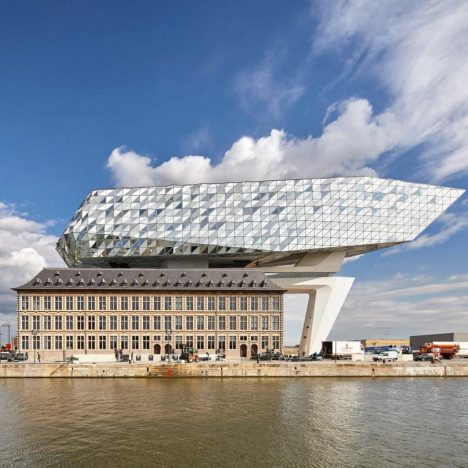
The world’s first sex toy for gender-transitioning men features in this week’s issue of Dezeen Mail, along with non-rectangular football pitches in Thailand and the Zaha Hadid-designed headquarters for Antwerp’s port authority (pictured).
Read Dezeen Mail issue 325 | Subscribe to Dezeen Mail
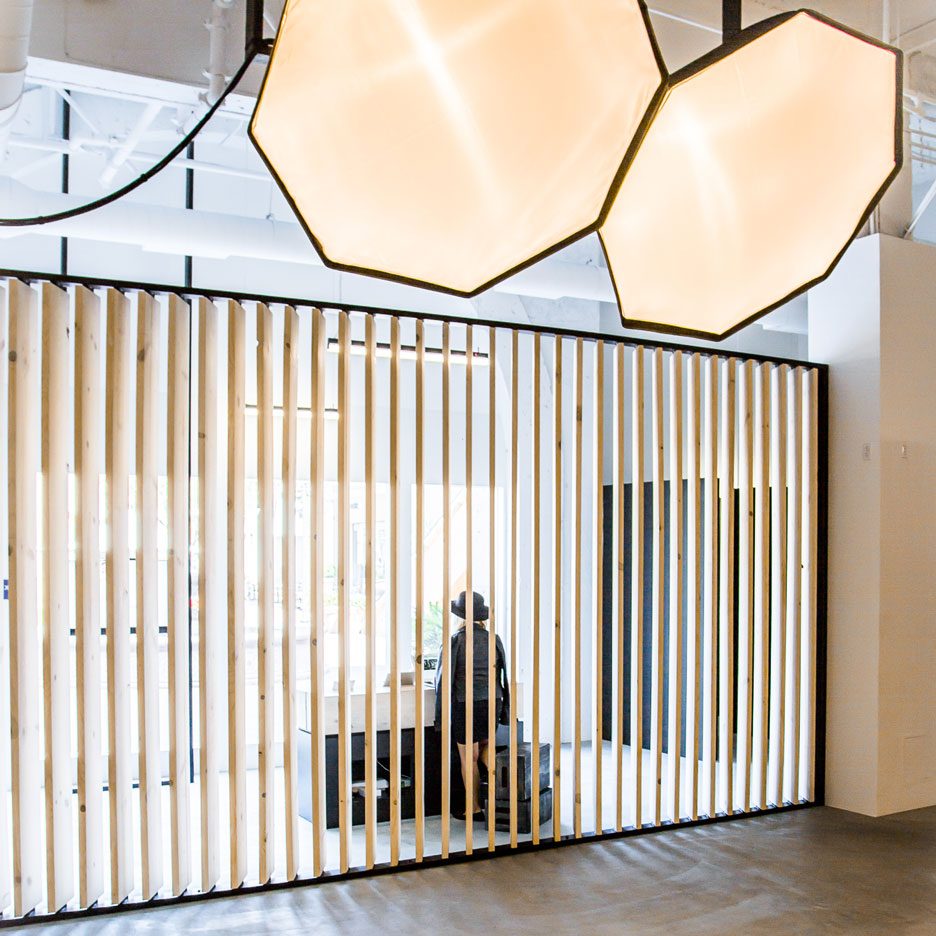
Californian firm Rapt Studio designed this pared-back photography studio for a company that instantly sends the results of shoots to a customer’s mobile device (+ slideshow). (more…)

From the architect. Allmannajuvet in Sauda and the abandoned zinc mines from the late 1800s have inspired architect Peter Zumthor to create yet another historical art installation along the National Tourist Routes.
Allmannajuvet, with its characteristic landscape and rich cultural history, is one of the 10 largest attractions along the National Tourist Routes. In 2002, world- renowned architect Peter Zumthor was commissioned by the Norwegian Public Roads Administration to design a tourist route attraction for the purpose of welcoming visitors and bringing the old mining history of Sauda back to life. The simplistic buildings are inspired by the mining operation, the drudgery and the workers’ strenuous everyday lives. The installation consists of a museum building, a café building, toilet and parking facilities, paths and stairs.
All the buildings were prefabricated in Saudasjøen and then assembled in Allmannajuvet. The exterior support system consists of creosote impregnated laminated wood. The exterior walls of the building consist of 18 mm plywood sheets and jute burlap, coated with a German acrylic material (PMMA).
The interior walls have been painted in a dark colour to resemble a gallery. The foundation work of the museum building and the café building, with its high demands for precision, is some of the most demanding work carried out in Norway.
The parking facility has been masoned with natural stone from Hardanger. The stones were transported from Jondal to Sauda. The visible corner of the wall is approximately 18 metres tall and has been firmly fixed three metres to the riverbed.
In the summer of 2011, Steilneset Memorial in Vardø was opened. The attraction was a collaboration between Zumthor, artist Louise Bourgeois and historian Liv Helene Willumsen. While Steilneset was raised in memory of the people in Finnmark who fell victim to the government’s witchcraft persecutions in the 1600s, Allmannajuvet emerges as a monument of the mining operation and the miners’ life of hardship in the late 1800s.
The National Tourist Routes attraction comprises 18 selected drives through beautiful Norwegian scenery, where the experience is enhanced by innovative architecture and thought-provoking art. The tourist routes are varied and travel through areas with unique qualities of nature, along coasts and fiords, mountains and waterfalls.
 Sig Nordal