Sarimanah Office / Arkides Studio


Courtesy of Arkides Studio

Courtesy of Arkides Studio


Courtesy of Arkides Studio


Courtesy of Arkides Studio


Courtesy of Arkides Studio


Courtesy of Arkides Studio

  • Architects: Arkides Studio
  • Location: Bandung, Bandung City, West Java, Indonesia
  • Area: 160.0 sqm
  • Project Year: 2016
  • Photographs: Courtesy of Arkides Studio

Courtesy of Arkides Studio

Courtesy of Arkides Studio

Sarimanah Office is a renovation project converting a house to a design studio. Layout of the office space is made to be like the layout of a house, with the aim of giving a homey impression. This concept is based on the fact that designers spend very much time in the office as a result of design workload so that this office can be a second home for them.


Courtesy of Arkides Studio

Courtesy of Arkides Studio

This studio design is expected to make the staff more relaxed and productive by avoiding serious office atmosphere with its intimidating cubicle. The aim is to lower their stress level caused by project deadlines and stimulate creative ideas from the designers. A large kitchen and dining room becomes the core in the design to provide space for communication that can improve teamwork, which is then also used as a meeting room.


Plan 1

Plan 1

The design tries to present itself with 3 basic geometry; gable-shaped mass, cube-shaped mass, and rectangular plane; that is composed by making the rectangular plane as a basic foundation for the two masses. The masses are then separated by a transparent finishing as an effort to give a monumental impression to both masses. The expression of all three geometry is emphasized with 3 different materials applied to each geometry; ie wood, concrete and perforated plate.


Courtesy of Arkides Studio

Courtesy of Arkides Studio

Materials in the design uses 3 basic material, namely concrete, wood, and iron. With a composition of the 3 that is almost balanced. Material on the buildings are shown as it is, wood as wood and unpainted concrete, in order to show material honesty in design and give an impression of a more modern building.


Courtesy of Arkides Studio
Courtesy of Arkides Studio

http://ift.tt/2d80On6

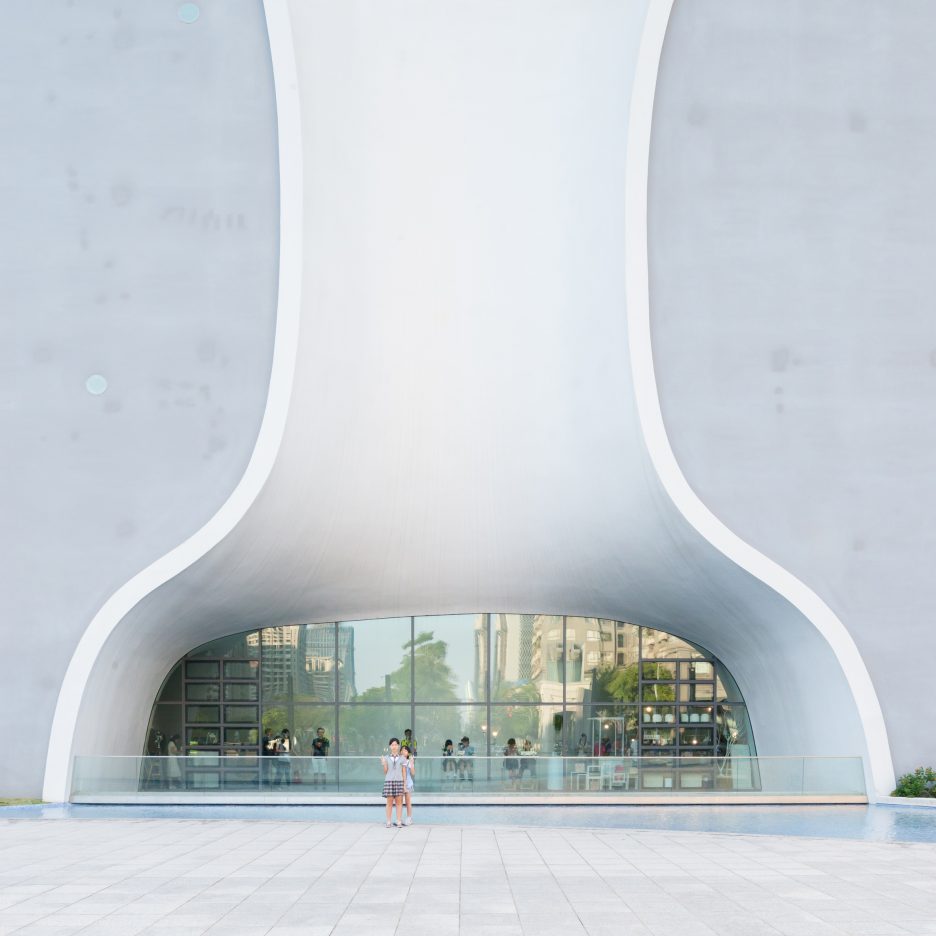
Toyo Ito’s Taichung Metropolitan Opera House in Taiwan nears completion


These new photographs reveal the cavernous form of an opera house by Japanese architect Toyo Ito, which is taking shape in the Taiwanese city Taichung (+ slideshow). (more…)

http://ift.tt/2d7ZxN2

Concord House_I / Studio Benicio


© Katherine Lu

© Katherine Lu


© Katherine Lu


© Katherine Lu


© Katherine Lu


© Katherine Lu

  • Architects: Studio Benicio
  • Location: Concord NSW 2137, Australia
  • Architect In Charge: Ian Bennett
  • Area: 230.0 sqm
  • Project Year: 2016
  • Photographs: Katherine Lu
  • Builder : Trend House
  • Lighting Consultant: Ted Smyth (InLite)
  • Concreting : Performance Concrete
  • Joinery: John Sacco (Homestyle Kitchens)

© Katherine Lu

© Katherine Lu

This low maintenance, contemporary four bedroom house located in Concord, Sydney, completed in May 2016, has been designed to showcase the owners’ love for concrete and to provide more space and greater amenity for their family of four.


© Katherine Lu

© Katherine Lu

The clients were after a new contemporary house that would make better use of their existing site than their tired, red brick cottage. The clients own and operate a formwork business, which in turn has garnered them a great love and appreciation for concrete and wanted their new house to feature this throughout.


Plan

Plan

Plan

Plan

Due to past struggles and time delays with Council, the clients requested we use the “Complying Development” approval system to expedite the process, which requires buildings to meet strict standards to ensure a fast tracked approvals process. The process applies to construction such as new homes (up to two storeys) renovations or extensions to an existing home, development of a ‘granny flat’, building a swimming pool and decks.


© Katherine Lu

© Katherine Lu

The challenge lay in designing something quite contemporary, including all items of the brief (which included keeping the existing pool), without any flourishes that would make the home non-compliant – all on a modestly sized site.


© Katherine Lu

© Katherine Lu

Once we understood the exact parameters of the “Complying Development” controls, we then worked on ensuring the indoor and outdoor living spaces related well to the existing pool location, as this couldn’t look, nor function like an add-on. Due to the modest size of the site we devised the solution of enabling the indoor and outdoor areas to work seamlessly as one – and with the retractable glass roof, this space can be enjoyed as an extension of the internal living space year round.


© Katherine Lu

© Katherine Lu

http://ift.tt/2d7MEm6

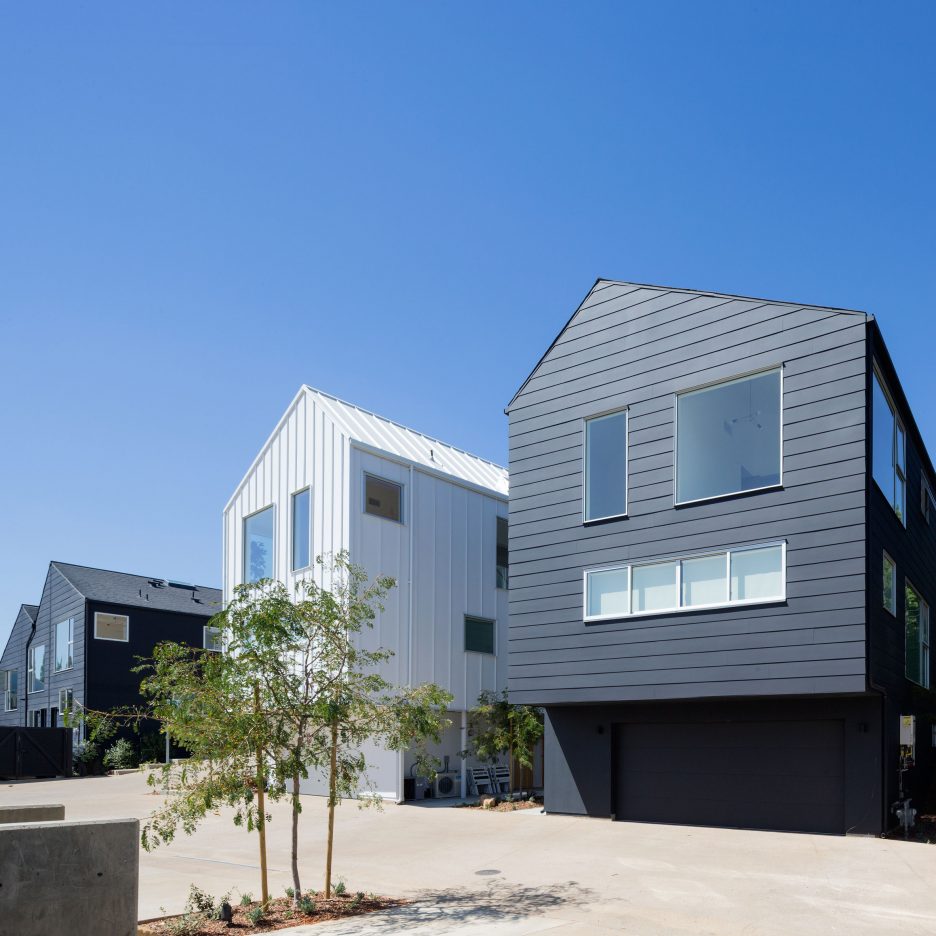
Bestor Architecture uses “stealth density” at Blackbirds housing in Los Angeles


Multiple residences are combined into single house-shaped volumes at this development by Bestor Architecture in the Echo Park neighbourhood of Los Angeles. (more…)

http://ift.tt/2dlfc9B

Serpentine Galleries Names Rogers & Adjaye to Pavilion Selection Board, Announces Zaha Hadid Exhibition


Images by Hélène Binet, Sylvain Deleu, John Offenbach, Luke Hayes, Claire Byrne, Iwan Baan, Neil MacWilliams, George Rex, NAARO, and Laurian Ghinitoiu

Images by Hélène Binet, Sylvain Deleu, John Offenbach, Luke Hayes, Claire Byrne, Iwan Baan, Neil MacWilliams, George Rex, NAARO, and Laurian Ghinitoiu

The Serpentine Galleries has announced a new process for the selection of architects for its successful Summer Serpentine Pavilion program.

For the event’s first 16 years, the annual commissions were selected by program founder and former Serpentine Galleries director Julia Peyton-Jones, who left her position earlier this year to pursue independent contemporary art and architecture projects. Replacing her are the Serpentine Galleries new CEO Yana Peel and Artistic Director Hans Ulrich Obrist, who will lead an advisory board featuring architects Richard Rogers and David Adjaye.


‘Vision for Madrid’, Spain, 1992. Image © Zaha Hadid Architects. Courtesy of Serpentine Galleries

‘Vision for Madrid’, Spain, 1992. Image © Zaha Hadid Architects. Courtesy of Serpentine Galleries

Beginning with the 2017 edition, a group of architects will be invited to submit designs for the main pavilion and new summer house series, from which the advisory board will select the winning proposals. The chosen architects are expected to be announced early next year.

The new format comes as part of a newly announced initiative to expand gallery outreach through an expansion of the exhibition slate and a new emphasis on “artists, audiences, technology, partnerships, innovation and accessibility for everyone.”


Zaha Hadid: Hafenstrasse Development Hafenstrasse Development, Hamburg, Germany 1989. Image © Zaha Hadid Architects. Courtesy of Serpentine Galleries

Zaha Hadid: Hafenstrasse Development Hafenstrasse Development, Hamburg, Germany 1989. Image © Zaha Hadid Architects. Courtesy of Serpentine Galleries

Also announced was a major exhibition of early works by Zaha Hadid, which was planned in partnership with the architect before her passing last spring. The show will present a bevy of rarely seen paintings, drawings, sculptures, installations and digital by Hadid, as well as a selection of never-before-seen sketchbooks.

“Zaha Hadid once said that ‘there should be no end to experimentation’ and this has become a mantra for the Serpentine team,” said Peel and Obrist in a joint press conference.

“It is the reason why we continue to put artists at the core of everything we do, crossing disciplines, innovating and reaching out to new audiences.”


Zaha Hadid: Sketch Selection from Sketchbook 2001. Image © Zaha Hadid Architects. Courtesy of Serpentine Galleries

Zaha Hadid: Sketch Selection from Sketchbook 2001. Image © Zaha Hadid Architects. Courtesy of Serpentine Galleries

News via Serpentine Galleries.

Round-Up: The Serpentine Pavilion Through the Years
//cdn.embedly.com/widgets/platform.js

http://ift.tt/2dlTJto

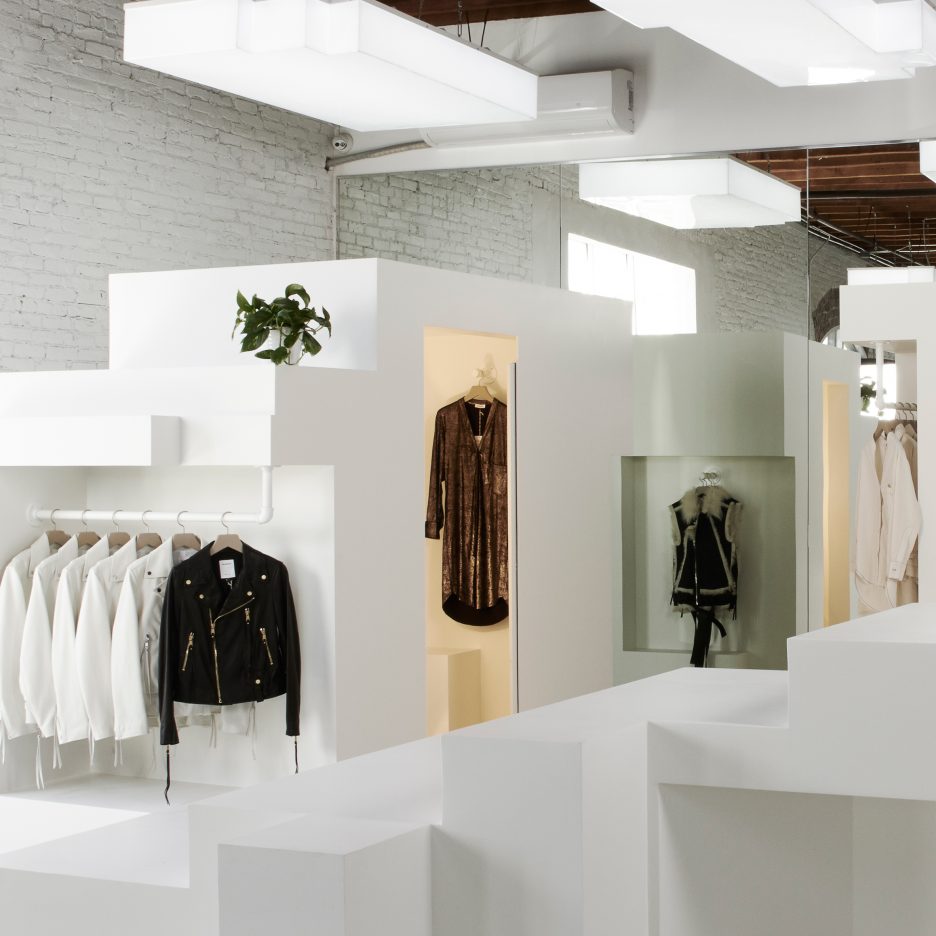
Bureau Spectacular creates interlocking moveable displays for Frankie Los Angeles store


White display stands inside this Los Angeles boutique designed by Bureau Spectacular fit together like a puzzle, forming a set of steps for events and performances (+ slideshow). (more…)

http://ift.tt/2cCObz2

Opera Software Wroclaw / Modelina Architekci


© Marcin Ratajczak

© Marcin Ratajczak


© Marcin Ratajczak


© Marcin Ratajczak


© Marcin Ratajczak


© Maciej Dąbrowski

  • Project Team: Paweł Garus, Jerzy Woźniak, Kinga Kin, Małgorzata Szymańska

© Marcin Ratajczak

© Marcin Ratajczak

From the architect. We really had to work for a long time to fnd a place, which would combine this non-corporate atmosphere, prestigious location along with a piece of history. And here it is! – says Krystian Kolondra, director of Polish agency Opera Software.


© Maciej Dąbrowski

© Maciej Dąbrowski

The designers from mode:linaTM have faced a challenge of planning an interior project for Norwegian company Opera Software, creator of the popular web browser. The company headquarters are located in two prestigious town houses in the hearth of Wroclaw – one from the beginning of the XIX century and the second from 1913 – which the owner is Zbigniew Grycan.


© Marcin Ratajczak

© Marcin Ratajczak

All of this started with one e-mail titled “We want the best ofce in the world!”.

Despite the fact that the roots of Opera Software lie in Norway, its Polish agency is closely connected to Wroclaw. Moreover, business centre Hieroniumus (the so-called Glass House) is an extremely important building for people, who live in Wroclaw. As a result, the city architecture has inspired the designers during the design process of the company’s interior. Given the stylistic preferences of employees and the atmosphere of the city – the fnal result has been preserved in the industrial, the so-called, loft style.


© Maciej Dąbrowski

© Maciej Dąbrowski

Thus, the picture of Wroclaw as “the city of one hundred bridges” has became the main theme of the project. Constructions in the shape of arch, grates and colours directly referring to the most popular spices are dominating inside the building.


© Marcin Ratajczak

© Marcin Ratajczak

The arrangement of the kitchenette is an abstract, but recognisable reference to the architectural icons of the city, such as the construction of Market Hall, Central Railway Station hall or Szczytnicki’s Park. On the contrary, meeting rooms are directly associated with computers and IT branch: there is an integrated circuit, fans and decors, which are made out of nearly one thousand old foppy disks and over two hundred keyboards!

Fortunately, the building of Opera Software is located near… Opera House in Wroclaw!


© Marcin Ratajczak

© Marcin Ratajczak

http://ift.tt/2cC5FGX

Richard Rogers and David Adjaye to select next Serpentine Pavilion architect


Next year’s Serpentine Pavilion in London will selected by architects including Richard Rogers and David Adjaye, it was announced today. (more…)

http://ift.tt/2d58xiH

Watch How the World’s Largest LED Screen Was Installed at the Burj Khalifa

In this video, members of the engineering team behind the the world’s largest LED screen explain the process behind its installation on the facade of the Burj Khalifa last year. The massive screen required 72 kilometers of cabling and 10,000 connectors to cover a total area of 33,000 square meters.

“We faced sandstorms, we faced rain, we faced heavy wind, so quite often we had to wait until we had a good slot in terms of wind to go out and do the installation,” says Senior Project Manager Kris Vloemans.

The screen has been utilized for a range of different shows since it was first used to ring in the New Year in 2015. Earlier this year, the Burj Khalifa sent out an open call to artists to submit their own dynamic designs to be displayed on the building facade.

Also check out some videos of the screen in action, below.

Minus5 Architects & Studio Mr. White Propose “Art Facade” for the Burj Khalifa
//cdn.embedly.com/widgets/platform.js

http://ift.tt/2d52oTn

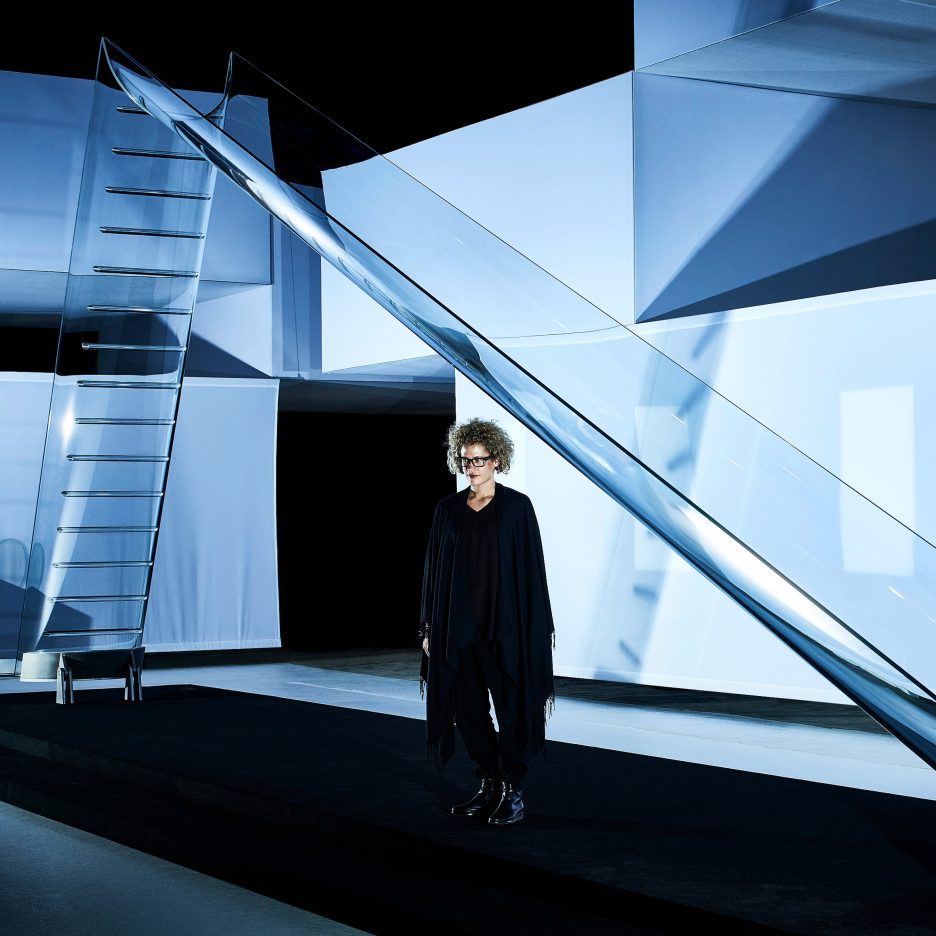
Sky Pool engineers create huge slide from single piece of glass


The engineering firm behind London’s 10-storey-high Sky Pool, Eckersley O’Callaghan, has demonstrated its latest glass innovation: a nine-metre-long slide (+ slideshow). (more…)

http://ift.tt/2dA5td7