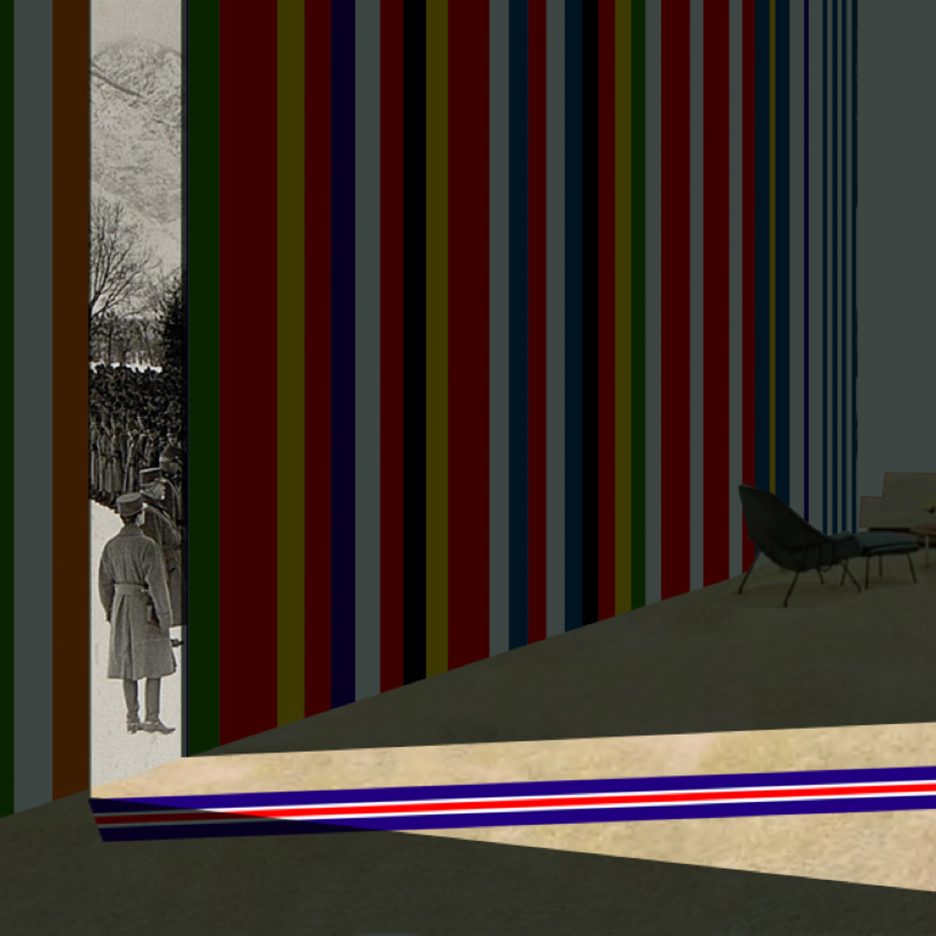
The first major exhibition at the new Design Museum in London will include 11 commissions by leading designers – including an EU-themed living room designed by OMA in response to Brexit (+ slideshow). (more…)
The first major exhibition at the new Design Museum in London will include 11 commissions by leading designers – including an EU-themed living room designed by OMA in response to Brexit (+ slideshow). (more…)

12 degrees was designed as an urban infill project, fitting into the context of a mixed use residential area where the city block has buildings that include both the Art Gallery of Ontario and the Ontario College of Art and Design. Given the art/gallery nature of the city block, the design became a playful exercise in massing and an anchor to the south-west corner of the block. The design can be read as analogous to the stacking of toy blocks, with one of the blocks skewed at 12 degrees from the others. 12 Degrees is located in the historic Grange Park neighbourhood. Grange Park is a mixed use, but predominantly residential neighbourhood. The residential vernacular varies with a mix of working class cottages, semi-detached homes to mansions from the former affluence one enjoyed by the neighbourhood.
Many of the buildings have been converted to commercial use, art galleries, restaurants and offices. A large student population also makes up much of the neighbourhood given the close proximately to OCAD. The building mass has been broken into a base and a tower. The base of the building is 3 stories high and is composed of townhouse style units that relate to the existing adjacent Victorian homes. The townhouses repeat themselves in a series of glazed window bays and stone clad piers, that make reference to the Victorian roof peaks and projecting bays.
The base opens up at the corner to expose the glazed main entrance and lobby, there is a hovering canopy of wood that signifies that this is the public part of the building. The tower is fully glazed above the base and is composed of 3 parts that playfully shift back and forth from the building orthogonal grid, there is one portion 3 floors high that is skewed 12 degrees. The skewed portion twists away from the corner above the main entry, helping to lighten up the building massing in that area. We also used the stepping nature of the building massing to reduce the impact of the building on the neighbourhood, shadowing was reduced and the building transitions down in height from 11 floors to 3 floors adjacent to the existing houses. Built on a compact 36m front x 31m deep urban site on Beverley Street, 12 Degrees consists of a three-storey glass and ledgerock-clad base under an eponymous rotated glass-clad mid-section; all topped by a cantilevered glass penthouse.
The bold massing holds its own with its arts and cultural district neighbors such as the Art Gallery of Ontario and the dramatically cantilevered Ontario College of Art and Design. The design also fits with its other neighbours. The 3-storey street-accessed townhouse-style units at the base of 12 Degrees share in common masonry cladding, projecting bay detailing and height with adjacent Victorian homes and row houses lining Beverley Street. In addition to its distinctive architectural appearance, 12 Degrees is noteworthy for its carefully considered urban design. The stepped form of the massing, transitioning down in height from 11 to 3 floors, reduces the shadow impact of the building on the neighborhood. The main entry and elevator lobby for the tower, marked by a hovering wood canopy, is located at the southwest corner of the building, closest to the vibrant commercial activity at the intersection of Beverley Street and Queen Street West.

The United States is currently embroiled in what is unquestionably one the most bizarre and unpredictable presidential races in its history. In this strange context, the world of architecture has unexpectedly found itself a hot political topic, with one architect at the center of the controversy: Andrew Tesoro.
Tesoro’s involvement in the presidential race began with a video created by Democrat nominee Hillary Clinton’s campaign. In the video, Tesoro tells a story of how Republican nominee Donald Trump “bullied” him and his architectural firm Tesoro Architects out of “many thousands of dollars” which were owed for their design services. Subsequently, Tesoro received something of a shout-out from Hillary Clinton in Monday’s presidential debate as evidence that Trump’s business experience does not qualify him to be president.
Given the nature of the campaign video, which was undoubtedly edited to paint Trump in a negative light, many have understandably questioned whether Tesoro’s opinions and story were accurately portrayed. This skepticism was then reinforced by a “condensed and edited interview” published by Forbes, which suggested that Tesoro’s opinion of Trump was much more forgiving than the one perpetuated by the Clinton campaign. Given the confusion around Tesoro’s true opinions, ArchDaily decided to give the architect a chance to present his message unambiguously. What follows are Andrew Tesoro’s responses to three simple questions about Donald Trump. These responses have not been edited by ArchDaily staff.
Above: The video produced by Clinton’s campaign featuring Andrew Tesoro.
What are your opinions on Donald Trump as a client?
The Forbes Magazine article was edited to grossly distort my intended message – Many of my remarks were taken out of context to imply that I simply and foolishly, would like to be buddies with Donald after he short-changed me by a lot of money. That’s wrong.
Donald Trump was a demanding client, difficult and impatient but also congenial, involved in the project, and not generally unpleasant to work with on a day-to-day basis, in the context of an architectural project.
What are your opinions on Donald Trump as a businessman in general?
I am not qualified to judge Mr. Trump’s business abilities broadly. However Donald Trump, and his organization’s way of managing relationships with professionals, contractors, vendors – is driven by an aggressive machine – motivated by an infatuation with money (holding greedily onto every dime, often deceitfully) to squeeze every possible dollar without regard for the value of the work, the responsibility to honor agreements, or fairness to those who worked hard on Trump’s behalf.
Above: A clip of the first presidential debate on Monday September 26th in which Clinton references Tesoro.
What are your opinions on Donald Trump as a presidential candidate?
Mr. Trump should not be a presidential candidate. His behavior is disgraceful – (I don’t think he is as hateful and mean-spirited as he seems on the campaign trail). The bizarre nature of his inflated ego, his lack of patience and ability to listen to others, his distorted instinct to measure all matters in only monetary terms – are disqualifying realities. He wants to win the race, but I am reasonably certain that in his heart, he does not want to do the job. Hillary Clinton is a far superior candidate.

Artist David Shrigley is set to unveil his gigantic “thumbs up” installation on the Fourth Plinth in London’s Trafalgar Square tomorrow and has released a gif to accompany it. (more…)

The Royal Institute of British Architects (RIBA) has announced a team led by Brock Carmichael Architects as the winners of the Tristan da Cunha Design Ideas Competition, a call for proposals on how to create “a more self-sustainable future” for the island of Tristan da Cunha, the world’s most remote inhabited island.
The competition, run by RIBA on behalf of the Government of Tristan da Cunha, encouraged architects to submit “innovative and cost-effective proposals for the re-design and consolidation of Tristan’s government (community infrastructure) buildings” in the community of Edinburgh of the Seven Seas, the only permanent settlement on the island.
The remote nature of the community (2,173 kilometres (1,350 mi) away from the nearest settlement, St. Helena), demands residents live a lifestyle built around planning for the future. The competition brief called for initiatives to assist this lifestyle, including improvements to the performance of residential properties and the island’s agrarian systems to support livestock grazing and year-round farming.
The winning scheme from Brock Carmichael Architects (with Oval Partnership, Arup International Development, Multi QS and Dr Gerda Speller from the University of Surrey) was selected from a shortlist of teams including: Lateral Office (Toronto, Canada); John Puttick Associates (New York, USA); Scott Brownrigg (Cardiff, UK) and Javier Terrados and Fernando Suárez (Seville, Spain).
“The Tristanians are very grateful for all the hard work involved and the different ways in which teams responded to the Brief and the unique set of challenges posed by delivering a project on the World’s remotest inhabited island,” said H Alex Mitham, Tristan da Cunha Administrator and Head of Government. “The Island Council felt the Brock Carmichael team had developed a very strong set of proposals that demonstrated both a practical approach and an in-depth understanding of the issues.”
Arrangements will now be made for members from the winning team to visit the island to begin the first steps towards realizing the project.
“We are delighted and honoured to have been chosen as the winners of this unique competition and would like to pass on our thanks to the people of Tristan for selecting our team,” said Martin Watson, Partner at Brock Carmichael Architects. “We are very much looking forward to forging a long-term partnership with the community to deliver practical solutions for the benefit of future generations to come”.
News via RIBA Competitions.
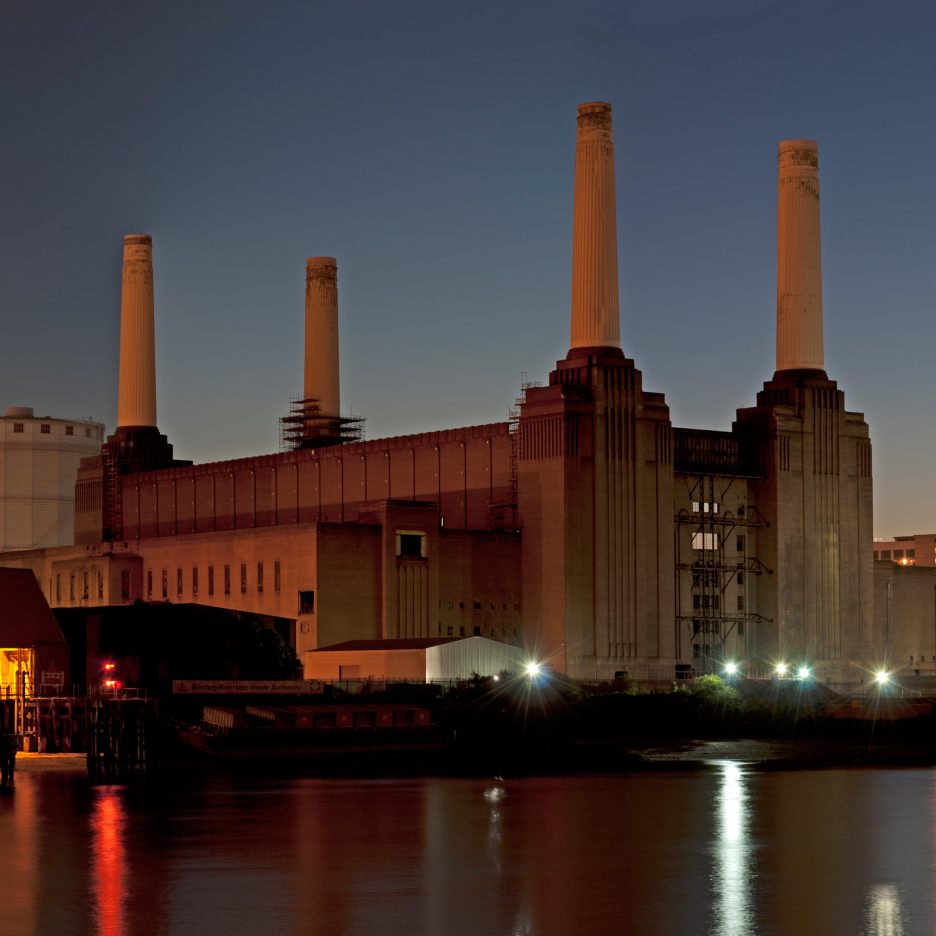
Apple has announced it will create a new London headquarters inside Battersea Power Station, taking over six floors of the former industrial building on the bank of the River Thames. (more…)
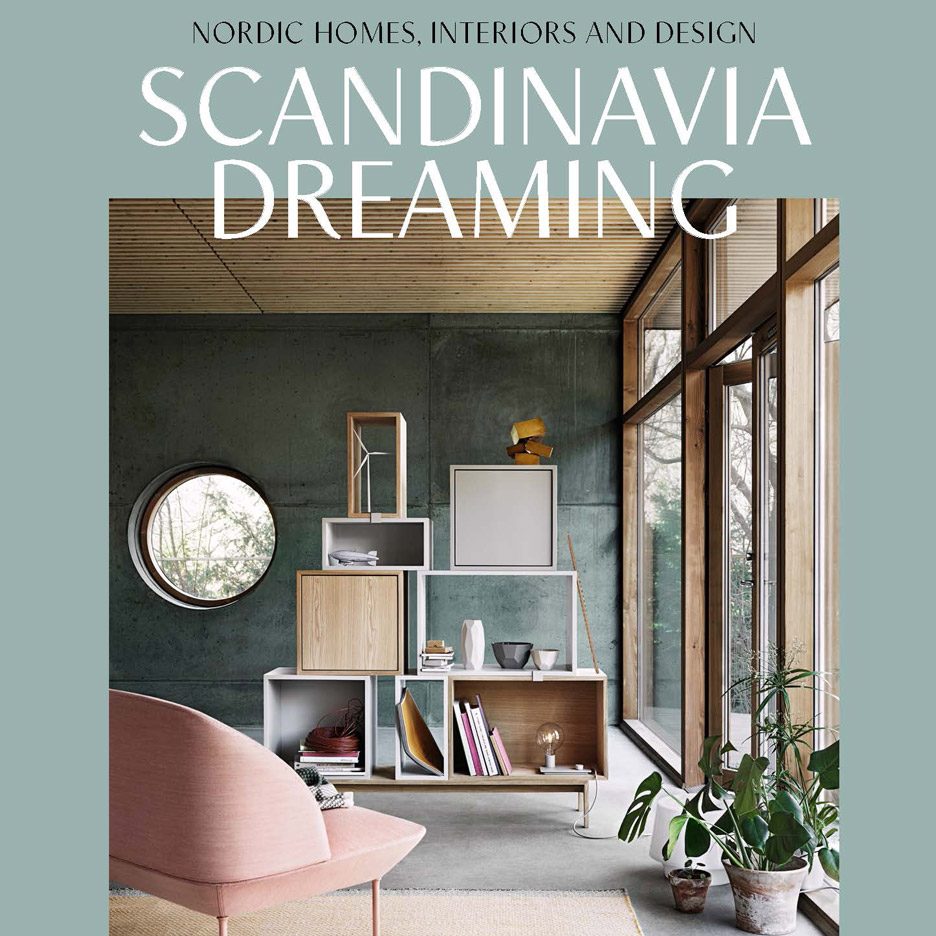
Competition: Dezeen has teamed up with German publishing house Gestalten to give away five copies of its new book Scandinavia Dreaming. (more…)

The site’s topography has a 20% slope, which means exactly 8 m difference between lowest and highest points. A 16 m square-shaped house was spotted in a single store above the inclined topography. In such a way that it results in two equal additional useful spaces: under and over it, like a yard in the shadow and another one in the sun, places to stay outdoor either in a rainy or a sunny day. Due to the slope, from any of the three levels we can always reach the ground at the same level, even on the roof we can cross a bridge and find the ground level again.
The house structure rests on four columns. The two waffles slabs — 50 cm high including all the beams that stand each 90 cm — were made by casting premixed concrete on plastic mold. Although the structure construction has been done on spot, its process is very industrialized.
The house’s roof has a 20 cm depth pool as a reflecting pool. The water was poured when the slab had just been cast avoiding cracks due to the heating during the cure process. Also by keeping the water we also avoid cricks from sudden variation of temperature. By this way the concrete become impermeable by itself, it means free from membrane and thermal insulation.
The external walls are made in concrete and they have only 5 cm of thickness. Then, to improve its thermal performance we had to protect them with a second layer, made with pre-cast panels out of pressed wood and cement.
The side windows were made with tempered glass without frameworks, they are like a guillotine balanced with a counterweight hidden between the panel and the wall of concrete.

Penn Station is finally getting its much-needed makeover. The transportation hub, the busiest train station in the country, has been the target of much ire and disdain ever since its Beaux-Arts predecessor, designed by McKim, Mead & White, was demolished in 1963, forcing the station to retreat into the dark, cramped passageways below Madison Square Garden. The ordeal lead critic and Yale University Professor Vincent Scully to memorably quip: “One entered the city like a god. One scuttles in now like a rat.”
But today, after years of scrapped schemes, New York Governor Andrew Cuomo announced a fast-track plan that will give New York’s scuttling visitors and commuters some breathing room as early as 2020. Led by Skidmore, Owings & Merrill, the design calls for a new 255,000 square foot train hall and retail space in the James A. Farley Building, also known as the General Post Office, across 8th Avenue from Madison Square Garden and the current Penn Station entrance.
The building will contain 112,000 square feet of retail space and 558,000 square feet of office space, as well as new waiting areas for Amtrak and Long Island Railroad passengers. The plan also proposes renovating the deteriorating underground passageways and platforms that currently support nearly three times as many users as they were designed for.
Read more about the news, here.
News via the New York Times. H/T NY Yimby.
 Sig Nordal