Architecture
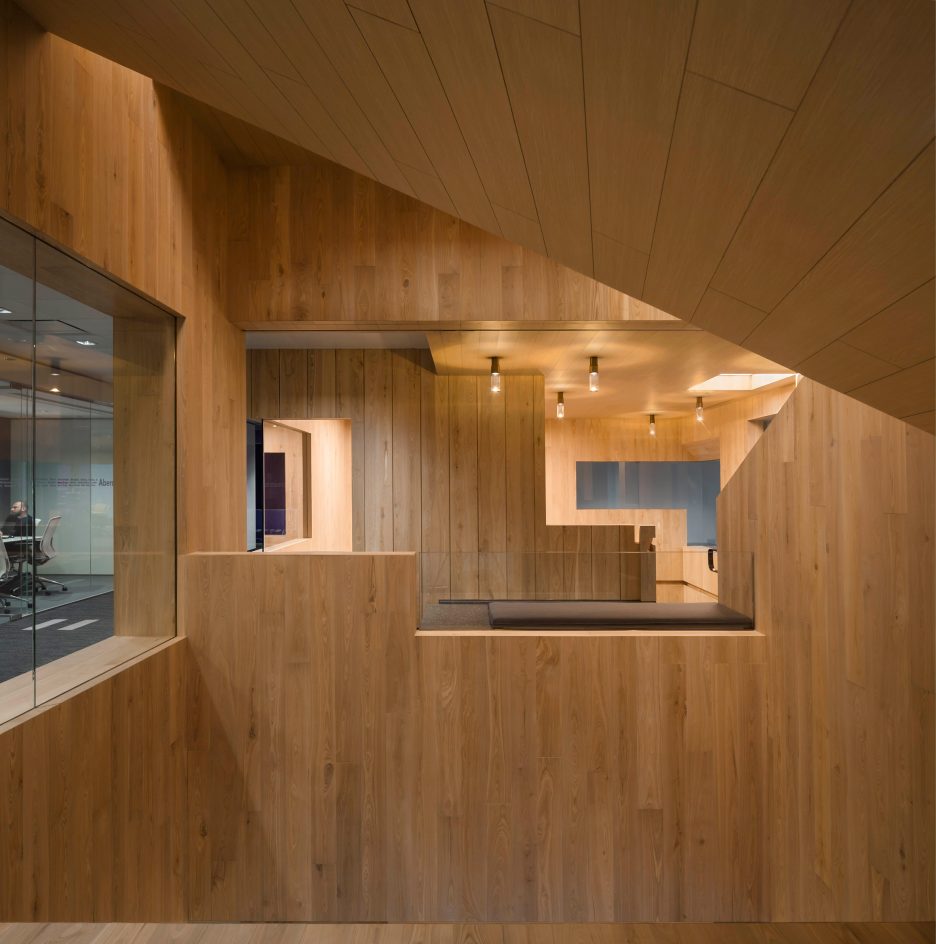
House in Laax / Valerio Olgiati

© Archive Olgiati
- Architects: Valerio Olgiati
- Location: Laax, Switzerland
- Area: 582.0 sqm
- Project Year: 2016
- Photographs: Archive Olgiati
- Construction Supervisor: Franz Bärtsch, Chur
- Structural Engineer: Patrick Gartmann, Ferrari Gartmann AG, Chur
- Project Manager: Sebastian Carella
© Archive Olgiati
From the architect. The single-family house rises from a 10-20m wide and 90m long lot in Laax, Switzerland. Local building legislation only permitted the construction of volumes aboveground at opposite ends of the property. One end of the area is situated in the “village zone”, while an “agricultural zone” surrounds the other end. Two completely opposite worlds form the context of this house.
© Archive Olgiati
At the historical village limit of the parcel is the so called “city house”. A clear and simple facade underlines the public space lying in front of the house with the volume and rooms orientated towards the village. Located here are the children’s bedrooms and the guest rooms. Towards the agricultural zone, at the other end of the plot, rises the so-called “country house”, a lower lying solid volume that opens towards the landscape.
© Archive Olgiati
The two ends are connected by an underground hall, where the daily life of the family takes place. Two top lights provide natural lighting to the space. All the main rooms in the house are niches and with their gables they transform into caves. Each space is interconnected with a 90m long corridor that forms the spine of the entire building.
Basement Plan
Ground Floor Plan
Site Section
Exterior and interior walls are all in white in-situ concrete. On the outside, attached tilting windows preserve the clarity and legibility of the two exterior volumes and lived-in niches.
© Archive Olgiati
Outer appearance and inner experience of the house form a contradiction that only mentally can be reconstructed as a unity. The house has an unexpected “grandezza” and homogeneity that is in stark contrast to the compartmentalisation and heterogeneity of the surrounding village.
© Archive Olgiati
Cristiana Vannini Designs an Apartment Near Bratislava, Slovakia

Private Apartment_BRA is a private home located in Bratislava, Slovakia. It was designed by Cristiana Vannini. Private Apartment_BRA by Cristiana Vannini: “Positioned between the city of Bratislava and the forest of XXX, the house is surrounded by a large terrace overlooking all the daytime spaces. Designed as a continuous space, the space is however strictly defined by its functions, balancing the contemporary style of the house as a place to..
Chapel in Valleaceron / Sancho Madrilejos

Courtesy of Juan Carlos Sancho
- Architects: Sancho Madrilejos
- Location: 13400 Almadén, Cdad. Real, Spain
- Architect In Charge: Sol Madridejos, Juan Carlos Sancho
- Project Year: 2001
- Photographs: Courtesy of Juan Carlos Sancho
- Assistant Technical Architect: Martín Pozuelo
- Project Leader: Luis Renedo
- Study Collaborators: Luis Renedo, Juan A. Garrido, Emilio Gómez Ramos, Patricia Planell, Marta Toral, Andrey García, Javier Moreno
Courtesy of Juan Carlos Sancho
From the architect. The idea of situating and relating a series of objects in the landscape- Dwelling, Chapel, Hunting pavilion and Guard´s residence- gave the project a dual significance: in addition to the close relationship between landscape, objects and itinerary –between space and objects-, each item had to provide a different response with different emphasis, from the most symbolic to the most silent or private. The unifying thread was to be the concept of the fold: the fold as a hidden generator of different spaces.
Sketch
The Chapel unit is developed around the study and manipulation of a focally tensed “box-fold”.
It is set at the top of a slight hill, turning it into a reference point in the landscape seen from the entrance to the property, at a 2km distance from a lower level, displaying different visions along the entire itinerary. It is oriented slightly off an east-west axis. One goes around the chapel on arrival at the residential zone, making it an entrance turning point. Visitors enter the chapel rising through the western façade until arrival, interiorly, at the focal point in a non-symmetrical front.
Courtesy of Juan Carlos Sancho
Along this walkthrough interval the varying scale of the fold makes the compact volume break offering a closed-compact, open-fragmented sequence of spaces in a constant change of time.
Diagram
The chapel has been thought naked, with no artificial lightning, as in a place where the exterior-interior spatial relationship determine its sense, its attention; only a cross, an onyx lamp and an image in the focal point reinforce the symbolic aspects involved in the project.
Courtesy of Juan Carlos Sancho
By proposing a fold in the box, in the corbusian “boîte”, a single material arises: golden concrete that captures all of the shades demanded to the volume, from capturing the direct light that breaks through an additional plane in the spatial composition, to the transmission of the unstable, coloured scent of dawn.
Model
Light thus takes on the role of a second material in the chapel, a material that contrasts with concrete, fragile, changing, mobile, unstable, dominating or vanishing.
Courtesy of Juan Carlos Sancho
Nils Holger Moorman launches dog-sized version of its flatpack bed
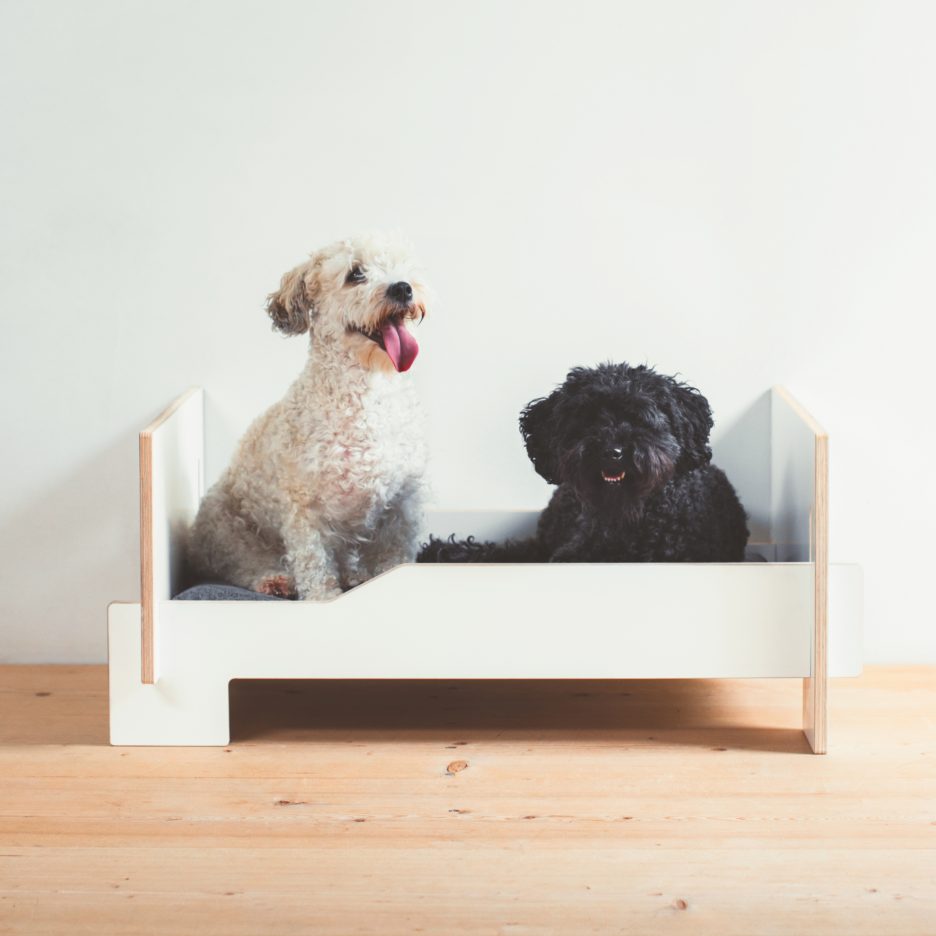
German furniture maker Nils Holger Moormann has released a flat-pack bed designed for the needs of man’s best friend (+ slideshow). (more…)
Villa Mavi / White Cube Atelier

© Farshid Nasrabadi
- Architects: White Cube Atelier
- Location: Damavand, Tehran Province, Iran
- Area: 600.0 sqm
- Project Year: 2015
- Photographs: Farshid Nasrabadi
- Collaborators: Hengame Rezaee, Danial Akhavian, Rouhollah Noruzi
- Clients: Armin & Ramin Bazargan
- Structural: Majid Bozorg
- Mechanical: Atlantic co.
- Electrical: Amir Salamat
© Farshid Nasrabadi
From the architect. This project is located in hasht-behesht town, Damavand– 45km far from Tehran and is designed for a family of eight. Topography of the site and view to the Mount Damavand were the principal factors which created the form. The 10% slope resulted in dividing the site to 3 parts.
Ground floor is formed at the level of the south yard. Basement is located at level of the middle yard and is connected to the upper yard by ramp and stairs. The third yard is at the lowest level; so the entire volume is a combination of 3 cubes. A part of the lowest cube is buried into soil whereas to the north the swimming pool and sport facilities open to the middle yard, it also forms a terrace related to the living room. The middle cube is divided to two shifted part; western part –including rooms- is oriented to the Mount Damavand and as a cantilevered box has created a big terrace for the 1st floor. Eastern part, housing the kitchen, is shifted toward the south yard and the main entrance. The highest cube is added to integrate the whole building.
© Farshid Nasrabadi
Section
© Farshid Nasrabadi
The building’s organization is a combination of two spatial zones, private zone of rooms and public zone made up of social spaces as living rooms and diverse open spaces. All of spaces enjoy day light and natural ventilation. Master bedroom and the social space of 1st floor enjoy view to Mount Damavand through the cantilevered box and the elongated window. Interior design indicates an interaction of cool materials as seranit and gray furniture and warm materials like wood and yellow accessories.
© Farshid Nasrabadi
Kyoto Residence / EXH Design + Anoffice

© Zhang Xi
- Architects: EXH Design, Anoffice
- Location: Kyoto, Japan
- Area: 120.88 sqm
- Project Year: 2016
- Photographs: Zhang Xi
© Zhang Xi
From the architect. Mid of the local Japanese residential area in Kyoto, west side of the Royal palace (30 mins walking distance, 10 mins by bike), EXH design has completed a private house together with Anoffice. The developer has splitted a plot into four slices each 4.2 meters by 15 meters. The client got the last piece at the west side which enjoys a grand view to the neat neighborhood and west sunlight.
© Zhang Xi
© Zhang Xi
The volume of the building is as a result of Kyoto building law – the height and angle of the pitched roof should be designed to allow the view to the sky from the pedestrian.
Sky View Diagram
To “merge” better with the neighbors and stay invisible in the residential area, the building uses exactly the same material like the other houses except the big windows to invite the sunlight and view in. Since the neighbors have their windows closed most of the time, it’s rather exciting to watch the street scene while sitting inside the house, the house is wrapped by a life movie which is happening everyday.
© Zhang Xi
The first floor is a studio , while the second and third floor is a duplex as the main living area with separate entrance in the back. As a prefabricated wood house the structure can be exposed as much as possible inside except the roof and outside wall for fire proof reasons; the same wood panels are used in kitchen cabinet and floor.
© Zhang Xi
Floor Plans
© Zhang Xi
All windows are to connect the house more with the outdoor space, although it’s public; and organized according to the views which selected by the owner and designers. Open the window in the first floor sit at the edge , and look to the mini garden is inspired by the Japanese garden. The second and third floor makes the street space a private show. Curtains play a role in dividing space and defining privacy.
© Zhang Xi
Zaha Hadid’s Port House in Antwerp captured in photography by Hélène Binet
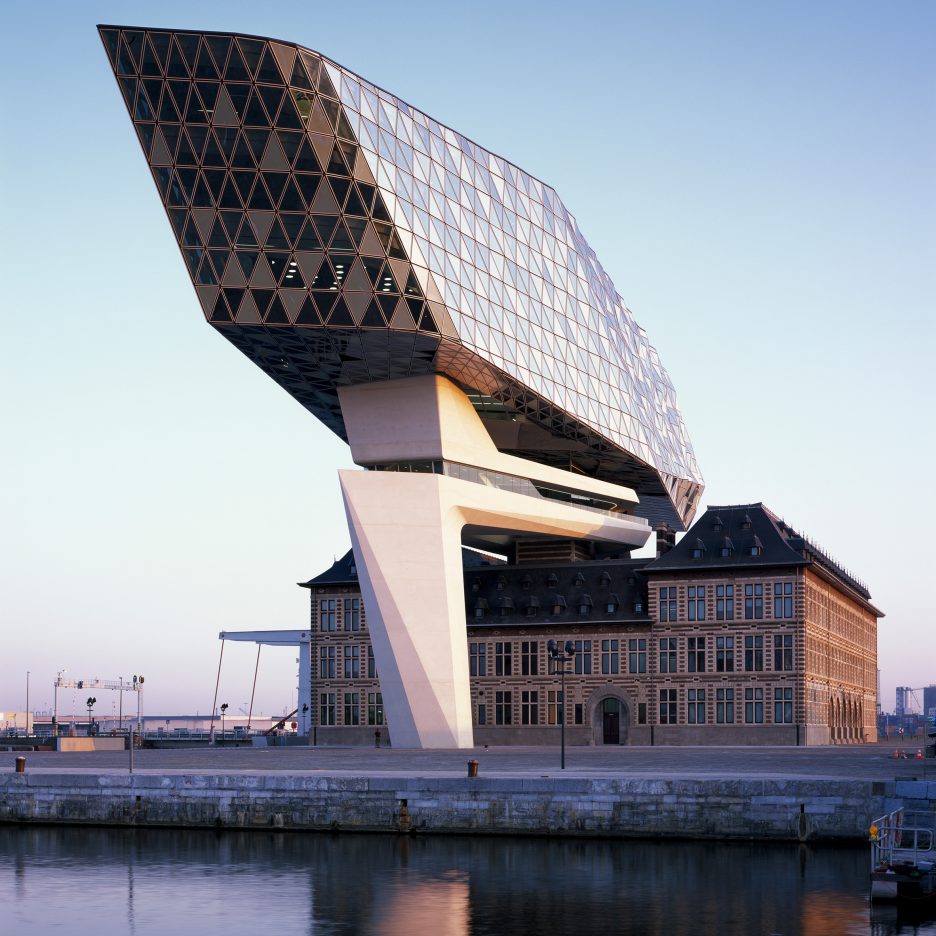
Swiss-French photographer Hélène Binet has shot the recently completed port authority building in Antwerp by Zaha Hadid Architects, which features a huge glazed volume mounted on its roof. (more…)
Ecopark / i.house

© Le Hoang
- Architects: i.house
- Location: Hung Yen Province, Vietnam
- Design Team: Chu Ngoc Anh, Le Canh Van, Dang Huy Cuong, Tran Vu Hoang
- Area: 250.0 sqm
- Project Year: 2016
- Photographs: Le Hoang
© Le Hoang
Optimizing the home owner’s aesthetic personality and bringing more green and most relaxing space are the criteria set out for the architects. Based on a current land-site that is cramped and limited in size (90sqm/floor), the architects have used a variety of solutions from creating floor-through space, omitting unnecessary rooms/space, fully maximizing the beautiful views of the urban township and laying unique green parts (garden stands).
© Le Hoang
For the Penthouse apartment, a contemporary design style was applied in combination with the use of several selected, classic industrial-style furnitures.
© Le Hoang
The living room, kitchen and dining room were designed connectedly with large surrounding glass walls, which makes the common space to be frequently illuminated with natural light. The kitchen area with gray-wood tone was designed in minimalist style with the intention to create “a dark background block” for the living room, it contrasts with the common space filled with light and put more highlight to the furnitures with diversified lines. The dining room is also an open library with a separate perspective and is the ideal space for relaxing and reading books for the home owner. A special feature of the apartment is an “invisible” study which is disguised as a bookcase in the dining room. This is a versatile room which is both a study and also can be converted into a bedroom for guests.
1st Floor Plan
2nd Floor Plan
To be more impressive and closer to the modern style, rustic and high handicraft-like materials were used as rustic tiles (as if they were peeled off from an old building), together with a polishing concrete floor and a copper fireplace with a mound-by-hand shell.
© Le Hoang
On the 2nd floor, the master bedroom is located rightly in central, where it has the widest and most beautiful view in the morning. The bedrooms are surrounded by supporting spaces such as dressing rooms, toilets and an entertainment garden. A unique 5-panel revolving-door creates a link between the bedroom and the open garden. In the garden, thanks to the use of glass railings, the splendid and not-be-restricted views over the urban township create a feeling of no boundary or distant from the urban township below. The array of garden stands is applied to create large green spaces and air conditioning for this place. A Plumeria rubra tree is also carefully selected to avoid storms but still creates a natural highlight.
© Le Hoang
All of these have contributed to create a Penthouse full of light and green with a very specific personality for the Ecopark urban township, they eliminate the feeling of cramped and dry in apartments here.
Avalon House / ArchiBlox

© Michael Wickham
- Architects: ArchiBlox
- Location: Avalon Beach NSW 2107, Australia
- Area: 106.0 sqm
- Project Year: 2015
- Photographs: Michael Wickham, Tom Ross
© Michael Wickham
From the architect. Beyond ArchiBlox’s speedy construction time of 6 weeks, prefab suited the clients desire to tread lightly on the land with the Avalon House project.
© Tom Ross
With modular building the impact on the surrounding environment is heavily reduced during construction. The dwelling is outfitted with a number of green features, including a living roof that minimises rainwater runoff and solar penetration. The green roof also acts as a thermal mass, an east-west orientation that allows cross-ventilation.
© Michael Wickham
Avalon House is beautifully wrapped in FSC certified external blackbutt hardwood timber milled from sustainably forestry methods. By fabricating off-site, ArchiBlox also had careful control over material usage with minimal wastage.
Floor Plan
As with any buildings procurement, it’s not so much about the construction methodology that would affect the relationship with sustainability but more the direction of the architect and the client’s appetite.
© Tom Ross
The major consideration for any sustainable response falls on the siting of the building, i.e. in the southern hemispheres opening up the windows to the north and reduction to the south. Once this is achieved, there are numerous other techniques that can be incorporated which may steadily increase the project budgets and, as such, the client’s appetite.
© Tom Ross
At ArchiBlox they believe that they have the ability of educating their clients to best maximise their sustainable response to their particular site. With this particular project, the main facades face north and given the type of footings used with this particular project, reduction of water flow across the site was a consideration with its proximity to the cliff edge and potential erosion. Building with a concrete slab or strip footings would have been problematic as would have created a barrier to water flow.
© Michael Wickham
 Sig Nordal