Architecture
Videos: 16 Top Chinese Architects Discuss China’s “Museum Boom”

Ordos Art & City Museum / MAD Architects. Image © Shu He
Currently on display at the Aedes Architecture Forum Berlin, “ZÀI XĪNG TǓ MÙ: Sixteen Chinese Museums, Fifteen Chinese Architects,” takes an in-depth look at China’s recent museum boom and its effects on the socio-political and cultural landscape of modern China.
As part of the exhibition, filmmaker Moritz Dirks sat down with 16 of the top architects working in China today, including Wang Shu, Dan Qun of MAD Architects, and Zhu Pei of Studio Pei-Zhu, to discuss the challenges of creating cultural spaces that relate both to the global, digital, urban contexts of the contemporary world and to the strong heritage and identity of Chinese culture.
Continue after the break for the 16 interviews.
Zài Xīng Tǔ Mù. Sixteen Chinese Museums, Fifteen Chinese Architects
//cdn.embedly.com/widgets/platform.js
More information about the Aedes Architecture Forum can be found here.
Henri Cleinge adapts grand Montreal bank for Crew Offices and Cafe
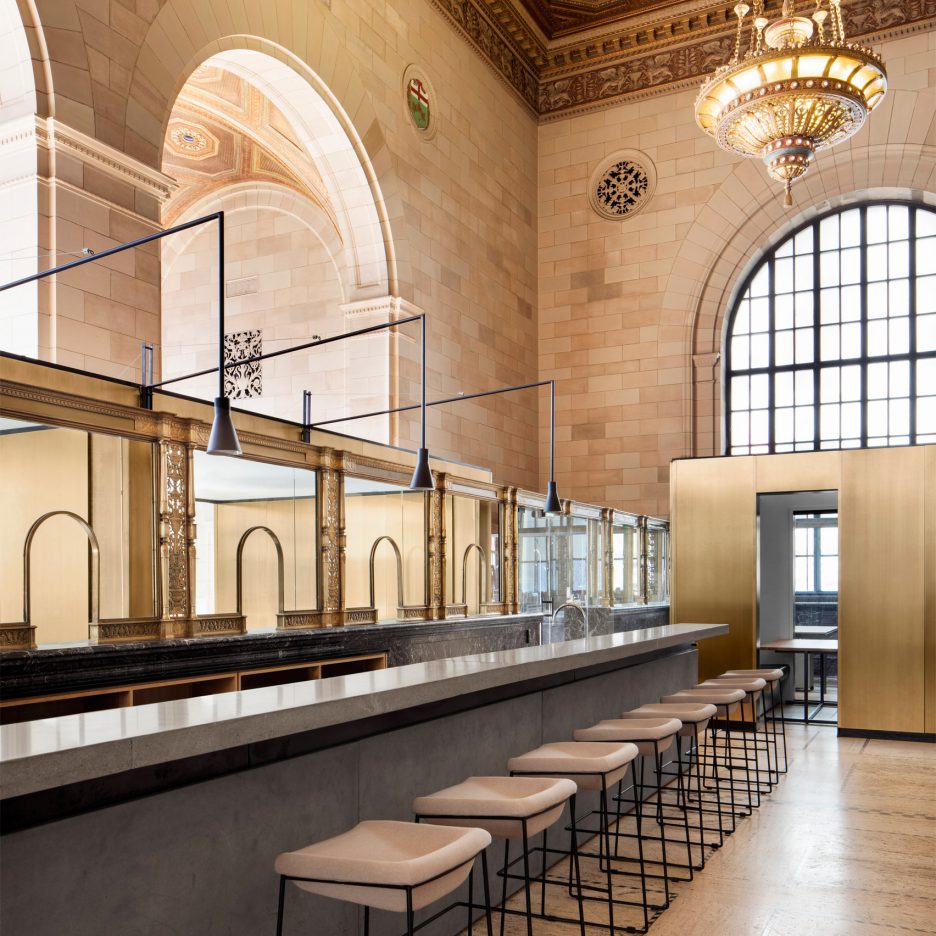
A former bank in the historic centre of Montreal has been transformed into an office for a tech start-up and a cafe for freelance workers by local architect Henri Cleinge (+ slideshow). (more…)
Snapchat branches into hardware with camera-integrated Spectacles

Taumascopio / Mattia Paco Rizzi

Courtesy of Mattia Paco Rizzi
- Architects: Mattia Paco Rizzi
- Location: Zingst, Germany
- Area: 19.5 sqm
- Project Year: 2016
- Photographs: Courtesy of Mattia Paco Rizzi , Ken Schluchtmann
- Curator: Regina Tetens for Olympus PhotoArtPath 2016
Courtesy of Mattia Paco Rizzi
The center of the German Baltic town Zingst, received a new and permanent dimension, a space in space and a way out of reality’s forms and perspectives.
Courtesy of Mattia Paco Rizzi
The architectural-artistic pavilion TAUMASCOPIO of the Italian / French Architect Mattia Paco Rizzi links the daily life in the street to something from another world.
© Ken Schluchtmann
People enter the artwork and change for a moment their view and knowledge of reality. Like that TAUMASCOPIO does not only offer to be a playful tool for children but takes adults in a space of meditation.
The work is the perfect room to stop for a moment or take photos to bring home.
Diagram
Section
Sometimes the work almost seems to be dropped from outta space while the inside’s aesthetic in its perfection and beauty reminds of the high-quality design only used in boat and airplane construction.
Courtesy of Mattia Paco Rizzi
With the two openings to the surrounding world on both ends of the work the people can exchange looks and fragments of themselves.
© Ken Schluchtmann
The two viewers are conceived differently, the first for adult persons, the second for children and people on wheel chair. In this way all various publics can enjoy the kaleidoscopic reflections generated within the device.
Courtesy of Mattia Paco Rizzi
The whole mirror exterior skin is glued to have no apparent fixing point. The pavilion blends in the environment and creates a fluid effect when it’s seen moving.
Courtesy of Mattia Paco Rizzi
The installation will be open for the next three years
TAUMASCOPIO is an artwork in the exhibition Olympus PhotoArtPath 2016 curated by Regina Tetens.
Courtesy of Mattia Paco Rizzi
Henning Larsen Architects Wins Competition to Design New City Hall in Uppsala

© Henning Larsen Architects
Henning Larsen Architects, in collaboration with SLA and Tyréns, has won a competition for the design of a new city hall in Uppsala, Sweden, beating out proposals from Schmidt Hammer Lassen Architects, White Arkitekter, Ahrbom & Partners, and 3XN Architects.
The project will include a refurbishment and addition to the existing city hall building, which was built in 1957 and only partially completed in accordance with the original drawings. Henning Larsen Architects’ design will close off the L-shaped building, connecting the old and the new with a glass-roofed courtyard to create a new public gathering place for residents of Sweden’s 4th largest city.
© Henning Larsen Architects
The new 25,000 square meter (270,000 square foot) city hall will reflect the government’s desire for transparency and accessibility, inviting the public inside via an opening connecting the streetscape directly to the interior plaza. The glass-covered courtyard will serve as the new meeting place where public services are programs are located.
© Henning Larsen Architects
At the center of the courtyard, the sculptural addition links old and new departments with a series of footbridges at various levels. This central building will house town hall, meeting and conference facilities, while encouraging sharing and cross-disciplinary problem solving, hallmarks of a modern work environment. Additional program elements include 1,500 flexible workplaces, a cafe with outdoor seating, a restaurant, shops, conference facilities and spaces for public and private exhibitions and events.
© Henning Larsen Architects
The project was chosen by the jury based of the criteria of architectural design, functionality, adaptability, implementation capability, and sustainability, finding Henning Larsen Architects’ proposal “the one which most convincingly unites functional demands with architectural quality.”
© Henning Larsen Architects
© Henning Larsen Architects
© Henning Larsen Architects
“Our vision is a welcoming, modern town hall that promotes dialogue with the citizens, is a functional work place, and a meeting place for townsmen, officials, and politicians. At the same time, we want to preserve the architectural value of the existing building. I think, the winning proposal has solved this equation in a very elegant way,” said Major of Uppsala and jury chair, Marlene Burwick.
© Henning Larsen Architects
© Henning Larsen Architects
The city will now work with Henning Larsen Architects and consultants to further develop the project. Construction on the city hall is scheduled to begin in 2017, with completion anticipated for 2020.
News via Henning Larsen Architects, Arkitekt.se.
© Henning Larsen Architects
© Henning Larsen Architects
© Henning Larsen Architects
- Architects: Henning Larsen Architects
- Location: Stadshuset, 753 21 Uppsala, Sweden
- Client: City of Uppsala
- Landscape: SLA
- Engineer: Tyréns
- Sustainability: BREEAM-SE Excellence
- Type Of Assignment: Invited Competition
- Area: 25000.0 sqm
- Project Year: 0
- Photographs: Henning Larsen Architects
Adjaye, Farrell, Devlin and Shrigley back Brexit Design Manifesto
Brexit Design Manifesto: the list of leading design industry figures backing Dezeen’s Brexit Design Manifesto has more than doubled, with David Adjaye, Terry Farrell, Es Devlin and David Shrigley among those adding their support. (more…)
Brick “pixel patchwork” envelops Residenza Le Stelle housing by Buzzi Studio Di Architettura
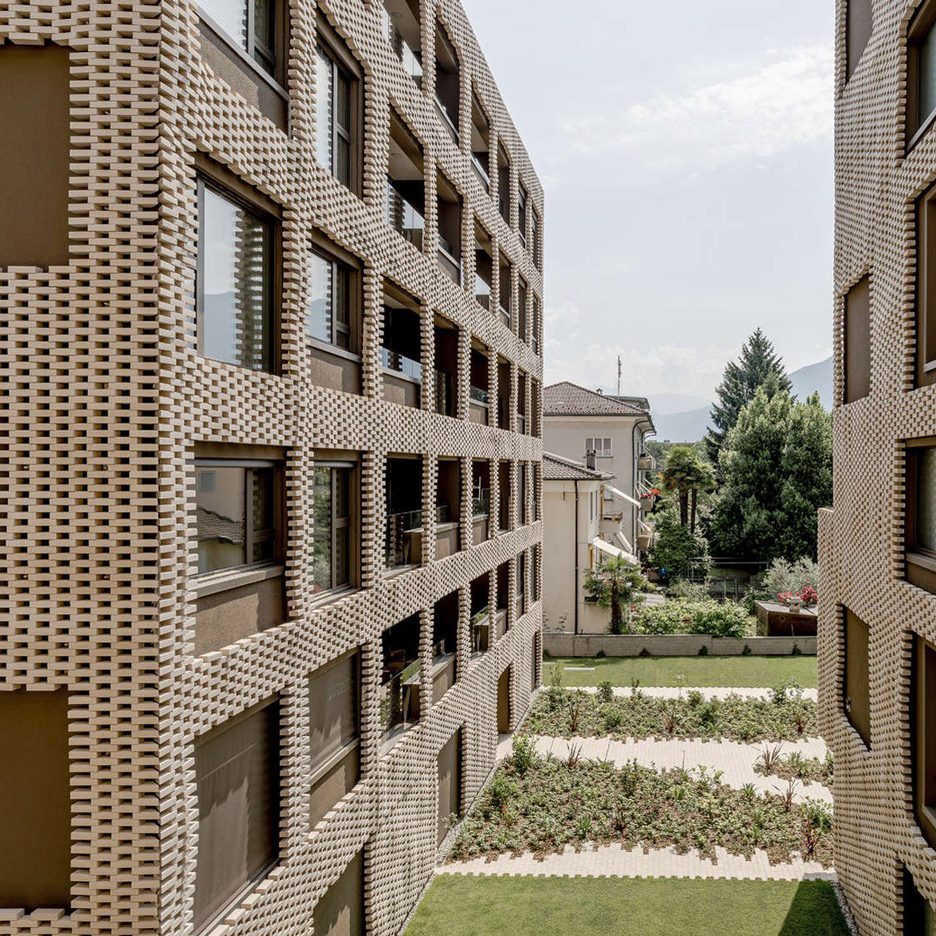
A+Awards: brickwork assembled by robots forms wavy facades across these apartment blocks in Switzerland – the latest project in our series about winners from this year’s Architizer A+Awards (+slideshow). (more…)
House Refurbishment in Conde de Torrejon Street / Donaire Arquitectos

© Fernando Alda
- Architects: Donaire Arquitectos
- Location: Seville, Spain
- Architect In Charge: Pablo Baruc
- Collaborators: Ana Benítez Morales
- Area: 180.57 sqm
- Project Year: 2016
- Photographs: Fernando Alda
- Budget: 110.000,00 €
© Fernando Alda
The house located in the old city center of Seville, Spain. The project is a low cost intervention in an old small house built in 1958. The house has an irregular shape which is considered one of the characteristics of the area.
© Fernando Alda
The intervention focuses on creating a modern and functional house. Starting with the research and study of the house typology and how to keep and reinforce its authenticity while at the same time allowing it to answer to contemporary living standards. The main reason for the house ́s adaptation process was to arise its historical footprints using creative resources at the lowest cost possible.
© Fernando Alda
Plan
© Fernando Alda
This new structure was painted in dark gray to easily make the distinction between what has been renovated and what was left as it is. The new steel structure is not connected with the original wall structure. The newly built wall was painted white as a neutral background, and so is the original brick wall with lime mortar.
© Fernando Alda
Section
© Fernando Alda
In general, the material that had been used are the same material which represents the characteristics of the area but with contemporary techniques, in order to keep the house related to its zone without it being the odd one. The staircase has been fully covered with glass, to provide natural light. The main structural element consists of an existing brick compound wall that formed all the edges of the house accentuating its natural material palette. the ground floor which consists of the garage, bathroom, and bedrooms. Its slab is completely made of concrete. As for the first floor slab, it is made from wood. The furniture and stairs are made of chestnut wood.
© Fernando Alda
 Sig Nordal