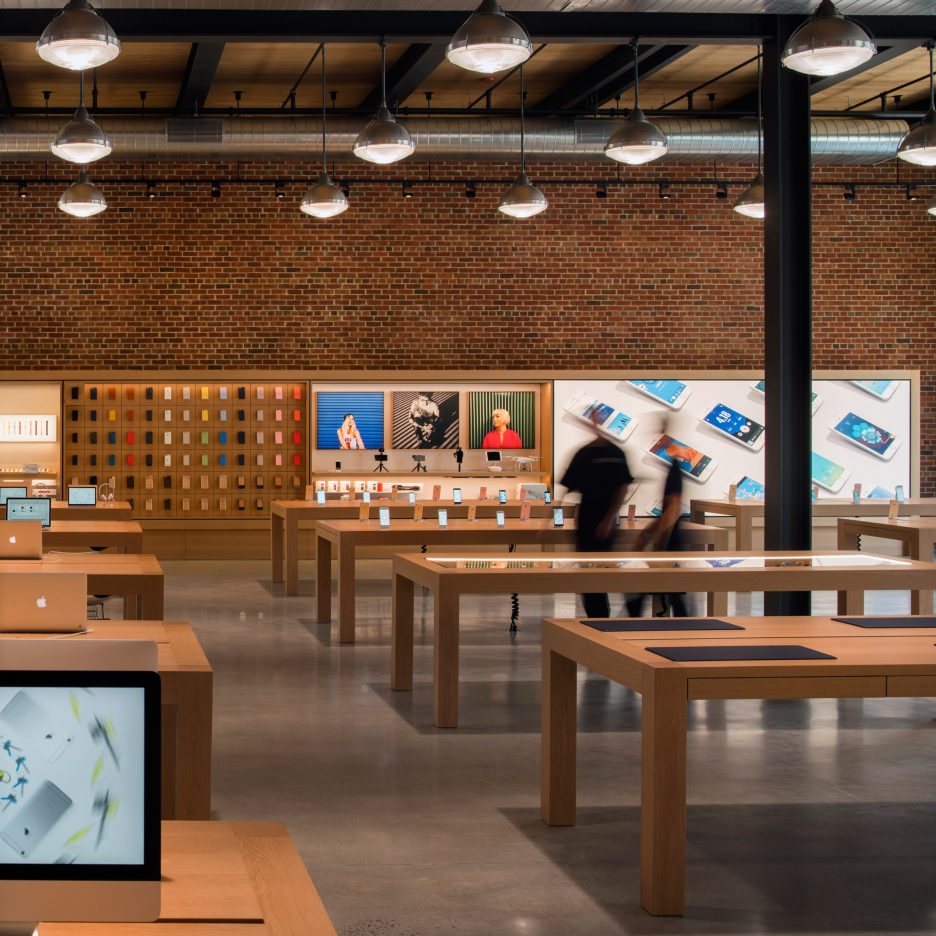
US firm Bohlin Cywinski Jackson has looked to Williamsburg’s industrial past to inform its interior for the first Apple Store in Brooklyn (+ slideshow). (more…)
US firm Bohlin Cywinski Jackson has looked to Williamsburg’s industrial past to inform its interior for the first Apple Store in Brooklyn (+ slideshow). (more…)

Like languages, space/place making is a discipline that will comprise a number of variations that are characteristic of the people, social and geographic climate that they serve. For any object or idea to endure and in effect become timeless it must pass through a number of filters that measure its clarity and depth retaining the genetic structure from which they evolved. Over many millennia the organisms that inhabit this planet have gone through countless environmental filters that have shaped and continue to inform the shape of organisms today. Nature has provided this framework of constant improvement for us. The “Woven Thread Pavilion” designed by Nuru Karim Founder & Principal NU.DE, deploys natural design systems to weave a set of sinuous lines into three-dimensional space. This intercourse of design and systems in nature is manifested through 4 modules and can be incrementally grown based on site / environmental conditions. The Pavilion could potentially host a number of public space events and activities.
The “Woven Thread pavilion” breeds on the principle of biomimetics, using natural systems (phyllotaxis) as a point of departure. Phyllotaxis or phyllotaxy is the arrangement of leaves on a plant stem (from Ancient Greek phýllon “leaf” and táxis “arrangement”). Phyllotactic spirals form a distinctive class of patterns in nature. The basic arrangements of leaves on a stem are opposite, or alternate = spiral. Leaves may also be whorled if several leaves arise, or appear to arise, from the same level (at the same node) on a stem. This arrangement is fairly unusual on plants except for those with particularly short internodes (source: Wikipedia).
The weave system is not based on elastic components used in traditional weaving technologies but using rigid thermoformed components to create a structural self-standing assembly. The idea is to interlace nature and architecture, enabling the design of hybridized, biological structures. In this process investigating nature is design research. And, the overall aim is to create new architectural species incorporating natural attributes ordered in performance, materials, digital technology and form.
The “Woven Thread Pavilion” deploys DuPont Corian “Deep Color Technology” material to weave a set of sinuous lines to create the pavilion design. The Pavilion design comprises of 4 nos modules and can be incrementally grown based on user requirements. The Pavilion could potentially host a number of activities and events, both active and passive in nature based on the constraints of the module size. The design process includes digital design tools and digital fabrication processes including CNC milling, creation of mould designs and thermoforming to complete the complex assembly. The design system is structural and supports its self-weight. Approx. 685 RFT of 30mm wide strips, 12mm thick DuPont Corian Material was used to create this sinuous Pavilion Design.
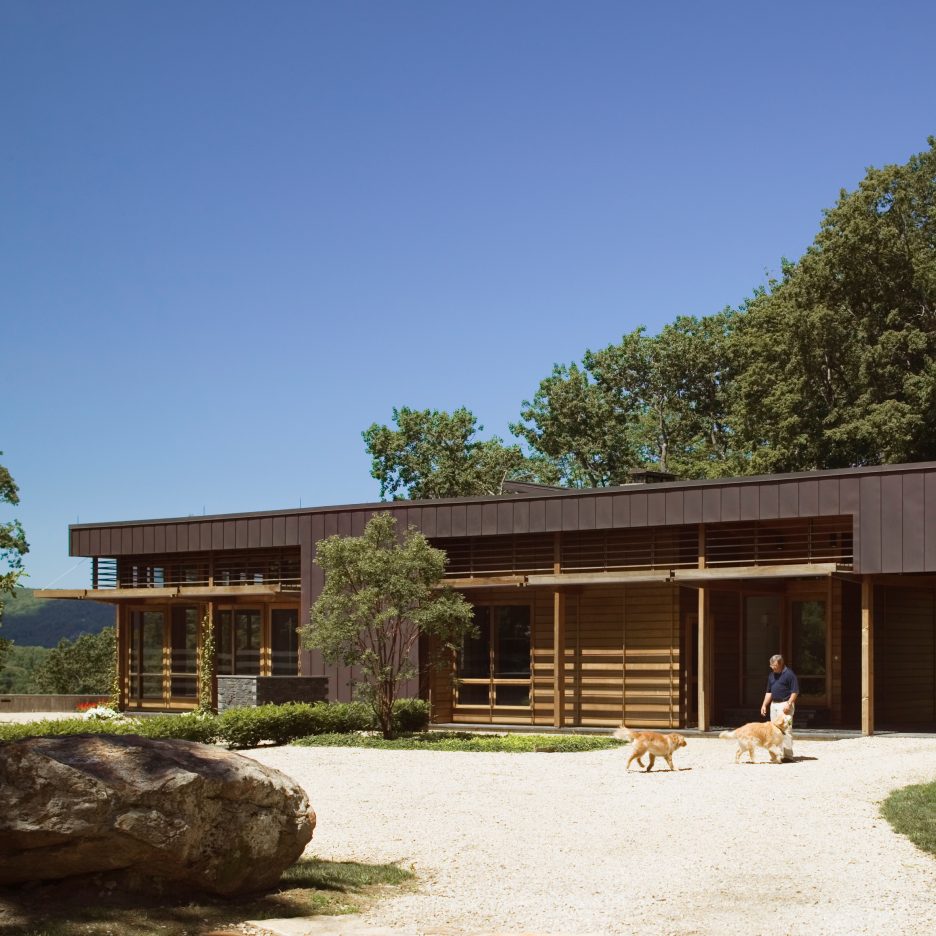
This hillside dwelling in rural Connecticut by Allee Architecture features a copper roof and facades made of glass, cedar and teak (+ slideshow). (more…)

Casa Gaviota (Seagull House) is a project developed through a thorough site analysis and conscious awareness of the environment. Located in a mountain surrounded by topographic depressions, and very close to the northern Pacific coast of Costa Rica, it stands lightly and volant on the terrain holding more than 80% of its areas in the air. It touches the ground only as needed, reducing the humidity and soil sealing and maximizing the natural ventilation through the project. The precise east – west orientation allows Casa Gaviota to fully open its north facade providing all the indirect lightning for the house and creating different environments that dramatically change throughout the day. A nearby river that refreshes and nourishes the flora and fauna of the place can be appreciated visually and aurally from the deck. The opening between the two modules allows the user to continue its path through the mountain, the same path that existed before the house was built. The house does not interfere between nature and oneself.
“The sky is not a place nor a time. The sky is perfect.”
Richard Bach´s book Jonathan Livingstone Seagull
Seagull House is essentially a project that respects the environment and emphasizes the absolute role of nature and its ephemeral poetry. The house attempts to fly and reach the sky.

//platform.instagram.com/en_US/embeds.js
Designing airports based on flight-inspired, aerodynamic forms is nothing new – in fact, that has been the concept behind some of history’s most beautiful airport terminals, such as Eero Saarinen’s iconic TWA Terminal in New York. But until now, no airport building has been quite so literal with its symbolism as the recently unveiled Ashgabat International Airport.
The new terminal building in Turkmenistan’s capital takes the form a soaring falcon, echoing the mascot of the national airline carrier. And at a cost of $2.3 billion USD, the structure has already drummed up some controversy – critics claim the building is much larger than needed to handle the country’s relative low traffic rates.
See some images of the bird-shaped building below.
//platform.instagram.com/en_US/embeds.js
//platform.instagram.com/en_US/embeds.js
//platform.instagram.com/en_US/embeds.js
//platform.instagram.com/en_US/embeds.js
//platform.instagram.com/en_US/embeds.js
BBC News – Turkmenistan unveils bird-shaped airport in Ashgabat https://t.co/Vf4L8TBrI1
— Nicolás Larenas ✈️ (@n_larenas) September 19, 2016
//platform.twitter.com/widgets.js
News via BBC.

Located in Haut-de-Seine department, the project takes place in a peaceful suburb town close to Paris, in Ile-de-France.
It involves the renovation and extension of a traditional stone house, perfectly situated on a quiet street and benefiting from a large green plot.
Unoccupied during several years, the main desire was to renovate the existing house all the while preserving its original architectural features. The extension was also driven by the will to respect the existing built and natural environment.
Adding an extension made sense mainly as there was a need to make the living areas on the ground floor larger. This floor consists of the two living rooms, both north and south facing, a corridor lined with a collections of CDs and vinyls and a kitchen as the central component of the home.
The numerous openings breaks down the relation between interior and exterior, creating a cosy feeling and connection with the natural surrounding.
The first floor is home to the first lot of bedrooms, with the spare bedroom and its big terrace looking over the quiet garden on the extension side, and the master bedroom with its open dressing, private bathroom and access to the terrace offering a nice view of the landscape.
The upper floors are dedicated to children with each room having both a sleeping area and playing area.
The combination of gritstone, which is typical of the region and the modern architecture components such as steel and glass produces altogether a unique architectural house, enjoyable for everyone.
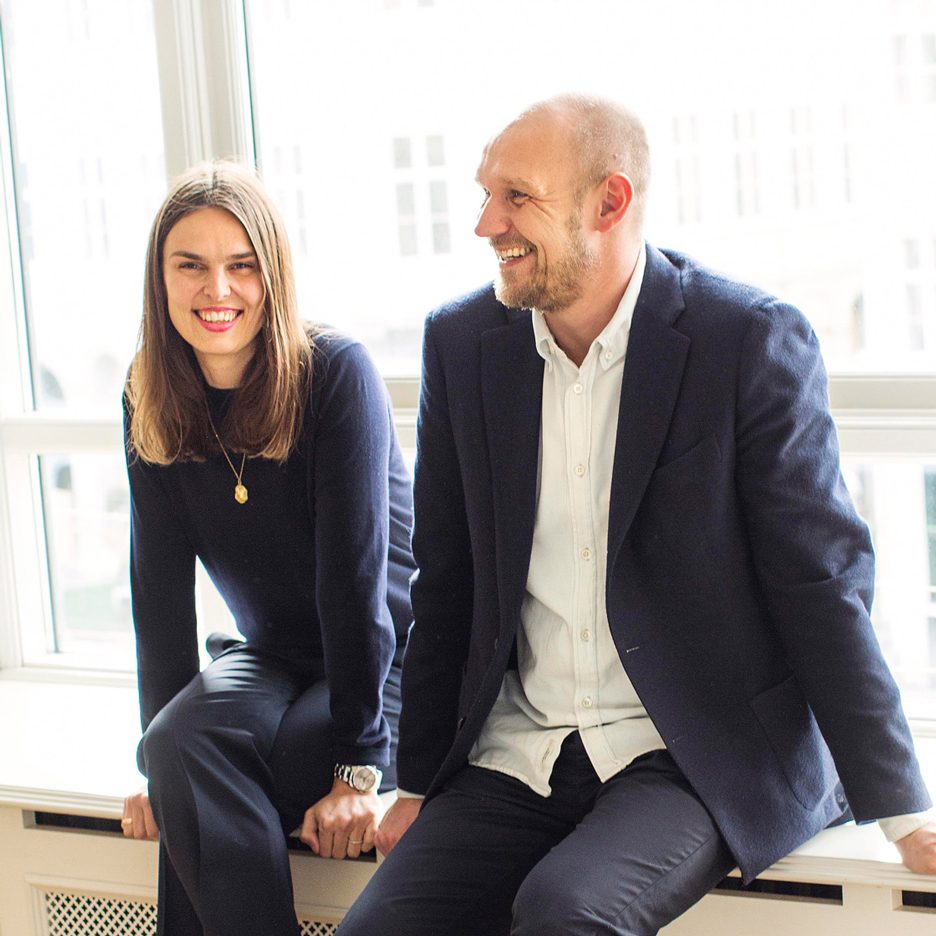
Business news: Danish brand Hay has acquired a majority stake in lighting and interiors company &tradition. (more…)
http://ift.tt/2czi9lW.:%20Museo%20de%20la%20Ciudad%20-%20Foto%20Der.:%20Gastón%20de%20la%20Llana
Buenos Aires‘ contemporary urban landscape as we know it today provides a tempered mix of historical and recent construction projects. As one of the most beautiful cities in South America, it’s wide boulevards and grand buildings, based on European models, have morphed to embrace the needs of a modern metropolis.
These images show just how profoundly time effects our cities (and how centuries-old foliage can powerfully transform spatial perception).
Browse the 20 interactive images of Buenos Aires before and after.
http://ift.tt/2cziYLA.:%20Autor%20Desconocido%20-%20Foto%20Der.:%20Gastón%20de%20la%20Llana
http://ift.tt/2d45RiJ.:%20Autor%20Desconocido%20-%20Foto%20Der.:%20Gastón%20de%20la%20Llana
http://ift.tt/2d45bKf.:%20Autor%20desconocido%20-%20Foto%20Der.:%20Gastón%20de%20la%20Llana
http://ift.tt/2czhYHm.:%20Autor%20Desconocido%20-%20Foto%20Der.:%20Gastón%20de%20la%20Llana
http://ift.tt/2d45k0j.:%20Autor%20desconocido%20-%20Foto%20Der.:%20Gastón%20de%20la%20Llana
http://ift.tt/2cziwgp.:%20Autor%20desconocido%20-%20Foto%20Der.:%20Gastón%20de%20la%20Llana
http://ift.tt/2d45apF.:%20Autor%20desconocido%20-%20Foto%20Der.:%20Gastón%20de%20la%20Llana
http://ift.tt/2d44D7j.:%20Autor%20Desconocido%20-%20Foto%20Der.:%20Gastón%20de%20la%20Llana
http://ift.tt/2czitkn.:%20Museo%20de%20la%20Ciudad%20-%20Foto%20Der.:%20Gastón%20de%20la%20Llana
http://ift.tt/2d45R2r.:%20Autor%20Desconocido%20-%20Foto%20Der.:%20Gastón%20de%20la%20Llana
http://ift.tt/2czid4V.:%20Autor%20desconocido%20-%20Foto%20Der.:%20Gastón%20de%20la%20Llana
http://ift.tt/2d44X5Y.:%20Autor%20Desconocido%20-%20Foto%20Der.:%20Gastón%20de%20la%20Llana
http://ift.tt/2czisNl.:%20Autor%20desconocido%20-%20Foto%20Der.:%20Gastón%20de%20la%20Llana
http://ift.tt/2d45RPD.:%20Autor%20desconocido%20-%20Foto%20Der.:%20Gastón%20de%20la%20Llana
http://ift.tt/2czicxT.:%20Autor%20desconocido%20-%20Foto%20Der.:%20Gastón%20de%20la%20Llana
Courtesy of Buenos Aires Antes y Después – Gaston de la Llana.
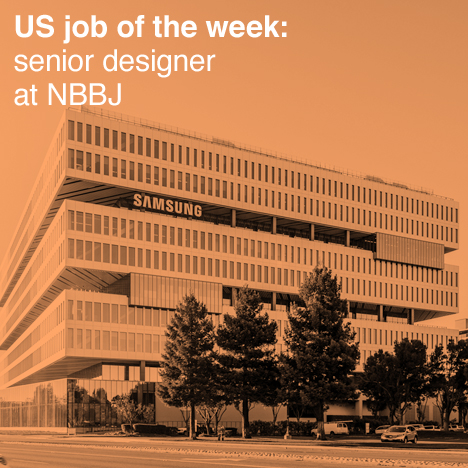
Our US job of the week on Dezeen Jobs is for a senior designer at NBBJ, which designed a 10-storey stacked building for Samsung’s US headquarters in California (pictured). Visit the ad for full details or browse other architecture and design opportunities on Dezeen Jobs.
 Sig Nordal