
Laman Residence is a private home located in San Marcos, Texas, USA. The 2,100-square-foot home was designed in 2015 by A Gruppo Architects. Laman Residence by A Gruppo Architects: “Upon retirement after 40 years of teaching Fibre-Arts and Interior Design at Texas State University (formerly Southwest Texas State University), the Lamans desired a gallery and studio to compliment their modest 1970’s era modern home, taken from Heritage Homes plan books..
Taggart House / Nest Architects

© Todd Watson
- Architects: Nest Architects
- Location: Portballintrae, Bushmills BT57, United Kingdom
- Area: 40.0 sqm
- Project Year: 2015
- Photographs: Todd Watson
- Structural Engineers: Design ID
- Qs: Philip Barbour Associates
- Contractor: DLane Construction
© Todd Watson
The existing 1920’s two storey dwelling is situated at Portballintrae, a small seaside village in County Antrim, Northern Ireland. Portballintrae takes its name from the Irish ‘Port Bhaile an Tra’, meaning ; ‘port of the beach settlement’ and lies within the Causeway Coast and Glens District Council area.
© Todd Watson
The original building character consisted of whitewashed cottages nestled around the Ballintrae bay, although that character has changed in no small part through the areas popularity as a seaside resort.
© Todd Watson
Brief
The client wished to reconfigure the existing accommodation to facilitate modern family living for three generations of their family in an open plan arrangement. The requirements set out at the initial briefing meeting included the aspiration to create spaces that engaged with the external environment and moved away from the existing cellular accommodation. The client had a specific requirement to provide an external hot shower area for use following surfing and family visits to the nearby beach. This reinforced the idea that the scheme should act as the family ‘hub’, a place to meet and spend quality time together. Coupled with the visual and emotive element of the brief there was a pragmatic requirement to improve the existing building performance and deal with any issues present simply due to the buildings age.
© Todd Watson
Concept Development
The existing building line facing Ballaghmore Road, had long been established and the intention was to develop a rear extension that would extend beyond the existing gable wall and benefit from views toward the hills beyond and from the evening sun. This approach allowed the visual impact from the public street to be subtle yet provide an interesting modern bookend and give a suggestion of what was beyond.
© Todd Watson
A new extension was added to the building to create an open aspect to the private garden at the rear whilst the poorly lit cellular accommodation was altered to facilitate the families open plan living aspirations and improve the internal environment. The conceptual building form was inspired by the family interest in surfing. The surf board profile manifests itself as a cantilever over the newly formed courtyard and coupled with the use of a hardwood timber soffit provides both protection from the elements and a tactile building face. The remaining building is formed in traditional masonry construction and covered with self-coloured white render that makes reference to the historic character of the area. The material palette used was simple and restrained with the emphasis being placed on strong elements of hardwood timber to add warmth.
Floor Plan
The new extension is bounded by an existing corrugated roofed outhouse which provides an important link to the past. The client wanted to ensure this building element was retained as it represented an emotional link to their early family life in the house. The new extension provides a visual representation of the next generation of their family life without forgetting the past. Their aspiration for the new building extension to be a significant part of their grand-children’s formative years is evident.
© Todd Watson
Sanuki Daisuke Architects Design a Narrow Home in the Center of Ho Chi Minh City, Vietnam

HEM House is a private home located in Ho Chi Minh City, Vietnam. It was designed by Sanuki Daisuke Architects in 2015. HEM House by Sanuki Daisuke Architects: “This is the individual house project at a small alley in the center of Ho Chi Minh City. When having a look at Vietnamese towns, we can realize that the buildings’ blocks separated by main streets, and numerous narrow alleys inside of..
This week, Moby criticised a hotel room by Zaha Hadid and Tate told Neo Bankside to get curtains
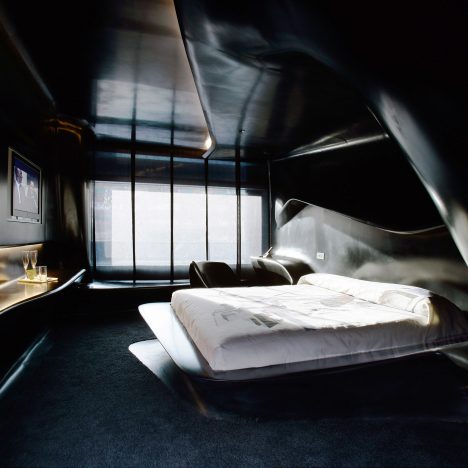
This week on Dezeen: this week Moby slammed the ergonomics of a Zaha Hadid-designed hotel room, while Nicholas Serota waded into the feud between Neo Bankside residents and Tate Modern. (more…)
Terra e Tuma Arquitetos Associados Design a Private Residence in São Paulo

Mipibu House is a private home located in São Paulo, Brazil. Completed in 2015, it was designed by Terra e Tuma Arquitetos Associados. Mipibu House by Terra e Tuma Arquitetos Associados: “This house represents a very common situation in São Paulo, a long and narrow ground [5.6×30.0m] (18ftx98ft), with only the front elevation free of interference of the buildings around it. The challenge increased from the moment that we had..
The Trefpunt / atelier PRO

© Luuk Kramer
- Architects: atelier PRO
- Location: Herenweg, 2361 Warmond, The Netherlands
- Project Year: 2016
- Photographs: Luuk Kramer
© Luuk Kramer
On the old Herenweg in Warmond atelier PRO architects have combined an existing community center with three new primary schools and a kindergarten. The result is a new multifunctional centre where the local schools, library, nursery, kindergarten and cultural associations have been given a place.
© Luuk Kramer
As councillor Kees van Velzen put it during his opening speech: “The building is adapted wonderfully on a historic site: the historic heart of Warmond. Through its playful form and excellent use of materials, the building fits perfectly into the surroundings.”
© Luuk Kramer
The brief
Warmond is a village in the western Netherlands, just north of Leiden and located in an area called the “Dune and Bulb Region”. For more than a decade, cultural meeting centre The Trefpunt has been the social hub of Warmond. In the evenings, the centre was well occupied but during the day it had moderate use. Elsewhere in Warmond three primary schools were facing declining student numbers and outdated school buildings. The schools mostly empty during the evening. Both buildings can complement each other in spaces and program. Moreover, the cultural centre offers features that a regular, relatively small school could never possess. The municipality wanted to investigate the possibility of combining a new school building with the renovation of The Trefpunt. The site is located in a lush open green area just north of the historic centre. The original building has a rigid rectangular form made from brick.
© Luuk Kramer
Combining old and new
Architecture office atelier PRO devised a surprising and successful scheme to combine the functions, opening up the existing building and adding a distinctive new section. Old and new come together in a large central space, the heart of the building. As a multipurpose space it easily accommodates different functions, for instance, from meeting to learning and playing.
Floor Plan
In the existing community centre, the interventions are limited but carefully focused. The narrow foyer is widened and the accessibility and appearance of the rooms are improved. Additionally the building was adapted, as much as possible, to be shared with the schools. In this way, the schools can enjoy the facilities of the renovated library and craft room. The youth club can be also used by the younger kids.
© Luuk Kramer
A free flowing shape
atelier PRO’s design softens the existing brick building by adding a new section in an open flowing form constructed in wood. The undulating form comprises a string of classrooms designed with flexibility in mind. Growth and downsizing of the schools can be easily accommodated by shuffling the classrooms which can interchange functions. This flexibility has already shown positive results: before the opening, two of the three schools merged seamlessly.
© Luuk Kramer
Samuel Wilkinson creates minimal chair using steam-bent wood
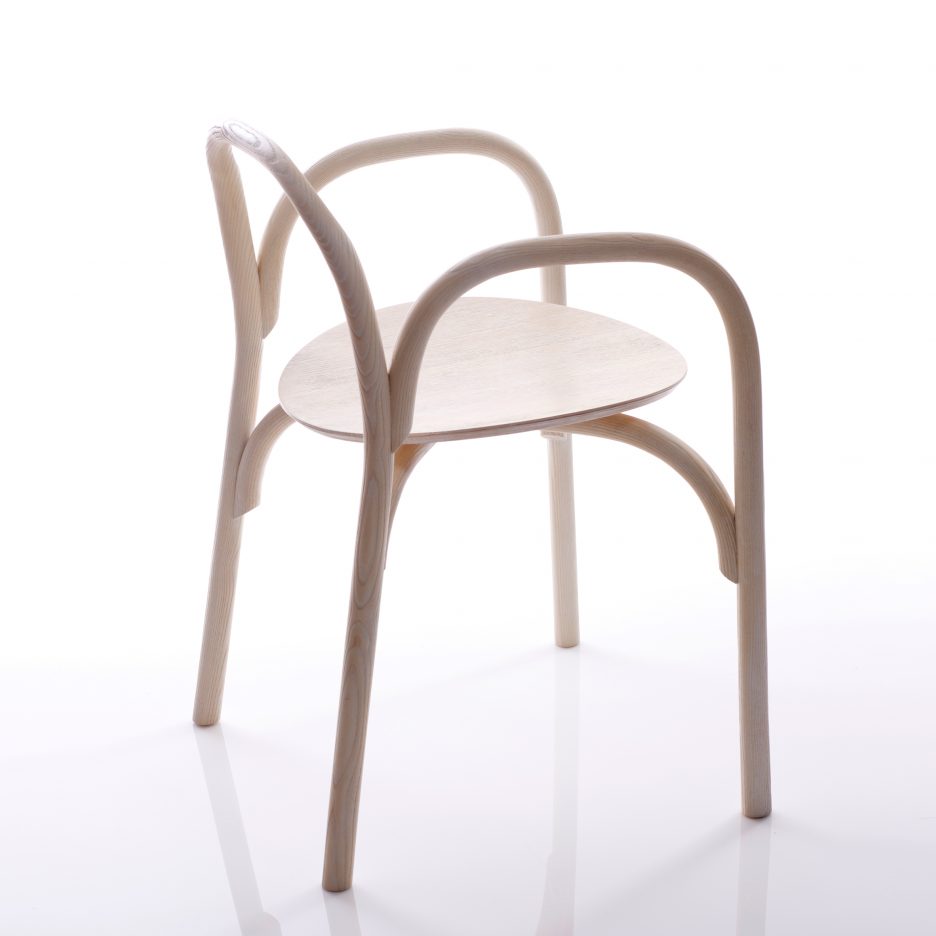
London Design Festival 2016: the frame of this simple chair by designer Samuel Wilkinson is made using the traditional technique of steam-bending wood (+ slideshow). (more…)
Eley Kishimoto covers London street crossing in graphic patterns
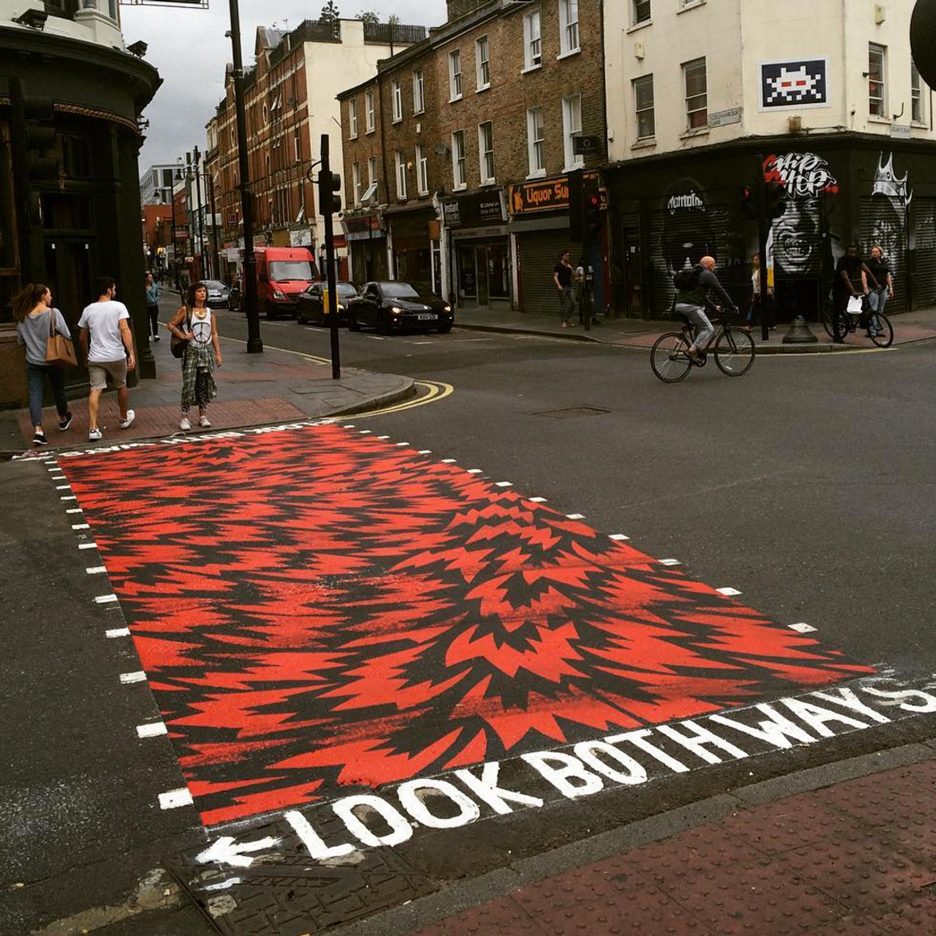
London Design Festival 2016: print studio Eley Kishimoto has applied its graphic Flash pattern to a number of pedestrian crossings in Brixton, south London. (more…)
Folly House / The Busride Design Studio

Courtesy of The Busride Design Studio
- Architects: The Busride Design Studio
- Location: Pune, Maharashtra, India
- Area: 5500.0 ft2
- Project Year: 2015
- Photographs: Courtesy of The Busride Design Studio
- Design Team : Apurv Aniruddh, Hinal Vyas, Pranali Patel, Rujuta Naringrekar, Kevin Mathew, Preeti Nautiyal, Shripal Shah
- Chief Contractor: Shakir Basrai
- Site Supervision: The Busride Design Studio
- Model Maker: The Busride Design Studio
Courtesy of The Busride Design Studio
“The Folly House in Pune was a response to a very odd brief: Make Mistakes. The owners were young entrepreneurs, looking to create a biography of themselves in the design of their home. They had concerns ranging from the effect of the residential environment on their young kids to their own productivity at home, and the various formats for living that the family enjoys to how they like to party.
Courtesy of The Busride Design Studio
Diagram
Courtesy of The Busride Design Studio
The sprawling 4500 sq ft house offered a wide range of possibilities to respond to the brief. Our approach was to create an open plan home where every functionality of the home was compacted into multi-functional or mobile objects. The remaining space was left untouched, activated only when these objects unfolded, rotated or pivoted open.
Courtesy of The Busride Design Studio
The living room consisted of two such objects, a multi-functional carved wooden topography and a fold-out wooden cube. The continuity of space was paramount in the design of both objects. This created an ‘exteriority’ within the interior space. The overall experience of the house transformed from ‘living in rooms’ to ‘living amongst objects’. Since the nature of each object is different, the house remains unpredictable and new relationships between everyday home objects are constantly discovered. Chance and unpredictability create follies. Follies are objects in a garden of no particular purpose. Follies are also mistakes.”
House of Stones / Ospace Architects

© Tze-Chun Wei
- Architects: Ospace Architects
- Location: Taiwan
- Design Team: Ospace Architects
- Area: 360.0 sqm
- Project Year: 2014
- Photographs: Tze-Chun Wei
© Tze-Chun Wei
From the architect. The House of Stones is an individual 4 storeys house located in Changhua, Taiwan. The site is in irregular triangle shape, where using the typical structural grid system is not applicable and not efficient. In this circumstance, we come up with the following two concepts.
© Tze-Chun Wei
Floating of Stones
Our initial inspiration comes from the rock in Zhangjiajie, and we see the site as a stone full of shapes, which then set out the composition strategy of our projects. All the opening of the building is followed by the idea of shaping a stone, where windows and roof are excavated and cut like a big rock.
Model
In order to express the concept of a floating stone and the different functions of the house, we separate the ground floor that is commercial use with exposed concrete and the upper floors that function as a private house with a white painted volume. This then presents a picture of a floating white stone sitting on an irregular rock column.
Concept
Concept
Motion of Wind
The subtropical weather in Taiwan is considered in this project. There is a pool placed on the south side of the building and a void in the center that helps generates the stack effect of the wind.
© Tze-Chun Wei
In this case, the wind runs over the pool to cool down its temperature and flows through the building by the central void, and this creates the pleasant of living with natural lighting and ventilation.
 Sig Nordal