The 6 Architects Who Have Won MacArthur “Genius” Grants


Blur Building. Exposition Pavilion: Swiss Expo, Yverdon-Les-Bains, 2002. Architects: Diller Scofidio + Renfro. Image © Diller Scofidio + Renfro

Blur Building. Exposition Pavilion: Swiss Expo, Yverdon-Les-Bains, 2002. Architects: Diller Scofidio + Renfro. Image © Diller Scofidio + Renfro

Today the MacArthur Foundation announced the 23 recipients of their 2016 MacArthur Fellowship Grants, which are awarded annually “to encourage people of outstanding talent to pursue their own creative, intellectual, and professional inclinations.” Each fellowship comes with a stipend of $625,000 for the recipients to use for individual pursuits, paid out in equal quarterly installments over a five year period. Fellows are selected based on 3 criteria: exceptional creativity, promise for important future advances based on a track record of significant accomplishment, and potential for the fellowship to facilitate subsequent creative work.

This year’s fellows include artists, playwrights, geobiologists, poets, jewelrymakers, novelists and historians, but, for the fifth straight year, no architects. In the program’s 36 year history, just 6 recipients have come from architecture-related fields.

1981 – Ada Louise Huxtable, architectural critic and historian

By 1981, Huxtable was already well-known for her impassioned opinion and critical voice as the New York Times’ resident architecture critic, having won the first ever Pulitzer Prize for Criticism in 1970. But it was being named a MacArthur fellow that solidified her role in bringing architectural criticism to the masses – after receiving the award, architectural criticism was picked up by all the biggest newspapers and regularly awarded with Pulitzer Prizes.

“Before Ada Louise Huxtable, architecture was not a part of the public dialogue,” her successor at the Times, Paul Goldberger said in 1996.

1999 – Elizabeth Diller and Ricardo Scofidio, architects

Founding their practice in 1979, Diller and Scofidio’s early career focused largely on installations, performance pieces and unbuilt works that united design, performance and electronic media with architectural theory. Upon awarding the duo with the fellowship in 1999, the MacArthur Foundation noted, “Their work explores how space functions in our culture and illustrates that architecture, when understood as the physical manifestation of social relationships, is everywhere, not just in buildings.”

During their fellowship period, Diller and Scofidio created some of their landmark built works, including the Blur Building at the Swiss Expo in 2002. Since then, the studio (along with Charles Renfro, who joined as partner in 2004) has grown into one of the most influential firms in practice today.


Rural Studio: Hale County Animal Shelter. Image © Timothy Hursley

Rural Studio: Hale County Animal Shelter. Image © Timothy Hursley

2000 – Samuel Mockbee, architect

On awarding Mockbee a fellowship grant in 2000, the MacArthur Foundation referred to him as “an architect who erased the boundary between experimental design and social consciousness.”

As co-founder of Auburn University’s Rural Studio, Mockbee combined architectural education with public service, bringing students to one of the country’s poorest counties in Alabama to create revolutionary, budget-conscious buildings from non-traditional materials that could be used by real people in need.

Sadly, a year after becoming a fellow, Mockbee passed away following a long battle with leukemia. Mockbee was posthumously awarded the AIA Gold Medal in 2004.

2008 – John Ochsendorf, engineer and architectural historian

Ochsendorf is a structural engineer and historian who has used his background to explore alternative engineering solutions from traditional architects. His studies have included investigations into the hand-woven fiber suspension bridges of the Incan Empire, ancient rope-weaving techniques, suspensions and cable-stayed bridges in Japan, and identifying the causes of vault and buttress failures in French and Spanish Romanesque churches

Said the MacArthur Foundation, “While conducting structural assessments of historic monuments around the world, Ochsendorf develops new methods for establishing the stability of ancient buildings and draws important lessons from them that will guide the construction of more efficient architecture in the future.”


© Hedrich Blessing

© Hedrich Blessing

2011 – Jeanne Gang, architect

Jeanne Gang was awarded a MacArthur Fellowship in 2011, one year after finishing her most well-known project, Aqua Tower in Chicago.

“Always responsive to the specific geography, social and environmental context, and purpose of each project, Gang creates bold yet functional forms for residential, educational, and commercial buildings,” said the MacArthur Foundation on her nomination.

Now in the final year of her fellowship, her firm’s current and recent projects include Vista Tower in Chicago, the US Embassy in Brasilia and Polis Station, a prototype for a community inclusive police campus.

Read about the 2016 MacArthur Fellows, here, or visit the MacArthur Foundation website, here.
http://ift.tt/2cUBq06

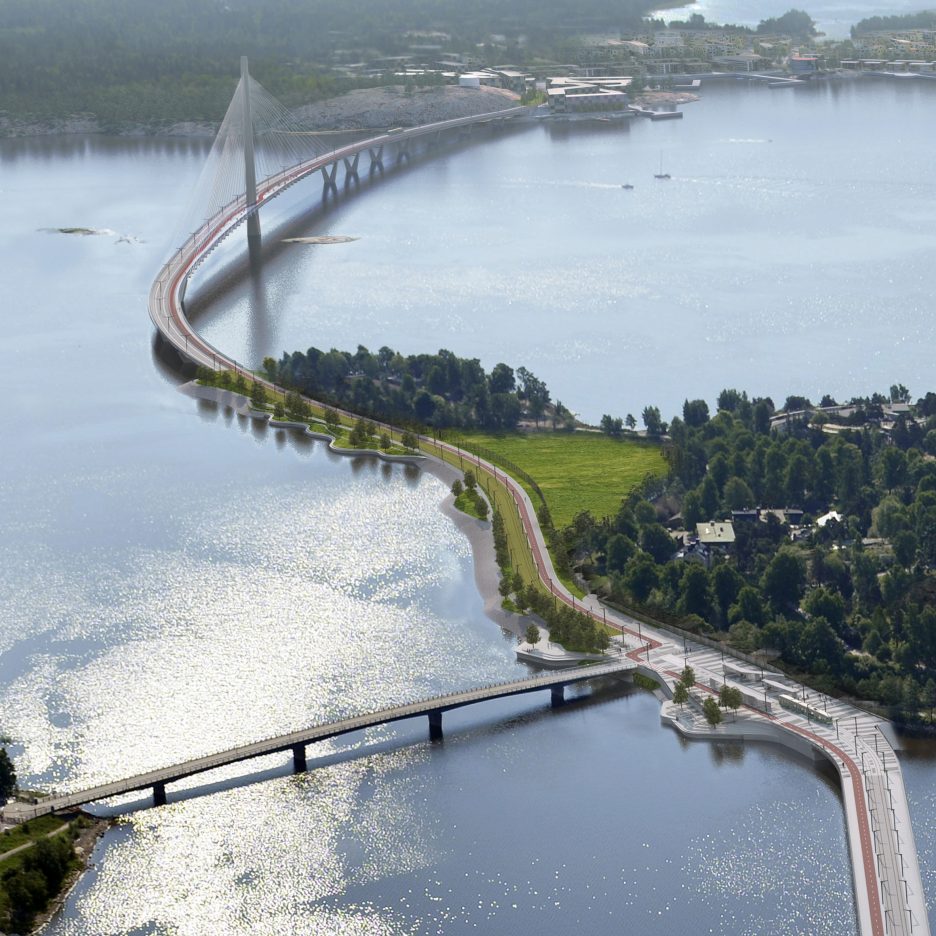
Knight Architects unveils design for Finland’s longest bridge


UK firm Knight Architects has revealed its plans for a bridge that will span over a kilometre across a bay in Helsinki, making it the longest bridge in Finland (+ slideshow). (more…)

http://ift.tt/2ddJo8r

KAA / Studio Arthur Casas


© Leonardo Finotti

© Leonardo Finotti


© Leonardo Finotti


© Leonardo Finotti


© Leonardo Finotti


© Leonardo Finotti

  • Architects: Studio Arthur Casas
  • Location: Av. Pres. Juscelino Kubitschek, 279 – Itaim Bibi, São Paulo – SP, 04542-020, Brazil
  • Area: 612.4 sqm
  • Project Year: 2008
  • Photographs: Leonardo Finotti
  • Constractor: Construções Inis
  • Consultants: Gica Mesiara (landscaping); Franco e Fortes (lighting design); Tempstar (air conditioning); Marco Aurelio Salvatore Tebet (MEP- Mechanical Electrical Plumbing) – Gica Mesiara (paisagismo); Franco e Fortes (projeto de iluminação); Tempstar (arcondicionado); Marco Aurelio Salvatore Tebet (Instalações)

© Leonardo Finotti

© Leonardo Finotti

São Paulo is a City that reveals itself behind the walls which makes some places amazing and special.


© Leonardo Finotti

© Leonardo Finotti

The discrete facade of the newest restaurant KAA gives no hint of what may prove to be internally. Inside, the narrow space of 798 m2 gets a new depth through the Green verical wall with plants from the Atlantic forest. The water mirror on the botton of the tropical green wall refers to “Igarapés”, that were so common before as well as nowadays in that region.


Plan

Plan

Section

Section

The huge stand at the bar that divides the big environment of the restaurant in 2 separate áreas is to suport indigenous original pieces which mimic with the bottles, cups and books. The roof made with canvas opens automatically. The furniture is contemporary and the philosophy of this place is transporting the urban “paulista” to a Green environment, it’s an escape from the chaos.


© Leonardo Finotti

© Leonardo Finotti

http://ift.tt/2dcgIYD

The Sociology of Coliving: How WeLive Creates a “Third Place”


Courtesy of WeLive

Courtesy of WeLive

This article was originally published on Autodesk’s Redshift publication (formerly known as Line//Shape//Space), under the title “Live, Work, Play: WeLive’s Live-Work Spaces Reveal a ‘Third Place.’

According to urban sociologist Ray Oldenburg, people need three types of places to live fulfilled, connected lives: Their “first place” (home) for private respite; their “second place” (work) for economic engagement; and their “third place,” a more amorphous arena used for reaffirming social bonds and community identities.

This third place can be a barbershop, neighborhood bar, community center, or even a public square. The desire for these three separate spheres drives how human environments are designed at a bedrock level, but increasing urbanism—as well as geographic and economic mobility—are collapsing these multiple spaces into one. The result is a new hybrid building type: a live-work multiunit dwelling that is home, office, and clubhouse.

WeLive, an offshoot of coworking-space company WeWork, recently opened two such projects, one in New York City and one in the Northern Virginia neighborhood of Crystal City, just outside of Washington, DC. The company is making huge bets on WeLive as a way to meet massive investor expectations. Wall Street (where the New York project is located, incidentally) valuated WeWork at $16 billion, and the company is looking for WeLive to generate 21 percent of its revenue in the next few years.

WeLive senior designer Quinton Kerns says coliving spaces and WeLive will swell in popularity as cities swell in population. For him, increasing urbanization means “smaller living and more communal living,” he says. “I think this is what cities are moving to.”

Both WeLive spaces, at 110 Wall St. and in Crystal City, are multistory buildings with about 200 rental units, offering a range of studio to four-bedroom apartments that are furnished and finished down to wall art and silverware. Leases (called “membership agreements”) run month-to-month, and there’s a WeWork co-working space on the bottom floor of each building.

A social-media app tracks activities and interaction across the building—from a startup reaching out to fellow WeLive-ers for an impromptu focus group to a few neighbors picking out a dinner reservation together. It’s low-impact living for young professionals more attracted to a hive-like cluster of like-minded entrepreneurs than they are to any particular place.

Anita Shannon, a community manager at 110 Wall St., says only a handful of people there live and work in the same building every day, so the WeLive concept is less about “a collapse of the three [places],” she says. “You definitely still have that separation [between living, work, and social spaces].”

But the close proximity of these zones inside a single building means that the spectrum of private-to-public spaces needs to be nuanced and carefully articulated. That’s the job of Kerns, who describes the transitions between public and private spaces as “fluid.”

From bedrooms to large event spaces and communal kitchens, there are about a half dozen types of spaces that each cater to different levels of social interaction. Beyond purely private individual units, hallways have small lounge spaces and phone booth–style workstations.

Groups of three floors are branded and identified as “neighborhoods,” each with a different graphic identity. For example, floors seven through nine at 110 Wall St. have a synchronized-swimmer graphic wall-covering theme. And each neighborhood has a communal kitchen and larger lounge space. “We try to accommodate all aspects of live-work,” says Kerns, who lived at the Wall Street location for six months.

There are subtle differences between the two WeLive projects, but both have a matching aesthetic heavy on particle board, plywood, exposed ductwork, and subway tile. This sensibility correlates to the more than 100 WeWork spaces, which Forbes dubbed “reformed bro meets upscale IKEA.”

One of Kern’s biggest design challenges with WeLive was how to create furnished apartments that would encourage what he calls an “asset-light living situation” while still offering ways for residents to make their home their own. To strike this balance, he used a selection of customizable materials in strategic places that give residents a chance to color outside his lines: felt walls in bedrooms for hanging photos; pegboard in the kitchen to arrange shelving for a cookbook collection; chalkboard walls for scrawling down grocery lists; and modular, movable shelving systems. “It’s like building with building blocks within the unit,” he says.

This adds up to a stylishly appointed, if mildly anonymous, ready-made apartment—one with the potential to allow the personalities of the unit and the resident to align. “You can literally show up with just a toothbrush and clothes,” Shannon says. “Actually, we do give you a toothbrush.”

Shannon says residents want to use this kind of coliving space to engage in the kind of neighborly camaraderie that seems almost antiquated: borrowing cups of sugar and gathering a quorum to go see a movie. But residents don’t necessarily have to talk to people to make this happen, hence the app. “A lot of members are more comfortable communicating on a digital platform as opposed to knocking on a neighbor’s door,” she says.

The WeLive buildings are certainly an extension of its app, which contains much of the social interaction the company says is critical to its value. The wine tastings, family-style dinners, and art classes planned by WeLive residents attract a broader cross section demographically than you might expect for a building that almost requires you to have a smartphone.

The average age of residents is about 30, and there are a decent number of recent college graduates, but there’s also a handful of 50- to 60-year-olds and families with kids. Kerns says that attracting a diverse audience is a critical goal for WeLive, and his designs for various spaces (high-energy yoga studios and exercise rooms for younger residents and a whiskey lounge with more refined materials and a mature setting) reinforce this.

“The most core characteristic through all of the members,” Shannon says, “is people going through a transition.” This could mean someone seeking a conveniently furnished apartment after moving to a new city or one needing to cut back on infrastructure and labor in anticipation of a new business venture that might not be profitable over the course of a traditional lease.

For a certain class of worker, mobility and flexibility are critical needs not served by traditional living arrangements. WeLive is betting that as the information economy whirls people around the globe faster and faster, they’ll need more places to land softly—toothbrush in hand or not.

http://ift.tt/2cNRsN0

New Deal Design’s Scrip device brings tactility to digital payments


San Francisco studio New Deal Design has devised a small copper-coloured device that allows users to make purchases by swiping its textured surface, as “a modern replacement for cash” (+ slideshow). (more…)

http://ift.tt/2cNMRL8

Irving Place Carriage House / LOT-EK


© Danny Bright

© Danny Bright


© Danny Bright


© Danny Bright


© Danny Bright


© Danny Bright

  • Architects: LOT-EK
  • Location: Brooklyn, NY, USA
  • Architects In Charge: Ada Tolla, Giuseppe Lignano
  • Area: 2500.0 ft2
  • Project Year: 2015
  • Photographs: Danny Bright
  • Structural Engineer: RSA, Eytan Solomonoff
  • Mep Engineer: Kevin Gallen
  • Principals: Francesco Breganze, Project Architect
  • Client: Markus Linnenbrink, Cindy Rucker
  • Area: 2,500 SF interior + 1,200 SF outdoor

© Danny Bright

© Danny Bright

The Irving Place Carriage House is a single family residence for an artist, a gallerist and their daughter. 


© Danny Bright

© Danny Bright

Diagram 2

Diagram 2

© Danny Bright

© Danny Bright

The project involved the remodeling of an existing two-level carriage house from the 30ies and the addition of a penthouse above. 


© Danny Bright

© Danny Bright

The space is organized through the insertion of a single volume that–as a jellyfish, resting its bell or umbrella on the roof–crosses with its tentacles the entire house extending from the roof to the ground. 


© Danny Bright

© Danny Bright

The penthouse, retrofitted from four shipping containers, provides access to the decked and shaded roof. The vertical volume—orange, like the penthouse containers—intersects the carriage house and organizes kitchen, bathrooms, mechanical space and the stairs, the incline of which generates all of the diagonal cuts. This volume also separates the space in two—entrance/mud room in the front with kitchen/dining/living space on the rear at the ground level, and master and kids bedrooms at the second level.


© Danny Bright

© Danny Bright

http://ift.tt/2cokOLJ

Green Urban Park Floating Above a Highway Unifies Buckhead Neighborhood in Atlanta


Aerial view looking south at dusk. Image Courtesy of Roger Partners / Nelson Byrd Woltz

Aerial view looking south at dusk. Image Courtesy of Roger Partners / Nelson Byrd Woltz

Rogers Partners Architects+Urban Designers and Nelson Byrd Woltz Landscape Architects have released preliminary designs for a new park floating above a divisive highway and commuter rail line in the Buckhead neighborhood of Atlanta, Georgia. A 2,400-foot-long elevated traverse, Buckhead Park Over GA400 aims to bring the community together with safe, convenient access to the amenities and cultural attractions in Buckhead. 


Courtesy of Roger Partners / Nelson Byrd Woltz. ImageView from Peachtree looking north


Courtesy of Roger Partners / Nelson Byrd Woltz. ImageView from PATH400 looking south


Courtesy of Roger Partners / Nelson Byrd Woltz. ImageView from plaza looking south


Aerial view looking toward Downtown Atlanta. Image Courtesy of Roger Partners / Nelson Byrd Woltz


View from allee looking north. Image Courtesy of Roger Partners / Nelson Byrd Woltz

View from allee looking north. Image Courtesy of Roger Partners / Nelson Byrd Woltz

Lined by shade trees spanning the full length of the elevated traverse, the park itself provides a specialized experience to its visitors. The north end includes a common area complete with an intimate amphitheater suitable for both formal and casual gatherings. A plaza in the heart of the park features retail, restaurants, and MARTA rail access. On the southern end is a garden oasis that will help mitigate the urban heat-island effect. The park will also add a destination to PATH400, a multipurpose recreational and commuter greenway trail running along the spine of GA400.


Courtesy of Roger Partners / Nelson Byrd Woltz. ImageView from Peachtree looking north

Courtesy of Roger Partners / Nelson Byrd Woltz. ImageView from Peachtree looking north

The design endeavors to improve the quality of life in Buckhead, such as by boosting the city’s walkability. With extensive pedestrian paths linking the park to neighboring streets, Buckhead Park Over GA400 encourages city dwellers to use the park as they travel between work, home, and leisure. Custom-engineered stormwater capture systems will sustainably irrigate the gardens, while native Atlanta flora will minimize maintenance while maximizing aesthetic impact.


View from Peachtree looking east. Image Courtesy of Roger Partners / Nelson Byrd Woltz

View from Peachtree looking east. Image Courtesy of Roger Partners / Nelson Byrd Woltz

We truly feel we have struck the right balance with this initial design to make big change with artfully-considered efforts, said Robert M. Rogers, FAIA, founding partner of Rogers Partners. We see Buckhead leading a national trend to create value, enhance quality of life, and improve connectivity by constructing inspired public spaces.


Aerial view looking toward Downtown Atlanta. Image Courtesy of Roger Partners / Nelson Byrd Woltz

Aerial view looking toward Downtown Atlanta. Image Courtesy of Roger Partners / Nelson Byrd Woltz

The Buckhead Community Improvement District board will review community feedback and discuss the next phase of the project in October. Read more about the design here.

News via: RogersPartners 

http://ift.tt/2cFkwkB

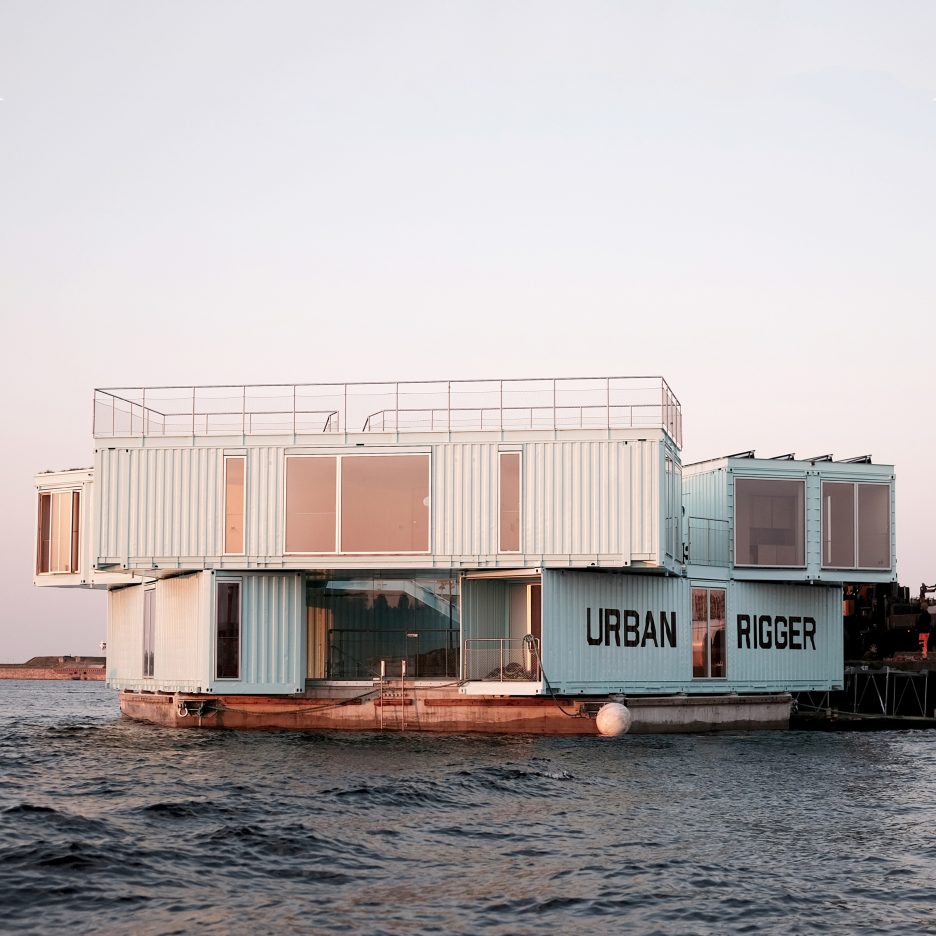
BIG stacks shipping containers to create floating student housing in Copenhagen harbour


Shipping containers are stacked on a floating platform to create these buoyant student halls of residence designed by Bjarke Ingels’ firm for Copenhagen harbour (+ slideshow). (more…)

http://ift.tt/2d2cjdM

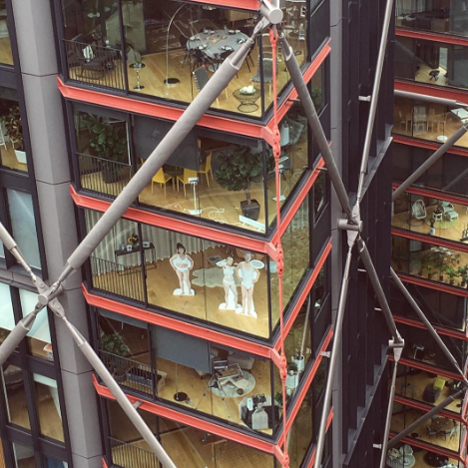
Neo Bankside residents should add net curtains to stop gallery visitors spying says Tate director


Outgoing Tate galleries director Nicholas Serota has waded into the feud between Neo Bankside residents and Tate Modern, whose new viewing platform overlooks the luxury housing development on London’s South Bank. (more…)

http://ift.tt/2djzygX

Call for entries to A’ Design Awards and Competition 2017


Dezeen promotion: architects and designers are invited to submit entries to this year’s A’ Design Awards (+ slideshow). (more…)

http://ift.tt/2dlRt9X