Pink House / Scott Posno


© Sama Jim Canzian

© Sama Jim Canzian


© Sama Jim Canzian


© Sama Jim Canzian


© Sama Jim Canzian


© Sama Jim Canzian

  • Text: Leslie Jen

© Sama Jim Canzian

© Sama Jim Canzian

Designed for a young family of four, this 3,000 square-foot house in Vancouver’s Mount Pleasant neighbourhood offers a contemporary take on single-family residential living. 


© Sama Jim Canzian

© Sama Jim Canzian

Despite its unequivocally modern aesthetic, the house is sensitive to its immediate context in its scale and materiality; the datum line responds to the houses immediately adjacent, and elegantly thin strips of stained cedar wrapping the structure take their cue from the domestic application of wood siding in the area. The second storey cantilevers over the entry level, amplifying the sculptural quality of the home and the abstracted graphic composition of the front façade. The entryway is further recessed to enhance the spatial juxtaposition of solid and void.


© Sama Jim Canzian

© Sama Jim Canzian

Dramatic contrasts are present between the black cladding and a pristinely pale interior. 

Custom millwork and floors in white oak comprise a seamlessly integrated system that contributes to the uninterrupted and streamlined effect. Furthermore, the contemporary appeal and circulatory flow of the open floor plan makes the interior seem larger, and encourages maximum usage of all spaces. Kitchen, dining and family areas are separated from the living area by a wall containing a three-sided open fireplace that augments the degree of porosity between rooms.


© Sama Jim Canzian

© Sama Jim Canzian

Section

Section

© Sama Jim Canzian

© Sama Jim Canzian

A projecting skylight offers an additional source of natural daylight from above to wash down to all three floors below. The stair, an architectural artifact itself, features a transparent glass balustrade and open risers, all of which permits light from above to further suffuse the interior. 


© Sama Jim Canzian

© Sama Jim Canzian

Landscaping gestures enhance the connection between indoors and outdoors, extending enjoyment of the house to the backyard during warmer months. The provision of a generous back deck accessible from the family room encourages al fresco dining and an appreciation of the verdant, lush ambiance of mature deciduous trees and plantings native to the West Coast.


© Sama Jim Canzian
© Sama Jim Canzian

http://ift.tt/2cmCfB9

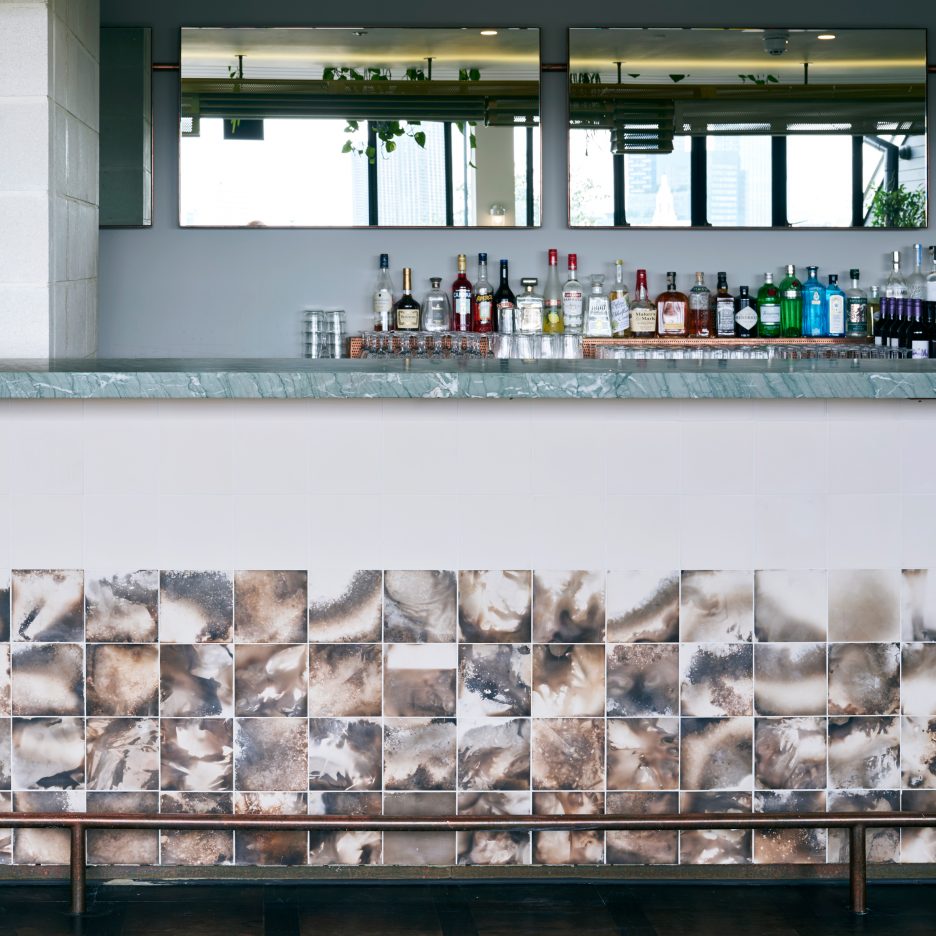
Assemble patterns ceramic tiles by baking them in a barbecue


London Design Festival 2016: Turner Prize-winning collective Assemble has produced a series of ceramic tiles that have been “smoked” in a barbecue (+ slideshow). (more…)

http://ift.tt/2cP06qK

DAKU Mounts Typography on Building Facade to Create Dynamic Mural Powered by the Sun

Urban artist DAKU has created a dynamic solar mural, “Time Changes Everything,” on a building in the Lodhi Colony area of Delhi as part of India’s first ever public arts district. Words associated with human emotion and the passage of time have been mounted perpendicularly on the building facade, casting shadows that shift as the sun moves across the sky, eventually extinguishing as the sun completes its journey.

The mural was created as a part of St+art India, a local initiative that commissioned 25 international street artists to transform the urban landscape of the Lodhi Colony District into an outdoor public arts gallery.


© St+art India

© St+art India

“By mounting several words on the wall which cast an evolving shadow through the day, the artist speaks metaphorically of all the things in life which change over time. The words highlighted in this piece not only speak of the nature of our lives but also the ephemeral nature of street art – which is constantly changing,” explain St+art India on their facebook page.


© St+art India

© St+art India

© St+art India

© St+art India

The piece is active from around 9:30 AM to 14:30 PM each day (depending on the time of year), but is most legible at noon, when the high sun creates shadows that fall directly back onto the wall, giving the words a crisp, dark outline.

A video posted by Offical DAKU Page (@daku156) on May 3, 2016 at 9:51pm PDT

//platform.instagram.com/en_US/embeds.js

A photo posted by Offical DAKU Page (@daku156) on Apr 2, 2016 at 11:41am PDT

//platform.instagram.com/en_US/embeds.js

Check out more of DAKU’s work on his Instagram page or website.

News via St+art India, H/T Creative Market.

http://ift.tt/2d8x7BR

“Heatherwick is a master of designing interesting things that nobody asked for”

thomas-heatherwick-hudson-yards-new-york-usa_dezeen_comments

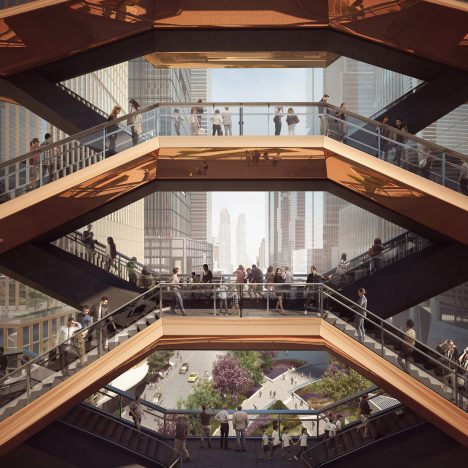
Comments update: Thomas Heatherwick’s design for a huge sculpture made up of 154 interconnected staircases divided opinion this week, with one commenter labelling him the “Coldplay of design”. (more…)

http://ift.tt/2cAEBIJ

Luminaire to auction off glass objects by Nendo, Tadao Ando and Campana brothers


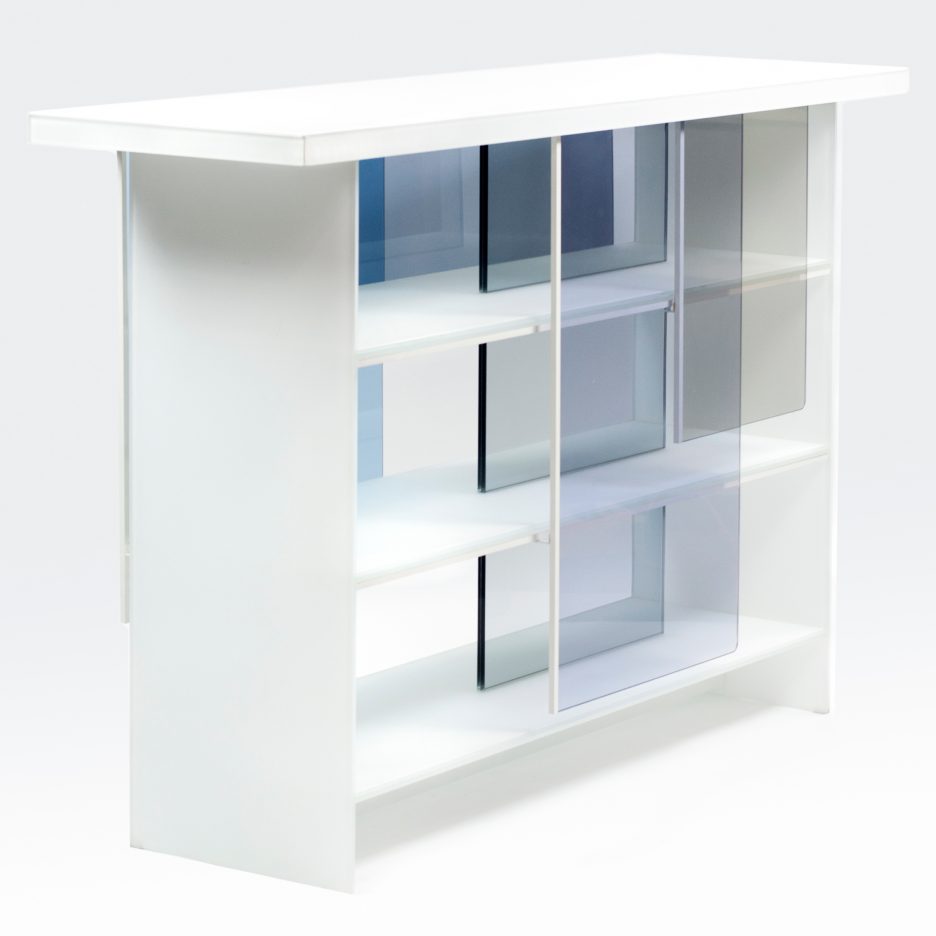
Dezeen promotion: well-known international designers have each donated glass objects to Luminaire’s GlasLove auction (+ slideshow). (more…)

http://ift.tt/2crFINg

Bezos Angela Davis School / archi5 + Tecnova Architecture


© Sergio Grazia

© Sergio Grazia


© Sergio Grazia


© Sergio Grazia


© Sergio Grazia


© Sergio Grazia

  • Client: SADEV 94
  • Engineer: EPDC
  • Economist: MEBI
  • Environmental Engineer : IETI
  • Kitchen Engineer: Alma Consulting
  • Acoustic Designer : LASA
  • Cost: 10 000 000 € HT

© Sergio Grazia

© Sergio Grazia

The construction of the new Angela Davis school in Bezons takes part in the creation of the new city center. The project, by its function of active urban facility is a key part of this city center. The goal of this construction is double : it must be a functional and sustainable public facility and also a milestone of this new neighbourhood. The school plot is an important link between the new center and the rest of the city. 


© Sergio Grazia

© Sergio Grazia

Plan

Plan

© Sergio Grazia

© Sergio Grazia

On the east side, the one story building with its vegetated roof evokes the roofs of the surrounding houses. The school integrates itself softly to the existing urban grid. The landscape is prolongated all along the plot to the South until the Edouard Vaillant street and come inside the school under the zinc North façade. 


© Sergio Grazia

© Sergio Grazia

The stone elevation creates inaccessible terraces reminiscent of suspended dry stone gardens and creates the promontory of the elementary school courtyard. This mineral stratification reminds castles, an évoque un château fort, a reassuring and timeless building, full of nature. The new school has a urban façade on Francis de Pressensé path with transparency on ground floor and suspended zinc «box» on first floor. 


© Sergio Grazia

© Sergio Grazia

© Sergio Grazia

© Sergio Grazia

The bridge over the entrance spans the planted walkway which is integrated to the building as a natural protection and presence behind the façade. The rows of high plane trees on South and North are preserved, prolonging the park on E. vaillant street. On the secondary path, the façade is carefully designed with a succession of aluminum vertical pieces, playing with sunlight. 


Plan

Plan

The entrance space is large and sheltered, sha- red between infant and elementary school. With the nature coming inside the school through this entrance, the pupils are feeling protected, imagination is smoothly taking place. 


© Sergio Grazia

© Sergio Grazia

The refectory of each school are both on the ground floor but independant. The multimedia pole is located just between infant and elementary and keeps its autonomy. In addition to the pedagogic garden, there is a greenhouse on first floor, permitting to make gardening pedagogic activities all year. 


© Sergio Grazia

© Sergio Grazia

All circulations are naturally lit through large and coloured windows. Real materials, durable and robust are used. The courtyard façades are cladded with Larch wood and protected from rain by a roof overhang. This envelop is also efficient, airtight, and its conception includes a maximal insulation to minimize energy losses. The rainwater management is optimized with vegetated roof and terraces. All windows and doors are wood and aluminum. 


© Sergio Grazia

© Sergio Grazia

Thermal inertia of the building, strengthened by its concrete base, is valued by night ventilation for summer comfort. The pedagogic greenhouse is used to pre-heat the school air during winter.


Section

Section

Section

Section

Build Angela Davis school is write a new page of Bezons’ history. In addition to integrating the urban options of this new borough, we propose to extend them and add ours, to enrich and bring an ambitious renewal for the city. This school keeps the promise of simple and clear daily ope- ration, a sustainable building. It will be a learning place which will leave its place to the imagination. 


© Sergio Grazia

© Sergio Grazia

http://ift.tt/2d8mqj3

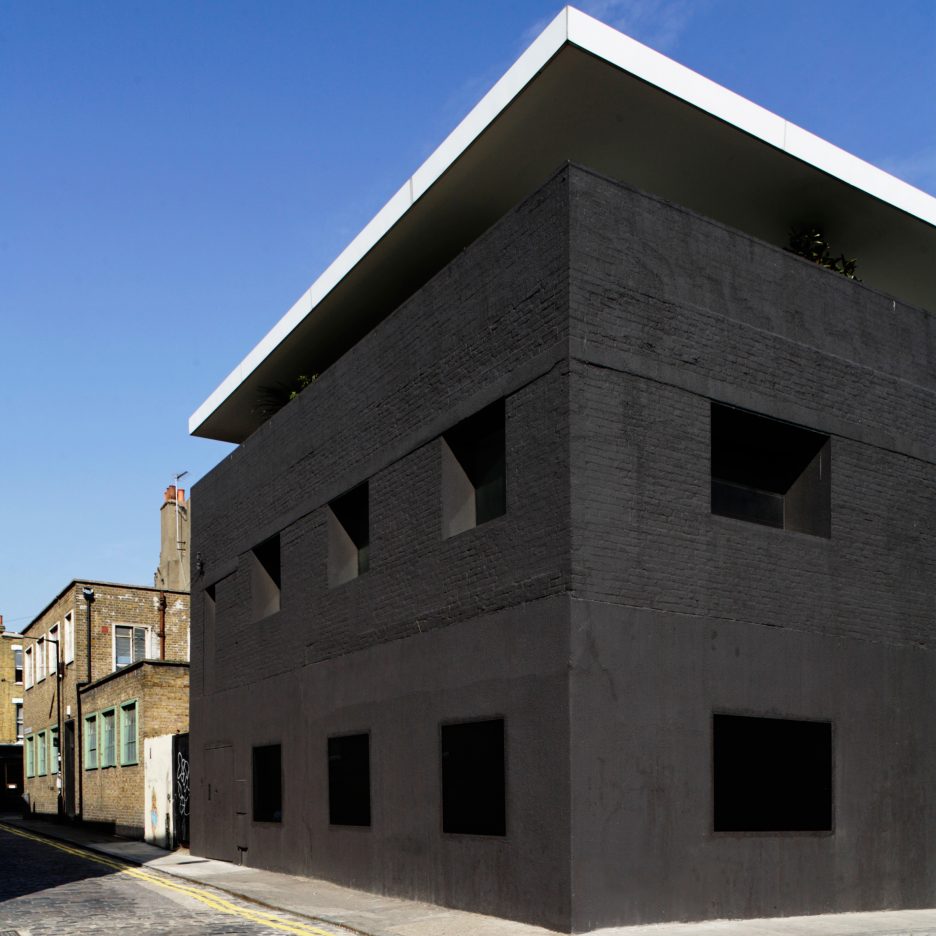
Ten projects worth knowing by London Design Medal winner David Adjaye

A Virtual Look Into Patrick Bateman’s “American Psycho” Apartment


Courtesy of Archilogic

Courtesy of Archilogic

Patrick Bateman’s apartment from American Psycho is one of the most iconic locations in recent film history – his bone-white business card writ large. The sterile set design, by Gideon Ponte, is as impersonally creepy as Christian Bale’s performance (sure, put a telescope by the window, why don’t you; a serial killer without voyeurism just isn’t scary enough.) Archilogic’s interactive 3D model invites you to experience the apartment from the inside – without fear of an axe to the head.

http://ift.tt/2cNeSQd

The film’s satire rests heavily on materialism and superficiality, Bateman’s status anxiety elevated to existential terror and psychosis. So naturally, his own living space – it’s hard to call it a home – is subject to the same inhuman perfectionism. From a Mackintosh chair to Mies van der Rohe’s Barcelona suite, every desirable piece adds to his armor of success. But in this extreme minimalism, without any trace of personality on show, the space feels hollow and empty. Even the Robert Longo artworks – oversized, black and white, and off-balance – add to the unsettling vibe.


Courtesy of Archilogic

Courtesy of Archilogic

Courtesy of Archilogic

Courtesy of Archilogic

Is this cold, hard atmosphere intrinsic to Eighties Manhattan style? In other hands, the kitchen – with its inviting window into the living room – could be a convivial space, a social focus. In Psycho, it’s the almost industrial, stainless steel backdrop to butchery (bet you don’t remember any actual eating taking place in that kitchen; the fridge is just a decapitated head storage system). The all-white bedroom, instead of a pristine place of rest, is a surgical theater. And yet, on its own merits, it’s a desirable apartment. Take a tour and try humanizing it with your own choice of furnishings… Blood not included.

Start the tour above, or via this link. The animation will guide you through different spaces in Patrick Bateman’s apartment.

  • The camera icon will repeat the animation.
  • The floorplan, dollhouse and person icon change the viewing mode.
  • The black menu bar on the right provides most importantly the account, interior and sharing menu.

Also, don’t miss Archilogic’s virtual looks into The Eames Case Study House #8, Mies van der Rohe’s Farnsworth House, Pierre Koenig’s Case Study House #21 (The Bailey House), Richard Neutra’s Unbuilt Case Study House #6 (The Omega House), and Eames and Saarinen’s Case Study House #9 (The Entenza House)Julius Ralph Davidson’s Case Study House #1Beverley David Thorne’s Case Study House #26, and A. Quincy Jones and Frederick Emmons’ Case Study House #24.

http://ift.tt/2dgrUqv

Boavista House / Pablo Pita Arquitectos


© José Campos

© José Campos


© José Campos


© José Campos


© José Campos


© José Campos

  • Architects: Pablo Pita Arquitectos
  • Location: Porto, Portugal
  • Project Team: Pablo Rebelo, Pedro Pita, Ricardo Oliveira, Catarina Alegria
  • Area: 260.0 sqm
  • Project Year: 2016
  • Photographs: José Campos
  • Consultant: ALFAengenharia
  • Constructor: José Leal SC, Lda

© José Campos

© José Campos

Boavista is a single-family house refurbishment in a well-known Porto street with the same name. The plot was a last century house in an advanced state of ruin facing one of the busiest streets, but offering a garden in the interior of the block.


© José Campos

© José Campos

Floor Plans

Floor Plans

© José Campos

© José Campos

The width limitations of these old constructions invite the dwelling to extend its boundaries to the inner courtyard. With this, a generous area is provided, setting the entire social area through one contiguous space. The kitchen extension connects to the garden, assuming a crucial role in the relation with the exterior. A wheeled wooden island allows a flexible use of the space. A skin of wooden shutters characterize the extension façade and set different layers of shade.


© José Campos

© José Campos

© José Campos

© José Campos

In the center a light core is settled, being the stairs developed in different stages with different relations with this void. Therefore the theme of the skylight is revisited, exploring one of the main features of these old constructions and enhancing its importance on the structure of these typologies. The height of the skylight defines an unusual residential scale allowing visual relations between the three floors.


© José Campos

© José Campos

http://ift.tt/2dgovbb

OMA reveals its first residential tower for New York


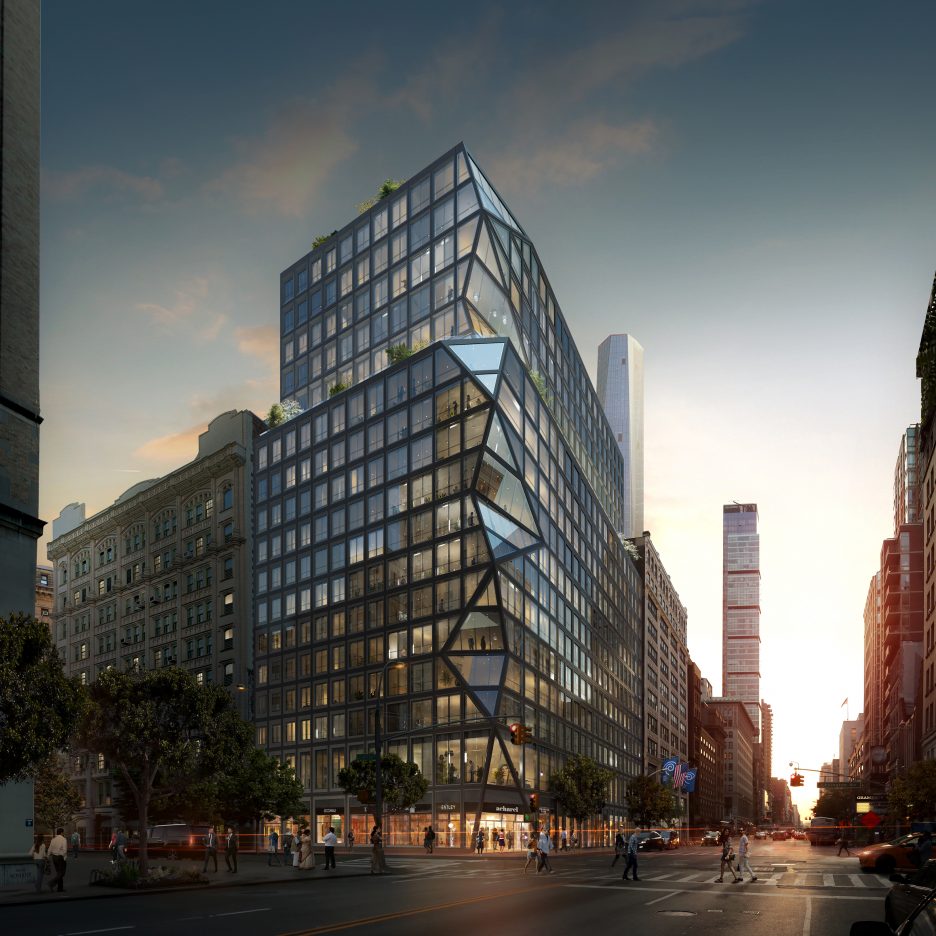
The New York office of Dutch firm OMA has proposed an apartment building with a “prismatic” corner for Manhattan. (more…)

http://ift.tt/2cm5vrN