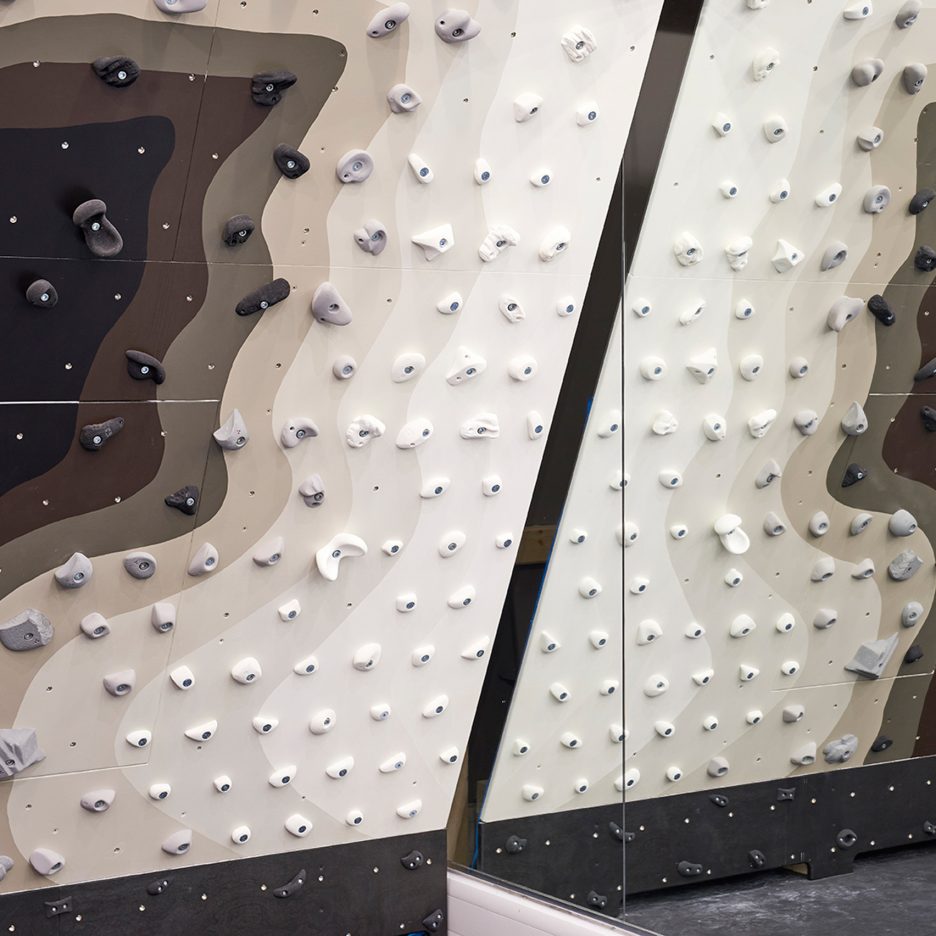
London Design Festival 2016: Patternity has added a graphic climbing wall adorned with monochrome contours to the basement gym inside east London’s Ace Hotel (+ slideshow). (more…)
London Design Festival 2016: Patternity has added a graphic climbing wall adorned with monochrome contours to the basement gym inside east London’s Ace Hotel (+ slideshow). (more…)

One of the most public and politically relevant debates about spatial borders, that of the United States and Mexico, has been probed in a project currently being exhibited at the London Design Biennale. Helmed by Fernando Romero and his team at fr*ee, “Border City” puts forward the idea of a binational city on the border, a place where cultures “both clash and blend to create something altogether unique.”
The states along the border of these two countries now have a population of over 100 million people – ample to facilitate the introduction of a new city. fr*ee explained: “Border City is the first integrated masterplan for a binational city conducive to both sides of the border, employing tools of enterprise such as special economic zones to argue for its viability.” The masterplan is unrolled in detail at the London Design Biennale, as seen in the video below. The exhibition is open from the 7 – 27 September.
The proposition stemmed from contemporary discussions around issues of immigration, border control, and free trade, and the inflammatory ways in which people sensationalize the problems without looking for viable solutions. The concept is rooted in the long history of places where frontiers meet, places like Hong Kong, Andorra, Baarle Hertog/Baarle Nassau, and Stanstead/ Derby Line.
fr*ee explained in a press release: Economic, social, cultural and environmental sustainability are urban assets and organizing principles for the proposal’s design. Challenging “border situations” are likely to multiply across the world as populations grow, migration increases, and economies continue to globalize. Romero introduces an urban prototype, with a hexagonal plan, that might offer a new model for a rapidly developing world.
The first proposed city is situated on the cusp of New Mexico, Texas and Chihuahua. The research and ideas put into the concept design would be transferable to other binational cities, but in order to give physical form to these concepts, a specific city had to envisaged.
This junction of states was seen as a highly fruitful area due to the completion of the new inland port of Santa Teresa, the I-10 highway connecting east and west coasts, and the 7 existing border crossings in the area. Each of these represent an extraordinary opportunity for logistics and transportation of products in the area, and combine to form the critical infrastructure needed for a plan such as this.
For more information, head over to the fr*ee website, and check out the video of Border City at the London Design Biennale below.
News via fr*ee.
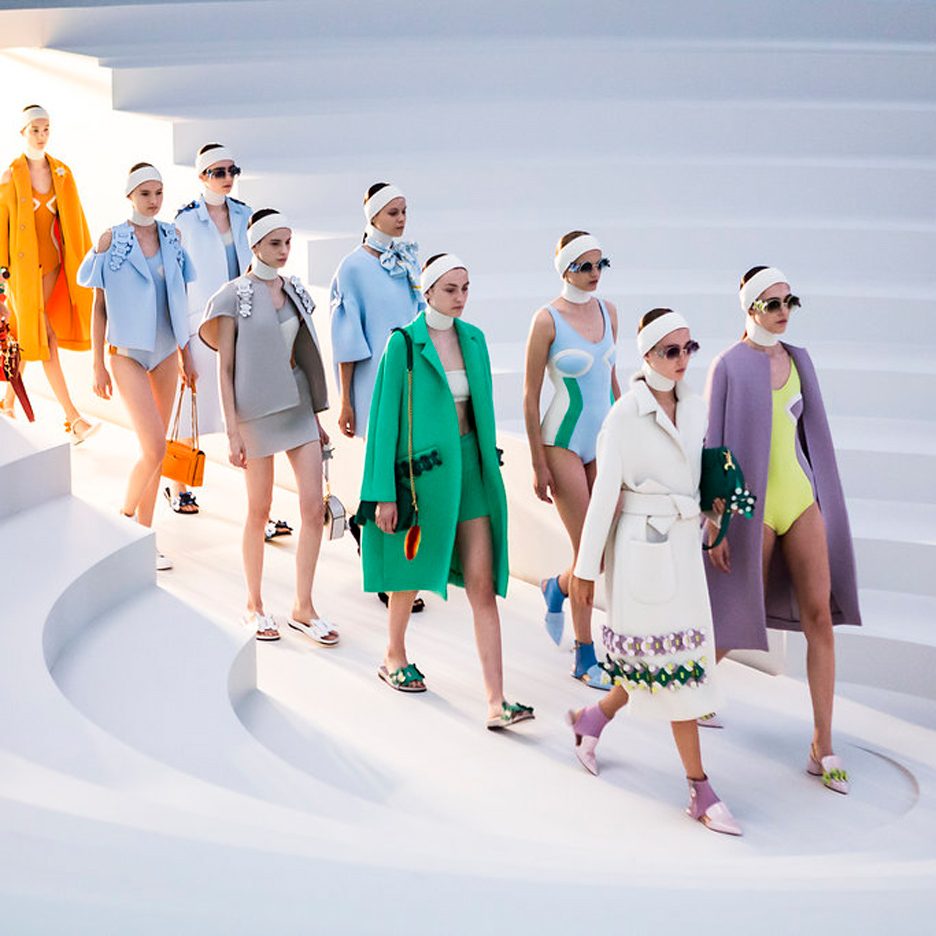
A giant illuminated disk hung above a set of circular steps to form the set for designer Anya Hindmarch’s collection during this season’s London Fashion Week (+ slideshow). (more…)

Steven Holl has been awarded the 2016 Daylight Award in Architecture, which honors architects “who have distinguished themselves by realizing architecture or creating urban environments that showcase a unique use of daylight, for the benefit of overall quality of life, its impact on human health, well-being and performance, and its value to society.”
Organized by non-profit, private charitable foundations Villum Fonden, Velux Fonden, and Velux Stiftung, the award puts specific emphasis on the interrelation of theory and practice.
I am deeply honored to have been selected as the laureate for Daylight in Architecture, said Holl. Space is oblivion without light. A building speaks through the silence of perception orchestrated by light. Luminosity is as integral to its spatial experience as porosity is integral to urban experience.
Past recipients of the award include Jørn Utzon, Henning Larsen, and Peter Zumthor.
News via Steven Holl Architects.
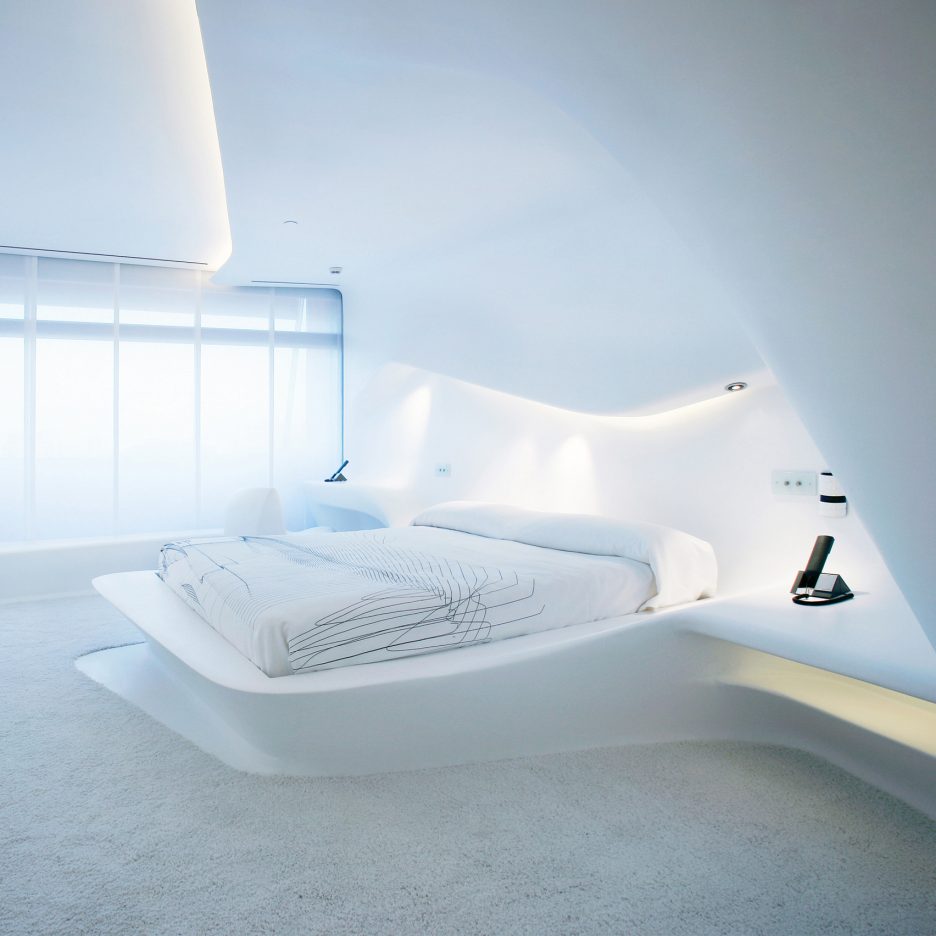
Musician Moby has hit out at architects “who think about stuff that can be photographed well, but who never actually plan on spending time in the spaces they create”. (more…)

Una Scala per le Stelle is a private residence renovated by Andrea Castrignano. It is located in Milan, Italy and was completed in 2016. . Photos by: Riccardo Gasperoni

From the architect. Situated on the border of a working farm in Suffolk (UK), the Scott House has been designed as a long and narrow flat roofed pavillon, to give the building a sufficient magnitude and scale to correspond sizes of the existing barn and the old dairies on the site. The long structure is placed on the edge of the property, perfectly conveying the transition from the meadowlands to the cultivated farmland and private enclosed garden.
The house is lifted on a slightly elevated sand stone plateau, that serves to lift the building slightly to a level that matches the gentle slope of the site from the East towards the West, which provides the interior with a view over both the garden and the fields in the horizon. The large overhang of the roof and the thin fascia board makes the building as light and airy as possible.
The internal layout of the house is an open space plan with long views, only divided by freestanding elements in to different functional zones. The design of the facade is all about transparency, letting nature be an integral part of the interior and framing views of the extraordinary settings.
The house is constructed in wooden beams with a vertical cladding in local Larch to correspond with the vertical wooden cladding on the existing structures on the site, creating a harmonious meeting between the old and the new buildings.
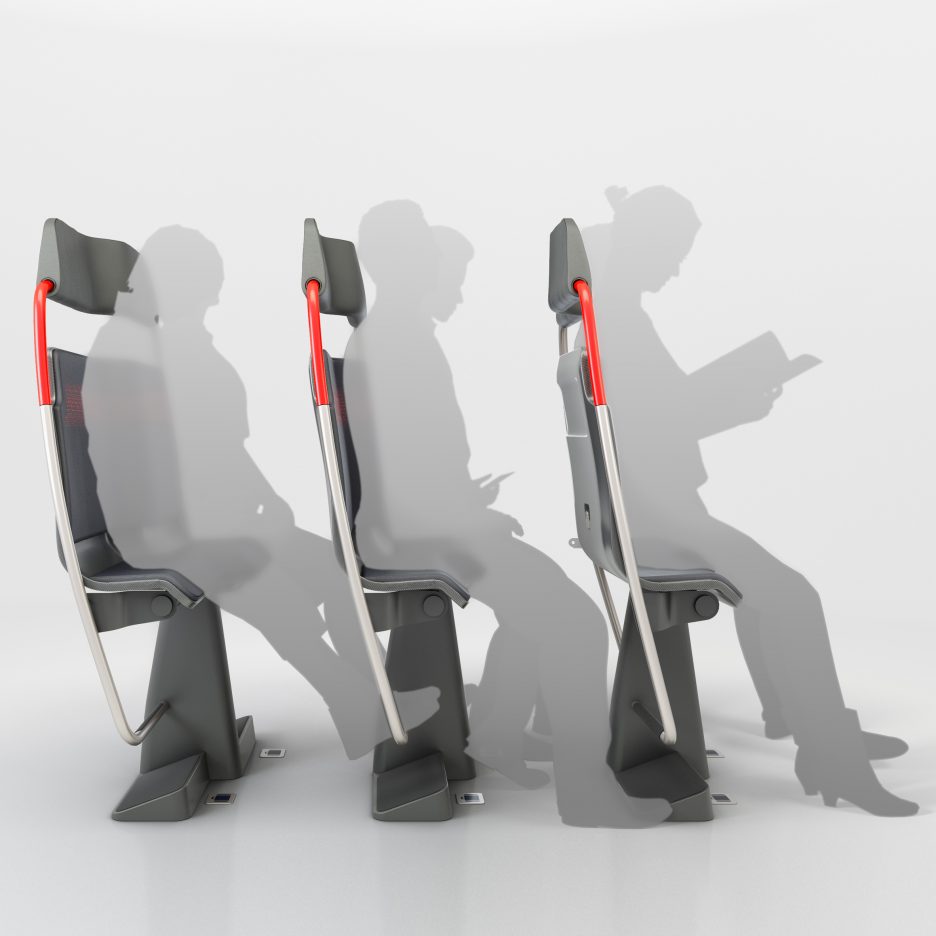
London studio PriestmanGoode has tackled the problem of overcrowding on public transport with new designs that rethink how people sit on their commute (+ movie). (more…)
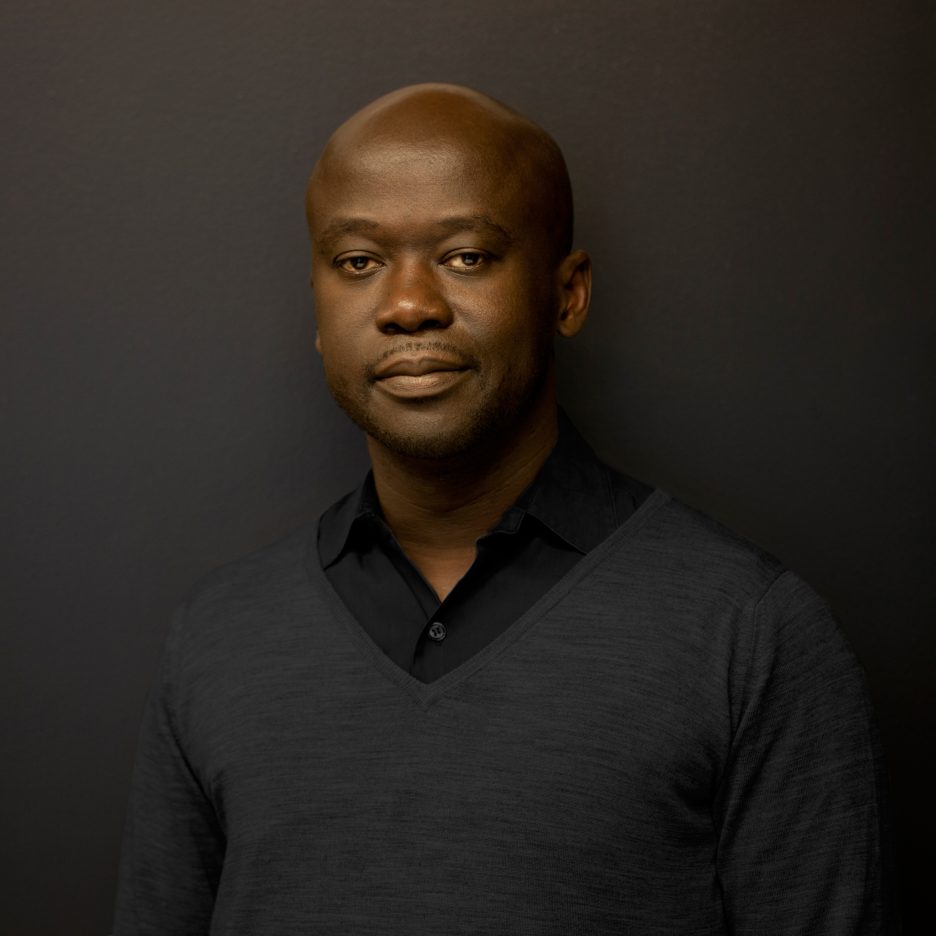
London Design Festival 2016: architect David Adjaye has won this year’s London Design Medal, while industrial designer Kenneth Grange has been given an award for lifetime achievement. (more…)

Louisa Hutton and Matthias Sauerbruch, of Berlin-based practice Sauerbruch Hutton, have recently published Archive 2 – a second series of monographic volumes dedicated to the work of their practice between 2006 and 2015. In the nine years between two sets of books, the architects have observed that “the expansion of the digital realm has had a profound effect on the way we perceive, discuss and produce architecture.” As such, and on the occasion of their second volume, they are inviting people to share their thoughts “on the convergence of architecture in concrete, pixel and print.”
Sauerbruch Hutton are challenging readers with three provocations, to which a number of people have responded.
You can find out more about Sauerbruch Hutton’s monograph, here.
The Architectural Monograph is Here to Stay
//cdn.embedly.com/widgets/platform.js
 Sig Nordal