Architecture
Nawamin 24 House / I Like Design Studio

© Soopakorn Srisakul
- Architects: I Like Design Studio
- Location: Thanon Nawamin, Krung Thep Maha Nakhon, Thailand
- Design Team: Narucha Kuwattanapasiri , Unnop Tupwong
- Area: 380.0 sqm
- Project Year: 2013
- Photographs: Soopakorn Srisakul
- Client: Kasin Suthammanas
© Soopakorn Srisakul
The project start from the idea that the owner is looking for more living space in the future and existing home with parent may not able to answer. After he is looking back through time, the old house that the owner growth-up and belong to his parent is not yet sold, locate in the same village, and surrounding with good neighbor. That is where the project begins.
The old house is one and half duplex with the mixed between wood and concrete, facing down south and having good air circulation through-out the entire house. He decided to fresh start the project by removes the existing house and start his passion from the ground up. The first request he brief to the architecture is best possible air circulation, and the second request is he love to see 45 degree rooftop because the design speak-out the harmony between modern and Thai design in his view.
© Soopakorn Srisakul
After providing both concepts the architect tone-down the rooftop design by split the house into 2 modules in order to create a better mass of 45 degree rooftop. The rooftop of the left module reflects modern design with flat rooftop, and the right module covers with 45 degree rooftop design. The idea helps overall design of the house and reflect stacking of mass and better shape of the house.
Section
Section
View is another matter of the design. Location of the house is surrounding with 30 years old houses, and not many angle for good views. The architect solved this matter by creates small open spaces in a few zone inside the house in order to bring the light in from the top. This would bring shed of the sun during the day and privacy over the night. Another highlight area of the home is living and dining room which is the largest space of the house with the maximum possible view surrounding with outdoor garden and garage. One of the owner passion is to collect vintage cars and he would please to look at the cars from the living room. Thus, the architect create vintage car view from the living area for him for his personal enjoyment. That is the begin story and concept to bring this compact house to home.
© Soopakorn Srisakul
Fifteen tonnes of rubble used to build Rotterdam house by Architectuur Maken
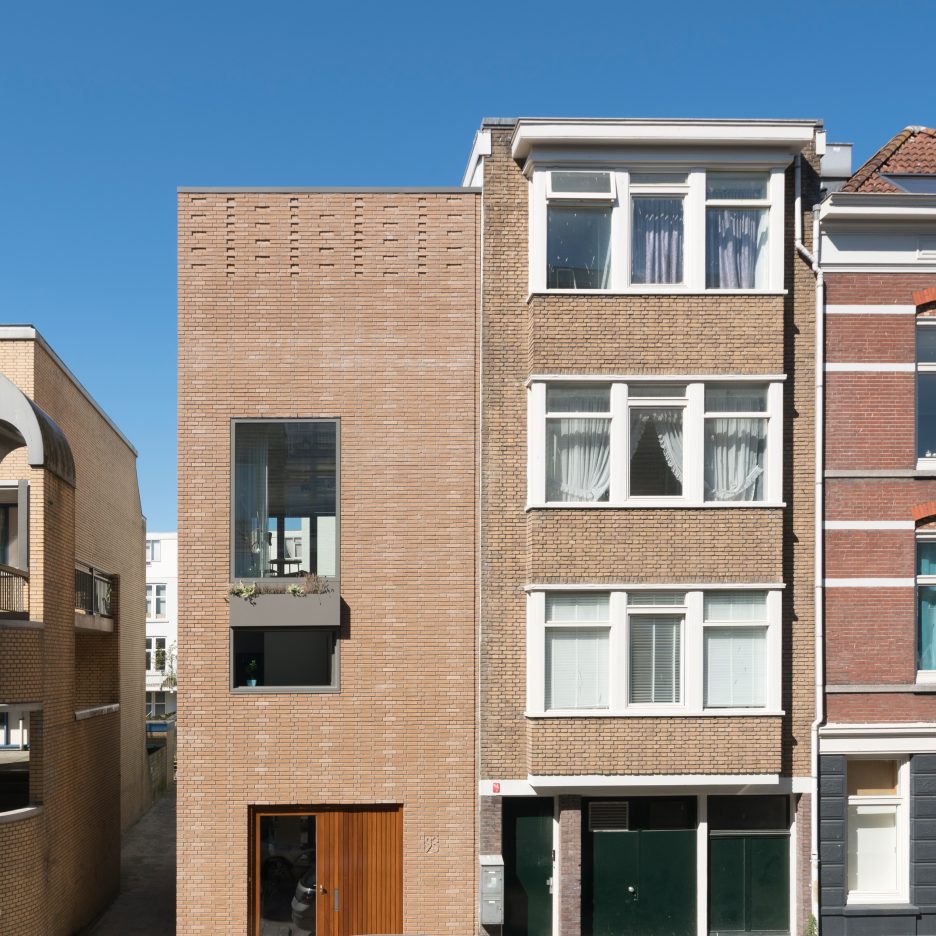
Sanwa designs collection of compact kitchen units for small homes

Japanese kitchen manufacturer Sanwa has designed a set of four kitchen units tailored to those with limited living space (+ slideshow). (more…)
Timelapse: The Construction of the World’s Tallest Timber Tower

Topping out two weeks ago, the structure of Brock Commons, currently the tallest timber structure in the world, is now complete. Measuring in at 18 stories and 174 feet (53 meters) tall, the building was completed nearly four months ahead of schedule, displaying one of the advantages of building tall buildings with wood.
Just 70 days after the prefabricated timber components were first delivered to the site, construction will now turn to the interior, with an expected completion date in early May 2017. In total, construction time will clock in at a speed 18 percent faster than a traditional project.
Check out the timelapse video to see the project come together.
AIA Study Finds Health Impacts Becoming A Design Priority for Architects & Owners

Center for Sustainable Landscapes / The Design Alliance Architects. Image © Denmarsh Photography
A recent study conducted by Dodge Data & Analytics with the American Institute of Architects (AIA) has found that architects and building owners are beginning to place higher priority of the impacts of design decisions on human health. Nearly 75% of architects and 67% of owners responded that health considerations now play a role in how their buildings are designed, indicating that healthy environments have become an important tool in marketing to tenants and consumers.
According to the report, the five healthy building features most often used by architects include:
- Better lighting/daylighting exposure
- Products that enhance thermal comfort
- Spaces that enhance social interaction
- Enhanced air quality
- Products that enhance acoustical comfort
The findings align with the goals of the AIA’s Design and Health initiative, which strives to improve health outcomes for people and communities while enhancing well-being, safety and environmental quality.
For more highlights from the report, visit the AIA’s website here, or download the report in full, here.
News via the American Institute of Architects.
Viaduct’s James Mair picks his five favourite minimalist furniture pieces
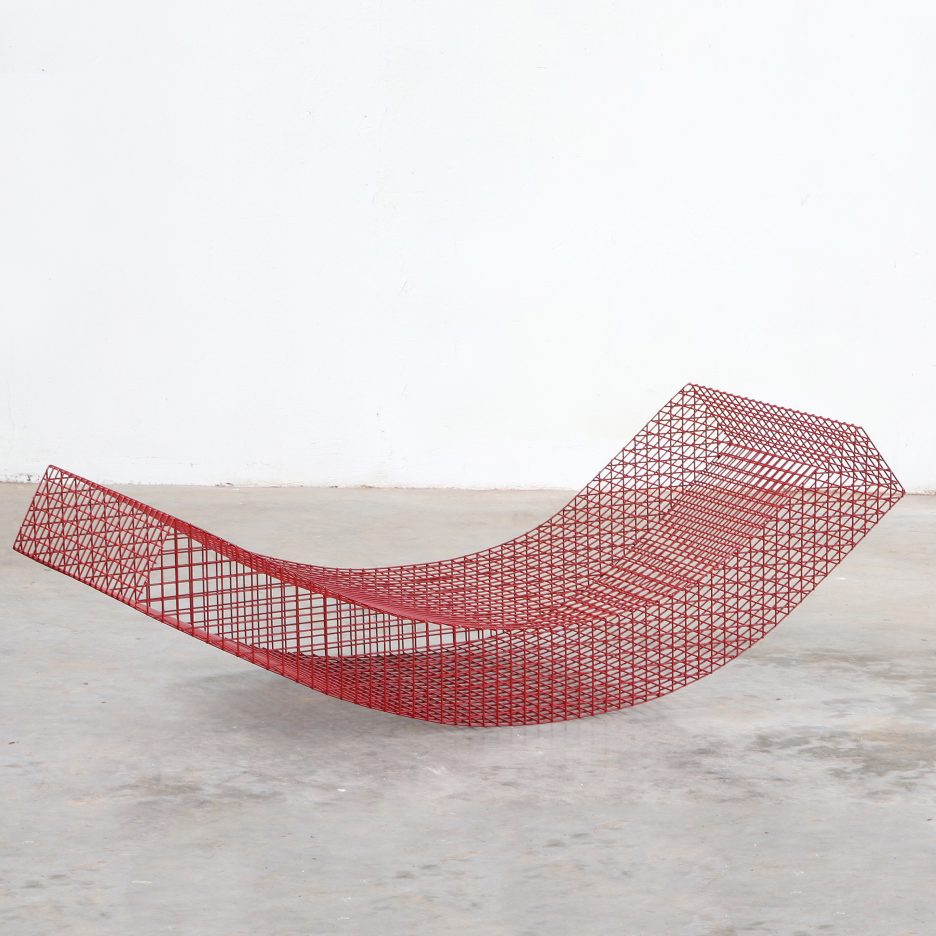
London Design Festival 2016: the best works of minimalist furniture have to make an impression with nothing more than a few lines. James Mair, founder and director of designer showroom Viaduct, shares five of his favourite examples with Dezeen (+ slideshow). (more…)
Cedar Rapids Public Library / OPN Architects

© Main Street Studio – Wayne Johnson
- Architects: OPN Architects
- Location: Cedar Rapids, IA, USA
- Area: 94000.0 sqm
- Project Year: 2013
- Photographs: Main Street Studio – Wayne Johnson
- Cm: Ryan Companies
- Gc: Knutsen Construction
- Design Engineers: MEP
- Structural: M2B Structural Engineers
- Civil: Ament Engineering
© Main Street Studio – Wayne Johnson
In June 2008 a flood swept through Cedar Rapids, Iowa filling the city’s downtown central library with eight feet of water. In the wake of this natural disaster, the city rallied to build a new central library that would be a dynamic center of the city’s urban core, embrace the transformational shifts of 21st Century technology and minimize the building’s environmental impact and long-term operational costs.
© Main Street Studio – Wayne Johnson
The new site is a couple blocks from the former flooded facility, outside the flood zone’s reach, and positioned to be an anchor to the city’s urban park. The design of the library embraces this opportunity by creating an urban plaza and positions the vibrant, active library spaces so the large expanses of glass highlight the library services to the community.
Plan 2
From the exterior, the activity of the library is prominently on display through expanses of floor-to-ceiling glass that wrap around the building on the first and second floor, visually connecting patrons and pedestrians. A 200-seat auditorium situated on the second and third levels faces the park. The auditorium stage is set against a wall of glass creating a backdrop from the changing seasons and cityscape. As darkness falls, the facade surrounding the auditorium glows with 60 eight-foot-by-one-foot light panels. This language of light is carried inside with a dramatic monumental stair featuring illuminated panels that respond as users walk up and down the stairs. The stairs and light wall are visible from the exterior, functioning as a kinetic sculpture and vividly telegraph the activity within the library to the street.
© Main Street Studio – Wayne Johnson
Plan 1
© Main Street Studio – Wayne Johnson
The new design broke barriers between the staff and patrons, library and civic spaces, and staff departments. Upon entry, patrons step into a two-story central atrium that brings together all of the core patron services in a hub and spoke system allowing users to orient themselves in the building as well as gather to meet. A café and coffee shop is nestled in the core, enticing visitors to gather, linger and engage with each other. Radiating from the core are the children’s, young adult and adult fiction areas. The views in and out of the collection spaces are seen from nearly every vantage point. The second floor consists of the adult non-fiction collections, a large dividable conference space, and staff and administrative offices. On the third floor is a break-out lobby for the auditorium and public access to the 20,000-square-foot green roof that was a key part of the LEED Platinum storm-water management strategy and has become a go-to spot in the library.
© Main Street Studio – Wayne Johnson
The success of the Cedar Rapids Public Library demonstrates the impact a next generation library can have on a community. The most surprising aspect of the new library is the ways in which the community has embraced and used the facility in ways unimagined. It truly is a participatory library. The metrics on circulation, meeting room use, and computer use have far surpassed expectations and highlight the impact a new library can have on a community.
© Main Street Studio – Wayne Johnson
Walk on Water with Space Caviar’s Floating Cultural Installation on Italian Lake

Courtesy of Space Caviar
Genoa-based studio Space Caviar has recently unveiled Arcipelago di Ocno, an aquatic installation on a lake in Mantova, Italy, which is the 2016 Italian Capital of Culture. Named after the local demigod Ocno, the installation recalls the form of a lotus, a plant with an extensive presence in Mantova’s lakes.
Acting as an aquatic piazza for the city, the archipelago of floating islands “[extends] Mantova’s urban fabric onto the lakes that surround its historic center,” utilizing modular units to create a venue for Mantova’s cultural activities for years to come.
Courtesy of Space Caviar
Courtesy of Space Caviar
These modular units can be reconfigured, relocated, or extended according to need, and will expand over the next few years to host concerts, events, performances, lectures, screenings, and more on Mantova’s lakes.
Courtesy of Space Caviar
Courtesy of Space Caviar
Courtesy of Space Caviar
Mantova’s citizens have been deprived for too many years of the pleasure to fully enjoy the relationship with water, said Mantova’s Councilor for Urban Regeneration, Lorenza Baroncelli. The archipelago will be a new, significant step in the effort to absorb the lakes into Mantova’s urban and social fabric. In addition, the archipelago finally represents an element of artistic and cultural innovation with a great international appeal alongside the city’s most historical beauties.
Courtesy of Space Caviar
Courtesy of Space Caviar
Courtesy of Space Caviar
The installation opened on September 11, and will continue to host events through the fall, as well as further in the future.
News via Space Caviar.
Frank Havermans creates futuristic pavilion in the Dutch countryside
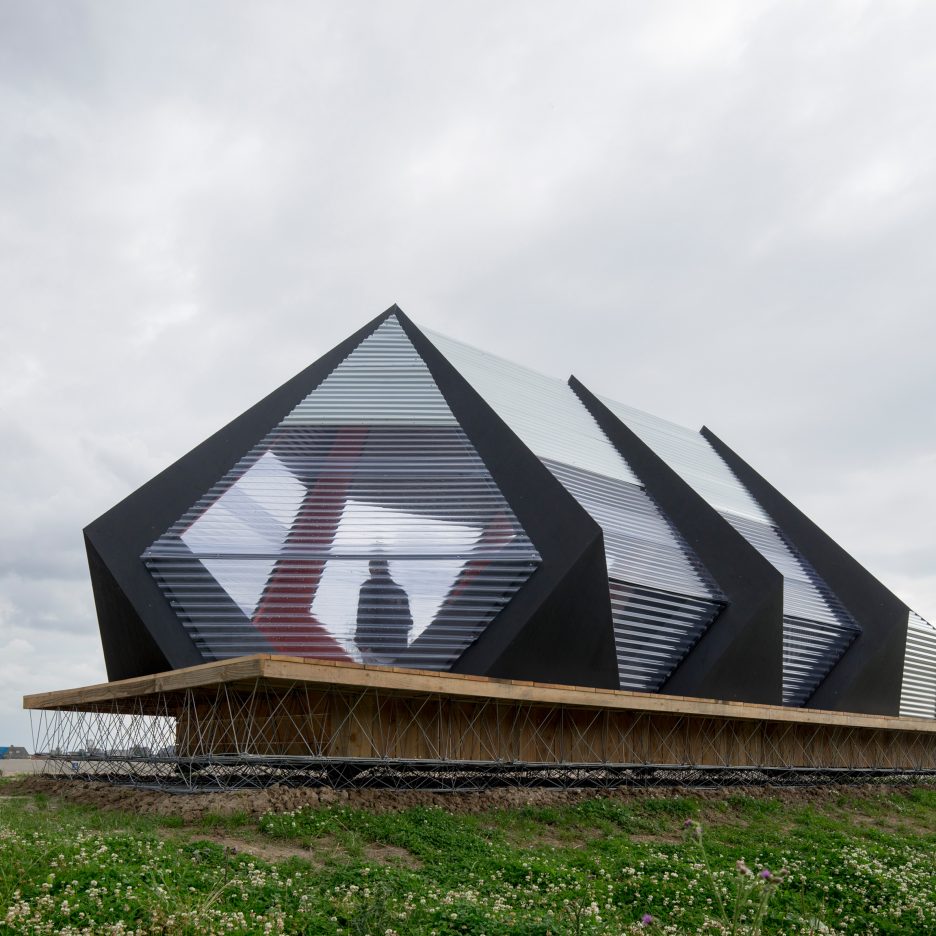
A huge ribcage-like structure cradles the angular corrugated steel and plastic body of this pavilion designed by Dutch architect Frank Havermans to host a series of summer events (+ slideshow). (more…)
 Sig Nordal